Narrative Poetry
Epics and ballads are kinds
  of narrative poetry, but
 there are poems that are
 neither epics nor ballads
  but where the writer is
       telling a story.
Dramatic Monologue
Dramatic Monologue:

• Is a narrative poem
• In every monologue there
  is a speaker who reveals
  his emotions and feelings.
• The author stays in the
  background
Rhyme: is a repetition
 of similar sounds in
     two or more
words, most often at
  the end of lines in
       poems
An example of Dramatic
     monologue:

• William Blake’s The
  Chimney Sweeper
When my mother died I was very young,
 And my father sold me while yet my
               tongue,
  Could scarcely cry weep weep weep
                weep,
 So your chimneys I sweep & in soot I
                sleep.
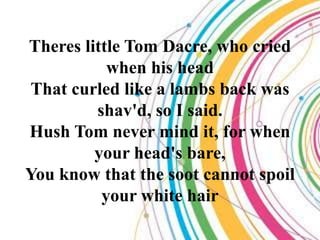
Theres little Tom Dacre, who cried
           when his head
 That curled like a lambs back was
         shav'd, so I said.
Hush Tom never mind it, for when
         your head's bare,
You know that the soot cannot spoil
          your white hair
And so he was quiet. & that very
               night.
As Tom was a sleeping he had such a
                sight
    That thousands of sweepers
      Dick, Joe, Ned, & Jack
Were all of them lock'd up in coffins
              of black,
And by came an Angel who had a
            bright key
And he open'd the coffins & set them
             all free.
 Then down a green plain leaping
        laughing they run
And wash in a river and shine in the
               Sun.
Then naked & white, all their bags
            left behind.
They rise upon clouds, and sport in
             the wind.
And the Angel told Tom, if he'd be a
             good boy,
  He'd have God for his father &
          never want joy.
And so Tom awoke and we rose in the
                   dark
And got with our bags & our brushes
                 to work.
 Tho' the morning was cold, Tom was
             happy & warm
 So if all do their duty, they need not
                fear harm
Dramatic Monologue
Dramatic Monologue

Dramatic Monologue

  • 2.
  • 3.
    Epics and balladsare kinds of narrative poetry, but there are poems that are neither epics nor ballads but where the writer is telling a story.
  • 4.
  • 5.
    Dramatic Monologue: • Isa narrative poem • In every monologue there is a speaker who reveals his emotions and feelings. • The author stays in the background
  • 6.
    Rhyme: is arepetition of similar sounds in two or more words, most often at the end of lines in poems
  • 7.
    An example ofDramatic monologue: • William Blake’s The Chimney Sweeper
  • 8.
    When my motherdied I was very young, And my father sold me while yet my tongue, Could scarcely cry weep weep weep weep, So your chimneys I sweep & in soot I sleep.
  • 9.
    Theres little TomDacre, who cried when his head That curled like a lambs back was shav'd, so I said. Hush Tom never mind it, for when your head's bare, You know that the soot cannot spoil your white hair
  • 10.
    And so hewas quiet. & that very night. As Tom was a sleeping he had such a sight That thousands of sweepers Dick, Joe, Ned, & Jack Were all of them lock'd up in coffins of black,
  • 11.
    And by camean Angel who had a bright key And he open'd the coffins & set them all free. Then down a green plain leaping laughing they run And wash in a river and shine in the Sun.
  • 12.
    Then naked &white, all their bags left behind. They rise upon clouds, and sport in the wind. And the Angel told Tom, if he'd be a good boy, He'd have God for his father & never want joy.
  • 13.
    And so Tomawoke and we rose in the dark And got with our bags & our brushes to work. Tho' the morning was cold, Tom was happy & warm So if all do their duty, they need not fear harm