How to lay out working Record
Drama in The Making 
• Introduction 
This is the Bit where you can talk 
about all we have done within 
Drama to do with the Holocaust. 
• What did you Know about the 
Holocaust Before we Started 
• What have we done in the lessons 
and how has this helped your 
understanding 
– This can be any of the stimulus material 
– Photos 
– Schindlers List 
– Extracts from Anne Franks Diary 
– Role Play of lining Jews up outside 
Houses. 
– Shoes as a stimulus for Symbolism 
– Still Images – Listening to the radio 
• Any Discussions you had with your group during the 
practical work. 
• What practical work we have covered and 
how that has got you thinking 
• Hot Seating 
• Creation of very short Monologues. 
• Don’t forget to say Why you have done all of 
these things. 
• What you have found from doing them 
• How they have furthered your understanding 
• Has that given you Any Ideas or thoughts of 
where to progress to.
Social, Cultural, Political and Historical 
• Here is any research that you want to do. 
To make your performance valid. 
• You may have been interested in a certain 
area of the Holocaust. 
• This is the ideas you can bring to your 
group to add a different perspective and 
dynamics. 
• This can be research o the Topic 
(Holocaust) 
• ****Research on Practitioners – Brecht, 
Artuad, Stainislavski, Lorca**** 
• Research on events that were happening 
at the same time. 
• Research on an Idea that you have had. 
• Poems 
• Costume 
• Names 
– This will then all be used to support 
all of your ideas later on. 
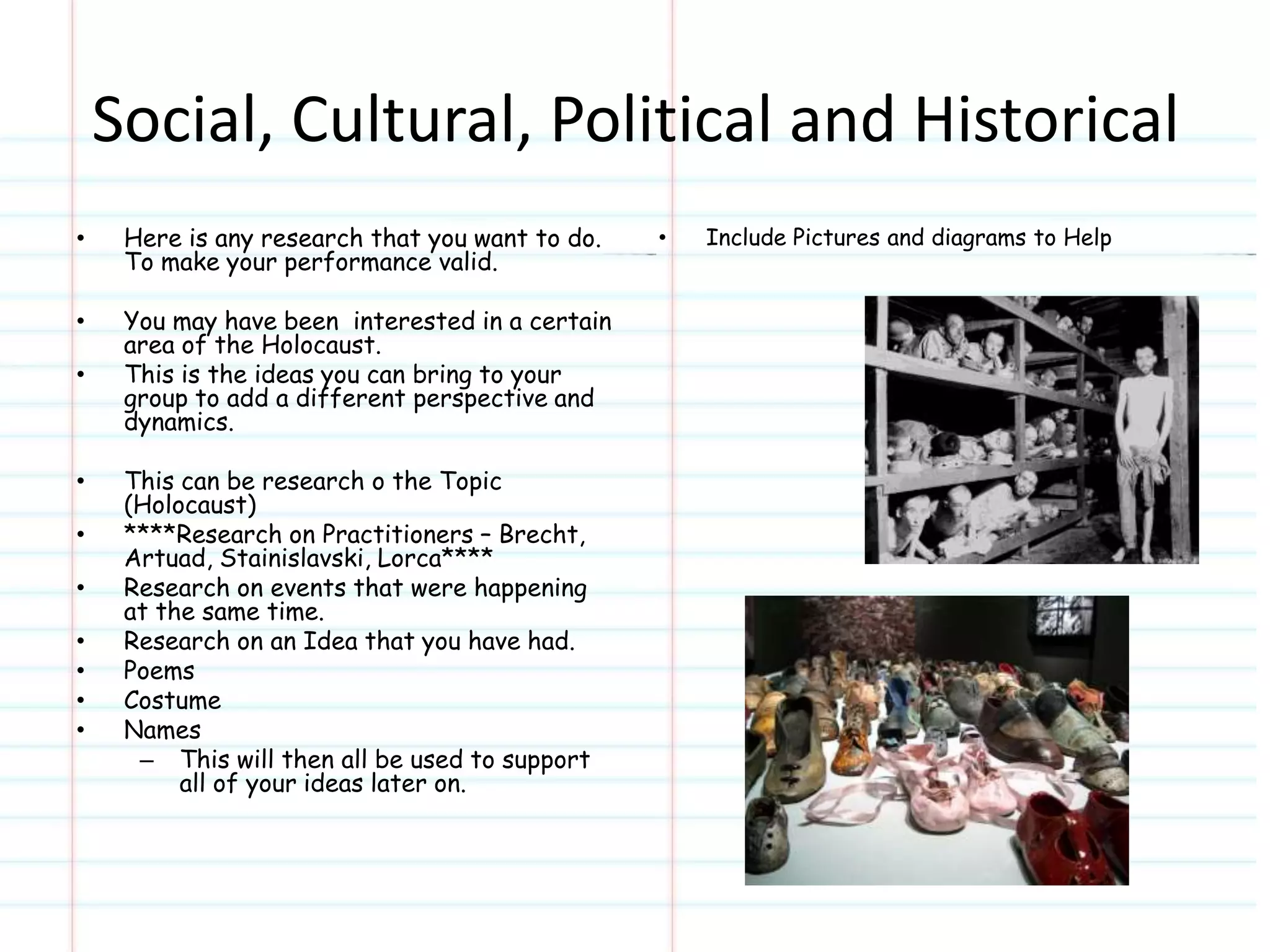
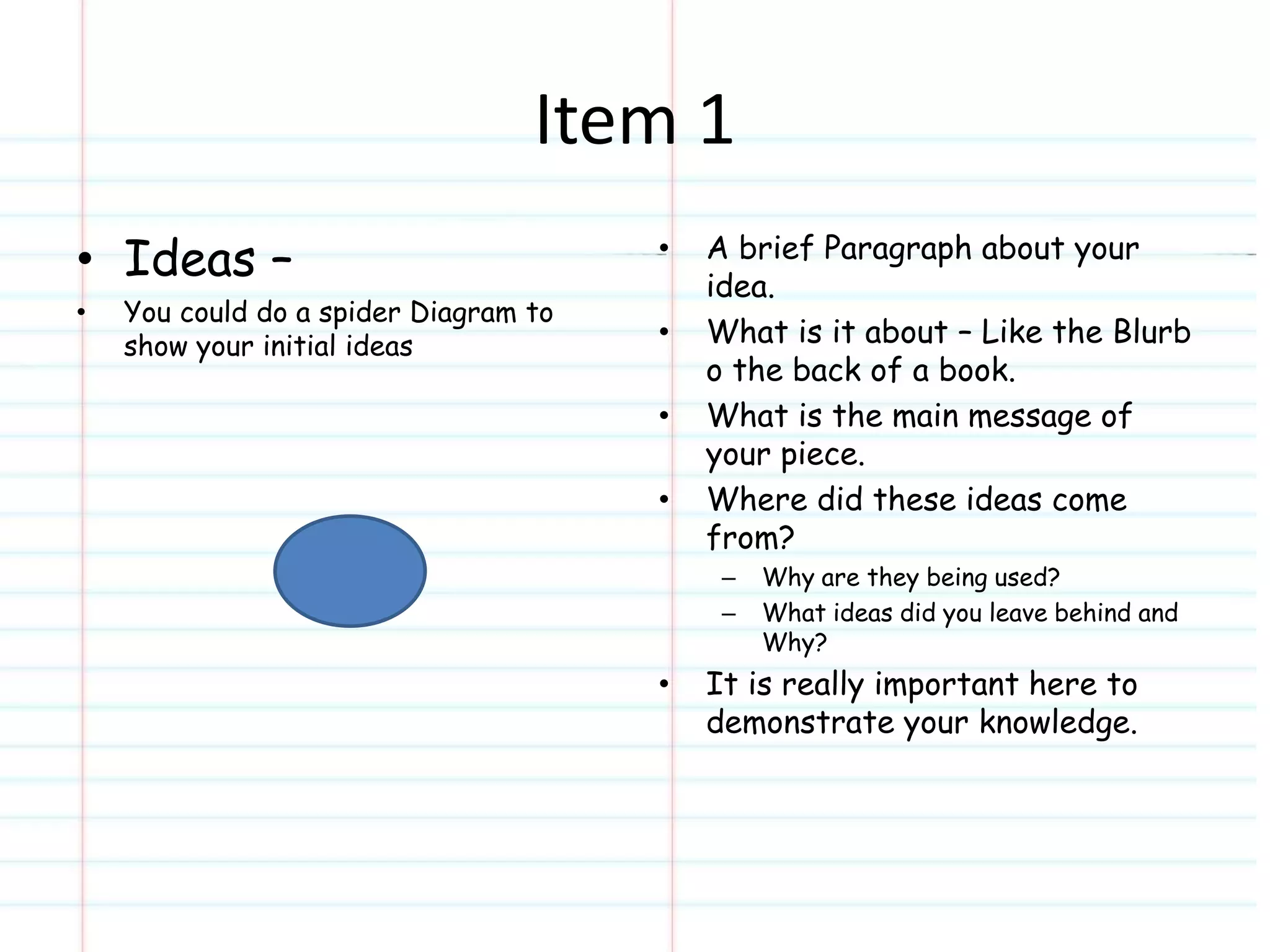
• Include Pictures and diagrams to Help
Item 1 
• Ideas – 
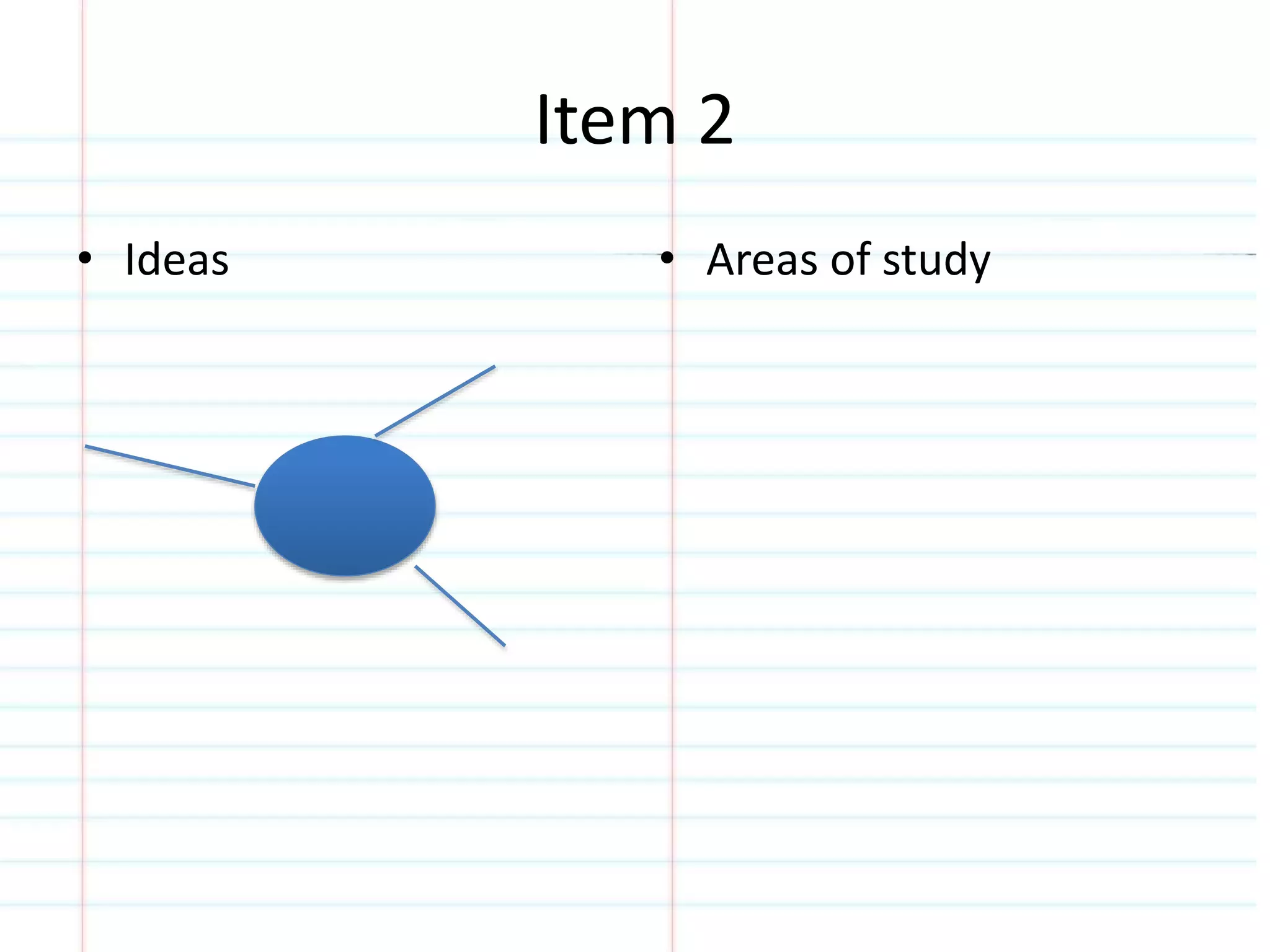
• You could do a spider Diagram to 
show your initial ideas 
• A brief Paragraph about your 
idea. 
• What is it about – Like the Blurb 
o the back of a book. 
• What is the main message of 
your piece. 
• Where did these ideas come 
from? 
– Why are they being used? 
– What ideas did you leave behind and 
Why? 
• It is really important here to 
demonstrate your knowledge.
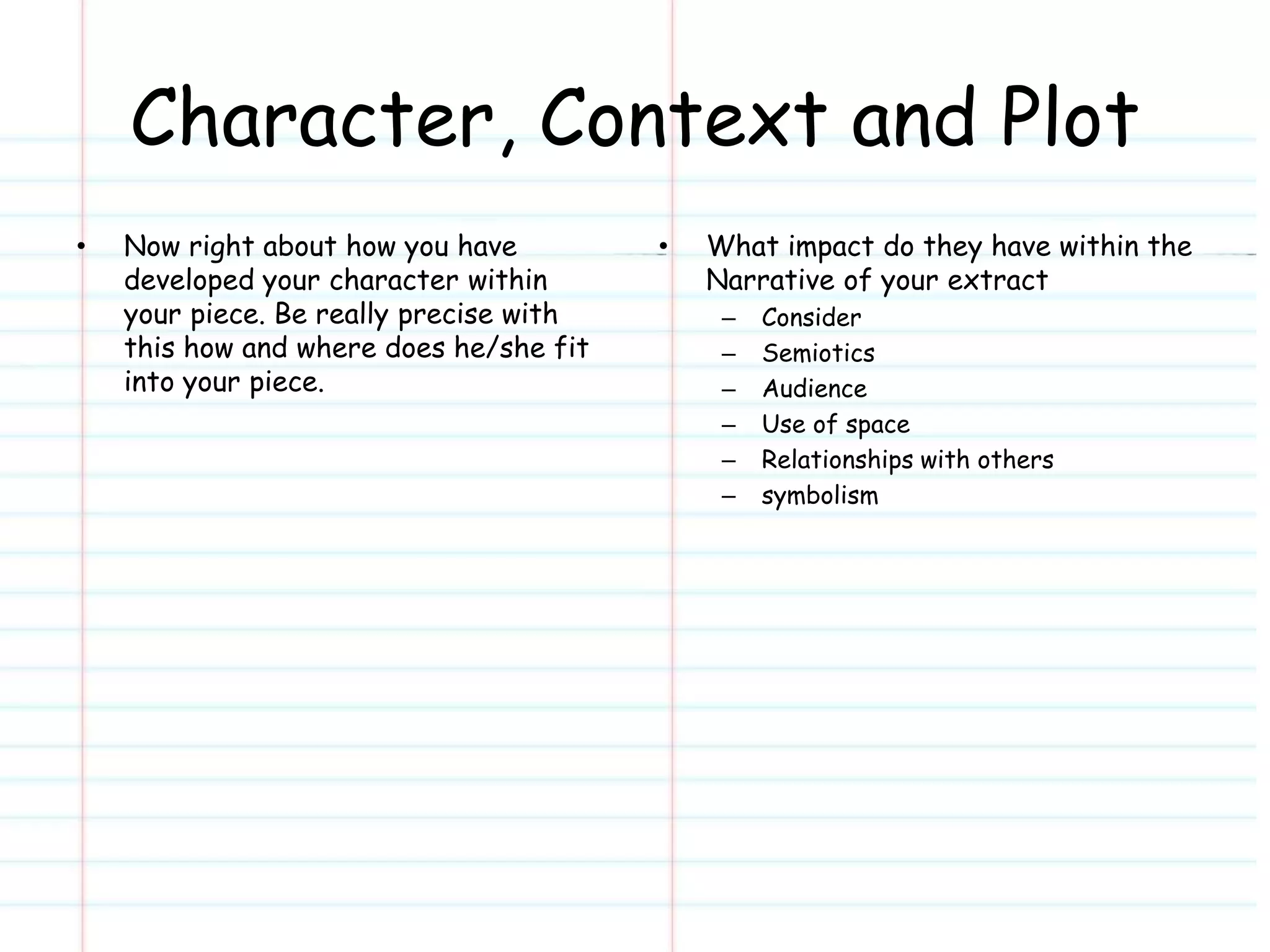
Character, Context and Plot 
• Now right about how you have 
developed your character within 
your piece. Be really precise with 
this how and where does he/she fit 
into your piece. 
• What impact do they have within the 
Narrative of your extract 
– Consider 
– Semiotics 
– Audience 
– Use of space 
– Relationships with others 
– symbolism
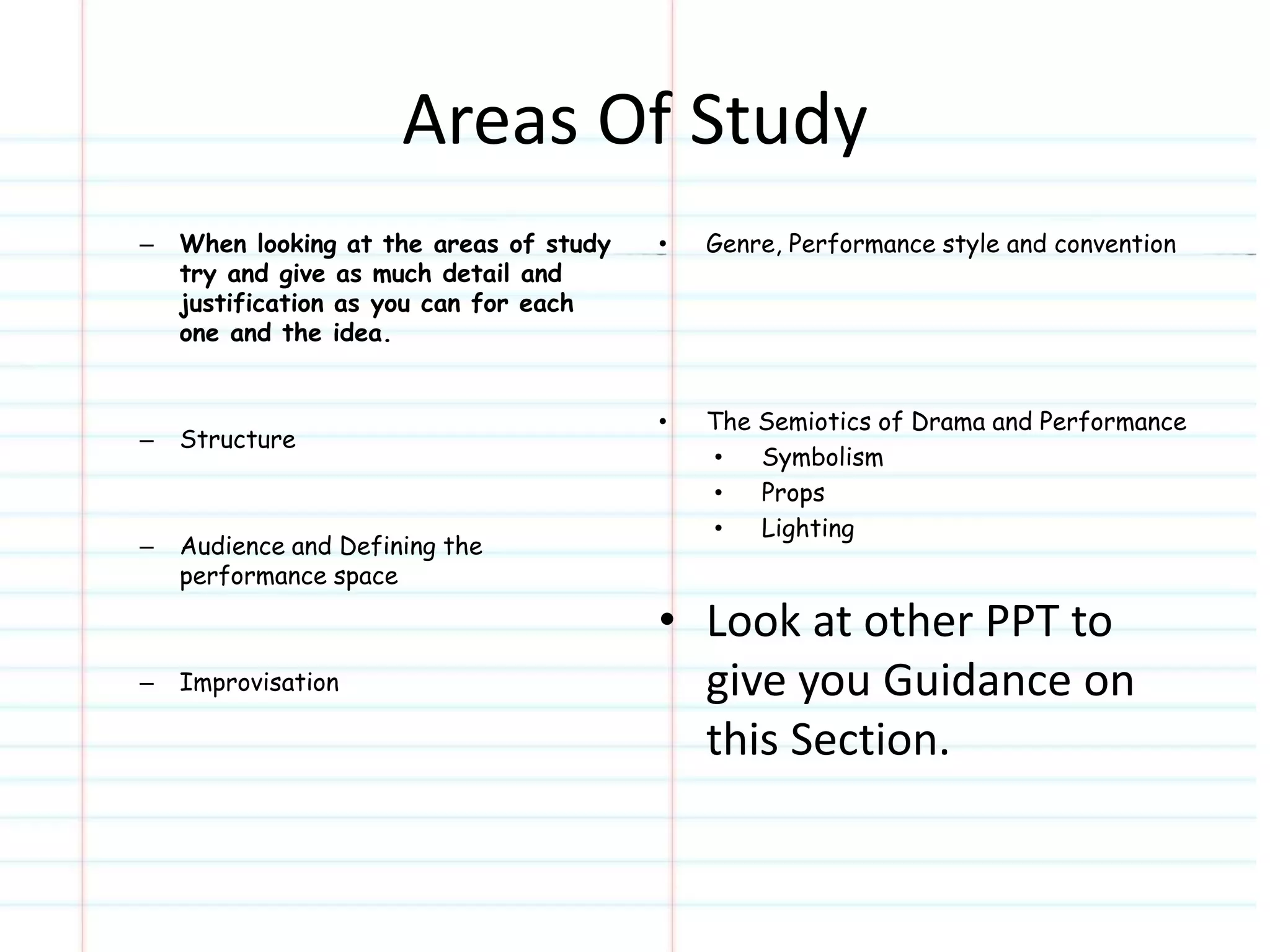
Areas Of Study 
– When looking at the areas of study 
try and give as much detail and 
justification as you can for each 
one and the idea. 
– Structure 
– Audience and Defining the 
performance space 
– Improvisation 
• Genre, Performance style and convention 
• The Semiotics of Drama and Performance 
• Symbolism 
• Props 
• Lighting 
• Look at other PPT to 
give you Guidance on 
this Section.
Development 
• This is your rehearsal 
for your improvisation.
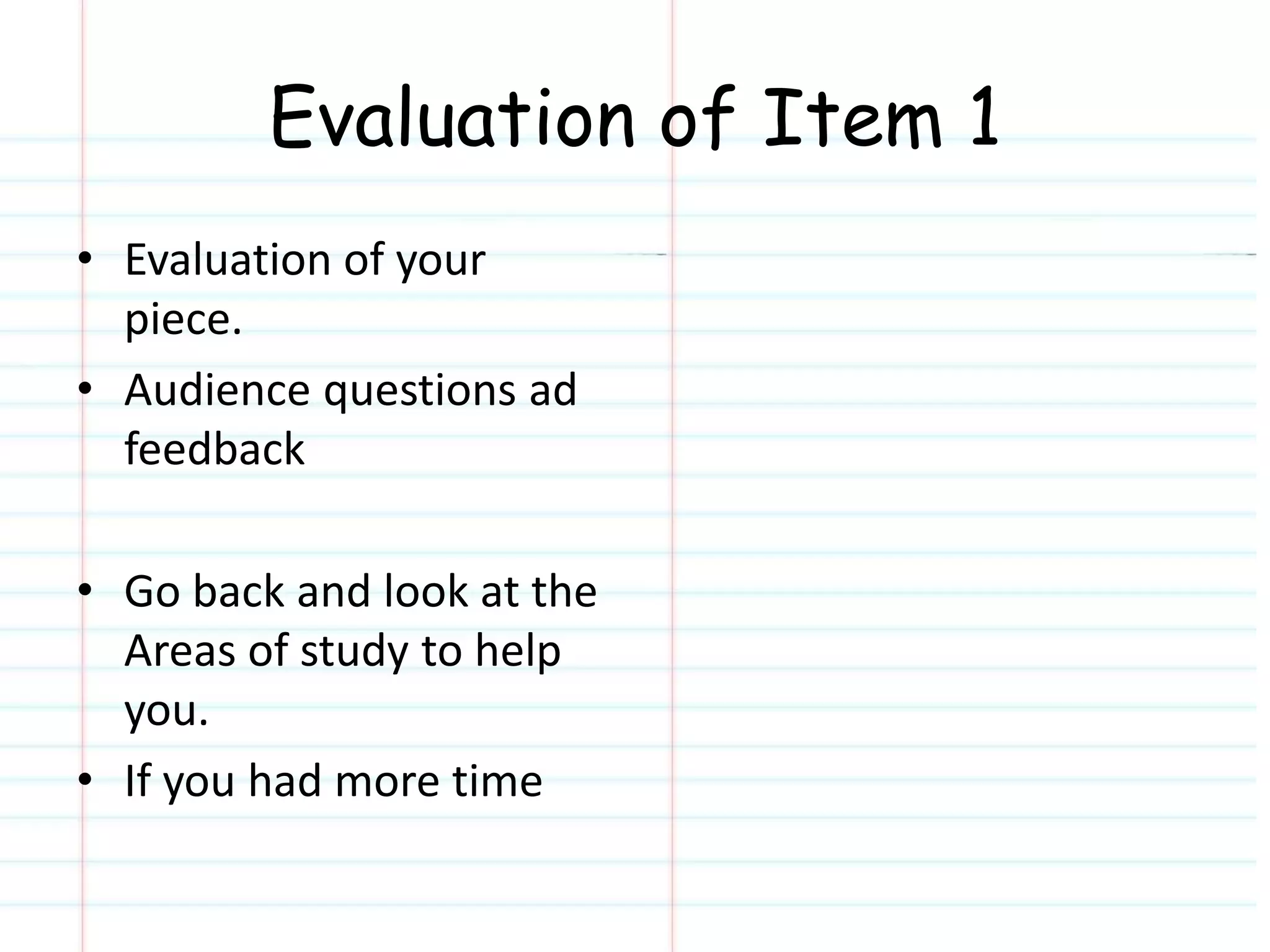
Evaluation of Item 1 
• Evaluation of your 
piece. 
• Audience questions ad 
feedback 
• Go back and look at the 
Areas of study to help 
you. 
• If you had more time
• Evaluation of another group. 
• Terminology of Areas of study 
could be good here also. 
• Practitioners
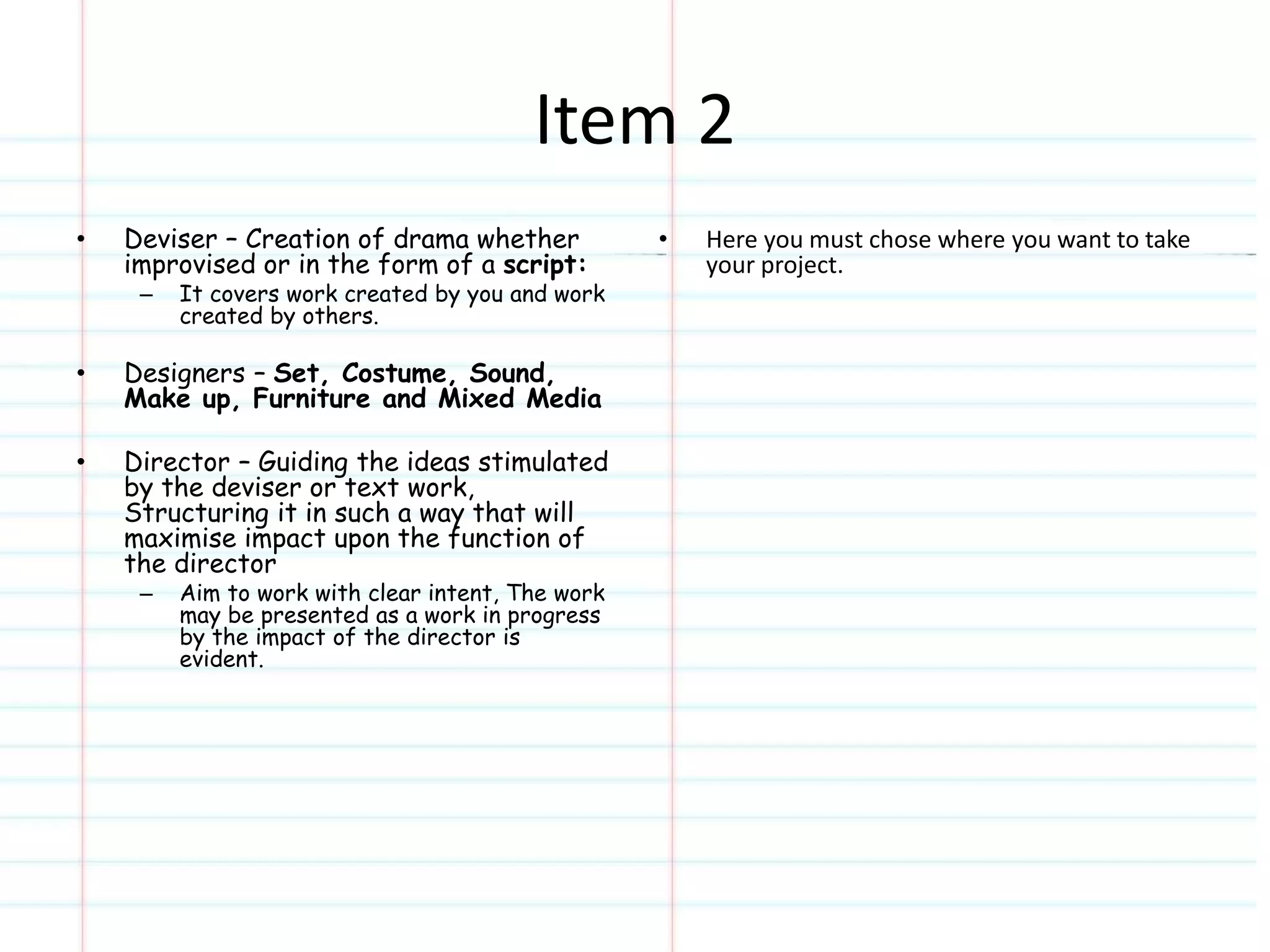
Item 2 
• Deviser – Creation of drama whether 
improvised or in the form of a script: 
– It covers work created by you and work 
created by others. 
• Designers – Set, Costume, Sound, 
Make up, Furniture and Mixed Media 
• Director – Guiding the ideas stimulated 
by the deviser or text work, 
Structuring it in such a way that will 
maximise impact upon the function of 
the director 
– Aim to work with clear intent, The work 
may be presented as a work in progress 
by the impact of the director is 
evident. 
• Here you must chose where you want to take 
your project.
Item 2 
• Ideas • Areas of study
• What aspect are you working on, Director, 
Designer or Devisor
Development of Item 2 
• Keep a track of ideas and how they have been 
developed.
Evaluation of Item 2 
• Use the areas of study 
terminology here to 
help you with the 
vocab. 
• Audience feedback 
after presentation 
• If you had more time
Item 3 
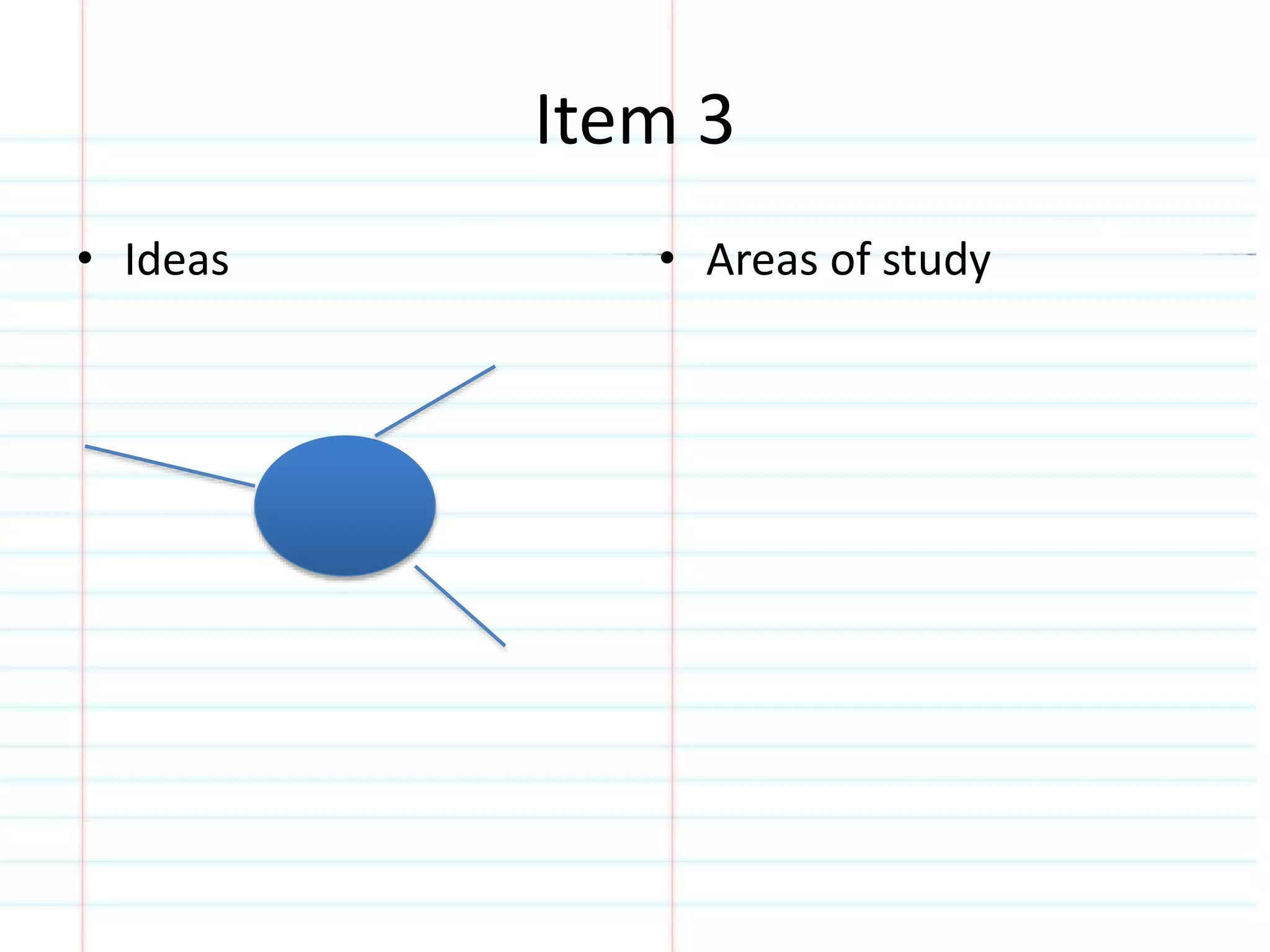
• Ideas • Areas of study
• What aspect are you working on, Director, 
Designer or Devisor
Development of Item 3 
• Keep a track of ideas and how they have been 
developed.
Evaluation of Item 3 
• Use the areas of study 
terminology here to 
help you with the 
vocab. 
• Audience feedback 
after presentation 
• If you had more time
Evaluation of whole topic.

Drama in the making how to lay out working record

  • 1.
    How to layout working Record
  • 2.
    Drama in TheMaking • Introduction This is the Bit where you can talk about all we have done within Drama to do with the Holocaust. • What did you Know about the Holocaust Before we Started • What have we done in the lessons and how has this helped your understanding – This can be any of the stimulus material – Photos – Schindlers List – Extracts from Anne Franks Diary – Role Play of lining Jews up outside Houses. – Shoes as a stimulus for Symbolism – Still Images – Listening to the radio • Any Discussions you had with your group during the practical work. • What practical work we have covered and how that has got you thinking • Hot Seating • Creation of very short Monologues. • Don’t forget to say Why you have done all of these things. • What you have found from doing them • How they have furthered your understanding • Has that given you Any Ideas or thoughts of where to progress to.
  • 3.
    Social, Cultural, Politicaland Historical • Here is any research that you want to do. To make your performance valid. • You may have been interested in a certain area of the Holocaust. • This is the ideas you can bring to your group to add a different perspective and dynamics. • This can be research o the Topic (Holocaust) • ****Research on Practitioners – Brecht, Artuad, Stainislavski, Lorca**** • Research on events that were happening at the same time. • Research on an Idea that you have had. • Poems • Costume • Names – This will then all be used to support all of your ideas later on. • Include Pictures and diagrams to Help
  • 4.
    Item 1 •Ideas – • You could do a spider Diagram to show your initial ideas • A brief Paragraph about your idea. • What is it about – Like the Blurb o the back of a book. • What is the main message of your piece. • Where did these ideas come from? – Why are they being used? – What ideas did you leave behind and Why? • It is really important here to demonstrate your knowledge.
  • 5.
    Character, Context andPlot • Now right about how you have developed your character within your piece. Be really precise with this how and where does he/she fit into your piece. • What impact do they have within the Narrative of your extract – Consider – Semiotics – Audience – Use of space – Relationships with others – symbolism
  • 6.
    Areas Of Study – When looking at the areas of study try and give as much detail and justification as you can for each one and the idea. – Structure – Audience and Defining the performance space – Improvisation • Genre, Performance style and convention • The Semiotics of Drama and Performance • Symbolism • Props • Lighting • Look at other PPT to give you Guidance on this Section.
  • 7.
    Development • Thisis your rehearsal for your improvisation.
  • 8.
    Evaluation of Item1 • Evaluation of your piece. • Audience questions ad feedback • Go back and look at the Areas of study to help you. • If you had more time
  • 9.
    • Evaluation ofanother group. • Terminology of Areas of study could be good here also. • Practitioners
  • 10.
    Item 2 •Deviser – Creation of drama whether improvised or in the form of a script: – It covers work created by you and work created by others. • Designers – Set, Costume, Sound, Make up, Furniture and Mixed Media • Director – Guiding the ideas stimulated by the deviser or text work, Structuring it in such a way that will maximise impact upon the function of the director – Aim to work with clear intent, The work may be presented as a work in progress by the impact of the director is evident. • Here you must chose where you want to take your project.
  • 11.
    Item 2 •Ideas • Areas of study
  • 12.
    • What aspectare you working on, Director, Designer or Devisor
  • 13.
    Development of Item2 • Keep a track of ideas and how they have been developed.
  • 14.
    Evaluation of Item2 • Use the areas of study terminology here to help you with the vocab. • Audience feedback after presentation • If you had more time
  • 15.
    Item 3 •Ideas • Areas of study
  • 16.
    • What aspectare you working on, Director, Designer or Devisor
  • 17.
    Development of Item3 • Keep a track of ideas and how they have been developed.
  • 18.
    Evaluation of Item3 • Use the areas of study terminology here to help you with the vocab. • Audience feedback after presentation • If you had more time
  • 19.