CHAPTER 3
AUDIENCE MEMBER’S ACTIVE
PARTICIPATION
• The audience member must choose what to watch.
• Live theatre takes more concentration than film or tv.
• The audience member is involved in two-way communication
with the actors.
• The willing suspension of disbelief. “I do believe in fairies! I do!
I do!”
THEATER ETIQUETTE
• It's NOT OK for audience members to talk quietly during a
theatrical performance.
• The actors do not expect the interruption.
• No cell phones or flash photography of any kind.
INDIVIDUAL EXPERIENCE
• Where you are seated in the theatre can make a difference in
how you experience the performance.
• The meaning of a play or a moment in the play can become
something quite different for each audience member.
• Observation: Recognition of what happened.
• Interpretation: Your response to that observation. “What did
that action mean?”
SEEING A SHOW TWICE?
• If the audience is more or less responsive than the first time, your
experience is likely to be different.
• You probably wont have as strong of an emotional connection with the
material because you already know what is going to happen.
• You have increased aesthetic distance the second time.
• Seeing a production more than once is likely to raise your own awareness
of your skills and limitations in analysis.
• A performance has its own unique life each time it occurs.
ANALYZING ACTING
• Did the actors' physical bearing seem consistent with the
words being spoken? (Clint Eastwood in Grand Torino)
• Is the actor setting an appropriate tempo for the character?
• Did the actors seem to be listening and reacting to one
another?
ACTING TOOLS
• Although a character's words may define or set the tone for
emotionality, nonverbal behavior usually underscores,
enhances, or even contradicts the spoken dialogue.
• William Gillette spoke of "the illusion of the first time,“
• Subtext. “little window or TV above their head”
WHAT IS “STYLE”
• manner of expression and methods of onstage behavior as
they affect composition and performance.
STYLES
• Style is dictated by the production team it can be:
• Representational
• Presentational
• Imposing a new performance style on an old play might
make the material more accessible to a modern audience.
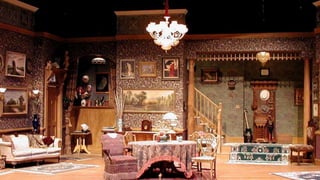
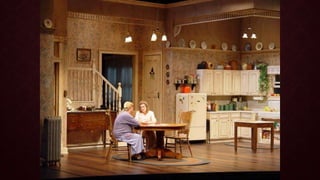
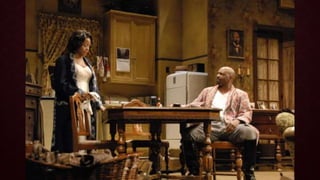
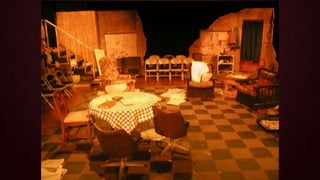
REPRESENTATIONAL
• Crafted realistically for look and function.
• Practicals such as sinks, lamps, phones, etc. all work.
• Built for believability.
PRESENTATIONAL
• Not meant to resemble everyday life.
• Authentic appearance is not important.
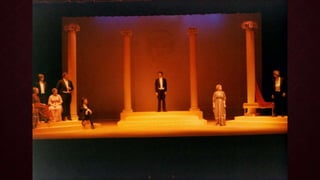
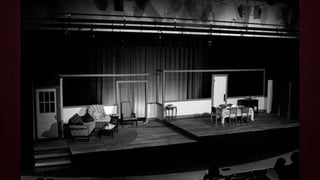
• May be stylized, abstracted, or suggestive.
• Should still be interesting and functional.
STYLIZED
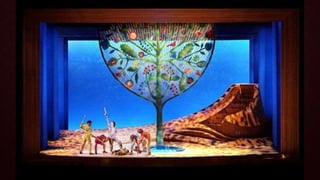
• Artistic representation
ABSTRACTED
• Think abstract art.
SUGGESTIVE
• Leave some blanks for the audience to fill in.
• Give them suggestions but not the whole picture.
ANALYZING COSTUMES
• Is the costume appropriate to the character wearing it?
• Is the costume's relationship to the costumes of other
characters in the play appropriate?
CRITICISM
• A piece of writing that includes analysis and evaluation of a
theatrical production.

• Broadway producers frequently close a show if opening
night reviews are poor.
• Otherwise they run as long as they are making money.
WRITING ABOUT A PERFORMANCE
• Soon after seeing the show, write down your sensory impressions.
• Do not get so caught up in note taking that you forget to be an
audience member.
• Be as objective as possible in providing evidence.
• Be an audience member first and a student second.
• Watching the DVD does not count.
WRITING ABOUT A PERFORMANCE
• Context of performance: Where are you? What did you
expect?
• Artistic intent: What was the production trying to achieve?
Did it succeed?

Chapter 3

  • 1.
  • 2.
    AUDIENCE MEMBER’S ACTIVE PARTICIPATION •The audience member must choose what to watch. • Live theatre takes more concentration than film or tv. • The audience member is involved in two-way communication with the actors. • The willing suspension of disbelief. “I do believe in fairies! I do! I do!”
  • 3.
    THEATER ETIQUETTE • It'sNOT OK for audience members to talk quietly during a theatrical performance. • The actors do not expect the interruption. • No cell phones or flash photography of any kind.
  • 4.
    INDIVIDUAL EXPERIENCE • Whereyou are seated in the theatre can make a difference in how you experience the performance. • The meaning of a play or a moment in the play can become something quite different for each audience member. • Observation: Recognition of what happened. • Interpretation: Your response to that observation. “What did that action mean?”
  • 5.
    SEEING A SHOWTWICE? • If the audience is more or less responsive than the first time, your experience is likely to be different. • You probably wont have as strong of an emotional connection with the material because you already know what is going to happen. • You have increased aesthetic distance the second time. • Seeing a production more than once is likely to raise your own awareness of your skills and limitations in analysis. • A performance has its own unique life each time it occurs.
  • 6.
    ANALYZING ACTING • Didthe actors' physical bearing seem consistent with the words being spoken? (Clint Eastwood in Grand Torino) • Is the actor setting an appropriate tempo for the character? • Did the actors seem to be listening and reacting to one another?
  • 7.
    ACTING TOOLS • Althougha character's words may define or set the tone for emotionality, nonverbal behavior usually underscores, enhances, or even contradicts the spoken dialogue. • William Gillette spoke of "the illusion of the first time,“ • Subtext. “little window or TV above their head”
  • 8.
    WHAT IS “STYLE” •manner of expression and methods of onstage behavior as they affect composition and performance.
  • 9.
    STYLES • Style isdictated by the production team it can be: • Representational • Presentational • Imposing a new performance style on an old play might make the material more accessible to a modern audience.
  • 10.
    REPRESENTATIONAL • Crafted realisticallyfor look and function. • Practicals such as sinks, lamps, phones, etc. all work. • Built for believability.
  • 14.
    PRESENTATIONAL • Not meantto resemble everyday life. • Authentic appearance is not important. • May be stylized, abstracted, or suggestive. • Should still be interesting and functional.
  • 15.
  • 18.
  • 21.
    SUGGESTIVE • Leave someblanks for the audience to fill in. • Give them suggestions but not the whole picture.
  • 25.
    ANALYZING COSTUMES • Isthe costume appropriate to the character wearing it? • Is the costume's relationship to the costumes of other characters in the play appropriate?
  • 26.
    CRITICISM • A pieceof writing that includes analysis and evaluation of a theatrical production. • Broadway producers frequently close a show if opening night reviews are poor. • Otherwise they run as long as they are making money.

  • 27.
    WRITING ABOUT APERFORMANCE • Soon after seeing the show, write down your sensory impressions. • Do not get so caught up in note taking that you forget to be an audience member. • Be as objective as possible in providing evidence. • Be an audience member first and a student second. • Watching the DVD does not count.
  • 28.
    WRITING ABOUT APERFORMANCE • Context of performance: Where are you? What did you expect? • Artistic intent: What was the production trying to achieve? Did it succeed?