From post-doc to present day
Dr Rebecca Palmer
Background
• Speech and language therapist
• Qualified university Reading 1999
• Worked as generalist SLT in North Lincolnshire for
2.5 years
• Interest in research:
– Much of treatment based on theory and experience
– Wanted to know more about what works
– Interested in how we can improve the interventions
we deliver to patients and improve understanding of
what works for who and why.
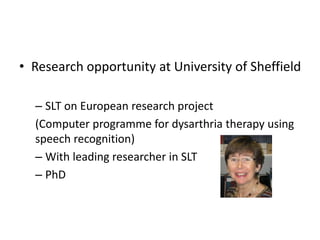
• Research opportunity at University of Sheffield
– SLT on European research project
(Computer programme for dysarthria therapy using
speech recognition)
– With leading researcher in SLT
– PhD
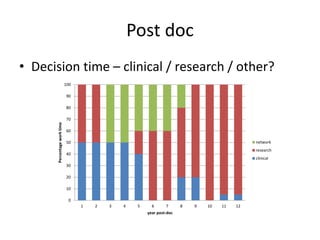
Post doc
• Decision time – clinical / research / other?
0
10
20
30
40
50
60
70
80
90
100
1 2 3 4 5 6 7 8 9 10 11 12
Percentageworktime
year post-doc
network
research
clinical
• Band 7 specialist SLT on stroke unit (2005-2010)
• Research associate working on project
developing speech recognition technology for
a communication aid (2005-2007)
• NIHR stroke research network – rehabilitation and community trials
manager in Trent region (2007-2013)
• NIHR RfPB grant – pilot RCT evaluating independent aphasia
therapy delivered via computer software (2009-2012) - CACTUS
• Combined:
– Knowledge of trials
– Clinical awareness of limited amounts of therapy can offer
– Interest in using technology as mode of delivery of SLT post stroke
• NIHR CLAHRC South Yorkshire – stroke theme and telehealth theme
(2010-2014)
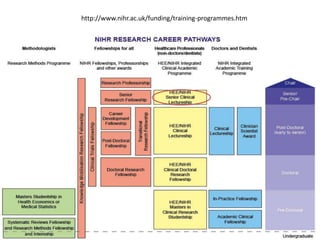
http://www.nihr.ac.uk/funding/training-programmes.htm
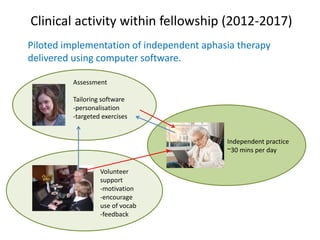
Assessment
Tailoring software
-personalisation
-targeted exercises
Independent practice
~30 mins per day
Volunteer
support
-motivation
-encourage
use of vocab
-feedback
Clinical activity within fellowship (2012-2017)
Piloted implementation of independent aphasia therapy
delivered using computer software.
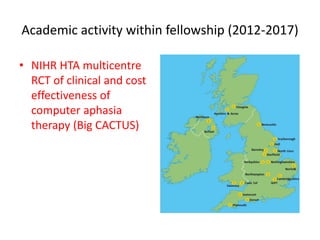
Academic activity within fellowship (2012-2017)
• NIHR HTA multicentre
RCT of clinical and cost
effectiveness of
computer aphasia
therapy (Big CACTUS)
Academic activity within fellowship (2012-2017)
• Building clinical research capacity:
– Masters students (MClinRes)
– PhD students
– Development of team of researchers
• Co-investigator on range of studies
– Focus on the rehabilitation of communication post stroke
– Focus on technological solutions
– Enabling people with aphasia to participate in stroke
rehabilitation research
• Stroke patient and public involvement
• Publications
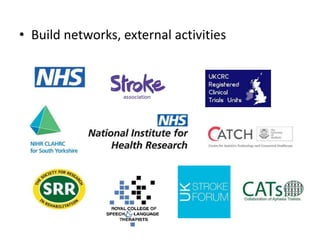
• Build networks, external activities
• Trustee for research and development
– Building research capacity of the profession
– Setting research priorities for profession
– Encouraging evidence based practice
Thank you for listening!

Dr Rebecca Palmer

  • 1.
    From post-doc topresent day Dr Rebecca Palmer
  • 2.
    Background • Speech andlanguage therapist • Qualified university Reading 1999 • Worked as generalist SLT in North Lincolnshire for 2.5 years • Interest in research: – Much of treatment based on theory and experience – Wanted to know more about what works – Interested in how we can improve the interventions we deliver to patients and improve understanding of what works for who and why.
  • 3.
    • Research opportunityat University of Sheffield – SLT on European research project (Computer programme for dysarthria therapy using speech recognition) – With leading researcher in SLT – PhD
  • 4.
    Post doc • Decisiontime – clinical / research / other? 0 10 20 30 40 50 60 70 80 90 100 1 2 3 4 5 6 7 8 9 10 11 12 Percentageworktime year post-doc network research clinical
  • 5.
    • Band 7specialist SLT on stroke unit (2005-2010) • Research associate working on project developing speech recognition technology for a communication aid (2005-2007)
  • 6.
    • NIHR strokeresearch network – rehabilitation and community trials manager in Trent region (2007-2013) • NIHR RfPB grant – pilot RCT evaluating independent aphasia therapy delivered via computer software (2009-2012) - CACTUS • Combined: – Knowledge of trials – Clinical awareness of limited amounts of therapy can offer – Interest in using technology as mode of delivery of SLT post stroke • NIHR CLAHRC South Yorkshire – stroke theme and telehealth theme (2010-2014)
  • 7.
  • 8.
    Assessment Tailoring software -personalisation -targeted exercises Independentpractice ~30 mins per day Volunteer support -motivation -encourage use of vocab -feedback Clinical activity within fellowship (2012-2017) Piloted implementation of independent aphasia therapy delivered using computer software.
  • 9.
    Academic activity withinfellowship (2012-2017) • NIHR HTA multicentre RCT of clinical and cost effectiveness of computer aphasia therapy (Big CACTUS)
  • 10.
    Academic activity withinfellowship (2012-2017) • Building clinical research capacity: – Masters students (MClinRes) – PhD students – Development of team of researchers • Co-investigator on range of studies – Focus on the rehabilitation of communication post stroke – Focus on technological solutions – Enabling people with aphasia to participate in stroke rehabilitation research • Stroke patient and public involvement • Publications
  • 11.
    • Build networks,external activities
  • 12.
    • Trustee forresearch and development – Building research capacity of the profession – Setting research priorities for profession – Encouraging evidence based practice
  • 13.
    Thank you forlistening!