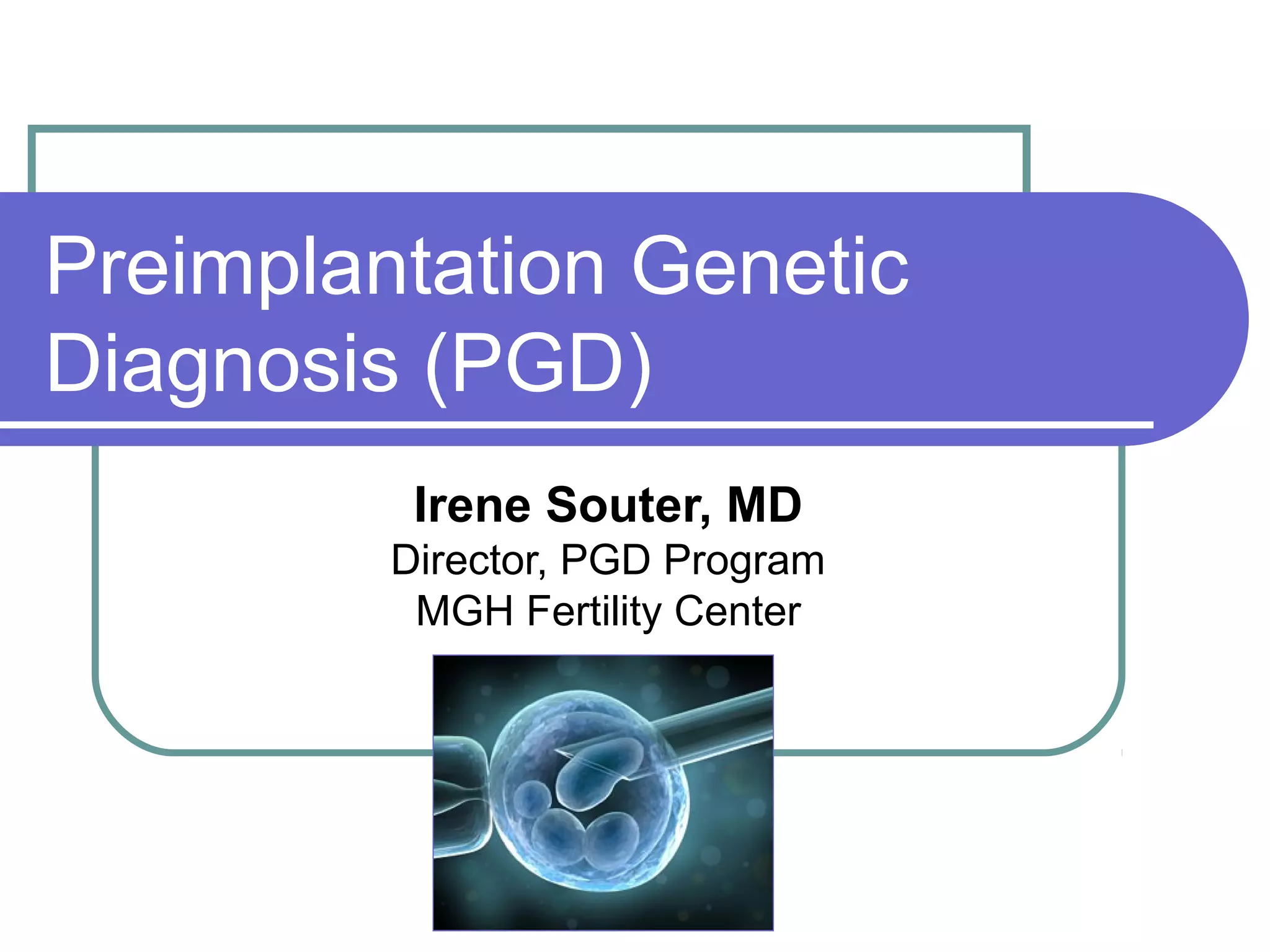
Preimplantation Genetic 
Diagnosis (PGD) 
Irene Souter, MD 
Director, PGD Program 
MGH Fertility Center
Pre-natal 
vs Pre-implantation diagnosis
Pre-natal Diagnosis 
Amniocentesis 
Chorionic Villus Sampling (CVS)
Pre-implantation Diagnosis 
 Introduced initially in 1990 
 Biopsy of a single cell per 
embryo, followed by its 
genetic diagnosis through 
different techniques (FISH, 
PCR, aCGH), and the 
subsequent replacement to 
the patient of those embryos 
classified by genetic 
diagnosis as normal.
PGD Indications 
Procedure is offered to couples: 
With known single gene 
disorders that can be 
detected by PGD 
With known chromosomal 
abnormalities that can be 
detected by PGD 
requesting sex selection for X-linked 
disorders
PGD Indications 
The procedure has also been offered to couples: 
undergoing IVF at risk for aneuploidy 
maternal age > 35 yo 
Prior trisomic conception 
with recurrent pregnancy losses 
Prior failed IVF cycles (>3 prior embryo transfers 
with high quality, morphologically normal embryos) 
Requesting PGD for HLA-typing (to allow selection of 
embryos that are histocompatible with live siblings) 
Requesting sex selection for “family balancing”
Single Gene Disorders
PGD Process 
Ovulation Induction 
Retrieval 
Fertilization 
Embryo Bx on Day-3 
Genetic Analysis 
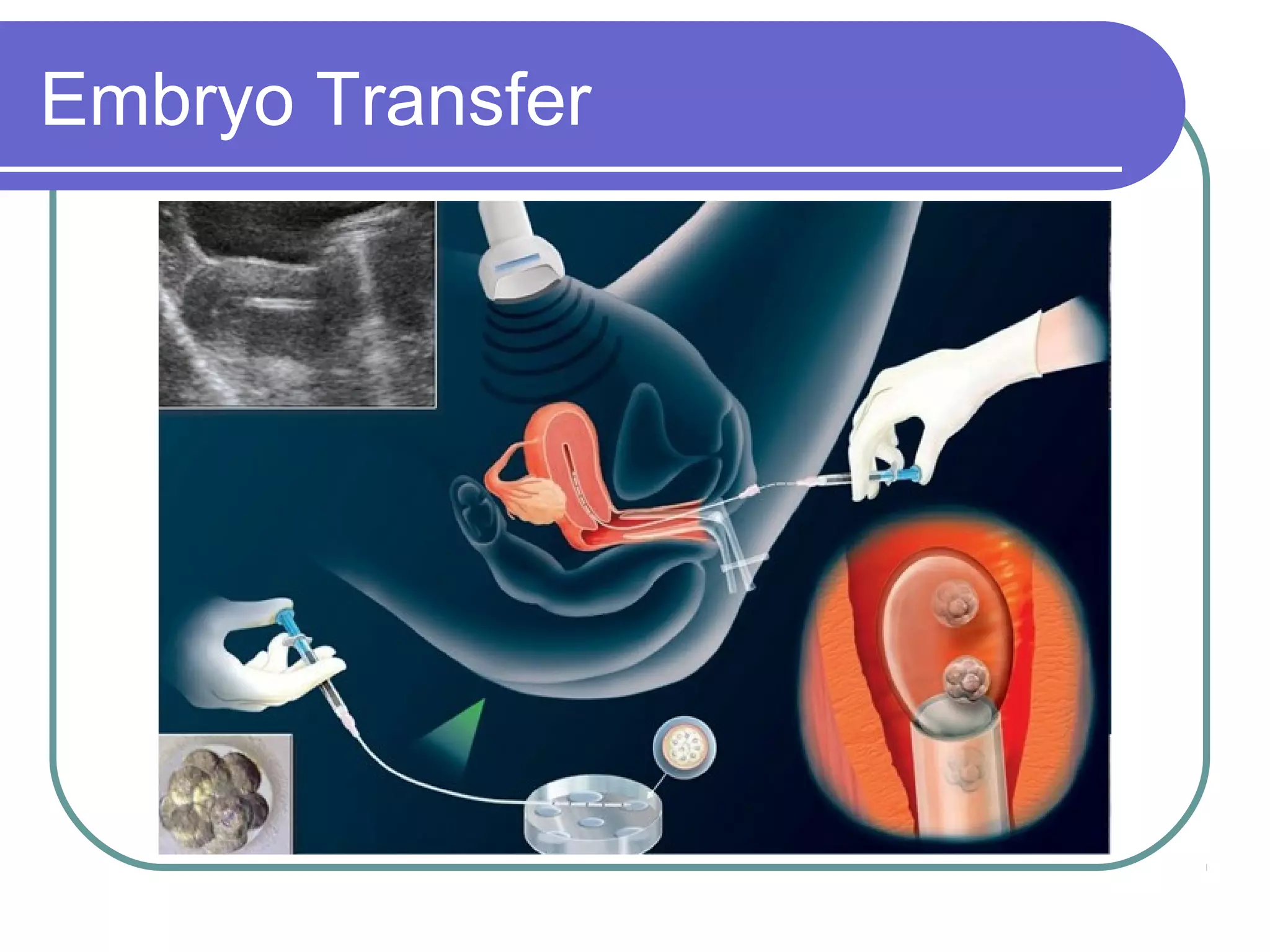
Embryo Transfer
Ovulation induction
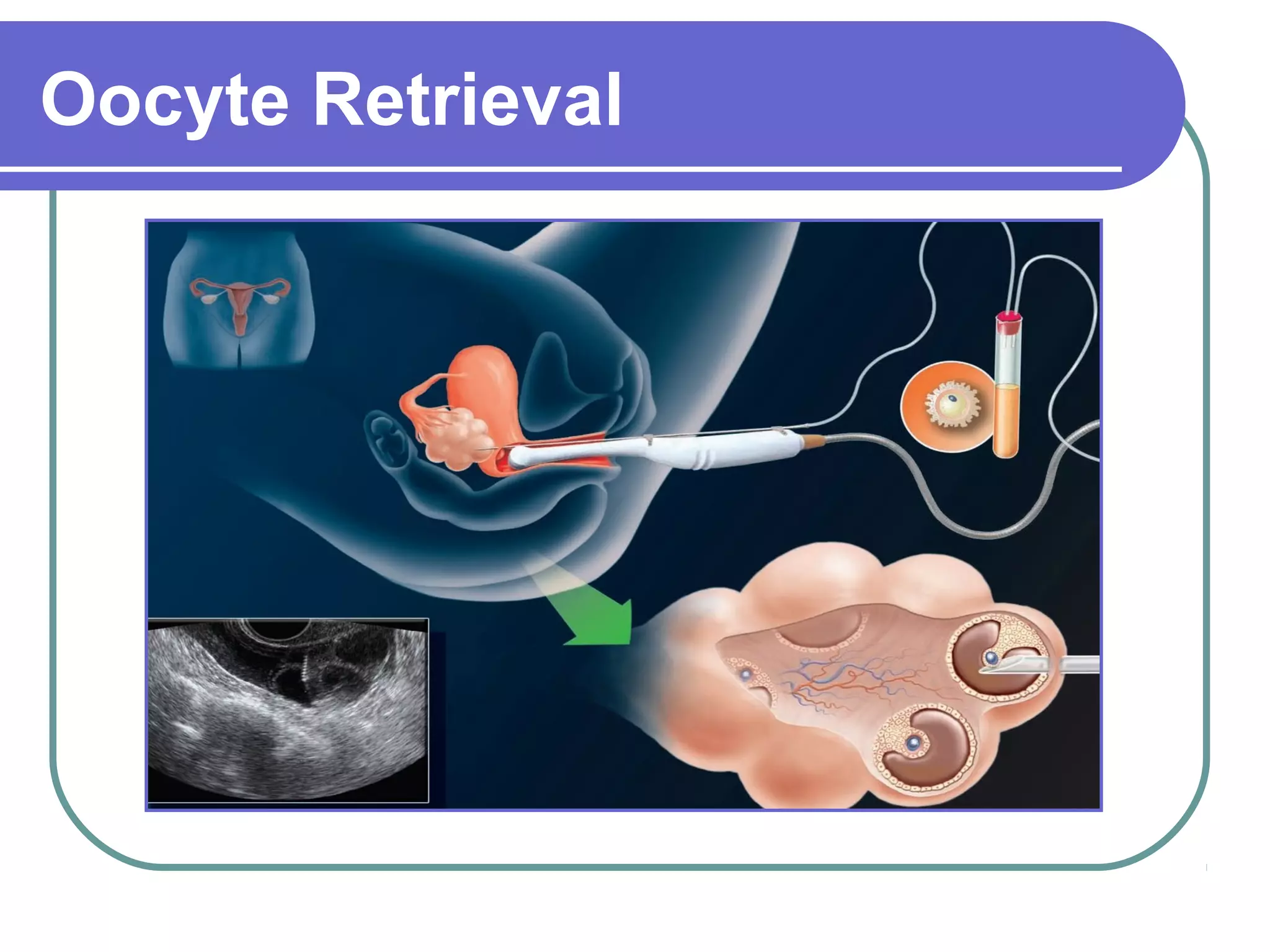
Oocyte Retrieval
Fertilization
Fertilization 
Conventional Insemination 
Intracytoplasmic Sperm Injection (ICSI)
Embryo Culture
Day 3/Cleavage Stage Embryo
Day 5/Blastocyst
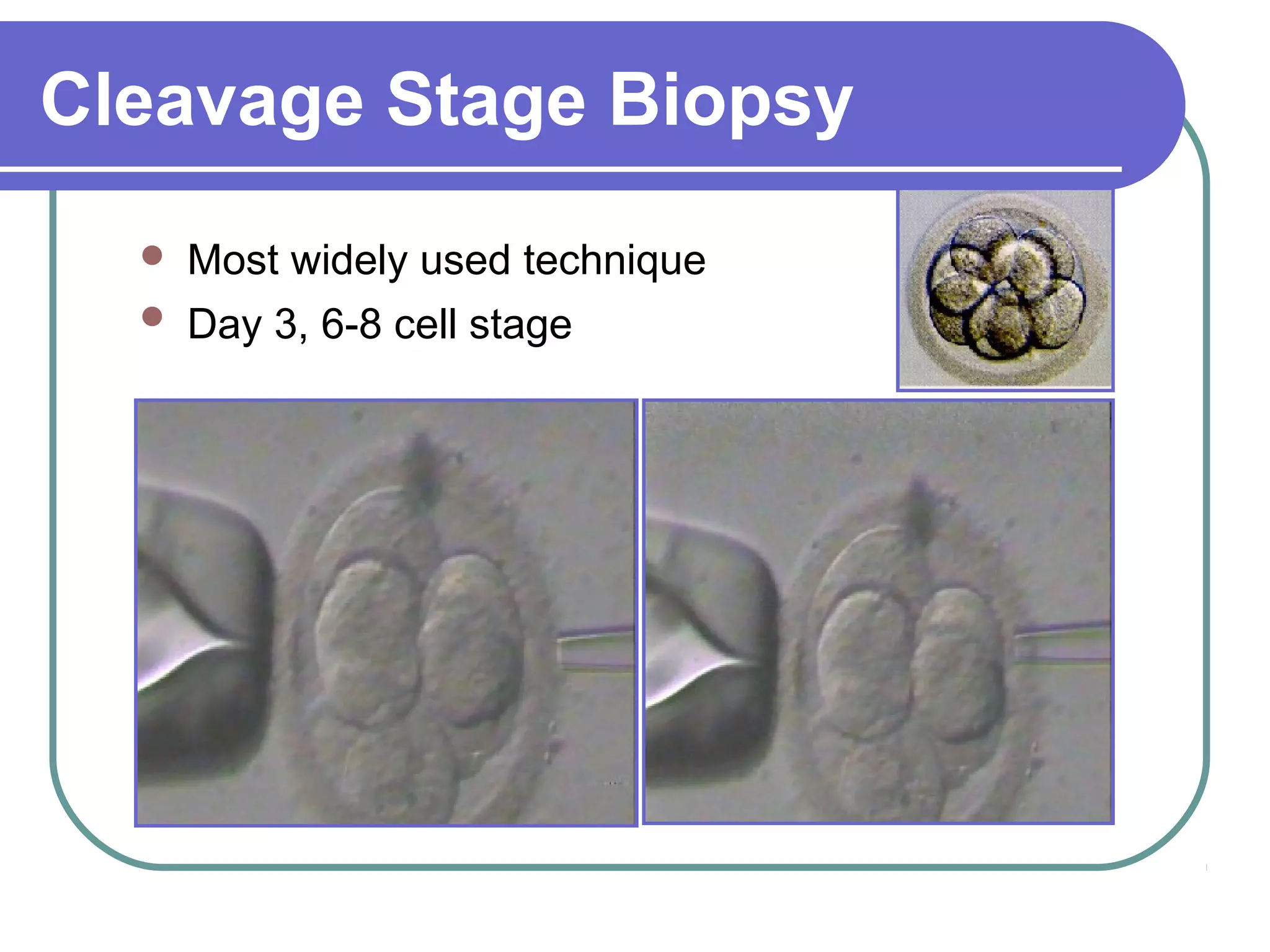
Cleavage Stage Biopsy 
 Most widely used technique 
 Day 3, 6-8 cell stage
Cleavage Stage Biopsy
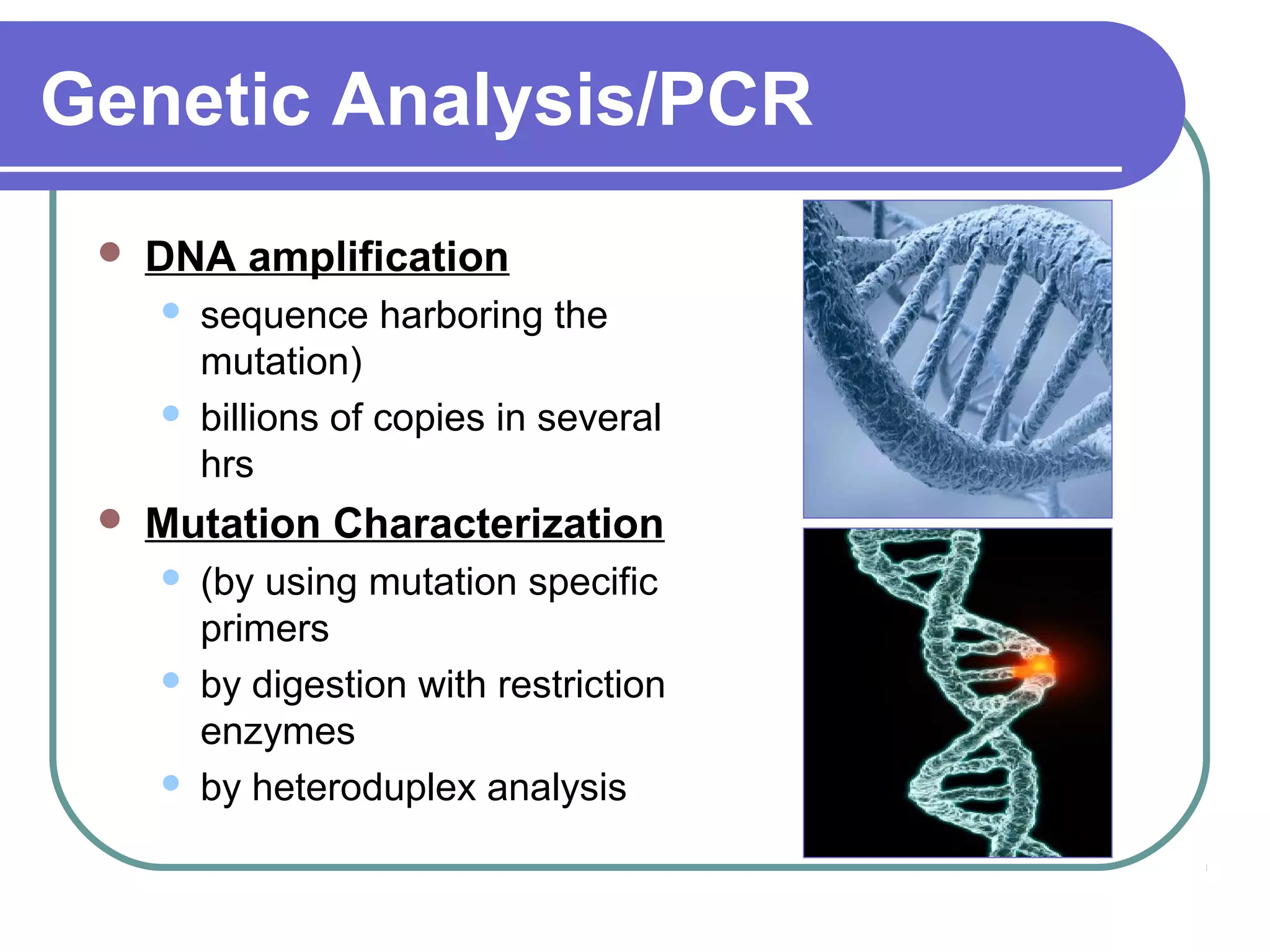
Genetic Analysis/PCR 
 DNA amplification 
 sequence harboring the 
mutation) 
 billions of copies in several 
hrs 
 Mutation Characterization 
 (by using mutation specific 
primers 
 by digestion with restriction 
enzymes 
 by heteroduplex analysis
Embryo Transfer
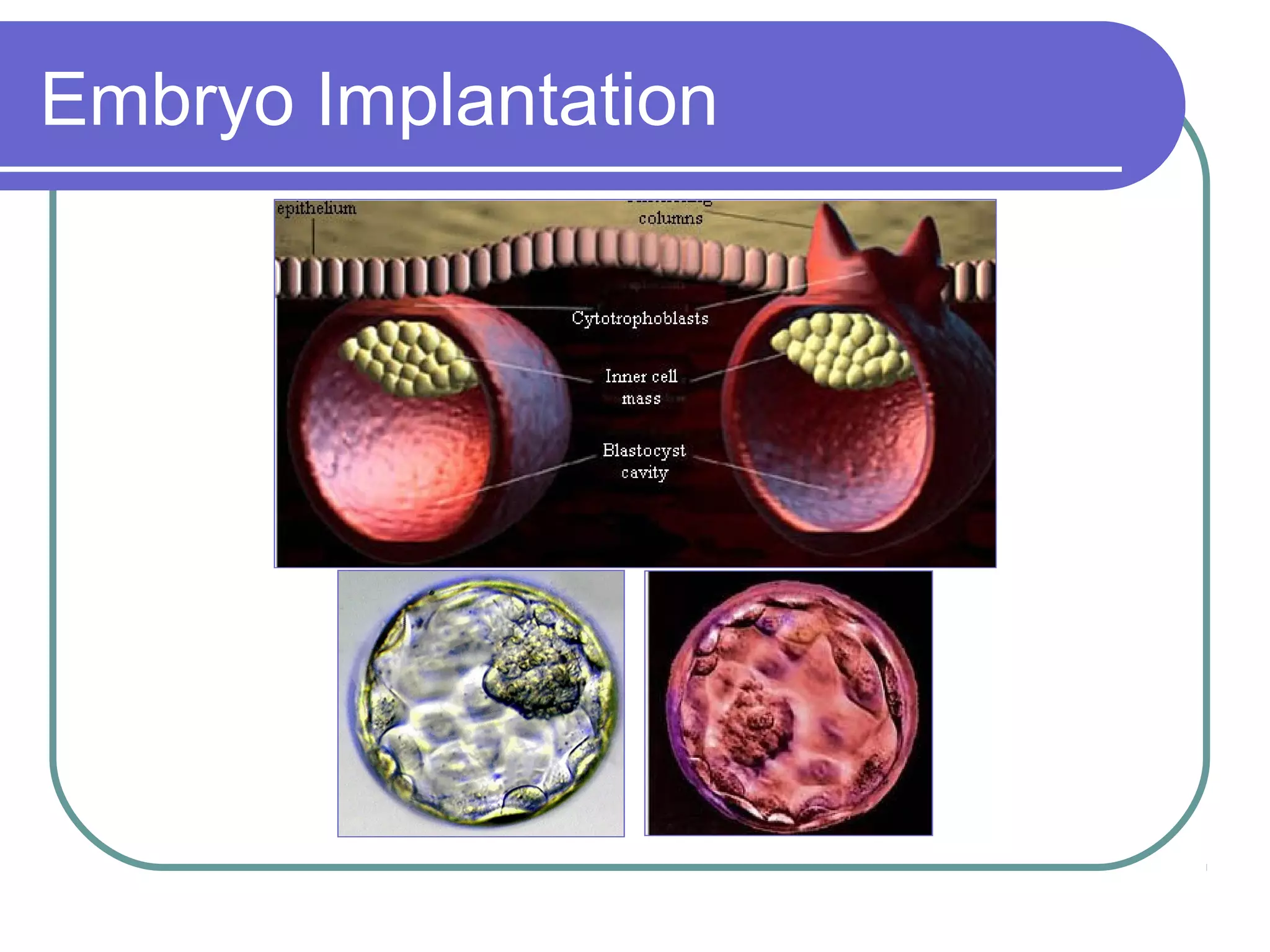
Embryo Implantation
Early Pregnancy
Can Mistakes Happen?
ESHRE-Misdiagnosis 
Single Gene Disorders 
 14 cases (0.3%), 86% PCR 
 8 babies born, 78% Prenatal Diagnosis 
Translocations (FISH) 
 3 cases, (0.08%) 
 No live births 
PGS (FISH) 
 10 cases, (0.08%) 
 One baby born with T-21 
SS 
 One case (0.2%), 46 XX, pregnancy terminated
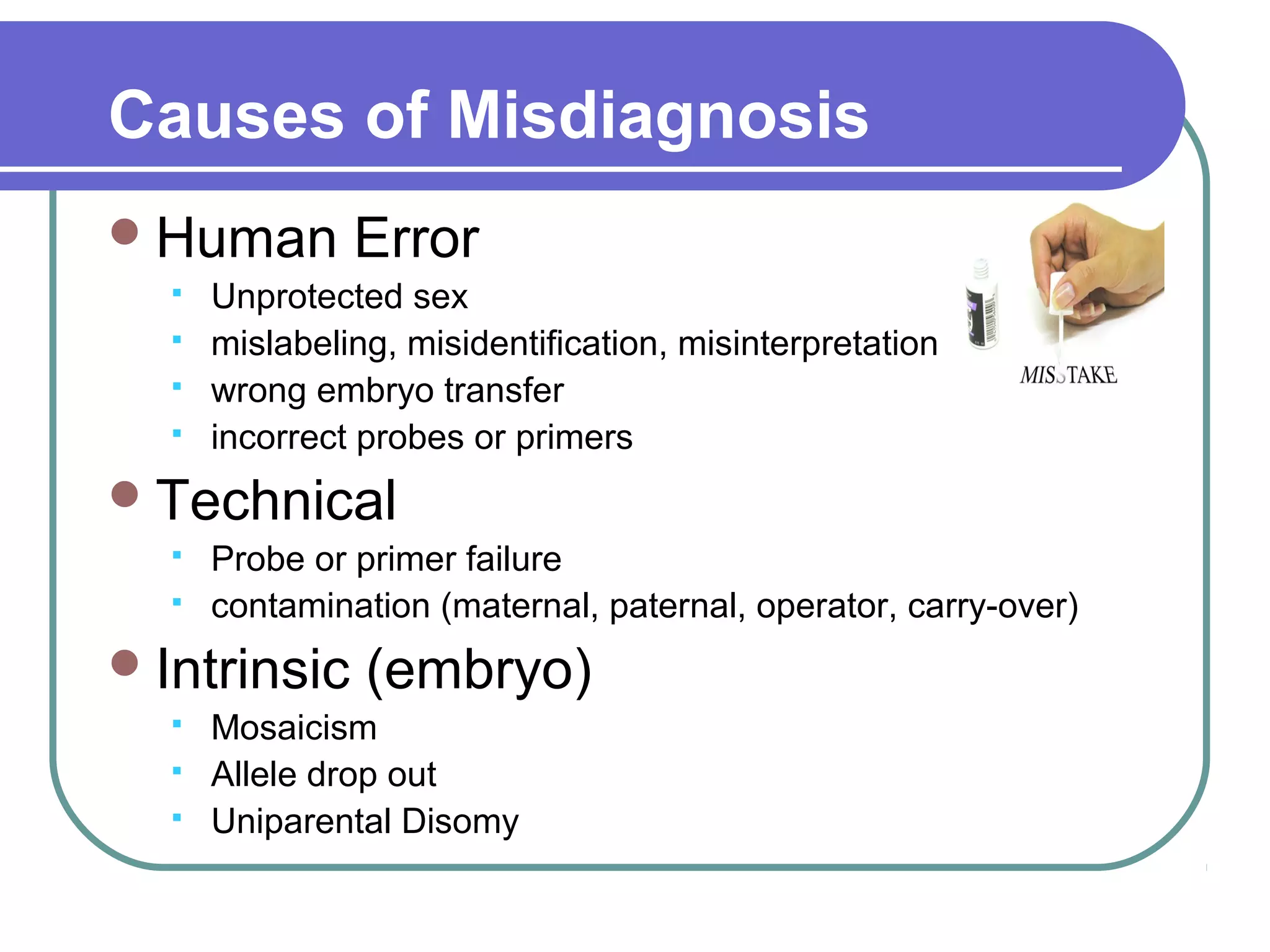
Causes of Misdiagnosis 
Human Error 
 Unprotected sex 
 mislabeling, misidentification, misinterpretation 
 wrong embryo transfer 
 incorrect probes or primers 
Technical 
 Probe or primer failure 
 contamination (maternal, paternal, operator, carry-over) 
Intrinsic (embryo) 
 Mosaicism 
 Allele drop out 
 Uniparental Disomy
Pre-natal Diagnosis
ESHRE-Delivery Outcomes 
 3163 deliveries 
 3841 children born 
 24% multiples, 96% twins 
 28% preterm births 
 17% singletons 
 67% twins 
 74% triplets 
 Mean Birth Weight: 
 3215 grs 
 2400 grs (twins) 
 Mean Length: 50.0 cm
PGD & Malformations 
ESHRE PGD Consortium, 2003 
Major malformations: 2.6% 
 Phocomelia and pulmonary deficiency, chylothorax, congenital hip 
dislocation, abdominal cystic mass, pes equinivarus, exencephaly 
Minor malformations: 1.4% 
 syndactyly, hydrocele testis, ASD, mongolian spot, sacral dimple 
Liebaers et al, Belgium 2010 
Major malformations: 2.1% vs ICSI: 3.4% 
 chylothorax, VSD, oeasophageal atresia, cataract, umbilical 
hernia, ichthyosis, cardiopathy
ESHRE-Single Gene Disorders 
 Most common autosomal recessive disorder 
 b-thalassemia/sickle cell anemia, CF, SMA 
 Most common autosomal dominant disorder 
 Myotonic Dystrophy, Huntington Disease, NF-1, Charcot- 
Marie-Tooth 
 Most common X-linked disorder 
 Fragile X, DMD, and Becker Muscular Dystrophy 
 Hemophilia A and B 
 3530 Cycles, dx: 85.8% of the biopsied embryos 
 CPR: 23% per OR, 29.5% per ET
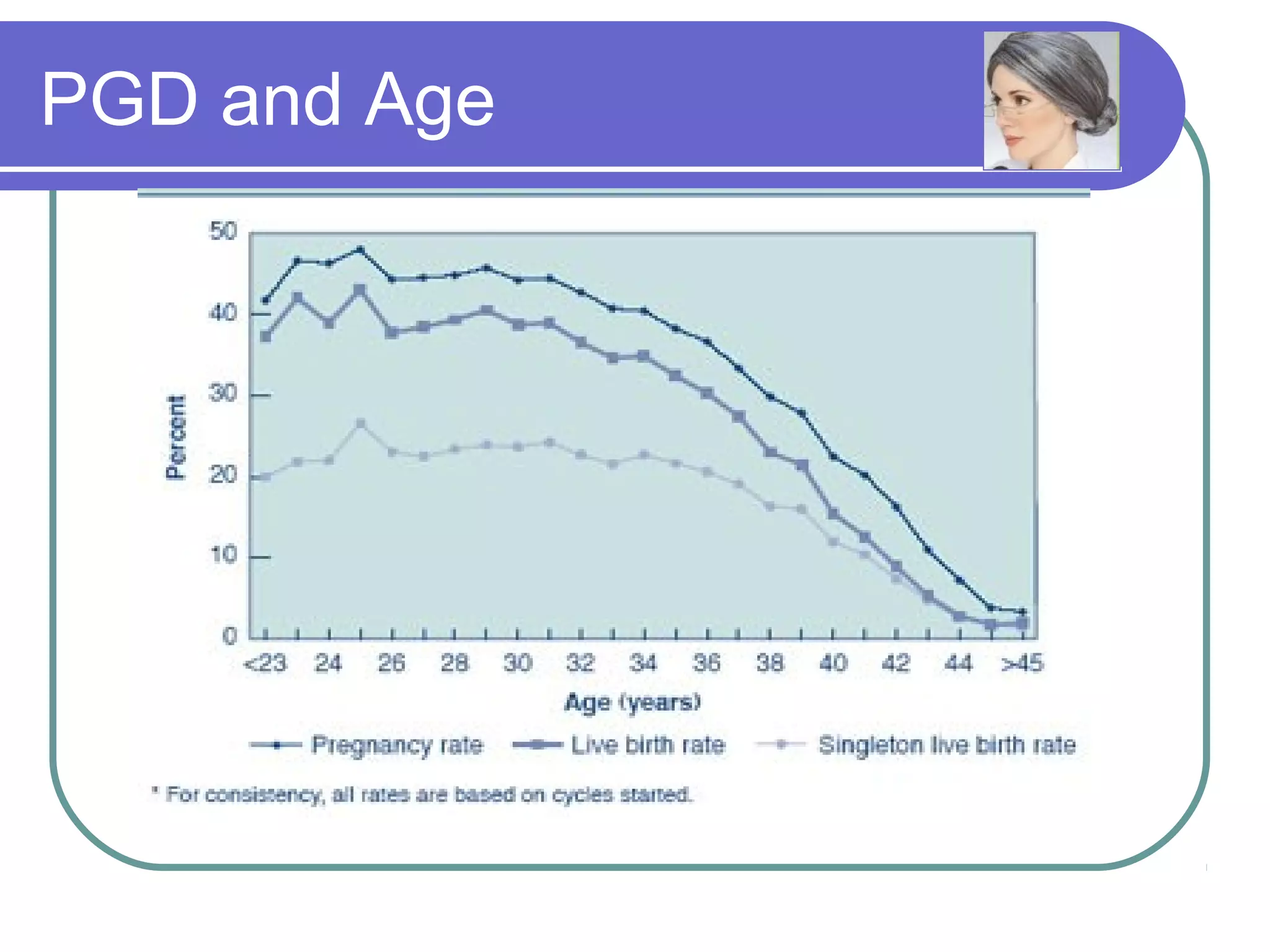
PGD and Age
PGD and Age
Conclusions 
For couples at risk for producing offspring 
with either debilitating monogenic 
disorders or chromosomal abnormalities 
IVF/PGD represents a major scientific 
advance.
Conclusions 
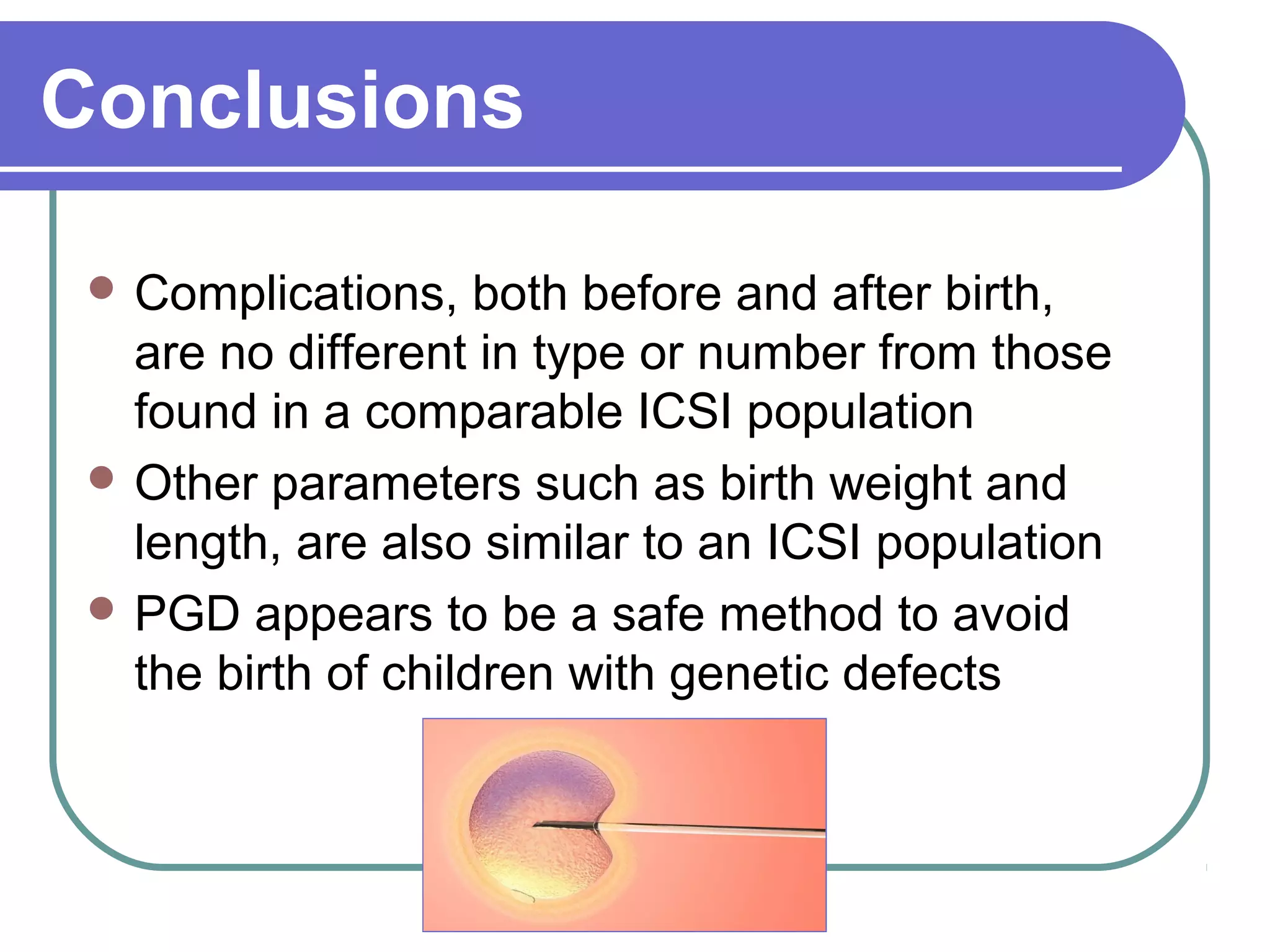
Complications, both before and after birth, 
are no different in type or number from those 
found in a comparable ICSI population 
Other parameters such as birth weight and 
length, are also similar to an ICSI population 
PGD appears to be a safe method to avoid 
the birth of children with genetic defects
Conclusions 
• Before PGD is performed, genetic 
counseling must be provided to ensure that 
patients fully understand the 
 risk for having an affected child 
 the impact of the disease 
 the available options 
 the multiple technical limitations including the 
possibility of an erroneous result 
• Prenatal diagnostic testing is strongly 
encouraged to confirm the results of PGD
What’s in the Future? 
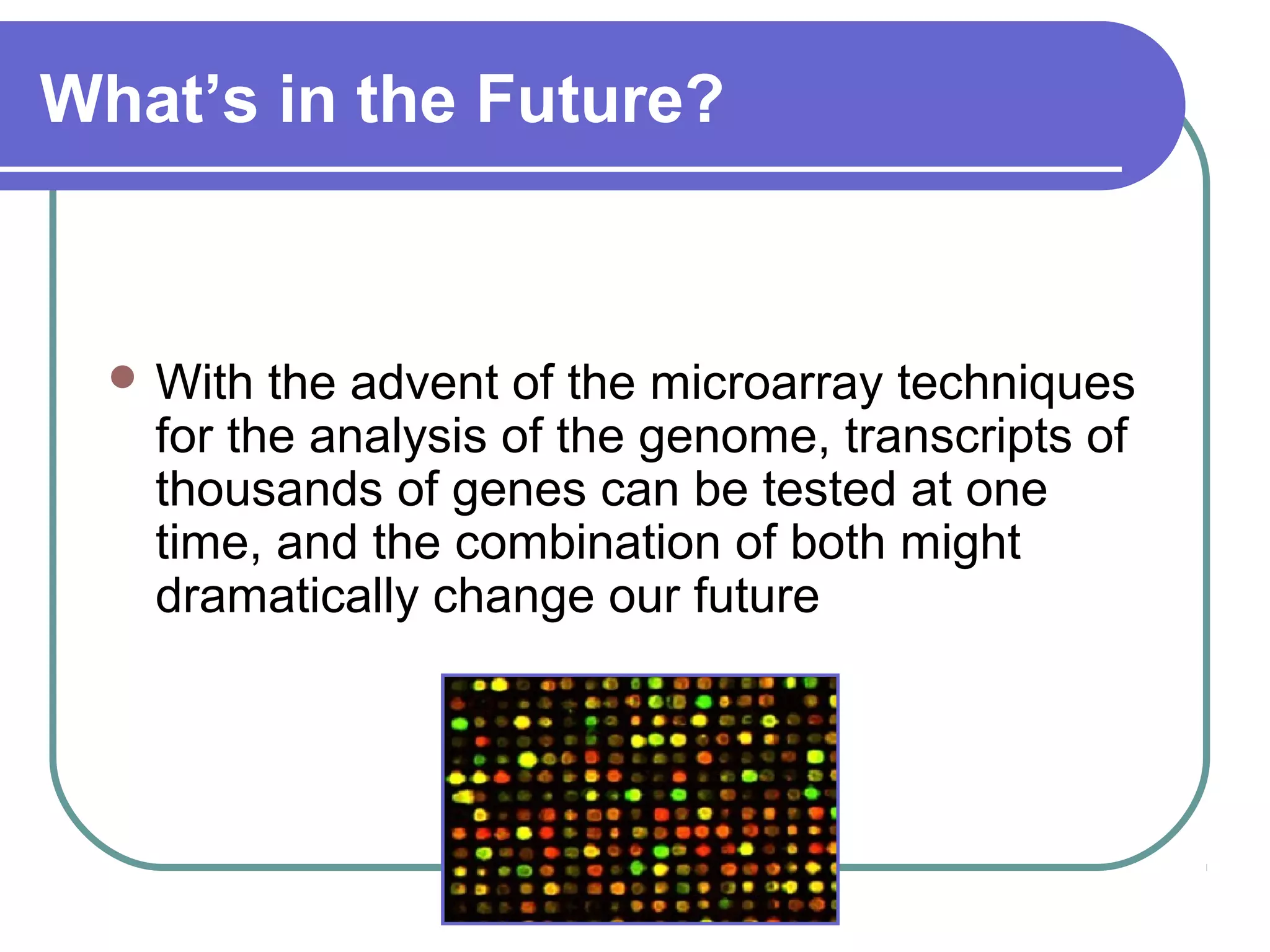
With the advent of the microarray techniques 
for the analysis of the genome, transcripts of 
thousands of genes can be tested at one 
time, and the combination of both might 
dramatically change our future
Thank You!

Dr. irene souter pgd stickler foundation (5)

  • 1.
    Preimplantation Genetic Diagnosis(PGD) Irene Souter, MD Director, PGD Program MGH Fertility Center
  • 2.
  • 3.
    Pre-natal Diagnosis Amniocentesis Chorionic Villus Sampling (CVS)
  • 4.
    Pre-implantation Diagnosis Introduced initially in 1990  Biopsy of a single cell per embryo, followed by its genetic diagnosis through different techniques (FISH, PCR, aCGH), and the subsequent replacement to the patient of those embryos classified by genetic diagnosis as normal.
  • 5.
    PGD Indications Procedureis offered to couples: With known single gene disorders that can be detected by PGD With known chromosomal abnormalities that can be detected by PGD requesting sex selection for X-linked disorders
  • 6.
    PGD Indications Theprocedure has also been offered to couples: undergoing IVF at risk for aneuploidy maternal age > 35 yo Prior trisomic conception with recurrent pregnancy losses Prior failed IVF cycles (>3 prior embryo transfers with high quality, morphologically normal embryos) Requesting PGD for HLA-typing (to allow selection of embryos that are histocompatible with live siblings) Requesting sex selection for “family balancing”
  • 7.
  • 8.
    PGD Process OvulationInduction Retrieval Fertilization Embryo Bx on Day-3 Genetic Analysis Embryo Transfer
  • 9.
  • 10.
  • 11.
  • 12.
    Fertilization Conventional Insemination Intracytoplasmic Sperm Injection (ICSI)
  • 13.
  • 14.
  • 15.
  • 16.
    Cleavage Stage Biopsy  Most widely used technique  Day 3, 6-8 cell stage
  • 17.
  • 18.
    Genetic Analysis/PCR DNA amplification  sequence harboring the mutation)  billions of copies in several hrs  Mutation Characterization  (by using mutation specific primers  by digestion with restriction enzymes  by heteroduplex analysis
  • 19.
  • 20.
  • 21.
  • 22.
  • 23.
    ESHRE-Misdiagnosis Single GeneDisorders  14 cases (0.3%), 86% PCR  8 babies born, 78% Prenatal Diagnosis Translocations (FISH)  3 cases, (0.08%)  No live births PGS (FISH)  10 cases, (0.08%)  One baby born with T-21 SS  One case (0.2%), 46 XX, pregnancy terminated
  • 24.
    Causes of Misdiagnosis Human Error  Unprotected sex  mislabeling, misidentification, misinterpretation  wrong embryo transfer  incorrect probes or primers Technical  Probe or primer failure  contamination (maternal, paternal, operator, carry-over) Intrinsic (embryo)  Mosaicism  Allele drop out  Uniparental Disomy
  • 25.
  • 26.
    ESHRE-Delivery Outcomes 3163 deliveries  3841 children born  24% multiples, 96% twins  28% preterm births  17% singletons  67% twins  74% triplets  Mean Birth Weight:  3215 grs  2400 grs (twins)  Mean Length: 50.0 cm
  • 27.
    PGD & Malformations ESHRE PGD Consortium, 2003 Major malformations: 2.6%  Phocomelia and pulmonary deficiency, chylothorax, congenital hip dislocation, abdominal cystic mass, pes equinivarus, exencephaly Minor malformations: 1.4%  syndactyly, hydrocele testis, ASD, mongolian spot, sacral dimple Liebaers et al, Belgium 2010 Major malformations: 2.1% vs ICSI: 3.4%  chylothorax, VSD, oeasophageal atresia, cataract, umbilical hernia, ichthyosis, cardiopathy
  • 28.
    ESHRE-Single Gene Disorders  Most common autosomal recessive disorder  b-thalassemia/sickle cell anemia, CF, SMA  Most common autosomal dominant disorder  Myotonic Dystrophy, Huntington Disease, NF-1, Charcot- Marie-Tooth  Most common X-linked disorder  Fragile X, DMD, and Becker Muscular Dystrophy  Hemophilia A and B  3530 Cycles, dx: 85.8% of the biopsied embryos  CPR: 23% per OR, 29.5% per ET
  • 29.
  • 30.
  • 31.
    Conclusions For couplesat risk for producing offspring with either debilitating monogenic disorders or chromosomal abnormalities IVF/PGD represents a major scientific advance.
  • 32.
    Conclusions Complications, bothbefore and after birth, are no different in type or number from those found in a comparable ICSI population Other parameters such as birth weight and length, are also similar to an ICSI population PGD appears to be a safe method to avoid the birth of children with genetic defects
  • 33.
    Conclusions • BeforePGD is performed, genetic counseling must be provided to ensure that patients fully understand the  risk for having an affected child  the impact of the disease  the available options  the multiple technical limitations including the possibility of an erroneous result • Prenatal diagnostic testing is strongly encouraged to confirm the results of PGD
  • 34.
    What’s in theFuture? With the advent of the microarray techniques for the analysis of the genome, transcripts of thousands of genes can be tested at one time, and the combination of both might dramatically change our future
  • 35.