Double entry for cash transactions
Sanjaya Jayasundara
B.Sc.(Finance) Sp.
University of Sri Jayewardenepura,
Investment Advisor, International School Teacher
071 25 45 001
Content
* Double Entry System
* Structure of an Account
* Cash Transactions
* Initial Capital & Additional Capital
* Cash Purchases
* Cash Sales
* Payment of expenses
* Purchases of Fixed Assets
Sanjaya Jayasundara Accounting
Double Entry System
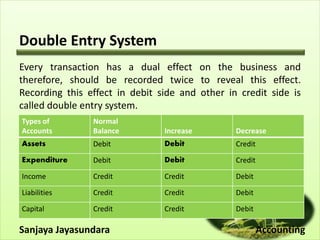
Every transaction has a dual effect on the business and
therefore, should be recorded twice to reveal this effect.
Recording this effect in debit side and other in credit side is
called double entry system.
Sanjaya Jayasundara Accounting
Types of
Accounts
Normal
Balance Increase Decrease
Assets Debit Debit Credit
Expenditure Debit Debit Credit
Income Credit Credit Debit
Liabilities Credit Credit Debit
Capital Credit Credit Debit
Account
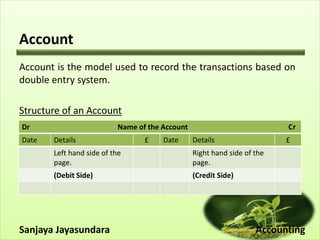
Account is the model used to record the transactions based on
double entry system.
Structure of an Account
Sanjaya Jayasundara Accounting
Date Details £ Date Details £
Left hand side of the
page.
Right hand side of the
page.
(Debit Side) (Credit Side)
Dr Name of the Account Cr
Providing Initial Capital or Additional Capital
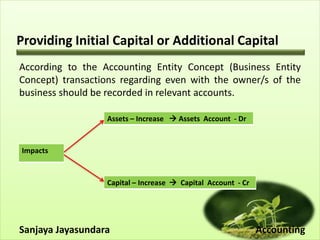
According to the Accounting Entity Concept (Business Entity
Concept) transactions regarding even with the owner/s of the
business should be recorded in relevant accounts.
Sanjaya Jayasundara Accounting
Impacts
Capital – Increase  Capital Account - Cr
Assets – Increase  Assets Account - Dr
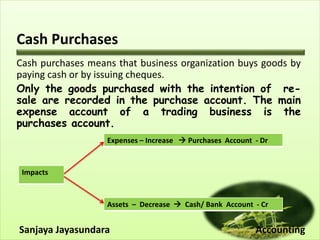
Cash Purchases
Cash purchases means that business organization buys goods by
paying cash or by issuing cheques.
Only the goods purchased with the intention of re-
sale are recorded in the purchase account. The main
expense account of a trading business is the
purchases account.
Sanjaya Jayasundara Accounting
Impacts
Assets – Decrease  Cash/ Bank Account - Cr
Expenses – Increase  Purchases Account - Dr
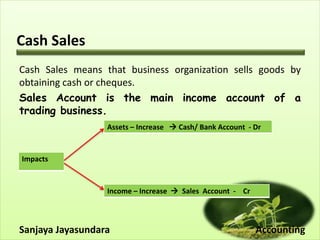
Cash Sales
Cash Sales means that business organization sells goods by
obtaining cash or cheques.
Sales Account is the main income account of a
trading business.
Sanjaya Jayasundara Accounting
Impacts
Income – Increase  Sales Account - Cr
Assets – Increase  Cash/ Bank Account - Dr
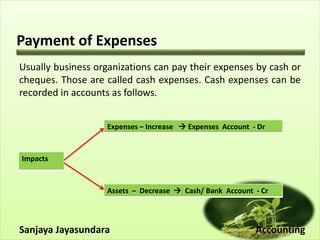
Payment of Expenses
Usually business organizations can pay their expenses by cash or
cheques. Those are called cash expenses. Cash expenses can be
recorded in accounts as follows.
Sanjaya Jayasundara Accounting
Impacts
Assets – Decrease  Cash/ Bank Account - Cr
Expenses – Increase  Expenses Account - Dr
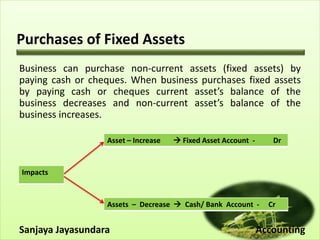
Purchases of Fixed Assets
Business can purchase non-current assets (fixed assets) by
paying cash or cheques. When business purchases fixed assets
by paying cash or cheques current asset’s balance of the
business decreases and non-current asset’s balance of the
business increases.
Sanjaya Jayasundara Accounting
Impacts
Assets – Decrease  Cash/ Bank Account - Cr
Asset – Increase  Fixed Asset Account - Dr
“The best investment is education…”
All the best…!
Sanjaya Jayasundara

double entry for cash transactions

  • 1.
    Double entry forcash transactions Sanjaya Jayasundara B.Sc.(Finance) Sp. University of Sri Jayewardenepura, Investment Advisor, International School Teacher 071 25 45 001
  • 2.
    Content * Double EntrySystem * Structure of an Account * Cash Transactions * Initial Capital & Additional Capital * Cash Purchases * Cash Sales * Payment of expenses * Purchases of Fixed Assets Sanjaya Jayasundara Accounting
  • 3.
    Double Entry System Everytransaction has a dual effect on the business and therefore, should be recorded twice to reveal this effect. Recording this effect in debit side and other in credit side is called double entry system. Sanjaya Jayasundara Accounting Types of Accounts Normal Balance Increase Decrease Assets Debit Debit Credit Expenditure Debit Debit Credit Income Credit Credit Debit Liabilities Credit Credit Debit Capital Credit Credit Debit
  • 4.
    Account Account is themodel used to record the transactions based on double entry system. Structure of an Account Sanjaya Jayasundara Accounting Date Details £ Date Details £ Left hand side of the page. Right hand side of the page. (Debit Side) (Credit Side) Dr Name of the Account Cr
  • 5.
    Providing Initial Capitalor Additional Capital According to the Accounting Entity Concept (Business Entity Concept) transactions regarding even with the owner/s of the business should be recorded in relevant accounts. Sanjaya Jayasundara Accounting Impacts Capital – Increase  Capital Account - Cr Assets – Increase  Assets Account - Dr
  • 6.
    Cash Purchases Cash purchasesmeans that business organization buys goods by paying cash or by issuing cheques. Only the goods purchased with the intention of re- sale are recorded in the purchase account. The main expense account of a trading business is the purchases account. Sanjaya Jayasundara Accounting Impacts Assets – Decrease  Cash/ Bank Account - Cr Expenses – Increase  Purchases Account - Dr
  • 7.
    Cash Sales Cash Salesmeans that business organization sells goods by obtaining cash or cheques. Sales Account is the main income account of a trading business. Sanjaya Jayasundara Accounting Impacts Income – Increase  Sales Account - Cr Assets – Increase  Cash/ Bank Account - Dr
  • 8.
    Payment of Expenses Usuallybusiness organizations can pay their expenses by cash or cheques. Those are called cash expenses. Cash expenses can be recorded in accounts as follows. Sanjaya Jayasundara Accounting Impacts Assets – Decrease  Cash/ Bank Account - Cr Expenses – Increase  Expenses Account - Dr
  • 9.
    Purchases of FixedAssets Business can purchase non-current assets (fixed assets) by paying cash or cheques. When business purchases fixed assets by paying cash or cheques current asset’s balance of the business decreases and non-current asset’s balance of the business increases. Sanjaya Jayasundara Accounting Impacts Assets – Decrease  Cash/ Bank Account - Cr Asset – Increase  Fixed Asset Account - Dr
  • 10.
    “The best investmentis education…” All the best…! Sanjaya Jayasundara