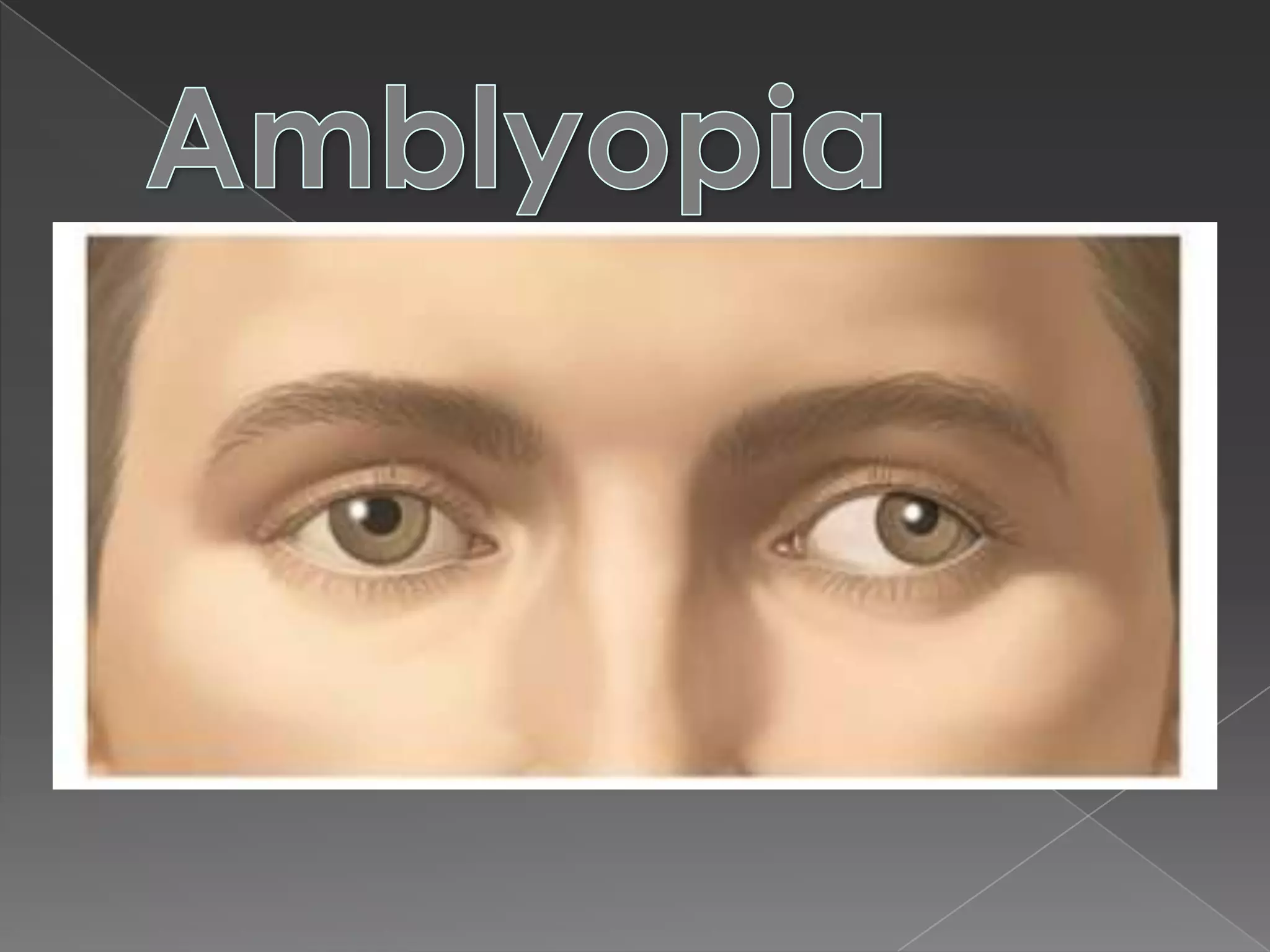
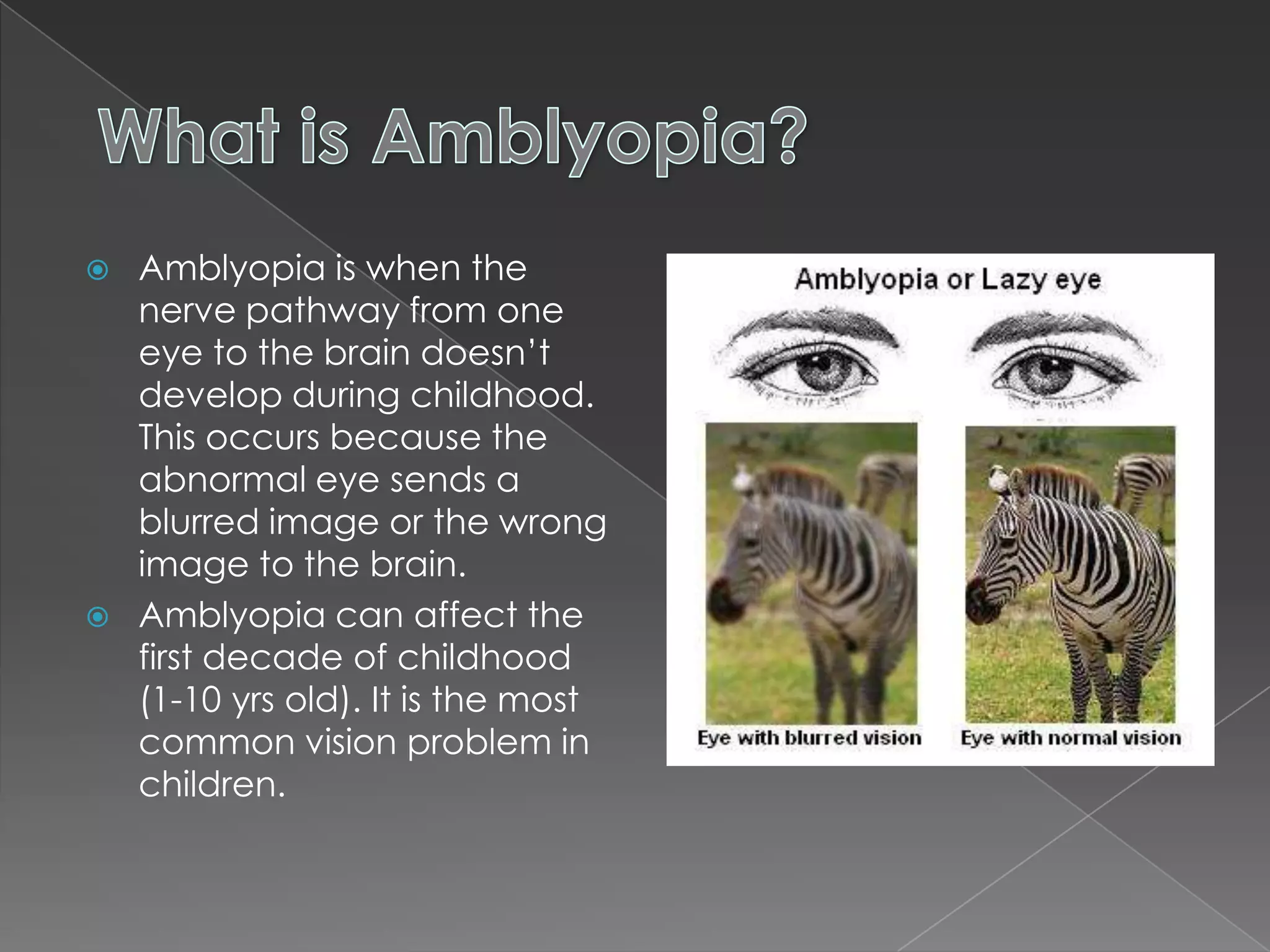
   Amblyopia is when the
    nerve pathway from one
    eye to the brain doesn’t
    develop during childhood.
    This occurs because the
    abnormal eye sends a
    blurred image or the wrong
    image to the brain.
   Amblyopia can affect the
    first decade of childhood
    (1-10 yrs old). It is the most
    common vision problem in
    children.
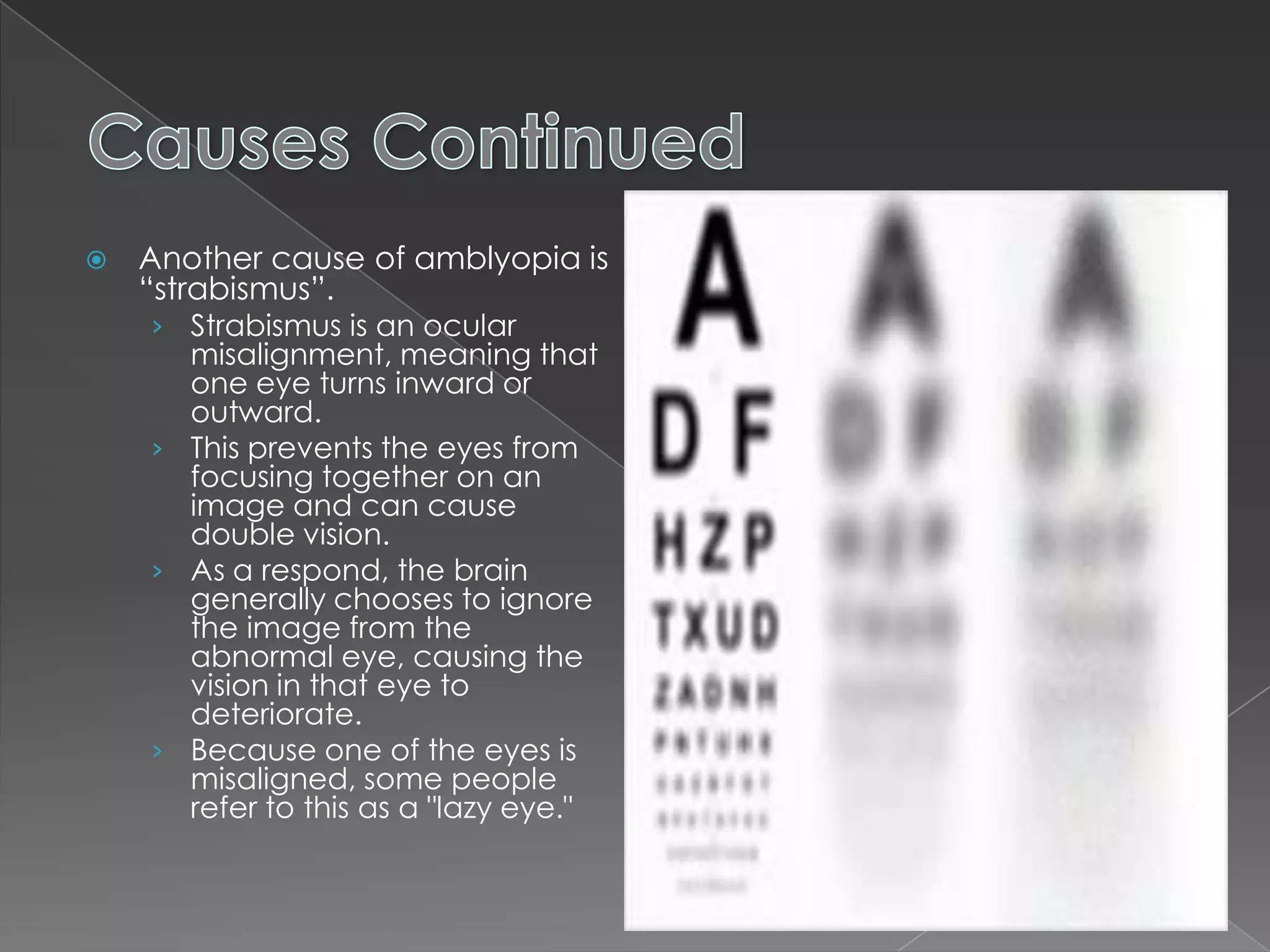
   Amblyopia usually starts when one eye
    has much better focus than the other
    eye.
    › For example: one eye might be very
     nearsighted or have a lot of astigmatism,
     while the other does not. When the brain is
     confronted with both a blurry image and a
     clear image, it will begin to ignore the blurry
     image. If this goes on for months or years, the
     vision in the eye that sees the blurry image
     will deteriorate.
   Another cause of amblyopia is
    “strabismus”.
    › Strabismus is an ocular
      misalignment, meaning that
      one eye turns inward or
      outward.
    › This prevents the eyes from
      focusing together on an
      image and can cause
      double vision.
    › As a respond, the brain
      generally chooses to ignore
      the image from the
      abnormal eye, causing the
      vision in that eye to
      deteriorate.
    › Because one of the eyes is
      misaligned, some people
      refer to this as a "lazy eye."
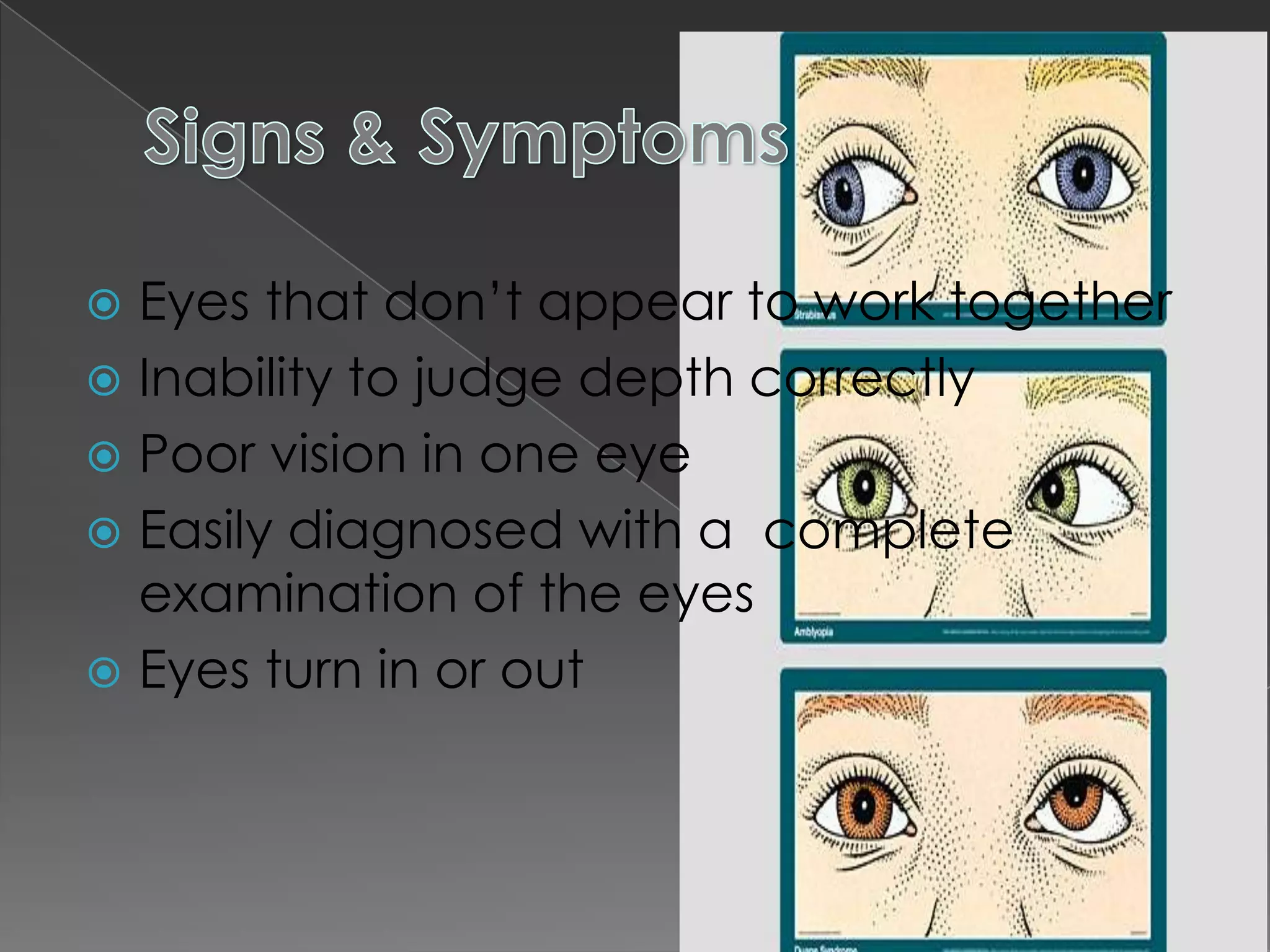
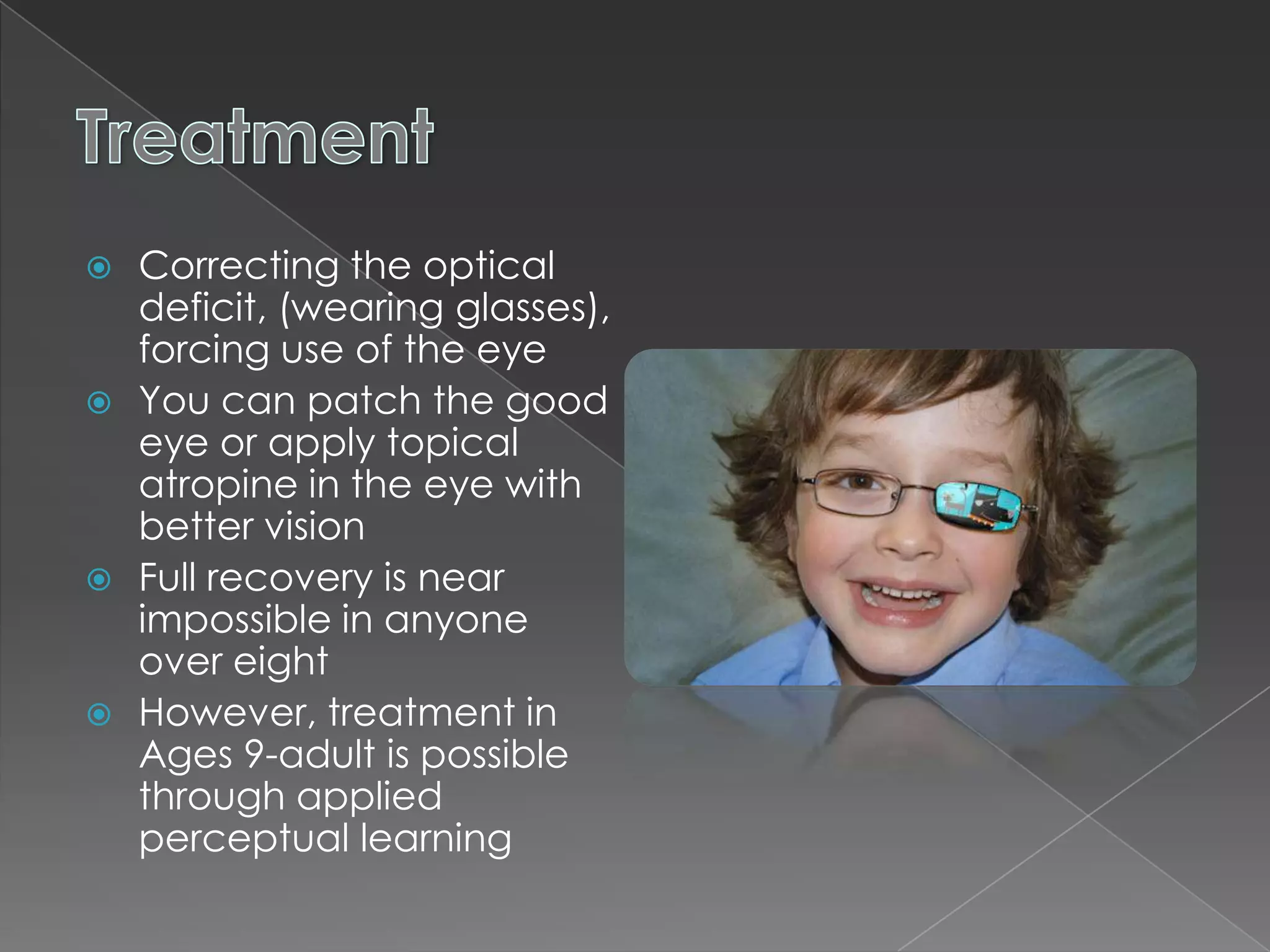
 Eyes that don’t appear to work together
 Inability to judge depth correctly
 Poor vision in one eye
 Easily diagnosed with a complete
  examination of the eyes
 Eyes turn in or out
 Correcting the optical
  deficit, (wearing glasses),
  forcing use of the eye
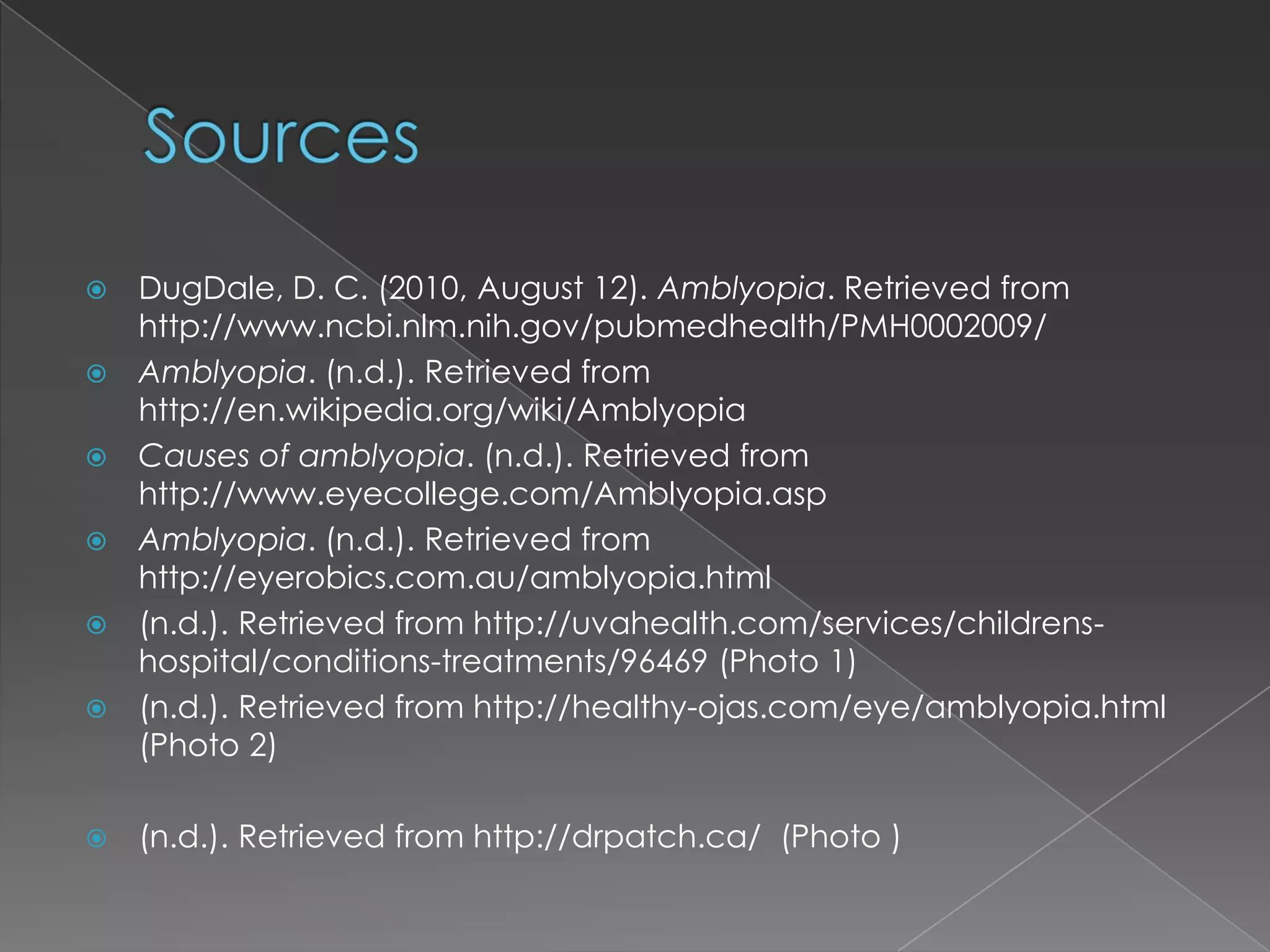
 You can patch the good
  eye or apply topical
  atropine in the eye with
  better vision
 Full recovery is near
  impossible in anyone
  over eight
 However, treatment in
  Ages 9-adult is possible
  through applied
  perceptual learning
   DugDale, D. C. (2010, August 12). Amblyopia. Retrieved from
    http://www.ncbi.nlm.nih.gov/pubmedhealth/PMH0002009/
   Amblyopia. (n.d.). Retrieved from
    http://en.wikipedia.org/wiki/Amblyopia
   Causes of amblyopia. (n.d.). Retrieved from
    http://www.eyecollege.com/Amblyopia.asp
   Amblyopia. (n.d.). Retrieved from
    http://eyerobics.com.au/amblyopia.html
   (n.d.). Retrieved from http://uvahealth.com/services/childrens-
    hospital/conditions-treatments/96469 (Photo 1)
   (n.d.). Retrieved from http://healthy-ojas.com/eye/amblyopia.html
    (Photo 2)

   (n.d.). Retrieved from http://drpatch.ca/ (Photo )

Amblyopia

  • 2.
    Amblyopia is when the nerve pathway from one eye to the brain doesn’t develop during childhood. This occurs because the abnormal eye sends a blurred image or the wrong image to the brain.  Amblyopia can affect the first decade of childhood (1-10 yrs old). It is the most common vision problem in children.
  • 3.
    Amblyopia usually starts when one eye has much better focus than the other eye. › For example: one eye might be very nearsighted or have a lot of astigmatism, while the other does not. When the brain is confronted with both a blurry image and a clear image, it will begin to ignore the blurry image. If this goes on for months or years, the vision in the eye that sees the blurry image will deteriorate.
  • 4.
    Another cause of amblyopia is “strabismus”. › Strabismus is an ocular misalignment, meaning that one eye turns inward or outward. › This prevents the eyes from focusing together on an image and can cause double vision. › As a respond, the brain generally chooses to ignore the image from the abnormal eye, causing the vision in that eye to deteriorate. › Because one of the eyes is misaligned, some people refer to this as a "lazy eye."
  • 5.
     Eyes thatdon’t appear to work together  Inability to judge depth correctly  Poor vision in one eye  Easily diagnosed with a complete examination of the eyes  Eyes turn in or out
  • 6.
     Correcting theoptical deficit, (wearing glasses), forcing use of the eye  You can patch the good eye or apply topical atropine in the eye with better vision  Full recovery is near impossible in anyone over eight  However, treatment in Ages 9-adult is possible through applied perceptual learning
  • 7.
    DugDale, D. C. (2010, August 12). Amblyopia. Retrieved from http://www.ncbi.nlm.nih.gov/pubmedhealth/PMH0002009/  Amblyopia. (n.d.). Retrieved from http://en.wikipedia.org/wiki/Amblyopia  Causes of amblyopia. (n.d.). Retrieved from http://www.eyecollege.com/Amblyopia.asp  Amblyopia. (n.d.). Retrieved from http://eyerobics.com.au/amblyopia.html  (n.d.). Retrieved from http://uvahealth.com/services/childrens- hospital/conditions-treatments/96469 (Photo 1)  (n.d.). Retrieved from http://healthy-ojas.com/eye/amblyopia.html (Photo 2)  (n.d.). Retrieved from http://drpatch.ca/ (Photo )