DOES MARRIAGE COUNSELLING
REALLY WORK?
   With information found and shared the way it is
    in modern society, you’d be had pressed to find
    anyone who hasn’t heard horror stories and
    scary statistics about marriage. Everyone gets
    divorced, everybody cheats, and no one wants
    to be married forever anymore…

   Of course, these statements are
    exaggerations, but marriage does seem a little
    more expendable than it used to be. It can be
    tough to imagine living your whole life with just
    one person under the best of circumstances.
    And when circumstances begin to suffer, it can
    be almost impossible.

   However, that doesn’t mean everyone with
    troubles should call a divorce lawyer. Marriage
    counselling is one way that some couples are
    able to get their relationships back on track and
    remember why they chose to get married in the
    first place.
BENEFITS OF MARRIAGE COUNSELLING
   Generally speaking, marriage counselling has several positive benefits to offer
    couples that want to make a difference in their marriage. Some of these benefits
    include:

        Learning about the communication skills that lead to healthy conflict resolution.

        Learning how to communicate needs and feelings clearly before anger sets in.

        Learning how to be assertive in different situations without being offensive.

        Developing a deeper and more meaningful understanding of your spouse. Yourself and
         both of your needs.

        Learning the ability to work through any unresolved issues that may be holding you back.


   Of course, marriage counselling is a process and it isn’t magic. There are certain
    benefits that a counselor can help bring out, and having a professional monitor the
    situation is a positive but that doesn’t mean it’s going to work for everyone.
IMPORTANT FACTORS
   The success or failure of marriage counselling depends
    on several different factors. There is no definitive ‘yes’
    or ‘no’ answer as to whether it works or not. It definitely
    works in some cases and it definitely doesn’t work in
    others. Much of the outcome depends on you.

       Take the time to look into the counselor before you make an
        appointment. Not all marriage counselors are the same, and
        you want one who has a proven track record and is focused
        on teaching new skills to make your marriage better.

       Don’t go into it looking for a quick fix. In all likelihood, you’re
        going to have to change the way you do some things and how
        you process certain information.
IMPORTANT FACTORS
    Take the opportunity to talk about the issues that
     are bothering you. Keeping quiet for whatever
     reason isn’t going to help anything, because you’ll
     still be feeling the same things when counselling is
     over.

    Seek out help when you recognize there are
     problems, not when the marriage is barely hanging
     on by a thread. You want to go to help make your
     marriage stronger, not just to decide if you should
     stay together or not.

    Try not to view the counselor as a savior that will
     fix everything that is wrong. Both spouses must be
     interested in making some changes and doing
     most of the heavy lifting.
ACTION IS CRUCIAL
   Regardless of which factors you have working in your
    favor and which ones you don’t, marriage counselling
    can only work if you go to marriage counselling.

   Naturally, that sounds like a ridiculously obvious
    comment, but taking action is the most important part of
    the process, because nothing else can happen without
    it.

   It’s easy to look down your nose at something and say it
    doesn’t work when you don’t give it an honest chance.

   If you really want to try and make the marriage work and
    the marriage is in trouble, how can it hurt?
LESSONS FROM HAPPY COUPLES
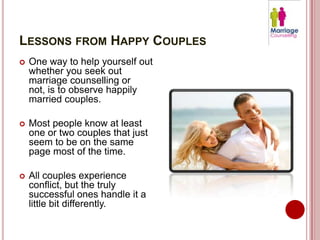
   One way to help yourself out
    whether you seek out
    marriage counselling or
    not, is to observe happily
    married couples.

   Most people know at least
    one or two couples that just
    seem to be on the same
    page most of the time.

   All couples experience
    conflict, but the truly
    successful ones handle it a
    little bit differently.
LESSONS FROM HAPPY COUPLES
   There always seems to be an underlying foundation
    of friendship and affection, and that foundation is
    strong.

   Harsh words are seldom spoken and expectations
    are usually realistic.

   Watch happy couples when you get the
    chance, then try to adopt some of those same skills
    and techniques in your own marriage.

Does marriage counselling really work

  • 1.
  • 2.
    With information found and shared the way it is in modern society, you’d be had pressed to find anyone who hasn’t heard horror stories and scary statistics about marriage. Everyone gets divorced, everybody cheats, and no one wants to be married forever anymore…  Of course, these statements are exaggerations, but marriage does seem a little more expendable than it used to be. It can be tough to imagine living your whole life with just one person under the best of circumstances. And when circumstances begin to suffer, it can be almost impossible.  However, that doesn’t mean everyone with troubles should call a divorce lawyer. Marriage counselling is one way that some couples are able to get their relationships back on track and remember why they chose to get married in the first place.
  • 3.
    BENEFITS OF MARRIAGECOUNSELLING  Generally speaking, marriage counselling has several positive benefits to offer couples that want to make a difference in their marriage. Some of these benefits include:  Learning about the communication skills that lead to healthy conflict resolution.  Learning how to communicate needs and feelings clearly before anger sets in.  Learning how to be assertive in different situations without being offensive.  Developing a deeper and more meaningful understanding of your spouse. Yourself and both of your needs.  Learning the ability to work through any unresolved issues that may be holding you back.  Of course, marriage counselling is a process and it isn’t magic. There are certain benefits that a counselor can help bring out, and having a professional monitor the situation is a positive but that doesn’t mean it’s going to work for everyone.
  • 4.
    IMPORTANT FACTORS  The success or failure of marriage counselling depends on several different factors. There is no definitive ‘yes’ or ‘no’ answer as to whether it works or not. It definitely works in some cases and it definitely doesn’t work in others. Much of the outcome depends on you.  Take the time to look into the counselor before you make an appointment. Not all marriage counselors are the same, and you want one who has a proven track record and is focused on teaching new skills to make your marriage better.  Don’t go into it looking for a quick fix. In all likelihood, you’re going to have to change the way you do some things and how you process certain information.
  • 5.
    IMPORTANT FACTORS  Take the opportunity to talk about the issues that are bothering you. Keeping quiet for whatever reason isn’t going to help anything, because you’ll still be feeling the same things when counselling is over.  Seek out help when you recognize there are problems, not when the marriage is barely hanging on by a thread. You want to go to help make your marriage stronger, not just to decide if you should stay together or not.  Try not to view the counselor as a savior that will fix everything that is wrong. Both spouses must be interested in making some changes and doing most of the heavy lifting.
  • 6.
    ACTION IS CRUCIAL  Regardless of which factors you have working in your favor and which ones you don’t, marriage counselling can only work if you go to marriage counselling.  Naturally, that sounds like a ridiculously obvious comment, but taking action is the most important part of the process, because nothing else can happen without it.  It’s easy to look down your nose at something and say it doesn’t work when you don’t give it an honest chance.  If you really want to try and make the marriage work and the marriage is in trouble, how can it hurt?
  • 7.
    LESSONS FROM HAPPYCOUPLES  One way to help yourself out whether you seek out marriage counselling or not, is to observe happily married couples.  Most people know at least one or two couples that just seem to be on the same page most of the time.  All couples experience conflict, but the truly successful ones handle it a little bit differently.
  • 8.
    LESSONS FROM HAPPYCOUPLES  There always seems to be an underlying foundation of friendship and affection, and that foundation is strong.  Harsh words are seldom spoken and expectations are usually realistic.  Watch happy couples when you get the chance, then try to adopt some of those same skills and techniques in your own marriage.