‘The Devil Made Me Do It’
It is a mixed documentary containing a voice
over (narrator), archived footage and
interviews.
The themes of the documentary include:
 Death & Murder
 Religion
 Criminal Investigation
 Influences of music (Marilyn Manson)
 Youth Culture
 Mental Illness
 ‘The Devil Made Me Do It’ is a single stranded
documentary as it only carries one storyline.
 It has an open narrative structure as the
audience are likely so still be wondering about
unanswered questions.
 It has a non-linear storyline as the order of
narration isn't told in complete order.
 A hand held camera is
used for actual footage
to highlight the manic/
chaos happening
around the situation.
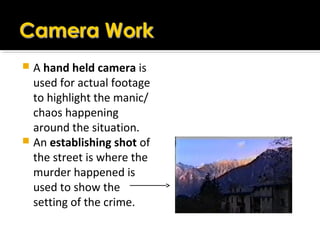
 An establishing shot of
the street is where the
murder happened is
used to show the
setting of the crime.
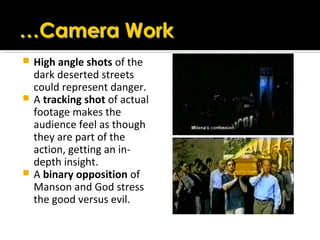
 High angle shots of the
dark deserted streets
could represent danger.
 A tracking shot of actual
footage makes the
audience feel as though
they are part of the
action, getting an in-
depth insight.
 A binary opposition of
Manson and God stress
the good versus evil.
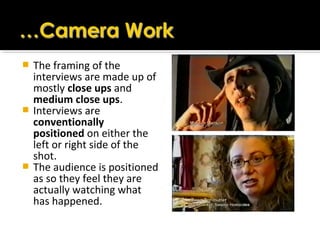
 The framing of the
interviews are made up of
mostly close ups and
medium close ups.
 Interviews are
conventionally
positioned on either the
left or right side of the
shot.
 The audience is positioned
as so they feel they are
actually watching what
has happened.
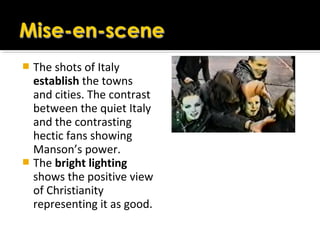
 The shots of Italy
establish the towns
and cities. The contrast
between the quiet Italy
and the contrasting
hectic fans showing
Manson’s power.
 The bright lighting
shows the positive view
of Christianity
representing it as good.
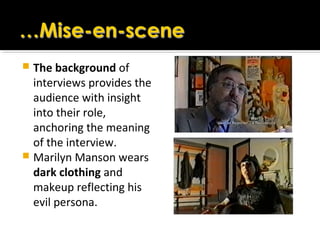
 The background of
interviews provides the
audience with insight
into their role,
anchoring the meaning
of the interview.
 Marilyn Manson wears
dark clothing and
makeup reflecting his
evil persona.
 Special effects are used to reinforce the impact of
the action and therefore emphasise the emotions
and atmosphere.
 Soft music provides the contrast of Marilyn
Manson’s music.
 The narrators voice is a standard male English
accent that was also used to translate and to relate
and reflect the age and gender of the audience.
 A voice over occurs over archived footage to
provide an extra explanation.
 Slow motion is used when the footage of the
coffin was being carried emphasises the
sadness and tension.
 Cuts between the Italian streets and the
concerts could show the good versus evil.
Quick cuts during reconstruction highlight
emotions of the events taking place.
 Montage editing of a series of shots shows
the continuity of the actions.
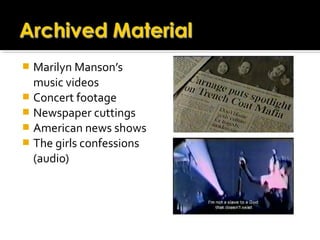
 Marilyn Manson’s
music videos
 Concert footage
 Newspaper cuttings
 American news shows
 The girls confessions
(audio)
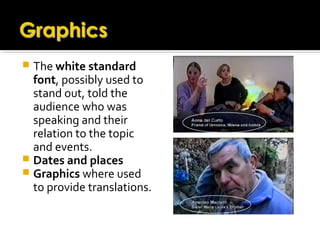
 The white standard
font, possibly used to
stand out, told the
audience who was
speaking and their
relation to the topic
and events.
 Dates and places
 Graphics where used
to provide translations.

Documentary analysis ‘the devil made me do it’

  • 1.
    ‘The Devil MadeMe Do It’
  • 2.
    It is amixed documentary containing a voice over (narrator), archived footage and interviews.
  • 3.
    The themes ofthe documentary include:  Death & Murder  Religion  Criminal Investigation  Influences of music (Marilyn Manson)  Youth Culture  Mental Illness
  • 4.
     ‘The DevilMade Me Do It’ is a single stranded documentary as it only carries one storyline.  It has an open narrative structure as the audience are likely so still be wondering about unanswered questions.  It has a non-linear storyline as the order of narration isn't told in complete order.
  • 5.
     A handheld camera is used for actual footage to highlight the manic/ chaos happening around the situation.  An establishing shot of the street is where the murder happened is used to show the setting of the crime.
  • 6.
     High angleshots of the dark deserted streets could represent danger.  A tracking shot of actual footage makes the audience feel as though they are part of the action, getting an in- depth insight.  A binary opposition of Manson and God stress the good versus evil.
  • 7.
     The framingof the interviews are made up of mostly close ups and medium close ups.  Interviews are conventionally positioned on either the left or right side of the shot.  The audience is positioned as so they feel they are actually watching what has happened.
  • 8.
     The shotsof Italy establish the towns and cities. The contrast between the quiet Italy and the contrasting hectic fans showing Manson’s power.  The bright lighting shows the positive view of Christianity representing it as good.
  • 9.
     The backgroundof interviews provides the audience with insight into their role, anchoring the meaning of the interview.  Marilyn Manson wears dark clothing and makeup reflecting his evil persona.
  • 10.
     Special effectsare used to reinforce the impact of the action and therefore emphasise the emotions and atmosphere.  Soft music provides the contrast of Marilyn Manson’s music.  The narrators voice is a standard male English accent that was also used to translate and to relate and reflect the age and gender of the audience.  A voice over occurs over archived footage to provide an extra explanation.
  • 11.
     Slow motionis used when the footage of the coffin was being carried emphasises the sadness and tension.  Cuts between the Italian streets and the concerts could show the good versus evil. Quick cuts during reconstruction highlight emotions of the events taking place.  Montage editing of a series of shots shows the continuity of the actions.
  • 12.
     Marilyn Manson’s musicvideos  Concert footage  Newspaper cuttings  American news shows  The girls confessions (audio)
  • 13.
     The whitestandard font, possibly used to stand out, told the audience who was speaking and their relation to the topic and events.  Dates and places  Graphics where used to provide translations.