Doctoral Project Proposal
Student: Lydia Kim & Reina Salazar
Advisor: Sara Benham & Varleisha Gibbs
Date: 12/10/2015
Introduction
Synopsis: A pilot study
What is the Sensi-Support Program?
Site: Penn Geriatric Psychiatry Center
Problem/Need
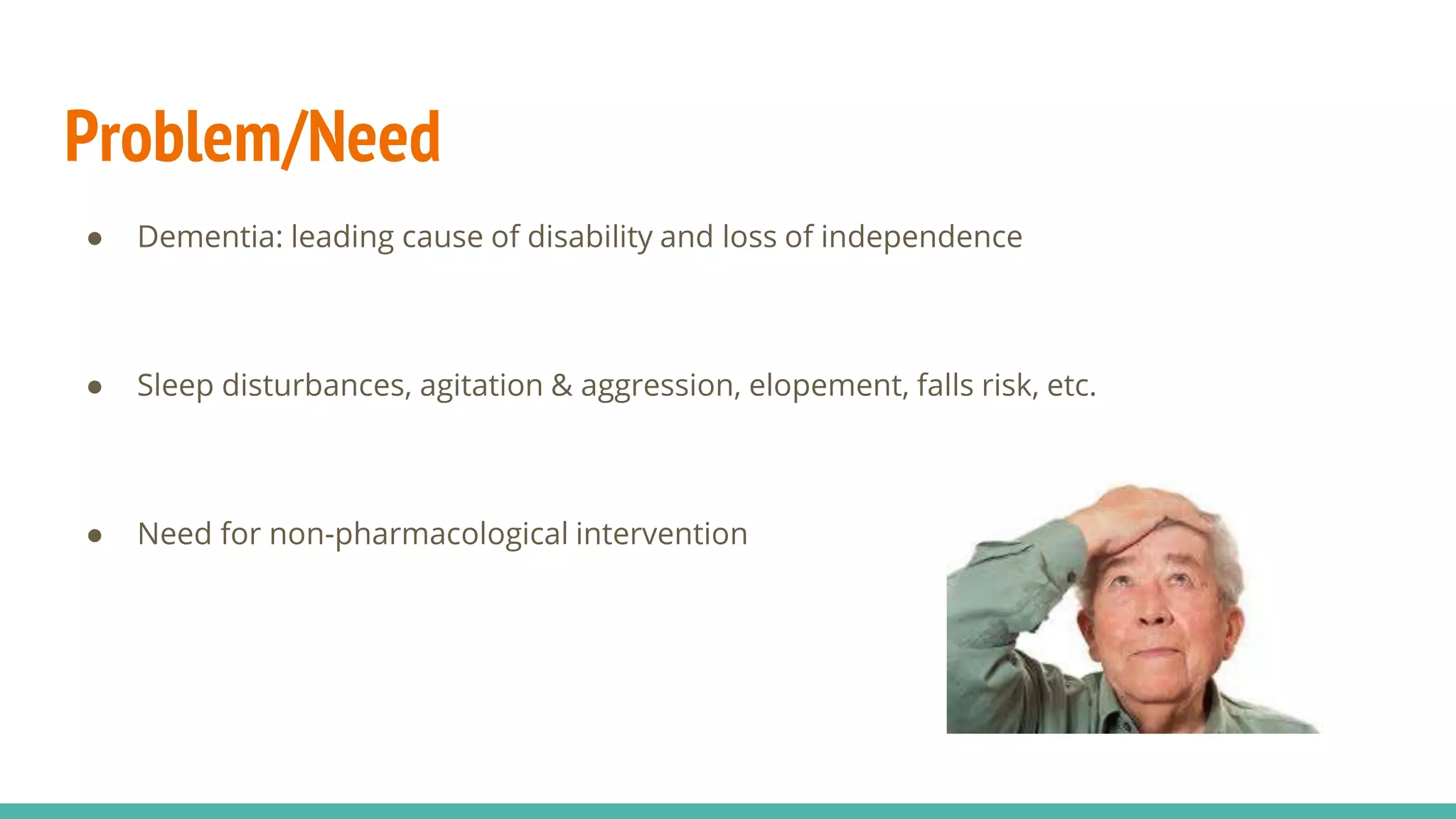
● Dementia: leading cause of disability and loss of independence
● Sleep disturbances, agitation & aggression, elopement, falls risk, etc.
● Need for non-pharmacological intervention
Research Question
Is the multisensory program entitled Sensi-Support effective and feasible at
the Penn Geriatric Psychiatry Center, as perceived by caregivers?
Supporting Literature: Multisensory Approaches
Considered best practice to use as the first mode of treatment
Effective in improving behavioral outcomes (e.g. agitation, aggression, mood)
There is evidence supporting the effectiveness of:
massage
movement-based activities
cooking
aromatherapy
meditation
Theoretical Foundation
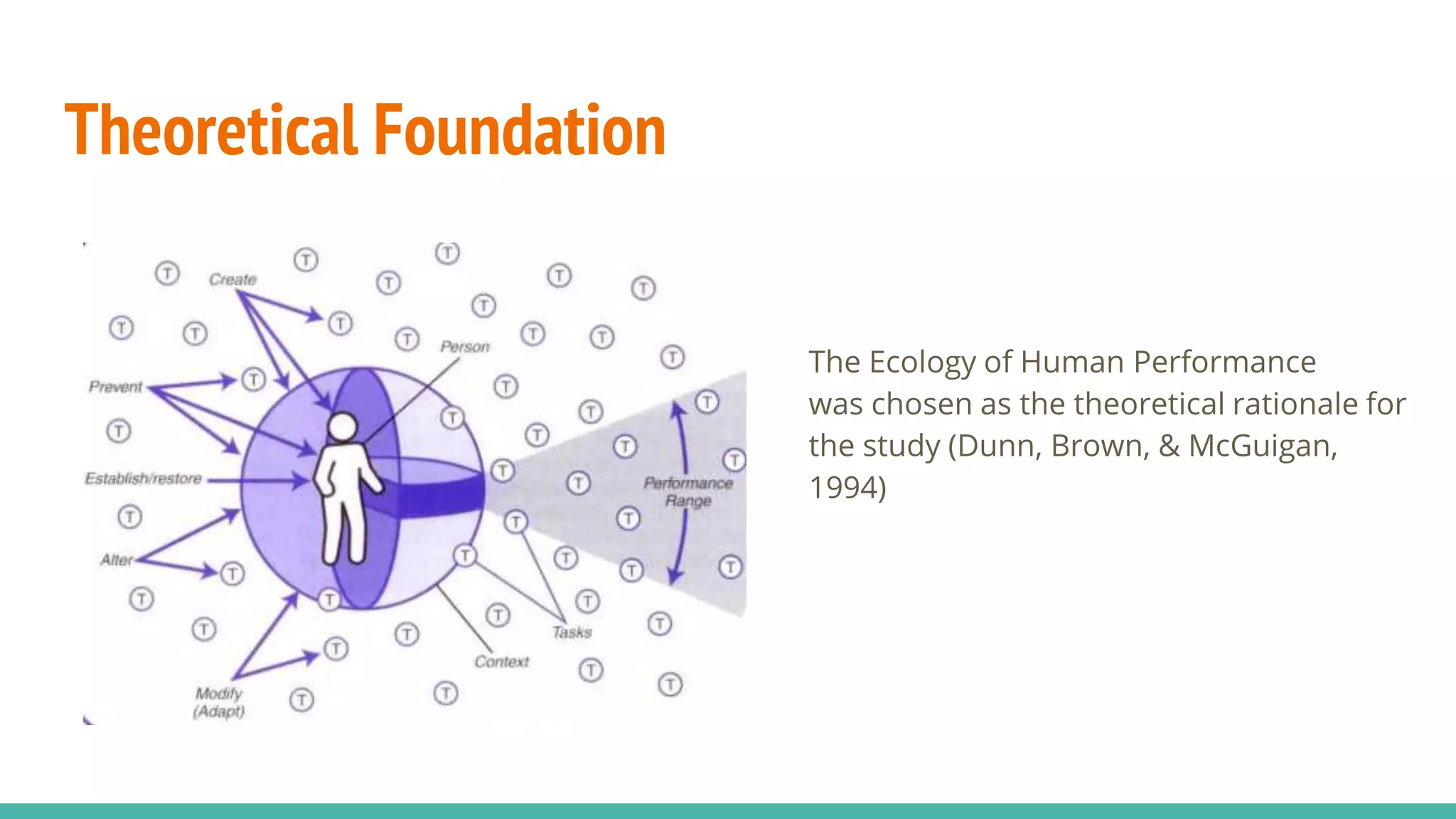
The Ecology of Human Performance
was chosen as the theoretical rationale for
the study (Dunn, Brown, & McGuigan,
1994)
Theoretical Foundation
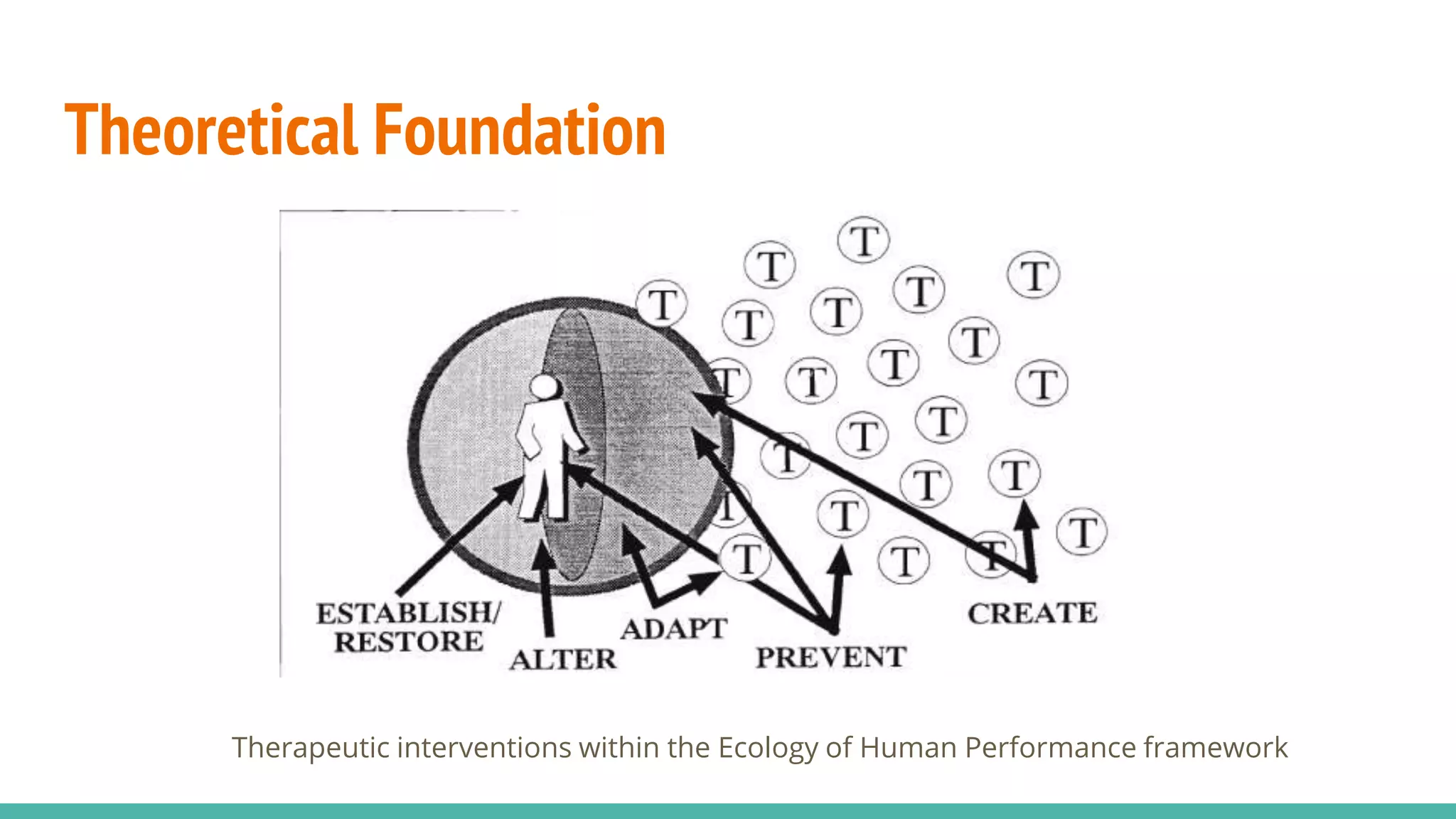
Therapeutic interventions within the Ecology of Human Performance framework
Long Term Goal
To determine whether the Sensi-Support Program is feasible and has an effect on sleep,
agitation, aggression, elopement, and/or falls risk among the clients receiving services at
the Penn Geriatric Psychiatry Center after 10 weeks.
Project Objectives/Purpose
100% of caregivers will demonstrate proper setup and use of the iLs Dreampad pillow in the
participant’s home environment by the end of the third week of the program.
Caregivers will identify at least two sensory-based activities or forms of sensory stimulation
preferred by the individual under their care by the end of the fourth week of the program.
100% of caregivers will incorporate at least two home safety recommendations in his or her home
by the end of the third week of the program.
Inputs
Time commitment of doctoral students
Support and feedback from doctoral
advisors
Dr. Steve Huege
Required Equipment
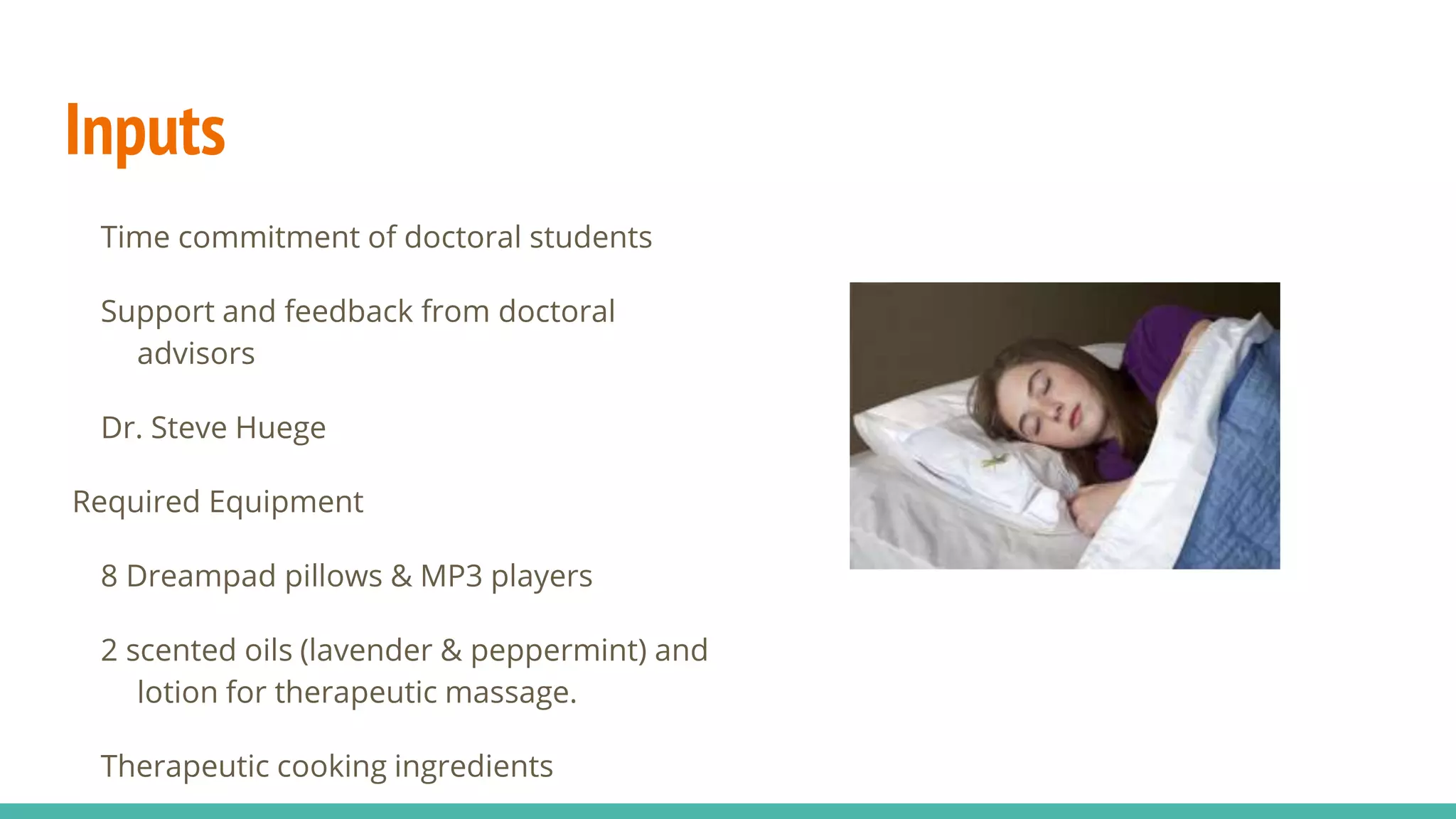
8 Dreampad pillows & MP3 players
2 scented oils (lavender & peppermint) and
lotion for therapeutic massage.
Therapeutic cooking ingredients
Activities/Methodology
Evidence-based sensory activities
Home visits
Home safety recommendations
Sleep hygiene training
Data Collection
Interviews
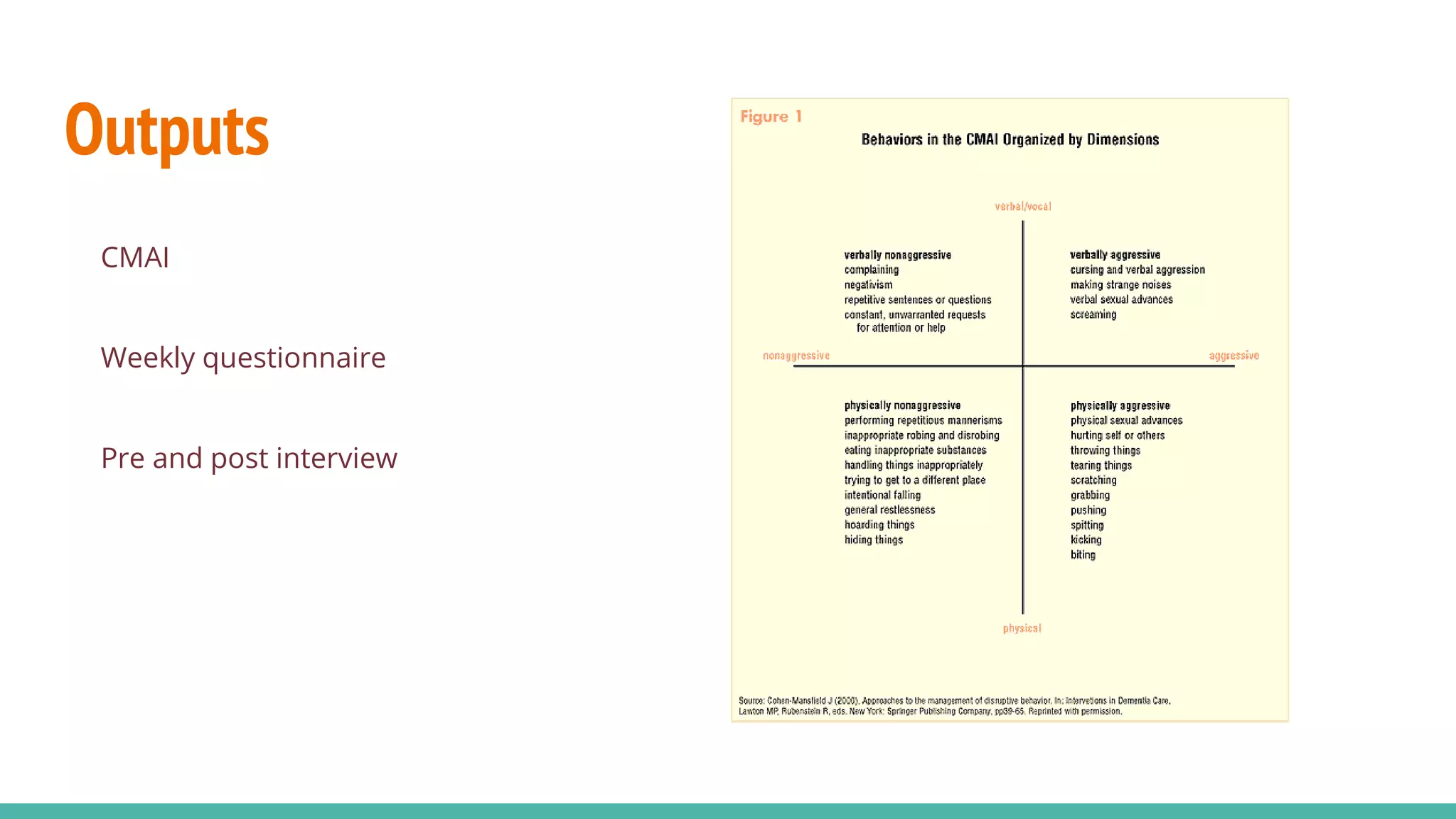
Cohen-Mansfield Agitation Inventory (CMAI)
Weekly Questionnaires
Outputs
CMAI
Weekly questionnaire
Pre and post interview
Outcomes
Hypothesis
The caregivers will perceive the Sensi-Support Program as feasible and effective in
improving sleep and decreasing agitation, aggression, elopement, and falls risk .
Caregivers will:
● Independently and competently set up the Dreampad pillow
● Demonstrate increased awareness of loved ones’ sensory preferences
● Demonstrate increased understanding of home safety
Impact
Possible positive mood change or behavioral changes
Decreased caregiver burden
Increased awareness of their perceptions regarding
the use of multisensory approaches
Potential Budget and Funding source
Funding source: in-house grant through Genesis Cares
Budget:
7 Dreampad pillows ($159 each)
8 MP3 players for Dreampad ($4.39 each)
Therapeutic massage: aromatherapy 2 scented oils and massage
lotion ($48.97)
Therapeutic cooking ingredients: ($24.64)
Total amount = $1221.73
Projected Timeline
December 7, 2015 - IRB submission
Mid January 2016 - Initiate project, recruit, gather
consent
January 2016 – Pretest: _________
January to April 2016 - Sensory activities, 3 home
visits, weekly questionnaires
April 2016 - Final interview and post test: ________,
data analysis
May 2016 - Present study results
Barriers/Concerns
Participants may potentially drop out of the study
Implications for the Field of Occupational Therapy
Expand knowledge base of sensory interventions for the geriatric psychiatric population
Study findings may lead to effective, occupation-based interventions
QUESTIONS?
References
Dunn, W., Brown, C., & McGuigan, A. (1994). The ecology of human performance: A framework for considering the effect of context. The American Journal of Occupational Therapy, 48(7), 595-607.
doi:10.5014/ajot.48.7.595.
Chien, L. W., Cheng, S. L., & Liu, C. F. (2012). The effect of lavender aromatherapy on autonomic nervous system in midlife women with insomnia. Evidence-Based Complementary and Alternative
Medicine, 2012. doi: 10.1155/2012/740813.
Field, T., Diego, M., Delgado, J., & Medina, L. (2013). Tai chi/yoga reduces prenatal depression, anxiety and sleep disturbances. Complementary Therapies in Clinical Practice, 19(1), 6-10. doi:
10.1016/j.ctcp.2012.10.001.
Hill, K. H., O'Brien, K. A., & Yurt, R. W. (2007). Therapeutic efficacy of a therapeutic cooking group from the patients' perspective. Journal of Burn Care & Research, 28(2), 324-327.
Narme, P., Clement, S., Ehrle, N., Schiaratura, L., Vachez, S., Courtaigne, B., Munsch, F., & Samson, S. (2013). Efficacy of musical interventions in dementia: Evidence from a randomized controlled trial.
Journal of Alzheimer's Disease, 38(2), 359-369. doi: 10.3233/JAD-130893.
Sharpe, P. A., Williams, H. G., Granner, M. L., Hussey, J. R. (2007). A randomised study of the effects of massage therapy compared to guided relaxation on well-being and stress perception among older
adults. Complementary Therapies in Medicine, 15(3), 157-163.
Vink, A. C., Zuidersma, M., Boersma, F., de Jonge, P., Zuidema, S. U., & Slaets, J. P. J. (2013). The effect of music therapy compared with general recreational activities in reducing agitation in people
with dementia: A randomised controlled trial. International Journal of Geriatric Psychiatry, 28, 1031–1038. doi:10.1002/gps.3924.
Woods, D. L., Craven, R. F., & Whitney, J. (2005). The effect of therapeutic touch on behavioral symptoms of persons with dementia. Alternative Therapies in Health and Medicine, 11(1), 66-74.
World Health Organization. (2015). Dementia (Fact sheet No. 362). Retrieved from http://www.who.int/mediacentre/factsheets/fs362/en/.

Doctoral Capstone Project: Sensi-Support

  • 1.
    Doctoral Project Proposal Student:Lydia Kim & Reina Salazar Advisor: Sara Benham & Varleisha Gibbs Date: 12/10/2015
  • 2.
    Introduction Synopsis: A pilotstudy What is the Sensi-Support Program? Site: Penn Geriatric Psychiatry Center
  • 3.
    Problem/Need ● Dementia: leadingcause of disability and loss of independence ● Sleep disturbances, agitation & aggression, elopement, falls risk, etc. ● Need for non-pharmacological intervention
  • 4.
    Research Question Is themultisensory program entitled Sensi-Support effective and feasible at the Penn Geriatric Psychiatry Center, as perceived by caregivers?
  • 5.
    Supporting Literature: MultisensoryApproaches Considered best practice to use as the first mode of treatment Effective in improving behavioral outcomes (e.g. agitation, aggression, mood) There is evidence supporting the effectiveness of: massage movement-based activities cooking aromatherapy meditation
  • 6.
    Theoretical Foundation The Ecologyof Human Performance was chosen as the theoretical rationale for the study (Dunn, Brown, & McGuigan, 1994)
  • 7.
    Theoretical Foundation Therapeutic interventionswithin the Ecology of Human Performance framework
  • 8.
    Long Term Goal Todetermine whether the Sensi-Support Program is feasible and has an effect on sleep, agitation, aggression, elopement, and/or falls risk among the clients receiving services at the Penn Geriatric Psychiatry Center after 10 weeks.
  • 9.
    Project Objectives/Purpose 100% ofcaregivers will demonstrate proper setup and use of the iLs Dreampad pillow in the participant’s home environment by the end of the third week of the program. Caregivers will identify at least two sensory-based activities or forms of sensory stimulation preferred by the individual under their care by the end of the fourth week of the program. 100% of caregivers will incorporate at least two home safety recommendations in his or her home by the end of the third week of the program.
  • 10.
    Inputs Time commitment ofdoctoral students Support and feedback from doctoral advisors Dr. Steve Huege Required Equipment 8 Dreampad pillows & MP3 players 2 scented oils (lavender & peppermint) and lotion for therapeutic massage. Therapeutic cooking ingredients
  • 11.
    Activities/Methodology Evidence-based sensory activities Homevisits Home safety recommendations Sleep hygiene training Data Collection Interviews Cohen-Mansfield Agitation Inventory (CMAI) Weekly Questionnaires
  • 12.
  • 13.
    Outcomes Hypothesis The caregivers willperceive the Sensi-Support Program as feasible and effective in improving sleep and decreasing agitation, aggression, elopement, and falls risk . Caregivers will: ● Independently and competently set up the Dreampad pillow ● Demonstrate increased awareness of loved ones’ sensory preferences ● Demonstrate increased understanding of home safety
  • 14.
    Impact Possible positive moodchange or behavioral changes Decreased caregiver burden Increased awareness of their perceptions regarding the use of multisensory approaches
  • 15.
    Potential Budget andFunding source Funding source: in-house grant through Genesis Cares Budget: 7 Dreampad pillows ($159 each) 8 MP3 players for Dreampad ($4.39 each) Therapeutic massage: aromatherapy 2 scented oils and massage lotion ($48.97) Therapeutic cooking ingredients: ($24.64) Total amount = $1221.73
  • 16.
    Projected Timeline December 7,2015 - IRB submission Mid January 2016 - Initiate project, recruit, gather consent January 2016 – Pretest: _________ January to April 2016 - Sensory activities, 3 home visits, weekly questionnaires April 2016 - Final interview and post test: ________, data analysis May 2016 - Present study results
  • 17.
  • 18.
    Implications for theField of Occupational Therapy Expand knowledge base of sensory interventions for the geriatric psychiatric population Study findings may lead to effective, occupation-based interventions
  • 19.
  • 20.
    References Dunn, W., Brown,C., & McGuigan, A. (1994). The ecology of human performance: A framework for considering the effect of context. The American Journal of Occupational Therapy, 48(7), 595-607. doi:10.5014/ajot.48.7.595. Chien, L. W., Cheng, S. L., & Liu, C. F. (2012). The effect of lavender aromatherapy on autonomic nervous system in midlife women with insomnia. Evidence-Based Complementary and Alternative Medicine, 2012. doi: 10.1155/2012/740813. Field, T., Diego, M., Delgado, J., & Medina, L. (2013). Tai chi/yoga reduces prenatal depression, anxiety and sleep disturbances. Complementary Therapies in Clinical Practice, 19(1), 6-10. doi: 10.1016/j.ctcp.2012.10.001. Hill, K. H., O'Brien, K. A., & Yurt, R. W. (2007). Therapeutic efficacy of a therapeutic cooking group from the patients' perspective. Journal of Burn Care & Research, 28(2), 324-327. Narme, P., Clement, S., Ehrle, N., Schiaratura, L., Vachez, S., Courtaigne, B., Munsch, F., & Samson, S. (2013). Efficacy of musical interventions in dementia: Evidence from a randomized controlled trial. Journal of Alzheimer's Disease, 38(2), 359-369. doi: 10.3233/JAD-130893. Sharpe, P. A., Williams, H. G., Granner, M. L., Hussey, J. R. (2007). A randomised study of the effects of massage therapy compared to guided relaxation on well-being and stress perception among older adults. Complementary Therapies in Medicine, 15(3), 157-163. Vink, A. C., Zuidersma, M., Boersma, F., de Jonge, P., Zuidema, S. U., & Slaets, J. P. J. (2013). The effect of music therapy compared with general recreational activities in reducing agitation in people with dementia: A randomised controlled trial. International Journal of Geriatric Psychiatry, 28, 1031–1038. doi:10.1002/gps.3924. Woods, D. L., Craven, R. F., & Whitney, J. (2005). The effect of therapeutic touch on behavioral symptoms of persons with dementia. Alternative Therapies in Health and Medicine, 11(1), 66-74. World Health Organization. (2015). Dementia (Fact sheet No. 362). Retrieved from http://www.who.int/mediacentre/factsheets/fs362/en/.

Editor's Notes

  • #2 Hello I’m Reina, and I’m Lydia and this is our capstone project.
  • #3  synopsis: there is a multisensory program called Sensi-support that is currently being run the the Penn Geriatric Psychiatry Center. We are expanding the program to include the PMC. And our study will evaluate the program for feasibility and effectiveness in these settings, as perceived by caregivers BENHAM FEEDBACK: ** verbalize/describe current program using Sensi support at these sites **DESCRIBE HOW YOUR PROJECT IS DIFFERENT - CAREGIVER PERSPECTIVE/HOME VISIT Sensi support program consists of different evidence-based sensory activities that is intended to provide various sensory stimulations to study participants. - Visual, auditory, gustatory, tactile, vestibular.. Massage with scented oils, movement-based activities, therapeutic cooking activities, and meditation ** -The multisensory program will include a series of evidence-based activities that incorporate various sensory stimulation for the purpose of decreasing agitation, aggression, elopement, and falls risk. We will perform the study at two outpatient centers in Philadelphia, the Penn Geriatric Psychiatry Center and the Penn Memory Center. both are owned by the University of Pennsylvania
  • #4 Lydia -As Reina said, we will be conducting the study at the Penn geriatric psychiatry center, and dementia is one of the most common diagnosis at the site. -According to the World Health Organization (2015), 47.5 million individuals worldwide have dementia and 7.7 million new cases arise every year. Dementia is a leading cause of disability and loss of independence. -The behavioural and psychological symptoms of dementia (BPSD) such as sleep disturbances, agitation & aggression, elopement, falls risk - are associated with significantly decreased quality of life, increased caregiver burden, and increased rates of institutionalization -Therefore, there is a need for nonpharmacological interventions for dementia (Vink, et. al., 2013). According to the studies,It is considered best practice to utilize nonpharmacological interventions, such as the multisensory approaches incorporated within the Sensi-support program, as the first mode of treatment since there are commonly little to no side effects.
  • #5 Lydia : so our question is “Is the multisensory program entitled Sensi-support effective and feasible at the penn geriatric psychiatry center , as perceived by caregivers?”
  • #6 Reina Multisensory approaches are becoming increasingly used among individuals with dementia and other geriatric psychiatric conditions (Collier, McPherson, Ellis-Hill, Staal, & Bucks, 2010; Vink, Bruinsma, Scholten, 2011). Since nonpharmacological approaches have little to no side effects, it is considered best practice to utilize such approaches as the first mode of treatment among individuals within the geriatric psychiatric population (Vink, et. al, 2013). Occupation-based multisensory approaches include activities, such as massage and cooking, that offer various types of sensory stimuli. Current evidence suggests that multisensory approaches are effective in improving behavioral outcomes, such as agitation and aggression, and mood among elderly individuals with dementia (Sanchez, Millan-Calenti, Lorenzo-Lopez, & Maseda, 2013).
  • #7 Reina This is the theory we chose. As you can in the diagram, performance range is an important component of the model. What is performance range? It is the range of tasks that an individual actually performs or engages in. A person can limited in the range of tasks he or she can perform or can have a wide range. And that is dependent upon the person’s context and person-related factors. For the elderly individuals receiving services at the Penn Memory Center and Geriatric Psychiatry center, performance range is limited. Many of these individuals have dementia and may display
  • #8 Reina
  • #9 Lydia The long term goal of this project is To determine whether the Sensi-Support Program is feasible and has an effect on sleep, agitation, aggression, elopement, and/or falls risk among the clients receiving services at the Penn Geriatric Psychiatry Center after 10 weeks.
  • #10 Lydia There are three project objectives we came up with the First objective is, 100% of caregivers will demonstrate proper setup and use of the iLs Dreampad pillow with 100% accuracy by the end of the third week of the program secondly, Caregivers will identify at least two sensory-based activities or forms of sensory stimulation preferred by the individual under their care by the end of the fourth week of the program. and lastly, 100% of caregivers will incorporate at least two home safety recommendations in his or her home by the end of the third week of the program and the Purpose of this project is to explore caregiver perceptions on the feasibility and effectiveness of an occupational therapy-based, multisensory program entitled Sensi-support at the Penn Geriatric Psychiatry center in a geriatric psychiatric population on the outcomes of sleep quality/patterns, agitation, aggression, elopement, and falls risk.
  • #11 Lydia Various types of inputs will be required for this project. First of all, we will be on site 32 hours a week for 10 weeks. We will be working with the patients and their caregivers, also we will be working on collecting and analyzing data on site. Homevisits will be completed as well for Dreampad pillow training, sleep hygiene training, and home safety check up. -Support from doctoral supervisors and other professors at the USciences is going to be important for the progress of the study and Steve Huege, who is a psychiatrist at the Penn Geriatric Psychiatric center will guide us and provide feedback throughout the study Required equipments for the program are 8 dreampads and mp3 players that go with the dreampad, lavender and Peppermint oi, and lotionl for the therapeutic massage.and also Various cooking ingredients will be required for the therapeutic cooking activities.
  • #12 Reina Data collection & Analysis -Cohen-Mansfield Agitation Inventory (CMAI): Paired t-test -Initial interview and final: ANOVA, Paired t-test, thematic analysis -Weekly questionnaire: thematic analysis 10 total sessions of 30-60 minute evidence-based sensory activities, once a week for 10 weeks Sensory activities: massage with scented oils, simple cooking, meditation with music, movement-based exercise that incorporate breathing, balance, and posture. Home visit within first two weeks for iLS DreamPad pillow training, home safety recommendations, and sleep hygiene training Two follow up visit at the midpoint and endpoint of study.
  • #13 Lydia “The following assessments will be utilized to measure the caregiver perceived feasibility of the sensi support program and the effect of the program , For the outputs following will be used. cohen mansfield agitation inventory will be used for measuring study participant’s agitation and aggression Also weekly questionnaire will be given to both program participants and the caregivers to gather qualitative data on caregiver opinions regarding the Sensi-support program Lastly, Pre and post interview to measure feasibility of Sensi-support program, and effect of program on sleep, agitation, aggression, elopement, and falls risk, as perceived by caregivers ------------------------------------------------------------------------- if any, on sleep, agitation, aggression, elopement, falls risk among the elderly individuals receiving services at the pen gerypsych “
  • #14 Reina
  • #15 Lydia This project may produce following impacts on the program participants and the caregivers. There maybe a possible positive mood change or behavioral changes of program participants. Also study subjects may experience decreased caregiver burden if the Sensi-support program produces positive outcomes among the individuals under their care. and study subjects may gain increased awareness of their perceptions regarding the use of multisensory approaches in geriatric individuals with psychiatric disorders
  • #16 Lydia Our funding source is in-house grant through Genesis cares Our budget includes 7 dreampad pillows which is ($159 each), 8 mp3 players that connects to the dreampad, peppermint oil, lavender oil, and massage lotion for therapeutic massage activities, and cooking ingredients for therapeutic cooking activities. Dreampad pillows and mp3 players will be covered by the Genesis grant and oils, lotions, cooking ingredients will be covered by us.
  • #17 Reina
  • #18 Reina
  • #19 Reina While only preliminary data