Preparing for Emergencies Enlightenment Inc. Circle of Life http://www.enlightenmentesp.com
Emergencies Happen Disasters can strike at anytime Having a plan and the tools in place to make it on your own for a period of time can be crucial Three simple steps can help you prepare for the unexpected
Emergency Preparedness Individuals should take three preparedness steps: Get a Kit  Make a Plan  Be Informed
Get an Emergency Supply Kit Include basic supplies for your family and pets for three days Prepare at least two kits: one for home; a smaller portable kit to take with you if you have to leave; and if possible, kits for your office or car
Emergency Supply Kit The larger at-home kit should include the following items: Food Non-perishable - not requiring refrigeration, cooking, or  water for preparation Examples: canned food, granola bars Include a manual can opener, if necessary Water One gallon per person and pet per day for  three days Store in clean, sealed plastic bottles Need for water can vary based on climate and  special needs
Emergency Supply Kit Radio   Battery-powered with NOAA  weather alert function Extra batteries Flashlight Extra batteries First Aid Kit With specific items for your family/personal needs Whistle   To signal for help if trapped Wrench or Pliers To turn off utilities if necessary
Unique Family Needs Consider your family’s unique needs such as older Americans or individuals with disabilities and other special needs. Some items you may want to add to your kit include: Prescription medications  Extra wheelchair batteries Formula or diapers for infants Games or toys to entertain children For a list of additional items,  visit www. Ready.gov
Pet Supplies If you have a pet, include pet supplies in your emergency supply kit:  Food Water Medicine/Medical records Collar with ID tag Harness or leash Crate or other pet carrier Familiar items, i.e. toys, treats and bedding Picture of you and your pet for identification purposes
Make a Family Emergency Plan Sit down as a family and plan in advance what you will do in an emergency A well thought out plan will allow you to assess the situation, use common sense, and take care of yourself and your loved ones
Family Emergency Plan You may not be together as a family when an emergency happens Plan in advance how to get in touch with each other and get back together www.ready.gov   has a template to help you get started Emergency Preparedness Flash Drive is a must have. It is universally recommended that your information should be available at all times and be part of your emergency disaster preparation.  (In Short SOS of Survival= Survival on a Stick) For more info please visit:  www.survivalonastick.com
Family Emergency Plan Elements Out-of-Town Contact  – In an emergency it might be easier to make a phone call out of town; designate a contact out-of-town to take roll and relay information for your family School and Work Plans  – Learn about the emergency plans at your workplace and at your children’s schools Meeting Places  – Choose two places to meet: one in the neighborhood; one outside of the neighborhood
Special Considerations for Your  Family Emergency Plan Older Americans and Individuals with Disabilities and Other Special Needs  – Develop an emergency plan that considers each person’s unique needs, including a personal support network to call on in the event of an emergency  Pets  – Plan with neighbors, friends or relatives to make sure someone is available to care for or evacuate your pets if you are unable to do so
Stay or Go? In some situations authorities may urge you to evacuate Hurricane, flood, fire, etc. In other situations, staying where you are and avoiding danger is best If air is contaminated or there are large amounts of debris in the air Listen to instructions from local emergency management officials
Evacuating Plan where you will go; choose several destinations in different directions Plan driving routes; have maps and alternate routes If you do not have a car, know public transportation options  Take your Emergency Supply Kit Lock your door Take your pets; plan out what pet friendly lodging you will go to in advance
Be Informed Learn more about: Different types of emergencies and their appropriate responses Which emergencies are more likely to affect your area The emergency plans in your community Visit www.ready.gov Please be prepared! For more emergency preparedness information please visit  www.enlightenmentesp.com www.survivalonastick.com
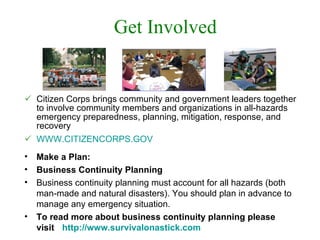
Citizen Corps brings community and government leaders together to involve community members and organizations in all-hazards emergency preparedness, planning, mitigation, response, and recovery WWW.CITIZENCORPS.GOV Business Continuity Personal Continuity Personal Continuity and the effect on Business Continuity Get Involved Make a Plan: Business Continuity Planning Business continuity planning must account for all hazards (both man-made and natural disasters). You should plan in advance to manage any emergency situation. To read more about business continuity planning please visit o  http://www.survivalonastick.com Personal Continuity and the effect on Business Continuity
Prepare Today! To learn more about how to prepare yourself and your family, visit www.ready.gov Enlightenment Inc. Circle of Life Contact Information for Enlightenment Inc . Phone Us Toll Free:  (877-552-0323)  Email us:  [email_address] Visit our websites:   http://www.enlightenmentesp.com http://www.survivalonastick.com

prepare 2011

  • 1.
    Preparing for EmergenciesEnlightenment Inc. Circle of Life http://www.enlightenmentesp.com
  • 2.
    Emergencies Happen Disasterscan strike at anytime Having a plan and the tools in place to make it on your own for a period of time can be crucial Three simple steps can help you prepare for the unexpected
  • 3.
    Emergency Preparedness Individualsshould take three preparedness steps: Get a Kit Make a Plan Be Informed
  • 4.
    Get an EmergencySupply Kit Include basic supplies for your family and pets for three days Prepare at least two kits: one for home; a smaller portable kit to take with you if you have to leave; and if possible, kits for your office or car
  • 5.
    Emergency Supply KitThe larger at-home kit should include the following items: Food Non-perishable - not requiring refrigeration, cooking, or water for preparation Examples: canned food, granola bars Include a manual can opener, if necessary Water One gallon per person and pet per day for three days Store in clean, sealed plastic bottles Need for water can vary based on climate and special needs
  • 6.
    Emergency Supply KitRadio Battery-powered with NOAA weather alert function Extra batteries Flashlight Extra batteries First Aid Kit With specific items for your family/personal needs Whistle To signal for help if trapped Wrench or Pliers To turn off utilities if necessary
  • 7.
    Unique Family NeedsConsider your family’s unique needs such as older Americans or individuals with disabilities and other special needs. Some items you may want to add to your kit include: Prescription medications Extra wheelchair batteries Formula or diapers for infants Games or toys to entertain children For a list of additional items, visit www. Ready.gov
  • 8.
    Pet Supplies Ifyou have a pet, include pet supplies in your emergency supply kit: Food Water Medicine/Medical records Collar with ID tag Harness or leash Crate or other pet carrier Familiar items, i.e. toys, treats and bedding Picture of you and your pet for identification purposes
  • 9.
    Make a FamilyEmergency Plan Sit down as a family and plan in advance what you will do in an emergency A well thought out plan will allow you to assess the situation, use common sense, and take care of yourself and your loved ones
  • 10.
    Family Emergency PlanYou may not be together as a family when an emergency happens Plan in advance how to get in touch with each other and get back together www.ready.gov has a template to help you get started Emergency Preparedness Flash Drive is a must have. It is universally recommended that your information should be available at all times and be part of your emergency disaster preparation. (In Short SOS of Survival= Survival on a Stick) For more info please visit: www.survivalonastick.com
  • 11.
    Family Emergency PlanElements Out-of-Town Contact – In an emergency it might be easier to make a phone call out of town; designate a contact out-of-town to take roll and relay information for your family School and Work Plans – Learn about the emergency plans at your workplace and at your children’s schools Meeting Places – Choose two places to meet: one in the neighborhood; one outside of the neighborhood
  • 12.
    Special Considerations forYour Family Emergency Plan Older Americans and Individuals with Disabilities and Other Special Needs – Develop an emergency plan that considers each person’s unique needs, including a personal support network to call on in the event of an emergency Pets – Plan with neighbors, friends or relatives to make sure someone is available to care for or evacuate your pets if you are unable to do so
  • 13.
    Stay or Go?In some situations authorities may urge you to evacuate Hurricane, flood, fire, etc. In other situations, staying where you are and avoiding danger is best If air is contaminated or there are large amounts of debris in the air Listen to instructions from local emergency management officials
  • 14.
    Evacuating Plan whereyou will go; choose several destinations in different directions Plan driving routes; have maps and alternate routes If you do not have a car, know public transportation options Take your Emergency Supply Kit Lock your door Take your pets; plan out what pet friendly lodging you will go to in advance
  • 15.
    Be Informed Learnmore about: Different types of emergencies and their appropriate responses Which emergencies are more likely to affect your area The emergency plans in your community Visit www.ready.gov Please be prepared! For more emergency preparedness information please visit www.enlightenmentesp.com www.survivalonastick.com
  • 16.
    Citizen Corps bringscommunity and government leaders together to involve community members and organizations in all-hazards emergency preparedness, planning, mitigation, response, and recovery WWW.CITIZENCORPS.GOV Business Continuity Personal Continuity Personal Continuity and the effect on Business Continuity Get Involved Make a Plan: Business Continuity Planning Business continuity planning must account for all hazards (both man-made and natural disasters). You should plan in advance to manage any emergency situation. To read more about business continuity planning please visit o http://www.survivalonastick.com Personal Continuity and the effect on Business Continuity
  • 17.
    Prepare Today! Tolearn more about how to prepare yourself and your family, visit www.ready.gov Enlightenment Inc. Circle of Life Contact Information for Enlightenment Inc . Phone Us Toll Free: (877-552-0323) Email us: [email_address] Visit our websites: http://www.enlightenmentesp.com http://www.survivalonastick.com

Editor's Notes

  • #3 Emergencies can range from inconvenient to devastating. But taking some simple preparedness steps in advance can minimize their impact and make a big difference in ensuring the safety and well-being of individuals, families, businesses, and communities.
  • #4 Emergency preparedness is a personal responsibility. Individuals should take three preparedness steps: Get an Emergency Supply Kit, Make a Family Emergency Plan, and Be Informed about the types of emergencies that can happen in your area and their appropriate responses.
  • #5 First and foremost, you can take some simple steps to prepare yourselves and your families for emergencies. The first step is to get an emergency supply kit. We urge all Americans to have some supplies on hand so that you and your family can survive for three days if an emergency occurs. As we saw in Hurricane Katrina, sometimes it takes first responders a little time to dispatch help, especially to areas that have been flooded. By having some supplies on hand you will be more prepared to handle a situation like that. You should also prepare at least two kits: one for home and a smaller portable kit to take with you if you have to evacuate. Today I will briefly review the supplies we recommend for the larger at-home emergency supply kit. However, a complete list of items we suggest for both kits can be found at www.ready.gov.
  • #6 Nursing mothers, children and sick people and those who live in warm climates may need more water.
  • #10 The second step is to make a Family Emergency Plan.
  • #11 The plan on www.Ready.gov has two parts: a full page sheet you should leave at home in a safe place, like your emergency supply kit, and smaller cutout cards to keep in your wallet, purse or backpack.
  • #12 These three issues are some of those addressed the www.ready.gov Family Communication Plan template.
  • #13 Older Americans and Individuals with Disabilities and Other Special Needs should develop an emergency plan that includes a personal support network to call on in the event of an emergency. Those with pets should make plans with neighbors, friends, or relatives to make sure someone is available to care for or evacuate your pets if you are unable to do so.
  • #14 In any emergency one of the first most important decisions you will have to make is deciding whether to stay or go.
  • #16 We have reviewed making an emergency supply kit and making a family emergency plan. The third step is to be informed. While many of the steps that you will take to prepare for emergencies are the same, there are important differences that will impact the decisions you make and the actions you take. www.ready.gov has detailed information to help you be fully informed.