Listen to Your Audience
Cut Through the Noise
National Council on Nonprofits - March 31, 2016
Brett Meyer
Chief Strategy Officer, ThinkShout
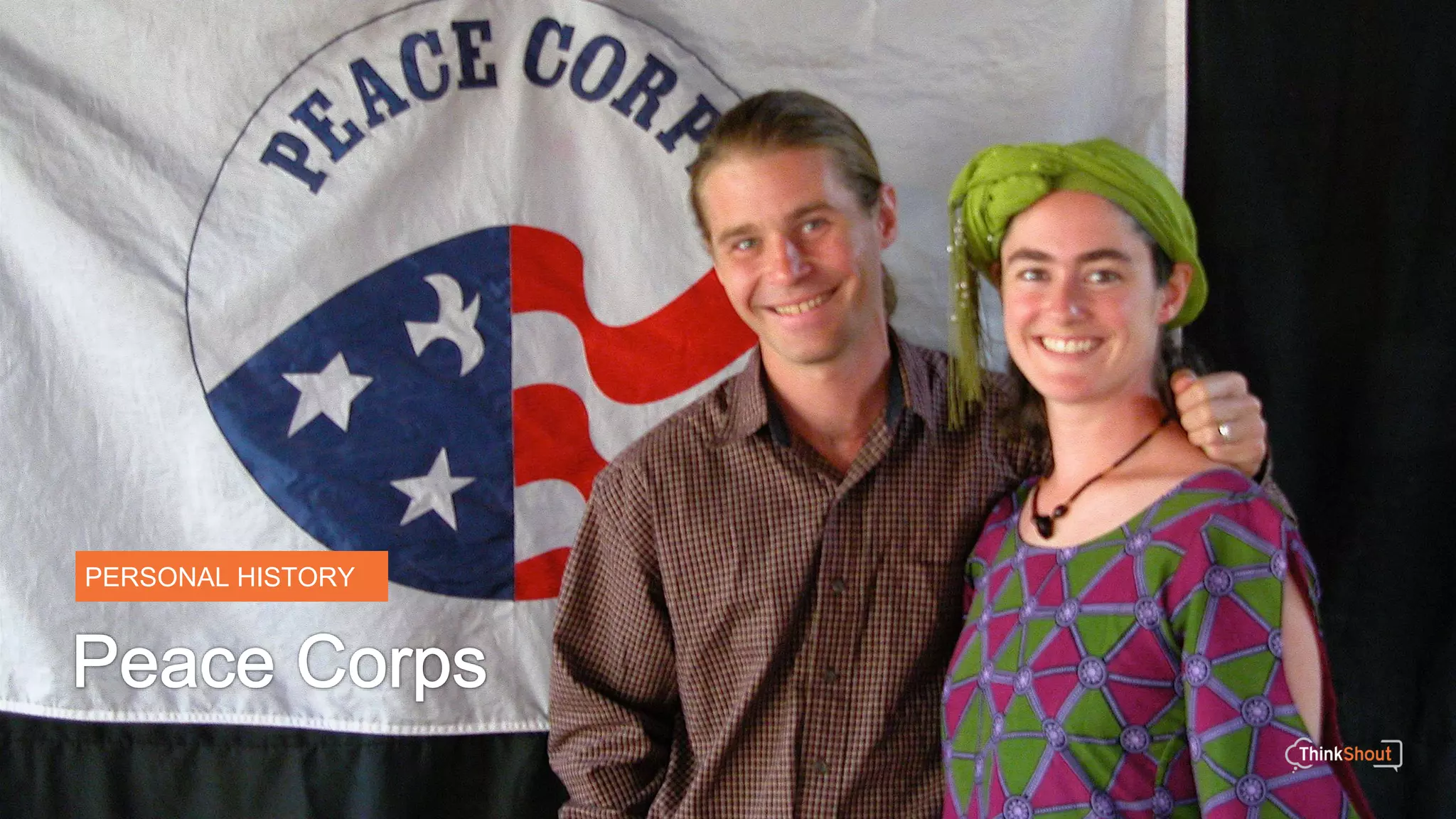
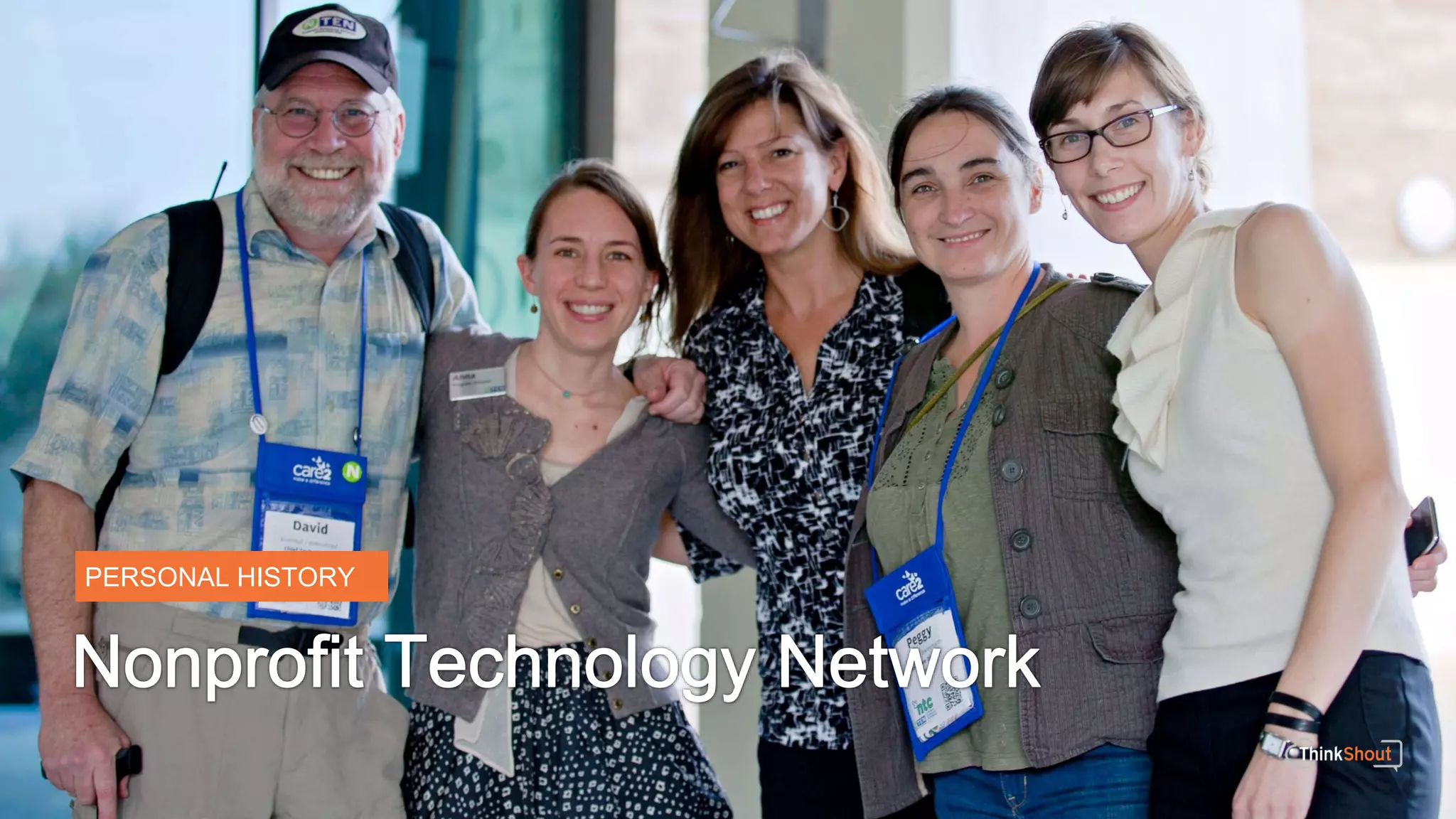
PERSONAL HISTORY
ThinkShout
THINKSHOUT
Facing History and Ourselves
THINKSHOUT
Humane Society of the United States
THINKSHOUT
Southern Poverty Law Center
PERSONAL HISTORY
College
PERSONAL HISTORY
Kwamba
PERSONAL HISTORY
PERSONAL HISTORY
PERSONAL HISTORY
PERSONAL HISTORY
ThinkShout
The Principals We Work from Are
Applicable to Every Budget
Cutting Through the Noise
INTRODUCTION TO THE PROBLEM
Morris Dees’ Challenge
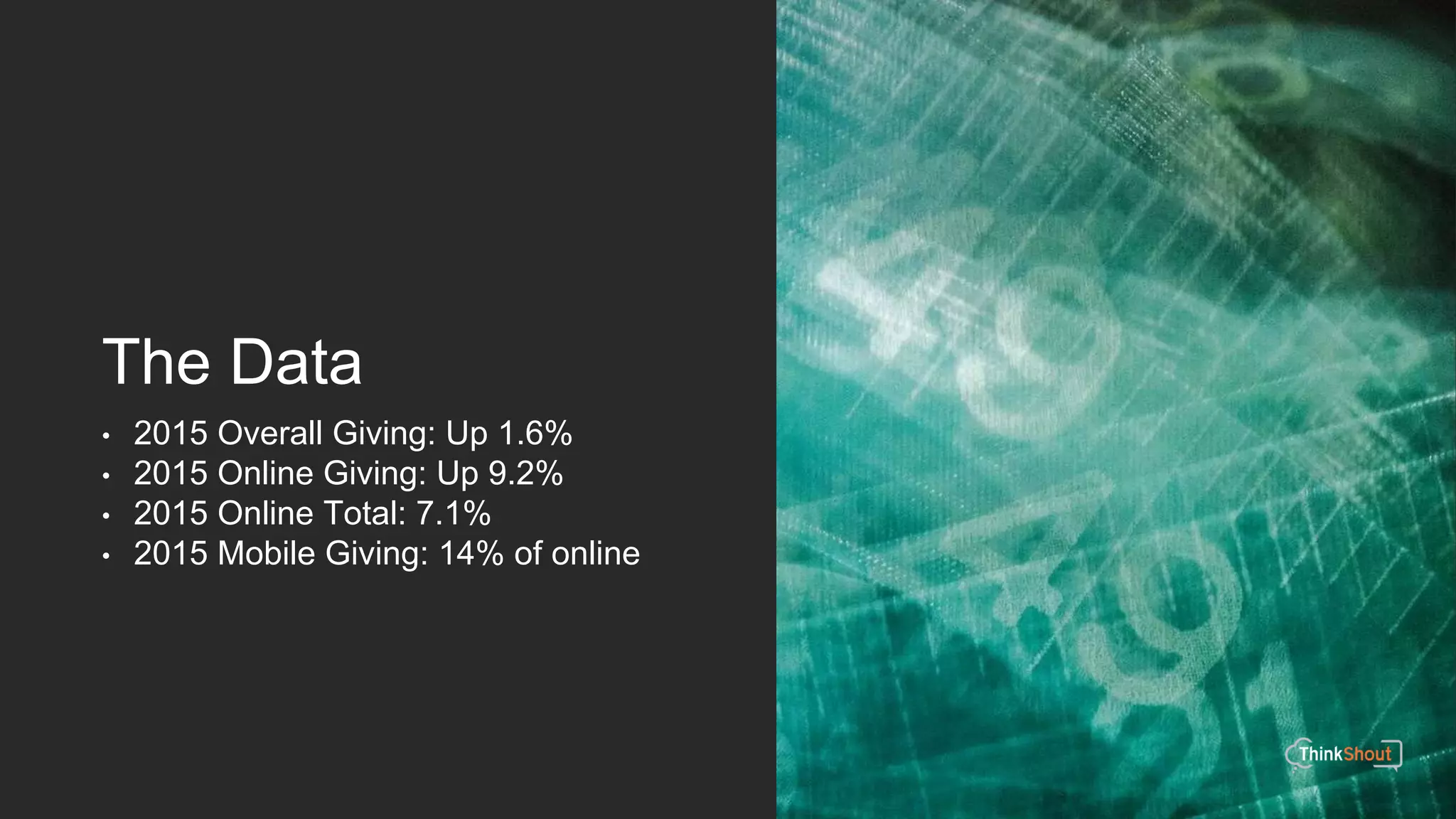
The Data
• 2015 Overall Giving: Up 1.6%
• 2015 Online Giving: Up 9.2%
• 2015 Online Total: 7.1%
• 2015 Mobile Giving: 14% of online
At some point, in the near future,
our supporters will have never used
a checkbook.
Sources of information will
continue to proliferate, all
competing for attention.
6 Principals
• Primacy
• Simplicity
• Consistency
• Clarity
• Authenticity
• Engagement
Put Your Constituents First
PRIMACY
PRIMACY
Organization by Type
PRIMACY
Organization by Department
PRIMACY
Goals
PRIMACY
Audiences
PRIMACY
Content
– Jesse James Garrett, The Elements of User Experience
“The single most important thing most websites
can offer to their users is content that those users
will find valuable.”
• .”
Don’t Make Me Think
SIMPLICITY
SIMPLICITY
SIMPLICITY
SIMPLICITY
Plaintext Emails Outperform Templates
Make the Experience Cohesive…
The Entire Experience
CONSISTENCY
CONSISTENCY
Third Party Systems
CONSISTENCY
One Bad Experience…
IF I ONLY HAD A FRAME(WORK)
#DrupalConFrame
Don’t Recreate Everything
IF I ONLY HAD A FRAME(WORK)
#DrupalConFrame
Don’t Recreate Everything
IF I ONLY HAD A FRAME(WORK)
#DrupalConFrame
Don’t Recreate Everything
#16NTCcohesiveUX
#16NTCcohesiveUX
CONSISTENCY
CONSISTENCY
Governance
CONSISTENCY
Basically, Write Things Down
Language Has Power
CLARITY
CLARITY
Specialized Language
CLARITY
Tell Stories, Not Policies
AUTHENTICITY
AUTHENTICITY
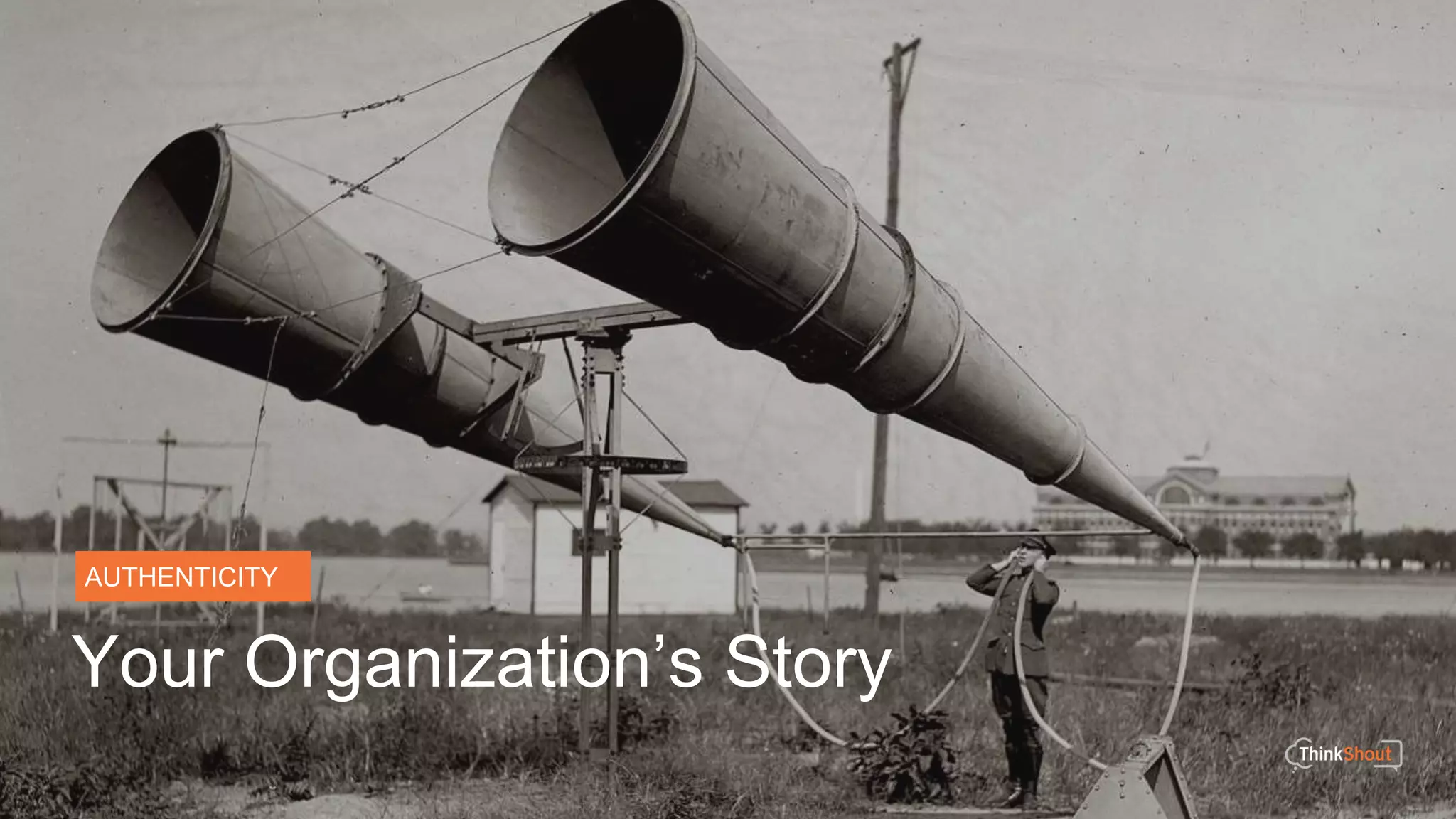
Your Organization’s Story
AUTHENTICITY
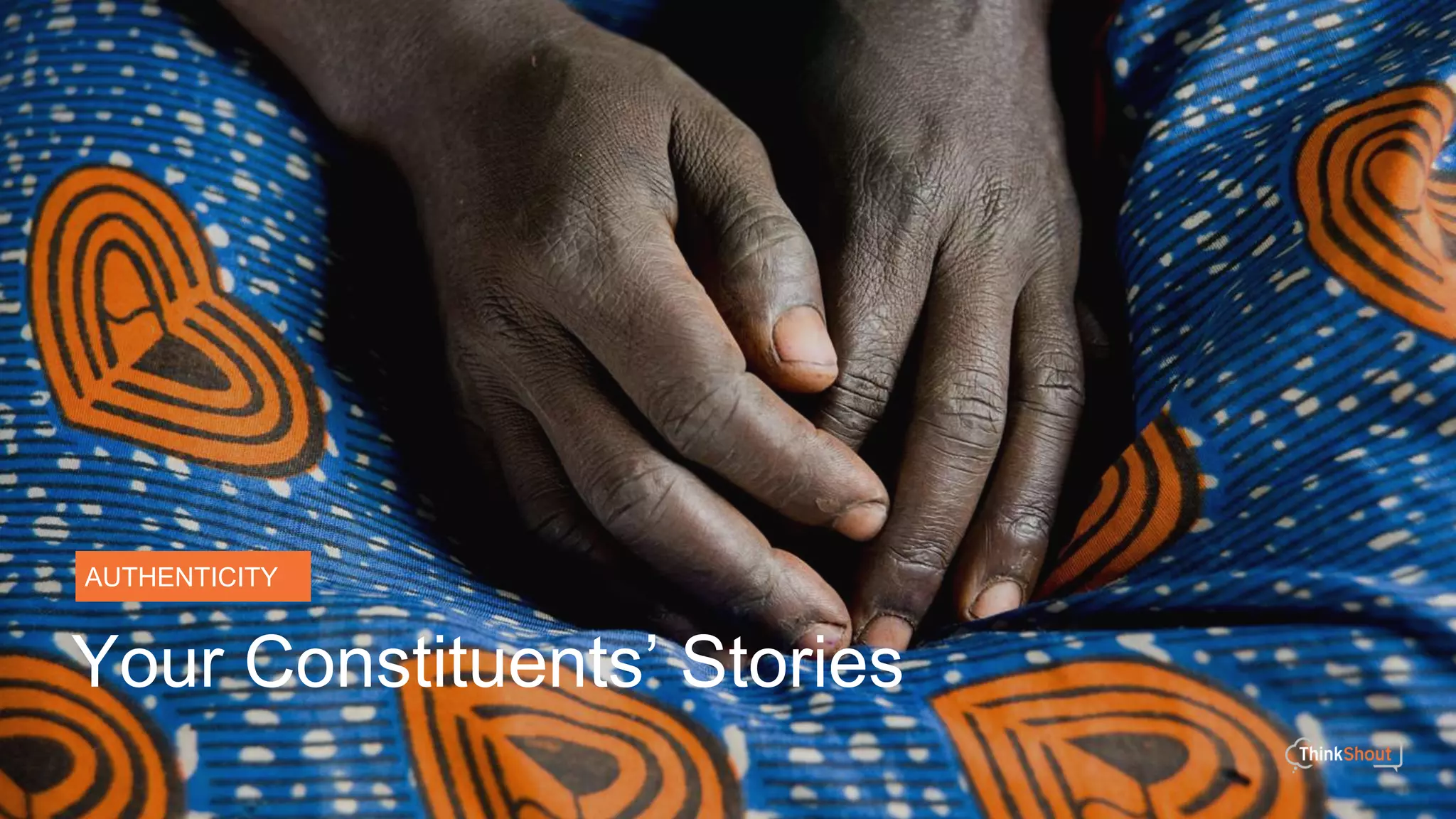
Your Constituents’ Stories
Listen, Listen, Listen
ENGAGEMENT
ENGAGEMENT
Ladder of Engagement
ENGAGEMENT
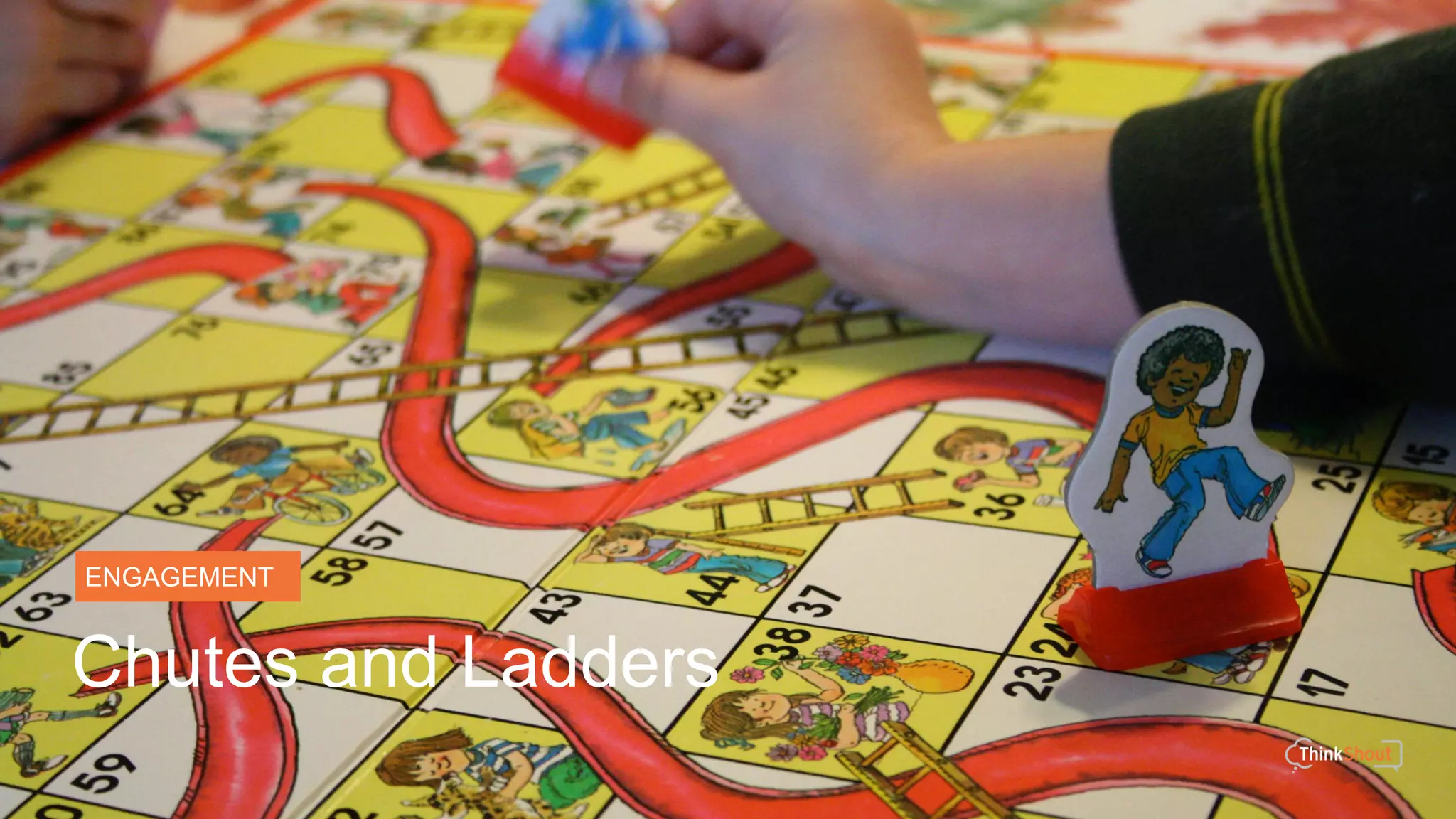
Chutes and Ladders
ENGAGEMENT
ENGAGEMENT
So, Does It Work?
REVISITING THE SPLC
CUT THROUGH THE NOISE
Infrastructure
INFRASTRUCTURE
Infrastructure Can Help
INFRASTRUCTURE
It’s Not Infallible
INFRASTRUCTURE
Humans Are Resilient
Questions?
Brett Meyer
@brett_meyer
brett.meyer@thinkshout.com

Cut Through the Noise: Listen to Your Audience

Editor's Notes

  • #2 Hi, I’m Brett. I’m a liberal arts major, and I’m here to talk to you about technology. That’s not quite true. I’m really here to talk to you about people. But we’ll get to that.
  • #3 I’ve been working in technology for a long time, and now I’m the Chief Strategy Officer at ThinkShout. It’s a great title, because it means whatever I need it to mean on a given day.
  • #4 ThinkShout is an agency that works with nonprofits and other social good organizations on digital strategy, particularly around websites, but we offer the full range of services you might expect. I’m mostly proud of our work for other reasons, though. Last year, we became a B-Corporation. We’re no longer legally obligated to maximize shareholder profits. We have our own mission and values statements. We’re one hire away from having a 50-50 gender distribution, which is almost unheard of for a tech company. And we do good work. Over the past few years, I’ve had the opportunity to work with so many fantastic organizations.
  • #7 I should just come right out and say that these were very expensive projects. Each of these organizations have budgets that most nonprofits would love to have, but most never will. I don’t want you all to think I’m going to talk about things you can’t possibly afford, so let me explain a little bit about how I got the opportunity to work with some of the largest nonprofits in the country.
  • #8 As I said, I was a liberal arts major. Seriously. I studied English Literature, Creative Writing, History, Philosophy, Political Science. Photo Credit: https://www.flickr.com/photos/12567713@N00/7005089218/
  • #9 But instead of going to graduate school, I waited for my now-spouse Melissa to finish her final year. Nobody wanted to pay me to read Thomas Pynchon, so I got a job at an educational start-up founded by a psychology professor. We made CD-ROM textbooks. At some point, our publisher wanted a website to support the work we were doing. This was 1996, when it was really easy to pick up web development. So I did. And I quickly realized that the Internet was going to displace what we were doing. Photo Credit: https://www.flickr.com/photos/rauckhaus/4616374039/
  • #10 So, I joined another guy who had started a web company in a garage. Okay, not a garage: just a 100 square foot office attached to his family’s candy company. You cannot make this stuff up. We built ourselves up to 12 working with banks, mortgage companies and derivative traders. Anybody know The Street.com? We integrated their offerings with AOL, Excite, and Yahoo. We built what could have been an early community site and almost got venture funding. But then the bubble burst and I went freelance for a few years – still working mostly with financial companies. Turns out, that starts to wear on you. Melissa worked for a financial advisory firm, and we both got tired of just earning a paycheck at about the same time. So we did what any reasonable person in their early 30s might do. Photo Credit: https://www.flickr.com/photos/rh2ox/9990016123
  • #11 We joined the Peace Corps. We served in Mali, in West Africa. We learned French and Bambara. Melissa worked at a health center, I worked at a radio station. We coached a girls’ soccer team together and did a local radio show – in Bambara. It was very hot. Then we came back. But I’ll cover that later. Idealism doesn’t pay the bills, though. I needed to find a job.
  • #12 And NTEN was hiring a communications and web manager. They hired me because I knew websites and how to write. But I had never done email marketing before, or any kind of marketing, really. When I joined NTEN, we had about 2500 people on our list. When I left, it was more than 60,000. And my annual marketing budget? About $30,000 a year. I learned so many things about nonprofits during my 6 years there, met so many great people doing amazing work, I knew I’d found my calling: helping nonprofits leverage modern communications platforms to better meet their missions. Photo Credit: https://www.flickr.com/photos/jdlasica/5548351071/
  • #13 So now I do that by helping to build really big websites. But I wanted you to understand: I am an accidental techie. Everything I’ve learned, I learned on my own, often with help from the community. I am not professionally trained, but I have become a professional. And I grew into my role at NTEN because I believed in the mission, just like pretty much everybody who chooses to work for a nonprofit. Along the way, I’ve learned a lot of things… about websites, of course, but also about communications, email, social media, marketing, and nonprofits in general. And I can tell you honestly that…
  • #14 There’s no real magic to it, just some basic principals we’ve developed over the years, both independently and as a team, at ThinkShout and at previous careers. When I joined ThinkShout, there were only 8 of us, and our projects were small. Now there are 24 of us. We’ve built our by applying some very simple principals. And I’m going to share those with you today.
  • #15 Because we’re all in this together. We’re all trying to impact the world in positive ways. But we have to fight to be heard. We have to cut through the noise.
  • #16 During my work with the SPLC, I had the honor of meeting Morris Dees. He co-founded the SPLC back in the early 70s and essentially invented nonprofit direct mail fundraising. We spoke for about 10 minutes, and most of that time he spent grilling us about online fundraising. Why in the world was the method he started more than 40 years ago still more effective than all the fancy tools we have at our disposal now? He’s right, of course. Direct mail is still the most effective means for fundraising for most every organization. And it’s not going away anytime *too* soon. Photo Credit: https://www.flickr.com/photos/sonnycohen/14896806161/
  • #17 But that’s changing. And it’s going to continue to change. Blackbaud recently released their 2015 Charitable Giving Report. It covers $18.2 billion in transactions. 2015 Overall Giving: Up 1.6% 2015 Online Giving: Up 9.2% 2015 Online Total: 7.1% (+7.4%: ecommerce percentage of total retail sales) 2015 Mobile Giving: 14% of online Blackbaud Charitable Giving Report: https://www.blackbaudhq.com/corpmar/cgr/how-nonprofit-fundraising-performed-in-2015.pdf Flickr: https://www.flickr.com/photos/enerva/14296912543
  • #18 Times were simpler when Morris Dees started his first direct mail campaign. That was pretty much the only way to reach supporters. There simply weren’t as many things to distract people. That has changed.
  • #19 Charitable giving has held at 2% of GDP. The only thing that increases is real dollars, real volunteers. Every nonprofit is competing for a slice of the pie that only gets larger when the economy is doing well. I know most of you in here are not concerned so much about fundraising as general communications, but the principal is still true. Most nonprofits are competing not just for donors, but for general attention. People are not getting any more time in the day; they can only pay attention to so much. What can you do to become one of those sources of information?
  • #20 We have another principal: Technical Excellence, but we also recognize that the technology simply has to work. It’s how you apply the technology that matters. Photo Credit: https://www.flickr.com/photos/tunruh/363011730/
  • #21 If you take only one thing away from what I say today, I hope it’s this.
  • #22 One common problem we’ve run into over and over again is the organization of content by type. Photo Credit: https://www.flickr.com/photos/anupamsrivastava/9315800953/
  • #23  Photo Credit: https://www.flickr.com/photos/bobjagendorf/2219031438/
  • #25 Photo Credit: https://www.flickr.com/photos/twose/887903401/
  • #26 Photo Credit: https://www.flickr.com/photos/russelldavies/375430921/
  • #30 Photo Credit: https://www.flickr.com/photos/jeepersmedia/13976920190/
  • #31 Photo Credit: https://www.flickr.com/photos/staffanscherz/6161284551/
  • #34 Photo Credit: https://www.flickr.com/photos/r_b/2452307906/
  • #36 How many of you use a single system to get your message out? Two? Three? Almost every nonprofit relies on a whole host of systems: CMS, CRM, email, direct mail, maybe video, certainly a number of social media platforms. That can make it incredibly difficult to create a consistent experience for your end users. But we have to. Photo Credit: https://www.flickr.com/photos/j_benson/9913779966/
  • #37 Because one bad experience can ruin a multitude of good ones, because humans expect things to turn out, well, just as they expect. Photo Credit: https://www.flickr.com/photos/j_benson/9913779966/
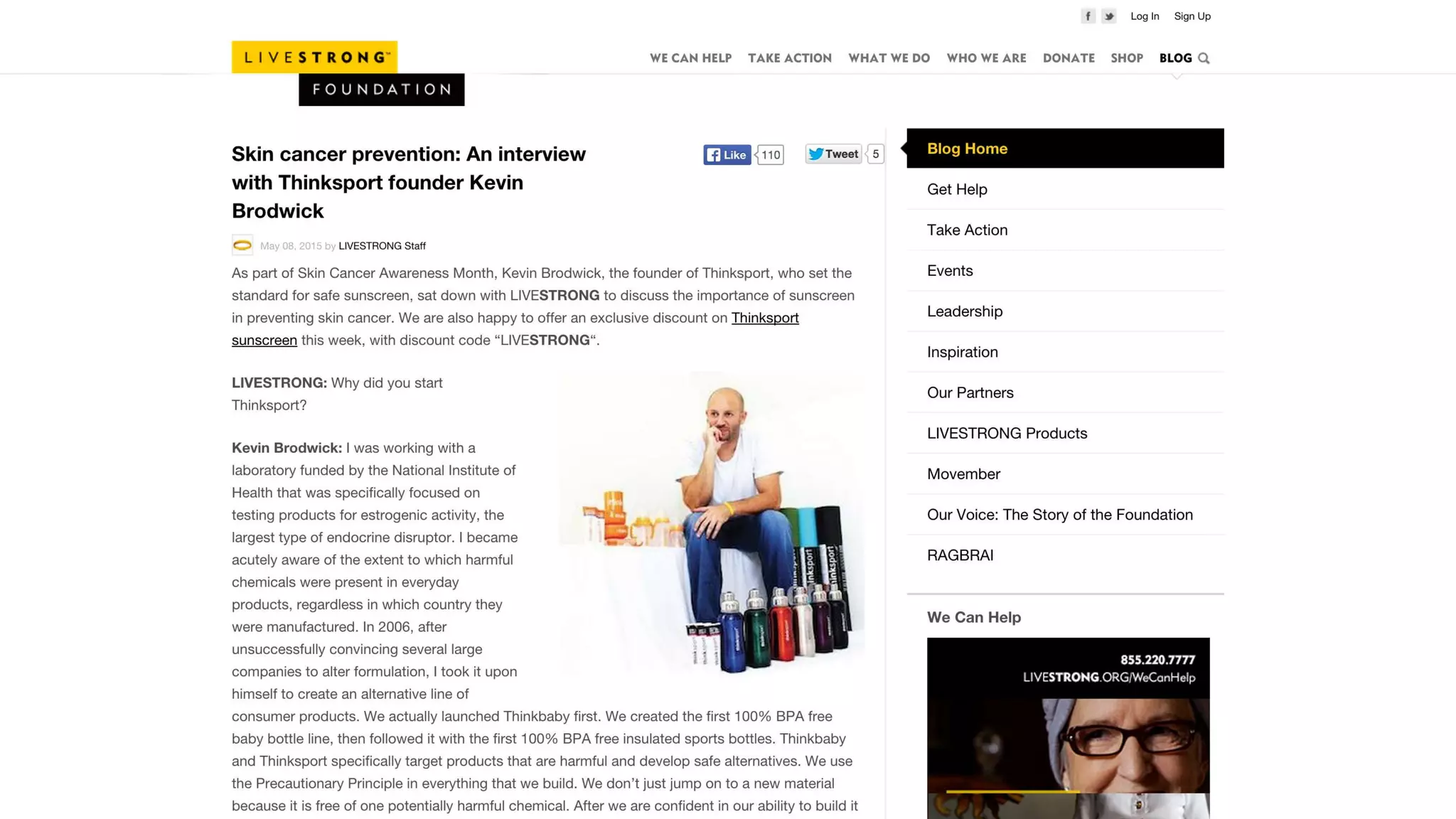
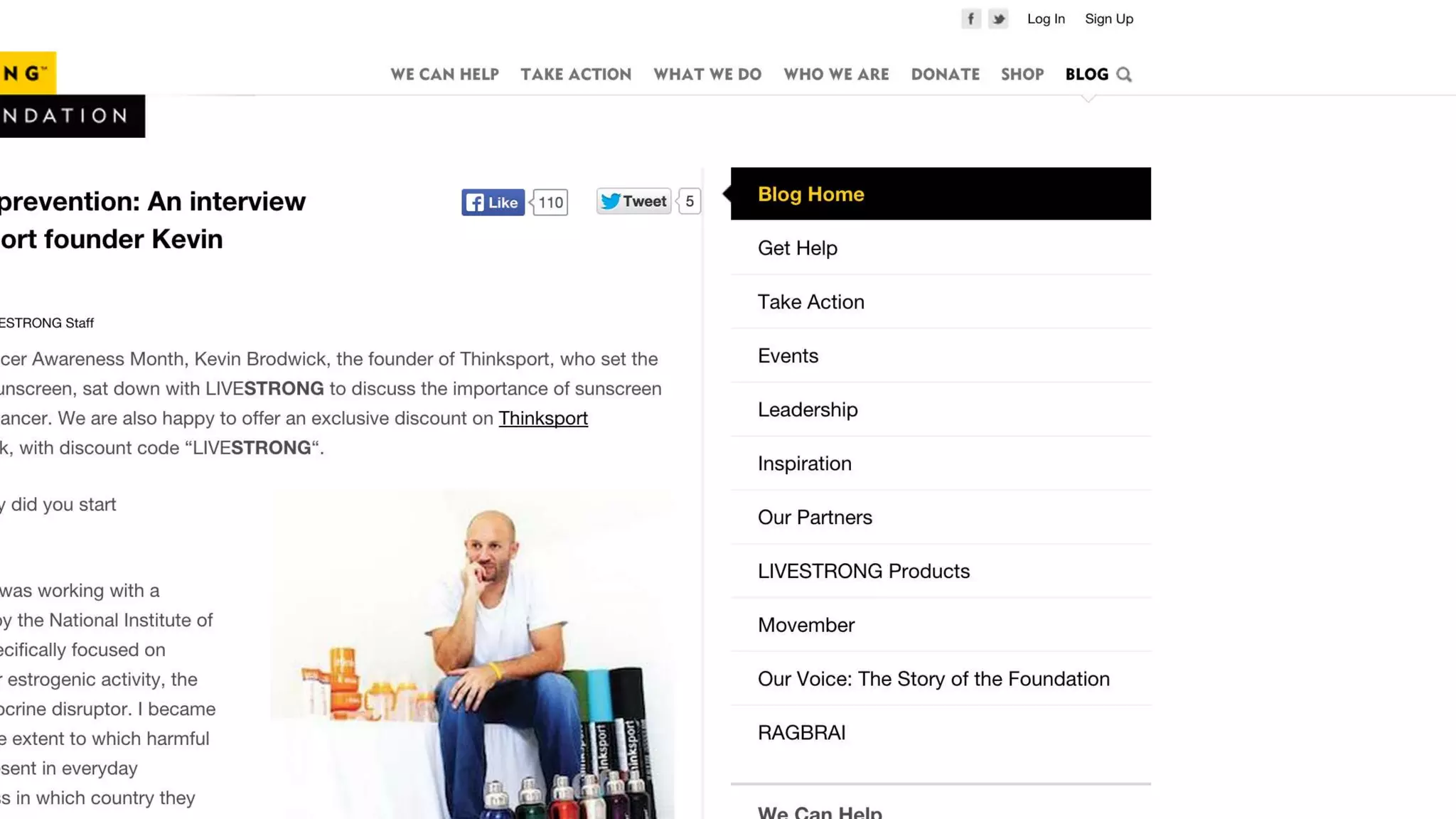
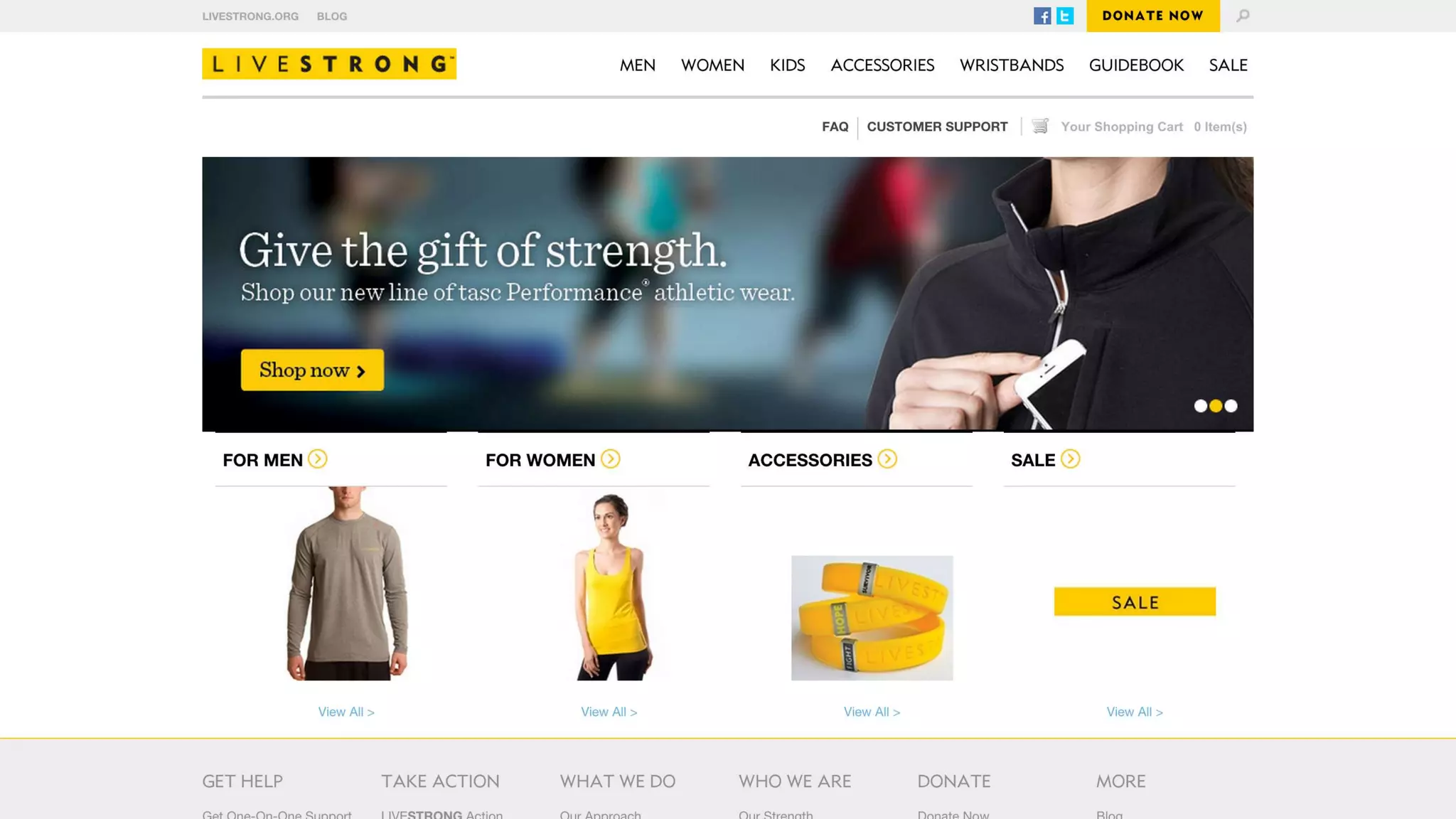
  • #38 Presenter: Brett Remember when I said LiveStrong was doing a pretty good job? They’ve done it by making sensible compromises.
  • #39 Presenter: Brett Remember when I said LiveStrong was doing a pretty good job? They’ve done it by making sensible compromises.
  • #40 Presenter: Brett The information architecture on their main site features dropdown menus. Say what you will about that as a UX element, it’s what they decided to do.
  • #41 Presenter: Brett For the blog, they have the same top level navigation — but they’ve done away with the drop down. It changes the user experience, but lessens the amount of maintenance they need to do. If those items fell out of sync, it may be a worse UX than simply limiting the options they have at this point.
  • #42 Presenter: Brett For the blog, they have the same top level navigation — but they’ve done away with the drop down. It changes the user experience, but lessens the amount of maintenance they need to do. If those items fell out of sync, it may be a worse UX than simply limiting the options they have at this point.
  • #43 Presenter: Brett For the store, the navigation has changed entirely. This makes sense. Why give the user the same experience on the store site as on the main site, when the focus is on helping them buy products at this point? The important part is to retain the sense of brand, and the feeling that the properties are connected.
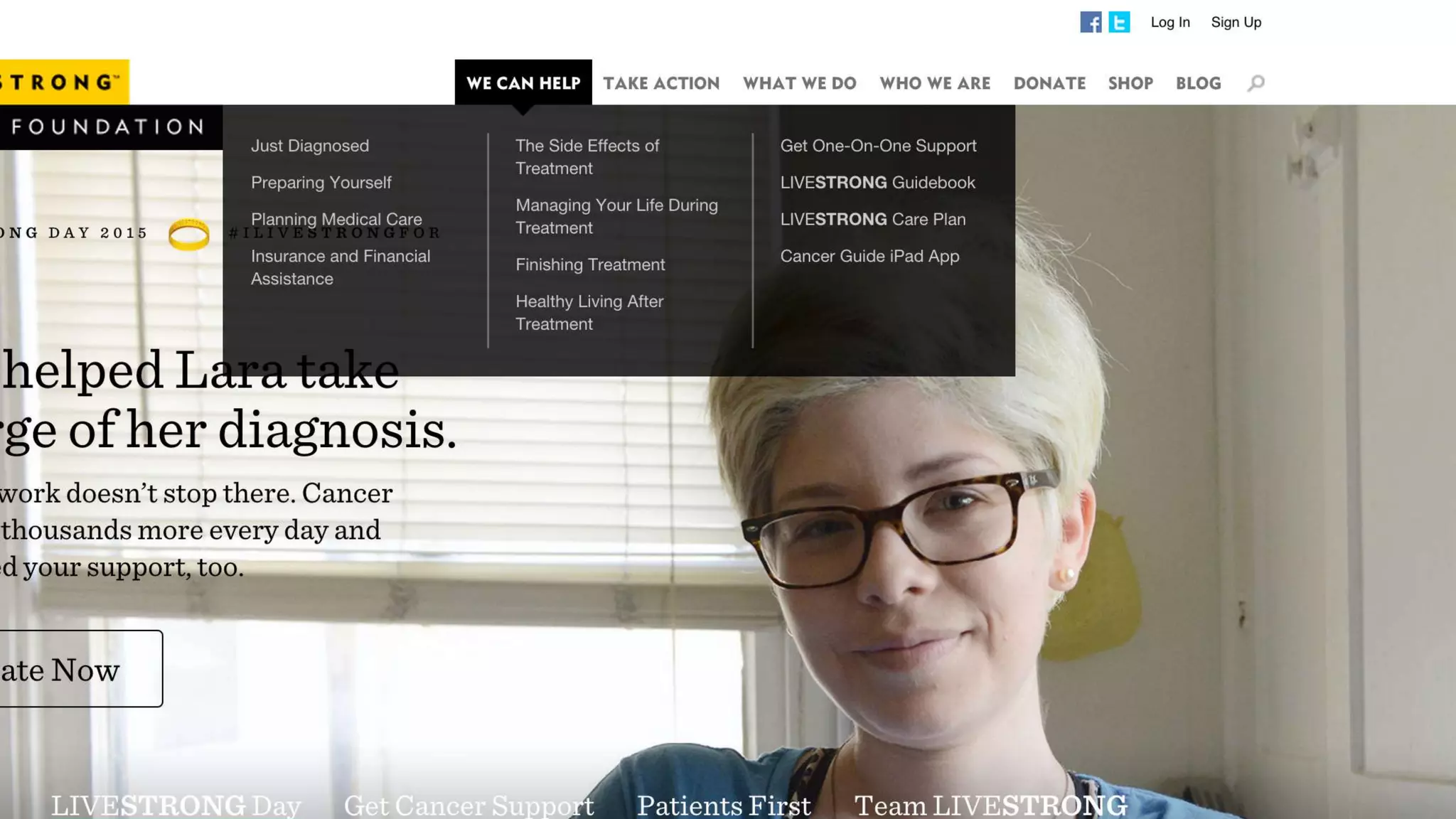
  • #44 Presenter: Brett The donation page is even more stripped down. Again, once they’ve gotten a user into the donation channel, they don’t want to provide easy ways to do something else. Keep the experience clean, then return them to the main site after the action has been completed. By focusing on the capabilities and use cases of their various properties, Livestrong has compromised on some elements of the user experience to focus on what’s important given the use case. A more cynical person might draw a comparison to how Lance won the Tour, but let’s move past that, shall we.
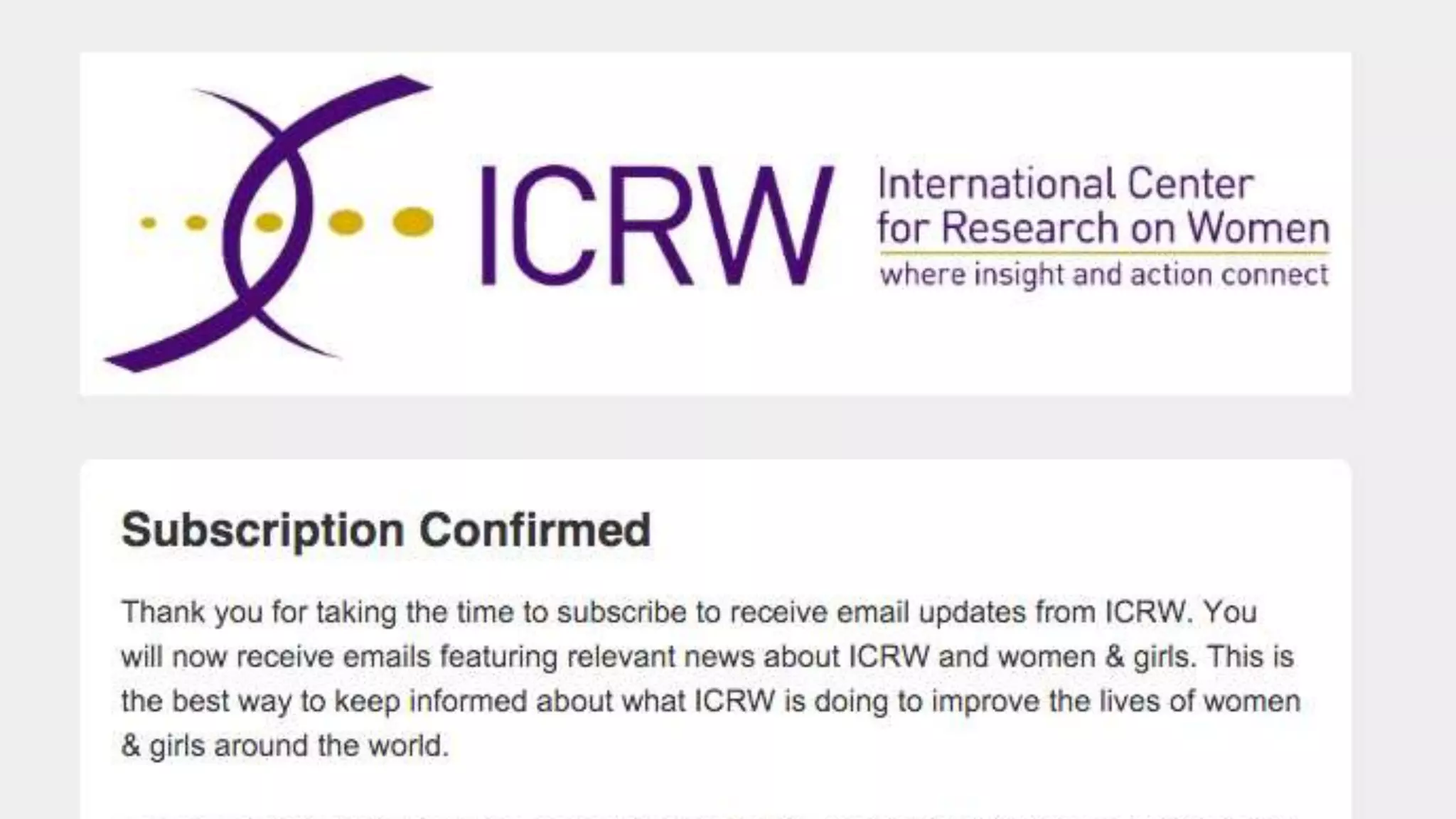
  • #45 Presenter: Melissa Journey of signing up for an email Photo credit: http://www.icrw.org/
  • #46 Presenter: Melissa Journey of signing up for an email Photo credit: http://www.icrw.org/
  • #47 Presenter: Melissa Journey of signing up for an email Photo credit: http://www.icrw.org/
  • #48 I’m sure everybody in here knows that mobile is not a problem to solve in the future. It’s an immediate and pressing issue. You can’t provide a consistent experience to your supporters if you assume they’re just consuming your messages through a computer. How many of you have used your phones to check your email? Okay, how many of your organizations have a responsive email template? It’s got to happen. A staffer with even some HTML knowledge can do it in a day. Photo Credit: https://www.flickr.com/photos/toehk/7312829146/
  • #49 Creating consistency requires a plan. It’s typically not the case that a single person is responsible for every touchpoint with your supporters, and when that’s the case, experiences fragment and brand consistency is lost. You need to establish: Roles & Responsibilities: Who’s responsible for what? Workflow: when and how do things happen? Metrics and evaluation standards: how are you going to know what you need to improve if you’re not tracking against key metrics? Photo Credit: https://www.flickr.com/photos/josephgruber/16533486144/
  • #50 Photo Credit: https://www.flickr.com/photos/josephgruber/16533486144/
  • #51 Ah, my English major slide. Everybody here probably speaks at least some English. I bet a lot of you also speak other languages. But we can all talk to each other, right? When we’re done here, you can come up, and we can have a conversation.
  • #52 Shouldn’t it be that way at work, too? Not when we talk to our teammates: when we talk to our constituents. We all use specialized language. Consider your own experience. Melissa and I could have an entire conversation that nobody else could understand – speaking English. If I say something like “Did you clear the Cloudfront cache on AWS?”, most everybody at ThinkShout would understand. But outside of developers? At our organizations, we speak in shorthand to get our work done more quickly. But we can’t do that when we talk to our supporters, folks who don’t share our vocabulary yet. Photo Credit: https://www.flickr.com/photos/travelwayoflife/7465843862/
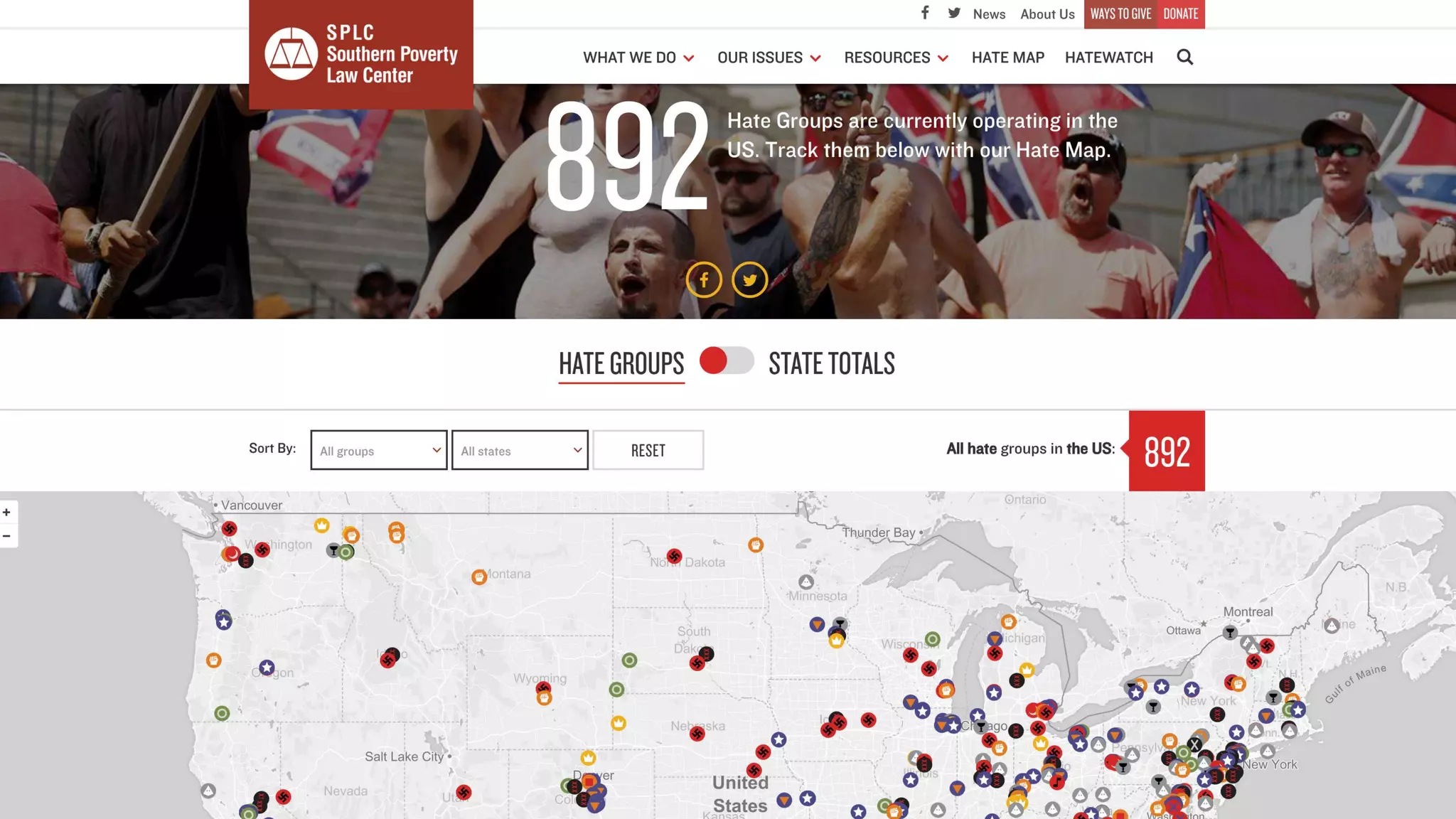
  • #53 The Hate Map is the SPLC’s signature piece of content. It’s updated once a year, and they do a big push around it. The map itself tells a story, a terrifying story, and through the use of icons, they make it pretty self-evident what that story is. But they also go to the effort to define their terms and explain the premise, in simple, clear language.
  • #54 When Marvel started teasing The Avengers movie with the first Iron Man, I thought there was no way that can work. Movies aren’t comics. People aren’t going to pay attention to all of the lead-up or suddenly just get why there’s this super team. I was wrong. You typically can’t tell your entire story all at once. “We’re having an event to do this.” “Join us on a webinar for that.” “Engage on our Facebook page.” Why? To support our mission, ultimately, but you can’t say that every time. You need to break your stories up into pieces, while tying it back to the master narrative. Photo Credit: https://www.flickr.com/photos/julienbelli/14487075742/
  • #55 People don’t connect so much with what you do or how you do it so much as why you do it. “We work to fight climate change.” Okay, that’s a good generality. But what does that mean?
  • #56 Photo Credit: https://www.flickr.com/photos/x-ray_delta_one/3980856249/
  • #57 Planned parenthood uses a pinterest board to spotlight their CEO - we mentioned earlier the importance of using an outsider, but this is one instance in which makes sense to us an “insider” as she is well known and was highlighted in the media. Things she has to say are of interest and value to members/donors and this also serves as a good resource for media relations.
  • #58 Photo credit: http://www.icrw.org/
  • #61 Photo Credit: https://www.flickr.com/photos/ikewinski/8072803358/
  • #62 Photo Credit: https://www.flickr.com/photos/benhusmann/3120095949/
  • #63 Photo Credit: https://www.flickr.com/photos/simpologist/42391997/
  • #64 I can’t tell you how many times, at this point, I’ve heard a potential client essentially ask us if we can recreate Facebook. Photo Credit: https://www.flickr.com/photos/thomashawk/6009783137/
  • #71  Photo Credit: https://www.flickr.com/photos/biwook/390088839/
  • #72  If it was, we would have got to meet Jon Stewart. You can’t pin your hopes on technology solving all of your problems. Photo Credit: https://www.flickr.com/photos/wsdot/8807161879/
  • #73 You can do incredible things with the systems you already have if you: Understand what they can do Understand what they can’t do Formulate a plan to make the best of it Photo Credit: Brett & Melissa
  • #74  Photo Credit: https://www.flickr.com/photos/lwr/13442542235/