NQO1 modulates redox status and
H2O2 levels in pancreatic β-cells

Delaine Zayas-Bazán Burgos1 , Joshua Gray2,3, Emma Heart3
1University of Puerto Rico at Cayey
2U.S. Coast Guard Academy
3Marine Biology Laboratory
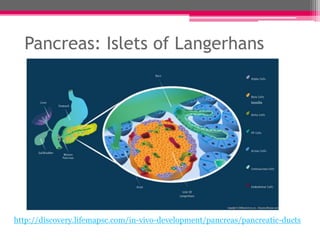
Pancreas: Islets of Langerhans

insulin

http://discovery.lifemapsc.com/in-vivo-development/pancreas/pancreatic-ducts
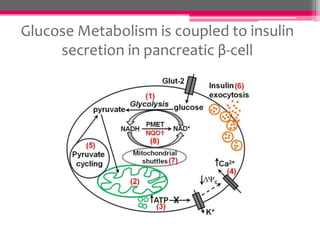
Glucose Metabolism is coupled to insulin
secretion in pancreatic β-cell
The role of NQO1 in metabolism
Detoxification enzyme
 NQO1 knock-out mice are
sensitive to oxidant stress
Joseph P et al (2007), Radjendirane V. (1998)

Intermediary metabolism
 NQO1 levels correlated with
fasting insulin levels
Palming J et al (2007)

 NQO1 knock-out mice have
metabolic defects
Gaikwad A et al (20o1)
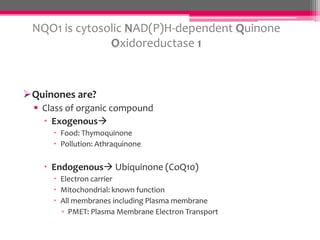
NQO1 is cytosolic NAD(P)H-dependent Quinone
Oxidoreductase 1

Quinones are?
 Class of organic compound
 Exogenous
 Food: Thymoquinone
 Pollution: Athraquinone

 Endogenous Ubiquinone (CoQ10)
 Electron carrier
 Mitochondrial: known function
 All membranes including Plasma membrane
▫ PMET: Plasma Membrane Electron Transport
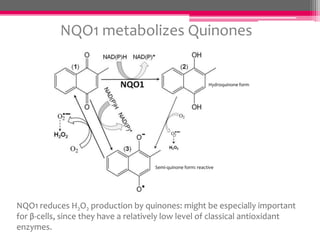
NQO1 metabolizes Quinones

Hydroquinone form

Semi-quinone form: reactive

NQO1 reduces H2O2 production by quinones: might be especially important
for β-cells, since they have a relatively low level of classical antioxidant
enzymes.
NQOI cytoprotection in β-cells
β-cells have relatively low levels of classical antioxidant
enzymes
 SOD : Superoxide dismutases 1,2 and 3

Why?
Oxidants are important for signaling in β-cell under
physiological situation
Pathological high doses of oxidants will harm β-cell
to greater extent than other cell types
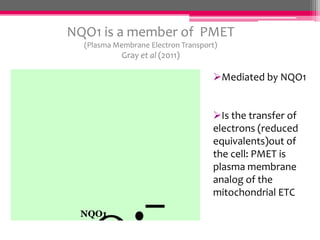
NQO1 is a member of PMET
(Plasma Membrane Electron Transport)

Gray et al (2011)

Mediated by NQO1
Is the transfer of
electrons (reduced
equivalents)out of
the cell: PMET is
plasma membrane
analog of the
mitochondrial ETC
NQO1
Hypotheses to test:
Objective: to determine role of NQO1 in β-cell
health and metabolism.

Hypotheses:
 (1) NQO1 reduces oxidative stress in β-cells by
lowering quinone-dependent H2O2 production.
 (2) NQO1 modulates NAD(P)H-to-NAD(P)+ ratio in βcells.
Methods
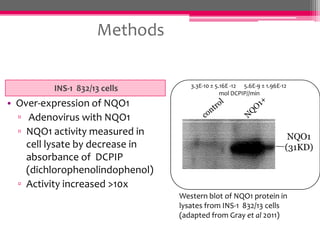
INS-1 832/13 cells

• Over-expression of NQO1
▫ Adenovirus with NQO1
▫ NQO1 activity measured in
cell lysate by decrease in
absorbance of DCPIP
(dichlorophenolindophenol)
▫ Activity increased >10x

3.3E-10 ± 5.16E -12 5.6E-9 ± 1.96E-12
mol DCPIP//min

NQO1
(31KD)

Western blot of NQO1 protein in
lysates from INS-1 832/13 cells
(adapted from Gray et al 2011)
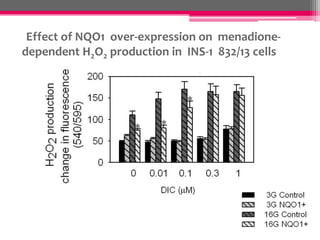
Effect of NQO1 over-expression on menadionedependent H2O2 production in INS-1 832/13 cells
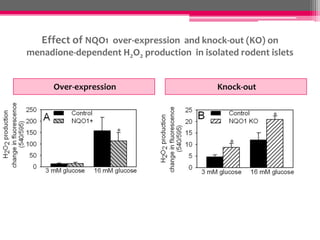
Effect of NQO1 over-expression and knock-out (KO) on
menadione-dependent H2O2 production in isolated rodent islets
Over-expression

Knock-out
Hypotheses
Hypotheses:
 (1) NQO1 reduces oxidative stress in β-cells by
lowering quinone-dependent H2O2
production.
 (2) NQO1 modulates NAD(P)H-to-NAD(P)+
ratio in β-cells.
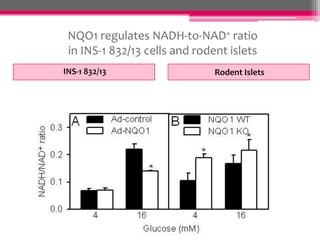
• NADH and NADPH are substrates for NQO1
• Gaikwad et al (2001): NQO1 has been show to
modulate redox ratios in fat and liver
NQO1 regulates NADH-to-NAD+ ratio
in INS-1 832/13 cells and rodent islets
INS-1 832/13

Rodent Islets
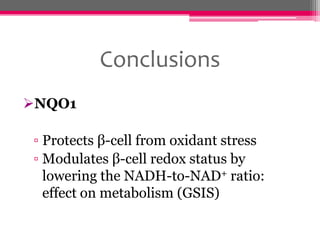
Conclusions
NQO1

▫ Protects β-cell from oxidant stress
▫ Modulates β-cell redox status by
lowering the NADH-to-NAD+ ratio:
effect on metabolism (GSIS)
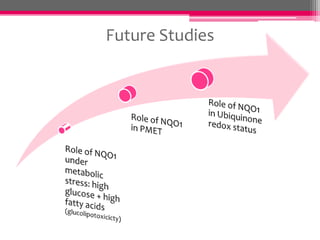
Future Studies
Acknowledgments

Dmzbb final mbl

  • 1.
    NQO1 modulates redoxstatus and H2O2 levels in pancreatic β-cells Delaine Zayas-Bazán Burgos1 , Joshua Gray2,3, Emma Heart3 1University of Puerto Rico at Cayey 2U.S. Coast Guard Academy 3Marine Biology Laboratory
  • 2.
    Pancreas: Islets ofLangerhans insulin http://discovery.lifemapsc.com/in-vivo-development/pancreas/pancreatic-ducts
  • 3.
    Glucose Metabolism iscoupled to insulin secretion in pancreatic β-cell
  • 4.
    The role ofNQO1 in metabolism Detoxification enzyme  NQO1 knock-out mice are sensitive to oxidant stress Joseph P et al (2007), Radjendirane V. (1998) Intermediary metabolism  NQO1 levels correlated with fasting insulin levels Palming J et al (2007)  NQO1 knock-out mice have metabolic defects Gaikwad A et al (20o1)
  • 5.
    NQO1 is cytosolicNAD(P)H-dependent Quinone Oxidoreductase 1 Quinones are?  Class of organic compound  Exogenous  Food: Thymoquinone  Pollution: Athraquinone  Endogenous Ubiquinone (CoQ10)  Electron carrier  Mitochondrial: known function  All membranes including Plasma membrane ▫ PMET: Plasma Membrane Electron Transport
  • 6.
    NQO1 metabolizes Quinones Hydroquinoneform Semi-quinone form: reactive NQO1 reduces H2O2 production by quinones: might be especially important for β-cells, since they have a relatively low level of classical antioxidant enzymes.
  • 7.
    NQOI cytoprotection inβ-cells β-cells have relatively low levels of classical antioxidant enzymes  SOD : Superoxide dismutases 1,2 and 3 Why? Oxidants are important for signaling in β-cell under physiological situation Pathological high doses of oxidants will harm β-cell to greater extent than other cell types
  • 8.
    NQO1 is amember of PMET (Plasma Membrane Electron Transport) Gray et al (2011) Mediated by NQO1 Is the transfer of electrons (reduced equivalents)out of the cell: PMET is plasma membrane analog of the mitochondrial ETC NQO1
  • 9.
    Hypotheses to test: Objective:to determine role of NQO1 in β-cell health and metabolism. Hypotheses:  (1) NQO1 reduces oxidative stress in β-cells by lowering quinone-dependent H2O2 production.  (2) NQO1 modulates NAD(P)H-to-NAD(P)+ ratio in βcells.
  • 10.
    Methods INS-1 832/13 cells •Over-expression of NQO1 ▫ Adenovirus with NQO1 ▫ NQO1 activity measured in cell lysate by decrease in absorbance of DCPIP (dichlorophenolindophenol) ▫ Activity increased >10x 3.3E-10 ± 5.16E -12 5.6E-9 ± 1.96E-12 mol DCPIP//min NQO1 (31KD) Western blot of NQO1 protein in lysates from INS-1 832/13 cells (adapted from Gray et al 2011)
  • 11.
    Effect of NQO1over-expression on menadionedependent H2O2 production in INS-1 832/13 cells
  • 12.
    Effect of NQO1over-expression and knock-out (KO) on menadione-dependent H2O2 production in isolated rodent islets Over-expression Knock-out
  • 13.
    Hypotheses Hypotheses:  (1) NQO1reduces oxidative stress in β-cells by lowering quinone-dependent H2O2 production.  (2) NQO1 modulates NAD(P)H-to-NAD(P)+ ratio in β-cells. • NADH and NADPH are substrates for NQO1 • Gaikwad et al (2001): NQO1 has been show to modulate redox ratios in fat and liver
  • 14.
    NQO1 regulates NADH-to-NAD+ratio in INS-1 832/13 cells and rodent islets INS-1 832/13 Rodent Islets
  • 15.
    Conclusions NQO1 ▫ Protects β-cellfrom oxidant stress ▫ Modulates β-cell redox status by lowering the NADH-to-NAD+ ratio: effect on metabolism (GSIS)
  • 16.
  • 17.

Editor's Notes

  • #3 Alphacells: GlucagenBeta Cells: InsulinDeltaCells: somatosinPP Cells : PancreaticPolypeptide
  • #6 NAD(P)H dehydrogenase, quinine 1
  • #9 NQO1 overexpression by increasing sensitivity to glucose at lower stimulatory glucose levels
  • #16 0