DISTURBANCES IN FORM OF THOUGHT
BY
VISWANATHAN, GAUTAM SYLESH
FORMAL THOUGHT DISORDER
• “Thought form” refers to the way in which ideas are linked, not
the ideas themselves.
• Thoughts may be logically associated and goal directed, if they are
not a disorder of thought form(formal thought disorder or
sometimes, thought disorder) may exist.
• No thought disorder is pathognomonic for a particular disorder.
FORMAL THOUGHT DISORDER
• However, a specific disorder of thought form is sometimes more
characteristic of one diagnosis than another and may thereby convey
diagnostic significance.
Ex:
• Clang association and flight of ideas are most closely associated with
manic states, derailment and thought blocking are associated with
schizophrenia
THOUGHT DISORDERS INCLUDE
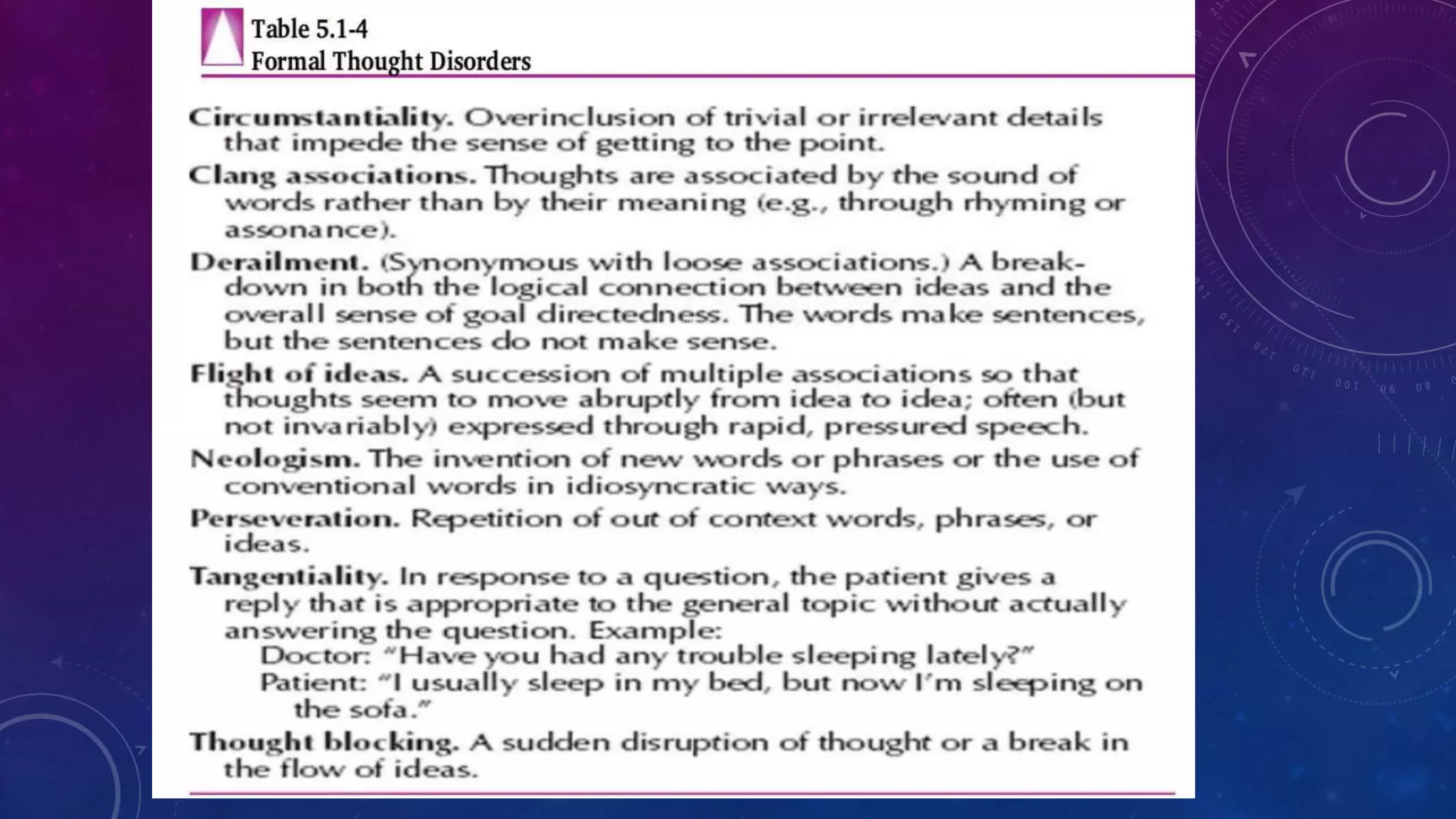
• Circumstantiality
• Clang associations
• Derailment
• Flight of ideas
• Neologism
• Perseveration
• Tangentiality
• Thought blocking
• Incoherence
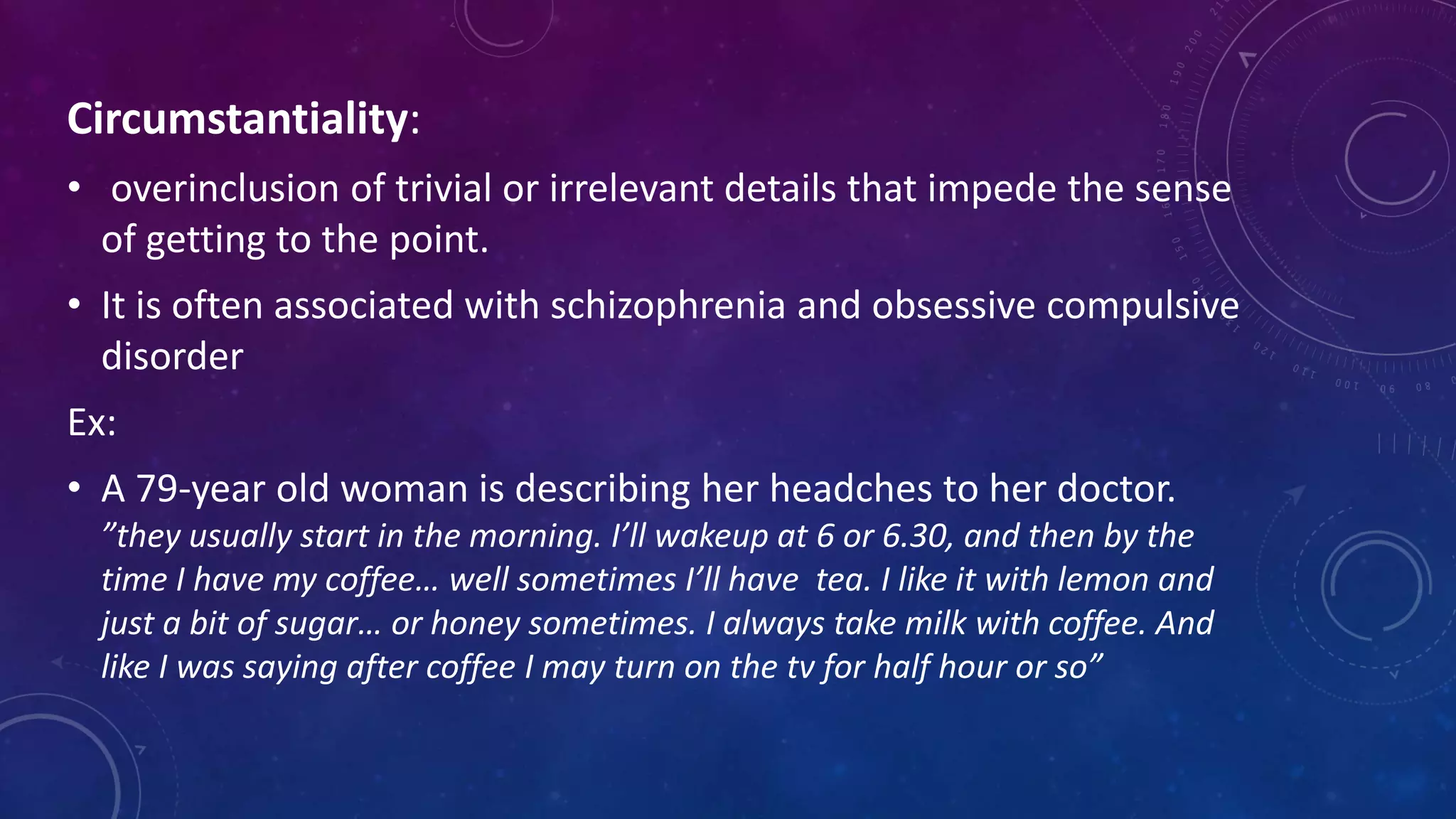
Circumstantiality:
• overinclusion of trivial or irrelevant details that impede the sense
of getting to the point.
• It is often associated with schizophrenia and obsessive compulsive
disorder
Ex:
• A 79-year old woman is describing her headches to her doctor.
”they usually start in the morning. I’ll wakeup at 6 or 6.30, and then by the
time I have my coffee… well sometimes I’ll have tea. I like it with lemon and
just a bit of sugar… or honey sometimes. I always take milk with coffee. And
like I was saying after coffee I may turn on the tv for half hour or so”
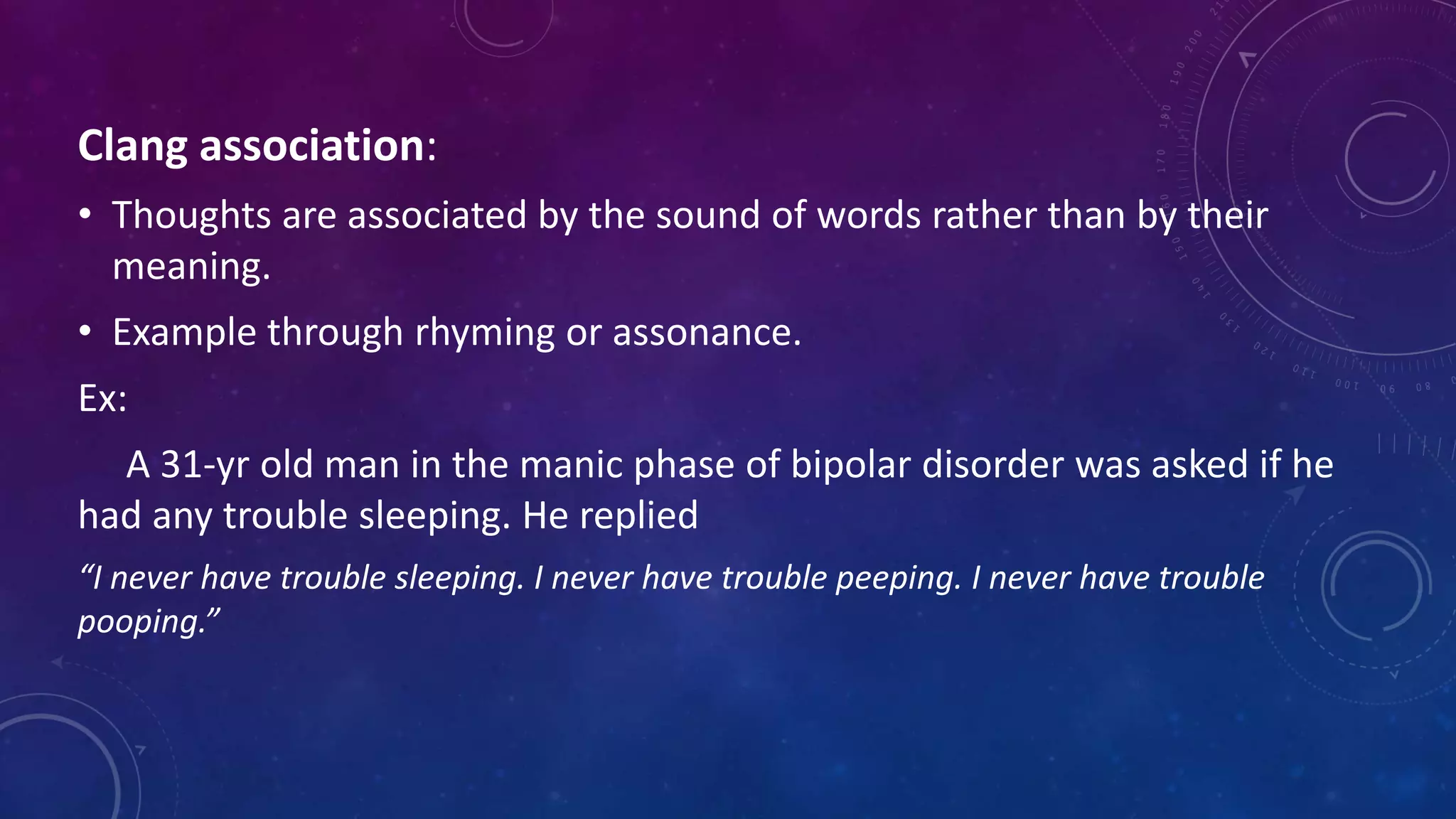
Clang association:
• Thoughts are associated by the sound of words rather than by their
meaning.
• Example through rhyming or assonance.
Ex:
A 31-yr old man in the manic phase of bipolar disorder was asked if he
had any trouble sleeping. He replied
“I never have trouble sleeping. I never have trouble peeping. I never have trouble
pooping.”
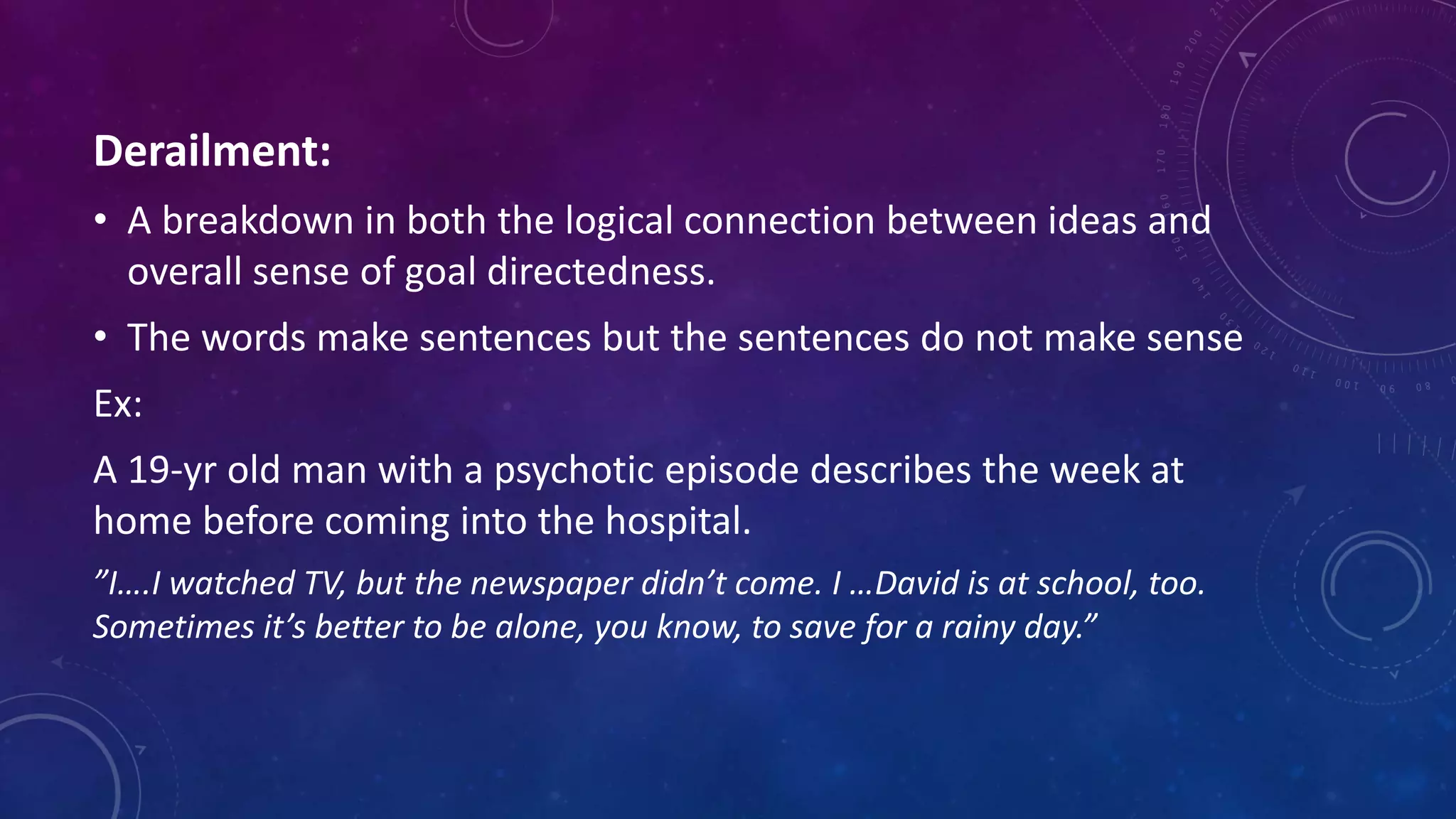
Derailment:
• A breakdown in both the logical connection between ideas and
overall sense of goal directedness.
• The words make sentences but the sentences do not make sense
Ex:
A 19-yr old man with a psychotic episode describes the week at
home before coming into the hospital.
”I….I watched TV, but the newspaper didn’t come. I …David is at school, too.
Sometimes it’s better to be alone, you know, to save for a rainy day.”
Flight of ideas:
• A succession of multiple associations so that thoughts seem to move
abruptly from idea to idea.
• Often (but not invariably) expressed through rapid, pressured speech.
Ex:
A 37-yr-old man who is in the middle of a manic episode is speaking with
great rapidity:
“I just got back from New York. Call it the Big Apple, but it’s rotten to the core. Nobody
can take me. I could beat up my father. He was tough, a salesman. He sold his soul for a
pig in a poke.”
Neologism:
• The invention of new words or phrases or the use of conventional
words in idiosyncratic ways.
• Ex:
A 25 year old man with a diagnosis of chronic undifferentiated
schizophrenia described his activities during a pass from a
psychiatric hospital:
“we went to the park. It was hot, but not too hot. It was burging”
.
Preseveration:
• Repetion of out of context words, phrases, or ideas
Ex:
A psychiatrist is evaluating an 86 year old woman in a nursing home.
Psychiatrist: do you know what day it is?
Woman: Yes,Tuesday.
Psychiatrist: And where are we now?
Woman: Tuesday.
Tangentiality:
• In response to a question, the patient gives a reply that is
appropriate to the general topic without actually answering the
question.
Ex:
A 40 year old man with depression is being evaluated by a
psychiatrist
Psychiatrist: Have you had trouble sleeping through the night lately?
Patient : I usually sleep in my bed but now I’m sleeping on the sofa.
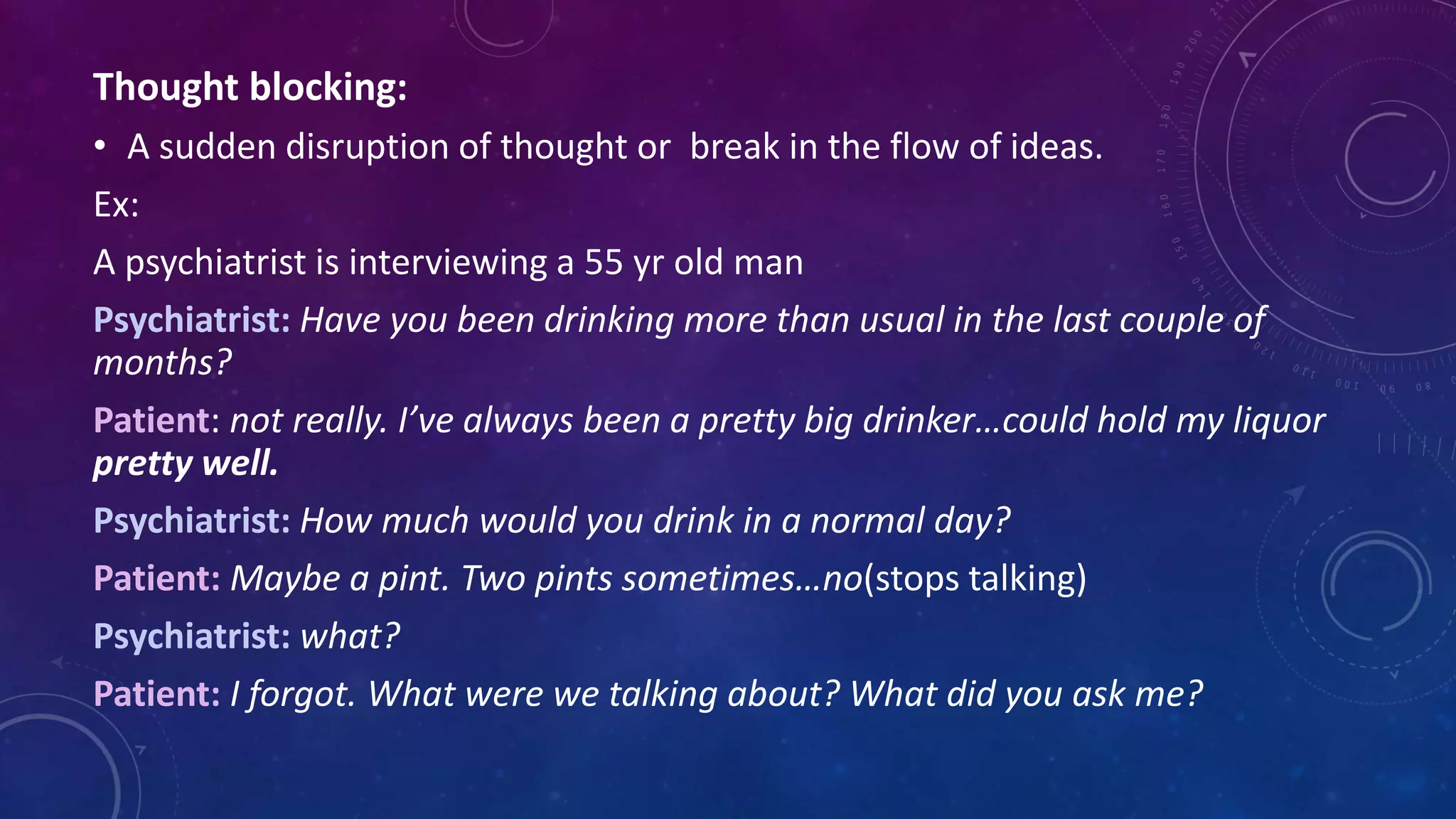
Thought blocking:
• A sudden disruption of thought or break in the flow of ideas.
Ex:
A psychiatrist is interviewing a 55 yr old man
Psychiatrist: Have you been drinking more than usual in the last couple of
months?
Patient: not really. I’ve always been a pretty big drinker…could hold my liquor
pretty well.
Psychiatrist: How much would you drink in a normal day?
Patient: Maybe a pint. Two pints sometimes…no(stops talking)
Psychiatrist: what?
Patient: I forgot. What were we talking about? What did you ask me?
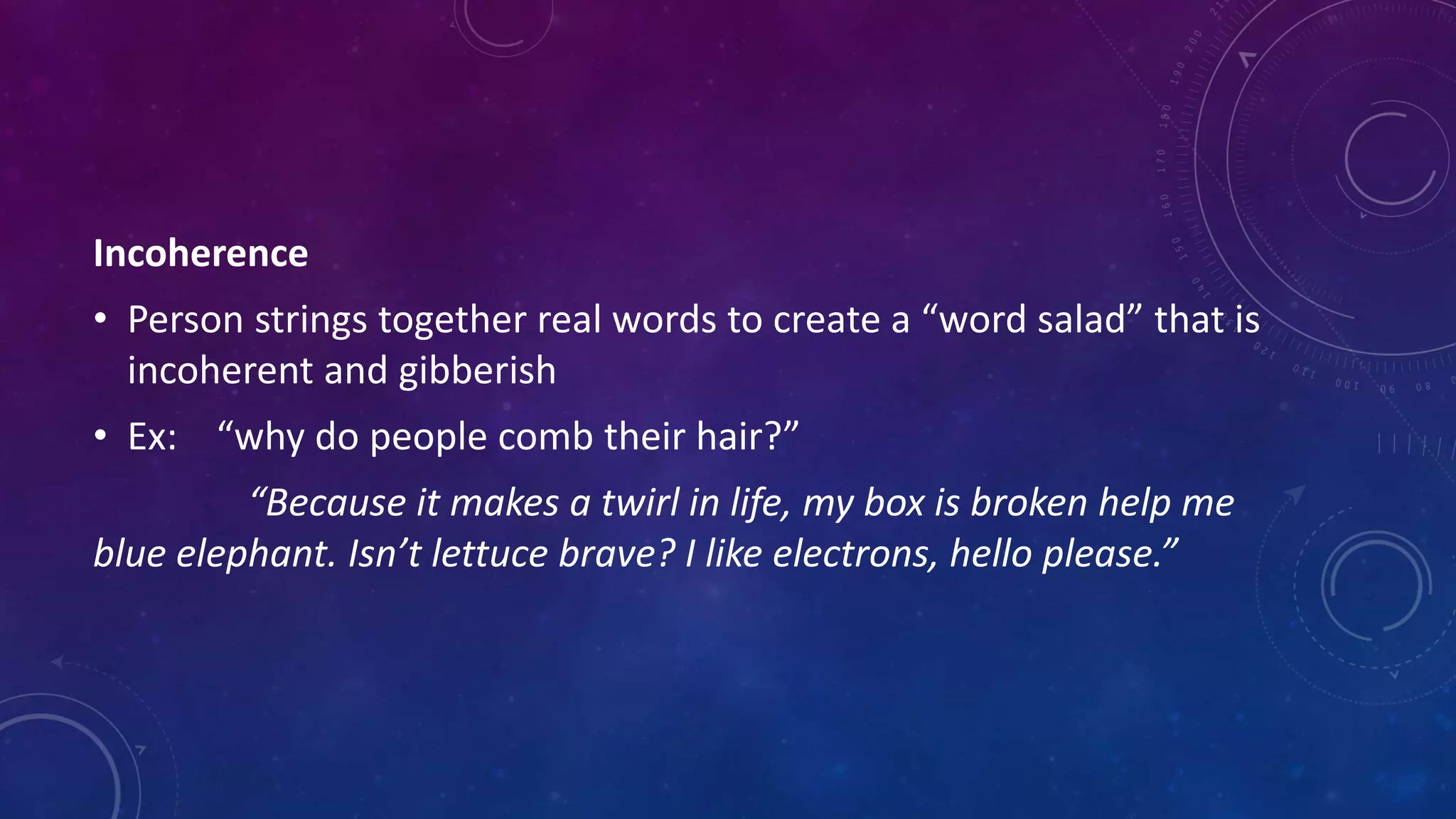
Incoherence
• Person strings together real words to create a “word salad” that is
incoherent and gibberish
• Ex: “why do people comb their hair?”
“Because it makes a twirl in life, my box is broken help me
blue elephant. Isn’t lettuce brave? I like electrons, hello please.”

Disturbances in form of thought

  • 1.
    DISTURBANCES IN FORMOF THOUGHT BY VISWANATHAN, GAUTAM SYLESH
  • 2.
    FORMAL THOUGHT DISORDER •“Thought form” refers to the way in which ideas are linked, not the ideas themselves. • Thoughts may be logically associated and goal directed, if they are not a disorder of thought form(formal thought disorder or sometimes, thought disorder) may exist. • No thought disorder is pathognomonic for a particular disorder.
  • 3.
    FORMAL THOUGHT DISORDER •However, a specific disorder of thought form is sometimes more characteristic of one diagnosis than another and may thereby convey diagnostic significance. Ex: • Clang association and flight of ideas are most closely associated with manic states, derailment and thought blocking are associated with schizophrenia
  • 4.
    THOUGHT DISORDERS INCLUDE •Circumstantiality • Clang associations • Derailment • Flight of ideas • Neologism • Perseveration • Tangentiality • Thought blocking • Incoherence
  • 6.
    Circumstantiality: • overinclusion oftrivial or irrelevant details that impede the sense of getting to the point. • It is often associated with schizophrenia and obsessive compulsive disorder Ex: • A 79-year old woman is describing her headches to her doctor. ”they usually start in the morning. I’ll wakeup at 6 or 6.30, and then by the time I have my coffee… well sometimes I’ll have tea. I like it with lemon and just a bit of sugar… or honey sometimes. I always take milk with coffee. And like I was saying after coffee I may turn on the tv for half hour or so”
  • 7.
    Clang association: • Thoughtsare associated by the sound of words rather than by their meaning. • Example through rhyming or assonance. Ex: A 31-yr old man in the manic phase of bipolar disorder was asked if he had any trouble sleeping. He replied “I never have trouble sleeping. I never have trouble peeping. I never have trouble pooping.”
  • 8.
    Derailment: • A breakdownin both the logical connection between ideas and overall sense of goal directedness. • The words make sentences but the sentences do not make sense Ex: A 19-yr old man with a psychotic episode describes the week at home before coming into the hospital. ”I….I watched TV, but the newspaper didn’t come. I …David is at school, too. Sometimes it’s better to be alone, you know, to save for a rainy day.”
  • 9.
    Flight of ideas: •A succession of multiple associations so that thoughts seem to move abruptly from idea to idea. • Often (but not invariably) expressed through rapid, pressured speech. Ex: A 37-yr-old man who is in the middle of a manic episode is speaking with great rapidity: “I just got back from New York. Call it the Big Apple, but it’s rotten to the core. Nobody can take me. I could beat up my father. He was tough, a salesman. He sold his soul for a pig in a poke.”
  • 10.
    Neologism: • The inventionof new words or phrases or the use of conventional words in idiosyncratic ways. • Ex: A 25 year old man with a diagnosis of chronic undifferentiated schizophrenia described his activities during a pass from a psychiatric hospital: “we went to the park. It was hot, but not too hot. It was burging” .
  • 11.
    Preseveration: • Repetion ofout of context words, phrases, or ideas Ex: A psychiatrist is evaluating an 86 year old woman in a nursing home. Psychiatrist: do you know what day it is? Woman: Yes,Tuesday. Psychiatrist: And where are we now? Woman: Tuesday.
  • 12.
    Tangentiality: • In responseto a question, the patient gives a reply that is appropriate to the general topic without actually answering the question. Ex: A 40 year old man with depression is being evaluated by a psychiatrist Psychiatrist: Have you had trouble sleeping through the night lately? Patient : I usually sleep in my bed but now I’m sleeping on the sofa.
  • 13.
    Thought blocking: • Asudden disruption of thought or break in the flow of ideas. Ex: A psychiatrist is interviewing a 55 yr old man Psychiatrist: Have you been drinking more than usual in the last couple of months? Patient: not really. I’ve always been a pretty big drinker…could hold my liquor pretty well. Psychiatrist: How much would you drink in a normal day? Patient: Maybe a pint. Two pints sometimes…no(stops talking) Psychiatrist: what? Patient: I forgot. What were we talking about? What did you ask me?
  • 14.
    Incoherence • Person stringstogether real words to create a “word salad” that is incoherent and gibberish • Ex: “why do people comb their hair?” “Because it makes a twirl in life, my box is broken help me blue elephant. Isn’t lettuce brave? I like electrons, hello please.”