Useful and
Harmful
Materials
Science 5
Learning Objectives
1.Identify then different
characteristics of materials that’s
make it useful and harmful.
2.Learn how to segregate waste
based on its properties.
02
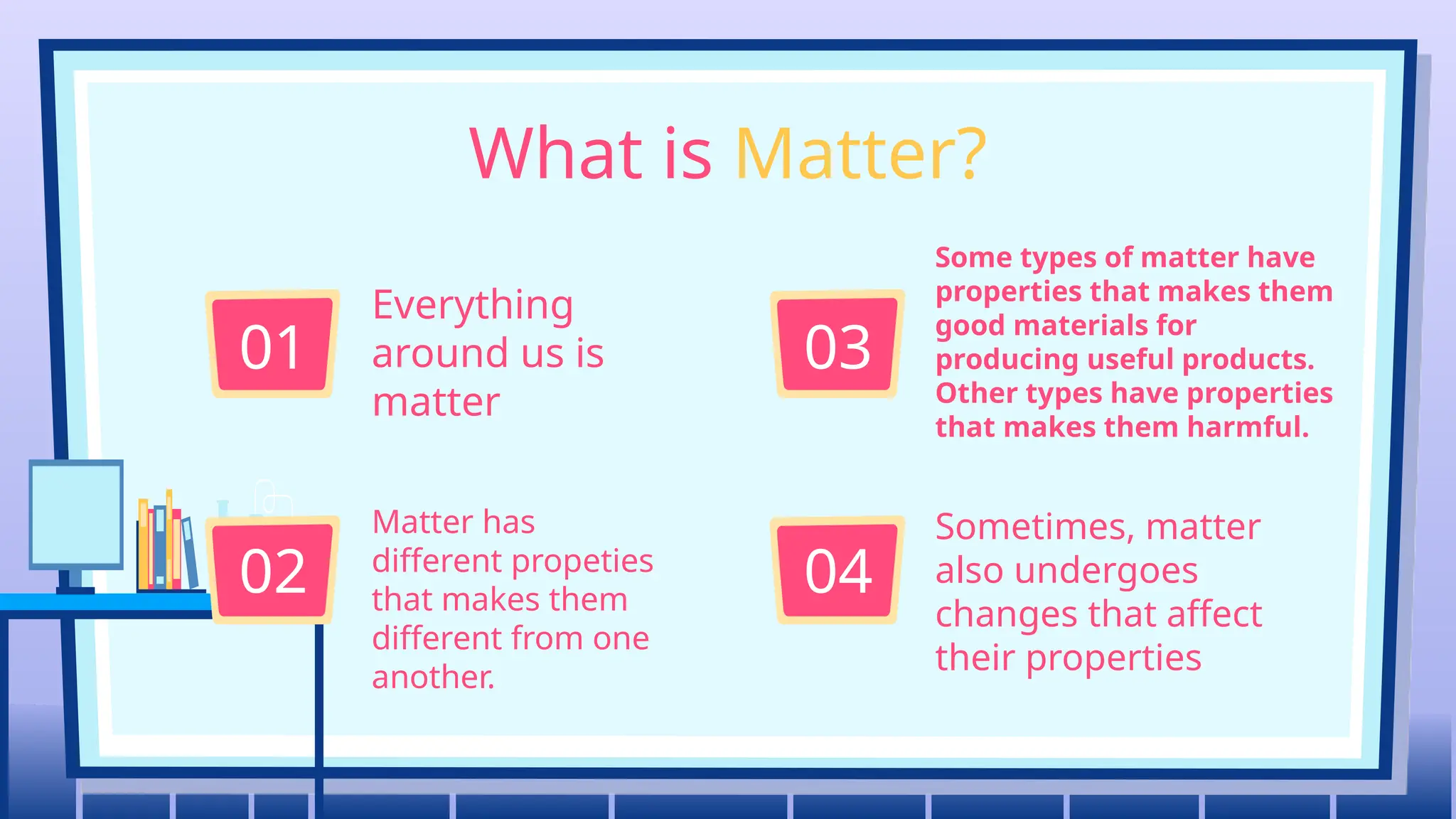
What is Matter?
Everything
around us is
matter
01 03
04
Matter has
different propeties
that makes them
different from one
another.
Some types of matter have
properties that makes them
good materials for
producing useful products.
Other types have properties
that makes them harmful.
Sometimes, matter
also undergoes
changes that affect
their properties
Direction: Get three items inside your bag and
three more items inside the classroom. Identify
each item that you found and answer the
following questions.
1. What is the item made of?
2. Are these materials safe or harmful? Why?
Explore
Explore
We use different materials for cleaning, cooking, eating and
repairing. The usefulness of a certain material depends on its
properties. These are materials that are durable and therefore can be
reused many times. Though there are some that are not meant to be
used. Creative and inventive people still find a ways to use them.
There are also materials are made of ertain purposes only and
can be harmful when not use properly.
In order to minimize waste in our own household , we have to
know which materials are still useful and which are ones should
already disposed.
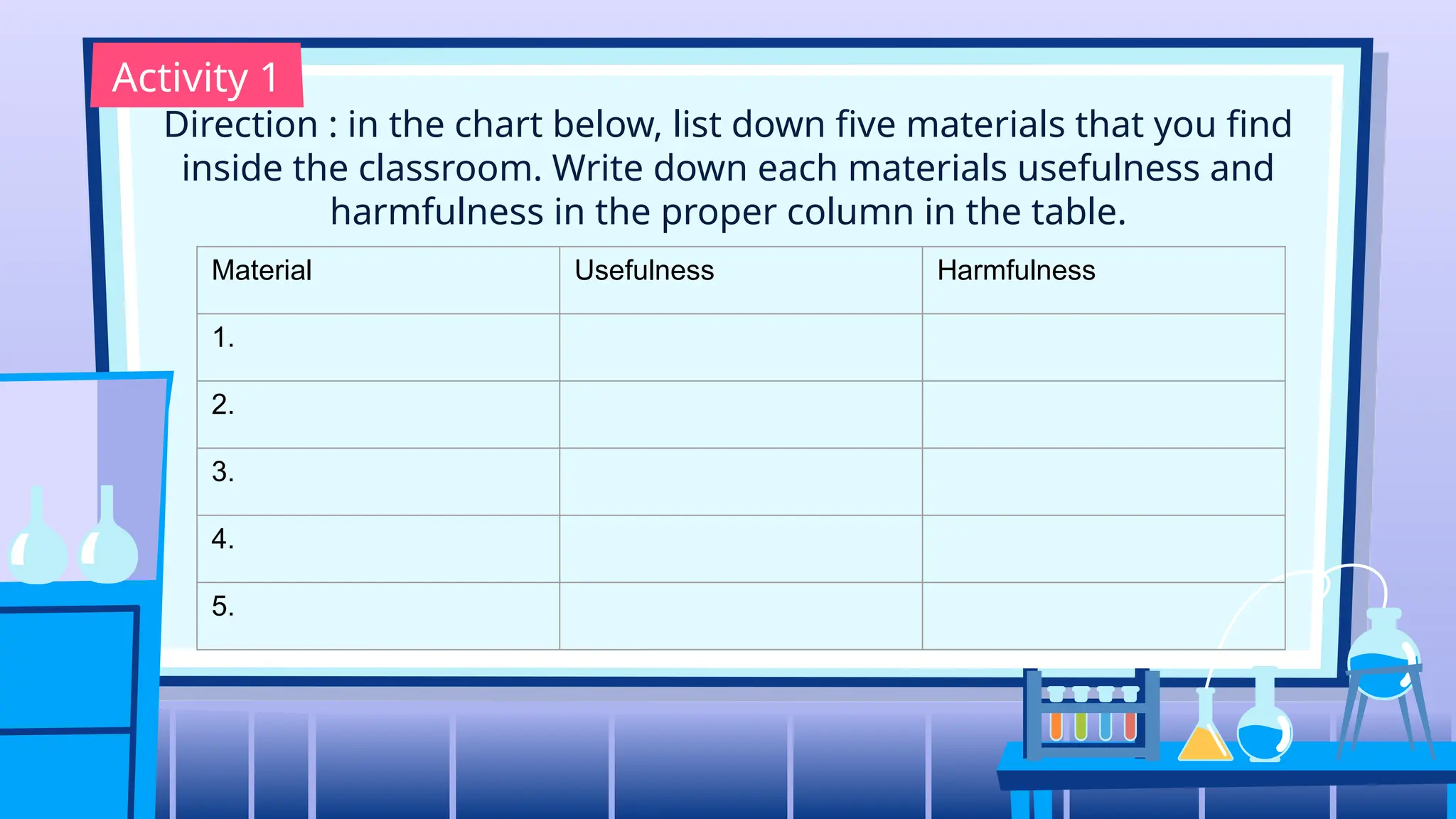
Direction : in the chart below, list down five materials that you find
inside the classroom. Write down each materials usefulness and
harmfulness in the proper column in the table.
Activity 1
Material Usefulness Harmfulness
1.
2.
3.
4.
5.
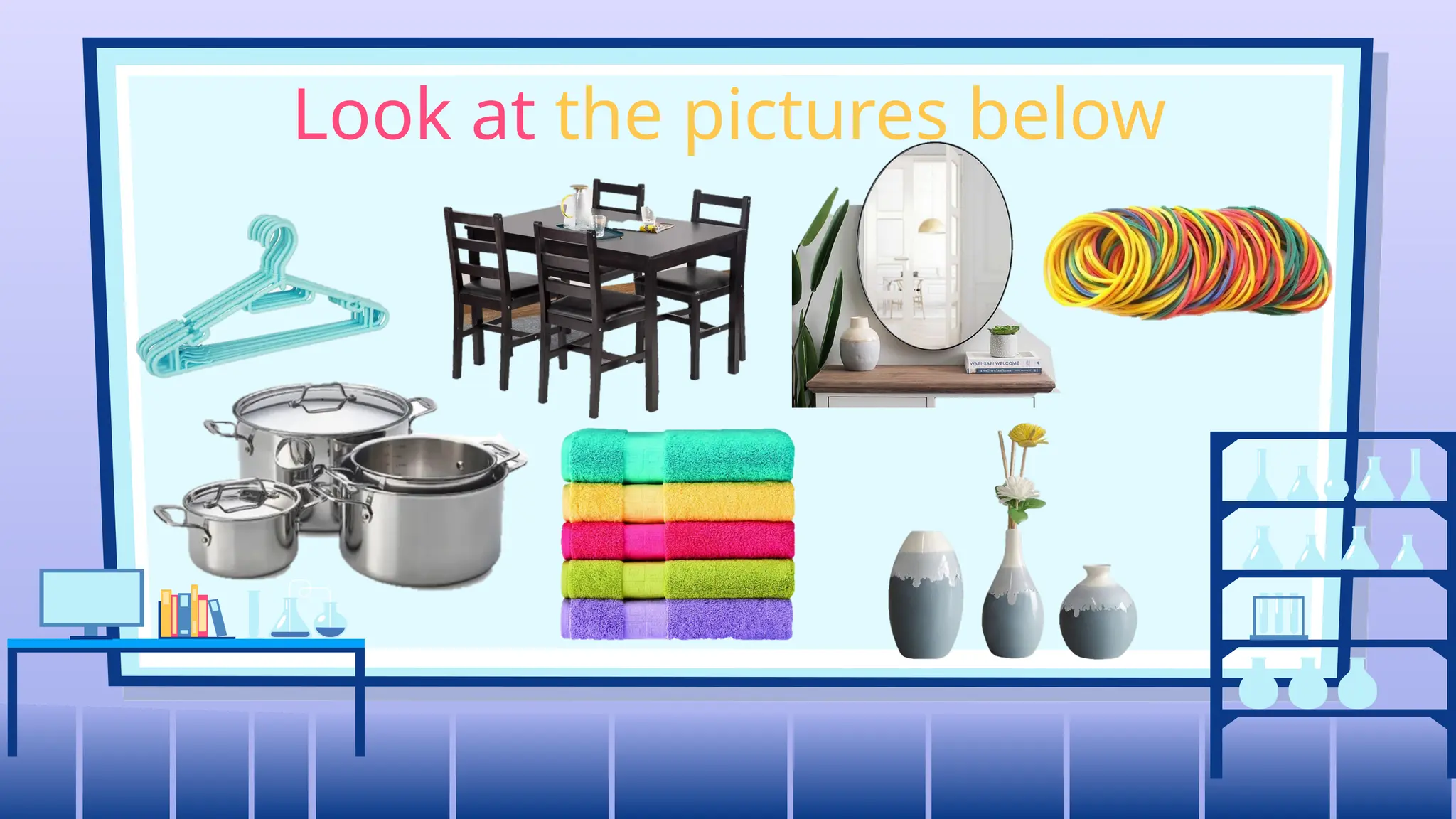
Look at the pictures below
Activity 2 Direction: What kind of materials are
used at home? List your answers in
the table below.
What materials are made of: Names of household materials
1.
2.
3.
4.
5.
When is a
material
useful?
Material is Useful if it can be
beneficial to humans or the
environment.
For Example: A water is very
useful material can be used to
mix different substances.
A material is harmful if there is
more than good that can be
obtain from it.
For Example: batteries can
provide energy to different
kinds of equipment but the
contents of battery is
harmful.
 They must have separate conatiner for
disposal.
 They must have proper labels and should
be out of reach of children.
 They must not be touched with bare
hands. Gloves should be used when
possible.
Guidelines in Handling, storing,
disposing Harmful Materials.:
Corrosive material chemicals must
not be flushed down the sink or
toilet
Flammable material such as thinner
and firecrackers must be stored in
cool and dry place far from any flame
source.
Always read and follow the
instructions of a product
before using it.
1. ______cotton
2. ______pesticides
3. ______ socks
4. ______blanket
5. ______muriatic acid
6. ______empty paint can
7. ______drained batteries
8. ______old news papers
9. ______use paint brush
10.______vegetable scrap
Identify the material if its useful or
harmful
CREDITS: This presentation template was created by Slidesgo,
including icons by Flaticon and infographics & images by Freepik
Thanks!
Do you have any questions?
jayson9oliva@gmail.com
+09772878018
Created by: Sir Jayson

ELEMENTARY SCIENCE Useful and harmful materials.pptx

  • 1.
  • 2.
    Learning Objectives 1.Identify thendifferent characteristics of materials that’s make it useful and harmful. 2.Learn how to segregate waste based on its properties.
  • 3.
    02 What is Matter? Everything aroundus is matter 01 03 04 Matter has different propeties that makes them different from one another. Some types of matter have properties that makes them good materials for producing useful products. Other types have properties that makes them harmful. Sometimes, matter also undergoes changes that affect their properties
  • 4.
    Direction: Get threeitems inside your bag and three more items inside the classroom. Identify each item that you found and answer the following questions. 1. What is the item made of? 2. Are these materials safe or harmful? Why? Explore
  • 5.
    Explore We use differentmaterials for cleaning, cooking, eating and repairing. The usefulness of a certain material depends on its properties. These are materials that are durable and therefore can be reused many times. Though there are some that are not meant to be used. Creative and inventive people still find a ways to use them. There are also materials are made of ertain purposes only and can be harmful when not use properly. In order to minimize waste in our own household , we have to know which materials are still useful and which are ones should already disposed.
  • 6.
    Direction : inthe chart below, list down five materials that you find inside the classroom. Write down each materials usefulness and harmfulness in the proper column in the table. Activity 1 Material Usefulness Harmfulness 1. 2. 3. 4. 5.
  • 7.
    Look at thepictures below
  • 8.
    Activity 2 Direction:What kind of materials are used at home? List your answers in the table below. What materials are made of: Names of household materials 1. 2. 3. 4. 5.
  • 9.
  • 10.
    Material is Usefulif it can be beneficial to humans or the environment. For Example: A water is very useful material can be used to mix different substances.
  • 12.
    A material isharmful if there is more than good that can be obtain from it. For Example: batteries can provide energy to different kinds of equipment but the contents of battery is harmful.
  • 13.
     They musthave separate conatiner for disposal.  They must have proper labels and should be out of reach of children.  They must not be touched with bare hands. Gloves should be used when possible. Guidelines in Handling, storing, disposing Harmful Materials.:
  • 14.
    Corrosive material chemicalsmust not be flushed down the sink or toilet Flammable material such as thinner and firecrackers must be stored in cool and dry place far from any flame source.
  • 15.
    Always read andfollow the instructions of a product before using it.
  • 16.
    1. ______cotton 2. ______pesticides 3.______ socks 4. ______blanket 5. ______muriatic acid 6. ______empty paint can 7. ______drained batteries 8. ______old news papers 9. ______use paint brush 10.______vegetable scrap Identify the material if its useful or harmful
  • 17.
    CREDITS: This presentationtemplate was created by Slidesgo, including icons by Flaticon and infographics & images by Freepik Thanks! Do you have any questions? jayson9oliva@gmail.com +09772878018 Created by: Sir Jayson