DISTANCE TECHNOLOGIES
Shonda Robinson
DEFINING DISTANCE TECHNOLOGIES
• Communication technologies used during distance learning and education.
• Communicates information to large groups of people using the Internet
• Used in business sector as well as education
ISSUES SURROUNDING DISTANCE
LEARNING
• Equity
• Effectiveness
• Building a community
• Communication
SOCIAL NETWORKING
• Videoconferencing
• Podcasts
• Blogs
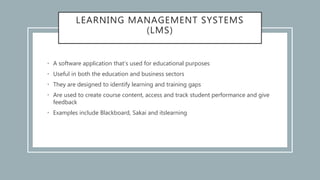
LEARNING MANAGEMENT SYSTEMS
(LMS)
• A software application that’s used for educational purposes
• Useful in both the education and business sectors
• They are designed to identify learning and training gaps
• Are used to create course content, access and track student performance and give
feedback
• Examples include Blackboard, Sakai and itslearning
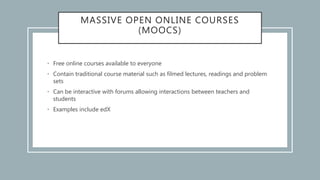
MASSIVE OPEN ONLINE COURSES
(MOOCS)
• Free online courses available to everyone
• Contain traditional course material such as filmed lectures, readings and problem
sets
• Can be interactive with forums allowing interactions between teachers and
students
• Examples include edX
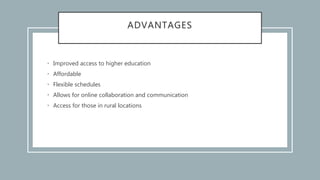
ADVANTAGES
• Improved access to higher education
• Affordable
• Flexible schedules
• Allows for online collaboration and communication
• Access for those in rural locations
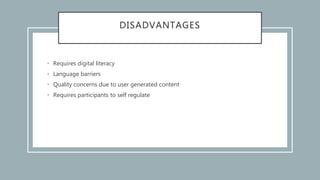
DISADVANTAGES
• Requires digital literacy
• Language barriers
• Quality concerns due to user generated content
• Requires participants to self regulate
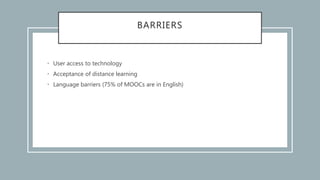
BARRIERS
• User access to technology
• Acceptance of distance learning
• Language barriers (75% of MOOCs are in English)
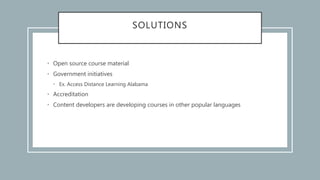
SOLUTIONS
• Open source course material
• Government initiatives
• Ex. Access Distance Learning Alabama
• Accreditation
• Content developers are developing courses in other popular languages
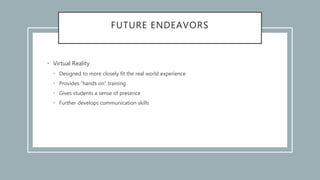
FUTURE ENDEAVORS
• Virtual Reality
• Designed to more closely fit the real world experience
• Provides “hands on” training
• Gives students a sense of presence
• Further develops communication skills

Distance Technologies

  • 1.
  • 2.
    DEFINING DISTANCE TECHNOLOGIES •Communication technologies used during distance learning and education. • Communicates information to large groups of people using the Internet • Used in business sector as well as education
  • 3.
    ISSUES SURROUNDING DISTANCE LEARNING •Equity • Effectiveness • Building a community • Communication
  • 4.
  • 5.
    LEARNING MANAGEMENT SYSTEMS (LMS) •A software application that’s used for educational purposes • Useful in both the education and business sectors • They are designed to identify learning and training gaps • Are used to create course content, access and track student performance and give feedback • Examples include Blackboard, Sakai and itslearning
  • 6.
    MASSIVE OPEN ONLINECOURSES (MOOCS) • Free online courses available to everyone • Contain traditional course material such as filmed lectures, readings and problem sets • Can be interactive with forums allowing interactions between teachers and students • Examples include edX
  • 7.
    ADVANTAGES • Improved accessto higher education • Affordable • Flexible schedules • Allows for online collaboration and communication • Access for those in rural locations
  • 8.
    DISADVANTAGES • Requires digitalliteracy • Language barriers • Quality concerns due to user generated content • Requires participants to self regulate
  • 9.
    BARRIERS • User accessto technology • Acceptance of distance learning • Language barriers (75% of MOOCs are in English)
  • 10.
    SOLUTIONS • Open sourcecourse material • Government initiatives • Ex. Access Distance Learning Alabama • Accreditation • Content developers are developing courses in other popular languages
  • 11.
    FUTURE ENDEAVORS • VirtualReality • Designed to more closely fit the real world experience • Provides “hands on” training • Gives students a sense of presence • Further develops communication skills