1
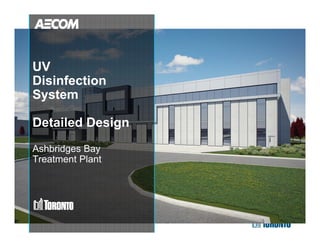
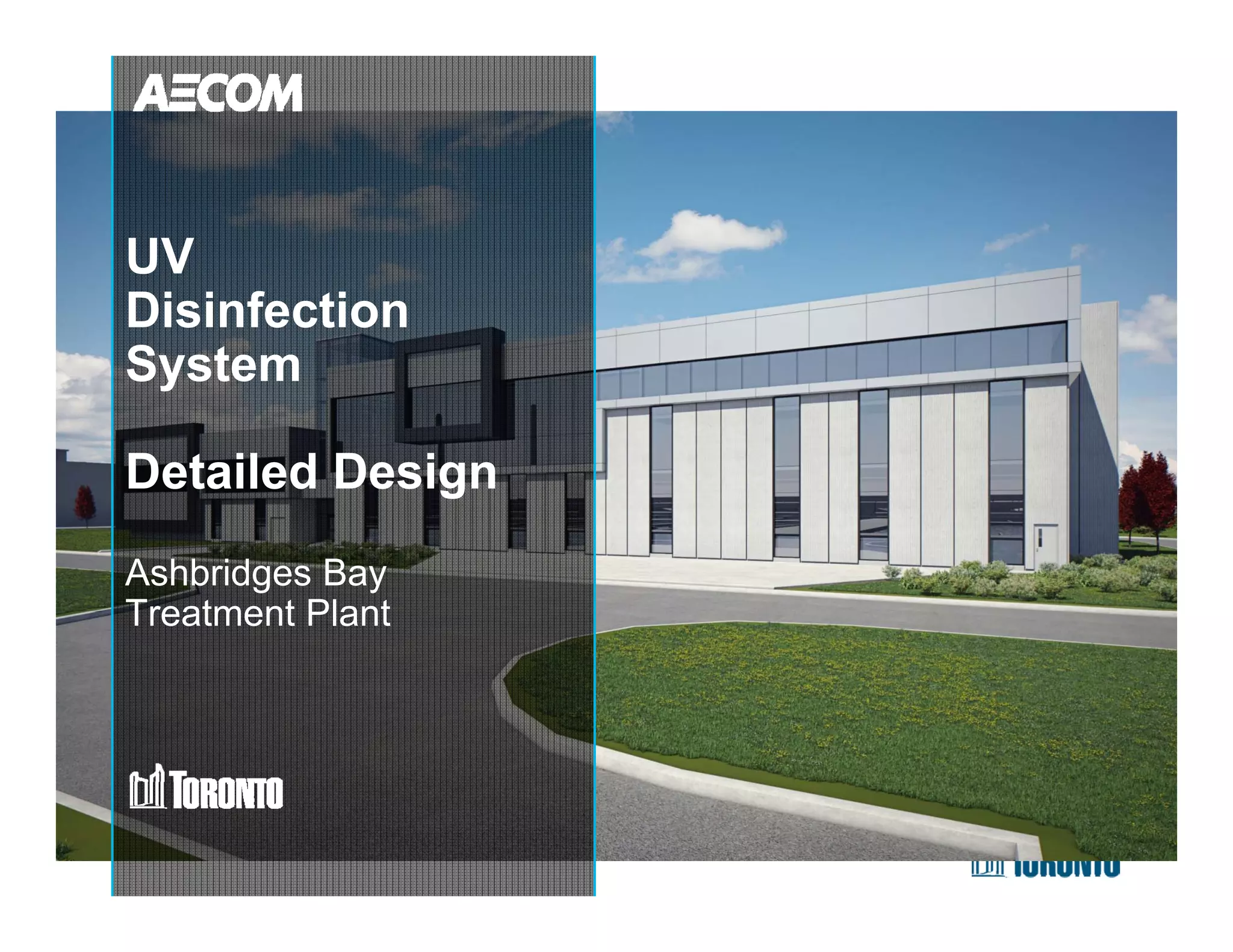
UV
Disinfection
System
Detailed Design
Ashbridges Bay
Treatment Plant
2
• Meeting Objective
• Project Background
• Project Implementation
• Design Criteria
• UV Disinfection Facility
• UV Supplier Selection
• Effluent Discharge Management
• Capital / Project Schedule
Agenda
2
3
Presentation of the UV Disinfection Facility detailed
design prior to Tendering and Construction
Meeting Objective
3
4
Project Background
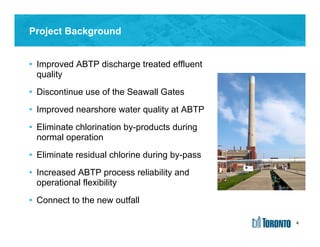
• Improved ABTP discharge treated effluent
quality
• Discontinue use of the Seawall Gates
• Improved nearshore water quality at ABTP
• Eliminate chlorination by-products during
normal operation
• Eliminate residual chlorine during by-pass
• Increased ABTP process reliability and
operational flexibility
• Connect to the new outfall
4
5
Project Objective
• Design and construct an UV disinfection facility that meets all
regulations
Success Factors
• Elimination of residual chlorine discharge to the lake
• Discontinue the use of the seawall gates
• Improvement of the nearshore water quality
• Meeting EA commitments
Project Implementation
5
6
• Effluent flows
– 818 MLD (rated capacity)
– 2,000 MLD
– 3,300 MLD
• Effluent UV disinfection (normal operation)
• Effluent chlorination / dechlorination (by-pass mode)
Design Criteria
6
7
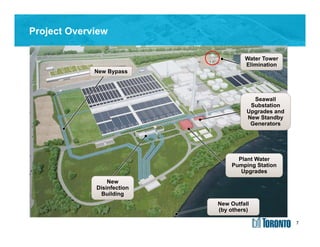
Project Overview
Seawall
Substation
Upgrades and
New Standby
Generators
Plant Water
Pumping Station
Upgrades
New
Disinfection
Building
New Bypass
Water Tower
Elimination
New Outfall
(by others)
7
8
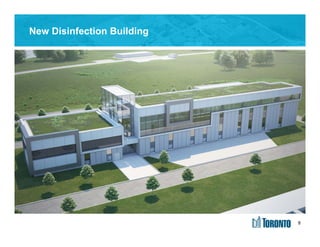
New Disinfection Building
8
9
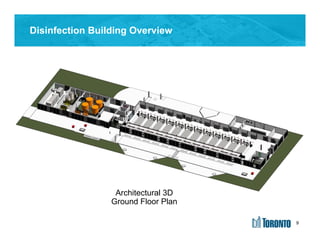
Disinfection Building Overview
Architectural 3D
Ground Floor Plan
9
10
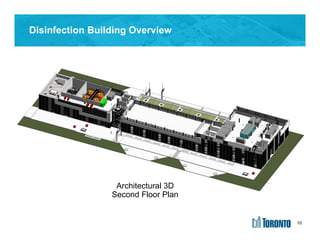
Disinfection Building Overview
Architectural 3D
Second Floor Plan
10
11
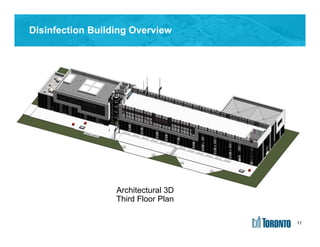
Disinfection Building Overview
Architectural 3D
Third Floor Plan
11
12
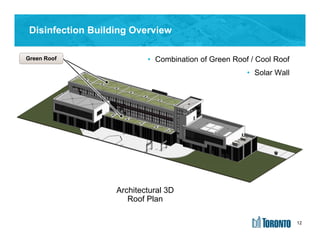
Disinfection Building Overview
• Combination of Green Roof / Cool Roof
• Solar Wall
Green Roof
Architectural 3D
Roof Plan
12
13
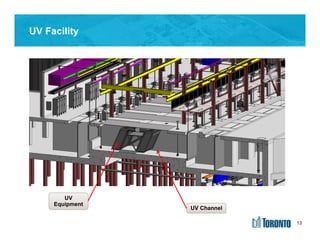
UV Facility
UV
Equipment
UV Channel
13
14
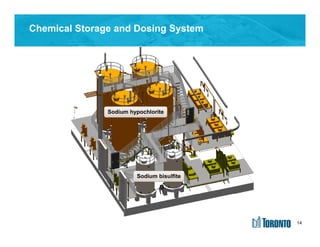
Sodium hypochlorite
Sodium bisulfite
Chemical Storage and Dosing System
14
15
Energy Conservation Measures
• Green Roof
• Solar Wall
• Heat recovery to reduce operational cost
• Occupied/ unoccupied control (light and heat)
• VFDs provided to all fans & pumps
• Heat reclaim for domestic water heating
• Ultra high efficiency and high efficiency motors and
lighting
• Mechanical control system linked to ABTP central
computer system
• Environmentally friendly refrigerants in air-
conditioning system
• Variable Refrigerant Flow (VRF) in air-conditioning
system
15
16
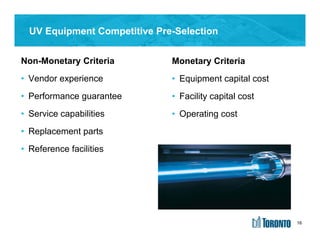
UV Equipment Competitive Pre-Selection
Monetary Criteria
• Equipment capital cost
• Facility capital cost
• Operating cost
Non-Monetary Criteria
• Vendor experience
• Performance guarantee
• Service capabilities
• Replacement parts
• Reference facilities
16
17
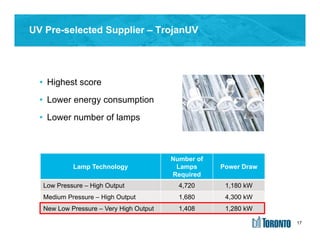
• Highest score
• Lower energy consumption
• Lower number of lamps
UV Pre-selected Supplier – TrojanUV
Lamp Technology
Number of
Lamps
Required
Power Draw
Low Pressure – High Output 4,720 1,180 kW
Medium Pressure – High Output 1,680 4,300 kW
New Low Pressure – Very High Output 1,408 1,280 kW
17
18
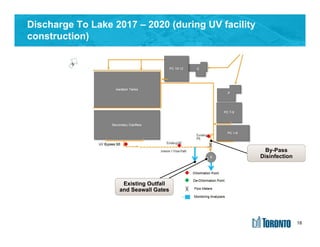
Discharge To Lake 2017 – 2020 (during UV facility
construction)
By-Pass
Disinfection
Existing Outfall
and Seawall Gates
18
19
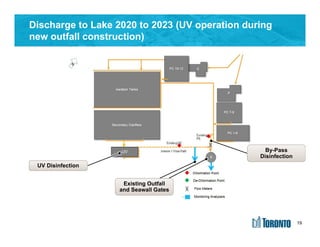
Discharge to Lake 2020 to 2023 (UV operation during
new outfall construction)
By-Pass
Disinfection
Existing Outfall
and Seawall Gates
UV Disinfection
UV
19
20
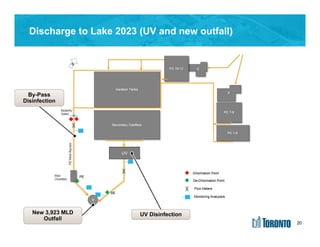
Discharge to Lake 2023 (UV and new outfall)
By-Pass
Disinfection
UV Disinfection
UV
New 3,923 MLD
Outfall
20
21
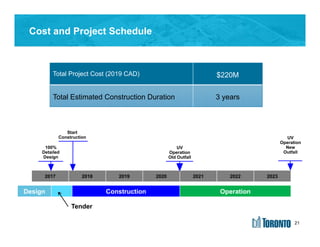
Cost and Project Schedule
Total Project Cost (2019 CAD) $220M
Total Estimated Construction Duration 3 years
2017 2018 2019 2020 2021 2022 2023
100%
Detailed
Design
Start
Construction
UV
Operation
Old Outfall
UV
Operation
New
Outfall
Design Construction Operation
Tender
21
22
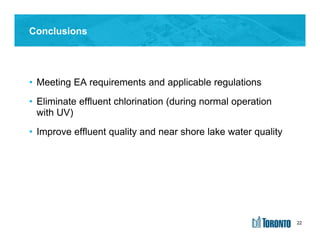
Conclusions
• Meeting EA requirements and applicable regulations
• Eliminate effluent chlorination (during normal operation
with UV)
• Improve effluent quality and near shore lake water quality
22
23
Thank you
23

Disinfection System

  • 1.
  • 2.
    2 • Meeting Objective •Project Background • Project Implementation • Design Criteria • UV Disinfection Facility • UV Supplier Selection • Effluent Discharge Management • Capital / Project Schedule Agenda 2
  • 3.
    3 Presentation of theUV Disinfection Facility detailed design prior to Tendering and Construction Meeting Objective 3
  • 4.
    4 Project Background • ImprovedABTP discharge treated effluent quality • Discontinue use of the Seawall Gates • Improved nearshore water quality at ABTP • Eliminate chlorination by-products during normal operation • Eliminate residual chlorine during by-pass • Increased ABTP process reliability and operational flexibility • Connect to the new outfall 4
  • 5.
    5 Project Objective • Designand construct an UV disinfection facility that meets all regulations Success Factors • Elimination of residual chlorine discharge to the lake • Discontinue the use of the seawall gates • Improvement of the nearshore water quality • Meeting EA commitments Project Implementation 5
  • 6.
    6 • Effluent flows –818 MLD (rated capacity) – 2,000 MLD – 3,300 MLD • Effluent UV disinfection (normal operation) • Effluent chlorination / dechlorination (by-pass mode) Design Criteria 6
  • 7.
    7 Project Overview Seawall Substation Upgrades and NewStandby Generators Plant Water Pumping Station Upgrades New Disinfection Building New Bypass Water Tower Elimination New Outfall (by others) 7
  • 8.
  • 9.
  • 10.
  • 11.
  • 12.
    12 Disinfection Building Overview •Combination of Green Roof / Cool Roof • Solar Wall Green Roof Architectural 3D Roof Plan 12
  • 13.
  • 14.
  • 15.
    15 Energy Conservation Measures •Green Roof • Solar Wall • Heat recovery to reduce operational cost • Occupied/ unoccupied control (light and heat) • VFDs provided to all fans & pumps • Heat reclaim for domestic water heating • Ultra high efficiency and high efficiency motors and lighting • Mechanical control system linked to ABTP central computer system • Environmentally friendly refrigerants in air- conditioning system • Variable Refrigerant Flow (VRF) in air-conditioning system 15
  • 16.
    16 UV Equipment CompetitivePre-Selection Monetary Criteria • Equipment capital cost • Facility capital cost • Operating cost Non-Monetary Criteria • Vendor experience • Performance guarantee • Service capabilities • Replacement parts • Reference facilities 16
  • 17.
    17 • Highest score •Lower energy consumption • Lower number of lamps UV Pre-selected Supplier – TrojanUV Lamp Technology Number of Lamps Required Power Draw Low Pressure – High Output 4,720 1,180 kW Medium Pressure – High Output 1,680 4,300 kW New Low Pressure – Very High Output 1,408 1,280 kW 17
  • 18.
    18 Discharge To Lake2017 – 2020 (during UV facility construction) By-Pass Disinfection Existing Outfall and Seawall Gates 18
  • 19.
    19 Discharge to Lake2020 to 2023 (UV operation during new outfall construction) By-Pass Disinfection Existing Outfall and Seawall Gates UV Disinfection UV 19
  • 20.
    20 Discharge to Lake2023 (UV and new outfall) By-Pass Disinfection UV Disinfection UV New 3,923 MLD Outfall 20
  • 21.
    21 Cost and ProjectSchedule Total Project Cost (2019 CAD) $220M Total Estimated Construction Duration 3 years 2017 2018 2019 2020 2021 2022 2023 100% Detailed Design Start Construction UV Operation Old Outfall UV Operation New Outfall Design Construction Operation Tender 21
  • 22.
    22 Conclusions • Meeting EArequirements and applicable regulations • Eliminate effluent chlorination (during normal operation with UV) • Improve effluent quality and near shore lake water quality 22
  • 23.