DISEASES CAUSED BY
AMMONIA
DISEASES CAUSED BY
AMMONIA
DISEASES CAUSED BY
AMMONIA
BY: SOMIA TARIQ
TO: DR. OMM-E-HANY
Institute of Environmental
studies, University of Karachi.
OCCUPATIONAL
DISEASE:
Any illness associated with a
particular occupation or
industry.
Such diseases result from a
variety of biological, chemical,
physical, and psychological factors
that are present in the
work environment or are
otherwise encountered in the
course of employment.
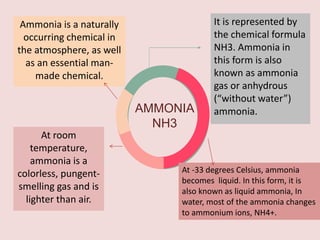
AMMONIA
NH3
Ammonia is a naturally
occurring chemical in
the atmosphere, as well
as an essential man-
made chemical.
It is represented by
the chemical formula
NH3. Ammonia in
this form is also
known as ammonia
gas or anhydrous
(“without water”)
ammonia.
At room
temperature,
ammonia is a
colorless, pungent-
smelling gas and is
lighter than air.
At -33 degrees Celsius, ammonia
becomes liquid. In this form, it is
also known as liquid ammonia, In
water, most of the ammonia changes
to ammonium ions, NH4+.
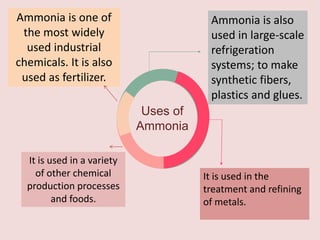
Uses of
Ammonia
Ammonia is one of
the most widely
used industrial
chemicals. It is also
used as fertilizer.
Ammonia is also
used in large-scale
refrigeration
systems; to make
synthetic fibers,
plastics and glues.
It is used in a variety
of other chemical
production processes
and foods.
It is used in the
treatment and refining
of metals.
Ammonia in the human body:
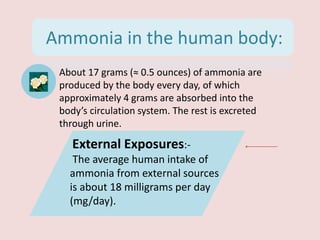
About 17 grams (≈ 0.5 ounces) of ammonia are
produced by the body every day, of which
approximately 4 grams are absorbed into the
body’s circulation system. The rest is excreted
through urine.
External Exposures:-
The average human intake of
ammonia from external sources
is about 18 milligrams per day
(mg/day).
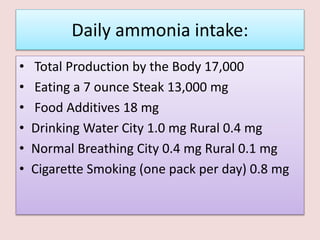
Daily ammonia intake:
• Total Production by the Body 17,000
• Eating a 7 ounce Steak 13,000 mg
• Food Additives 18 mg
• Drinking Water City 1.0 mg Rural 0.4 mg
• Normal Breathing City 0.4 mg Rural 0.1 mg
• Cigarette Smoking (one pack per day) 0.8 mg
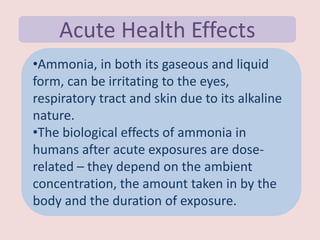
Acute Health Effects
•Ammonia, in both its gaseous and liquid
form, can be irritating to the eyes,
respiratory tract and skin due to its alkaline
nature.
•The biological effects of ammonia in
humans after acute exposures are dose-
related – they depend on the ambient
concentration, the amount taken in by the
body and the duration of exposure.
Work place exposure limit:
• According to OSHA, the smallest amount of ammonia that
has been found to be irritating to the eyes, nose and throat
of the most sensitive individuals is 50 ppm.
• OSHA also sets 300 ppm as the exposure concentration of
ammonia causing no escape-impairing symptoms and no
irreversible effects.
• Breathing 700 to 1,700 ppm results in coughing,
bronchospasm and chest pain along with severe eye
irritation and tearing
•At levels greater than 5,000 ppm,ammonia causes
chemical bronchitis, fluid accumulation in the lungs,
chemical burns of the skin and is potentially fatal
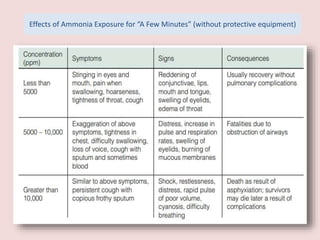
Effects of Ammonia Exposure for “A Few Minutes” (without protective equipment)
• Persons who suffer from severe liver or kidney disease
may be more sensitive to exposure to higher
concentrations of ammonia, because of the importance of
these organs in transforming and excreting ammonia.
• Because ammonia is a respiratory tract irritant, persons
who are hyperreactive to other respiratory irritants, or who
are asthmatic, would be expected to be more susceptible
to inhalation of high concentrations of ammonia.
Effects on Sensitive Individuals
•Hyperammonemia:
Elevated concentrations of ammonia in the
brain as a result of hyperammonemia leads to cerebral
dysfunction
involving a spectrum of neuropsychiatric and neurologi
cal symptoms (impaired memory, shortened attention
span, sleep-wake inversions, brain edema, intracranial
hypertension, seizures, ataxia and coma).
Diseases caused by ammonia
•Hepatic encephalopathy,
Hepatic encephalopathy is a decline in brain function that
occurs as a result of severe liver disease. In this condition,
your liver can’t adequately remove toxins from your blood.
This causes a buildup of toxins in your bloodstream, which
can lead to brain damage. It is a condition that happens
when the liver is too diseased or damaged to properly
process ammonia. In this disorder, ammonia builds up in
the blood and travels to the brain. It can cause confusion,
disorientation, coma, and even death.
Diseases caused by ammonia
symptoms
• Symptoms of hepatic encephalopathy differ depending on the
underlying cause of the liver damage.
• Symptoms and signs of moderate hepatic encephalopathy may
include:
• difficulty thinking
• personality changes
• poor concentration
• problems with handwriting or loss of other small hand movements
• confusion
• forgetfulness
• poor judgment
• a musty or sweet breath odor
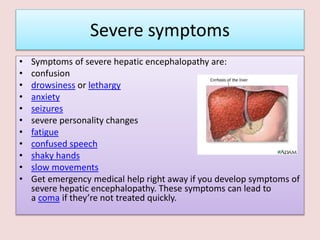
Severe symptoms
• Symptoms of severe hepatic encephalopathy are:
• confusion
• drowsiness or lethargy
• anxiety
• seizures
• severe personality changes
• fatigue
• confused speech
• shaky hands
• slow movements
• Get emergency medical help right away if you develop symptoms of
severe hepatic encephalopathy. These symptoms can lead to
a coma if they’re not treated quickly.
What are the different stages of
hepatic encephalopathy?
• Hepatic encephalopathy is divided into stages based on the severity
of the symptoms. Common classification systems include the West
Haven Criteria and the Glasgow Coma Scale.
• The five stages of hepatic encephalopathy, according to the West
Haven Criteria, are:
• Stage 0. At this stage, symptoms are minimal.
• Stage 1. Symptoms are mild. They may include a shortened
attention span and changes to your sleep habits, such
as hypersomnia or insomnia.
• Stage 2. Symptoms are moderate. At this stage, you may
feel disoriented or lethargic.
• Stage 3. Symptoms are severe. You’ll be unable to perform basic
tasks. You’ll also feel confused and experience personality changes.
• Stage 4. This stage is characterized by coma.
How to Protect Yourself Before working with ammonia,
• Personnel should review the material safety data sheet.
• Personnel handling anhydrous or strong aqua ammonia
where skin or eye contact is likely to occur should wear
gloves, shoe covers and aprons impervious to
ammonia.
• Unless eye and face protection is afforded by a
respirator hood or face piece, chemical goggles and
face shields should be worn at all times.
• The National Institute for Occupational Safety and
Health recommends wearing gloves made of Butyl,
Teflon or Viton for up to eight hours of exposure and
Nitrile gloves for up to four hours of exposure.

Diseases caused by ammonia

  • 1.
    DISEASES CAUSED BY AMMONIA DISEASESCAUSED BY AMMONIA DISEASES CAUSED BY AMMONIA BY: SOMIA TARIQ TO: DR. OMM-E-HANY Institute of Environmental studies, University of Karachi.
  • 2.
    OCCUPATIONAL DISEASE: Any illness associatedwith a particular occupation or industry. Such diseases result from a variety of biological, chemical, physical, and psychological factors that are present in the work environment or are otherwise encountered in the course of employment.
  • 3.
    AMMONIA NH3 Ammonia is anaturally occurring chemical in the atmosphere, as well as an essential man- made chemical. It is represented by the chemical formula NH3. Ammonia in this form is also known as ammonia gas or anhydrous (“without water”) ammonia. At room temperature, ammonia is a colorless, pungent- smelling gas and is lighter than air. At -33 degrees Celsius, ammonia becomes liquid. In this form, it is also known as liquid ammonia, In water, most of the ammonia changes to ammonium ions, NH4+.
  • 4.
    Uses of Ammonia Ammonia isone of the most widely used industrial chemicals. It is also used as fertilizer. Ammonia is also used in large-scale refrigeration systems; to make synthetic fibers, plastics and glues. It is used in a variety of other chemical production processes and foods. It is used in the treatment and refining of metals.
  • 5.
    Ammonia in thehuman body: About 17 grams (≈ 0.5 ounces) of ammonia are produced by the body every day, of which approximately 4 grams are absorbed into the body’s circulation system. The rest is excreted through urine. External Exposures:- The average human intake of ammonia from external sources is about 18 milligrams per day (mg/day).
  • 6.
    Daily ammonia intake: •Total Production by the Body 17,000 • Eating a 7 ounce Steak 13,000 mg • Food Additives 18 mg • Drinking Water City 1.0 mg Rural 0.4 mg • Normal Breathing City 0.4 mg Rural 0.1 mg • Cigarette Smoking (one pack per day) 0.8 mg
  • 7.
    Acute Health Effects •Ammonia,in both its gaseous and liquid form, can be irritating to the eyes, respiratory tract and skin due to its alkaline nature. •The biological effects of ammonia in humans after acute exposures are dose- related – they depend on the ambient concentration, the amount taken in by the body and the duration of exposure.
  • 9.
    Work place exposurelimit: • According to OSHA, the smallest amount of ammonia that has been found to be irritating to the eyes, nose and throat of the most sensitive individuals is 50 ppm. • OSHA also sets 300 ppm as the exposure concentration of ammonia causing no escape-impairing symptoms and no irreversible effects. • Breathing 700 to 1,700 ppm results in coughing, bronchospasm and chest pain along with severe eye irritation and tearing •At levels greater than 5,000 ppm,ammonia causes chemical bronchitis, fluid accumulation in the lungs, chemical burns of the skin and is potentially fatal
  • 10.
    Effects of AmmoniaExposure for “A Few Minutes” (without protective equipment)
  • 11.
    • Persons whosuffer from severe liver or kidney disease may be more sensitive to exposure to higher concentrations of ammonia, because of the importance of these organs in transforming and excreting ammonia. • Because ammonia is a respiratory tract irritant, persons who are hyperreactive to other respiratory irritants, or who are asthmatic, would be expected to be more susceptible to inhalation of high concentrations of ammonia. Effects on Sensitive Individuals
  • 12.
    •Hyperammonemia: Elevated concentrations ofammonia in the brain as a result of hyperammonemia leads to cerebral dysfunction involving a spectrum of neuropsychiatric and neurologi cal symptoms (impaired memory, shortened attention span, sleep-wake inversions, brain edema, intracranial hypertension, seizures, ataxia and coma). Diseases caused by ammonia
  • 13.
    •Hepatic encephalopathy, Hepatic encephalopathyis a decline in brain function that occurs as a result of severe liver disease. In this condition, your liver can’t adequately remove toxins from your blood. This causes a buildup of toxins in your bloodstream, which can lead to brain damage. It is a condition that happens when the liver is too diseased or damaged to properly process ammonia. In this disorder, ammonia builds up in the blood and travels to the brain. It can cause confusion, disorientation, coma, and even death. Diseases caused by ammonia
  • 14.
    symptoms • Symptoms ofhepatic encephalopathy differ depending on the underlying cause of the liver damage. • Symptoms and signs of moderate hepatic encephalopathy may include: • difficulty thinking • personality changes • poor concentration • problems with handwriting or loss of other small hand movements • confusion • forgetfulness • poor judgment • a musty or sweet breath odor
  • 15.
    Severe symptoms • Symptomsof severe hepatic encephalopathy are: • confusion • drowsiness or lethargy • anxiety • seizures • severe personality changes • fatigue • confused speech • shaky hands • slow movements • Get emergency medical help right away if you develop symptoms of severe hepatic encephalopathy. These symptoms can lead to a coma if they’re not treated quickly.
  • 16.
    What are thedifferent stages of hepatic encephalopathy? • Hepatic encephalopathy is divided into stages based on the severity of the symptoms. Common classification systems include the West Haven Criteria and the Glasgow Coma Scale. • The five stages of hepatic encephalopathy, according to the West Haven Criteria, are: • Stage 0. At this stage, symptoms are minimal. • Stage 1. Symptoms are mild. They may include a shortened attention span and changes to your sleep habits, such as hypersomnia or insomnia. • Stage 2. Symptoms are moderate. At this stage, you may feel disoriented or lethargic. • Stage 3. Symptoms are severe. You’ll be unable to perform basic tasks. You’ll also feel confused and experience personality changes. • Stage 4. This stage is characterized by coma.
  • 17.
    How to ProtectYourself Before working with ammonia, • Personnel should review the material safety data sheet. • Personnel handling anhydrous or strong aqua ammonia where skin or eye contact is likely to occur should wear gloves, shoe covers and aprons impervious to ammonia. • Unless eye and face protection is afforded by a respirator hood or face piece, chemical goggles and face shields should be worn at all times. • The National Institute for Occupational Safety and Health recommends wearing gloves made of Butyl, Teflon or Viton for up to eight hours of exposure and Nitrile gloves for up to four hours of exposure.