§  In	
  a	
  world	
  of	
  rising	
  health	
  care	
  costs	
  and	
  greater	
  emphasis	
  on	
  
pa4ent	
  sa4sfac4on,	
  more	
  and	
  more	
  hospitals	
  are	
  looking	
  for	
  
ways	
  to	
  improve	
  the	
  pa4ent	
  experience,	
  while	
  also	
  cu;ng	
  costs.	
  
§  Hospitaliza4on	
  and	
  subsequent	
  discharge	
  home	
  oAen	
  involve	
  
discon4nuity	
  of	
  care,	
  mul4ple	
  changes	
  in	
  medica4on	
  regimens,	
  
and	
  inadequate	
  pa4ent	
  educa4on,	
  leading	
  to	
  medica4on	
  
misadventures	
  and	
  avoidable	
  rehospitaliza4ons1.	
  	
  
§  Many	
  studies	
  have	
  proven	
  that	
  pharmacists	
  are	
  well-­‐qualified	
  to	
  
iden4fy	
  and	
  resolve	
  medica4on-­‐related	
  problems	
  that	
  occur	
  as	
  
pa4ents	
  transi4on	
  between	
  health	
  care	
  se;ngs,	
  as	
  well	
  as	
  
facilita4ng	
  pa4ent	
  discharge	
  by	
  reconciling	
  medica4on	
  
discrepancies2,3,4,5.	
  	
  
§  To	
  the	
  best	
  of	
  the	
  our	
  knowledge,	
  there	
  is	
  no	
  published	
  account	
  
of	
  a	
  pharmacist-­‐led	
  discharge	
  counseling	
  program	
  based	
  on	
  lean	
  
principles,	
  and	
  what	
  impact	
  it	
  may	
  have	
  on	
  the	
  Hospital	
  
Consumer	
  Assessment	
  of	
  Healthcare	
  Providers	
  and	
  Systems	
  
(HCAHPS)	
  score,	
  now	
  a	
  quality	
  control	
  measure	
  used	
  to	
  
determine	
  hospital	
  reimbursement6.	
  	
  
INTRODUCTION
§  To	
  implement	
  a	
  pharmacist-­‐led	
  discharge	
  counseling	
  program	
  
with	
  exis4ng	
  resources	
  using	
  lean	
  principles.	
  	
  
§  To	
  determine	
  if	
  there	
  is	
  a	
  sta4s4cally	
  significant	
  difference	
  in	
  the	
  
Hospital	
  Consumer	
  Assessment	
  of	
  Healthcare	
  Providers	
  and	
  
Systems	
  (HCAHPS)	
  “Communica4ons	
  about	
  Medica4ons”	
  domain	
  
aAer	
  implementa4on	
  of	
  the	
  program.	
  	
  
OBJECTIVES
§  This	
  study	
  was	
  submiUed	
  and	
  approved	
  to	
  the	
  Waynesboro	
  
Hospital	
  Ins4tu4onal	
  Review	
  Board.	
  
§  Prior	
  to	
  implementa4on	
  of	
  the	
  discharge	
  counseling	
  program,	
  
ac4on	
  teams	
  were	
  formed	
  to	
  iden4fy	
  possible	
  domains	
  of	
  
improvement	
  using	
  lean	
  principles.	
  
§  Originally	
  developed	
  by	
  Taiichi	
  Ohno	
  for	
  the	
  Toyota	
  
Manufacturing	
  Company7.	
  
§  The	
  ac4on	
  teams	
  iden4fied	
  that	
  the	
  HCAHPS	
  score	
  regarding	
  
“Communica4ons	
  about	
  Medica4ons”	
  was	
  low,	
  and	
  aAer	
  
collabora4ng	
  with	
  pharmacy,	
  originally	
  developed	
  a	
  plan	
  for	
  daily	
  
inpa4ent	
  medica4on	
  educa4on	
  rounding.	
  	
  
§  It	
  was	
  no4ced	
  that	
  pa4ents	
  were	
  not	
  as	
  recep4ve	
  	
  to	
  counseling/
educa4on	
  during	
  their	
  stay	
  as	
  they	
  were	
  at	
  discharge.	
  As	
  a	
  result,	
  
a	
  pharmacist-­‐led	
  discharge	
  counseling	
  program	
  was	
  formed.	
  
METHODS
RESULTS
§  Based	
  on	
  the	
  mean	
  data	
  collected,	
  the	
  implementa4on	
  of	
  a	
  
pharmacist-­‐led	
  discharge	
  counseling	
  program	
  demonstrated	
  a	
  
sta4s4cally	
  significant	
  improvement	
  in	
  HCAHPs	
  Survey	
  Scores	
  
regarding	
  “Communica4ons	
  about	
  Medicines”.	
  
§  Limita4ons	
  of	
  our	
  study	
  include	
  small	
  sample	
  size	
  and	
  limited	
  4me	
  
since	
  implementa4on	
  of	
  the	
  discharge	
  counseling	
  program.	


CONCLUSIONS
REFERENCES
Utilizing Lean Principles to Implement A Pharmacist-led
Discharge Counseling Program
Salma Tewfik, PharmD, Clint Pentz, PharmD, MBA, BCPS
Summit Health – Waynesboro Hospital
METHODS
Data collection was acquired via Press Ganey scores over a four month
period since the implementation of the program (July – October 2015).
The focus was on the “Communications about Medications” domain in
the HCAHPS survey specific for the Medical-Surgical Floor at
Waynesboro Hospital.
Definition of “top box” scoring: a system which reports the percentage
of patients who respond in terms of “Always” or the highest possible
ranking category.
The data was then compared and analyzed to baseline top box scores
from 2014 over a 12 month period, to identify if there was a statistically
significant improvement since the implementation of the program.
A two sided t-test was used to compare both sets of data, and a p value
< 0.05 was determined to be statistically significant.
This study is still ongoing, and we hope to collect 12 months worth of
data for 2015-16 to compare to baseline scores collected from 2014.
!!!!!!!!!!!!!!!!!!!!!!!!!!!!!!!!!!!!!! !
Pharmacist!Discharge!Counseling!
Revised!Date:!8/16/15!
Pharmacy!
! ! Page!1!
Quality!Check! Safety!Precaution! Standard!WIP!
Purpose:!!!Help!patients,!caregivers,!and!family!have!a!better!understanding!of!their!medications.!!To!
improve!metrics!related!to!medication!education!and!readmissions!
Related!Policies/Evidence/SPDs:!!!HCAHPS/Press!Ganey!Medical/Surgical!
Operators:!!Clint!Pentz!and!Jarett!Logsdon! Expected!Cycle!Time:!!!
STEP!
!
TASK!DESCRIPTION!
!
TOOLS/SUPPLIES!
REQUIRED!
1.! Identify!patients!for!discharge!counselling:!!Alert!prints!when!a!patient!has!
discharge!orders!placed,!determine!if!patient!is!from!Medical/Surgical!and!
appropriate!for!counselling.!!Discharge!medication!counseling!will!only!take!place!
Monday!through!Friday!when!2!Pharmacists!are!staffing!
Daily!Patient!
Census,!EMR!
2.! Review!and!print!the!“Patient!Visit!Report”:!!Review!report!on!all!patients.!!Review!
for!duplicates!in!therapy!or!conflicting!medications,!report!issues!to!physician!
Patient!Visit!Report!
3.! Review!patient!history!to!aid!with!medication!counselling! EMR:!Progress!
Notes,!H&P!and!
Consults!
4.! Review!new!medications/changes/discontinuations!with!patient:!Counselling!may!
include!mechanism,!reason!for!use,!sideLeffects,!!proper!administration,!food!
considerations,!etc.!
Patient!Visit!Report!
5.! Review/verify!all!home!medications!with!patient!and!answer!patient!questions.!
Notify!discharging!nurse!that!medication!discharge!counseling!has!been!completed!
Patient!Visit!Report!
6.! Report!discrepancies!or!possible!errors!to!physician!for!clarification:!!If!error!is!
found,!report!changes!to!physician!and!fix!patients!copy!of!“Patient!Visit!Report.”!
Patient!Visit!Report!
7.! Document!medication!education!using!a!PCS!note!title!of!
“Medication!Discharge!Counselling”!
EMR!
8.! Assess!effectiveness! HCAHPS!
9.! !
!
10.! !
!
11! !
!
12.! !
!
13.! !
!
Discharge Counseling Standard Work Description
DISCUSSION
DISCLOSURES
30
40
50
60
70
80
90
100
Jul14
Aug14
Sept14
Oct14
Nov14
Dec14
Jan15
Feb15
Mar15
Apr15
May15
Jun15
HCAHPS- Communication about Medicines FY15
(top box trends)
Data Center-line Goal Trendline
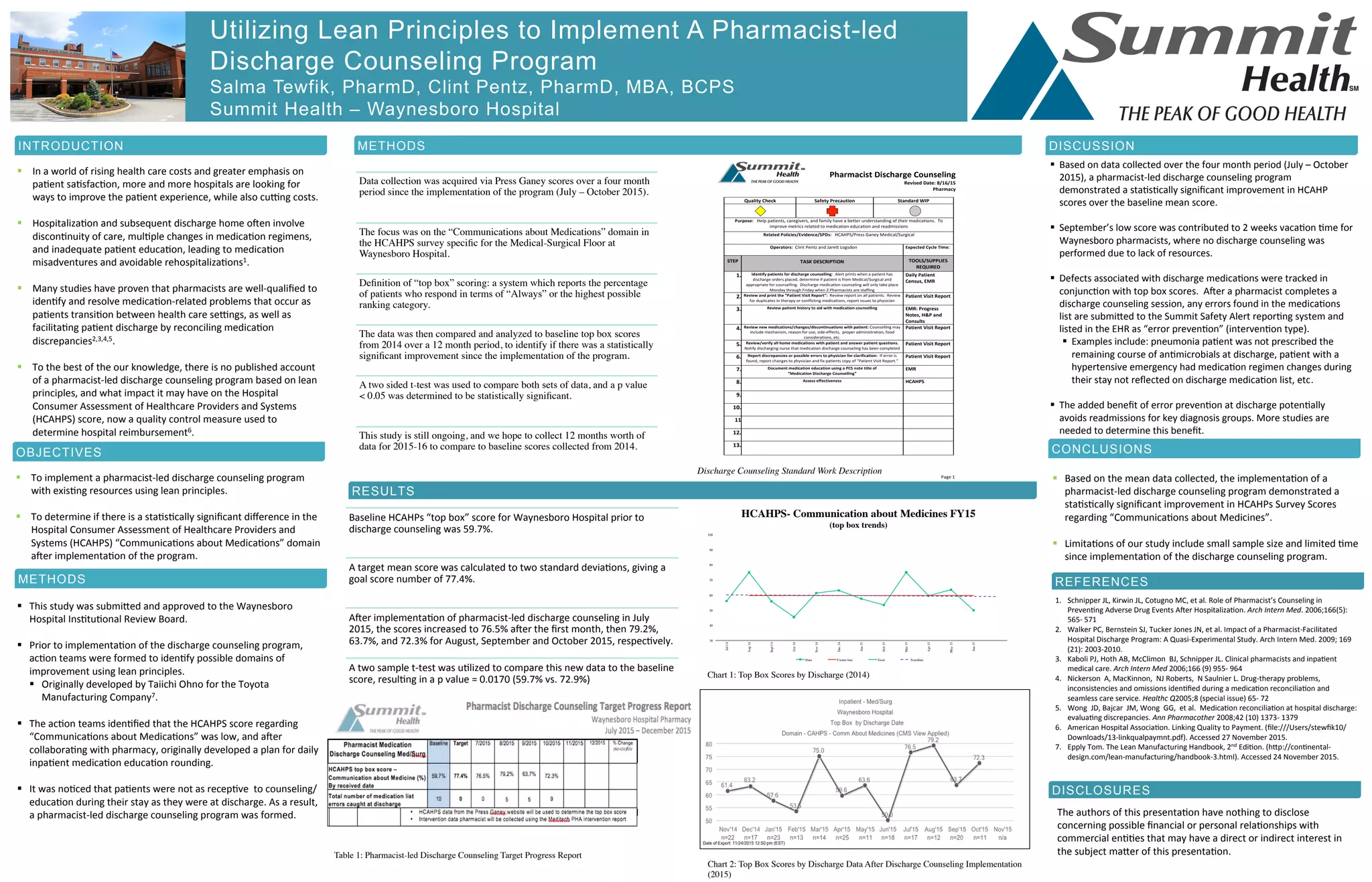
Chart 1: Top Box Scores by Discharge (2014)
Chart 2: Top Box Scores by Discharge Data After Discharge Counseling Implementation
(2015)
Baseline	
  HCAHPs	
  “top	
  box”	
  score	
  for	
  Waynesboro	
  Hospital	
  prior	
  to	
  
discharge	
  counseling	
  was	
  59.7%.	
  
A	
  target	
  mean	
  score	
  was	
  calculated	
  to	
  two	
  standard	
  devia4ons,	
  giving	
  a	
  
goal	
  score	
  number	
  of	
  77.4%.	
  
AAer	
  implementa4on	
  of	
  pharmacist-­‐led	
  discharge	
  counseling	
  in	
  July	
  
2015,	
  the	
  scores	
  increased	
  to	
  76.5%	
  aAer	
  the	
  first	
  month,	
  then	
  79.2%,	
  
63.7%,	
  and	
  72.3%	
  for	
  August,	
  September	
  and	
  October	
  2015,	
  respec4vely.	
  	
  
A	
  two	
  sample	
  t-­‐test	
  was	
  u4lized	
  to	
  compare	
  this	
  new	
  data	
  to	
  the	
  baseline	
  
score,	
  resul4ng	
  in	
  a	
  p	
  value	
  =	
  0.0170	
  (59.7%	
  vs.	
  72.9%)	
  
Table 1: Pharmacist-led Discharge Counseling Target Progress Report
§  Based	
  on	
  data	
  collected	
  over	
  the	
  four	
  month	
  period	
  (July	
  –	
  October	
  
2015),	
  a	
  pharmacist-­‐led	
  discharge	
  counseling	
  program	
  
demonstrated	
  a	
  sta4s4cally	
  significant	
  improvement	
  in	
  HCAHP	
  
scores	
  over	
  the	
  baseline	
  mean	
  score.	
  	
  
§  September’s	
  low	
  score	
  was	
  contributed	
  to	
  2	
  weeks	
  vaca4on	
  4me	
  for	
  
Waynesboro	
  pharmacists,	
  where	
  no	
  discharge	
  counseling	
  was	
  
performed	
  due	
  to	
  lack	
  of	
  resources.	
  	
  
§  Defects	
  associated	
  with	
  discharge	
  medica4ons	
  were	
  tracked	
  in	
  
conjunc4on	
  with	
  top	
  box	
  scores.	
  	
  AAer	
  a	
  pharmacist	
  completes	
  a	
  
discharge	
  counseling	
  session,	
  any	
  errors	
  found	
  in	
  the	
  medica4ons	
  
list	
  are	
  submiUed	
  to	
  the	
  Summit	
  Safety	
  Alert	
  repor4ng	
  system	
  and	
  
listed	
  in	
  the	
  EHR	
  as	
  “error	
  preven4on”	
  (interven4on	
  type).	


§  Examples	
  include:	
  pneumonia	
  pa4ent	
  was	
  not	
  prescribed	
  the	
  
remaining	
  course	
  of	
  an4microbials	
  at	
  discharge,	
  pa4ent	
  with	
  a	
  
hypertensive	
  emergency	
  had	
  medica4on	
  regimen	
  changes	
  during	
  
their	
  stay	
  not	
  reflected	
  on	
  discharge	
  medica4on	
  list,	
  etc.
§  The	
  added	
  benefit	
  of	
  error	
  preven4on	
  at	
  discharge	
  poten4ally	
  
avoids	
  readmissions	
  for	
  key	
  diagnosis	
  groups.	
  More	
  studies	
  are	
  
needed	
  to	
  determine	
  this	
  benefit.	


The	
  authors	
  of	
  this	
  presenta4on	
  have	
  nothing	
  to	
  disclose	
  
concerning	
  possible	
  financial	
  or	
  personal	
  rela4onships	
  with	
  
commercial	
  en44es	
  that	
  may	
  have	
  a	
  direct	
  or	
  indirect	
  interest	
  in	
  
the	
  subject	
  maUer	
  of	
  this	
  presenta4on.	
  
1.  Schnipper	
  JL,	
  Kirwin	
  JL,	
  Cotugno	
  MC,	
  et	
  al.	
  Role	
  of	
  Pharmacist’s	
  Counseling	
  in	
  
Preven4ng	
  Adverse	
  Drug	
  Events	
  AAer	
  Hospitaliza4on.	
  Arch	
  Intern	
  Med.	
  2006;166(5):	
  
565-­‐	
  571	
  
2.  Walker	
  PC,	
  Bernstein	
  SJ,	
  Tucker	
  Jones	
  JN,	
  et	
  al.	
  Impact	
  of	
  a	
  Pharmacist-­‐Facilitated	
  
Hospital	
  Discharge	
  Program:	
  A	
  Quasi-­‐Experimental	
  Study.	
  Arch	
  Intern	
  Med.	
  2009;	
  169	
  
(21):	
  2003-­‐2010.	
  
3.  Kaboli	
  PJ,	
  Hoth	
  AB,	
  McClimon	
  	
  BJ,	
  Schnipper	
  JL.	
  Clinical	
  pharmacists	
  and	
  inpa4ent	
  
medical	
  care.	
  Arch	
  Intern	
  Med	
  2006;166	
  (9)	
  955-­‐	
  964	
  
4.  Nickerson	
  	
  A,	
  MacKinnon,	
  	
  NJ	
  Roberts,	
  	
  N	
  Saulnier	
  L.	
  Drug-­‐therapy	
  problems,	
  
inconsistencies	
  and	
  omissions	
  iden4fied	
  during	
  a	
  medica4on	
  reconcilia4on	
  and	
  
seamless	
  care	
  service.	
  Healthc	
  Q2005;8	
  (special	
  issue)	
  65-­‐	
  72	
  
5.  Wong	
  	
  JD,	
  Bajcar	
  	
  JM,	
  Wong	
  	
  GG,	
  	
  et	
  al.	
  	
  Medica4on	
  reconcilia4on	
  at	
  hospital	
  discharge:	
  
evalua4ng	
  discrepancies.	
  Ann	
  Pharmacother	
  2008;42	
  (10)	
  1373-­‐	
  1379	
  
6.  American	
  Hospital	
  Associa4on.	
  Linking	
  Quality	
  to	
  Payment.	
  (file:///Users/stewfik10/
Downloads/13-­‐linkqualpaymnt.pdf).	
  Accessed	
  27	
  November	
  2015.	
  	
  
7.  Epply	
  Tom.	
  The	
  Lean	
  Manufacturing	
  Handbook,	
  2nd	
  Edi4on.	
  (hUp://con4nental-­‐
design.com/lean-­‐manufacturing/handbook-­‐3.html).	
  Accessed	
  24	
  November	
  2015.	


Discharge Counseling + Lean Principles_stewfik_PDF_1

  • 1.
    §  In  a  world  of  rising  health  care  costs  and  greater  emphasis  on   pa4ent  sa4sfac4on,  more  and  more  hospitals  are  looking  for   ways  to  improve  the  pa4ent  experience,  while  also  cu;ng  costs.   §  Hospitaliza4on  and  subsequent  discharge  home  oAen  involve   discon4nuity  of  care,  mul4ple  changes  in  medica4on  regimens,   and  inadequate  pa4ent  educa4on,  leading  to  medica4on   misadventures  and  avoidable  rehospitaliza4ons1.     §  Many  studies  have  proven  that  pharmacists  are  well-­‐qualified  to   iden4fy  and  resolve  medica4on-­‐related  problems  that  occur  as   pa4ents  transi4on  between  health  care  se;ngs,  as  well  as   facilita4ng  pa4ent  discharge  by  reconciling  medica4on   discrepancies2,3,4,5.     §  To  the  best  of  the  our  knowledge,  there  is  no  published  account   of  a  pharmacist-­‐led  discharge  counseling  program  based  on  lean   principles,  and  what  impact  it  may  have  on  the  Hospital   Consumer  Assessment  of  Healthcare  Providers  and  Systems   (HCAHPS)  score,  now  a  quality  control  measure  used  to   determine  hospital  reimbursement6.     INTRODUCTION §  To  implement  a  pharmacist-­‐led  discharge  counseling  program   with  exis4ng  resources  using  lean  principles.     §  To  determine  if  there  is  a  sta4s4cally  significant  difference  in  the   Hospital  Consumer  Assessment  of  Healthcare  Providers  and   Systems  (HCAHPS)  “Communica4ons  about  Medica4ons”  domain   aAer  implementa4on  of  the  program.     OBJECTIVES §  This  study  was  submiUed  and  approved  to  the  Waynesboro   Hospital  Ins4tu4onal  Review  Board.   §  Prior  to  implementa4on  of  the  discharge  counseling  program,   ac4on  teams  were  formed  to  iden4fy  possible  domains  of   improvement  using  lean  principles.   §  Originally  developed  by  Taiichi  Ohno  for  the  Toyota   Manufacturing  Company7.   §  The  ac4on  teams  iden4fied  that  the  HCAHPS  score  regarding   “Communica4ons  about  Medica4ons”  was  low,  and  aAer   collabora4ng  with  pharmacy,  originally  developed  a  plan  for  daily   inpa4ent  medica4on  educa4on  rounding.     §  It  was  no4ced  that  pa4ents  were  not  as  recep4ve    to  counseling/ educa4on  during  their  stay  as  they  were  at  discharge.  As  a  result,   a  pharmacist-­‐led  discharge  counseling  program  was  formed.   METHODS RESULTS §  Based  on  the  mean  data  collected,  the  implementa4on  of  a   pharmacist-­‐led  discharge  counseling  program  demonstrated  a   sta4s4cally  significant  improvement  in  HCAHPs  Survey  Scores   regarding  “Communica4ons  about  Medicines”.   §  Limita4ons  of  our  study  include  small  sample  size  and  limited  4me   since  implementa4on  of  the  discharge  counseling  program.       CONCLUSIONS REFERENCES Utilizing Lean Principles to Implement A Pharmacist-led Discharge Counseling Program Salma Tewfik, PharmD, Clint Pentz, PharmD, MBA, BCPS Summit Health – Waynesboro Hospital METHODS Data collection was acquired via Press Ganey scores over a four month period since the implementation of the program (July – October 2015). The focus was on the “Communications about Medications” domain in the HCAHPS survey specific for the Medical-Surgical Floor at Waynesboro Hospital. Definition of “top box” scoring: a system which reports the percentage of patients who respond in terms of “Always” or the highest possible ranking category. The data was then compared and analyzed to baseline top box scores from 2014 over a 12 month period, to identify if there was a statistically significant improvement since the implementation of the program. A two sided t-test was used to compare both sets of data, and a p value < 0.05 was determined to be statistically significant. This study is still ongoing, and we hope to collect 12 months worth of data for 2015-16 to compare to baseline scores collected from 2014. !!!!!!!!!!!!!!!!!!!!!!!!!!!!!!!!!!!!!! ! Pharmacist!Discharge!Counseling! Revised!Date:!8/16/15! Pharmacy! ! ! Page!1! Quality!Check! Safety!Precaution! Standard!WIP! Purpose:!!!Help!patients,!caregivers,!and!family!have!a!better!understanding!of!their!medications.!!To! improve!metrics!related!to!medication!education!and!readmissions! Related!Policies/Evidence/SPDs:!!!HCAHPS/Press!Ganey!Medical/Surgical! Operators:!!Clint!Pentz!and!Jarett!Logsdon! Expected!Cycle!Time:!!! STEP! ! TASK!DESCRIPTION! ! TOOLS/SUPPLIES! REQUIRED! 1.! Identify!patients!for!discharge!counselling:!!Alert!prints!when!a!patient!has! discharge!orders!placed,!determine!if!patient!is!from!Medical/Surgical!and! appropriate!for!counselling.!!Discharge!medication!counseling!will!only!take!place! Monday!through!Friday!when!2!Pharmacists!are!staffing! Daily!Patient! Census,!EMR! 2.! Review!and!print!the!“Patient!Visit!Report”:!!Review!report!on!all!patients.!!Review! for!duplicates!in!therapy!or!conflicting!medications,!report!issues!to!physician! Patient!Visit!Report! 3.! Review!patient!history!to!aid!with!medication!counselling! EMR:!Progress! Notes,!H&P!and! Consults! 4.! Review!new!medications/changes/discontinuations!with!patient:!Counselling!may! include!mechanism,!reason!for!use,!sideLeffects,!!proper!administration,!food! considerations,!etc.! Patient!Visit!Report! 5.! Review/verify!all!home!medications!with!patient!and!answer!patient!questions.! Notify!discharging!nurse!that!medication!discharge!counseling!has!been!completed! Patient!Visit!Report! 6.! Report!discrepancies!or!possible!errors!to!physician!for!clarification:!!If!error!is! found,!report!changes!to!physician!and!fix!patients!copy!of!“Patient!Visit!Report.”! Patient!Visit!Report! 7.! Document!medication!education!using!a!PCS!note!title!of! “Medication!Discharge!Counselling”! EMR! 8.! Assess!effectiveness! HCAHPS! 9.! ! ! 10.! ! ! 11! ! ! 12.! ! ! 13.! ! ! Discharge Counseling Standard Work Description DISCUSSION DISCLOSURES 30 40 50 60 70 80 90 100 Jul14 Aug14 Sept14 Oct14 Nov14 Dec14 Jan15 Feb15 Mar15 Apr15 May15 Jun15 HCAHPS- Communication about Medicines FY15 (top box trends) Data Center-line Goal Trendline Chart 1: Top Box Scores by Discharge (2014) Chart 2: Top Box Scores by Discharge Data After Discharge Counseling Implementation (2015) Baseline  HCAHPs  “top  box”  score  for  Waynesboro  Hospital  prior  to   discharge  counseling  was  59.7%.   A  target  mean  score  was  calculated  to  two  standard  devia4ons,  giving  a   goal  score  number  of  77.4%.   AAer  implementa4on  of  pharmacist-­‐led  discharge  counseling  in  July   2015,  the  scores  increased  to  76.5%  aAer  the  first  month,  then  79.2%,   63.7%,  and  72.3%  for  August,  September  and  October  2015,  respec4vely.     A  two  sample  t-­‐test  was  u4lized  to  compare  this  new  data  to  the  baseline   score,  resul4ng  in  a  p  value  =  0.0170  (59.7%  vs.  72.9%)   Table 1: Pharmacist-led Discharge Counseling Target Progress Report §  Based  on  data  collected  over  the  four  month  period  (July  –  October   2015),  a  pharmacist-­‐led  discharge  counseling  program   demonstrated  a  sta4s4cally  significant  improvement  in  HCAHP   scores  over  the  baseline  mean  score.     §  September’s  low  score  was  contributed  to  2  weeks  vaca4on  4me  for   Waynesboro  pharmacists,  where  no  discharge  counseling  was   performed  due  to  lack  of  resources.     §  Defects  associated  with  discharge  medica4ons  were  tracked  in   conjunc4on  with  top  box  scores.    AAer  a  pharmacist  completes  a   discharge  counseling  session,  any  errors  found  in  the  medica4ons   list  are  submiUed  to  the  Summit  Safety  Alert  repor4ng  system  and   listed  in  the  EHR  as  “error  preven4on”  (interven4on  type).       §  Examples  include:  pneumonia  pa4ent  was  not  prescribed  the   remaining  course  of  an4microbials  at  discharge,  pa4ent  with  a   hypertensive  emergency  had  medica4on  regimen  changes  during   their  stay  not  reflected  on  discharge  medica4on  list,  etc. §  The  added  benefit  of  error  preven4on  at  discharge  poten4ally   avoids  readmissions  for  key  diagnosis  groups.  More  studies  are   needed  to  determine  this  benefit.       The  authors  of  this  presenta4on  have  nothing  to  disclose   concerning  possible  financial  or  personal  rela4onships  with   commercial  en44es  that  may  have  a  direct  or  indirect  interest  in   the  subject  maUer  of  this  presenta4on.   1.  Schnipper  JL,  Kirwin  JL,  Cotugno  MC,  et  al.  Role  of  Pharmacist’s  Counseling  in   Preven4ng  Adverse  Drug  Events  AAer  Hospitaliza4on.  Arch  Intern  Med.  2006;166(5):   565-­‐  571   2.  Walker  PC,  Bernstein  SJ,  Tucker  Jones  JN,  et  al.  Impact  of  a  Pharmacist-­‐Facilitated   Hospital  Discharge  Program:  A  Quasi-­‐Experimental  Study.  Arch  Intern  Med.  2009;  169   (21):  2003-­‐2010.   3.  Kaboli  PJ,  Hoth  AB,  McClimon    BJ,  Schnipper  JL.  Clinical  pharmacists  and  inpa4ent   medical  care.  Arch  Intern  Med  2006;166  (9)  955-­‐  964   4.  Nickerson    A,  MacKinnon,    NJ  Roberts,    N  Saulnier  L.  Drug-­‐therapy  problems,   inconsistencies  and  omissions  iden4fied  during  a  medica4on  reconcilia4on  and   seamless  care  service.  Healthc  Q2005;8  (special  issue)  65-­‐  72   5.  Wong    JD,  Bajcar    JM,  Wong    GG,    et  al.    Medica4on  reconcilia4on  at  hospital  discharge:   evalua4ng  discrepancies.  Ann  Pharmacother  2008;42  (10)  1373-­‐  1379   6.  American  Hospital  Associa4on.  Linking  Quality  to  Payment.  (file:///Users/stewfik10/ Downloads/13-­‐linkqualpaymnt.pdf).  Accessed  27  November  2015.     7.  Epply  Tom.  The  Lean  Manufacturing  Handbook,  2nd  Edi4on.  (hUp://con4nental-­‐ design.com/lean-­‐manufacturing/handbook-­‐3.html).  Accessed  24  November  2015.