Disasters: Lessons
Learned and
Preparation
Disasters shape our world, testing human resilience. They strike
unexpectedly, leaving profound impacts. Understanding their nature and
preparing for them is crucial for survival and recovery.
by bhanuprasad baggu
Types of Disasters: Natural and Man-made
Natural Disasters
Earthquakes, hurricanes, and tsunamis are unpredictable
forces of nature. They can devastate entire regions in
minutes.
Man-made Disasters
Industrial accidents, oil spills, and nuclear meltdowns result
from human error. They often have long-lasting
environmental impacts.
Hurricanes: Anatomy and Impact
1 Formation
Hurricanes form over warm ocean waters, fueled by heat and moisture. They grow into massive rotating storm systems.
2 Landfall
As hurricanes reach land, they bring destructive winds, storm surges, and flooding. Coastal areas are particularly vulnerable.
3 Aftermath
Post-hurricane recovery involves clearing debris, restoring power, and rebuilding infrastructure. Communities often face long-term
challenges.
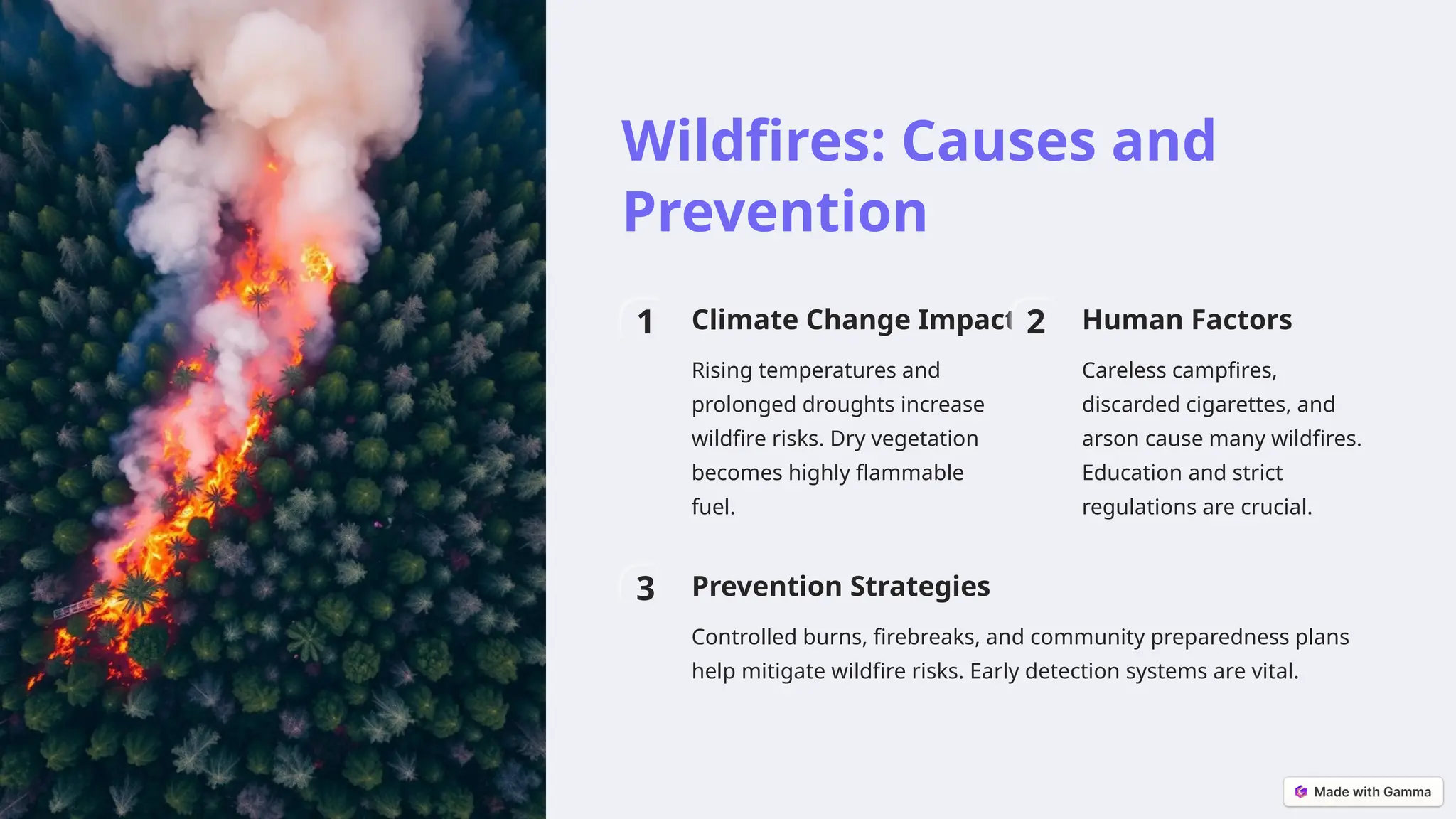
Wildfires: Causes and
Prevention
1 Climate Change Impact
Rising temperatures and
prolonged droughts increase
wildfire risks. Dry vegetation
becomes highly flammable
fuel.
2 Human Factors
Careless campfires,
discarded cigarettes, and
arson cause many wildfires.
Education and strict
regulations are crucial.
3 Prevention Strategies
Controlled burns, firebreaks, and community preparedness plans
help mitigate wildfire risks. Early detection systems are vital.
Earthquakes: Assessing
Risks and Mitigation
Seismic Monitoring
Advanced seismographs detect
ground movements. They
provide crucial data for
earthquake prediction and risk
assessment.
Building Codes
Strict building codes ensure
structures can withstand
seismic activity. Retrofitting
older buildings is essential.
Public Education
Teaching earthquake safety procedures saves lives. Regular drills help
communities respond effectively during emergencies.
Floods: Adapting to
Changing Weather Patterns
Climate Analysis
Studying changing precipitation patterns helps predict flood risks.
This informs urban planning and infrastructure development.
Flood-Resistant Infrastructure
Levees, flood walls, and permeable surfaces manage water flow.
Green spaces act as natural flood buffers.
Early Warning Systems
Advanced sensors and predictive models provide timely flood
alerts. These systems enable proactive evacuation and protection
measures.
Pandemics: Containing the Spread
Personal Protection
Masks, hand hygiene, and social distancing slow virus transmission. These simple
measures have significant collective impact.
Vaccination Campaigns
Rapid vaccine development and distribution are crucial. Global cooperation ensures
equitable access to vaccines.
Contact Tracing
Identifying and isolating infected individuals breaks transmission chains. Technology
enhances the efficiency of contact tracing efforts.
Cybersecurity Threats:
Protecting Data and
Infrastructure
Threat Type Impact Mitigation
Ransomware Data loss, financial
damage
Regular backups,
employee training
DDoS Attacks Service disruption Traffic filtering,
cloud-based
protection
Data Breaches Privacy violations,
legal consequences
Encryption, access
controls
Emergency Response:
Coordination and
Communication
1 Initial Alert
Rapid detection and verification of emergencies is crucial. Multi-
channel alert systems ensure wide reach.
2 Resource Mobilization
Coordinating first responders, equipment, and supplies requires
efficient logistics. Pre-planned protocols streamline deployment.
3 Public Communication
Clear, consistent messaging keeps the public informed and safe.
Multiple languages and platforms ensure comprehensive coverage.
Disaster Recovery: Rebuilding and Resilience
Immediate Relief
Temporary shelters and essential
supplies provide immediate aid. Quick
deployment of these resources is critical.
Resilient Rebuilding
Reconstructing with improved, disaster-
resistant designs enhances future
preparedness. Sustainable materials and
methods are prioritized.
Community Engagement
Involving locals in recovery planning
fosters resilience. It ensures solutions
are tailored to community needs.

Disasters-Lessons-Learned-and-Preparation.pptx

  • 1.
    Disasters: Lessons Learned and Preparation Disastersshape our world, testing human resilience. They strike unexpectedly, leaving profound impacts. Understanding their nature and preparing for them is crucial for survival and recovery. by bhanuprasad baggu
  • 2.
    Types of Disasters:Natural and Man-made Natural Disasters Earthquakes, hurricanes, and tsunamis are unpredictable forces of nature. They can devastate entire regions in minutes. Man-made Disasters Industrial accidents, oil spills, and nuclear meltdowns result from human error. They often have long-lasting environmental impacts.
  • 3.
    Hurricanes: Anatomy andImpact 1 Formation Hurricanes form over warm ocean waters, fueled by heat and moisture. They grow into massive rotating storm systems. 2 Landfall As hurricanes reach land, they bring destructive winds, storm surges, and flooding. Coastal areas are particularly vulnerable. 3 Aftermath Post-hurricane recovery involves clearing debris, restoring power, and rebuilding infrastructure. Communities often face long-term challenges.
  • 4.
    Wildfires: Causes and Prevention 1Climate Change Impact Rising temperatures and prolonged droughts increase wildfire risks. Dry vegetation becomes highly flammable fuel. 2 Human Factors Careless campfires, discarded cigarettes, and arson cause many wildfires. Education and strict regulations are crucial. 3 Prevention Strategies Controlled burns, firebreaks, and community preparedness plans help mitigate wildfire risks. Early detection systems are vital.
  • 5.
    Earthquakes: Assessing Risks andMitigation Seismic Monitoring Advanced seismographs detect ground movements. They provide crucial data for earthquake prediction and risk assessment. Building Codes Strict building codes ensure structures can withstand seismic activity. Retrofitting older buildings is essential. Public Education Teaching earthquake safety procedures saves lives. Regular drills help communities respond effectively during emergencies.
  • 6.
    Floods: Adapting to ChangingWeather Patterns Climate Analysis Studying changing precipitation patterns helps predict flood risks. This informs urban planning and infrastructure development. Flood-Resistant Infrastructure Levees, flood walls, and permeable surfaces manage water flow. Green spaces act as natural flood buffers. Early Warning Systems Advanced sensors and predictive models provide timely flood alerts. These systems enable proactive evacuation and protection measures.
  • 7.
    Pandemics: Containing theSpread Personal Protection Masks, hand hygiene, and social distancing slow virus transmission. These simple measures have significant collective impact. Vaccination Campaigns Rapid vaccine development and distribution are crucial. Global cooperation ensures equitable access to vaccines. Contact Tracing Identifying and isolating infected individuals breaks transmission chains. Technology enhances the efficiency of contact tracing efforts.
  • 8.
    Cybersecurity Threats: Protecting Dataand Infrastructure Threat Type Impact Mitigation Ransomware Data loss, financial damage Regular backups, employee training DDoS Attacks Service disruption Traffic filtering, cloud-based protection Data Breaches Privacy violations, legal consequences Encryption, access controls
  • 9.
    Emergency Response: Coordination and Communication 1Initial Alert Rapid detection and verification of emergencies is crucial. Multi- channel alert systems ensure wide reach. 2 Resource Mobilization Coordinating first responders, equipment, and supplies requires efficient logistics. Pre-planned protocols streamline deployment. 3 Public Communication Clear, consistent messaging keeps the public informed and safe. Multiple languages and platforms ensure comprehensive coverage.
  • 10.
    Disaster Recovery: Rebuildingand Resilience Immediate Relief Temporary shelters and essential supplies provide immediate aid. Quick deployment of these resources is critical. Resilient Rebuilding Reconstructing with improved, disaster- resistant designs enhances future preparedness. Sustainable materials and methods are prioritized. Community Engagement Involving locals in recovery planning fosters resilience. It ensures solutions are tailored to community needs.