BASIC
CONCEPT
OF HAZARD
CHAPTER 3
DISASTER READINESS AND RISK REDUCTION
HAZARD
• Elements of the physical environment, harmful to man and caused
by forces extraneous to him.
• A source of potential harm or situation with a potential to cause
loss
• A natural event that has the potential to cause a harm or loss
• A phenomenon or situation, which has the potential to cause the
disruption or damage to people, their services and their
environment
GENERAL CLASSIFICATION OF
HAZARD
1. Natural hazard such as earthquakes or floods arise from purely
natural processes in the environment.
2. Quasi – natural hazard such as smog or desertification that arise
through the interaction of natural processes and human activity.
3. Technological (or human – made) hazards such as the toxicity of
pesticides to agricultural lands, accidental leaks of chemicals
from chemical laboratories or radiation from a nuclear plant.
These arise directly as a result of human activities.
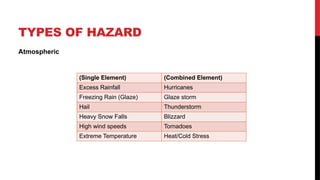
TYPES OF HAZARD
Atmospheric
(Single Element) (Combined Element)
Excess Rainfall Hurricanes
Freezing Rain (Glaze) Glaze storm
Hail Thunderstorm
Heavy Snow Falls Blizzard
High wind speeds Tornadoes
Extreme Temperature Heat/Cold Stress
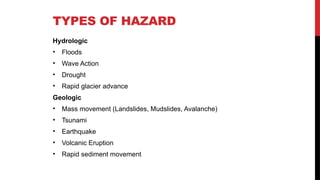
TYPES OF HAZARD
Hydrologic
• Floods
• Wave Action
• Drought
• Rapid glacier advance
Geologic
• Mass movement (Landslides, Mudslides, Avalanche)
• Tsunami
• Earthquake
• Volcanic Eruption
• Rapid sediment movement
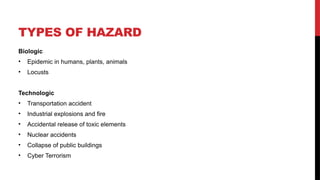
TYPES OF HAZARD
Biologic
• Epidemic in humans, plants, animals
• Locusts
Technologic
• Transportation accident
• Industrial explosions and fire
• Accidental release of toxic elements
• Nuclear accidents
• Collapse of public buildings
• Cyber Terrorism
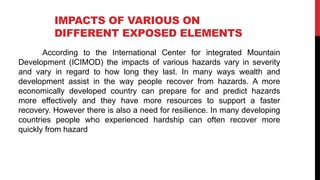
IMPACTS OF VARIOUS ON
DIFFERENT EXPOSED ELEMENTS
According to the International Center for integrated Mountain
Development (ICIMOD) the impacts of various hazards vary in severity
and vary in regard to how long they last. In many ways wealth and
development assist in the way people recover from hazards. A more
economically developed country can prepare for and predict hazards
more effectively and they have more resources to support a faster
recovery. However there is also a need for resilience. In many developing
countries people who experienced hardship can often recover more
quickly from hazard
COMMON LONG TERM IMPACTS OF
NATURAL HAZARD
Physical
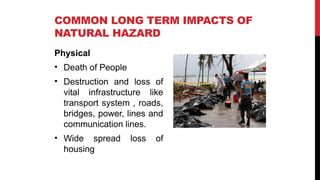
• Death of People
• Destruction and loss of
vital infrastructure like
transport system , roads,
bridges, power, lines and
communication lines.
• Wide spread loss of
housing
Psychological impact
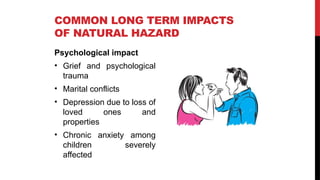
• Grief and psychological
trauma
• Marital conflicts
• Depression due to loss of
loved ones and
properties
• Chronic anxiety among
children severely
affected
COMMON LONG TERM IMPACTS
OF NATURAL HAZARD
COMMON LONG TERM IMPACTS
OF NATURAL HAZARD
Socio – Cultural Impact
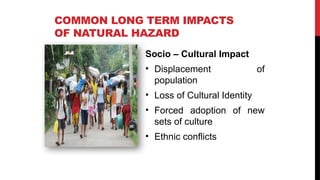
• Displacement of
population
• Loss of Cultural Identity
• Forced adoption of new
sets of culture
• Ethnic conflicts
Economic Impact
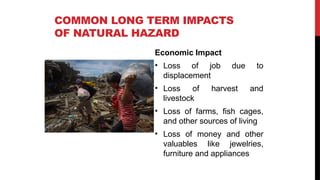
• Loss of job due to
displacement
• Loss of harvest and
livestock
• Loss of farms, fish cages,
and other sources of living
• Loss of money and other
valuables like jewelries,
furniture and appliances
COMMON LONG TERM IMPACTS
OF NATURAL HAZARD
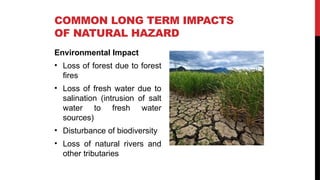
Environmental Impact
• Loss of forest due to forest
fires
• Loss of fresh water due to
salination (intrusion of salt
water to fresh water
sources)
• Disturbance of biodiversity
• Loss of natural rivers and
other tributaries
COMMON LONG TERM IMPACTS
OF NATURAL HAZARD
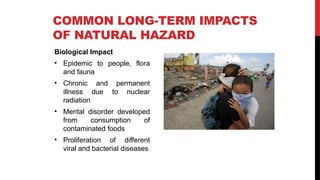
Biological Impact
• Epidemic to people, flora
and fauna
• Chronic and permanent
illness due to nuclear
radiation
• Mental disorder developed
from consumption of
contaminated foods
• Proliferation of different
viral and bacterial diseases
COMMON LONG-TERM IMPACTS
OF NATURAL HAZARD
ASSIGNMENT
1. Define Earthquake
2. What are the different earthquake hazard?

DISASTER READINESS AND RISK REDUCTION BASIC CONCEPT OF HAZARD

  • 1.
    BASIC CONCEPT OF HAZARD CHAPTER 3 DISASTERREADINESS AND RISK REDUCTION
  • 2.
    HAZARD • Elements ofthe physical environment, harmful to man and caused by forces extraneous to him. • A source of potential harm or situation with a potential to cause loss • A natural event that has the potential to cause a harm or loss • A phenomenon or situation, which has the potential to cause the disruption or damage to people, their services and their environment
  • 3.
    GENERAL CLASSIFICATION OF HAZARD 1.Natural hazard such as earthquakes or floods arise from purely natural processes in the environment. 2. Quasi – natural hazard such as smog or desertification that arise through the interaction of natural processes and human activity. 3. Technological (or human – made) hazards such as the toxicity of pesticides to agricultural lands, accidental leaks of chemicals from chemical laboratories or radiation from a nuclear plant. These arise directly as a result of human activities.
  • 4.
    TYPES OF HAZARD Atmospheric (SingleElement) (Combined Element) Excess Rainfall Hurricanes Freezing Rain (Glaze) Glaze storm Hail Thunderstorm Heavy Snow Falls Blizzard High wind speeds Tornadoes Extreme Temperature Heat/Cold Stress
  • 5.
    TYPES OF HAZARD Hydrologic •Floods • Wave Action • Drought • Rapid glacier advance Geologic • Mass movement (Landslides, Mudslides, Avalanche) • Tsunami • Earthquake • Volcanic Eruption • Rapid sediment movement
  • 6.
    TYPES OF HAZARD Biologic •Epidemic in humans, plants, animals • Locusts Technologic • Transportation accident • Industrial explosions and fire • Accidental release of toxic elements • Nuclear accidents • Collapse of public buildings • Cyber Terrorism
  • 7.
    IMPACTS OF VARIOUSON DIFFERENT EXPOSED ELEMENTS According to the International Center for integrated Mountain Development (ICIMOD) the impacts of various hazards vary in severity and vary in regard to how long they last. In many ways wealth and development assist in the way people recover from hazards. A more economically developed country can prepare for and predict hazards more effectively and they have more resources to support a faster recovery. However there is also a need for resilience. In many developing countries people who experienced hardship can often recover more quickly from hazard
  • 8.
    COMMON LONG TERMIMPACTS OF NATURAL HAZARD Physical • Death of People • Destruction and loss of vital infrastructure like transport system , roads, bridges, power, lines and communication lines. • Wide spread loss of housing
  • 9.
    Psychological impact • Griefand psychological trauma • Marital conflicts • Depression due to loss of loved ones and properties • Chronic anxiety among children severely affected COMMON LONG TERM IMPACTS OF NATURAL HAZARD
  • 10.
    COMMON LONG TERMIMPACTS OF NATURAL HAZARD Socio – Cultural Impact • Displacement of population • Loss of Cultural Identity • Forced adoption of new sets of culture • Ethnic conflicts
  • 11.
    Economic Impact • Lossof job due to displacement • Loss of harvest and livestock • Loss of farms, fish cages, and other sources of living • Loss of money and other valuables like jewelries, furniture and appliances COMMON LONG TERM IMPACTS OF NATURAL HAZARD
  • 12.
    Environmental Impact • Lossof forest due to forest fires • Loss of fresh water due to salination (intrusion of salt water to fresh water sources) • Disturbance of biodiversity • Loss of natural rivers and other tributaries COMMON LONG TERM IMPACTS OF NATURAL HAZARD
  • 13.
    Biological Impact • Epidemicto people, flora and fauna • Chronic and permanent illness due to nuclear radiation • Mental disorder developed from consumption of contaminated foods • Proliferation of different viral and bacterial diseases COMMON LONG-TERM IMPACTS OF NATURAL HAZARD
  • 14.
    ASSIGNMENT 1. Define Earthquake 2.What are the different earthquake hazard?