DIPHTHERIA,
PERTUSSIS &
TETANUS
AARTI VERMA , Asso. Professor
Diphtheria (Corynebacterium diphtheriae)
Diphtherais Greek word for leather
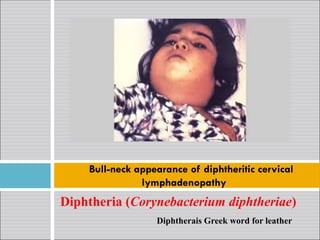
Bull-neck appearance of diphtheritic cervical
lymphadenopathy
INTRODUCTION
 An acute toxic infection caused by Corynebacterium
diphtheriae and rarely toxigenic strains of Corynebacterium
ulcerans
 aerobic, nonencapsulated, non–spore-forming, mostly
nonmotile, pleomorphic, gram-positive bacilli
 Differentiation of C. diphtheriae from C. ulcerans is based on
urease activity, C. ulcerans is urease-positive
 Four C. diphtheriae biotypes - mitis, intermedius, belfanti,
gravis; differentiated by colonial morphology, hemolysis, and
fermentation reactions
INTRODUCTION
 Diphtheritic toxin production occurs only after acquisition of a
lysogenic Corynebacteriophage by either C. diphtheriae or C.
ulcerans, which encodes the diphtheritic toxin gene and
confers diphtheria-producing potential on these strains
 Demonstration of diphtheritic toxin production or potential
for toxin production by an isolate is necessary to confirm
disease
 The former is done in vitro using the agar immunoprecipitin
technique (Elek test) or in vivo with the toxin neutralization
test in guinea pigs, the latter by polymerase chain reaction
testing for carriage of the toxin gene
 Toxin is lethal in human beings in an amount 130μg/kg BW
EPIDEMIOLOGY
 Transmission: airborne respiratory droplets, direct contact
with respiratory secretions of symptomatic individuals, or
exudates from infected skin lesions
 Asymptomatic respiratory tract carriage is important in
transmission. Where diphtheria is endemic, 3-5% of healthy
individuals can carry toxigenic organisms
 Diphtheria is endemic in INDIA.
 Skin infection and skin carriage are silent reservoirs and
organisms can remain viable in dust or on fomites for up to
6 months
 Transmission through contaminated milk and an infected food
handler has been documented
EPIDEMIOLOGY
 Children aged 1-5yrs are commonly infected
 A herd immunity of 70% is required to prevent epidemics
 Contaminated objects like thermometers, cups, spoons, toys
and pencils can spread the disease
 Overcrowding, poor sanitation and hygiene, illiteracy, urban
migration and close contacts can lead to outbreak
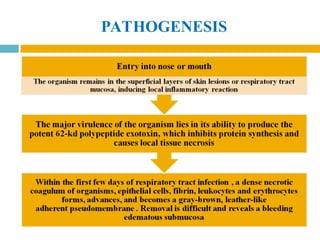
PATHOGENESIS
 Local effect of diphtheritic toxin:
 Paralysis of the palate and hypopharynx
 Pneumonia
 Systemic effects (Toxin absorption ):
 kidney tubule necrosis
 hypoglycemia
 myocarditis and/or demyelination of nerves
 Myocarditis:10-14 days
 Demyelination of nerves: 3-7 weeks
CLINICAL MANIFESTATIONS
 Influenced by the anatomic site of infection, the immune
status of the host and the production and systemic distribution
of toxin
 Incubation period: 1-6 days
 Classification (location):
 nasal
 pharyngeal
 tonsillar
 laryngeal or laryngotracheal
 skin, eye or genitalia
CLINICAL MANIFESTATIONS
 Nasal diphtheria: Infection of the anterior nares- more
common among infants, causes serosanguineous, purulent,
erosive rhinitis with membrane formation
 Shallow ulceration of the external nares and upper lip is
characteristic
 Unilateral nasal discharge is quite pathognomic of nasal
diphtheria
 Accurate diagnosis of nasal diphtheria delayed-paucity of
systemic signs and symptoms
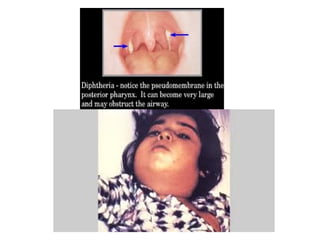
 Tonsillar and pharyngeal diphtheria:
sore throat is the universal early symptom
 Only half of patients have fever and fewer have dysphagia,
hoarseness, malaise, or headache
 Mild pharyngeal injection unilateral or bilateral tonsillar
membrane formation extend to involve the uvula, soft
palate, posterior oropharynx, hypopharynx, or glottic areas
 Underlying soft tissue edema and enlarged lymph nodes: bull-
neck appearance
 Laryngeal diphtheria: At significant risk for suffocation
because of local soft tissue edema and airway obstruction by
the diphtheritic membrane
 Classic cutaneous diphtheria is an indolent, nonprogressive
infection characterized by a superficial, ecthymic, nonhealing
ulcer with a gray-brown membrane
Infection at Other Sites:
ear (otitis externa), the eye (purulent and ulcerative
conjunctivitis), the genital tract (purulent and ulcerative
vulvovaginitis) and sporadic cases of pyogenic arthritis
Diagnosis
 Clinical features
 Culture: from the nose and throat and any other
mucocutaneous lesion. A portion of membrane should be
removed and submitted for culture along with underlying
exudate
 Elek test: rapid diagnosis (16-24 hrs)
 Enzyme immunossay
 PCR for A or B portion of the toxic gene “tox”
 Hypoglycemia, glycosuria, BUN, or abnormal ECG for liver,
kidney and heart involvement
Differential diagnosis:
1. Common cold
2. Congenital syphilis snuffle
3. Sinusitis
4. Adenoiditis and foreign body in nose
5. Streptococcal pharyngitis
6. Infectious mononucleosis
COMPLICATIONS
1. Respiratory tract obstruction by pseudomembranes:
bronchoscopy or intubation and mechanical ventilation
2. Toxic Cardiomyopathy:
-in 10-25% of patients
-responsible for 50-60% of deaths
-the risk for significant complications correlates directly with the extent
and severity of exudative local oropharyngeal disease as well as delay in
administration of antitoxin
-Tachycardia out of proportion to fever
-prolonged PR interval and changes in the ST-T wave
-Elevation of the serum aspartate aminotransferase concentration
closely parallels the severity of myonecrosis
3. Toxic Neuropathy:
 Acutely or 2-3 wk after: hypoesthesia and soft palate paralysis
 Afterwards weakness of the posterior pharyngeal, laryngeal, and facial nerves :
a nasal quality in the voice, difficulty in swallowing and risk for aspiration
 Cranial neuropathies (5th wk): oculomotor and ciliary paralysis- strabismus,
blurred vision, or difficulty with accommodation
 Symmetric polyneuropathy (10 days to 3 mo): motor deficits with diminished
deep tendon reflexes
 Monitoring for paralysis of the diaphragm muscle
Recovery from the neuritis is often slow but usually complete.
Corticosteroids are not recommended.
TREATMENT
1. Antitoxin:
 Mainstay of therapy
 Neutralizes only free toxin, efficacy diminishes with elapsed time
 Antitoxin is administered as a single empirical dose of 20,000-
120,000 U based on the degree of toxicity, site and size of the
membrane, and duration of illness
2. Antimicrobial therapy
 Halt toxin production, treat localized infection and prevent transmission
of the organism to contacts
 erythromycin (40-50 mg/kg/day 6 hrly [PO] or [IV]), aqueous
crystalline penicillin G (100,000-150,000 U/kg/day 6 hrly IV or [IM]),
or procaine penicillin (25,000-50,000 U/kg/day 12 hrly IM) for 14 days
 Elimination of the organism should be documented by
negative results of at least 2 successive cultures of specimens
from the nose and throat (or skin) obtained 24 hr apart after
completion of therapy
 Prognosis: depends on the virulence of the organism
(subspecies gravis), patient age, immunization status, site of
infection and speed of administration of the antitoxin
 The case fatality rate of almost 10% for respiratory tract
diphtheria
 At recovery, administration of diphtheria toxoid is indicated to
complete the primary series or booster doses of immunization,
because not all patients develop antibodies to diphtheritic toxin
after infection
PREVENTION
Asymptomatic Case Contacts:
 Antimicrobial prophylaxis -erythromycin (40-50 mg/kg/day divided qid
PO for 10 days) or a single injection of benzathine penicillin G
(600,000U IM for patients <30 kg, 1,200,000U IM for patients ≥30 kg)
 Diphtheria toxoid vaccine-to immunized individuals who have not
received a booster dose within 5 yr. Children who have not received their
4th dose should be vaccinated. Those who have received fewer than 3
doses of diphtheria toxoid or who have uncertain immunization status are
immunized with an age-appropriate preparation on a primary schedule
Asymptomatic Carriers:
 Same+Repeat cultures are performed about 2 wk after completion of
therapy. if results are positive, an additional 10-day course of oral
erythromycin should be given and follow-up cultures performed
VACCINE
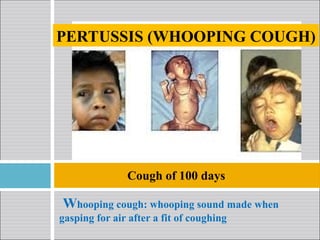
Whooping cough: whooping sound made when
gasping for air after a fit of coughing
Cough of 100 days
PERTUSSIS (WHOOPING COUGH)
INTRODUCTION
 A highly contagious acute bacterial infection caused by the
bacilli Bordetella pertussis
 Currently worldwide prevalence is diminished due to active
immunization
 However it remains a public health problem among older
children and adults
 It continues to be an important respiratory disease afflicting
unvaccinated infants and previously vaccinated children and
adults (waning immunity)
EPIDEMIOLOGY
 Transmission: through the respiratory route in the form of
droplet infection
 Adolescents and adults are the reservoir. No animal or insect
reservoir
 A highly communicable disease. SAR 80% among
households contacts
 In the catarrhal stage and 2 weeks after the onset of cough
ETIOLOGY
 Bordetella pertussis – aerobic gram-negative coccobacilli
 Produces toxins namely pertussis toxin, filamentous
hemagglutinin, hemolysin, adenylate cyclase toxin,
dermonecrotic toxin and tracheal cytotoxin- responsible for
clinical features (toxin mediated disease) and the immunity
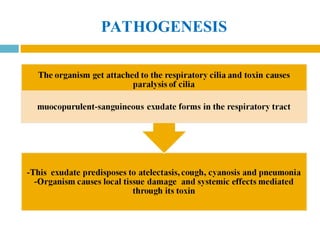
PATHOGENESIS
CLINICAL MANIFESTATIONS
 Incubation period: 7-10 days
 Infection lasts for 6 weeks – 10 weeks
 Stage I (catarrhal stage; 1-2 weeks): insidious onset of
coryza, sneezing, low grade fever and occasional cough
 Stage II (paroxysmal cough stage; 1-6 weeks): due to
difficulty in expelling the thick mucous form the
tracheobronchial tree
 At the end of paroxysm long inspiratory effort is followed by
a whoop
 In between episodes child look well. During episode of cough
the child may become cyanosed, followed by vomiting,
exhaustion and seizures
CLINICAL MANIFESTATIONS
 Cough increase for next 2-3 weeks and decreases over next 10
weeks
 Absence of whoop and/or post-tussive vomiting does not rule
out clinical diagnosis of pertussis
paroxysmal cough>2 weeks with or without whoop and/or
post-tussive vomiting is the hallmark feature of pertussis
 Stage III (convalecence stage): period of gradual recovery
even up to 6 months
COMPLICATIONS
1. Secondary pneumonia (1 in 5) and apneic spells (50%;
neonates and infant<6 months of age)
2. Neurological complications: seizures (1 in 100) and
encephalopathy (1 in 300) due to the toxin or hypoxia or
cerebral hemorrhage
3. Otitis media, anorexia and dehydration, rib frcture,
pneumothorax, subdural hematoma, hernia and rectal prolapse
Differential diagnosis:
1. B. parapertussis, adenovirus, mycoplasma pneumonia, and
chlamydia trachomatis
2. Foreign body aspiration, endobronchial tuberculosis and a
mass pressing on the airway
DIAGNOSIS
1. Suspected on the basis of history and clinical examination
and is confirmed by culture, genomics or serology
2. Elevated WBC count with lymphocytosis. The absolute
lymphocyte count of ≥20,000 is highly suggestive
3. Culture: gold standard specially in the catarrhal stage. A
saline nasal swab or swab from the posterior pharynx is
preferred and the swab should be taken using dacron or
calcium alginate and has to be plated on to the selective
medium
DIAGNOSIS
However culture are not recommended in clinical practice as
the yield is poor because of previous vaccination, antibiotic
use, diluted specimen and faulty collection and
transportation of specimen.
4. PCR: most sensitive to diagnose; can be done even after
antibiotic exposure. It should always be used in addition with
cultures
5. Direct fluorescent antibody testing: low sensitivity and
variable specifity
TREATMENT
1. Avoidance of irritants, smoke, noise and other cough
promoting factors
2. Antibiotics: effective only if started early in the course of
illness. Erythromycin (40-50 mg/kg/day 6 hrly orally for 2
weeks or Azithromycin 10 mg/kg for 5 days in children<6
months and for children>6 months 10 mg/kg on day 1,
followed by 5mg/kg from day2-5 or Clarithromycin 15
mg/kg 12 hrly for 7 days
3. Supplemental oxygen, hydration, cough mixtures and
bronchodilators (in individual cases)
PREVENTION
 All household contacts should be given erythromycin for 2
weeks
 Children <7 years of age not completed the four primary dose
should complete the same at the earliest
 Children <7 years of age completed primary vaccination but
not received the booster in the last 3 years have to be given a
single booster dose
 VACCINE
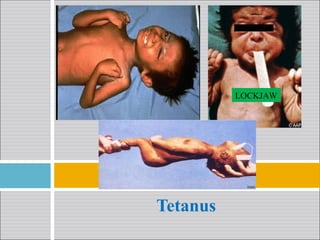
Tetanus
LOCKJAW
INTRODUCTION
 Tetanus is an acute, fatal, severe exotoxin mediated nervous
system disorder characterized by muscle spasm
 Caused by the toxin producing anaerobe, Clostridium tetani
 Tetanus is the only vaccine preventable disease that is
infectious but not contagious from person to person
CAUSATIVE AGENT
 Caused by Clostridiumtetani.
 Anaerobic
 Motile
 Gram positive bacilli
 Oval, colourless
 Found worldwide
 Found in soil, inanimate environment, in animal
faeces and occasionally human faeces.
CAUSATIVE FACTORS
 Hand washing.
 Delivery practices.
 Traditional birth customs.
 Interest in immunization.
TRANSMISSION
 Tetanus is not transmitted from person to person.
 Infection occurs when C.tetani spores are
introduced into acute wounds from trauma,
surgeries and injections or chronic skin lesions and
infections.
 Most cases are resulted from the wounds that are
too trivial to warrant medical attention.
 Incubation period- Usually between 3 to 21 days -
Median- 7 days - Shorter period- <7 days
EPIDEMIOLOGY
 C. tetani is a part of the normal flora in human and animal
intestines and is disseminated through excreta
 In spore form they are hard and long lasting in soil and dust
 The contamination of wound, unhygienic and improper
handling of the umbilical cord in newborns, lack of hygienic
habits and aseptic care during and after delivery are the main
risk factors for infection
PREDISPOSING FACTORS
 A penetrating injury – inoculation of C. tetani spores
 Coinfection with other bacteria
 A foreign body
 Localized ischemia
 Therefore tetanus develop in these clinical settings:
neonates, obstetric patients, postsurgical patients, patients
with dental infection, diabetic patients with infected extremity
ulcers, patients who inject contaminated drugs.
TYPES OF TETANUS
 1.Generalized Tetanus- Most common and
severe; Affects all skeletal muscles.
 2. Local Tetanus- Manifest with muscle spasms at
or near the infected area.
 3. Cephalic Tetanus- Affects the facial muscles
after a head injury or ear infection; lock jaw; easily
progress to generalized tetanus.
 4. Neonatal Tetanus- Similar to generalized
tetanus but affects neonates.
CLINICAL MANIFESTATIONS
 Incubation period: 1-8 days
 Generalized tetanus:
 Presenting feature is trismus
 Symptoms of autonomic overactivity such as irritability,
restlessness, sweating, tachycardia, cardiac arrhythmias,
hypotension or hypertension and fever
 Tonic contractions of skeletal muscles (stiff neck, board like
rigid abdomen) and intermittent intense muscular spasms with
no impairment of consciousness
 Painful spasms, triggered by loud noises or other sensory
stimuli such as light
CLINICAL MANIFESTATIONS
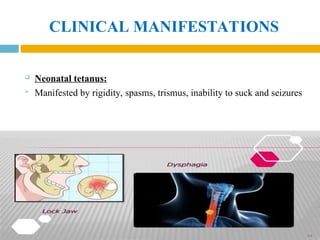
 Neonatal tetanus:
 Manifested by rigidity, spasms, trismus, inability to suck and seizures
Conti..
TREATMENT
 Best in the ICU as child may need early and aggressive
airway management
 The goals of treatment include
1. toxin production
 Wound debridement
 Antimicrobial therapy: metronidazole or penicillin G for 7-
10 days
2. Neutralization of unbound toxin:
 HTIG(HUMAN TETANUS IMMUNOGLOBULIN)
-3,000-6,000 units i.m.
 Equine antitoxin 1,500-3,000 units i.m. or i.v.
TREATMENT
3. Control of muscle spasms
 Avoidance of sensory stimuli
 Sedatives: diazepam
4. Management of autonomic dysfunction:
 Magnesium sulfate, beta blockers, morphine sulfate
5. Airway management and other supportive measures
 Main treatment as bound tetanus toxin can not be displaced
from the nervous system
 Endotracheal intubation/tracheostomy, nutritional support,
physical therapy as soon as spasms have ceased
PREVENTION
 Immunization and proper treatment of wounds and traumatic
injuries
 PROGNOSIS:
 The average mortality of tetanus is 45-55%
 Neonatal tetanus: 60-70%
 Most important factor influencing outcome is supportive care
PREVENTION
VACCINE:
 DPT vaccine: 3 primary doses starting at 6 weeks of age
 1st
booster at 16-18 months of age, 2nd
booster at 5 years of
age.
 Catch-up vaccination:
 Below 7 years: DPT at 0,1 and 6 months

Diphtheria_Pertussis_tetanus (2).pptMMMMMMMMMM

  • 1.
  • 2.
    Diphtheria (Corynebacterium diphtheriae) DiphtheraisGreek word for leather Bull-neck appearance of diphtheritic cervical lymphadenopathy
  • 3.
    INTRODUCTION  An acutetoxic infection caused by Corynebacterium diphtheriae and rarely toxigenic strains of Corynebacterium ulcerans  aerobic, nonencapsulated, non–spore-forming, mostly nonmotile, pleomorphic, gram-positive bacilli  Differentiation of C. diphtheriae from C. ulcerans is based on urease activity, C. ulcerans is urease-positive  Four C. diphtheriae biotypes - mitis, intermedius, belfanti, gravis; differentiated by colonial morphology, hemolysis, and fermentation reactions
  • 4.
    INTRODUCTION  Diphtheritic toxinproduction occurs only after acquisition of a lysogenic Corynebacteriophage by either C. diphtheriae or C. ulcerans, which encodes the diphtheritic toxin gene and confers diphtheria-producing potential on these strains  Demonstration of diphtheritic toxin production or potential for toxin production by an isolate is necessary to confirm disease  The former is done in vitro using the agar immunoprecipitin technique (Elek test) or in vivo with the toxin neutralization test in guinea pigs, the latter by polymerase chain reaction testing for carriage of the toxin gene  Toxin is lethal in human beings in an amount 130μg/kg BW
  • 5.
    EPIDEMIOLOGY  Transmission: airbornerespiratory droplets, direct contact with respiratory secretions of symptomatic individuals, or exudates from infected skin lesions  Asymptomatic respiratory tract carriage is important in transmission. Where diphtheria is endemic, 3-5% of healthy individuals can carry toxigenic organisms  Diphtheria is endemic in INDIA.  Skin infection and skin carriage are silent reservoirs and organisms can remain viable in dust or on fomites for up to 6 months  Transmission through contaminated milk and an infected food handler has been documented
  • 6.
    EPIDEMIOLOGY  Children aged1-5yrs are commonly infected  A herd immunity of 70% is required to prevent epidemics  Contaminated objects like thermometers, cups, spoons, toys and pencils can spread the disease  Overcrowding, poor sanitation and hygiene, illiteracy, urban migration and close contacts can lead to outbreak
  • 7.
  • 8.
     Local effectof diphtheritic toxin:  Paralysis of the palate and hypopharynx  Pneumonia  Systemic effects (Toxin absorption ):  kidney tubule necrosis  hypoglycemia  myocarditis and/or demyelination of nerves  Myocarditis:10-14 days  Demyelination of nerves: 3-7 weeks
  • 9.
    CLINICAL MANIFESTATIONS  Influencedby the anatomic site of infection, the immune status of the host and the production and systemic distribution of toxin  Incubation period: 1-6 days  Classification (location):  nasal  pharyngeal  tonsillar  laryngeal or laryngotracheal  skin, eye or genitalia
  • 10.
    CLINICAL MANIFESTATIONS  Nasaldiphtheria: Infection of the anterior nares- more common among infants, causes serosanguineous, purulent, erosive rhinitis with membrane formation  Shallow ulceration of the external nares and upper lip is characteristic  Unilateral nasal discharge is quite pathognomic of nasal diphtheria  Accurate diagnosis of nasal diphtheria delayed-paucity of systemic signs and symptoms
  • 11.
     Tonsillar andpharyngeal diphtheria: sore throat is the universal early symptom  Only half of patients have fever and fewer have dysphagia, hoarseness, malaise, or headache  Mild pharyngeal injection unilateral or bilateral tonsillar membrane formation extend to involve the uvula, soft palate, posterior oropharynx, hypopharynx, or glottic areas  Underlying soft tissue edema and enlarged lymph nodes: bull- neck appearance
  • 13.
     Laryngeal diphtheria:At significant risk for suffocation because of local soft tissue edema and airway obstruction by the diphtheritic membrane  Classic cutaneous diphtheria is an indolent, nonprogressive infection characterized by a superficial, ecthymic, nonhealing ulcer with a gray-brown membrane
  • 14.
    Infection at OtherSites: ear (otitis externa), the eye (purulent and ulcerative conjunctivitis), the genital tract (purulent and ulcerative vulvovaginitis) and sporadic cases of pyogenic arthritis Diagnosis  Clinical features  Culture: from the nose and throat and any other mucocutaneous lesion. A portion of membrane should be removed and submitted for culture along with underlying exudate  Elek test: rapid diagnosis (16-24 hrs)
  • 15.
     Enzyme immunossay PCR for A or B portion of the toxic gene “tox”  Hypoglycemia, glycosuria, BUN, or abnormal ECG for liver, kidney and heart involvement Differential diagnosis: 1. Common cold 2. Congenital syphilis snuffle 3. Sinusitis 4. Adenoiditis and foreign body in nose 5. Streptococcal pharyngitis 6. Infectious mononucleosis
  • 16.
    COMPLICATIONS 1. Respiratory tractobstruction by pseudomembranes: bronchoscopy or intubation and mechanical ventilation 2. Toxic Cardiomyopathy: -in 10-25% of patients -responsible for 50-60% of deaths -the risk for significant complications correlates directly with the extent and severity of exudative local oropharyngeal disease as well as delay in administration of antitoxin -Tachycardia out of proportion to fever -prolonged PR interval and changes in the ST-T wave -Elevation of the serum aspartate aminotransferase concentration closely parallels the severity of myonecrosis
  • 17.
    3. Toxic Neuropathy: Acutely or 2-3 wk after: hypoesthesia and soft palate paralysis  Afterwards weakness of the posterior pharyngeal, laryngeal, and facial nerves : a nasal quality in the voice, difficulty in swallowing and risk for aspiration  Cranial neuropathies (5th wk): oculomotor and ciliary paralysis- strabismus, blurred vision, or difficulty with accommodation  Symmetric polyneuropathy (10 days to 3 mo): motor deficits with diminished deep tendon reflexes  Monitoring for paralysis of the diaphragm muscle Recovery from the neuritis is often slow but usually complete. Corticosteroids are not recommended.
  • 18.
    TREATMENT 1. Antitoxin:  Mainstayof therapy  Neutralizes only free toxin, efficacy diminishes with elapsed time  Antitoxin is administered as a single empirical dose of 20,000- 120,000 U based on the degree of toxicity, site and size of the membrane, and duration of illness 2. Antimicrobial therapy  Halt toxin production, treat localized infection and prevent transmission of the organism to contacts  erythromycin (40-50 mg/kg/day 6 hrly [PO] or [IV]), aqueous crystalline penicillin G (100,000-150,000 U/kg/day 6 hrly IV or [IM]), or procaine penicillin (25,000-50,000 U/kg/day 12 hrly IM) for 14 days
  • 19.
     Elimination ofthe organism should be documented by negative results of at least 2 successive cultures of specimens from the nose and throat (or skin) obtained 24 hr apart after completion of therapy  Prognosis: depends on the virulence of the organism (subspecies gravis), patient age, immunization status, site of infection and speed of administration of the antitoxin  The case fatality rate of almost 10% for respiratory tract diphtheria  At recovery, administration of diphtheria toxoid is indicated to complete the primary series or booster doses of immunization, because not all patients develop antibodies to diphtheritic toxin after infection
  • 20.
    PREVENTION Asymptomatic Case Contacts: Antimicrobial prophylaxis -erythromycin (40-50 mg/kg/day divided qid PO for 10 days) or a single injection of benzathine penicillin G (600,000U IM for patients <30 kg, 1,200,000U IM for patients ≥30 kg)  Diphtheria toxoid vaccine-to immunized individuals who have not received a booster dose within 5 yr. Children who have not received their 4th dose should be vaccinated. Those who have received fewer than 3 doses of diphtheria toxoid or who have uncertain immunization status are immunized with an age-appropriate preparation on a primary schedule Asymptomatic Carriers:  Same+Repeat cultures are performed about 2 wk after completion of therapy. if results are positive, an additional 10-day course of oral erythromycin should be given and follow-up cultures performed VACCINE
  • 21.
    Whooping cough: whoopingsound made when gasping for air after a fit of coughing Cough of 100 days PERTUSSIS (WHOOPING COUGH)
  • 22.
    INTRODUCTION  A highlycontagious acute bacterial infection caused by the bacilli Bordetella pertussis  Currently worldwide prevalence is diminished due to active immunization  However it remains a public health problem among older children and adults  It continues to be an important respiratory disease afflicting unvaccinated infants and previously vaccinated children and adults (waning immunity)
  • 23.
    EPIDEMIOLOGY  Transmission: throughthe respiratory route in the form of droplet infection  Adolescents and adults are the reservoir. No animal or insect reservoir  A highly communicable disease. SAR 80% among households contacts  In the catarrhal stage and 2 weeks after the onset of cough
  • 24.
    ETIOLOGY  Bordetella pertussis– aerobic gram-negative coccobacilli  Produces toxins namely pertussis toxin, filamentous hemagglutinin, hemolysin, adenylate cyclase toxin, dermonecrotic toxin and tracheal cytotoxin- responsible for clinical features (toxin mediated disease) and the immunity
  • 25.
  • 26.
    CLINICAL MANIFESTATIONS  Incubationperiod: 7-10 days  Infection lasts for 6 weeks – 10 weeks  Stage I (catarrhal stage; 1-2 weeks): insidious onset of coryza, sneezing, low grade fever and occasional cough  Stage II (paroxysmal cough stage; 1-6 weeks): due to difficulty in expelling the thick mucous form the tracheobronchial tree  At the end of paroxysm long inspiratory effort is followed by a whoop  In between episodes child look well. During episode of cough the child may become cyanosed, followed by vomiting, exhaustion and seizures
  • 27.
    CLINICAL MANIFESTATIONS  Coughincrease for next 2-3 weeks and decreases over next 10 weeks  Absence of whoop and/or post-tussive vomiting does not rule out clinical diagnosis of pertussis paroxysmal cough>2 weeks with or without whoop and/or post-tussive vomiting is the hallmark feature of pertussis  Stage III (convalecence stage): period of gradual recovery even up to 6 months
  • 28.
    COMPLICATIONS 1. Secondary pneumonia(1 in 5) and apneic spells (50%; neonates and infant<6 months of age) 2. Neurological complications: seizures (1 in 100) and encephalopathy (1 in 300) due to the toxin or hypoxia or cerebral hemorrhage 3. Otitis media, anorexia and dehydration, rib frcture, pneumothorax, subdural hematoma, hernia and rectal prolapse Differential diagnosis: 1. B. parapertussis, adenovirus, mycoplasma pneumonia, and chlamydia trachomatis 2. Foreign body aspiration, endobronchial tuberculosis and a mass pressing on the airway
  • 29.
    DIAGNOSIS 1. Suspected onthe basis of history and clinical examination and is confirmed by culture, genomics or serology 2. Elevated WBC count with lymphocytosis. The absolute lymphocyte count of ≥20,000 is highly suggestive 3. Culture: gold standard specially in the catarrhal stage. A saline nasal swab or swab from the posterior pharynx is preferred and the swab should be taken using dacron or calcium alginate and has to be plated on to the selective medium
  • 30.
    DIAGNOSIS However culture arenot recommended in clinical practice as the yield is poor because of previous vaccination, antibiotic use, diluted specimen and faulty collection and transportation of specimen. 4. PCR: most sensitive to diagnose; can be done even after antibiotic exposure. It should always be used in addition with cultures 5. Direct fluorescent antibody testing: low sensitivity and variable specifity
  • 31.
    TREATMENT 1. Avoidance ofirritants, smoke, noise and other cough promoting factors 2. Antibiotics: effective only if started early in the course of illness. Erythromycin (40-50 mg/kg/day 6 hrly orally for 2 weeks or Azithromycin 10 mg/kg for 5 days in children<6 months and for children>6 months 10 mg/kg on day 1, followed by 5mg/kg from day2-5 or Clarithromycin 15 mg/kg 12 hrly for 7 days 3. Supplemental oxygen, hydration, cough mixtures and bronchodilators (in individual cases)
  • 32.
    PREVENTION  All householdcontacts should be given erythromycin for 2 weeks  Children <7 years of age not completed the four primary dose should complete the same at the earliest  Children <7 years of age completed primary vaccination but not received the booster in the last 3 years have to be given a single booster dose  VACCINE
  • 33.
  • 34.
    INTRODUCTION  Tetanus isan acute, fatal, severe exotoxin mediated nervous system disorder characterized by muscle spasm  Caused by the toxin producing anaerobe, Clostridium tetani  Tetanus is the only vaccine preventable disease that is infectious but not contagious from person to person
  • 35.
    CAUSATIVE AGENT  Causedby Clostridiumtetani.  Anaerobic  Motile  Gram positive bacilli  Oval, colourless  Found worldwide  Found in soil, inanimate environment, in animal faeces and occasionally human faeces.
  • 36.
    CAUSATIVE FACTORS  Handwashing.  Delivery practices.  Traditional birth customs.  Interest in immunization.
  • 37.
    TRANSMISSION  Tetanus isnot transmitted from person to person.  Infection occurs when C.tetani spores are introduced into acute wounds from trauma, surgeries and injections or chronic skin lesions and infections.  Most cases are resulted from the wounds that are too trivial to warrant medical attention.  Incubation period- Usually between 3 to 21 days - Median- 7 days - Shorter period- <7 days
  • 38.
    EPIDEMIOLOGY  C. tetaniis a part of the normal flora in human and animal intestines and is disseminated through excreta  In spore form they are hard and long lasting in soil and dust  The contamination of wound, unhygienic and improper handling of the umbilical cord in newborns, lack of hygienic habits and aseptic care during and after delivery are the main risk factors for infection
  • 39.
    PREDISPOSING FACTORS  Apenetrating injury – inoculation of C. tetani spores  Coinfection with other bacteria  A foreign body  Localized ischemia  Therefore tetanus develop in these clinical settings: neonates, obstetric patients, postsurgical patients, patients with dental infection, diabetic patients with infected extremity ulcers, patients who inject contaminated drugs.
  • 40.
    TYPES OF TETANUS 1.Generalized Tetanus- Most common and severe; Affects all skeletal muscles.  2. Local Tetanus- Manifest with muscle spasms at or near the infected area.  3. Cephalic Tetanus- Affects the facial muscles after a head injury or ear infection; lock jaw; easily progress to generalized tetanus.  4. Neonatal Tetanus- Similar to generalized tetanus but affects neonates.
  • 41.
    CLINICAL MANIFESTATIONS  Incubationperiod: 1-8 days  Generalized tetanus:  Presenting feature is trismus  Symptoms of autonomic overactivity such as irritability, restlessness, sweating, tachycardia, cardiac arrhythmias, hypotension or hypertension and fever  Tonic contractions of skeletal muscles (stiff neck, board like rigid abdomen) and intermittent intense muscular spasms with no impairment of consciousness  Painful spasms, triggered by loud noises or other sensory stimuli such as light
  • 42.
    CLINICAL MANIFESTATIONS  Neonataltetanus:  Manifested by rigidity, spasms, trismus, inability to suck and seizures
  • 43.
  • 44.
    TREATMENT  Best inthe ICU as child may need early and aggressive airway management  The goals of treatment include 1. toxin production  Wound debridement  Antimicrobial therapy: metronidazole or penicillin G for 7- 10 days 2. Neutralization of unbound toxin:  HTIG(HUMAN TETANUS IMMUNOGLOBULIN) -3,000-6,000 units i.m.  Equine antitoxin 1,500-3,000 units i.m. or i.v.
  • 45.
    TREATMENT 3. Control ofmuscle spasms  Avoidance of sensory stimuli  Sedatives: diazepam 4. Management of autonomic dysfunction:  Magnesium sulfate, beta blockers, morphine sulfate 5. Airway management and other supportive measures  Main treatment as bound tetanus toxin can not be displaced from the nervous system  Endotracheal intubation/tracheostomy, nutritional support, physical therapy as soon as spasms have ceased
  • 46.
    PREVENTION  Immunization andproper treatment of wounds and traumatic injuries  PROGNOSIS:  The average mortality of tetanus is 45-55%  Neonatal tetanus: 60-70%  Most important factor influencing outcome is supportive care
  • 47.
    PREVENTION VACCINE:  DPT vaccine:3 primary doses starting at 6 weeks of age  1st booster at 16-18 months of age, 2nd booster at 5 years of age.  Catch-up vaccination:  Below 7 years: DPT at 0,1 and 6 months