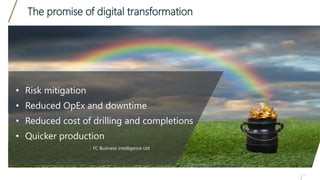
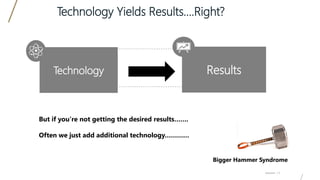
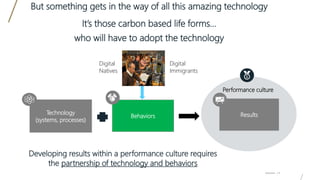
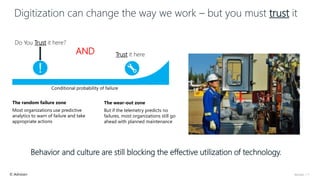
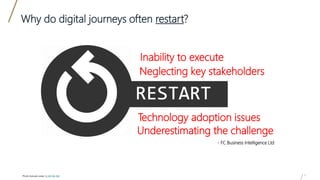
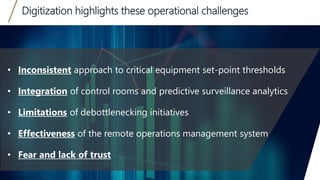
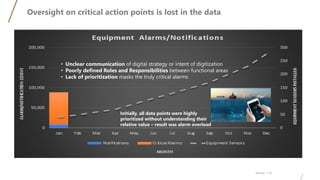
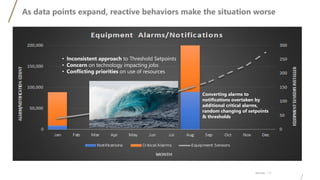
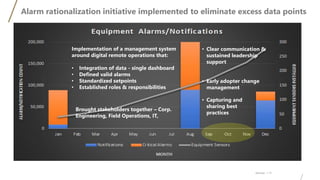
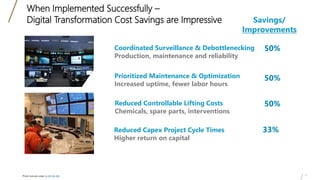
Digital transformation promises benefits like reduced costs and improved efficiency, but many organizations struggle to realize these benefits due to issues with technology adoption, inconsistent processes, and a lack of trust in new systems. To truly achieve results, digital transformation requires changes to both technology and behaviors within an organization's performance culture. Leaders must clearly communicate the strategy, define roles and responsibilities, and provide change management support to address issues like alarm fatigue or fears about new technologies. When implemented successfully through partnerships between technology and behaviors, digital transformation can deliver impressive cost savings through improvements like reduced project cycle times, increased uptime, and coordinated asset management.









![[Accenture] Digital Business 2017](https://cdn.slidesharecdn.com/ss_thumbnails/digitalbusiness-140324050918-phpapp02-171229091300-thumbnail.jpg?width=640&height=640&fit=bounds)


