DIGITAL ETIQUETTE
Created By Cassidy Mills and Kelley Carney
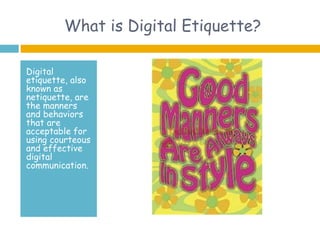
What is Digital Etiquette?

Digital
etiquette, also
known as
netiquette, are
the manners
and behaviors
that are
acceptable for
using courteous
and effective
digital
communication.
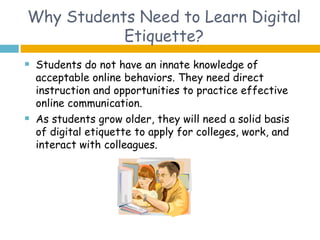
Why Students Need to Learn Digital
           Etiquette?
   Students do not have an innate knowledge of
    acceptable online behaviors. They need direct
    instruction and opportunities to practice effective
    online communication.
   As students grow older, they will need a solid basis
    of digital etiquette to apply for colleges, work, and
    interact with colleagues.
Rules for Digital Etiquette

           6 Basic Rules for Students to Follow:
1. Remember the Human: Students need to be aware
   that when they interact online they are dealing with
   real individuals with feelings.

2. Adhere to the same standards of behavior online
   that you follow in real life: Do not say or share
   anything online that you would not say/share face to
   face.
3. Help Keep Flame Wars Under Control: Do not post
   rude or hateful comments to purposely hurt
   someone’s feelings or instigate arguments.
4. Respect Other People’s Privacy: Do not post private
   information or images of others online without their
   consent.
5. Make Yourself Look Good Online: Remember that
   nothing online is ever completely private. If you
   would not want a loved one, employer, or teacher to
   know something about you then do not post it.
6. Be Aware of Your Audience: Keep in mind who you
   are communicating with. Remain professional with
   teachers and adults. Do not use slang while writing in
   professional or formal communications.
Examples of Common Mistakes

   TYPING IN ALL CAPS: It makes it look like you are
    shouting online.
   Using sarcasm: Without vocal tone and facial
    expressions, your audience may misinterpret your
    message.
   Using abbreviations: Your friends may understand
    “ttyl, ikr, and lol” however, these are not appropriate
    formal communication.
Preventions

 Proofread your messages and posts
 Spell check
 Make sure your message is clear and easy to
  interpret
 Remember that when you post something
  online, it may likely be there forever
Resources
   http://fsudigitalcitizenship.wikispaces.com/Digita
   www.brainpop.com/technology/computersandinter
   www.educationworld.com
   www.babble.com
Questions

. Why is it important to teach students digital
 etiquette?


. What are some common mistakes made by
students?


.What is one of the basic rules for digital
etiquette?
Answers
1. They will need it to effectively communicate
   as adults in school and in the work place.
   Teachers need to realize that their students
   may not learn digital etiquette at home and
   therefore, need instruction at school.
Answers
2. Typing in all caps, using abbreviations, and
  using sarcasm.
Answers
3. Possible Answers: Remember the Human,
  Adhere to the same standards of behavior
  online that you follow in real life, Help Keep
  Flame Wars Under Control, Respect Other
  People’s Privacy, Make Yourself Look Good
  Online, Be Aware of Your Audience

Digital etiquette 2[1]

  • 1.
    DIGITAL ETIQUETTE Created ByCassidy Mills and Kelley Carney
  • 2.
    What is DigitalEtiquette? Digital etiquette, also known as netiquette, are the manners and behaviors that are acceptable for using courteous and effective digital communication.
  • 3.
    Why Students Needto Learn Digital Etiquette?  Students do not have an innate knowledge of acceptable online behaviors. They need direct instruction and opportunities to practice effective online communication.  As students grow older, they will need a solid basis of digital etiquette to apply for colleges, work, and interact with colleagues.
  • 4.
    Rules for DigitalEtiquette 6 Basic Rules for Students to Follow: 1. Remember the Human: Students need to be aware that when they interact online they are dealing with real individuals with feelings. 2. Adhere to the same standards of behavior online that you follow in real life: Do not say or share anything online that you would not say/share face to face.
  • 5.
    3. Help KeepFlame Wars Under Control: Do not post rude or hateful comments to purposely hurt someone’s feelings or instigate arguments. 4. Respect Other People’s Privacy: Do not post private information or images of others online without their consent.
  • 6.
    5. Make YourselfLook Good Online: Remember that nothing online is ever completely private. If you would not want a loved one, employer, or teacher to know something about you then do not post it. 6. Be Aware of Your Audience: Keep in mind who you are communicating with. Remain professional with teachers and adults. Do not use slang while writing in professional or formal communications.
  • 7.
    Examples of CommonMistakes  TYPING IN ALL CAPS: It makes it look like you are shouting online.  Using sarcasm: Without vocal tone and facial expressions, your audience may misinterpret your message.  Using abbreviations: Your friends may understand “ttyl, ikr, and lol” however, these are not appropriate formal communication.
  • 8.
    Preventions  Proofread yourmessages and posts  Spell check  Make sure your message is clear and easy to interpret  Remember that when you post something online, it may likely be there forever
  • 9.
    Resources  http://fsudigitalcitizenship.wikispaces.com/Digita  www.brainpop.com/technology/computersandinter  www.educationworld.com  www.babble.com
  • 10.
    Questions . Why isit important to teach students digital etiquette? . What are some common mistakes made by students? .What is one of the basic rules for digital etiquette?
  • 11.
    Answers 1. They willneed it to effectively communicate as adults in school and in the work place. Teachers need to realize that their students may not learn digital etiquette at home and therefore, need instruction at school.
  • 12.
    Answers 2. Typing inall caps, using abbreviations, and using sarcasm.
  • 13.
    Answers 3. Possible Answers:Remember the Human, Adhere to the same standards of behavior online that you follow in real life, Help Keep Flame Wars Under Control, Respect Other People’s Privacy, Make Yourself Look Good Online, Be Aware of Your Audience