Digital Citizenship – Identity,
Footprint, & Social Activism
Papers: Reputation Management and Social Media
Understanding your Digital Identity
Understanding your digital Identity
• Digital Identity- Describe the persona a person projects across the
internet.
• This is how other people might view you on the internet
• These days most people are creating their own online appearance
• How well is your online presence?
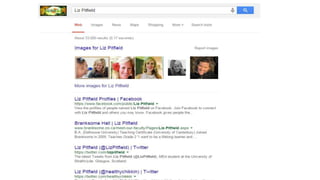
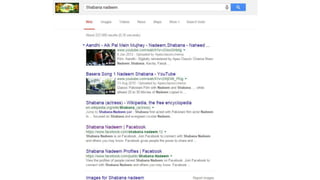
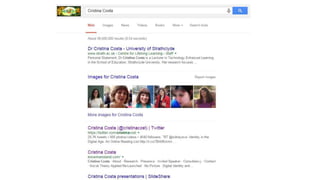
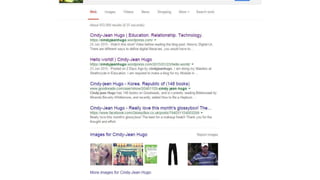
• How would you feel if I google you now…
• Why did I show you this?
• How does it feel?
• Would your future students, parents, co workers and employer
Google you?
• What would you want people to see when they look for you online?
• Do you have Facebook?
• Do you use it with fellow classmates?
• Do you think this could be used in your classroom?
Digital Identity
• Jenkins (2004) claims that “…all human identities are by definition
social identities…” if this is true is Digital Identity not the same as
social identity?
• Digital identity represent yourself as a person online.
• Are you the master of your own digital identity?
• No, other people have an input towards your identity.
• We comment on one another's blogs, would we still comment the
same way if we didn’t know one another?
• This is me Project – urge people to take control of their own digital
identity.
• Allow users to create recourses and allow them to understand their
own digital identity
• Some people not all, project themselves they way they want to be
seen by others
• Other embrace the open approach to share information freely
• Do you……
• Delete unwanted images?
• Set privacy settings?
• Untag photos?..... Why?
Digital Citizenship
• Are you a digital Citizen?
• If you are active on the internet or online you are a digital citizen.
• What would the attributes of a digital citizen be?
• _____________________
• _____________________
• _____________________
• _____________________
• _____________________
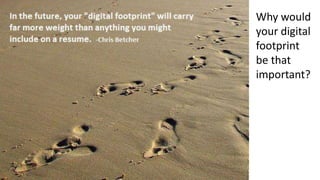
Why would
your digital
footprint
be that
important?
Digital footprint
• Just like a foot print in sand, it is the digital foot print you leave
behind with every step you take in the digital world
• What advice would you give to a student now if they asked about
how to control their digital foot print?
• What is your digital footprint like?
Thank you (Refrences)
• Bennett, W. L. (2008). Changing citizenship in the digital age. Civic life
online: Learning how digital media can engage youth, 1, 1-24.
• Greenhow, C., & Robelia, B. (2009). Informal learning and identity
formation in online social networks. Learning, Media and
Technology, 34(2), 119-140.
• Ribble, M. S., Bailey, G. D., & Ross, T. W. (2004). Digital Citizenship:
Addressing Appropriate Technology Behavior. Learning & Leading
with Technology, 32(1), 6.

Digital citizenship – identity, footprint, &

  • 1.
    Digital Citizenship –Identity, Footprint, & Social Activism Papers: Reputation Management and Social Media Understanding your Digital Identity
  • 2.
    Understanding your digitalIdentity • Digital Identity- Describe the persona a person projects across the internet. • This is how other people might view you on the internet • These days most people are creating their own online appearance • How well is your online presence? • How would you feel if I google you now…
  • 7.
    • Why didI show you this? • How does it feel? • Would your future students, parents, co workers and employer Google you? • What would you want people to see when they look for you online? • Do you have Facebook? • Do you use it with fellow classmates? • Do you think this could be used in your classroom?
  • 8.
    Digital Identity • Jenkins(2004) claims that “…all human identities are by definition social identities…” if this is true is Digital Identity not the same as social identity? • Digital identity represent yourself as a person online. • Are you the master of your own digital identity? • No, other people have an input towards your identity. • We comment on one another's blogs, would we still comment the same way if we didn’t know one another?
  • 10.
    • This isme Project – urge people to take control of their own digital identity. • Allow users to create recourses and allow them to understand their own digital identity • Some people not all, project themselves they way they want to be seen by others • Other embrace the open approach to share information freely • Do you…… • Delete unwanted images? • Set privacy settings? • Untag photos?..... Why?
  • 11.
  • 12.
    • Are youa digital Citizen? • If you are active on the internet or online you are a digital citizen. • What would the attributes of a digital citizen be? • _____________________ • _____________________ • _____________________ • _____________________ • _____________________
  • 13.
  • 14.
    Digital footprint • Justlike a foot print in sand, it is the digital foot print you leave behind with every step you take in the digital world • What advice would you give to a student now if they asked about how to control their digital foot print? • What is your digital footprint like?
  • 15.
    Thank you (Refrences) •Bennett, W. L. (2008). Changing citizenship in the digital age. Civic life online: Learning how digital media can engage youth, 1, 1-24. • Greenhow, C., & Robelia, B. (2009). Informal learning and identity formation in online social networks. Learning, Media and Technology, 34(2), 119-140. • Ribble, M. S., Bailey, G. D., & Ross, T. W. (2004). Digital Citizenship: Addressing Appropriate Technology Behavior. Learning & Leading with Technology, 32(1), 6.

Editor's Notes

  • #9 Boundries, and multipal identities Have we ever been in full control of our identity?
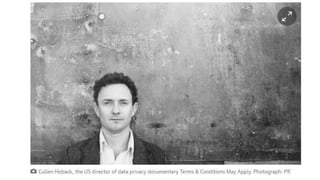
  • #10 http://www.theguardian.com/technology/2013/sep/19/data-digital-identity-cullen-hoback
  • #12 http://www.digizen.org/digicentral/digital-citizenship.aspx
  • #13  Element 1: Digital Access This is perhaps one of the most fundamental blocks to being a digital citizen. However, due to Socioeconomic status, location, and other disabilities- some individuals may not have digital access. Recently, schools have been becoming more connected with the internet, often offering computers, and other forms of access. This can be offered through kiosks, community centers, and open labs. This most often is associated with the digital divide and factors associated with such. [17] Element 2: Digital Commerce This is the ability for users to recognize that much of the economy is regulated online. It also deals with the understanding of the dangers and benefits of online buying, using credit cards online, and so forth. As with the advantages and legal activities- there is also dangerous activities such as illegal downloads, gambling, drug deals, pornography, plagiarism, and so forth. Element 3: Digital Communication This element deals with understanding the variety of online communication mediums such as email, instant messaging, Facebook messenger, the variety of apps, and so forth. There is a standard of etiquette associated with each medium. Element 4: Digital Literacy This deals with the understanding of how to use various digital devices. For example, how to properly search for something on a search engine versus a database. How to use various online logs. Oftentimes many educational institutions will help form an individual’s digital literacy. Element 5: Digital Etiquette As discussed in the third element, digital communication, this is the expectation that various mediums require a variety of etiquette. Certain mediums demand more appropriate behavior and language than others. Element 6: Digital Law This is where enforcement occurs for illegal downloads, plagiarizing, hacking, creating viruses, sending spams, identity theft, cyberbullying, and so forth. Element 7: Digital Rights and Responsibilities This is the set of rights digital citizens have such as privacy, speech, and so forth. Element 8: Digital Health Digital citizens must be aware of the physical stress placed on their bodies by internet usage. They must be aware to not become overly dependent on the internet causing eye strain, headaches, stress problems, and so on. Element 9: Digital Security This simply means that citizens must take measures to be safe by practicing using difficult passwords, virus protection, backing up data, and so forth. [18]
  • #16 We should start to embed this into the teaching and education right now. How do we embed this in the curriculum. Adults think in black and white, they should work in the grey area. Part of the fear comes from their knowledge of the online world.