 The difference between digipacks and normal CD’s is
 that unlike CD’s, digipacks are made of plastic and
 usually are made out of paper or cardboard.

 Also digipacks have four sides or pages to them unlike
 a usual two sided CD.

 Most have a song lyric book in tucked in the front
 cover.
 As I have said they are made of paper or cardboard so
 they are usually thinner than an average CD.

 In the bottom right we can see an example of a
  Digipack cover.
 As you can see, on it is usually the name of the album
  and the name of the singer or band.
 The cover also usually have an image of the artist for
  promotional purposes.

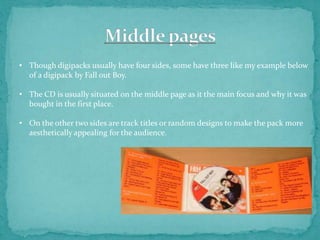
• Though digipacks usually have four sides, some have three like my example below
  of a digipack by Fall out Boy.

• The CD is usually situated on the middle page as it the main focus and why it was
  bought in the first place.

• On the other two sides are track titles or random designs to make the pack more
  aesthetically appealing for the audience.
• In this digipack by Kate Nash we can clearly see that on the back there are a
  few distinguishing features.

• Firstly the main thing we see are song titles. This is done so the listener can
  see if they like the songs featured and then buy the album knowing what
  the tracks are called.

• There is also a bar code which is typical of an album.

• In the bottom corner there is a logo so the buyer can see who the recording
  company is.

• At the bottom we can also see parallel to the recording
  company logo is a copyright notice.

Digi packs

  • 2.
     The differencebetween digipacks and normal CD’s is that unlike CD’s, digipacks are made of plastic and usually are made out of paper or cardboard.  Also digipacks have four sides or pages to them unlike a usual two sided CD.  Most have a song lyric book in tucked in the front cover.
  • 3.
     As Ihave said they are made of paper or cardboard so they are usually thinner than an average CD.  In the bottom right we can see an example of a Digipack cover.  As you can see, on it is usually the name of the album and the name of the singer or band.  The cover also usually have an image of the artist for promotional purposes.

  • 4.
    • Though digipacksusually have four sides, some have three like my example below of a digipack by Fall out Boy. • The CD is usually situated on the middle page as it the main focus and why it was bought in the first place. • On the other two sides are track titles or random designs to make the pack more aesthetically appealing for the audience.
  • 5.
    • In thisdigipack by Kate Nash we can clearly see that on the back there are a few distinguishing features. • Firstly the main thing we see are song titles. This is done so the listener can see if they like the songs featured and then buy the album knowing what the tracks are called. • There is also a bar code which is typical of an album. • In the bottom corner there is a logo so the buyer can see who the recording company is. • At the bottom we can also see parallel to the recording company logo is a copyright notice.