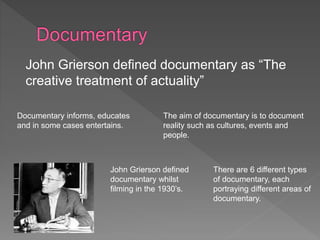
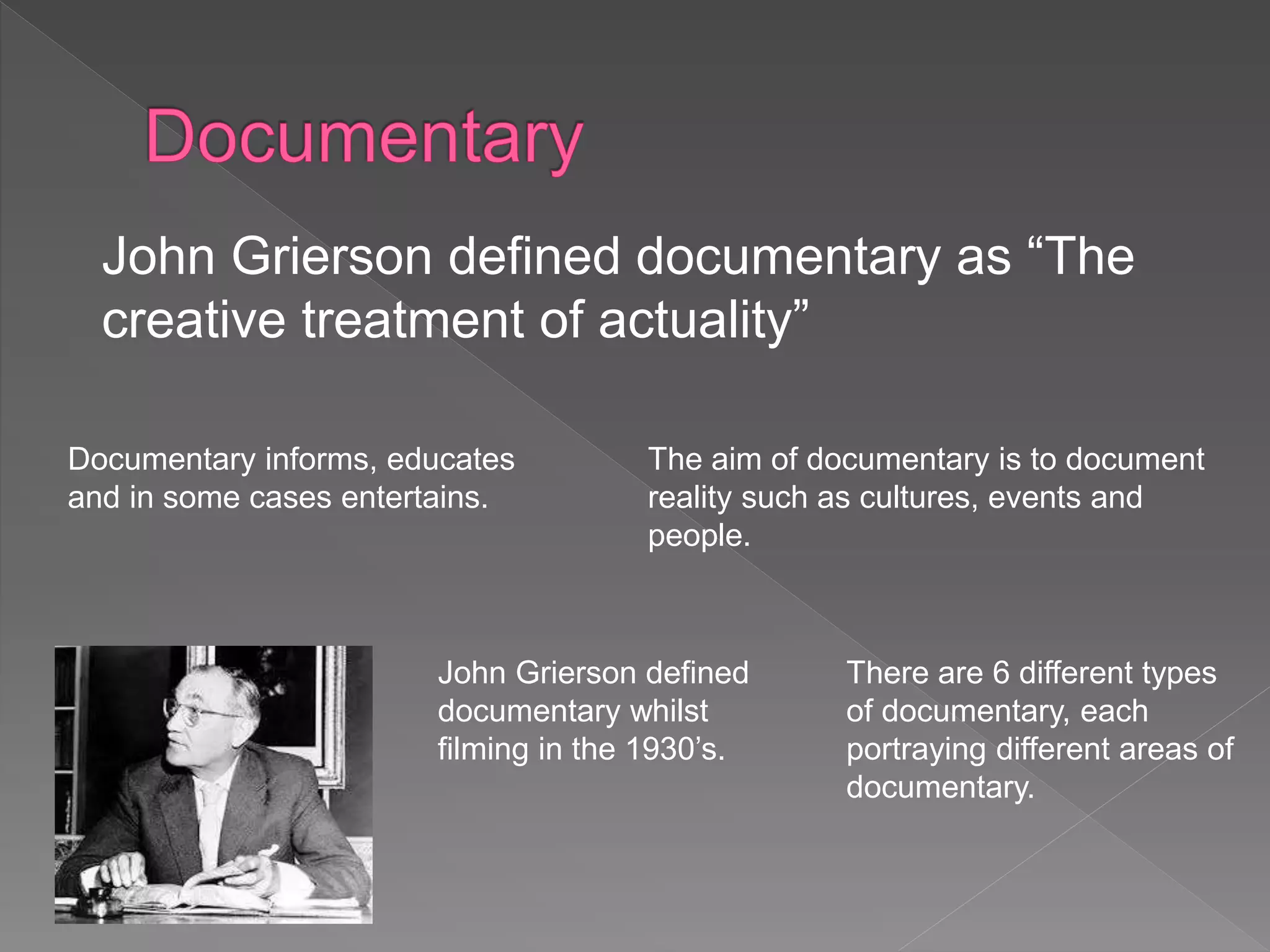
John Grierson defined documentary as “The 
creative treatment of actuality” 
The aim of documentary is to document 
reality such as cultures, events and 
people. 
Documentary informs, educates 
and in some cases entertains. 
John Grierson defined 
documentary whilst 
filming in the 1930’s. 
There are 6 different types 
of documentary, each 
portraying different areas of 
documentary.
A voice over the documentary explaining 
current events, you cannot see the person who 
is talking over, creating a sense of authority 
and often uses direct address.
An unannounced observer of a particular situation. 
There are different types of fly on the wall 
documentaries, these include; 
Direct cinema, from 
the USA 
Cinema verité which is french, 
this is based on the truest form 
with no commentary or 
narration, this was based on just 
observing, however this is still 
edited.
This is a television film based on 
real events which is reanacted. 
This is usually over 
exaggerated and 
dramatised to add effects 
to the audience viewing.
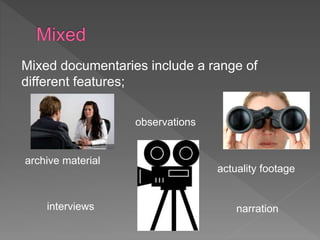
Mixed documentaries include a range of 
different features; 
actuality footage 
narration 
archive material 
observations 
interviews
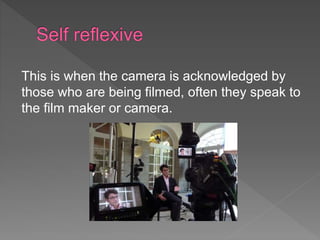
This is when the camera is acknowledged by 
those who are being filmed, often they speak to 
the film maker or camera.
A documentary following people in a particular 
occupation location over a period of time, can 
be seen as eavesdropping and is usually 
aimed at entertaining the audience.
This is usually when the camera is ignored 
or unseen by those filmed. 
The audience are then in the role of being a 
witness in events, providing them with 
evidence.
This can be seen or unseen and an 
interviewee can be questioned but not 
directly to the audience. 
Experts usually relevantly question those 
who are being interviewed. 
Often cutaways are used to show other 
footage that are evident to points made.
This is adding to the footage with dramatic 
events. 
By doing this it allows people to be conveyed 
in events that cannot be accessed or filmed 
in real life.
Carefully composed shots that include 
images that they want the audience to see. 
This creates different meanings to the 
audience including information with particular 
angles and shots, lighting and setting, which 
can make the audience interpret and 
understand in different ways.
The point that is trying to be put across and 
the purpose of what the document is trying to 
say. 
These can be conveyed directly and 
indirectly.

Different types of documentaries

  • 1.
    John Grierson defineddocumentary as “The creative treatment of actuality” The aim of documentary is to document reality such as cultures, events and people. Documentary informs, educates and in some cases entertains. John Grierson defined documentary whilst filming in the 1930’s. There are 6 different types of documentary, each portraying different areas of documentary.
  • 2.
    A voice overthe documentary explaining current events, you cannot see the person who is talking over, creating a sense of authority and often uses direct address.
  • 3.
    An unannounced observerof a particular situation. There are different types of fly on the wall documentaries, these include; Direct cinema, from the USA Cinema verité which is french, this is based on the truest form with no commentary or narration, this was based on just observing, however this is still edited.
  • 4.
    This is atelevision film based on real events which is reanacted. This is usually over exaggerated and dramatised to add effects to the audience viewing.
  • 5.
    Mixed documentaries includea range of different features; actuality footage narration archive material observations interviews
  • 6.
    This is whenthe camera is acknowledged by those who are being filmed, often they speak to the film maker or camera.
  • 7.
    A documentary followingpeople in a particular occupation location over a period of time, can be seen as eavesdropping and is usually aimed at entertaining the audience.
  • 8.
    This is usuallywhen the camera is ignored or unseen by those filmed. The audience are then in the role of being a witness in events, providing them with evidence.
  • 9.
    This can beseen or unseen and an interviewee can be questioned but not directly to the audience. Experts usually relevantly question those who are being interviewed. Often cutaways are used to show other footage that are evident to points made.
  • 10.
    This is addingto the footage with dramatic events. By doing this it allows people to be conveyed in events that cannot be accessed or filmed in real life.
  • 11.
    Carefully composed shotsthat include images that they want the audience to see. This creates different meanings to the audience including information with particular angles and shots, lighting and setting, which can make the audience interpret and understand in different ways.
  • 12.
    The point thatis trying to be put across and the purpose of what the document is trying to say. These can be conveyed directly and indirectly.