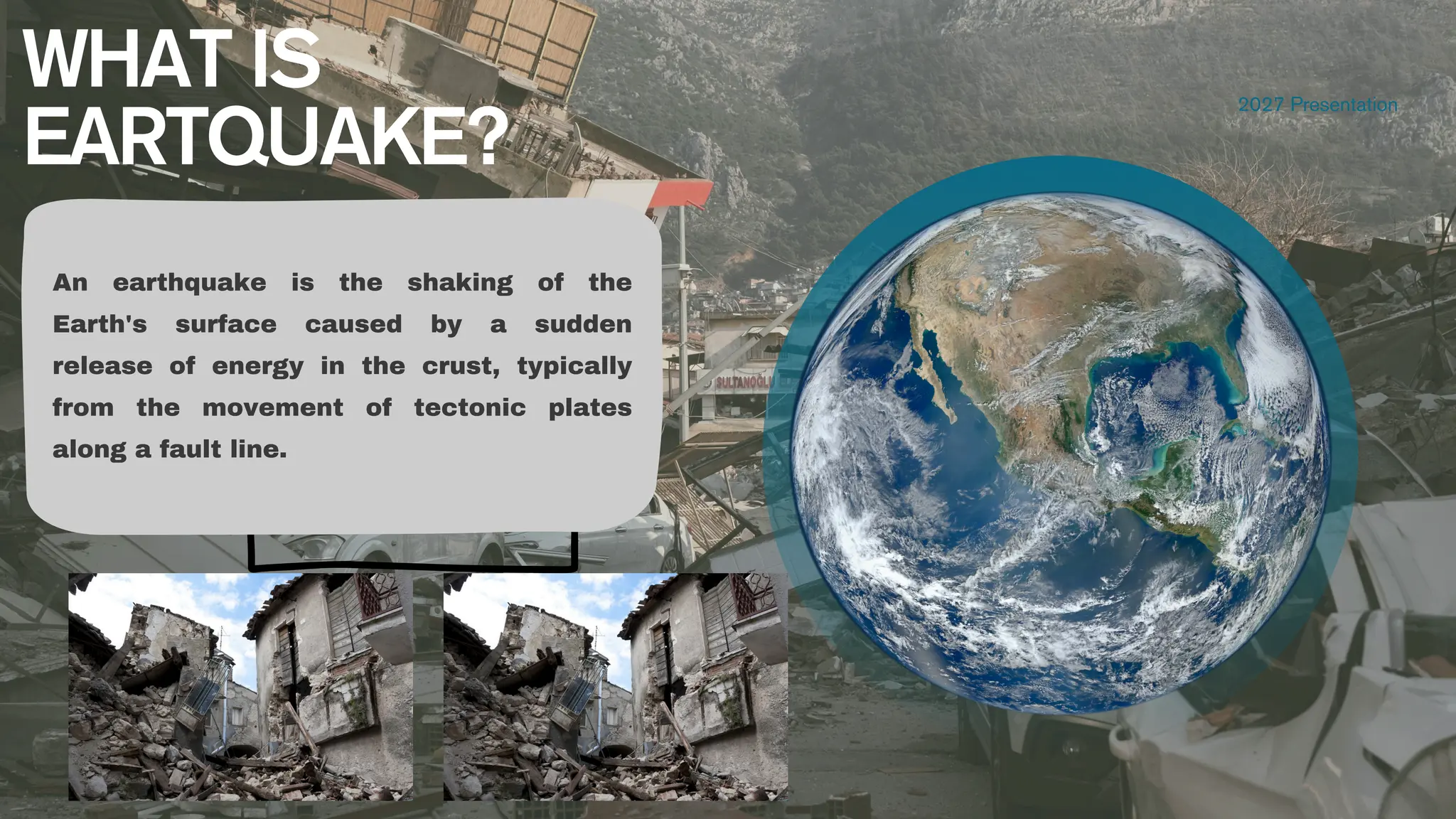
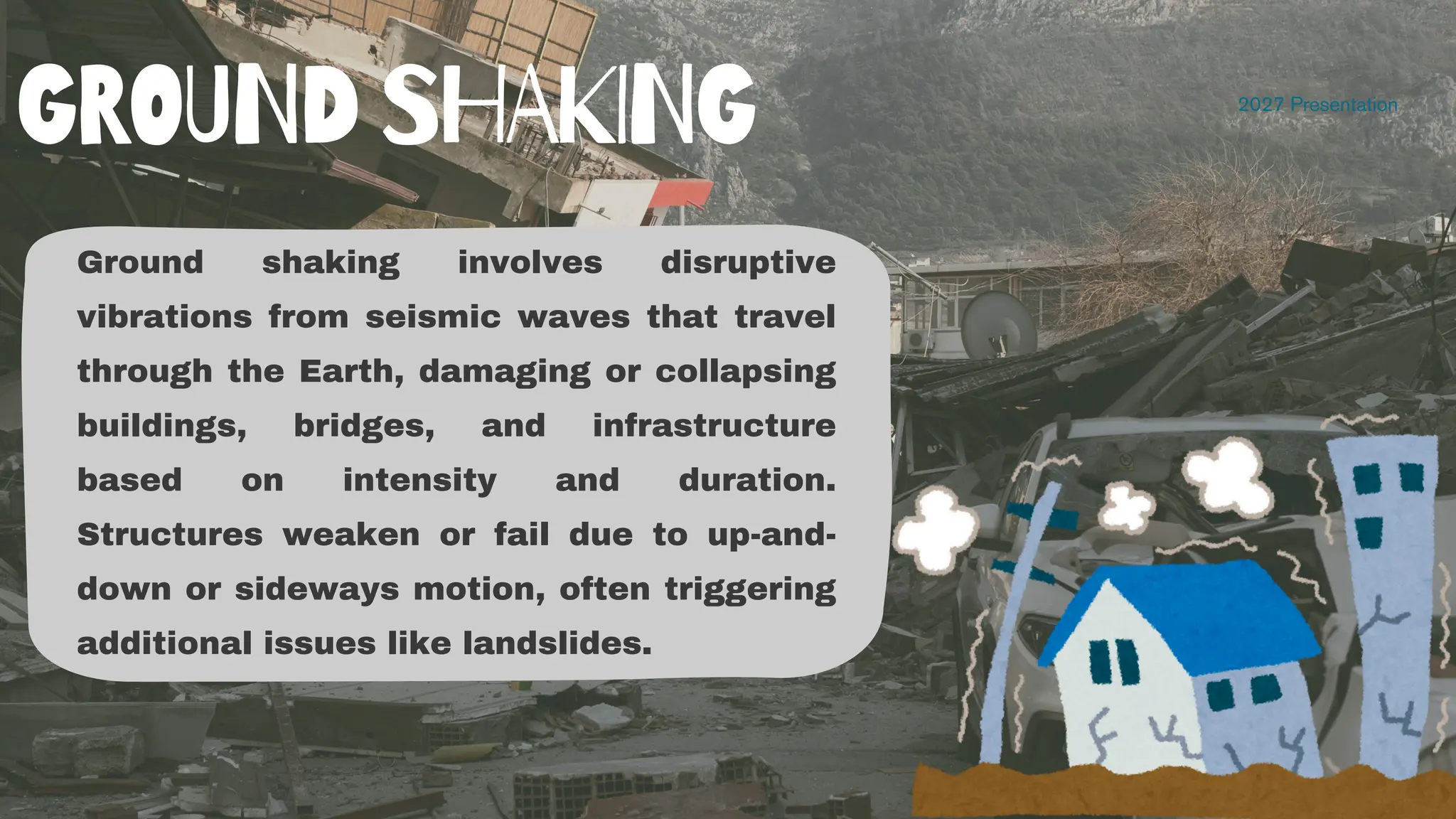
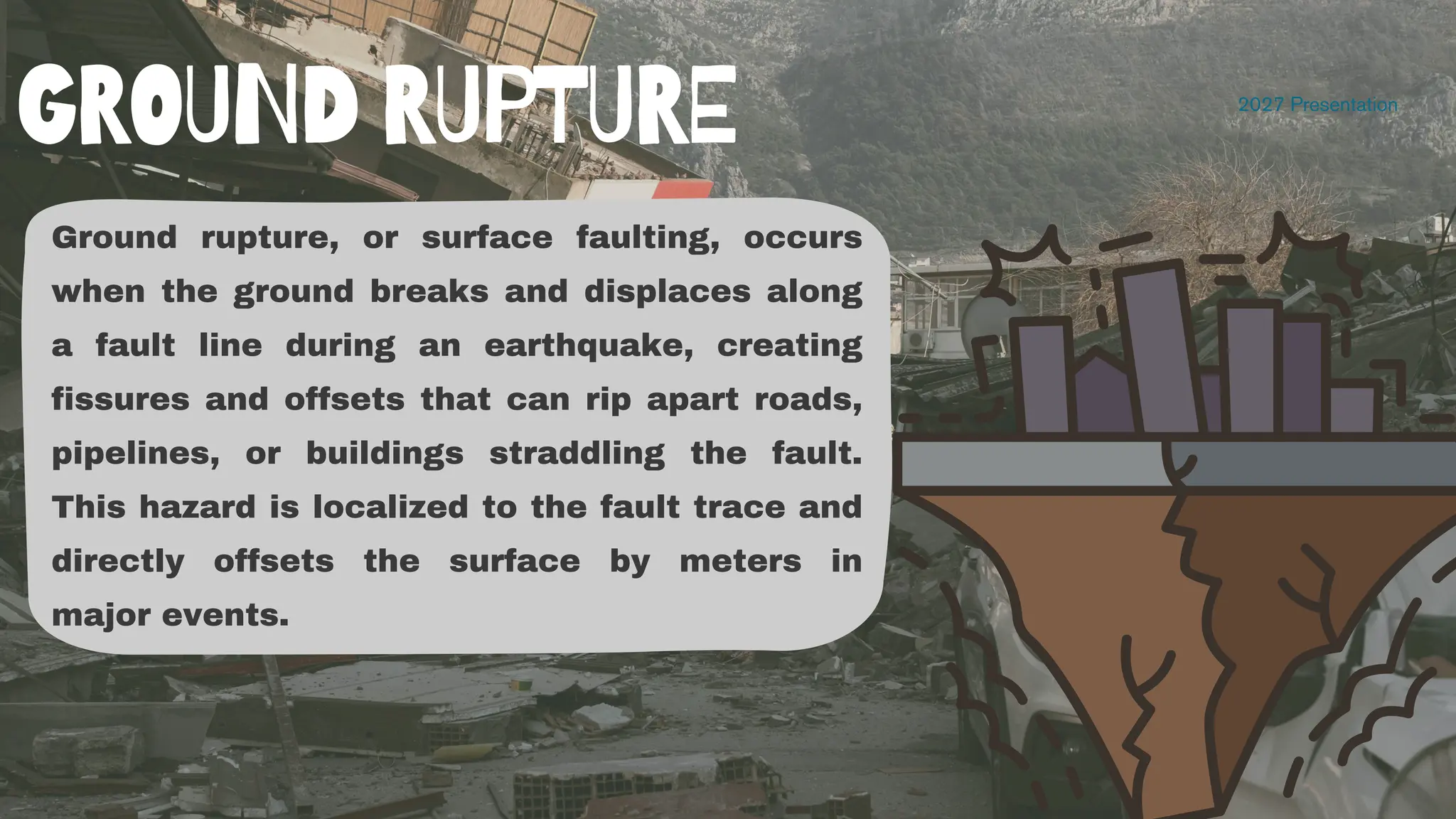
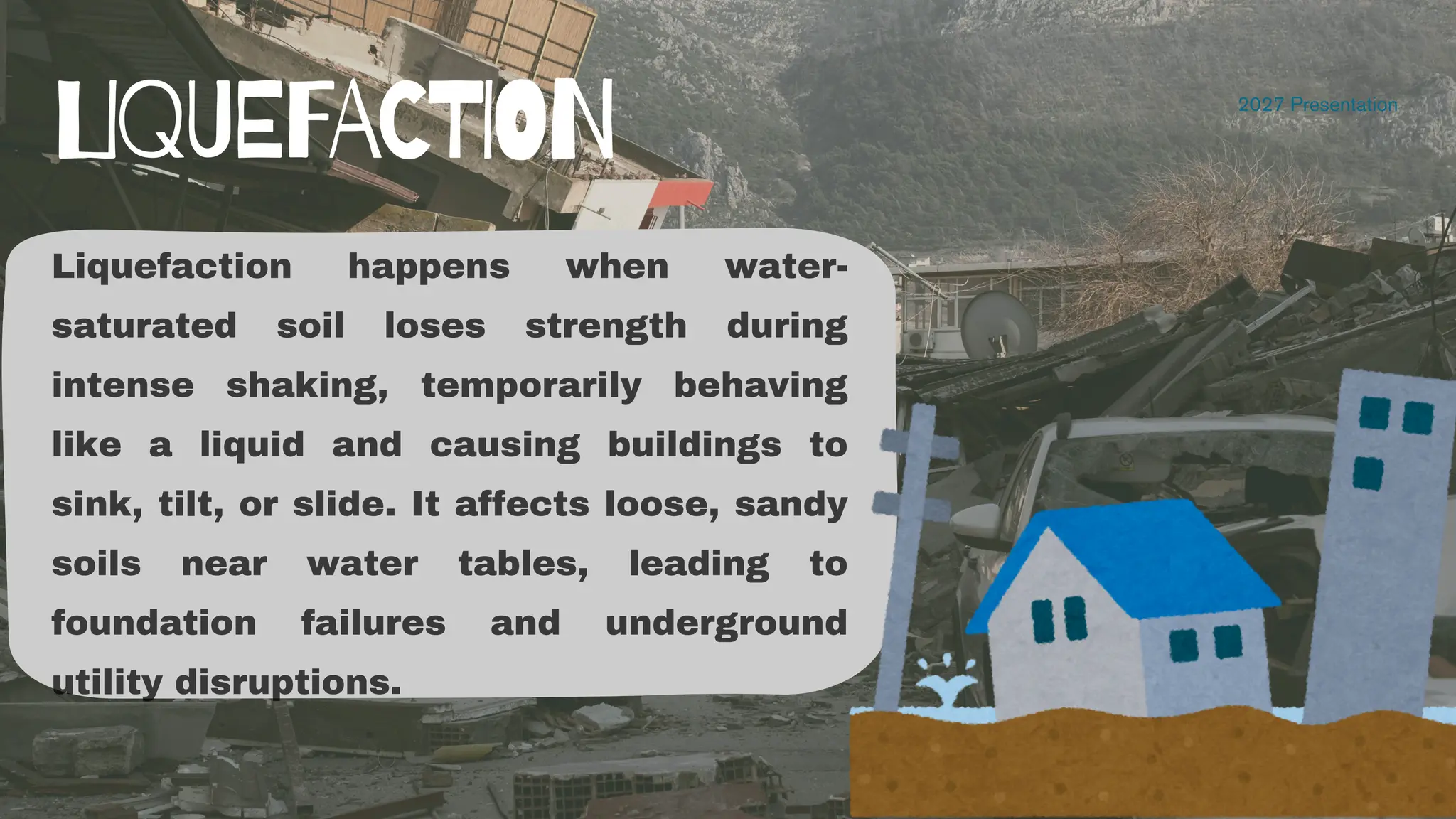
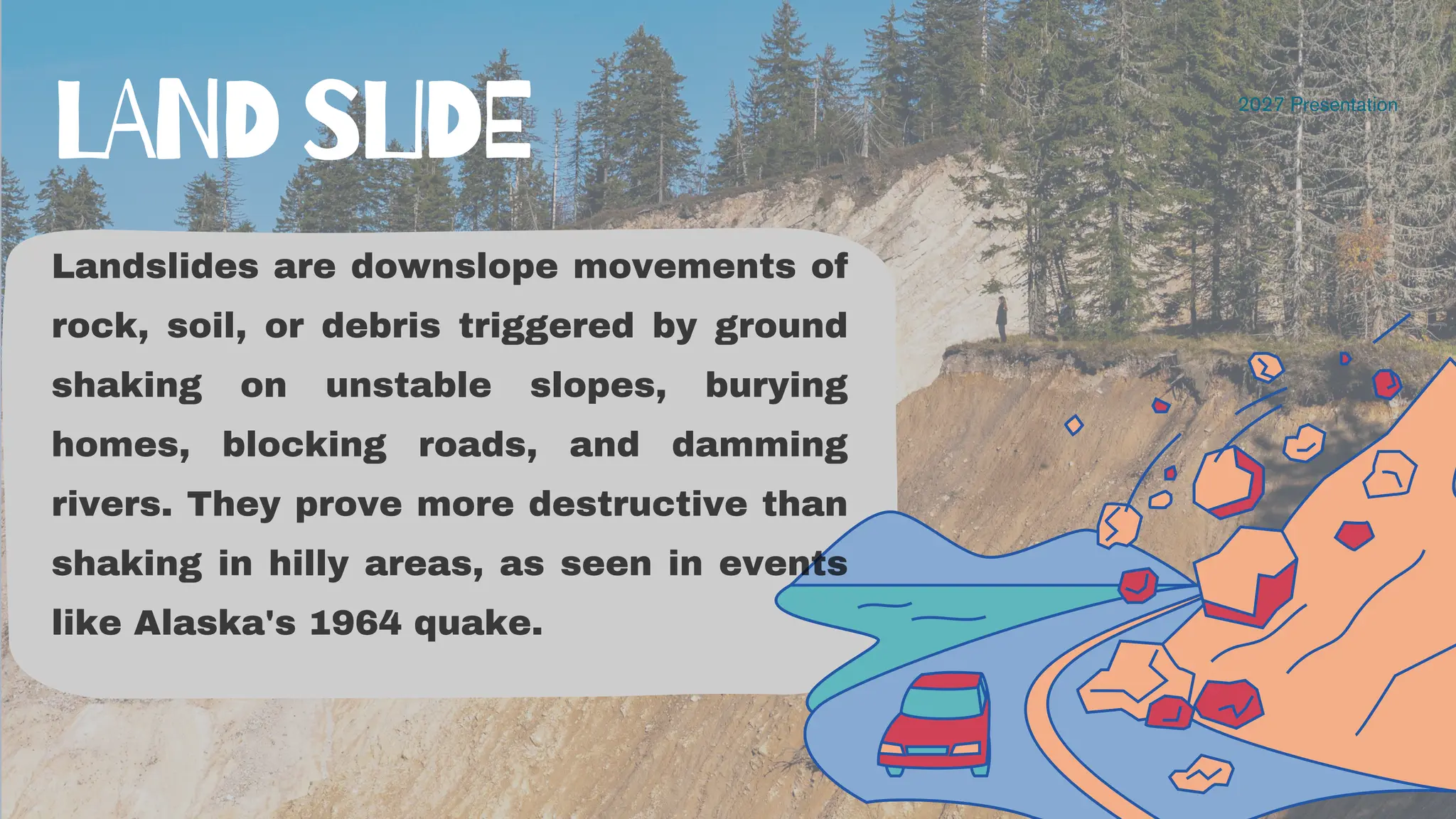
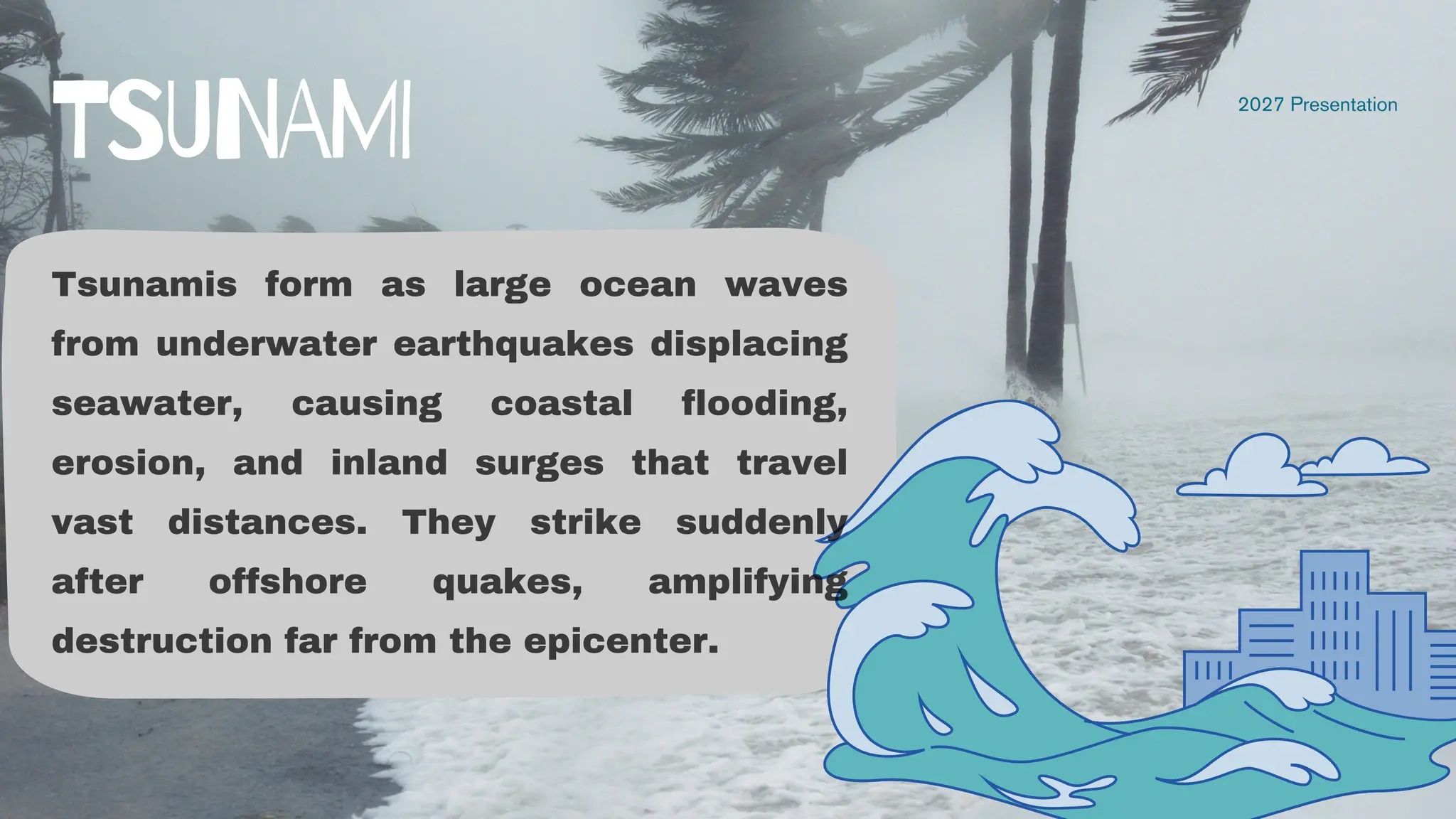
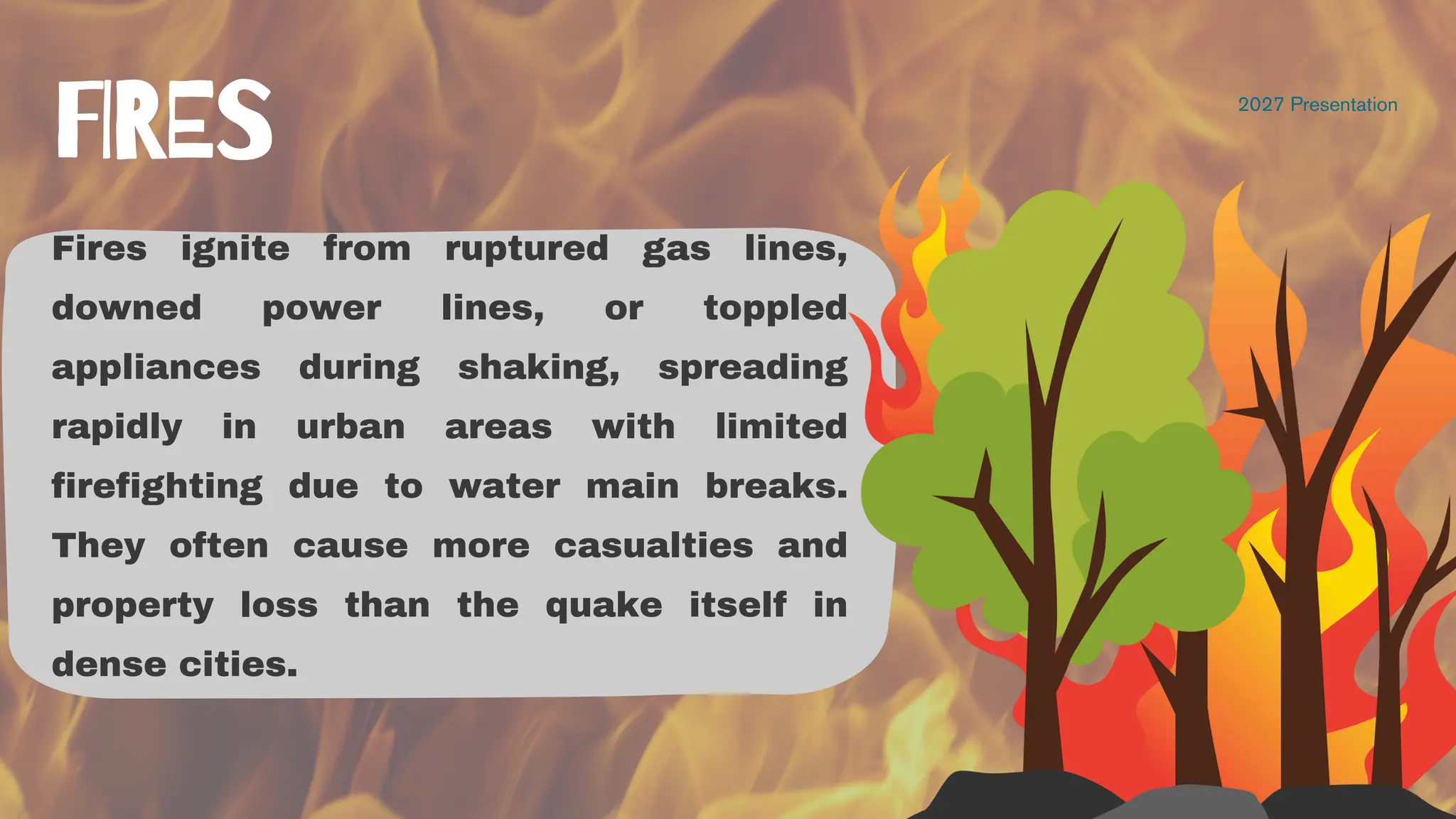
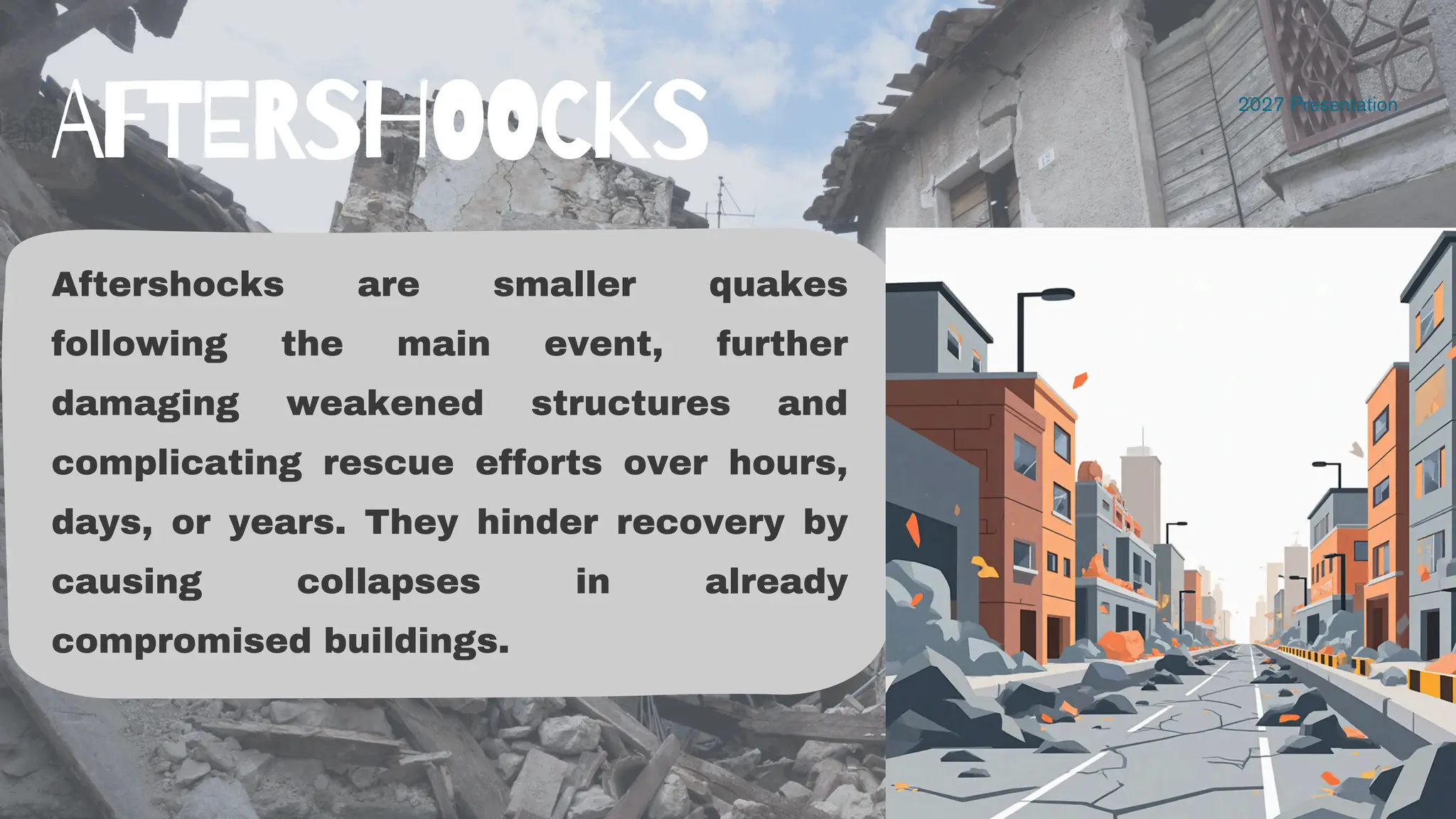
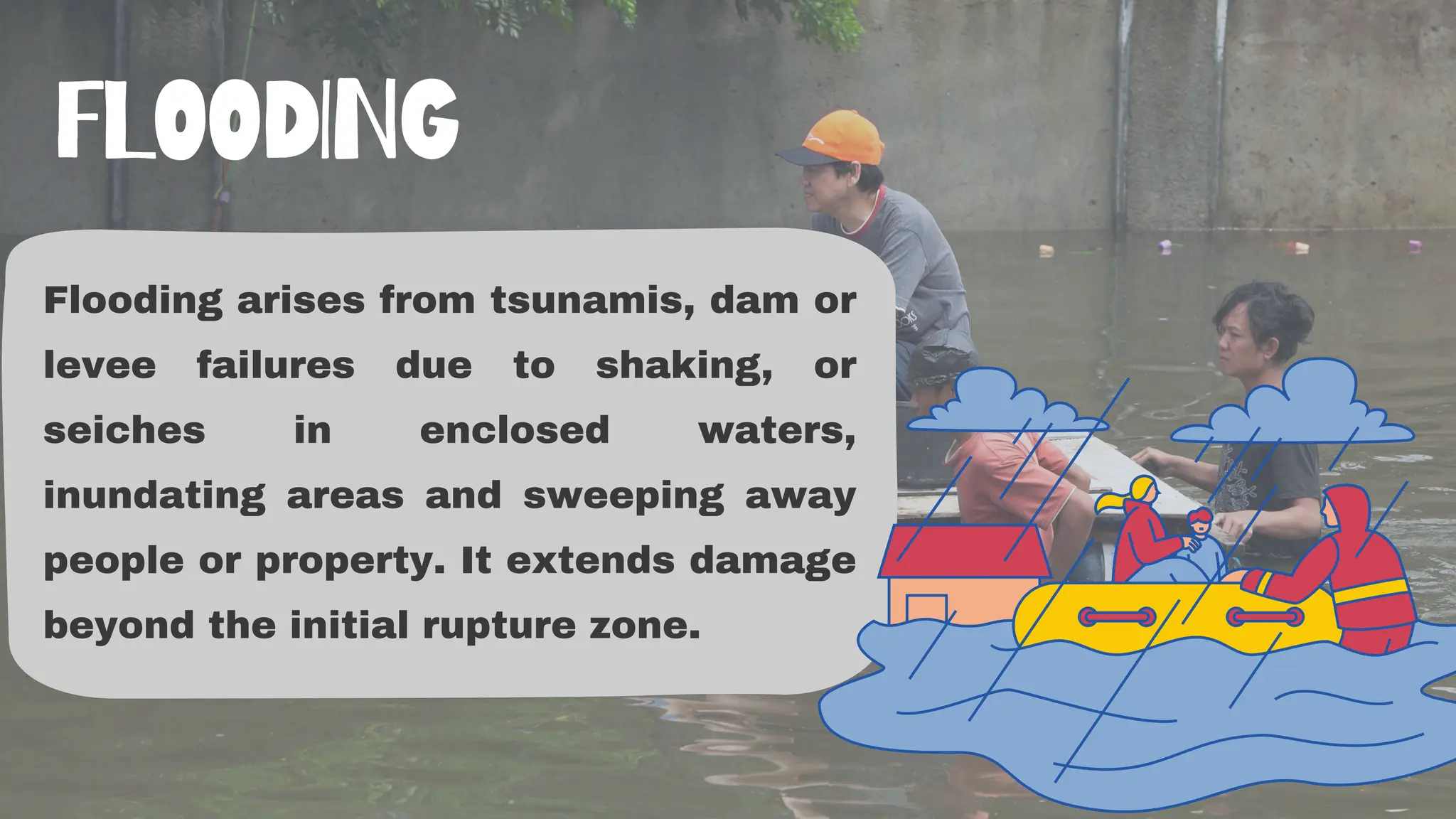
Earthquakes pose significant hazards including ground shaking, structural collapses, fires from ruptured gas lines, landslides, tsunamis in coastal areas, and liquefaction where soil behaves like liquid, leading to building failures and infrastructure damage. These effects can cause immediate deaths from falling debris, injuries from shattering glass or toppled furniture, and long-term disruptions like loss of utilities, psychological trauma, and economic devastation. In the Philippines, a seismically active region, such events amplify risks due to dense urban populations and varying building standards.[1][3][5]
## Preparation Before an Earthquake
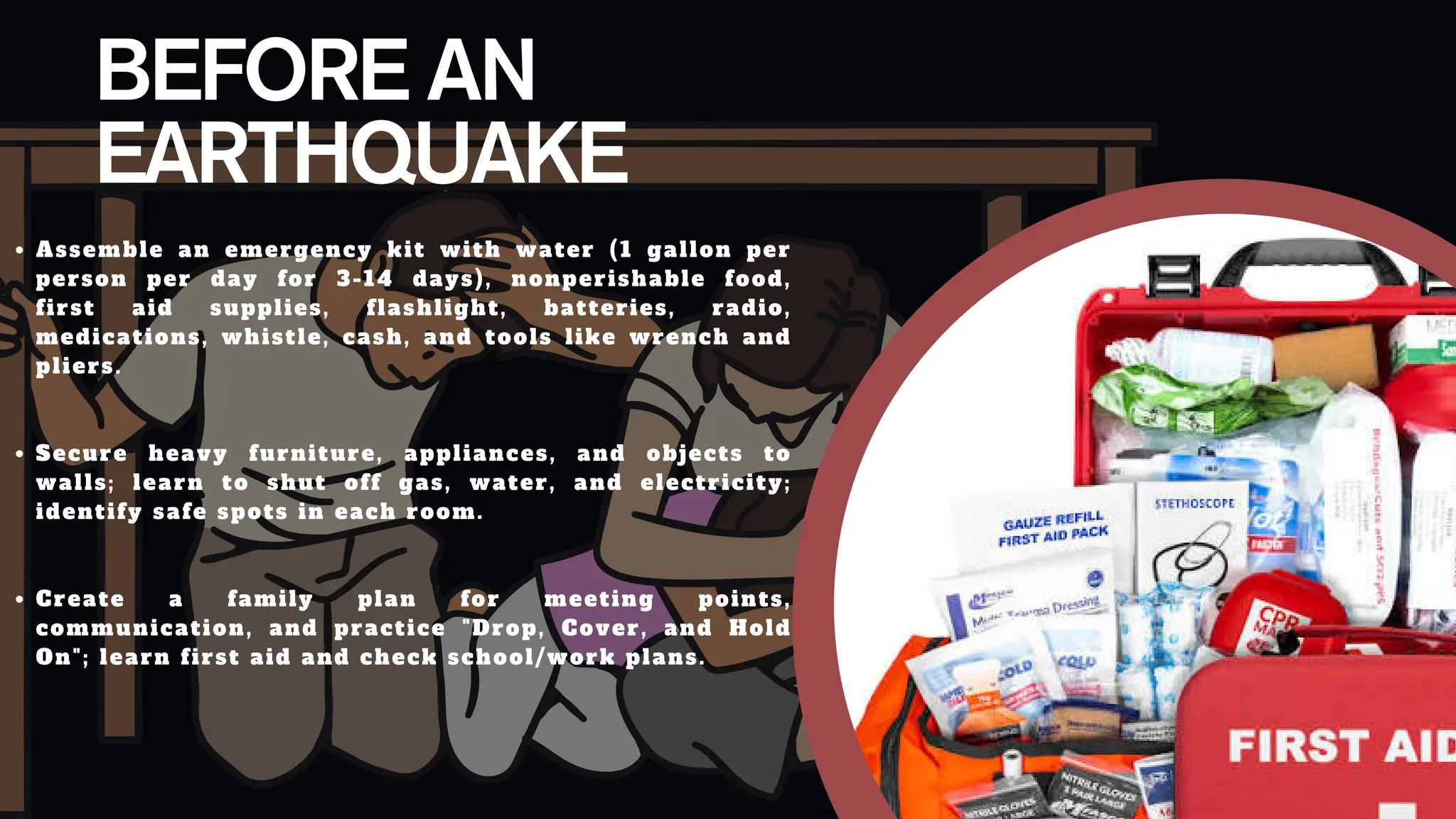
Secure heavy furniture and appliances to walls to prevent tipping. Assemble an emergency kit with water, non-perishable food, first aid supplies, flashlight, batteries, whistle, and a battery-powered radio. Identify safe spots indoors (under sturdy tables) and outdoors (away from buildings, trees, and power lines), and practice family drills while learning to shut off gas, water, and electricity.[2][4][8]
## Actions During an Earthquake
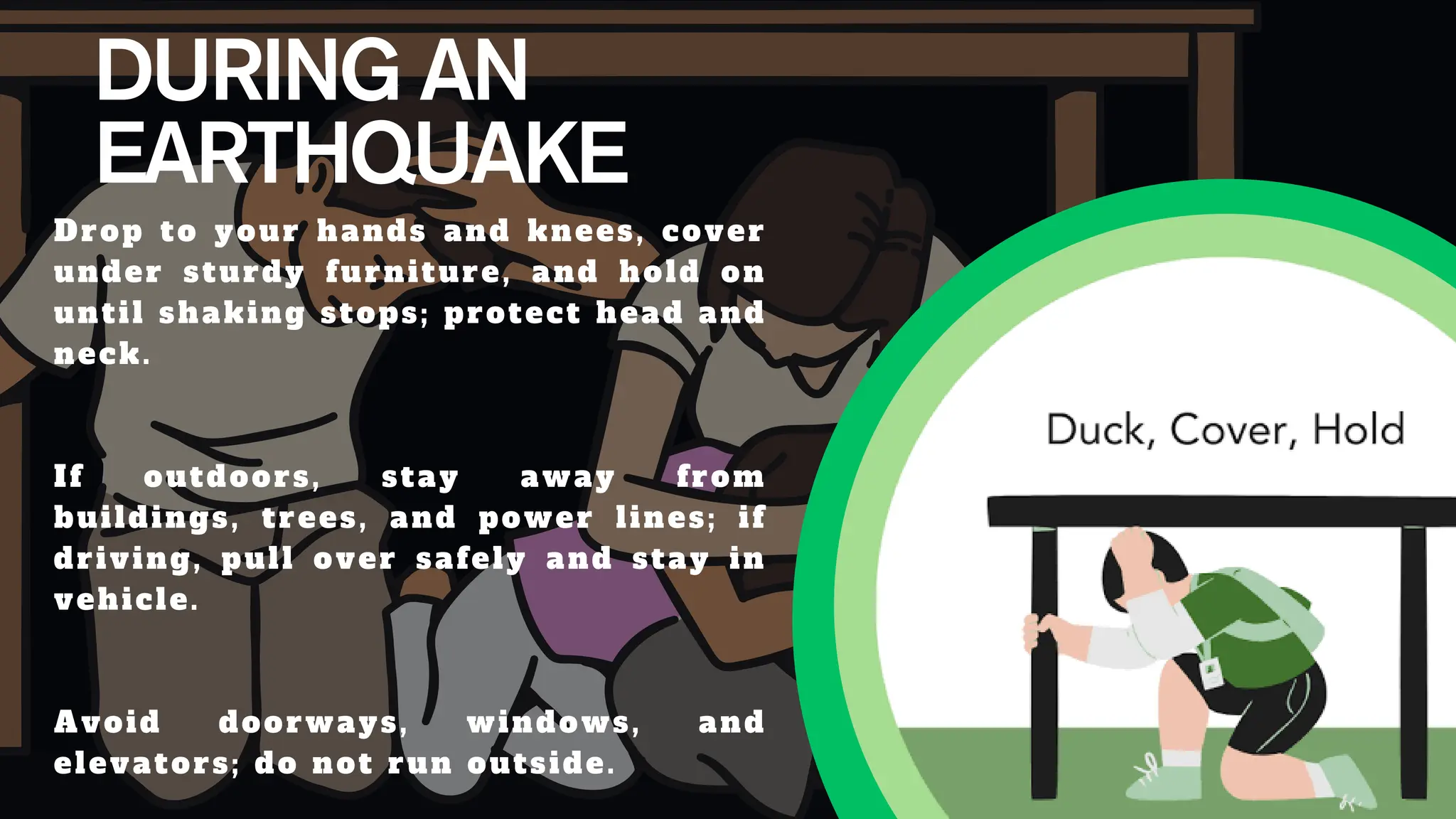
Drop, cover, and hold on under a sturdy table or desk, protecting your head and neck. Stay indoors away from windows, mirrors, and exterior walls; if outdoors, move to an open area. In a vehicle, pull over safely and stay inside with the engine off.[6][8][2]
## Response After an Earthquake
Check for injuries and provide first aid, then evacuate if the building is damaged while expecting aftershocks. Inspect for gas leaks, fires, or utility breaks—do not use matches or switches if gas is suspected—and tune into official radio updates. Avoid damaged roads and structures, and document damage for authorities.[8][10][2]