____1. Government communication can be defined as all activities in the which includes
the public and the private sector institutions. ____2. Government communication can
either be active or passive.
GO+FERN+MEANT= GOVERNMENT
____1. Government communication can be defined as all activities in the which includes
the public and the private sector institutions. ____2. Government communication can
either be active or passive.
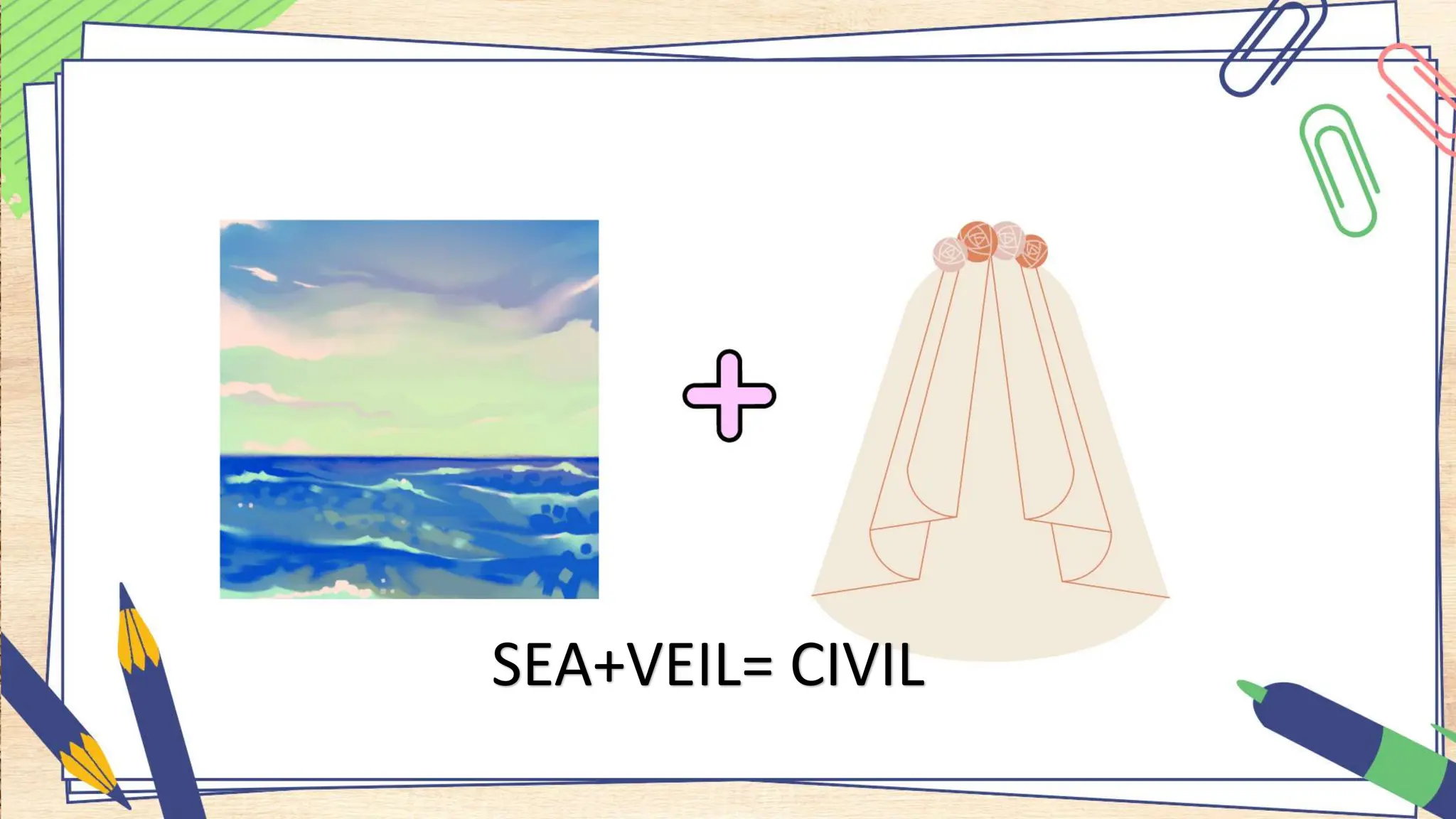
SEA+VEIL= CIVIL
____1. Government communication can be defined as all activities in the which includes
the public and the private sector institutions. ____2. Government communication can
either be active or passive.
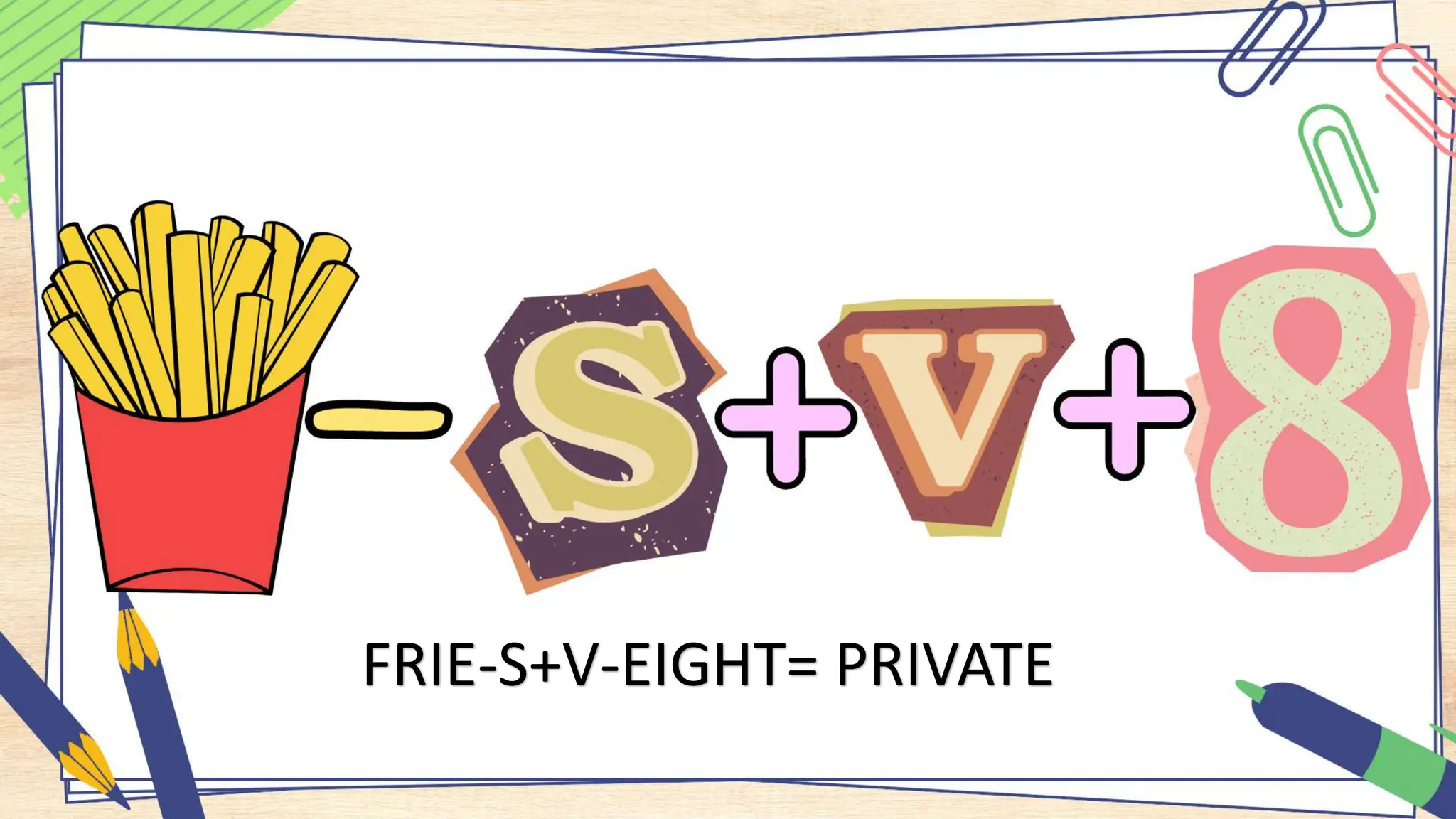
FRIE-S+V-EIGHT= PRIVATE
____1. Government communication can be defined as all activities in the which includes
the public and the private sector institutions. ____2. Government communication can
either be active or passive.
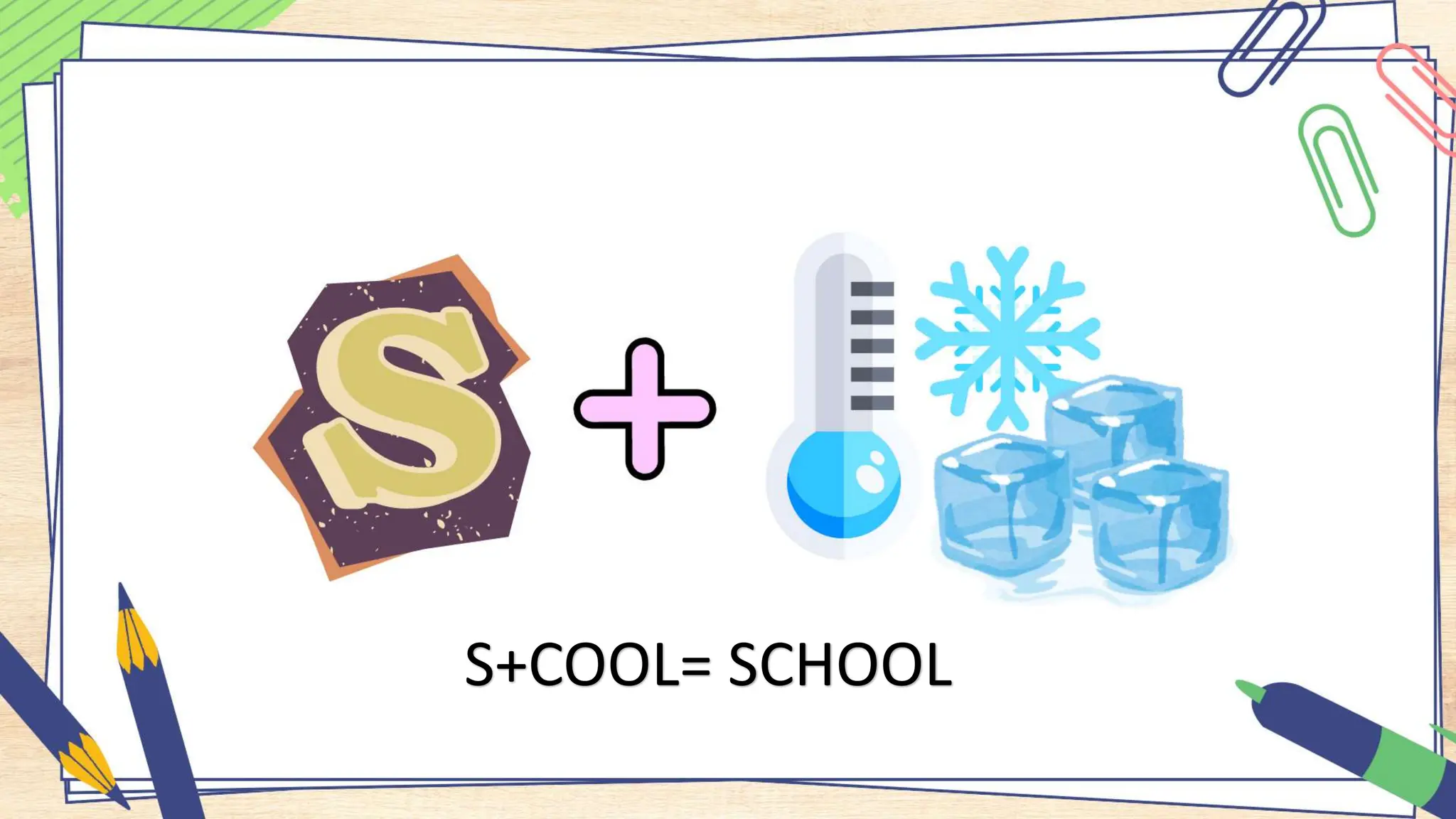
S+COOL= SCHOOL
____1. Government communication can be defined as all activities in the which includes
the public and the private sector institutions. ____2. Government communication can
either be active or passive.
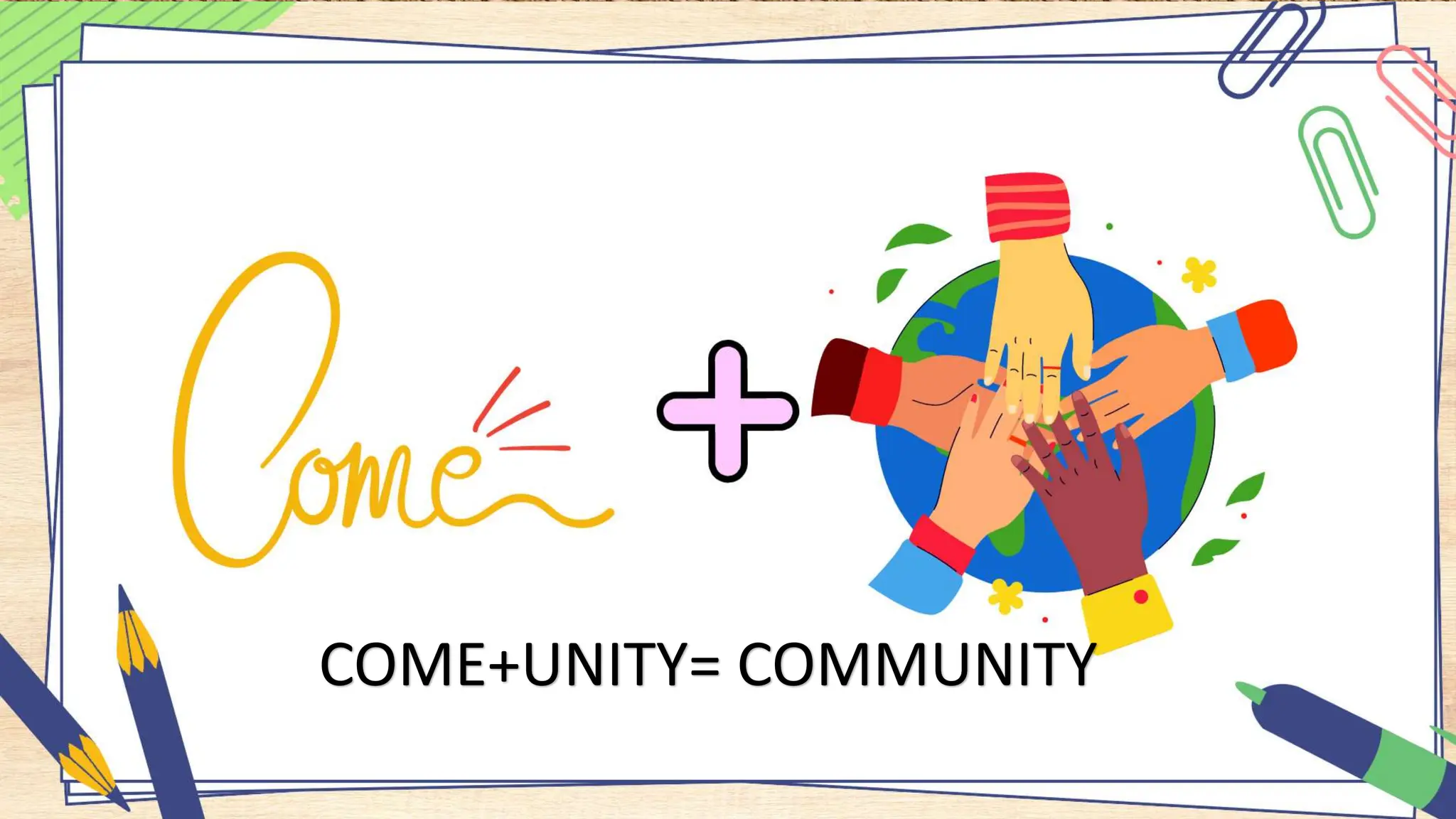
COME+UNITY= COMMUNITY
____1. Government communication can be defined as all activities in the which includes
the public and the private sector institutions. ____2. Government communication can
either be active or passive.
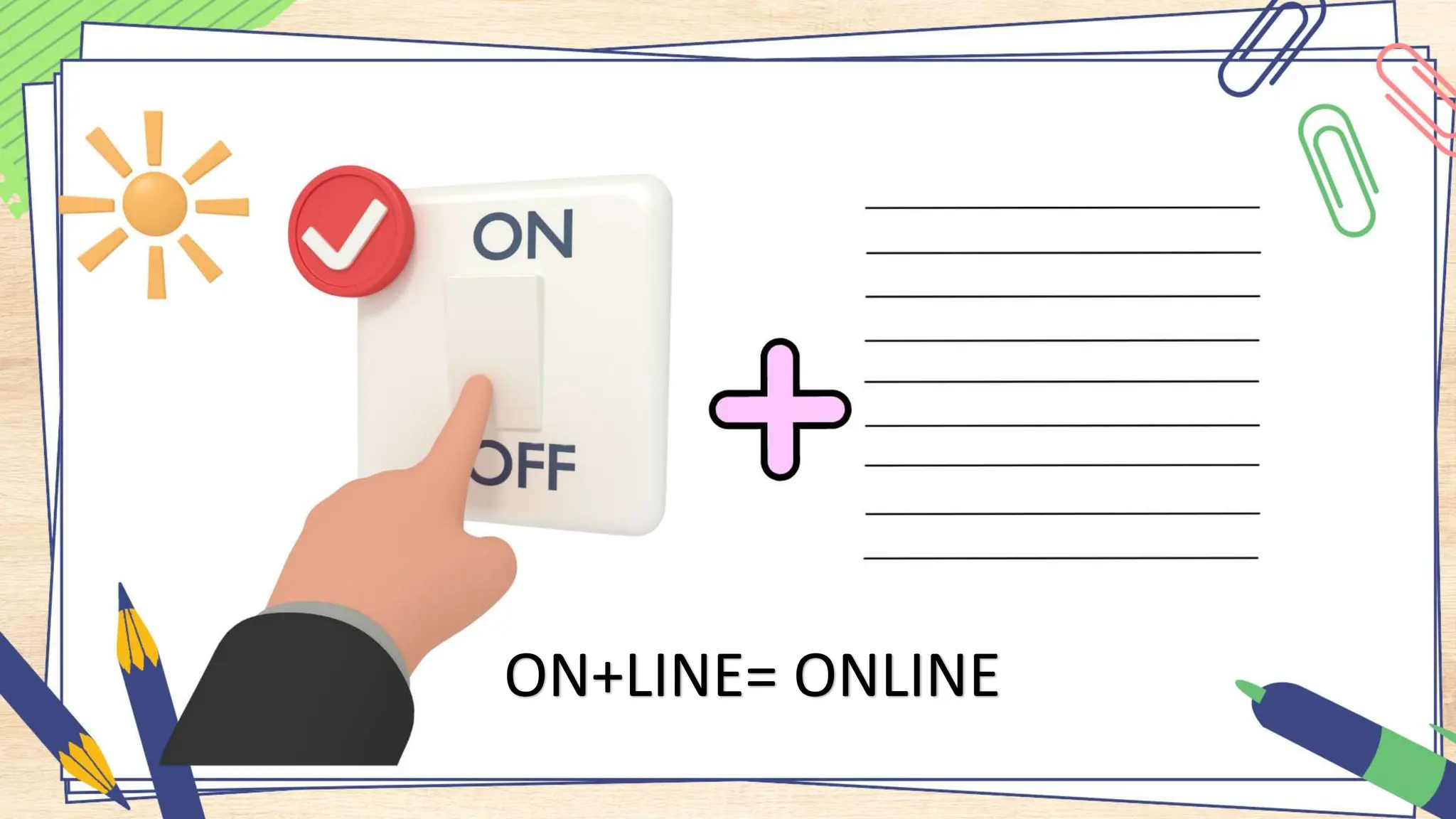
ON+LINE= ONLINE
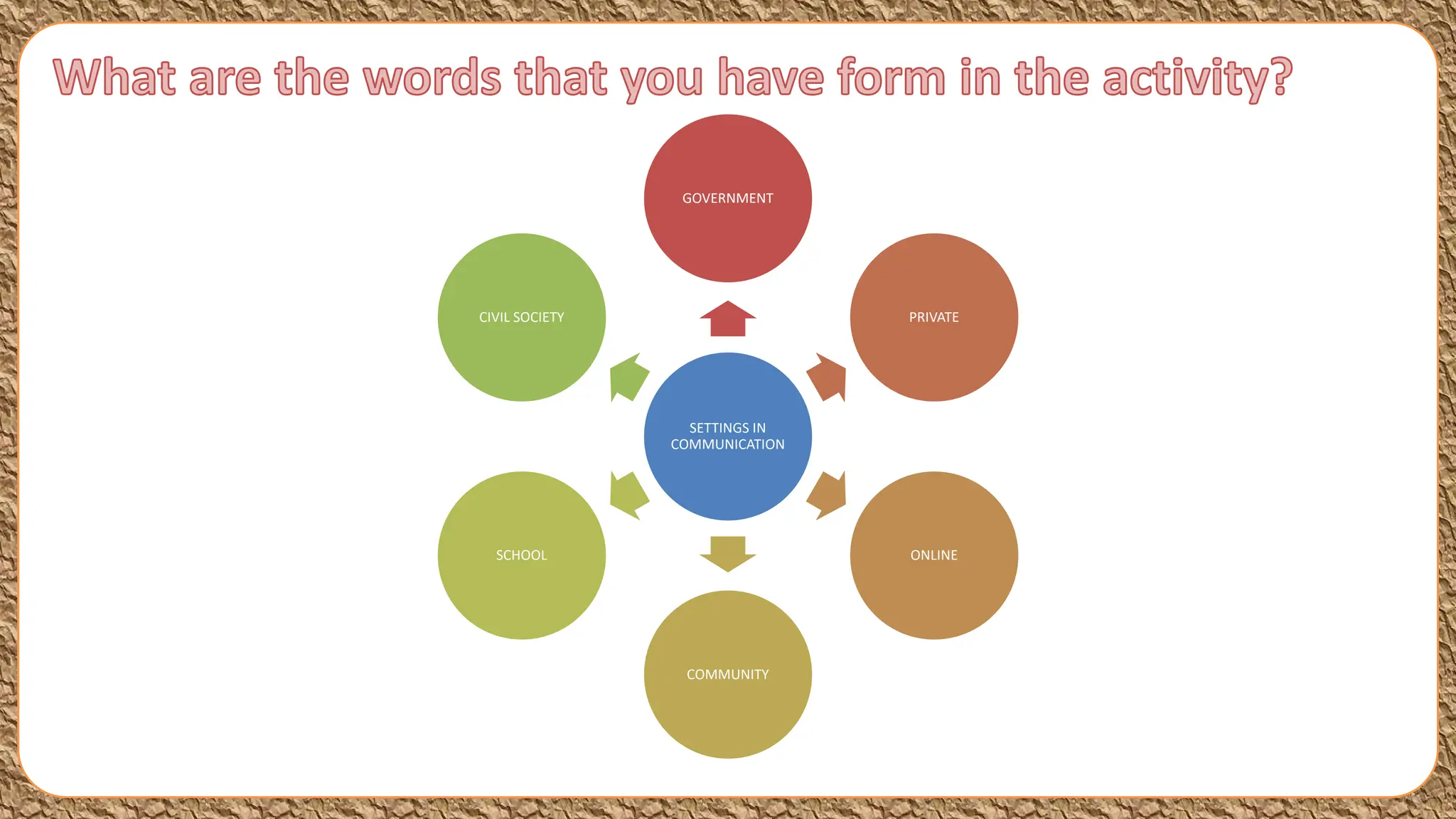
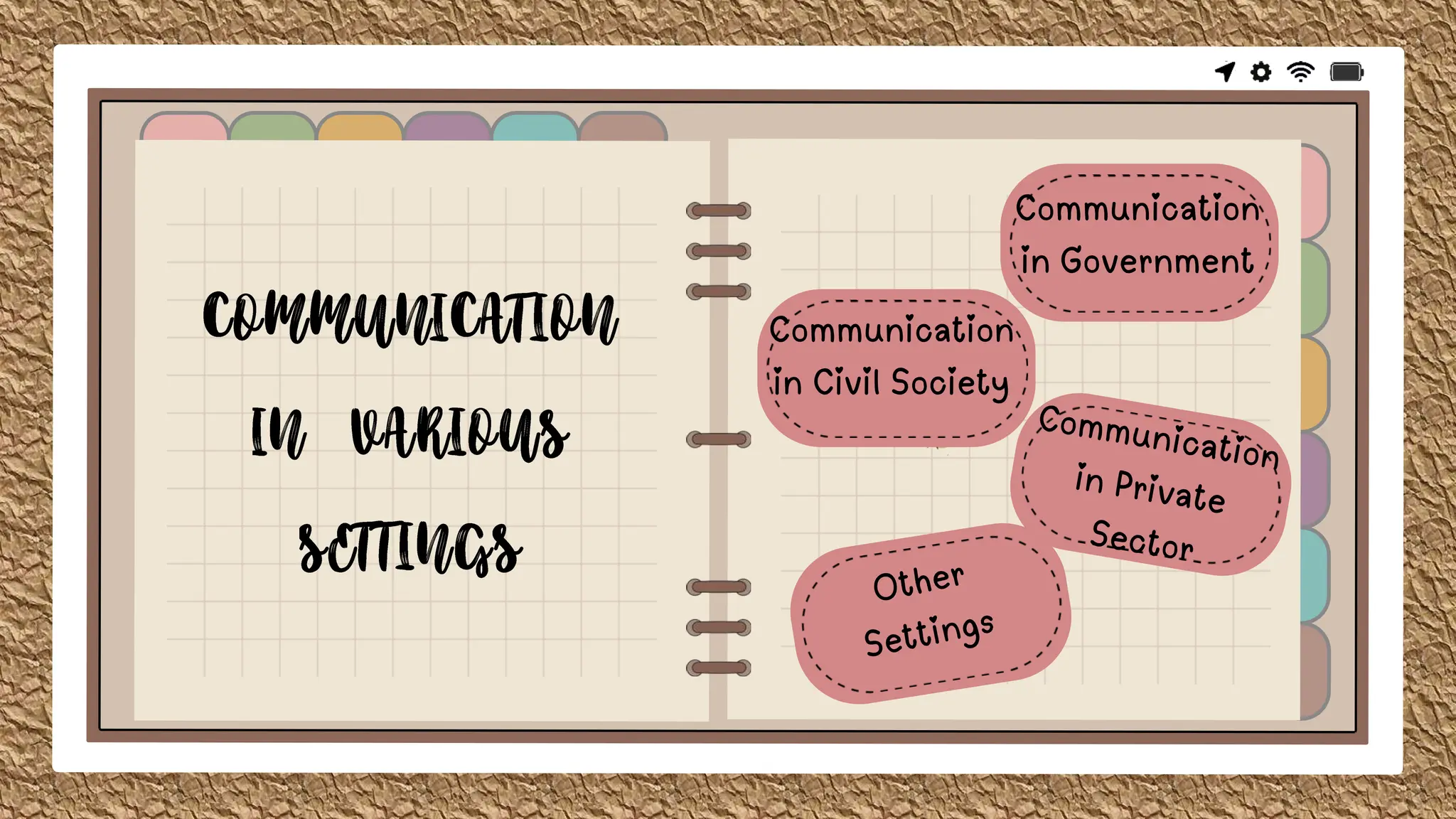
SETTINGS IN
COMMUNICATION
GOVERNMENT
PRIVATE
ONLINE
COMMUNITY
SCHOOL
CIVIL SOCIETY
DIASS
GRADE 11
Communication
in Civil Society
Communication
in Government
Government communication can be defined as
all activities done by the public sector
institutions that the government supervises for
the purpose of presenting and explaining
government plans, decisions and actions. It is
also used to promote legal processes, defending
recognized values and to foster patriotism.
Communication in Government
1.Government-wide communication.
Communication occurs in all structured
communication where its purpose is for
presenting government activities like to
explain decisions, and present actions.
2.Communication relating to benefits.
Communication occurs to ensure
beneficiaries are receive by the people to
avail services.
A.Types of Government Communication
3. Involving Institutional Communication.
Communication to enhance the visibility
and influence of an organization. This
type of communication is to clarify the
values to be conveyed and incorporating
these values in all communication
activities and implementing the
appropriate procedures.
A.Types of Government Communication
Communication done by a Non-
government organizations (NGOs) is an
example of this setting. Different
advocacies like Greenpeace, animal
rights, environmental protection are
examples of these.
2. Communication in Civil
Society
3. Communication in Private
Sector
Communication in any business
industries where information,
persuasion and mobilization are
the primary needs of the
private sector.
4. Other Settings
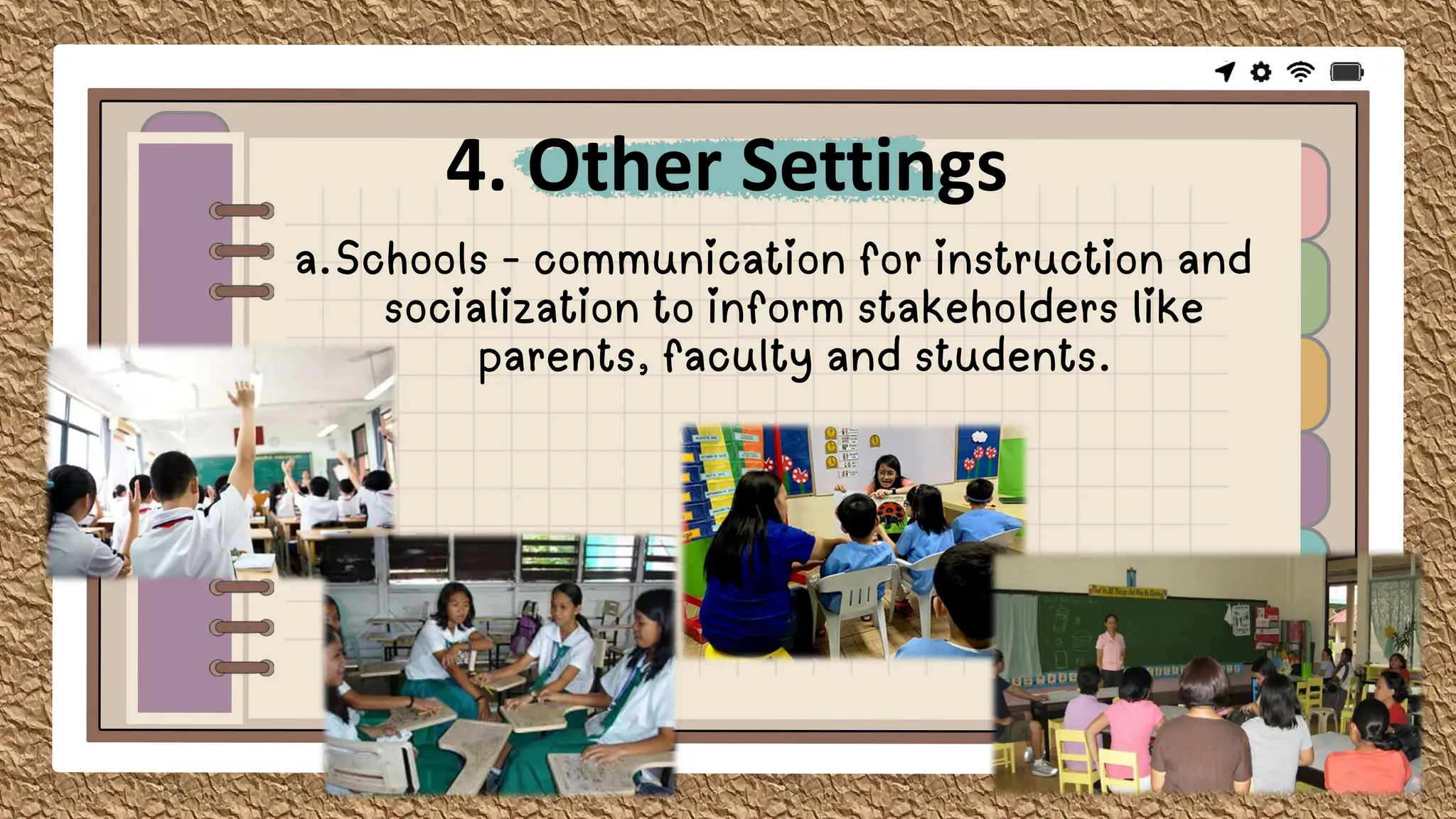
a.Schools - communication for instruction and
socialization to inform stakeholders like
parents, faculty and students.
4. Other Settings
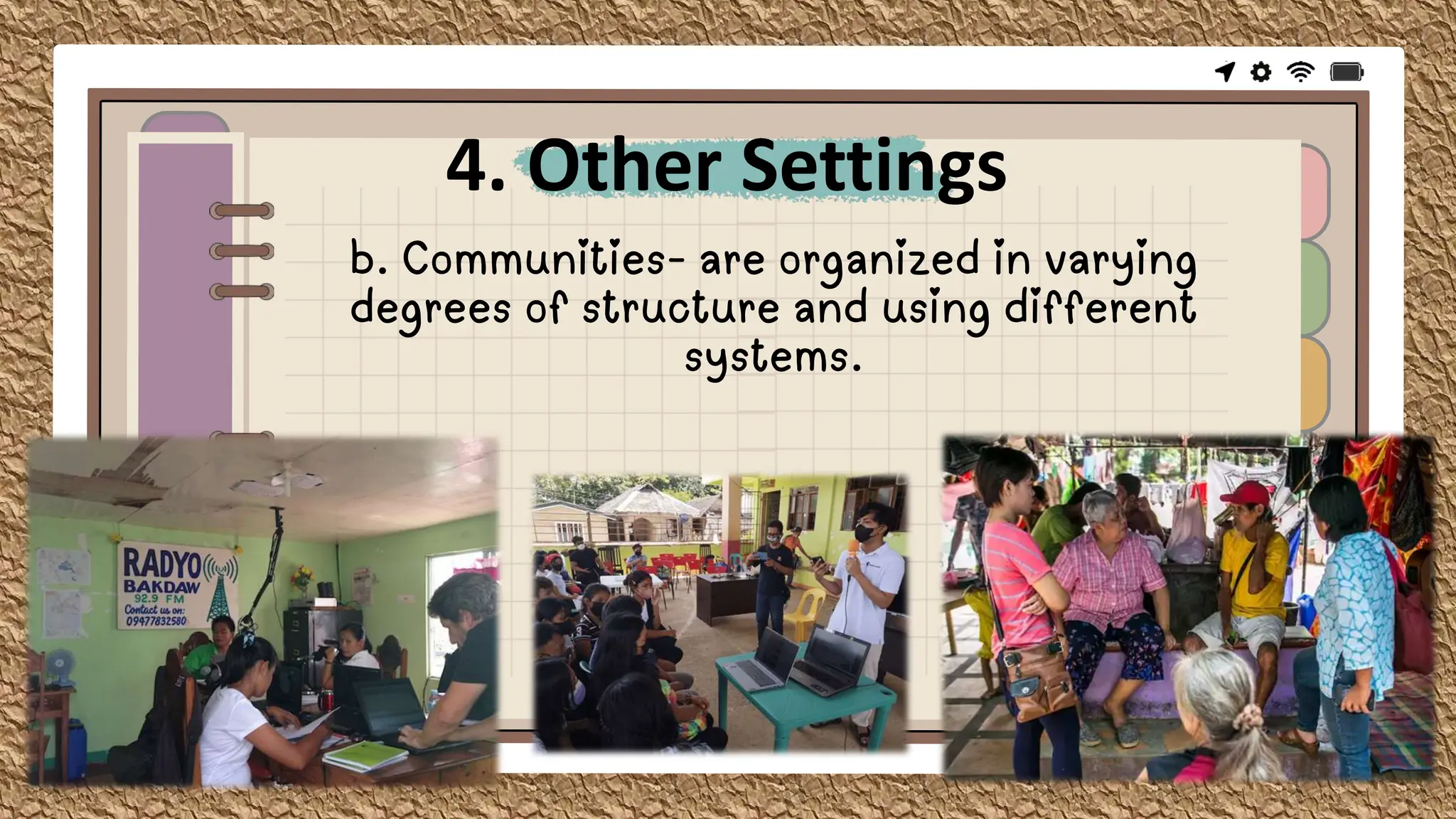
b. Communities- are organized in varying
degrees of structure and using different
systems.
4. Other Settings
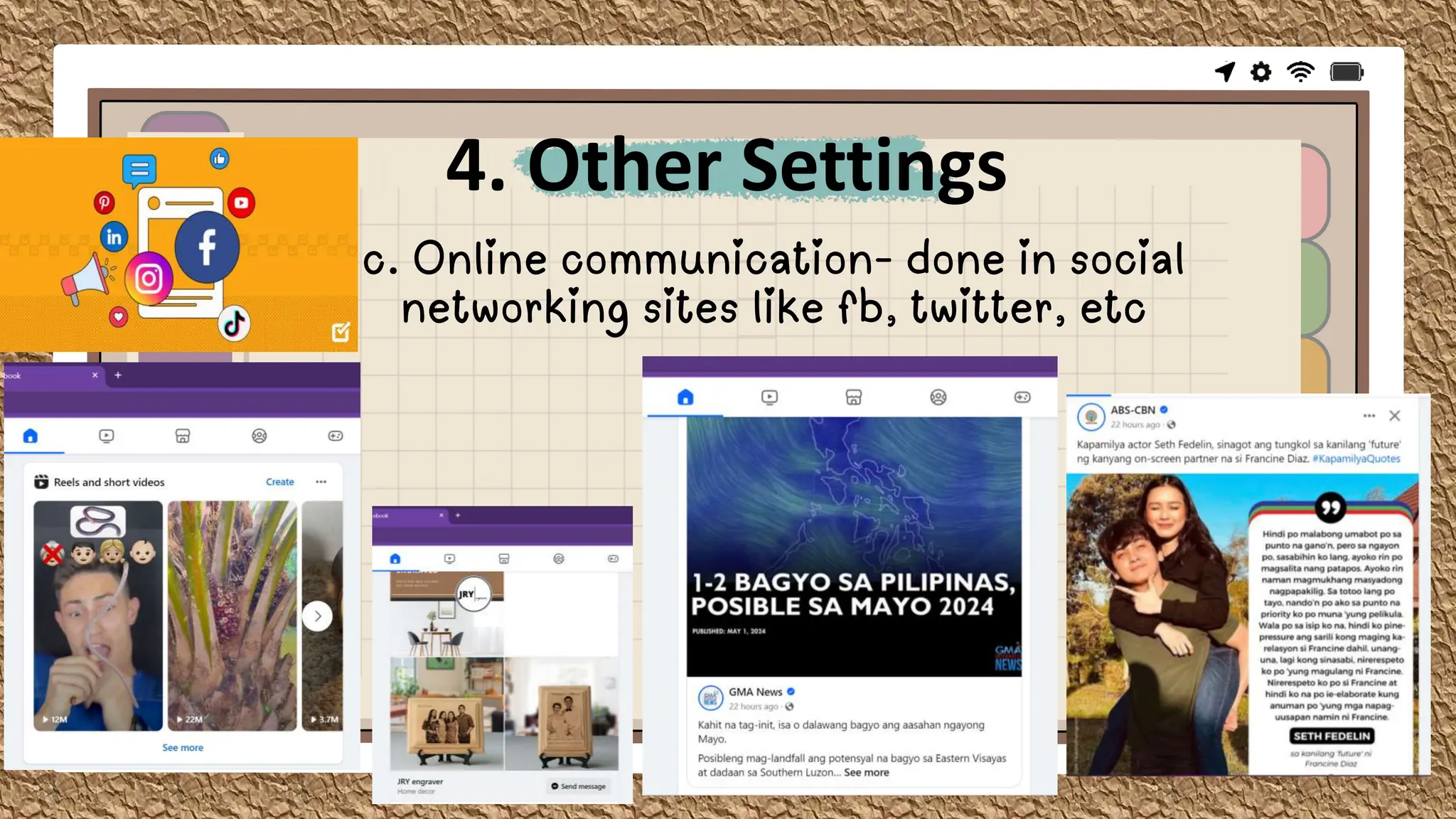
c. Online communication- done in social
networking sites like fb, twitter, etc
TOOLS IN COMMUNICATION
here
1.Print Materials
- Newspapers,
reports, books,
posters,
brochures, etc.
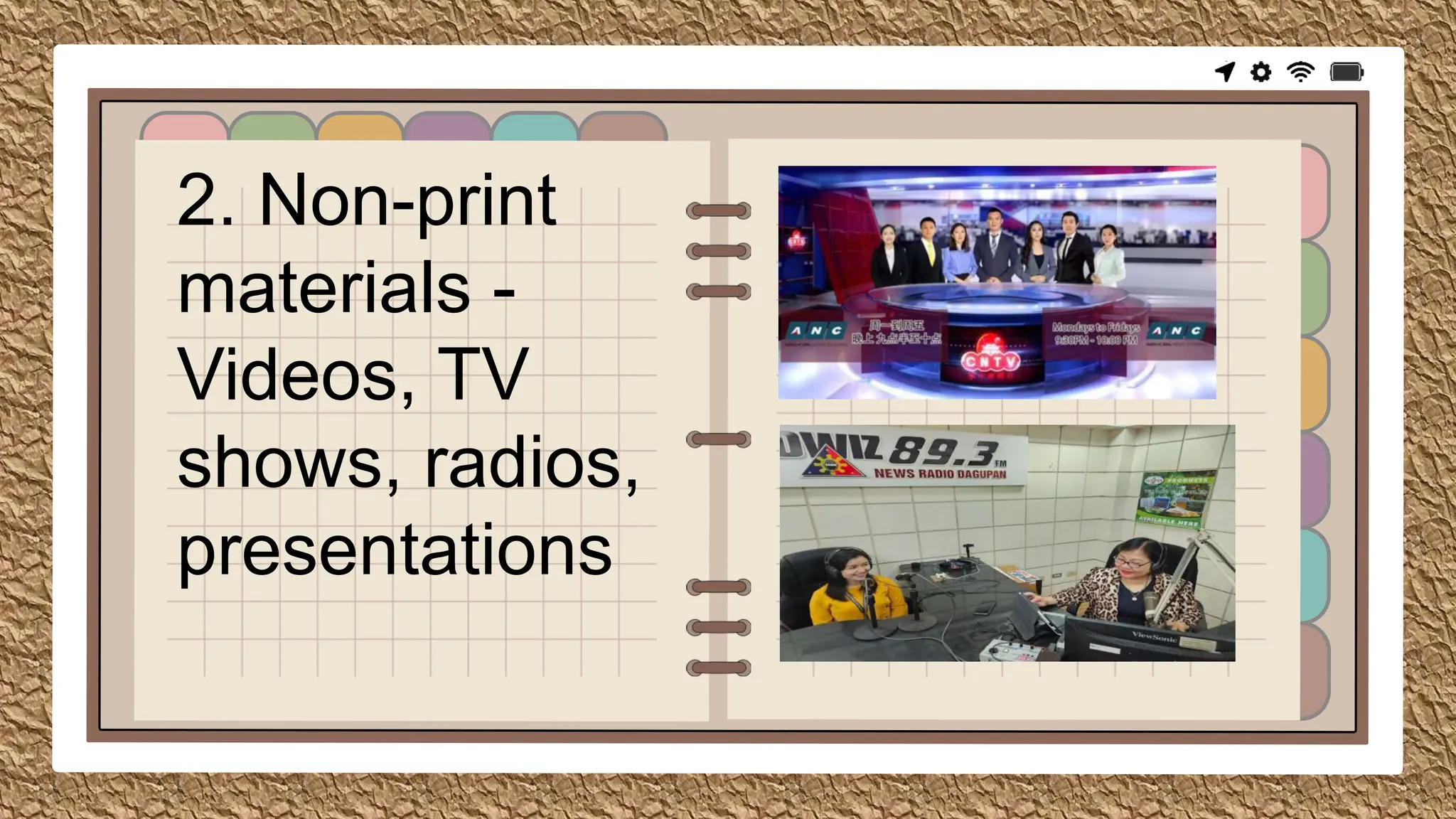
2. Non-print
materials -
Videos, TV
shows, radios,
presentations
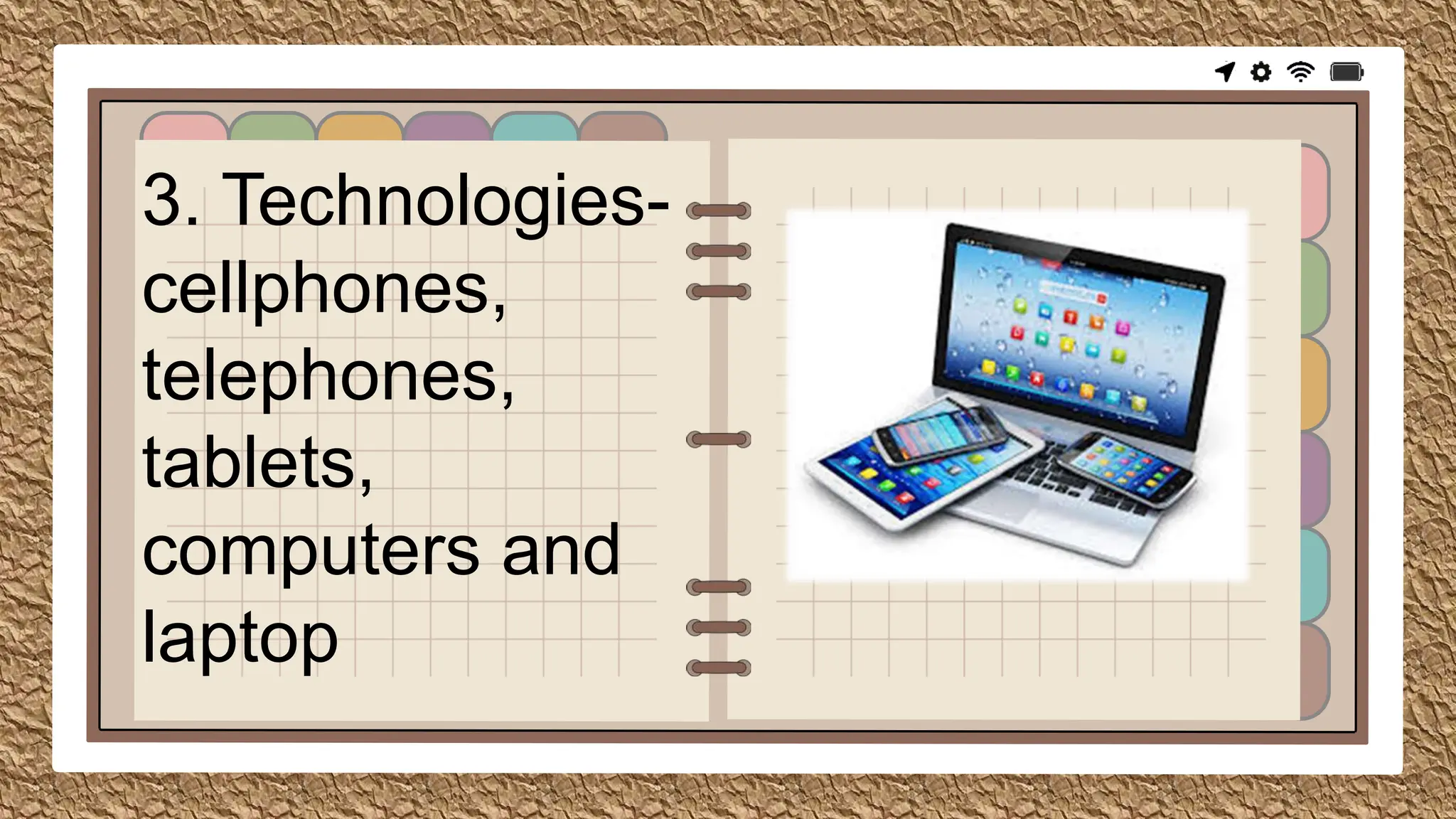
3. Technologies-
cellphones,
telephones,
tablets,
computers and
laptop
here
4. Online
Tools- Social
Media,
electronic
mails
PROCESS IN
COMMUNICATION
In understanding the process of
communication in any
organization, patterns on where
information and messages go is
critical. This is called the
directionality of communication.
Among these are the following:
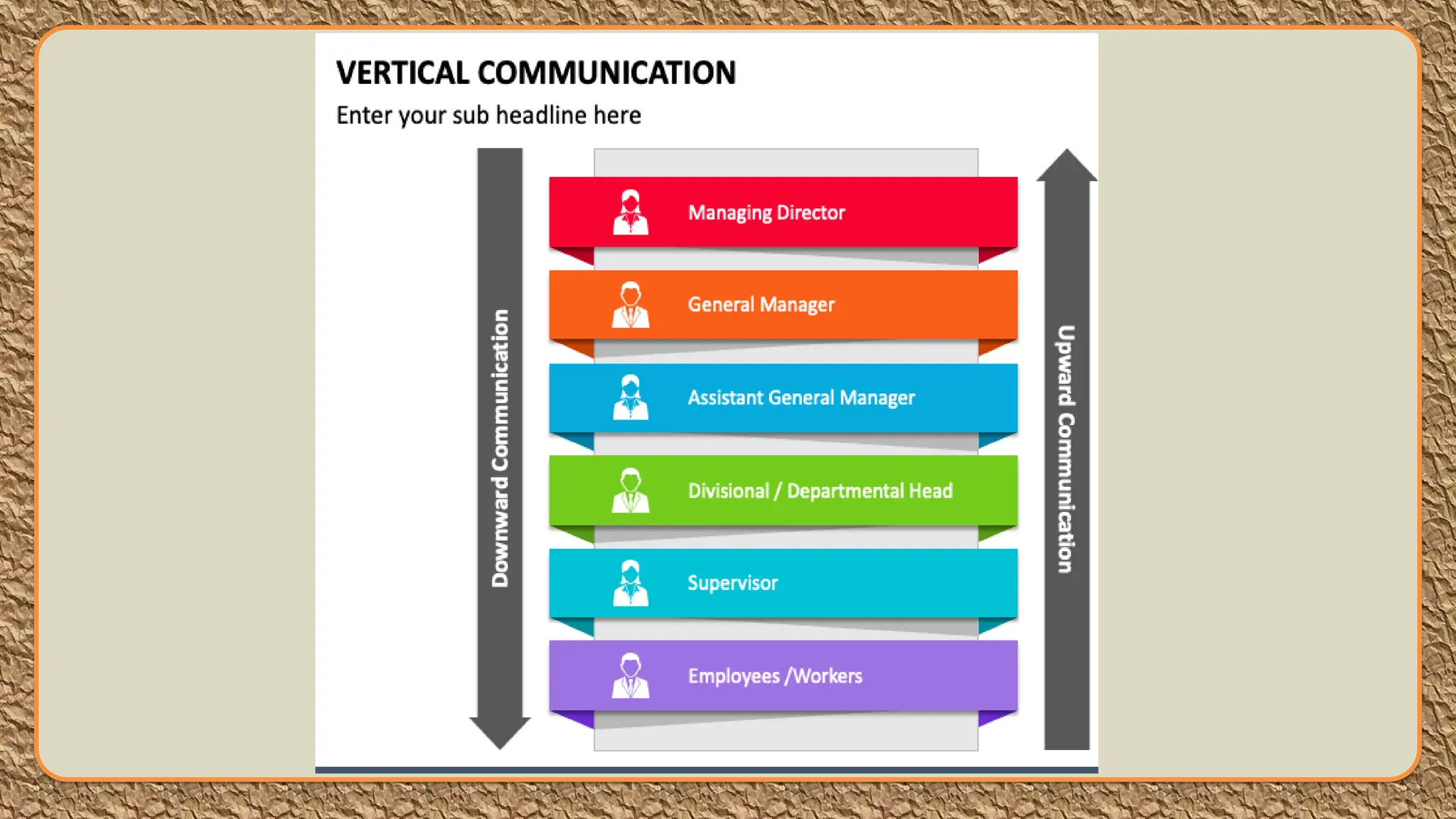
1. Vertical Communication-
refers to sending or receiving
messages between levels of
hierarchy or order whether
upward or downward.
2. Downward Communication
- is used to send messages
from lower a higher rank to a
lower rank.
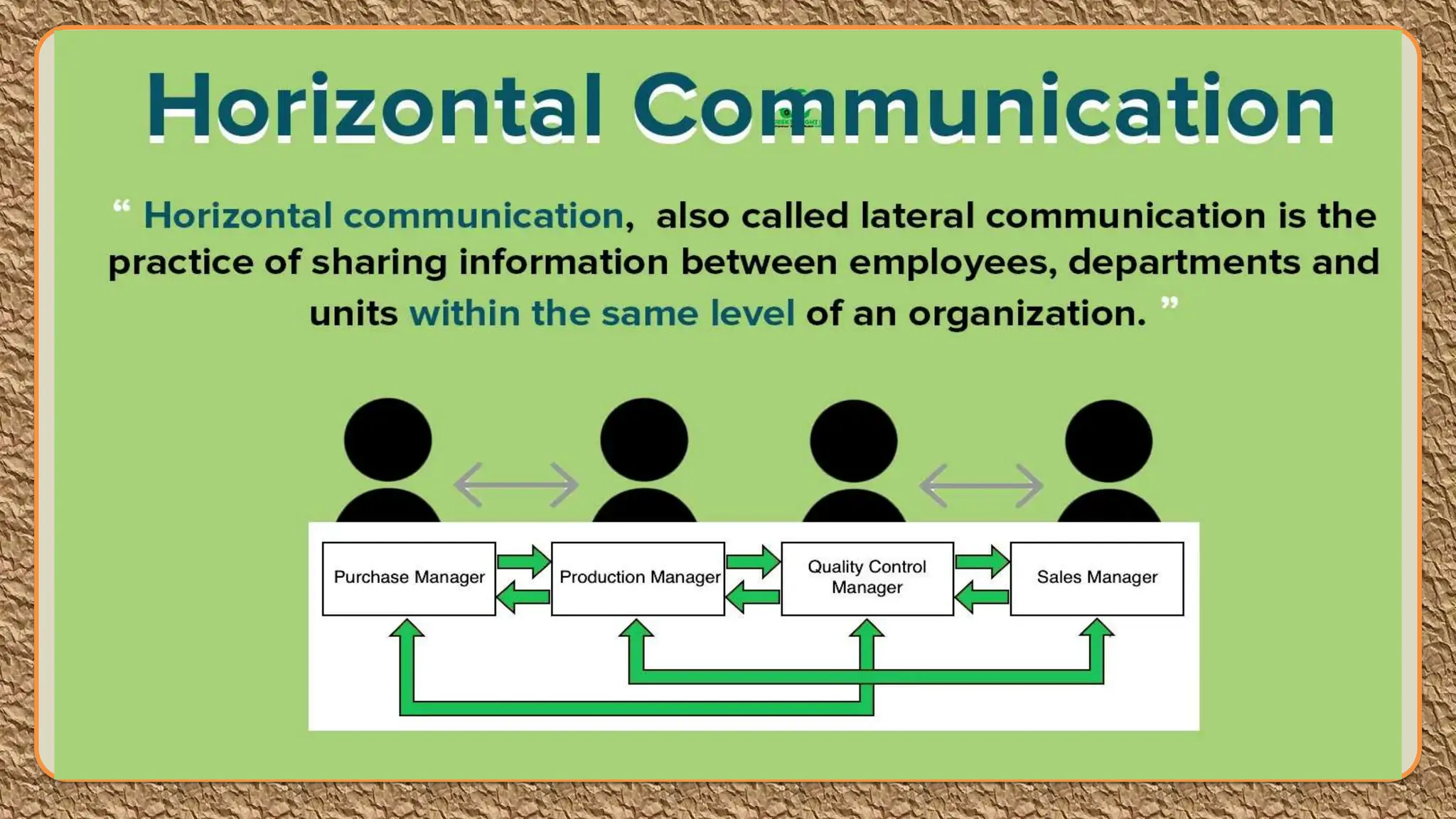
3. Horizontal Communication-
refers to sending or
receiving messages within the
same levels of hierarchy.
Terms in the
Communication Process
COMMUNICATION
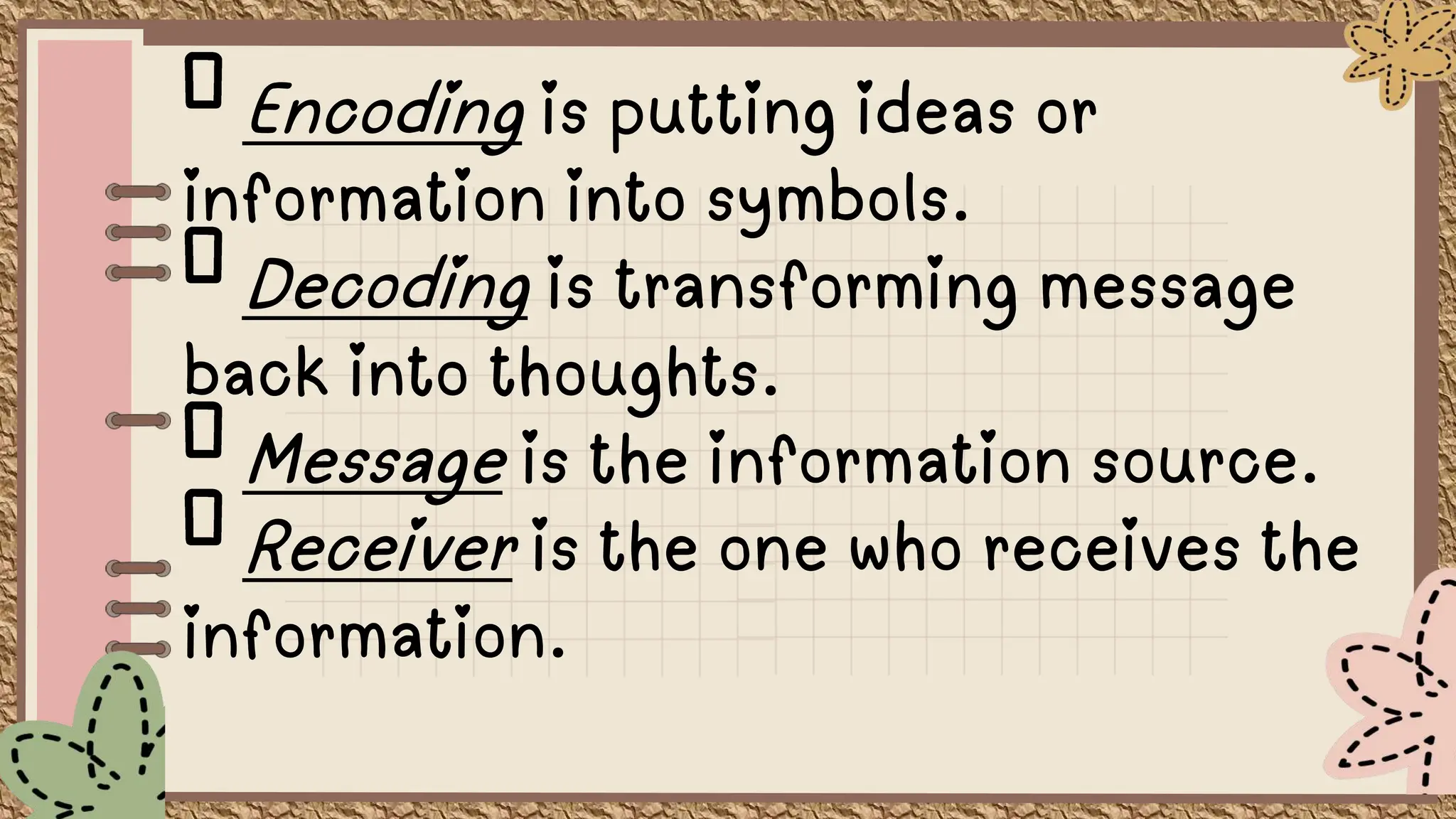
Encoding is putting ideas or
information into symbols.
Decoding is transforming message
back into thoughts.
Message is the information source.
Receiver is the one who receives the
information.
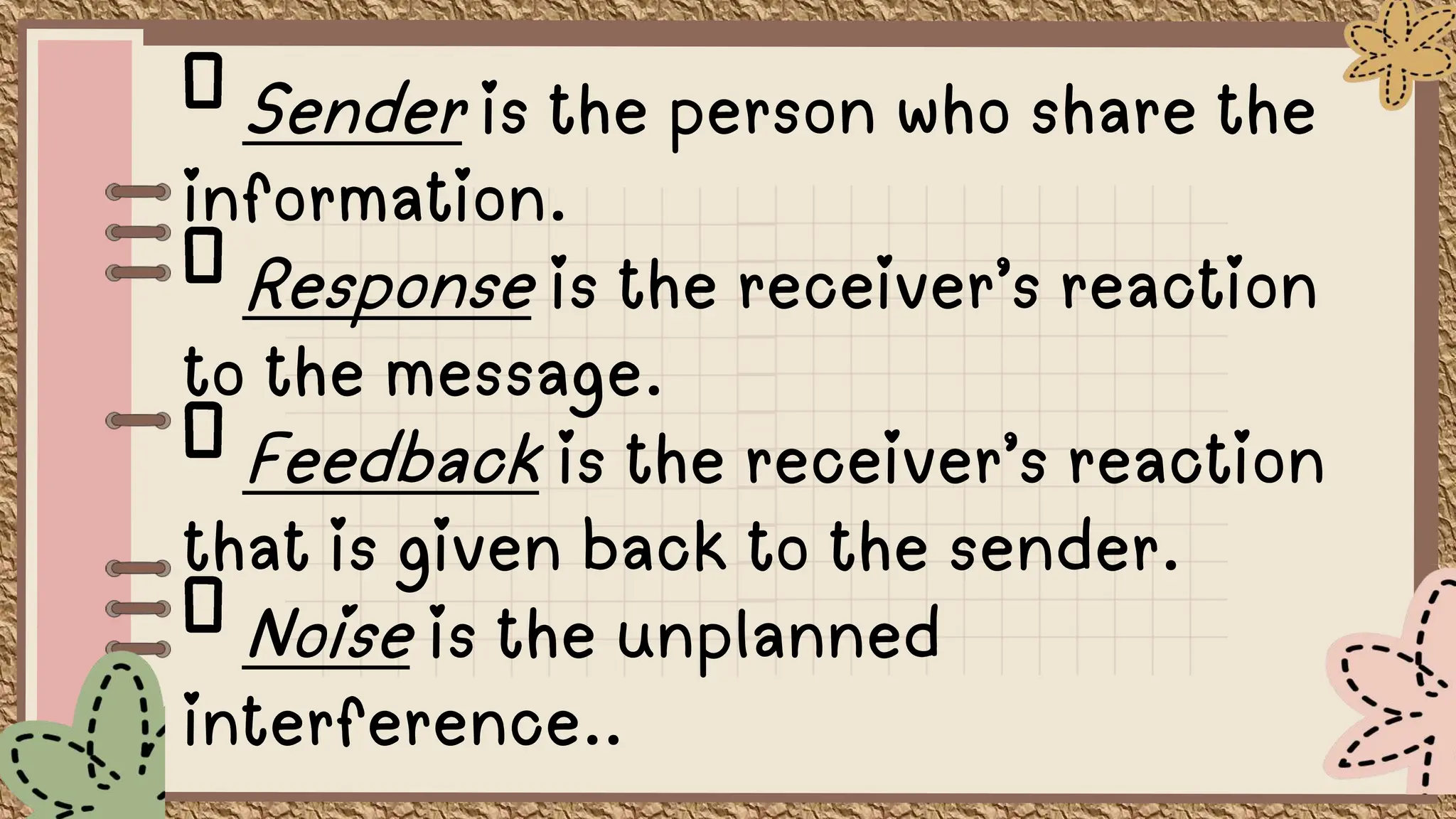
Sender is the person who share the
information.
Response is the receiver’s reaction
to the message.
Feedback is the receiver’s reaction
that is given back to the sender.
Noise is the unplanned
interference..
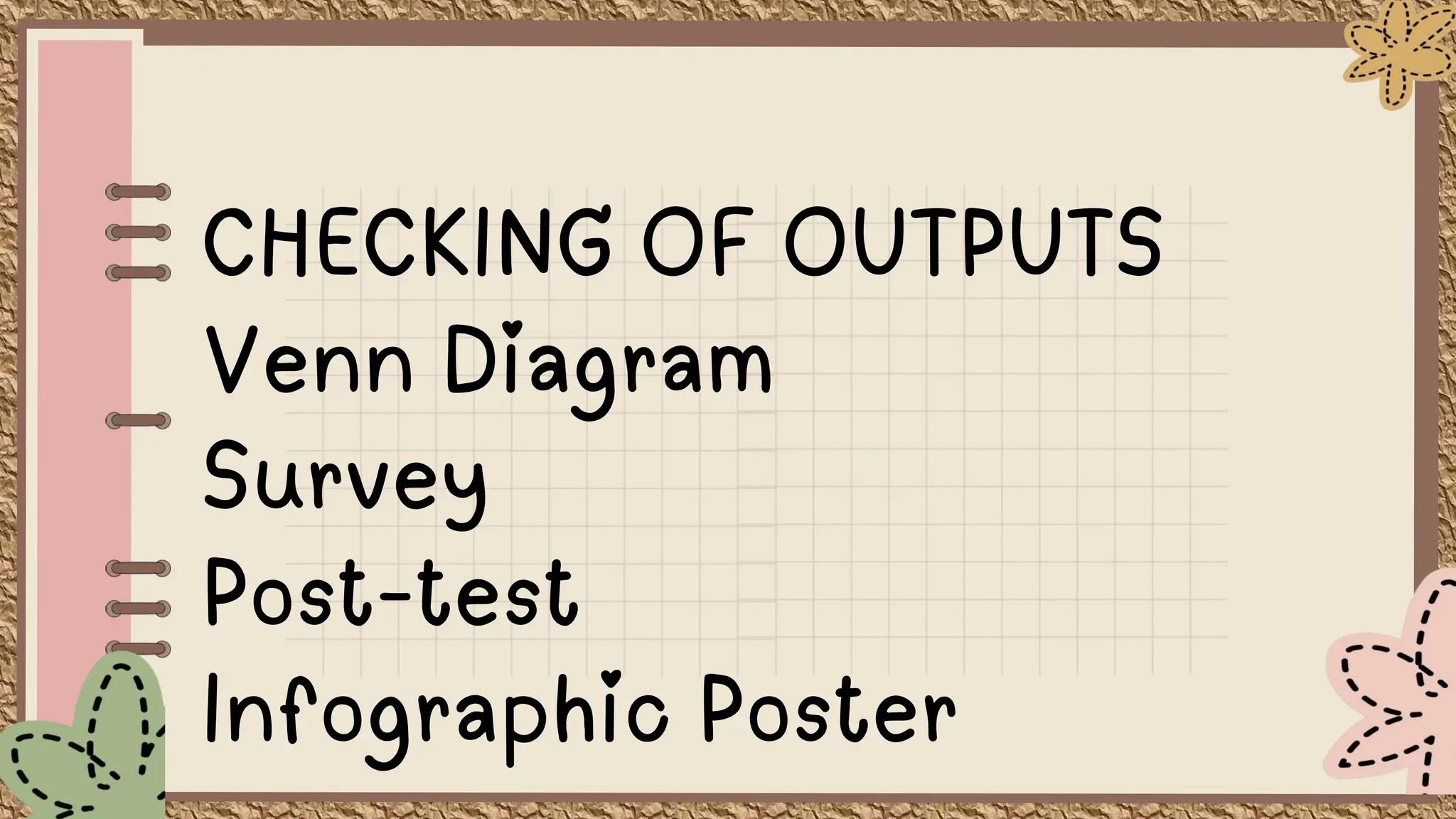
CHECKING OF OUTPUTS
Venn Diagram
Survey
Post-test
Infographic Poster
ACTIVITY:
Make a mind map
about the discipline
of communication

diass- settings, processes and methods in communication.pptx