A L P A Y D E D E Z A D E , L U C Y L E L I E V R E &
V A N E S S A S I L V A
Diane Arbus
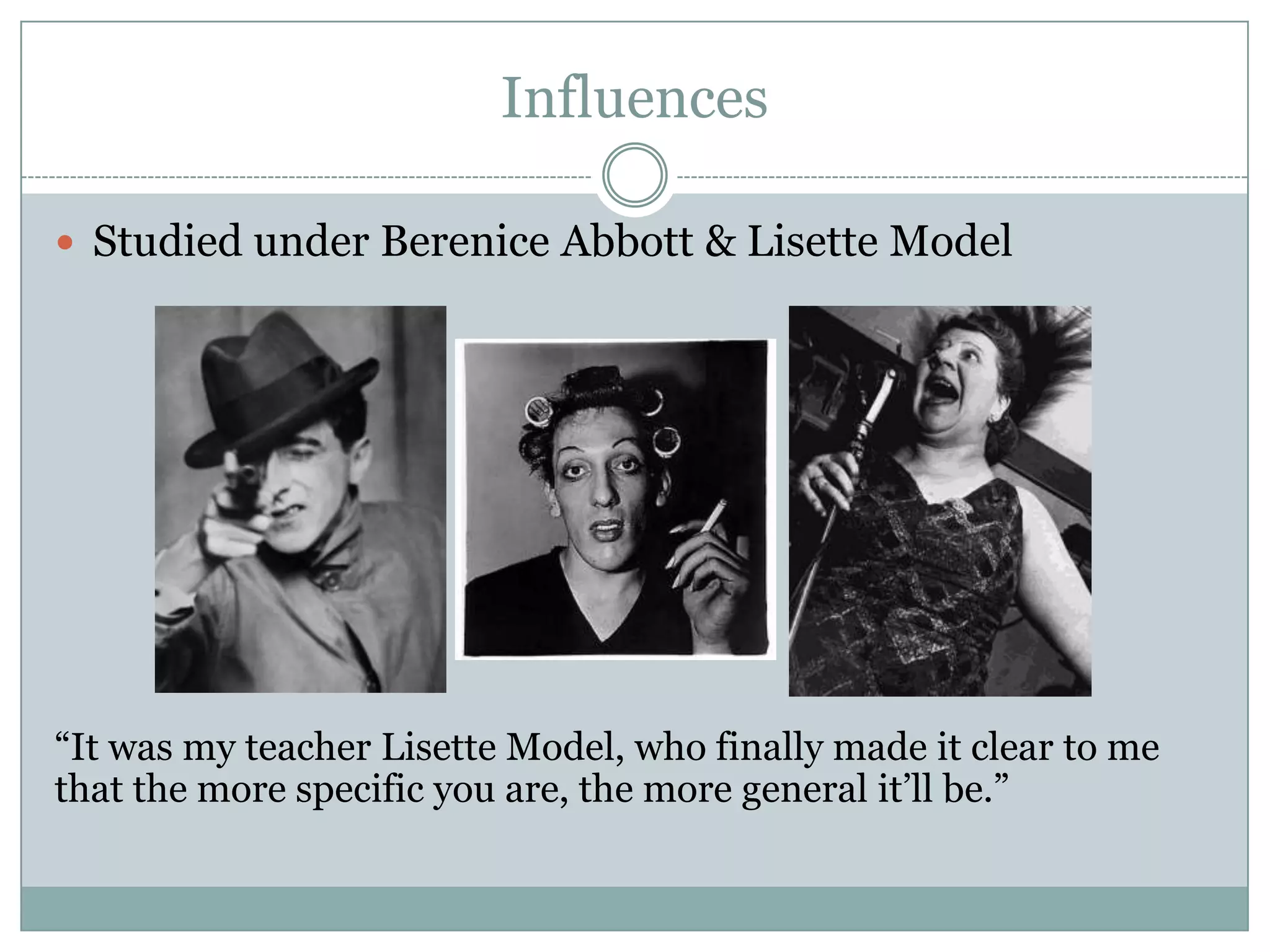
Influences
 Studied under Berenice Abbott & Lisette Model
“It was my teacher Lisette Model, who finally made it clear to me
that the more specific you are, the more general it‟ll be.”
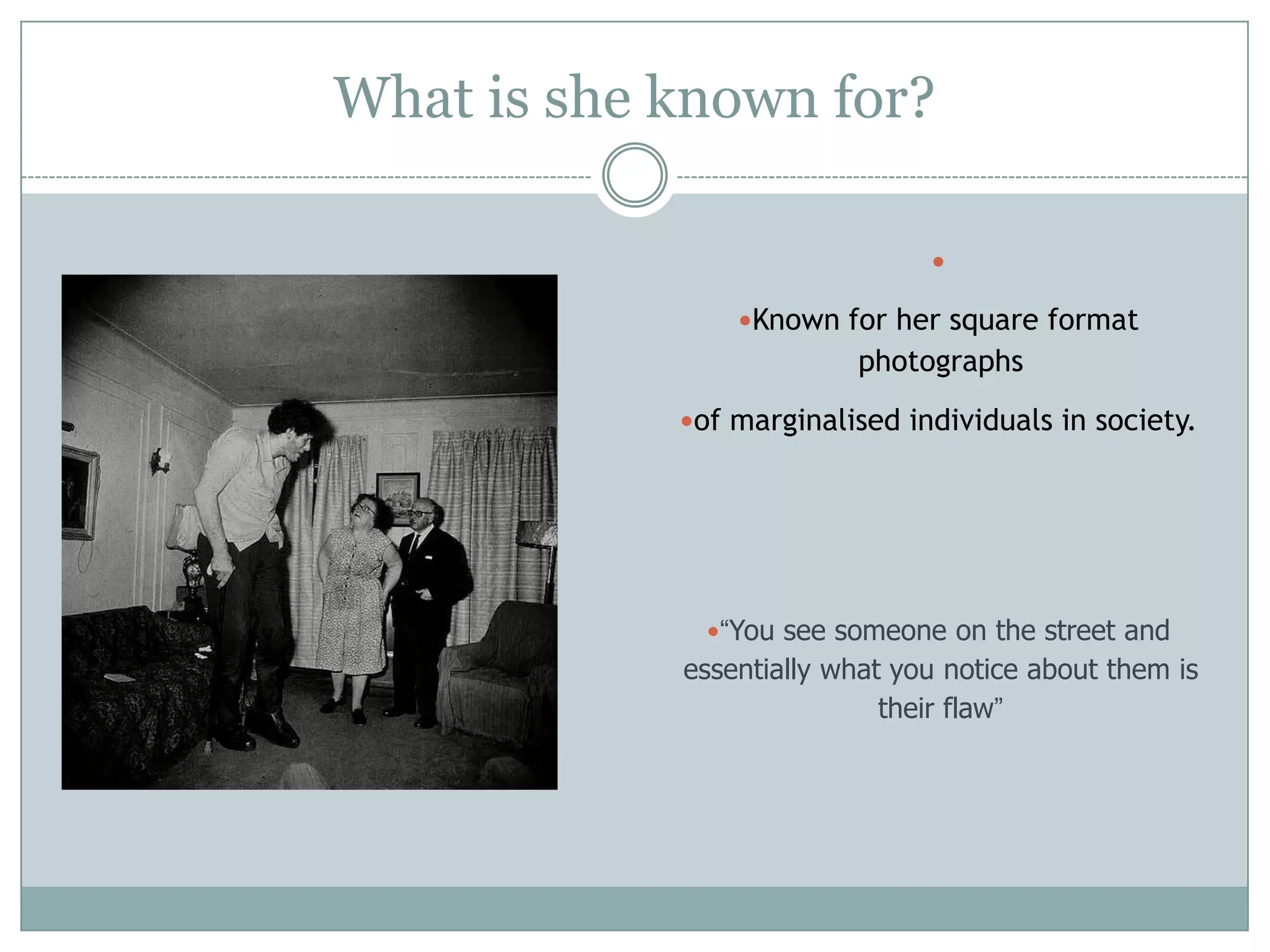
What is she known for?

Known for her square format
photographs
of marginalised individuals in society.
“You see someone on the street and
essentially what you notice about them is
their flaw”
Methods, techniques & teachings
1. Go places you have never been
2. Camera is a license to enter the lives of
others
3. Realize you can never understand the
world from your subjects eyes
4. Create specific photographs
Methods, techniques & teachings
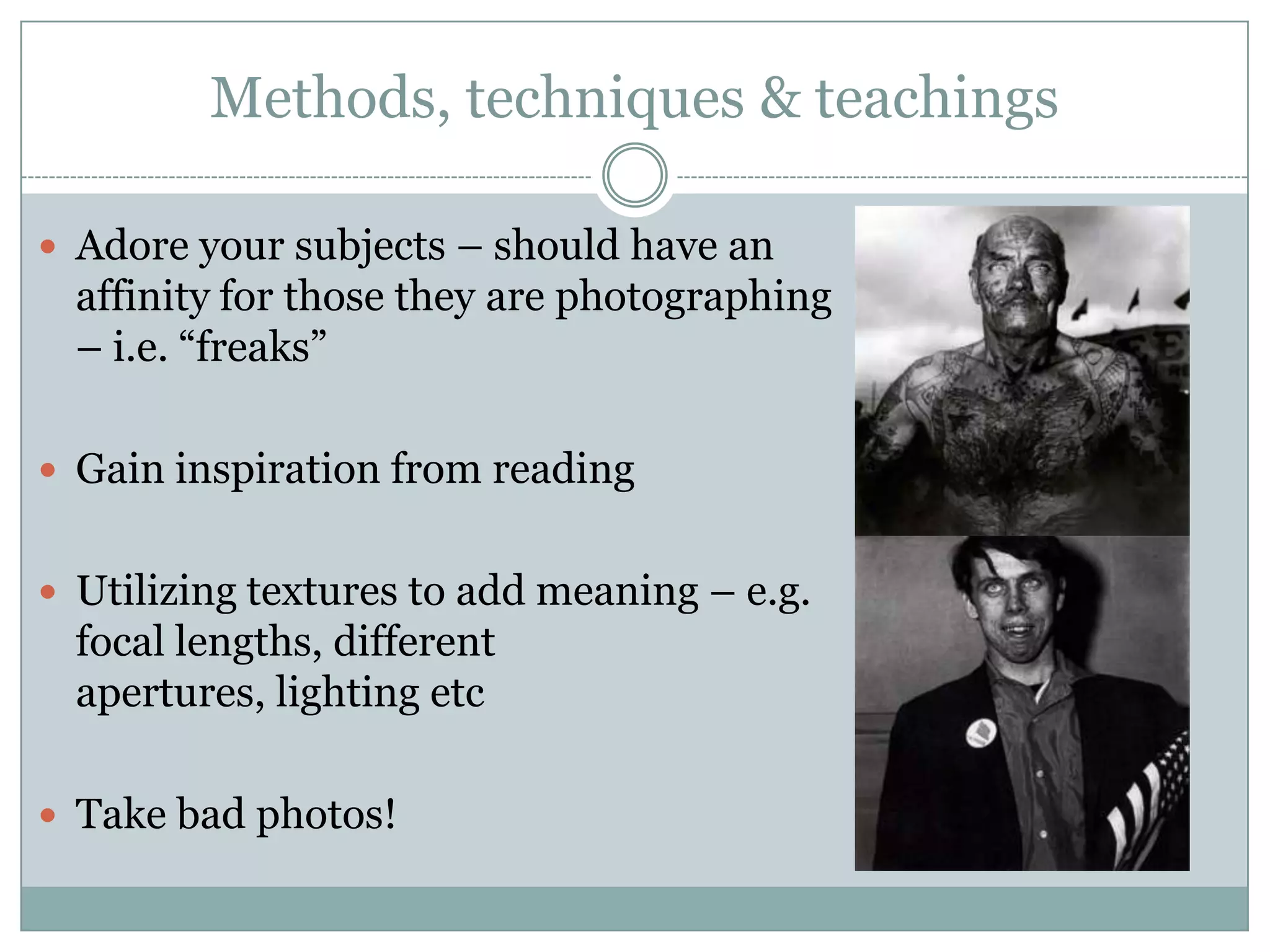
 Adore your subjects – should have an
affinity for those they are photographing
– i.e. “freaks”
 Gain inspiration from reading
 Utilizing textures to add meaning – e.g.
focal lengths, different
apertures, lighting etc
 Take bad photos!
Methods, techniques & teachings
1.Sometimes your best photos aren‟t immediately apparent (to you)
2.Don‟t arrange others, arrange yourself – Most interesting photos are
generally ones that aren‟t posed
3.Get over the fear of photography by getting to know your subjects - by
talking with the subjects it allows the photographer to overcome the
fear with taking personal shots and feel more comfortable
4.Subjects are more important than the pictures – She considered the
people to be more important than the photograph itself, as humans are
three-dimensional and evoked a more „holy feeling‟ in her
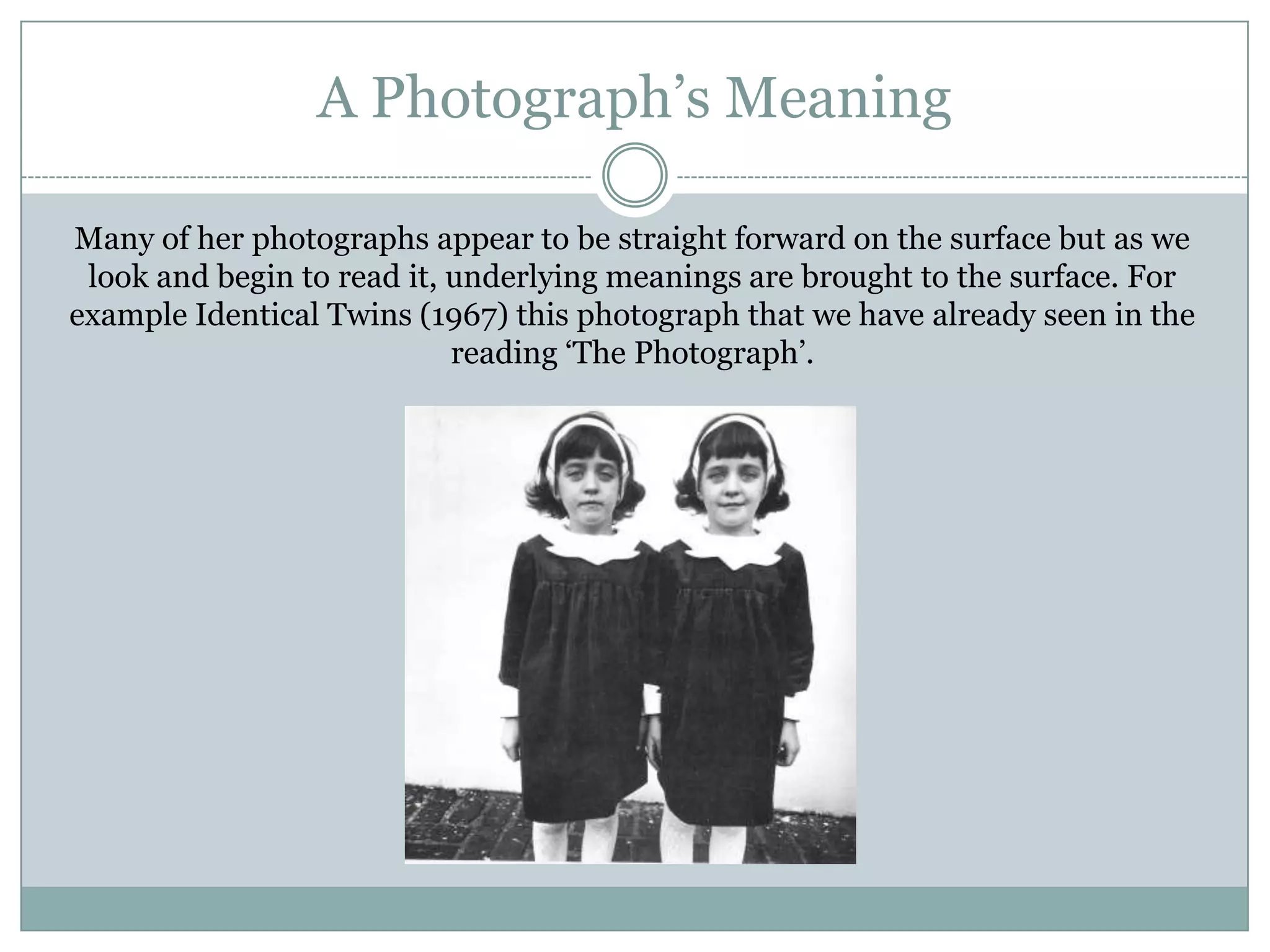
A Photograph‟s Meaning
Many of her photographs appear to be straight forward on the surface but as we
look and begin to read it, underlying meanings are brought to the surface. For
example Identical Twins (1967) this photograph that we have already seen in the
reading „The Photograph‟.
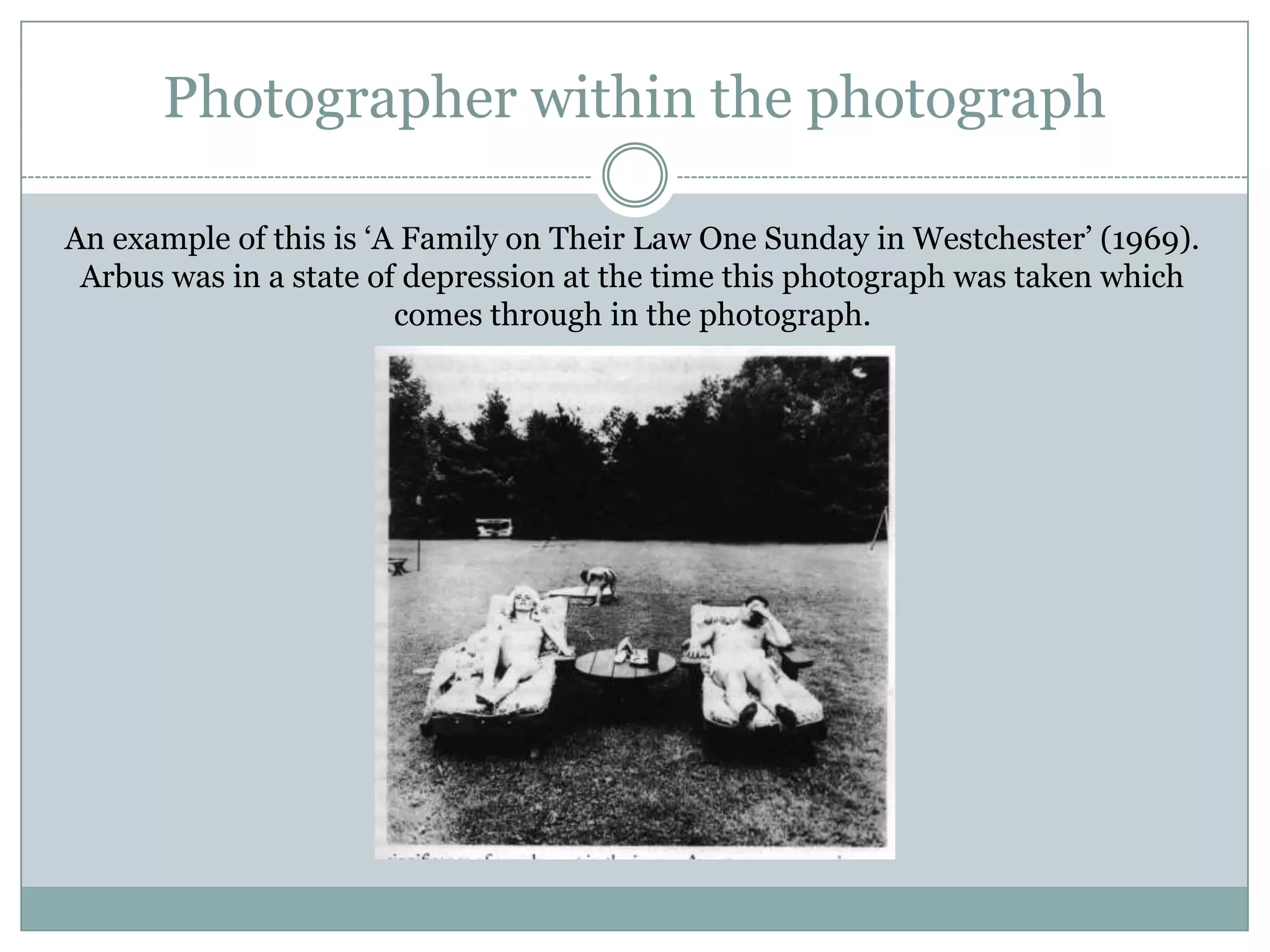
Photographer within the photograph
An example of this is „A Family on Their Law One Sunday in Westchester‟ (1969).
Arbus was in a state of depression at the time this photograph was taken which
comes through in the photograph.
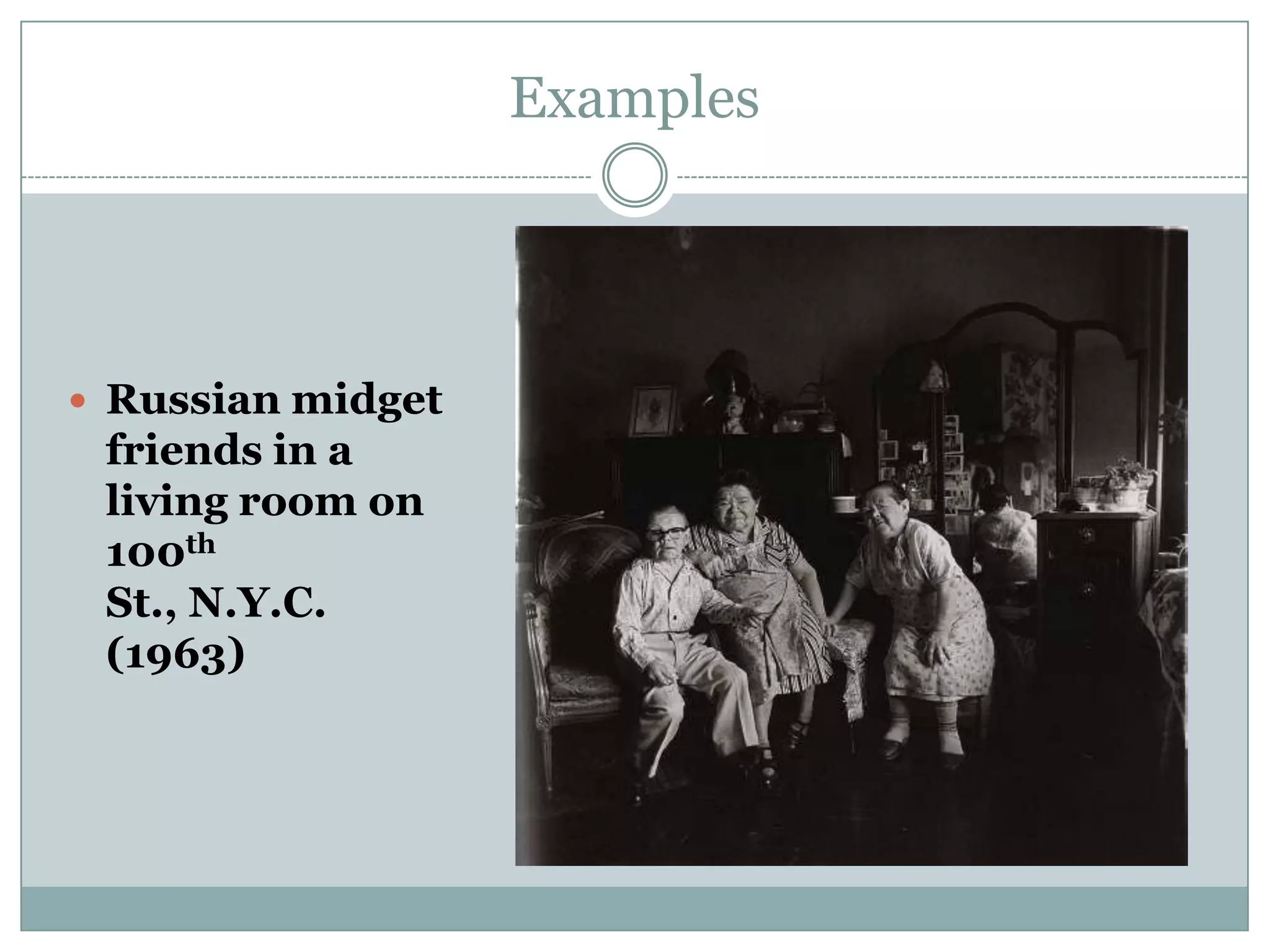
Examples
 Russian midget
friends in a
living room on
100th
St., N.Y.C.
(1963)
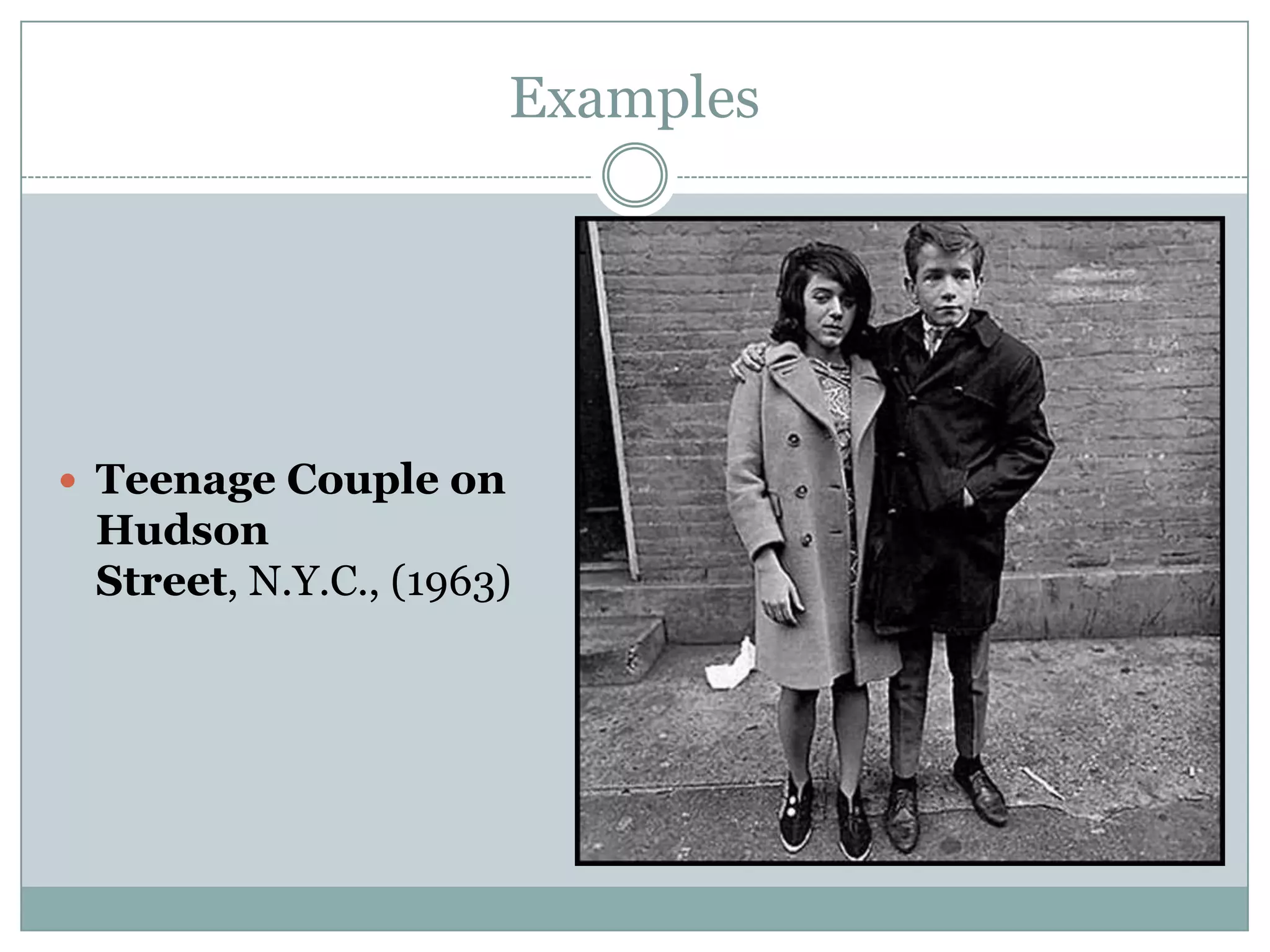
Examples
 Teenage Couple on
Hudson
Street, N.Y.C., (1963)

Diane arbus presentation (2)

  • 1.
    A L PA Y D E D E Z A D E , L U C Y L E L I E V R E & V A N E S S A S I L V A Diane Arbus
  • 2.
    Influences  Studied underBerenice Abbott & Lisette Model “It was my teacher Lisette Model, who finally made it clear to me that the more specific you are, the more general it‟ll be.”
  • 3.
    What is sheknown for?  Known for her square format photographs of marginalised individuals in society. “You see someone on the street and essentially what you notice about them is their flaw”
  • 4.
    Methods, techniques &teachings 1. Go places you have never been 2. Camera is a license to enter the lives of others 3. Realize you can never understand the world from your subjects eyes 4. Create specific photographs
  • 5.
    Methods, techniques &teachings  Adore your subjects – should have an affinity for those they are photographing – i.e. “freaks”  Gain inspiration from reading  Utilizing textures to add meaning – e.g. focal lengths, different apertures, lighting etc  Take bad photos!
  • 6.
    Methods, techniques &teachings 1.Sometimes your best photos aren‟t immediately apparent (to you) 2.Don‟t arrange others, arrange yourself – Most interesting photos are generally ones that aren‟t posed 3.Get over the fear of photography by getting to know your subjects - by talking with the subjects it allows the photographer to overcome the fear with taking personal shots and feel more comfortable 4.Subjects are more important than the pictures – She considered the people to be more important than the photograph itself, as humans are three-dimensional and evoked a more „holy feeling‟ in her
  • 7.
    A Photograph‟s Meaning Manyof her photographs appear to be straight forward on the surface but as we look and begin to read it, underlying meanings are brought to the surface. For example Identical Twins (1967) this photograph that we have already seen in the reading „The Photograph‟.
  • 8.
    Photographer within thephotograph An example of this is „A Family on Their Law One Sunday in Westchester‟ (1969). Arbus was in a state of depression at the time this photograph was taken which comes through in the photograph.
  • 9.
    Examples  Russian midget friendsin a living room on 100th St., N.Y.C. (1963)
  • 10.
    Examples  Teenage Coupleon Hudson Street, N.Y.C., (1963)