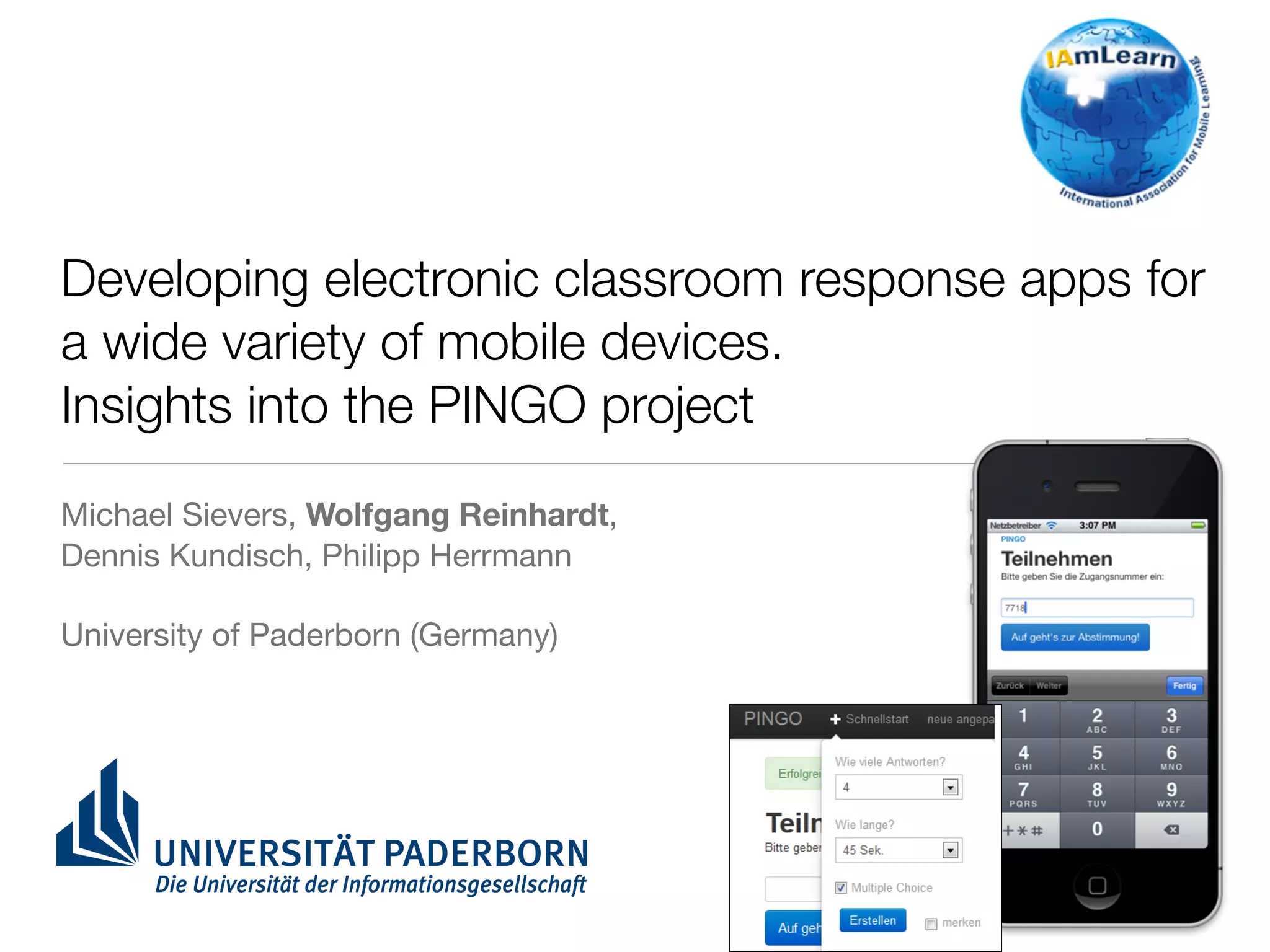
Developing electronic classroom response apps for
a wide variety of mobile devices.
Insights into the PINGO project
Michael Sievers, Wolfgang Reinhardt,
Dennis Kundisch, Philipp Herrmann

University of Paderborn (Germany)
Not Yet Another Classroom Response System...
What is Peer Instruction

• cooperative teaching-learning strategy


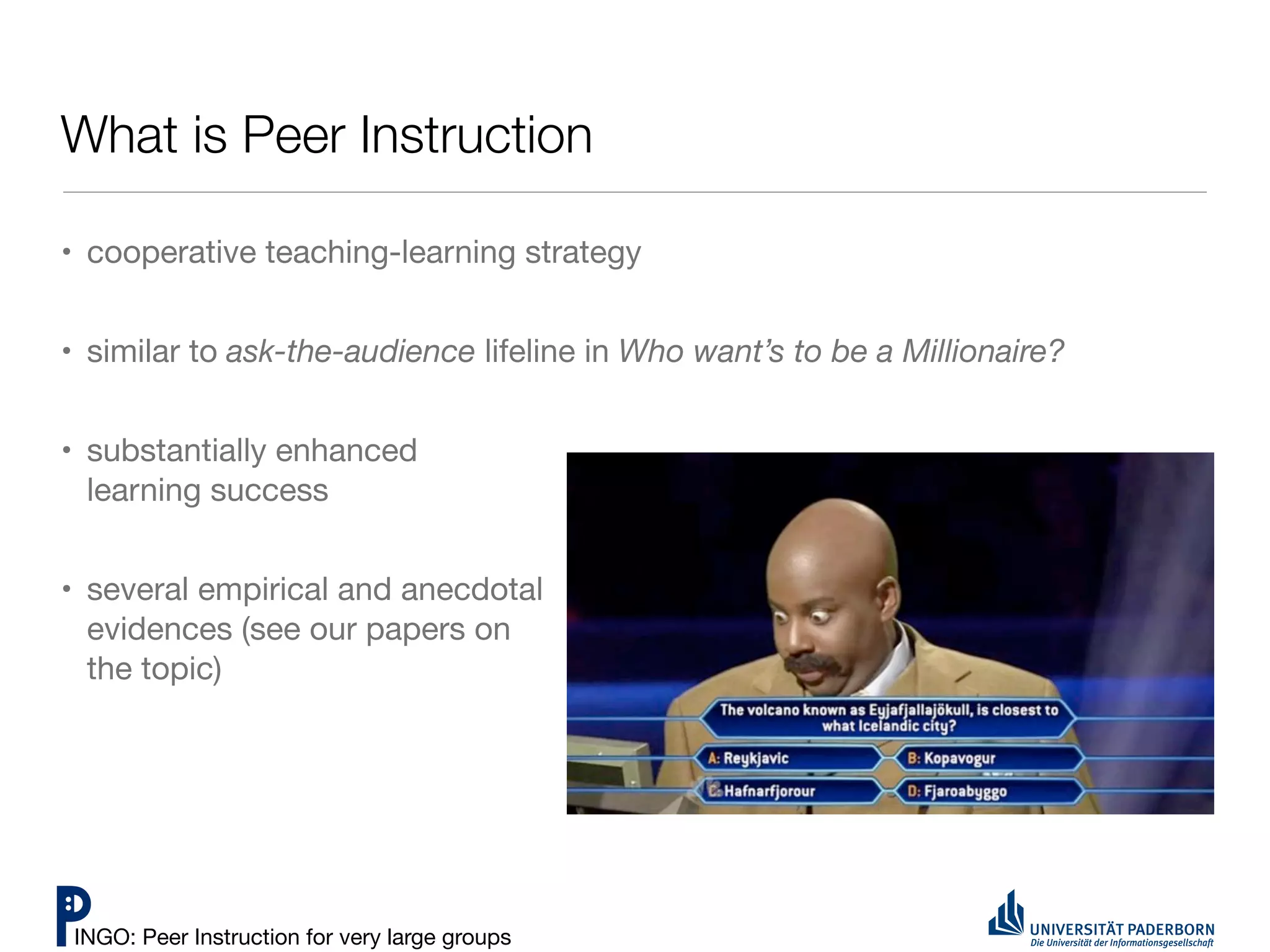
• similar to ask-the-audience lifeline in Who want’s to be a Millionaire?


• substantially enhanced
  learning success


• several empirical and anecdotal
  evidences (see our papers on
  the topic)


INGO: Peer Instruction for very large groups
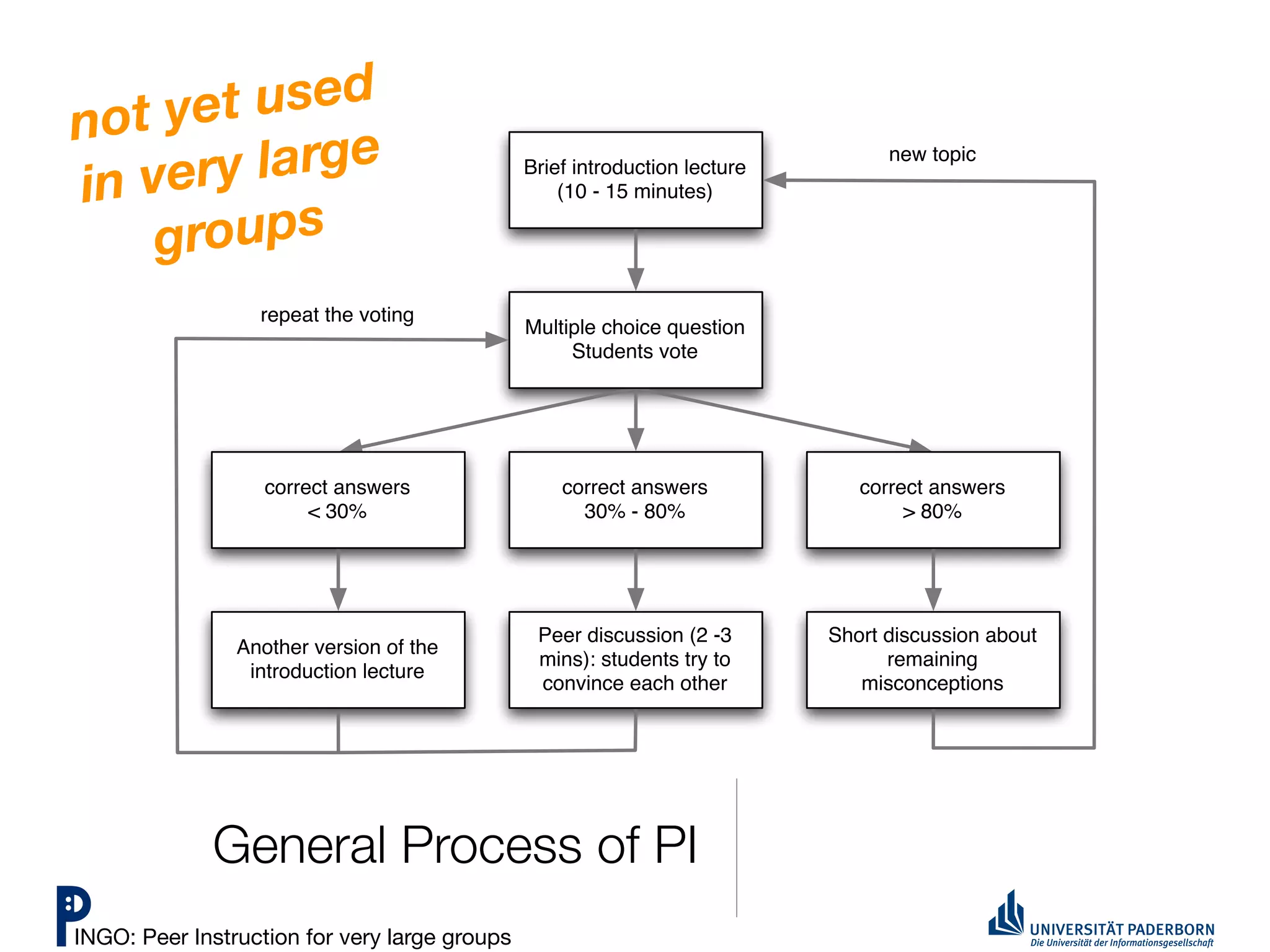
n ot yet used
in very  large                                 Brief introduction lecture
                                                   (10 - 15 minutes)
                                                                                  new topic


    g roups
                  repeat the voting
                                               Multiple choice question
                                                    Students vote


                   correct answers                 correct answers             correct answers
                        < 30%                        30% - 80%                      > 80%


                                                Peer discussion (2 -3       Short discussion about
                Another version of the
                                                mins): students try to            remaining
                 introduction lecture
                                                convince each other            misconceptions


             General Process of PI
INGO: Peer Instruction for very large groups
PI in very large groups (300+ students)

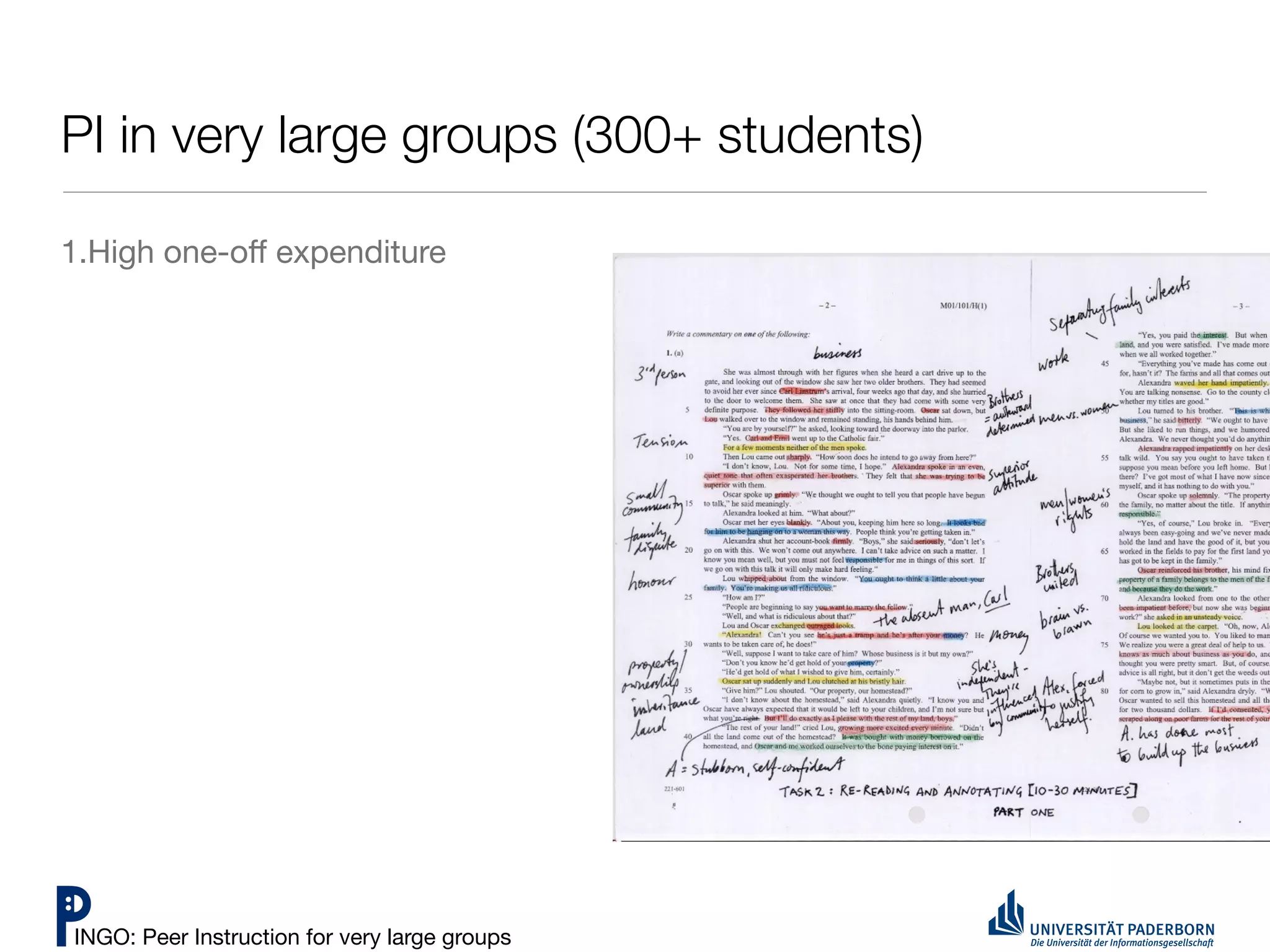
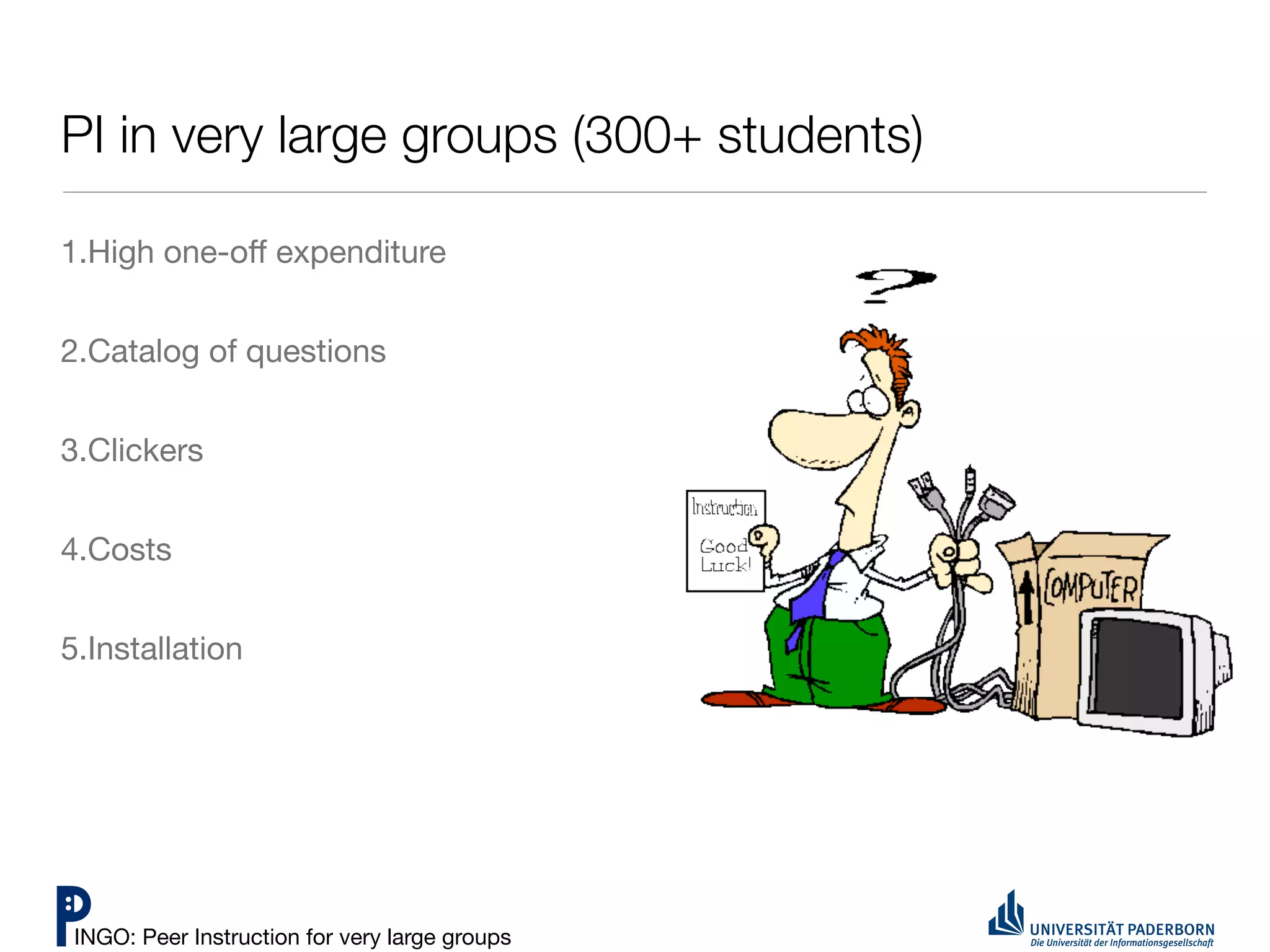
1.High one-off expenditure


INGO: Peer Instruction for very large groups
PI in very large groups (300+ students)

1.High one-off expenditure


2.Catalog of questions


INGO: Peer Instruction for very large groups
PI in very large groups (300+ students)

1.High one-off expenditure


2.Catalog of questions


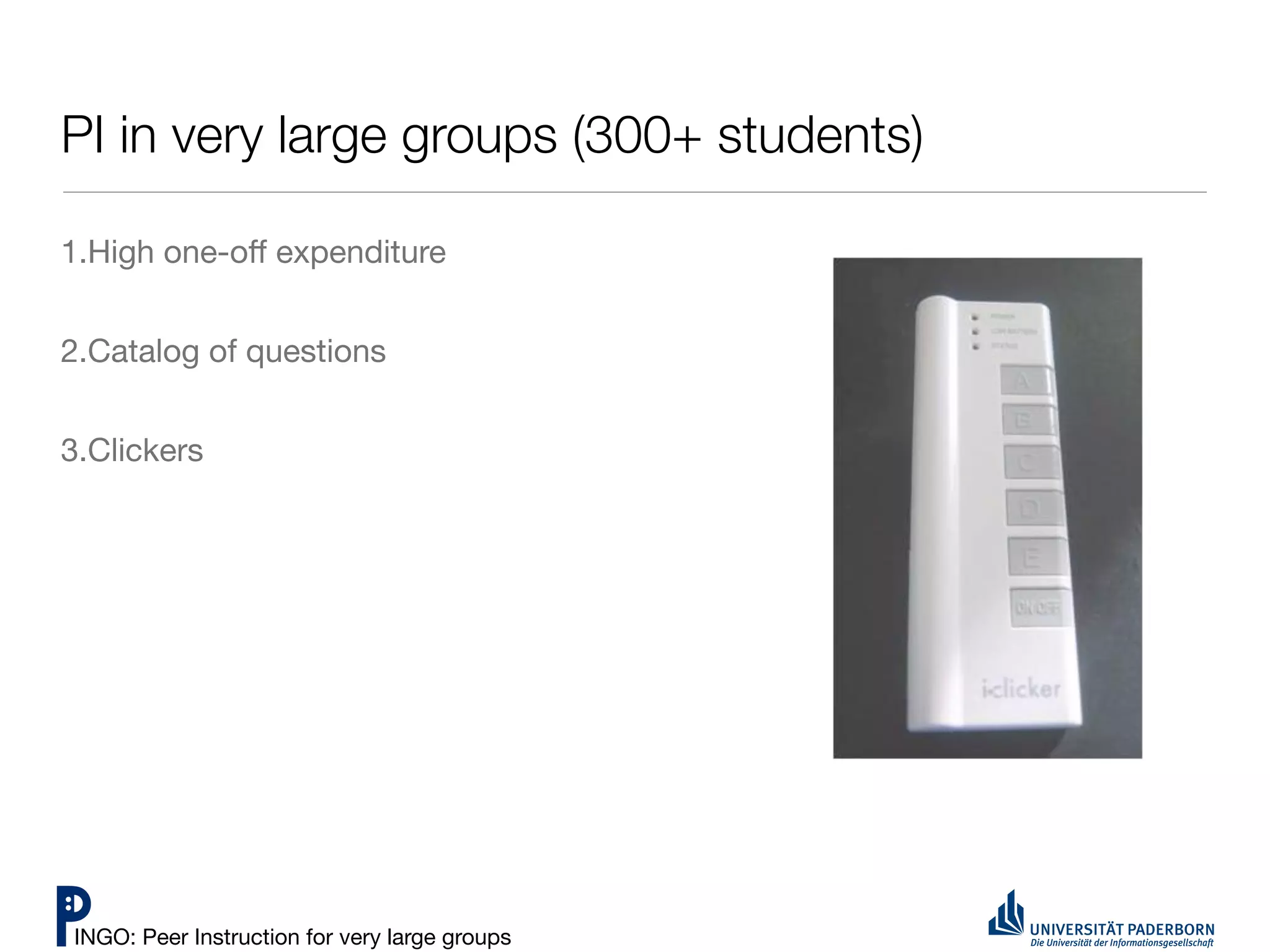
3.Clickers


INGO: Peer Instruction for very large groups
PI in very large groups (300+ students)

1.High one-off expenditure


2.Catalog of questions


3.Clickers


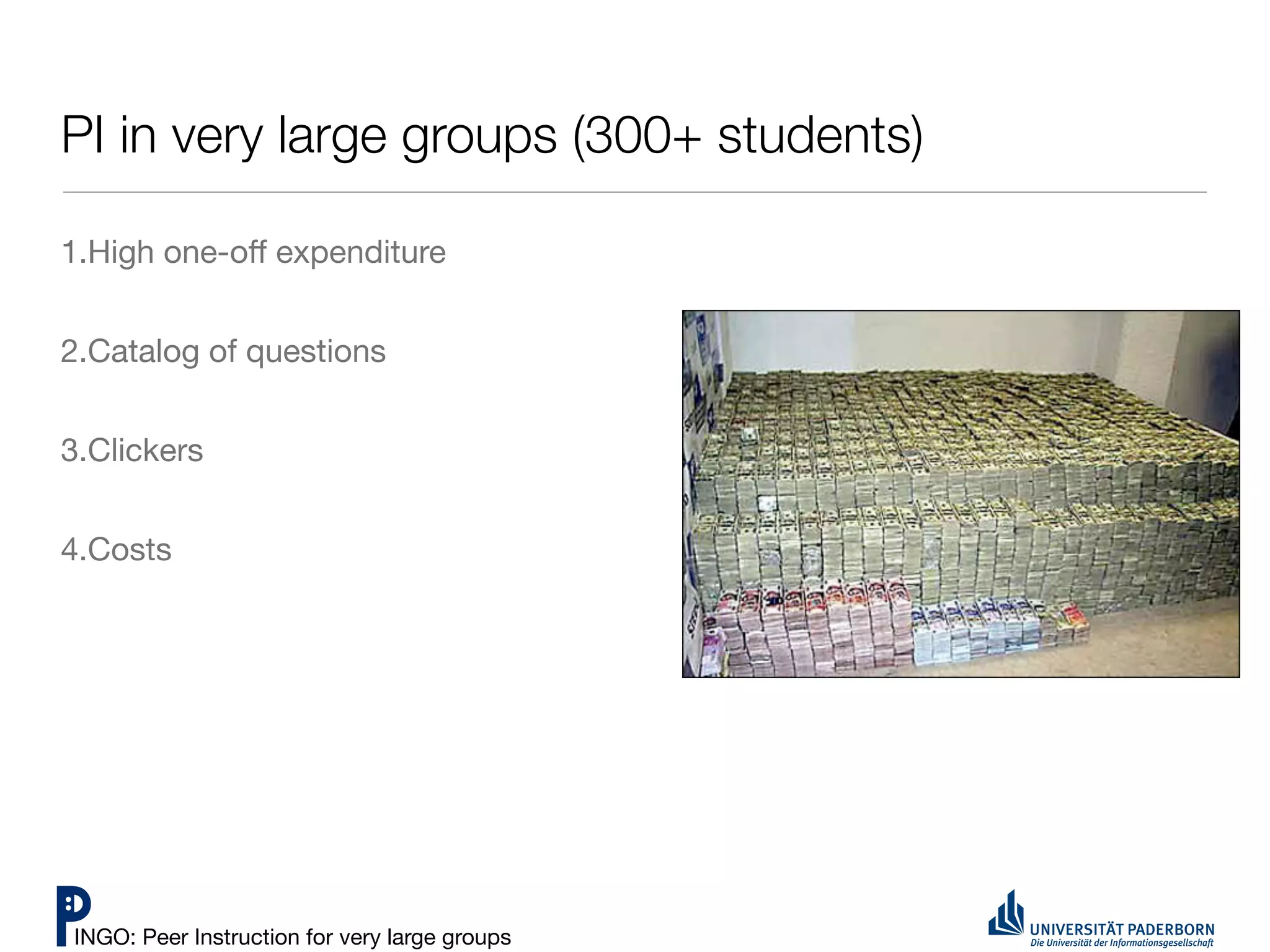
4.Costs


INGO: Peer Instruction for very large groups
PI in very large groups (300+ students)

1.High one-off expenditure


2.Catalog of questions


3.Clickers


4.Costs


5.Installation


 INGO: Peer Instruction for very large groups
PI in very large groups (300+ students)

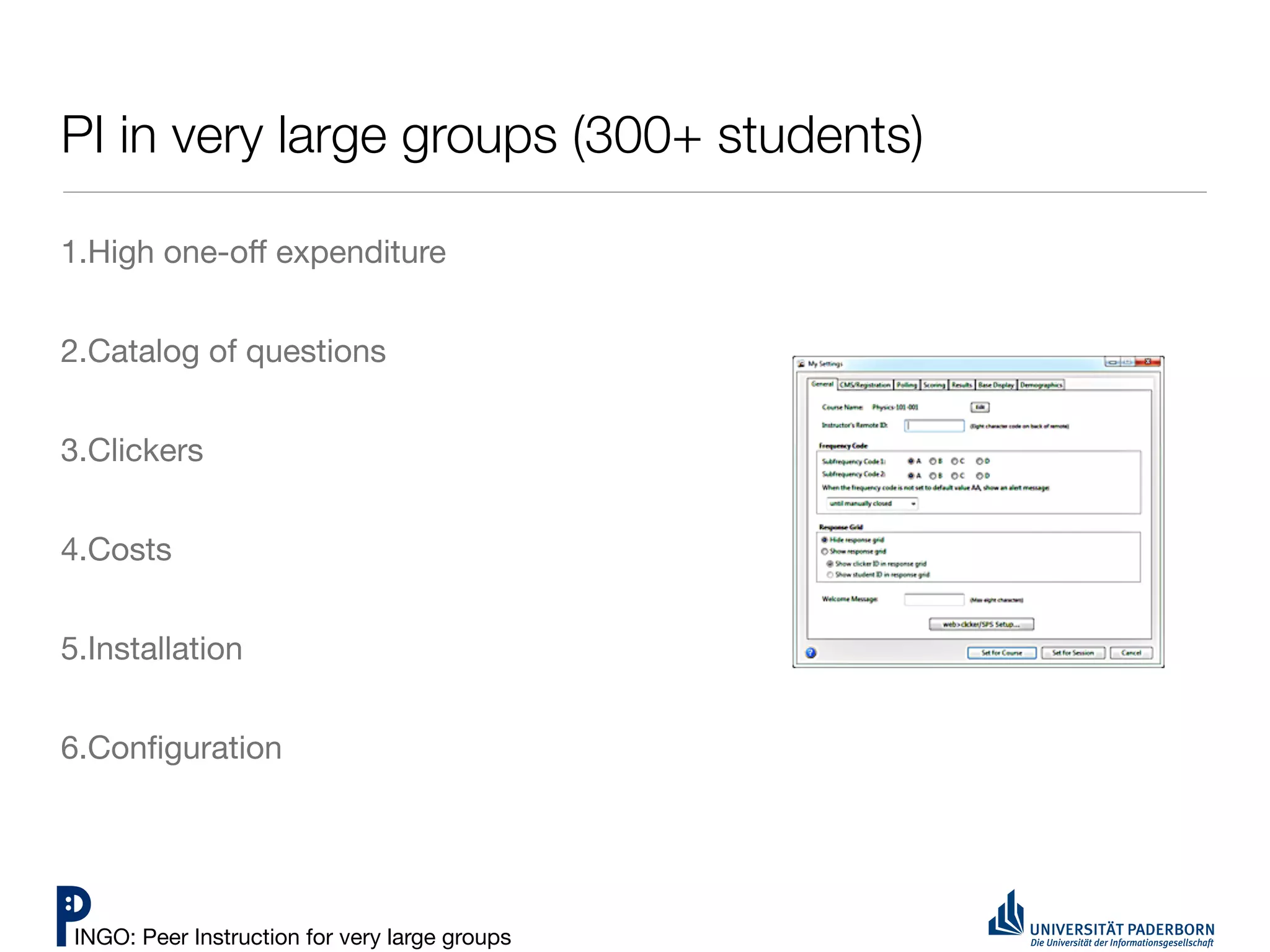
1.High one-off expenditure


2.Catalog of questions


3.Clickers


4.Costs


5.Installation


6.Configuration


 INGO: Peer Instruction for very large groups
PI in very large groups (300+ students)

1.High one-off expenditure


2.Catalog of questions


3.Clickers


4.Costs


5.Installation


6.Configuration


7.Exclusive use

 INGO: Peer Instruction for very large groups
Goals & constraints of the PINGO development

• support as many mobile devices as possible


• support at least 5000 requests/sec in the backend


• push new questions to the mobile devices


• sync timers between backend and mobile devices


INGO: Peer Instruction for very large groups
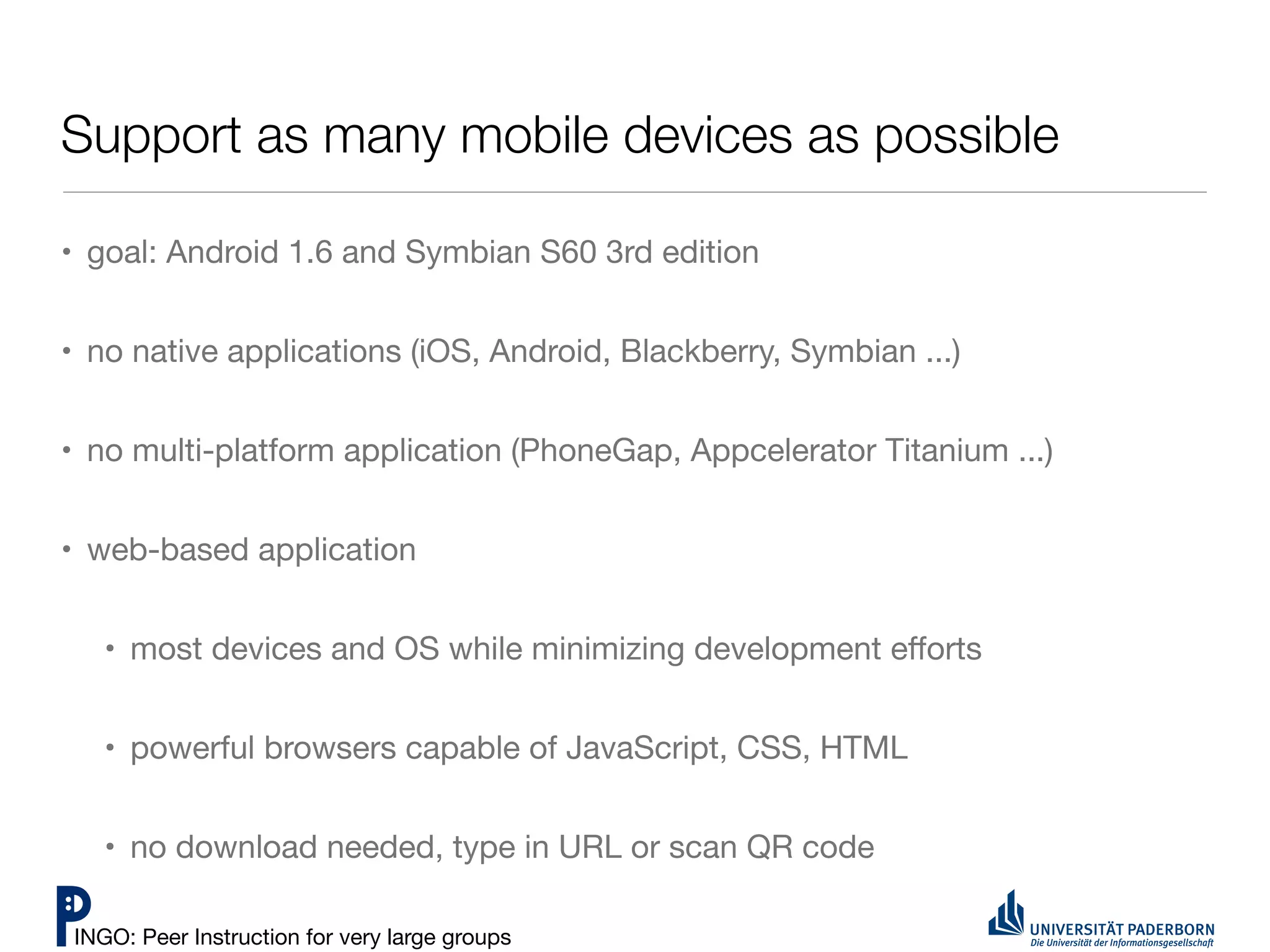
Support as many mobile devices as possible

• goal: Android 1.6 and Symbian S60 3rd edition


• no native applications (iOS, Android, Blackberry, Symbian ...)


• no multi-platform application (PhoneGap, Appcelerator Titanium ...)


• web-based application


   • most devices and OS while minimizing development efforts


   • powerful browsers capable of JavaScript, CSS, HTML


   • no download needed, type in URL or scan QR code

INGO: Peer Instruction for very large groups
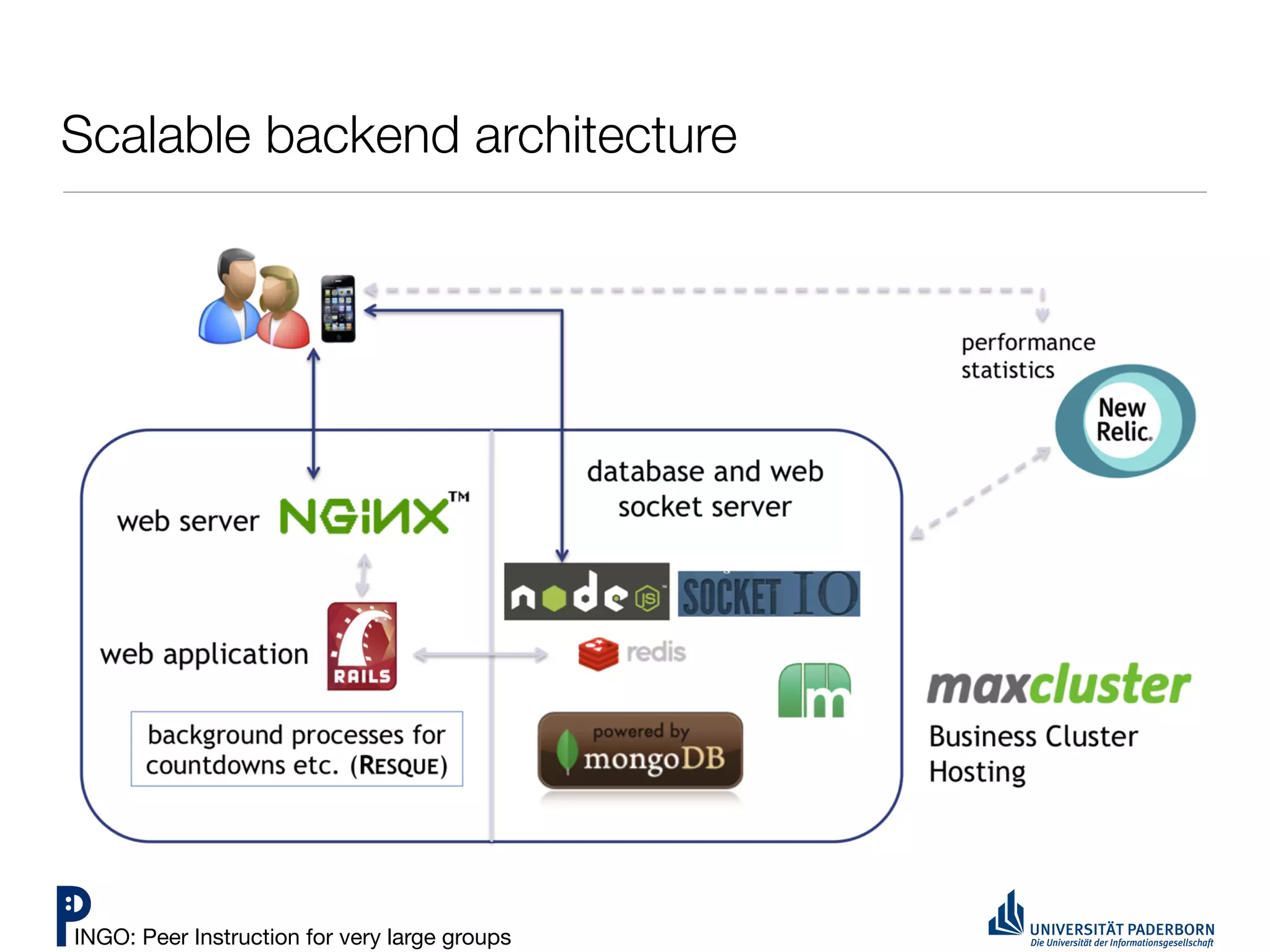
Scalable backend architecture


INGO: Peer Instruction for very large groups
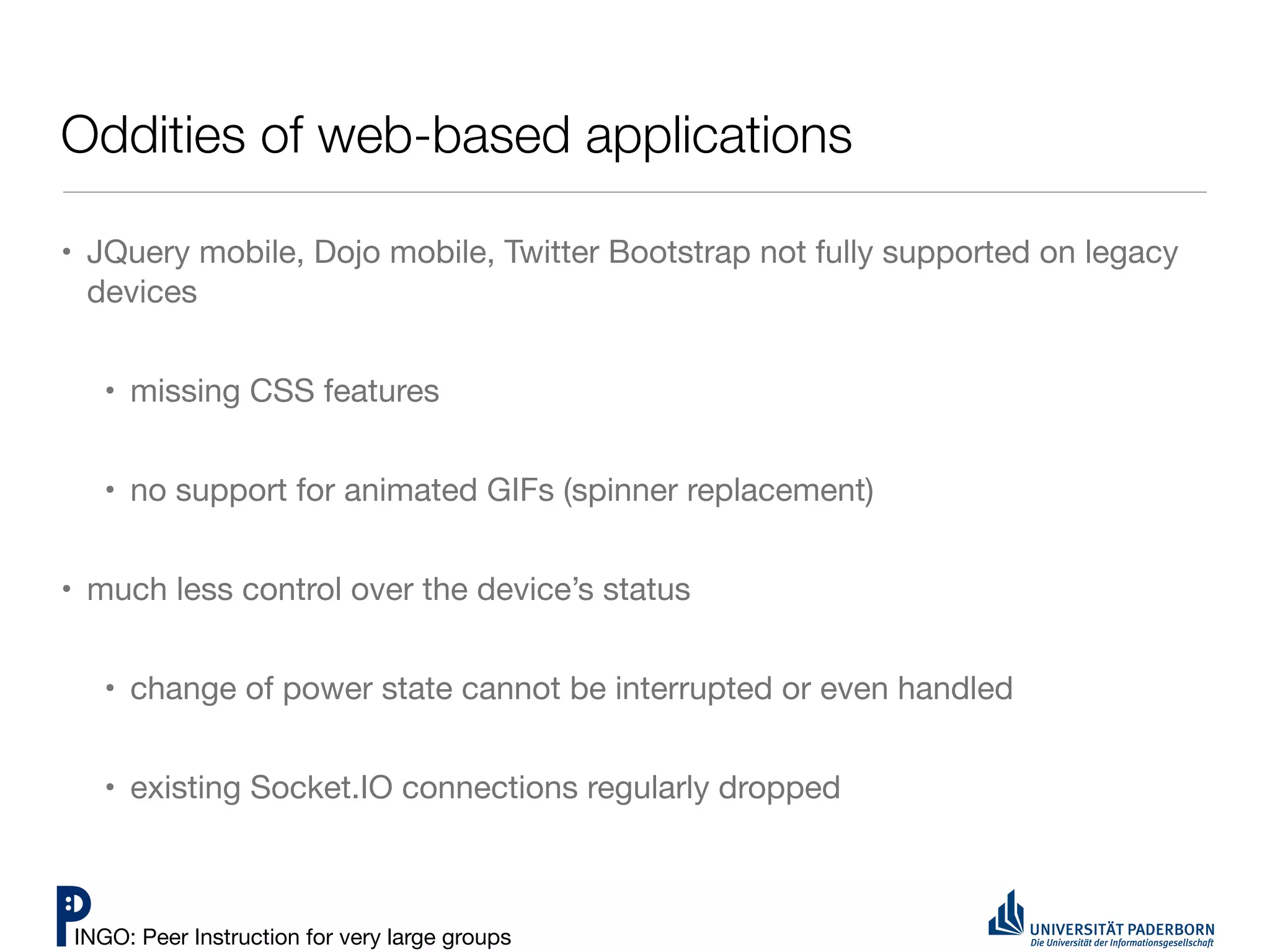
Oddities of web-based applications

• JQuery mobile, Dojo mobile, Twitter Bootstrap not fully supported on legacy
  devices


   • missing CSS features


   • no support for animated GIFs (spinner replacement)


• much less control over the device’s status


   • change of power state cannot be interrupted or even handled


   • existing Socket.IO connections regularly dropped


INGO: Peer Instruction for very large groups
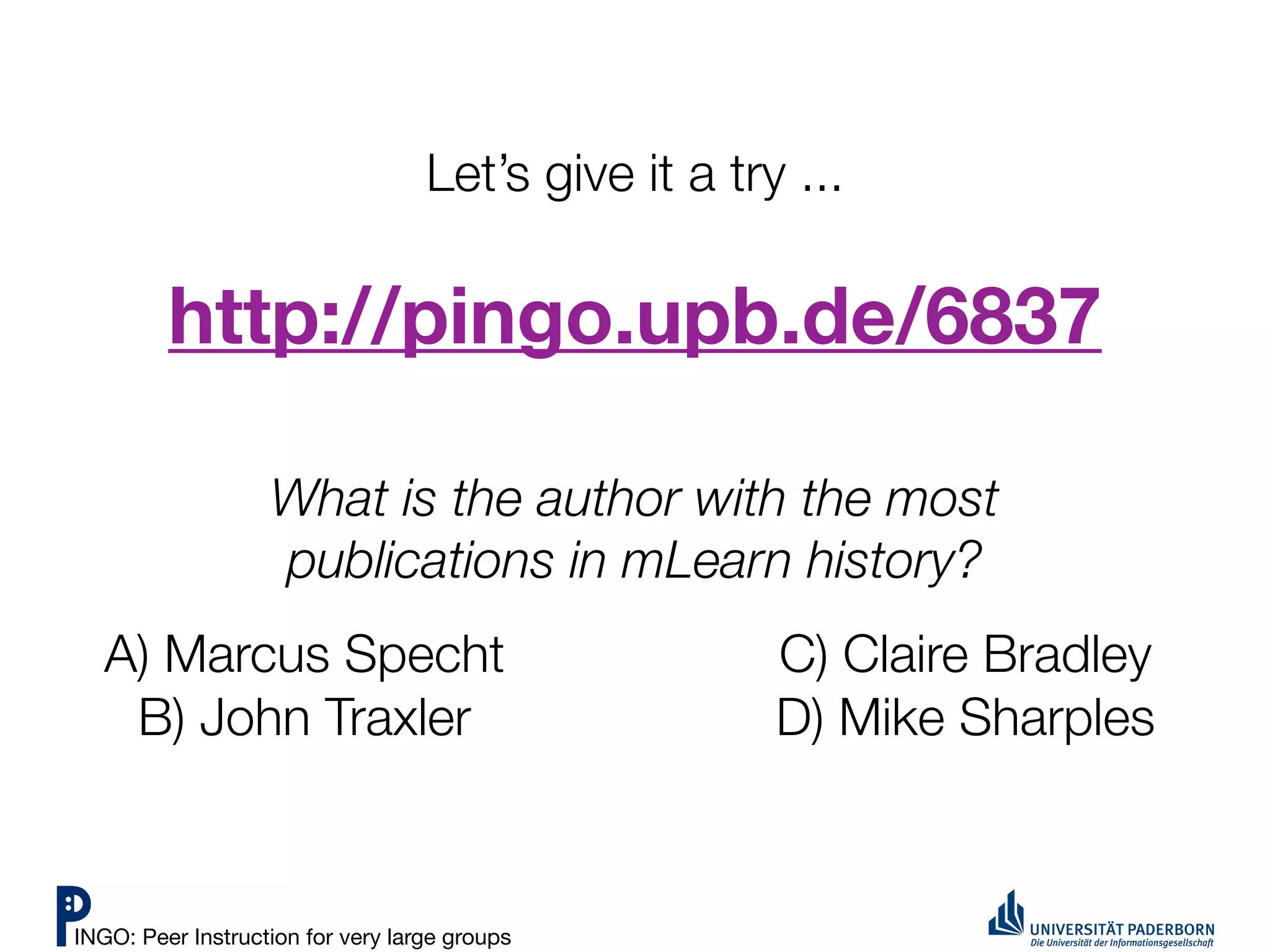
Let’s give it a try ...

         http://pingo.upb.de/6837

                   What is the author with the most
                   publications in mLearn history?
   A) Marcus Specht                                   C) Claire Bradley
    B) John Traxler                                   D) Mike Sharples


INGO: Peer Instruction for very large groups
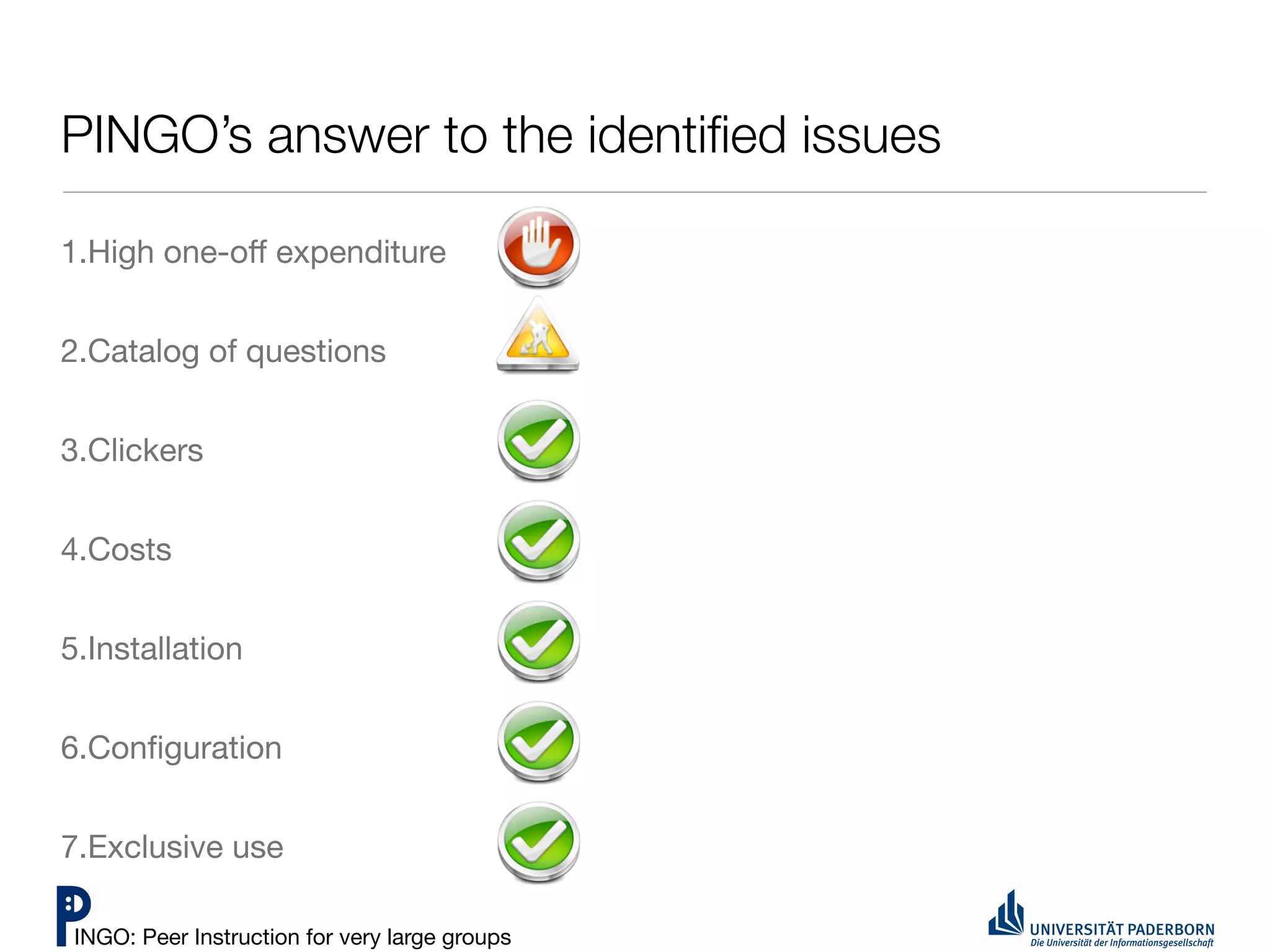
PINGO’s answer to the identified issues

1.High one-off expenditure


2.Catalog of questions


3.Clickers


4.Costs


5.Installation


6.Configuration


7.Exclusive use

 INGO: Peer Instruction for very large groups
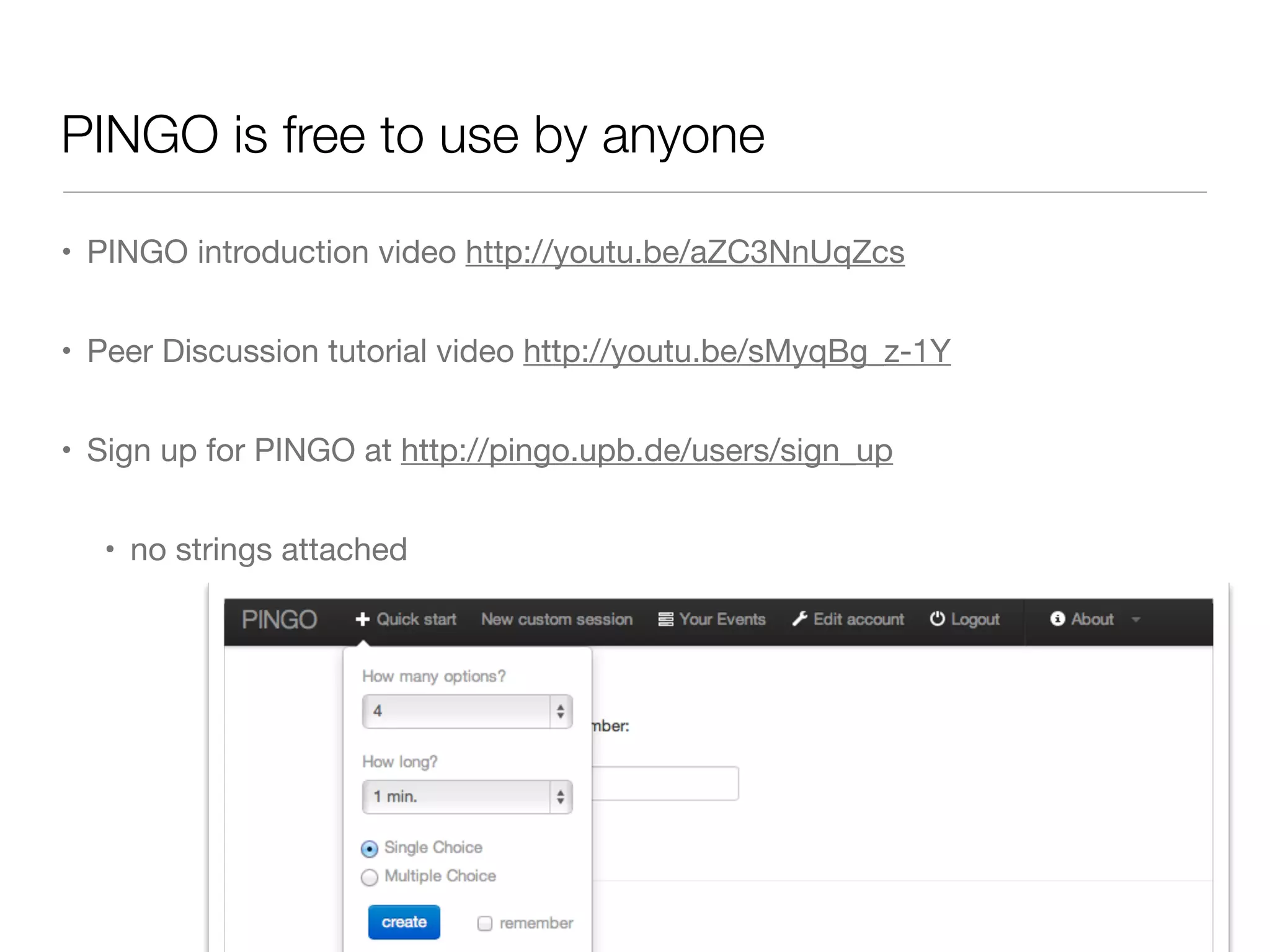
PINGO is free to use by anyone

• PINGO introduction video http://youtu.be/aZC3NnUqZcs


• Peer Discussion tutorial video http://youtu.be/sMyqBg_z-1Y


• Sign up for PINGO at http://pingo.upb.de/users/sign_up


  • no strings attached
wolfgang reinhardt  university of paderborn


                                                social media               sna
twitter        recommendations
                                                 awareness
research networks
                                                  bibliometrics
  artefact-actor-networks
                                                                     ginkgo
                            research 2.0
                 www.isitjustme.de        www.ginkgosem.com
  @wollepb                           @wollepb                  @wolfgang.reinhardt
  @wollepb                           @wollepb                  @wolfgang.reinhardt
  @wollepb                           @wollepb                  @wollepb

Developing electronic classroom response apps for a wide variety of mobile devices. Insights into the PINGO project

  • 1.
    Developing electronic classroomresponse apps for a wide variety of mobile devices. Insights into the PINGO project Michael Sievers, Wolfgang Reinhardt, Dennis Kundisch, Philipp Herrmann University of Paderborn (Germany)
  • 2.
    Not Yet AnotherClassroom Response System...
  • 3.
    What is PeerInstruction • cooperative teaching-learning strategy • similar to ask-the-audience lifeline in Who want’s to be a Millionaire? • substantially enhanced learning success • several empirical and anecdotal evidences (see our papers on the topic) INGO: Peer Instruction for very large groups
  • 4.
    n ot yetused in very large Brief introduction lecture (10 - 15 minutes) new topic g roups repeat the voting Multiple choice question Students vote correct answers correct answers correct answers < 30% 30% - 80% > 80% Peer discussion (2 -3 Short discussion about Another version of the mins): students try to remaining introduction lecture convince each other misconceptions General Process of PI INGO: Peer Instruction for very large groups
  • 5.
    PI in verylarge groups (300+ students) 1.High one-off expenditure INGO: Peer Instruction for very large groups
  • 6.
    PI in verylarge groups (300+ students) 1.High one-off expenditure 2.Catalog of questions INGO: Peer Instruction for very large groups
  • 7.
    PI in verylarge groups (300+ students) 1.High one-off expenditure 2.Catalog of questions 3.Clickers INGO: Peer Instruction for very large groups
  • 8.
    PI in verylarge groups (300+ students) 1.High one-off expenditure 2.Catalog of questions 3.Clickers 4.Costs INGO: Peer Instruction for very large groups
  • 9.
    PI in verylarge groups (300+ students) 1.High one-off expenditure 2.Catalog of questions 3.Clickers 4.Costs 5.Installation INGO: Peer Instruction for very large groups
  • 10.
    PI in verylarge groups (300+ students) 1.High one-off expenditure 2.Catalog of questions 3.Clickers 4.Costs 5.Installation 6.Configuration INGO: Peer Instruction for very large groups
  • 11.
    PI in verylarge groups (300+ students) 1.High one-off expenditure 2.Catalog of questions 3.Clickers 4.Costs 5.Installation 6.Configuration 7.Exclusive use INGO: Peer Instruction for very large groups
  • 12.
    Goals & constraintsof the PINGO development • support as many mobile devices as possible • support at least 5000 requests/sec in the backend • push new questions to the mobile devices • sync timers between backend and mobile devices INGO: Peer Instruction for very large groups
  • 13.
    Support as manymobile devices as possible • goal: Android 1.6 and Symbian S60 3rd edition • no native applications (iOS, Android, Blackberry, Symbian ...) • no multi-platform application (PhoneGap, Appcelerator Titanium ...) • web-based application • most devices and OS while minimizing development efforts • powerful browsers capable of JavaScript, CSS, HTML • no download needed, type in URL or scan QR code INGO: Peer Instruction for very large groups
  • 14.
    Scalable backend architecture INGO:Peer Instruction for very large groups
  • 15.
    Oddities of web-basedapplications • JQuery mobile, Dojo mobile, Twitter Bootstrap not fully supported on legacy devices • missing CSS features • no support for animated GIFs (spinner replacement) • much less control over the device’s status • change of power state cannot be interrupted or even handled • existing Socket.IO connections regularly dropped INGO: Peer Instruction for very large groups
  • 16.
    Let’s give ita try ... http://pingo.upb.de/6837 What is the author with the most publications in mLearn history? A) Marcus Specht C) Claire Bradley B) John Traxler D) Mike Sharples INGO: Peer Instruction for very large groups
  • 17.
    PINGO’s answer tothe identified issues 1.High one-off expenditure 2.Catalog of questions 3.Clickers 4.Costs 5.Installation 6.Configuration 7.Exclusive use INGO: Peer Instruction for very large groups
  • 18.
    PINGO is freeto use by anyone • PINGO introduction video http://youtu.be/aZC3NnUqZcs • Peer Discussion tutorial video http://youtu.be/sMyqBg_z-1Y • Sign up for PINGO at http://pingo.upb.de/users/sign_up • no strings attached
  • 19.
    wolfgang reinhardt university of paderborn social media sna twitter recommendations awareness research networks bibliometrics artefact-actor-networks ginkgo research 2.0 www.isitjustme.de www.ginkgosem.com @wollepb @wollepb @wolfgang.reinhardt @wollepb @wollepb @wolfgang.reinhardt @wollepb @wollepb @wollepb