Reza Adineh 1
Detection-First SIEM
Rule Types, Dashboards & Threat-
Informed Visibility
Reza Adineh | Minimal Cyber
Architecting detection that actually works
Reza Adineh 2
The Problem
Most SIEMs collect logs. Few detect
well.
Alert fatigue
Blind spots
Reactive SOCs
Detection isn’t about tools. It’s about
strategy.
Reza Adineh 3
Detection Rule Types
Know your rule types. Use them strategically.
Scheduled: Reliable, flexible, layered
Real-time/NRT: Speed-focused, narrow scope
Anomaly: Profile behavior, detect deviation
Cross-Correlation: Multi-source logic
TI/Fusion: IOC and campaign correlation
Tip: Blend rule types based on threat context.
Reza Adineh 4
Rethinking Anomaly Detection
Don’t rely on UEBA. Build your own
baseline.
✅ Average logins per user
✅ Usual parent-child process chains
✅ Typical network usage per host
“Normal” is your strongest signal.
Reza Adineh 5
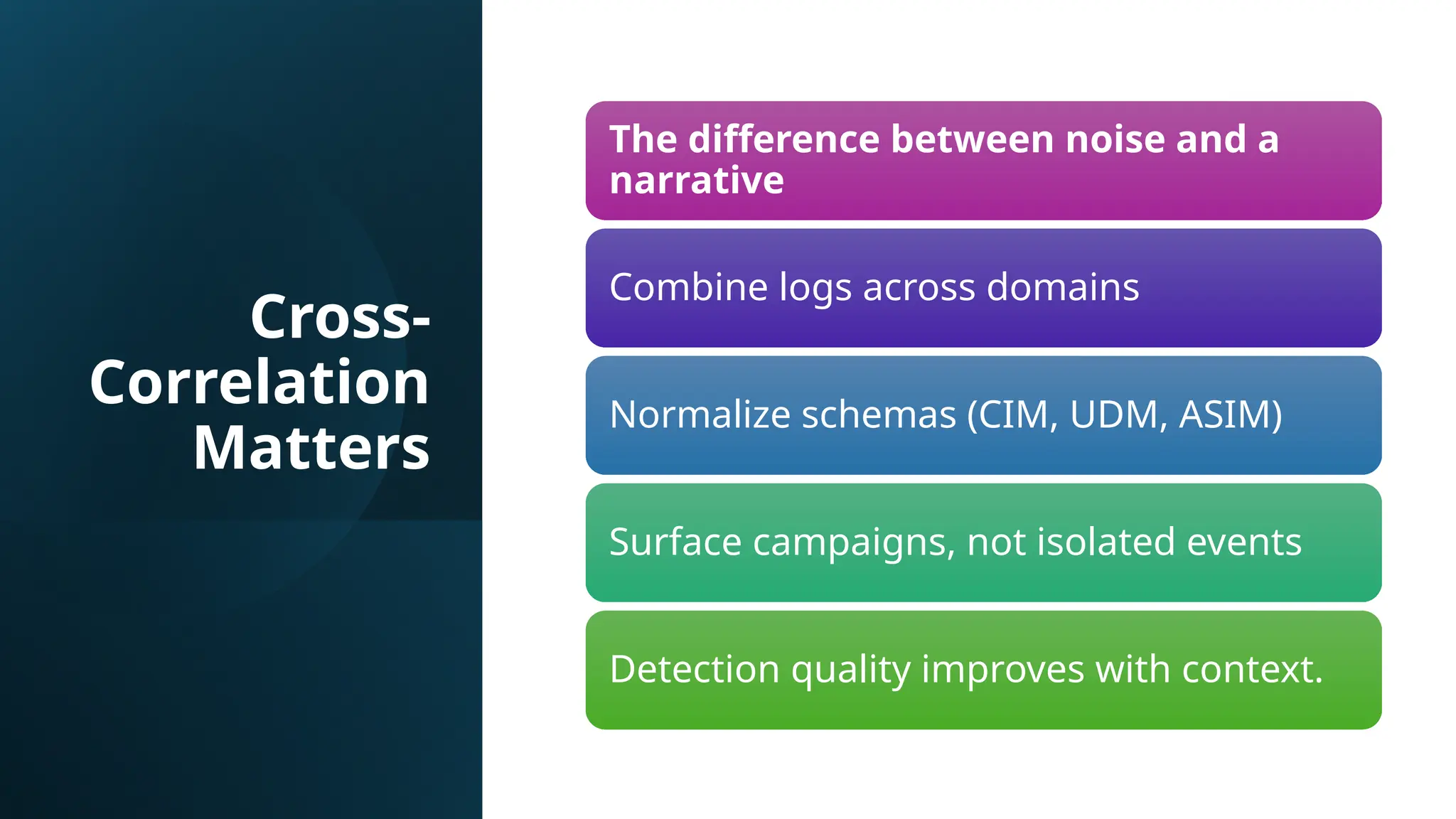
Cross-
Correlation
Matters
The difference between noise and a
narrative
Combine logs across domains
Normalize schemas (CIM, UDM, ASIM)
Surface campaigns, not isolated events
Detection quality improves with context.
Reza Adineh 6
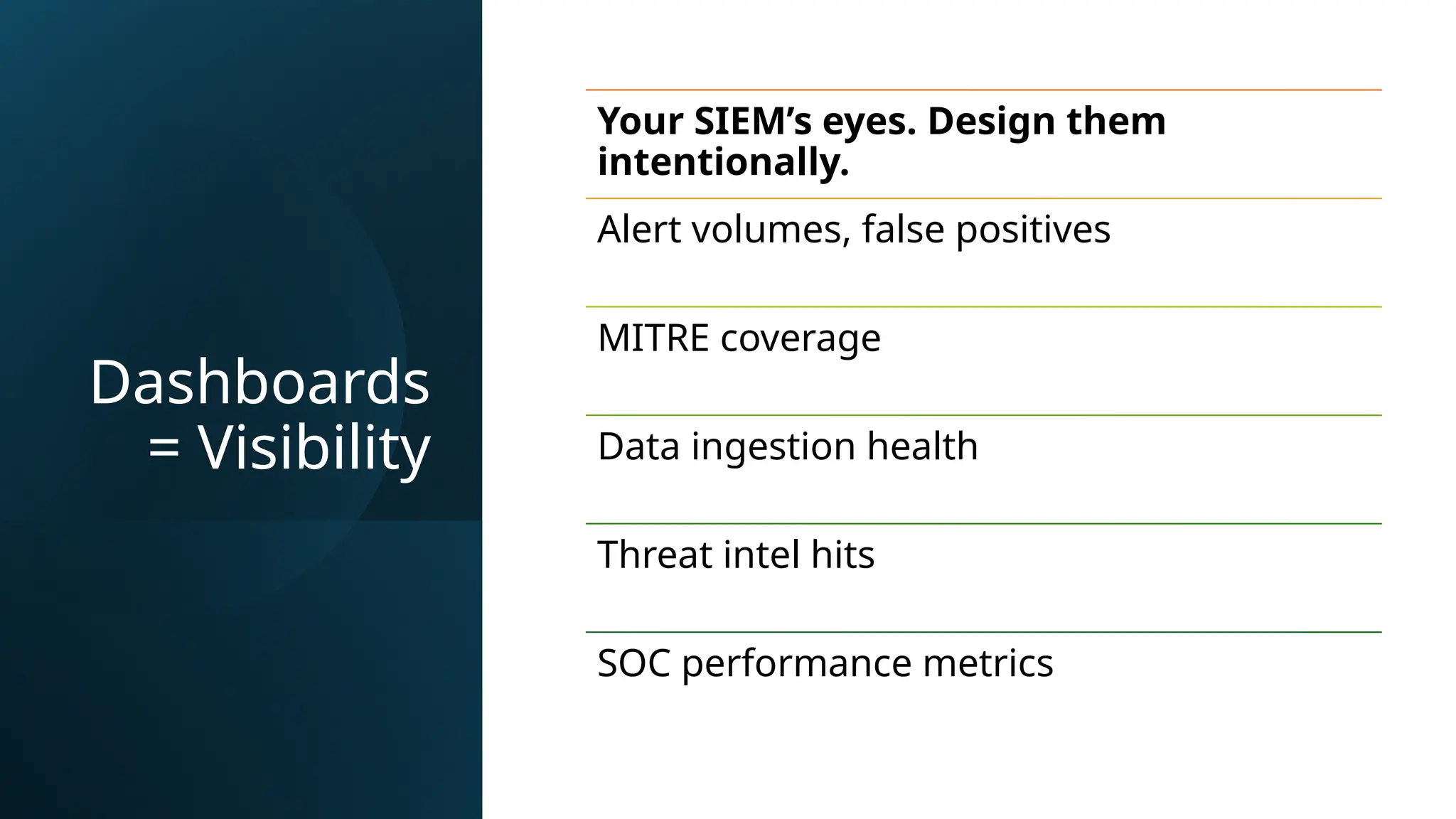
Dashboards
= Visibility
Your SIEM’s eyes. Design them
intentionally.
Alert volumes, false positives
MITRE coverage
Data ingestion health
Threat intel hits
SOC performance metrics
Reza Adineh 7
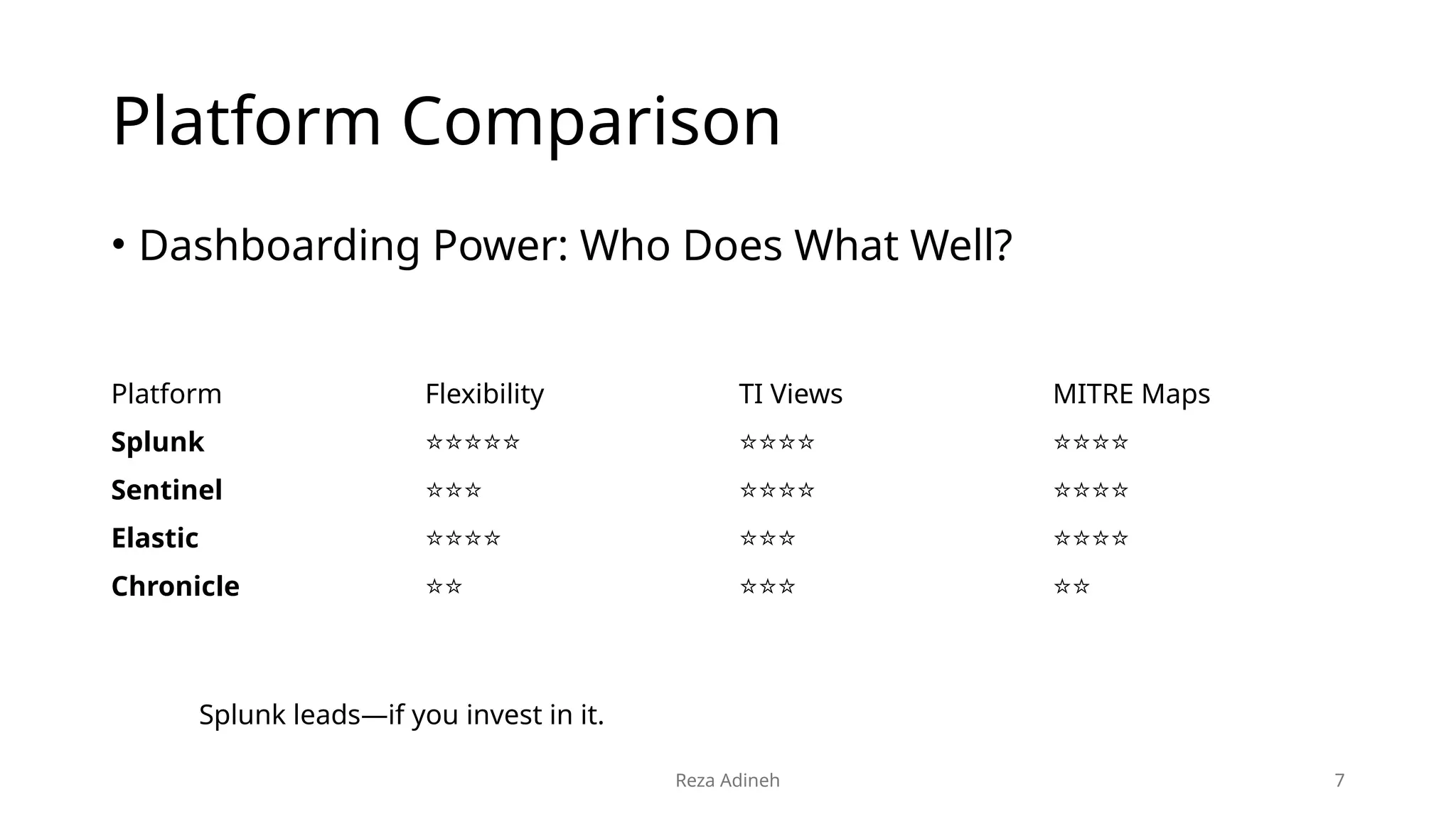
Platform Comparison
• Dashboarding Power: Who Does What Well?
Platform Flexibility TI Views MITRE Maps
Splunk ⭐⭐⭐⭐⭐ ⭐⭐⭐⭐ ⭐⭐⭐⭐
Sentinel ⭐⭐⭐ ⭐⭐⭐⭐ ⭐⭐⭐⭐
Elastic ⭐⭐⭐⭐ ⭐⭐⭐ ⭐⭐⭐⭐
Chronicle ⭐⭐ ⭐⭐⭐ ⭐⭐
Splunk leads—if you invest in it.
Reza Adineh 8
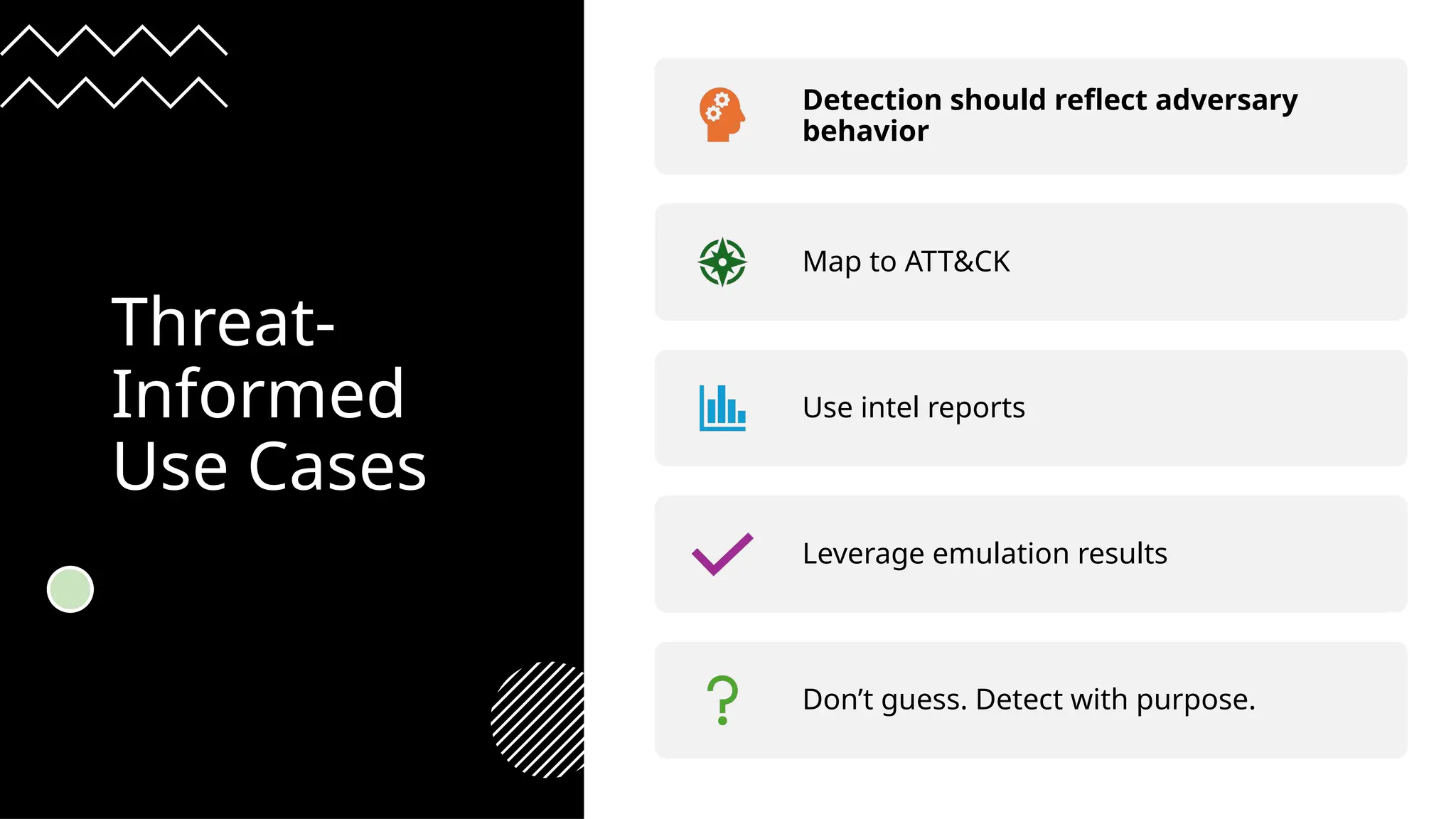
Threat-
Informed
Use Cases
Detection should reflect adversary
behavior
Map to ATT&CK
Use intel reports
Leverage emulation results
Don’t guess. Detect with purpose.
Reza Adineh 9
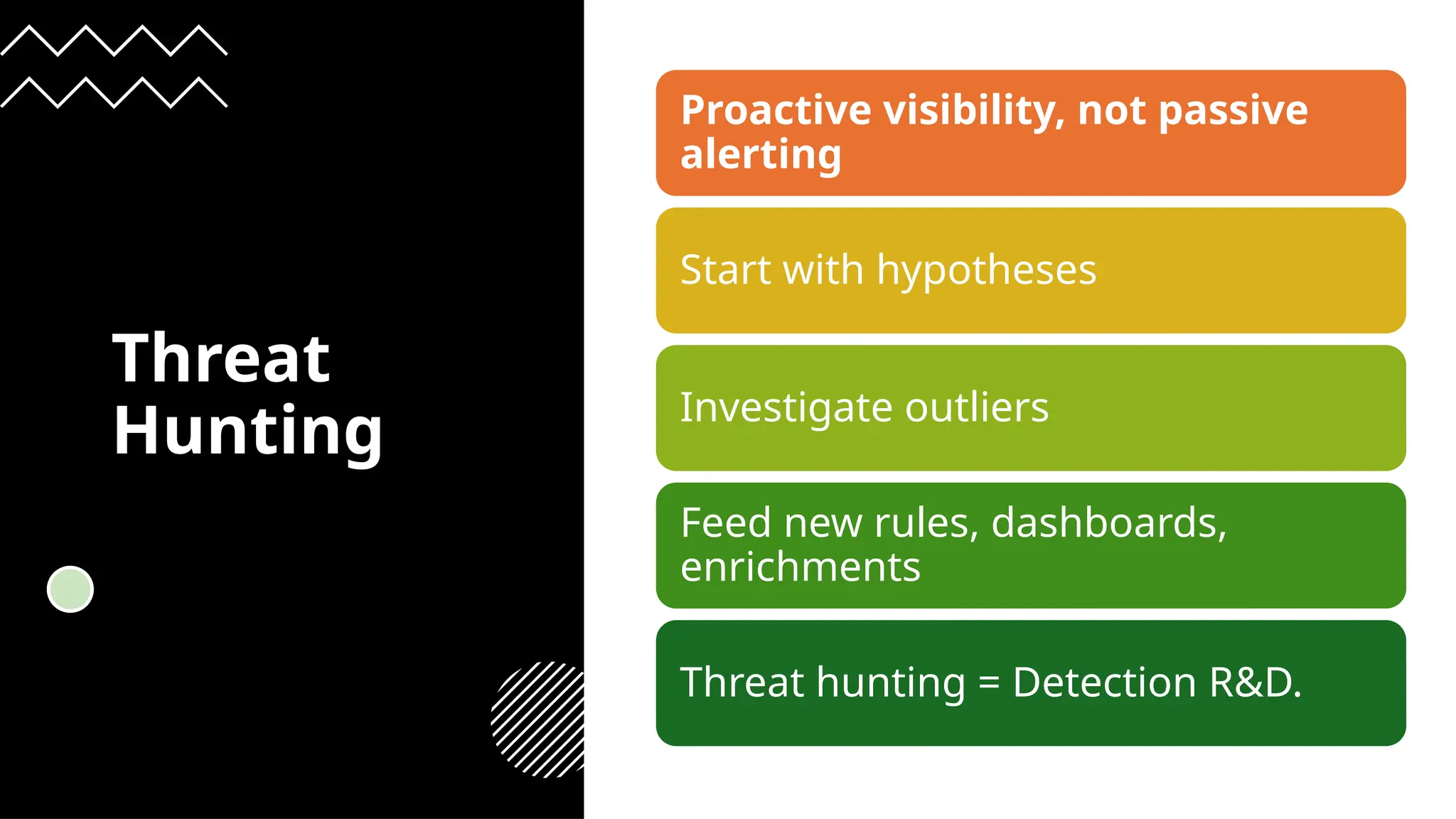
Threat
Hunting
Proactive visibility, not passive
alerting
Start with hypotheses
Investigate outliers
Feed new rules, dashboards,
enrichments
Threat hunting = Detection R&D.
Reza Adineh 10
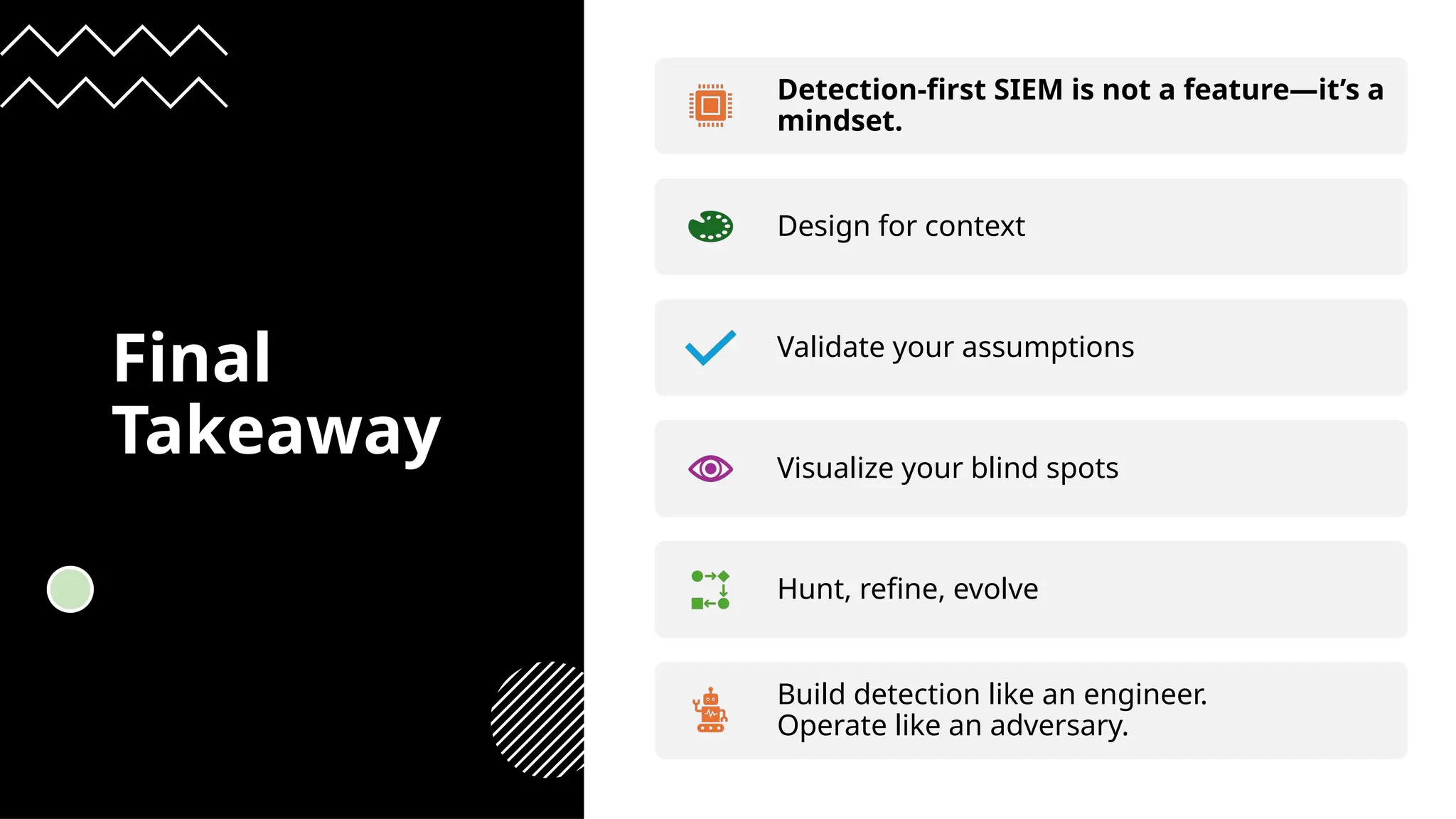
Final
Takeaway
Detection-first SIEM is not a feature—it’s a
mindset.
Design for context
Validate your assumptions
Visualize your blind spots
Hunt, refine, evolve
Build detection like an engineer.
Operate like an adversary.

Detection-First SIEM: Rule Types, Dashboards, and Threat-Informed Strategy

  • 1.
    Reza Adineh 1 Detection-FirstSIEM Rule Types, Dashboards & Threat- Informed Visibility Reza Adineh | Minimal Cyber Architecting detection that actually works
  • 2.
    Reza Adineh 2 TheProblem Most SIEMs collect logs. Few detect well. Alert fatigue Blind spots Reactive SOCs Detection isn’t about tools. It’s about strategy.
  • 3.
    Reza Adineh 3 DetectionRule Types Know your rule types. Use them strategically. Scheduled: Reliable, flexible, layered Real-time/NRT: Speed-focused, narrow scope Anomaly: Profile behavior, detect deviation Cross-Correlation: Multi-source logic TI/Fusion: IOC and campaign correlation Tip: Blend rule types based on threat context.
  • 4.
    Reza Adineh 4 RethinkingAnomaly Detection Don’t rely on UEBA. Build your own baseline. ✅ Average logins per user ✅ Usual parent-child process chains ✅ Typical network usage per host “Normal” is your strongest signal.
  • 5.
    Reza Adineh 5 Cross- Correlation Matters Thedifference between noise and a narrative Combine logs across domains Normalize schemas (CIM, UDM, ASIM) Surface campaigns, not isolated events Detection quality improves with context.
  • 6.
    Reza Adineh 6 Dashboards =Visibility Your SIEM’s eyes. Design them intentionally. Alert volumes, false positives MITRE coverage Data ingestion health Threat intel hits SOC performance metrics
  • 7.
    Reza Adineh 7 PlatformComparison • Dashboarding Power: Who Does What Well? Platform Flexibility TI Views MITRE Maps Splunk ⭐⭐⭐⭐⭐ ⭐⭐⭐⭐ ⭐⭐⭐⭐ Sentinel ⭐⭐⭐ ⭐⭐⭐⭐ ⭐⭐⭐⭐ Elastic ⭐⭐⭐⭐ ⭐⭐⭐ ⭐⭐⭐⭐ Chronicle ⭐⭐ ⭐⭐⭐ ⭐⭐ Splunk leads—if you invest in it.
  • 8.
    Reza Adineh 8 Threat- Informed UseCases Detection should reflect adversary behavior Map to ATT&CK Use intel reports Leverage emulation results Don’t guess. Detect with purpose.
  • 9.
    Reza Adineh 9 Threat Hunting Proactivevisibility, not passive alerting Start with hypotheses Investigate outliers Feed new rules, dashboards, enrichments Threat hunting = Detection R&D.
  • 10.
    Reza Adineh 10 Final Takeaway Detection-firstSIEM is not a feature—it’s a mindset. Design for context Validate your assumptions Visualize your blind spots Hunt, refine, evolve Build detection like an engineer. Operate like an adversary.