Downloaded 18 times



![OCP - Example Version 1
public class AreaCalculator
{
public double Area(Rectangle[] shapes)
{
double area = 0;
foreach (var shape in shapes)
{
area += shape.Width*shape.Height;
}
return area;
}
}
public class Rectangle
{
public double Width { get; set; }
public double Height { get; set; }
}](https://image.slidesharecdn.com/designprinciplespranalee-170219155948/75/Design-principles-SOLID-17-2048.jpg)
![OCP - Example Version 2
public double Area(object[] shapes)
{
double area = 0;
foreach (var shape in shapes)
{
if (shape is Rectangle)
{
Rectangle rectangle = (Rectangle) shape;
area += rectangle.Width*rectangle.Height;
}
else
{
Circle circle = (Circle)shape;
area += circle.Radius * circle.Radius * Math.PI;
}
}
return area;
}
public class Rectangle
{
public double Width { get; set; }
public double Height { get; set; }
}
public class Circle
{
public double Radius { get; set; }
}](https://image.slidesharecdn.com/designprinciplespranalee-170219155948/75/Design-principles-SOLID-18-2048.jpg)
![OCP - Example Version 3
public double Area(Shape[] shapes)
{
double area = 0;
foreach (var shape in shapes)
{
area += shape.Area();
}
return area;
}
public class Rectangle : Shape
{
public double Width { get; set; }
public double Height { get; set; }
public override double Area()
{
return Width*Height;
}
}
public class Circle : Shape
{
public double Radius { get; set; }
public override double Area()
{
return Radius*Radius*Math.PI;
}
}](https://image.slidesharecdn.com/designprinciplespranalee-170219155948/75/Design-principles-SOLID-19-2048.jpg)

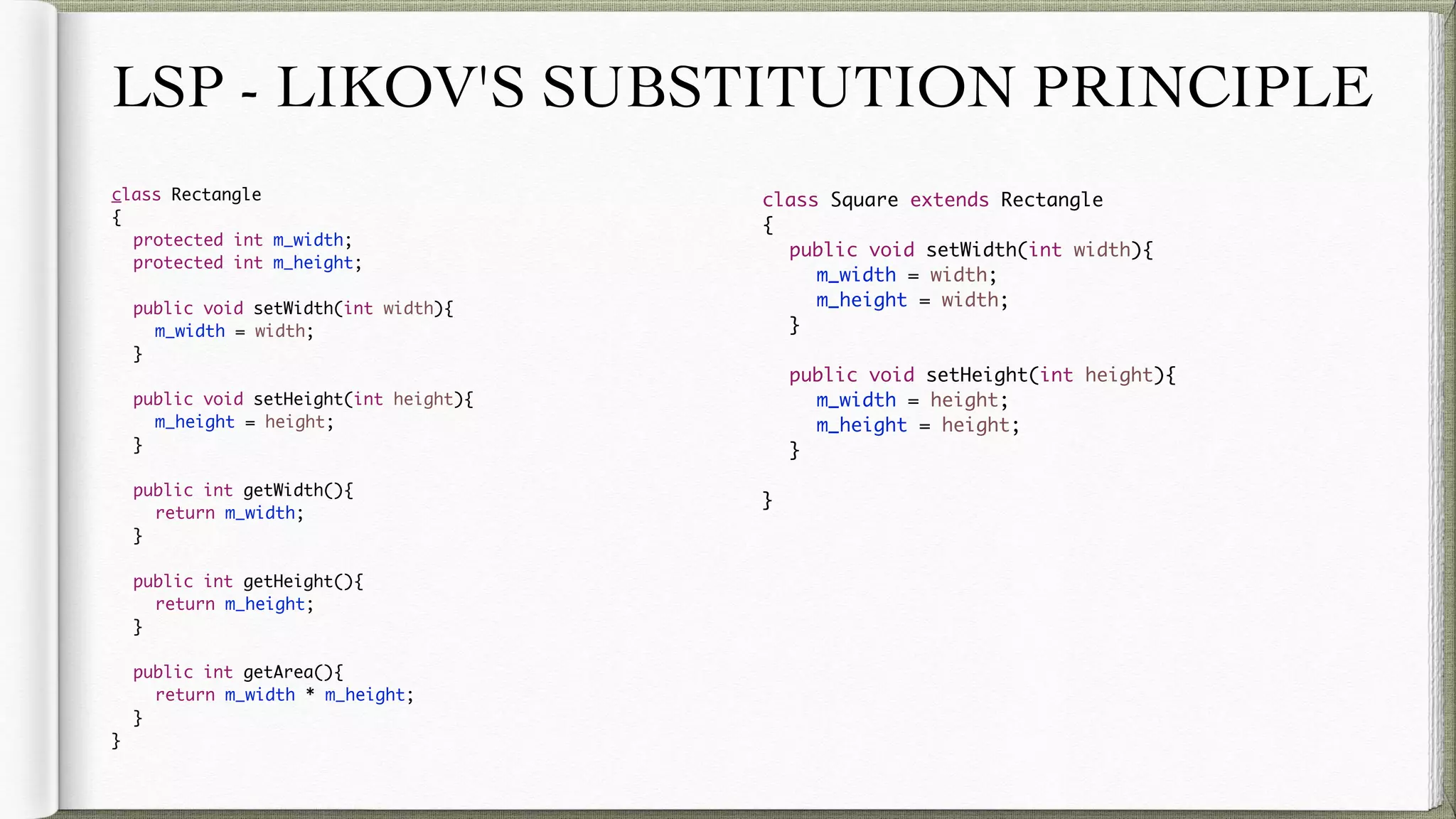
![LSP - LIKOV'S SUBSTITUTION PRINCIPLE
class LspTest
{
private static Rectangle getNewRectangle()
{
// it can be an object returned by some factory ...
return new Square();
}
public static void main (String args[])
{
Rectangle r = LspTest.getNewRectangle();
r.setWidth(5);
r.setHeight(10);
// user knows that r it's a rectangle.
// It assumes that he's able to set the width and height as for the base class
System.out.println(r.getArea());
// now he's surprised to see that the area is 100 instead of 50.
}
}](https://image.slidesharecdn.com/designprinciplespranalee-170219155948/75/Design-principles-SOLID-25-2048.jpg)



This document discusses design principles for writing maintainable code, including the SOLID principles. It describes symptoms of bad design like rigidity, fragility, immobility and viscosity. It then explains each SOLID principle in detail: single responsibility principle, open closed principle, Liskov substitution principle, interface segregation principle, and dependency inversion principle. For each principle, it provides examples of how to apply the principle correctly and the benefits it provides, such as making code easier to change and reuse.
Introduction to design principles in software development by Pranalee Rokde.
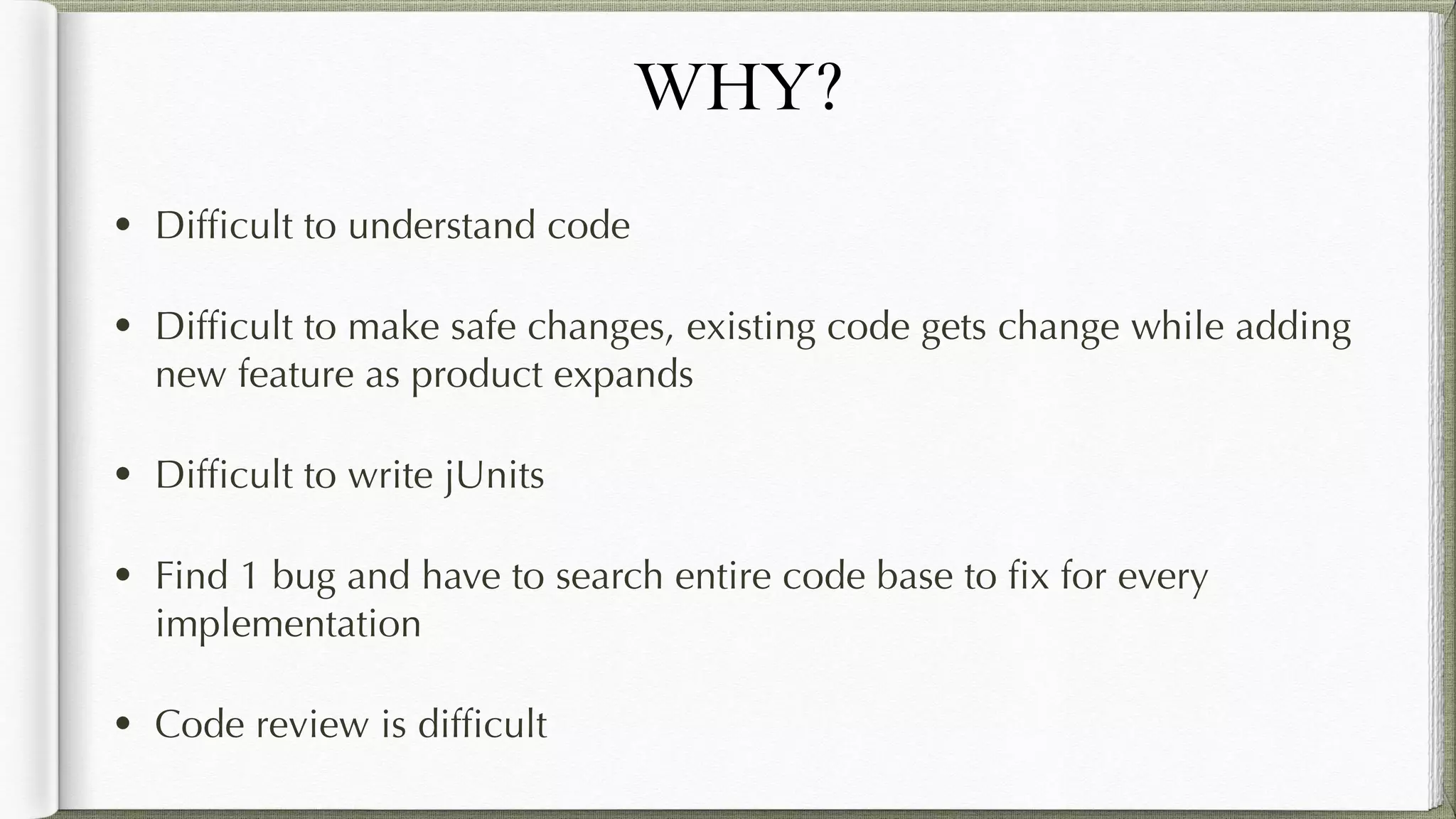
Issues faced in coding include difficulty in understanding, making safe changes, and trouble with code reviews.
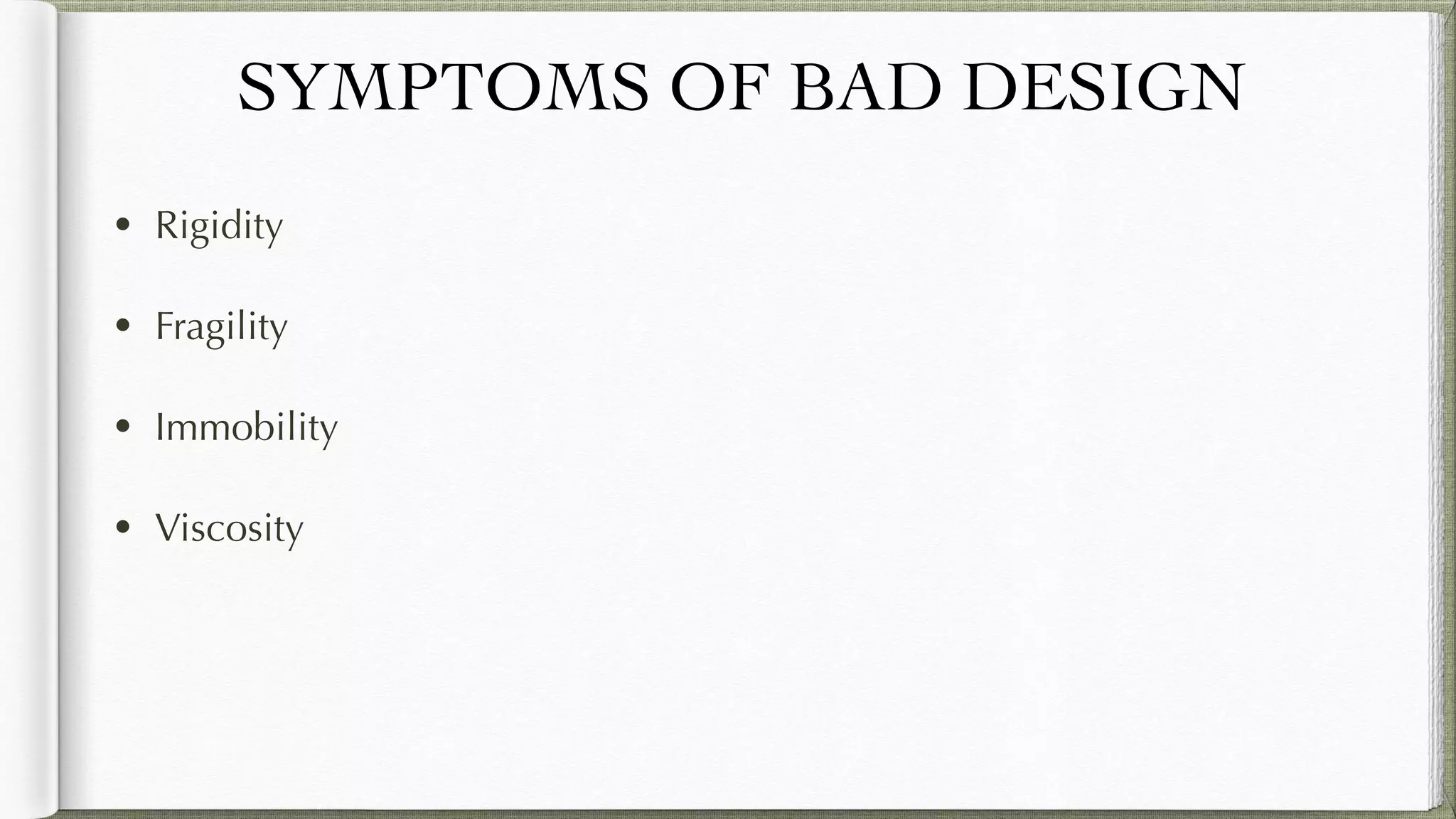
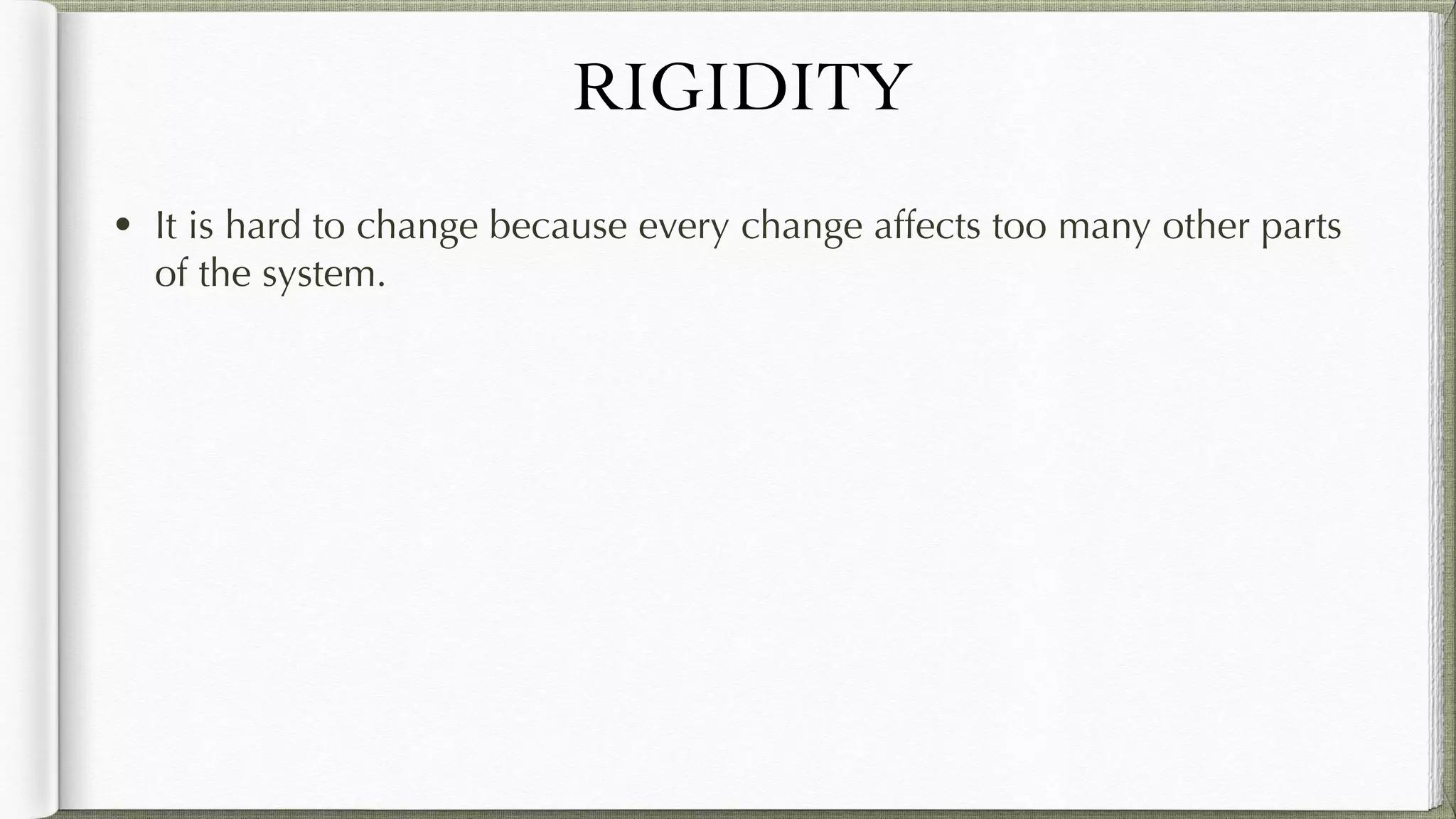
Identifying bad design through rigidity, fragility, immobility, and viscosity.
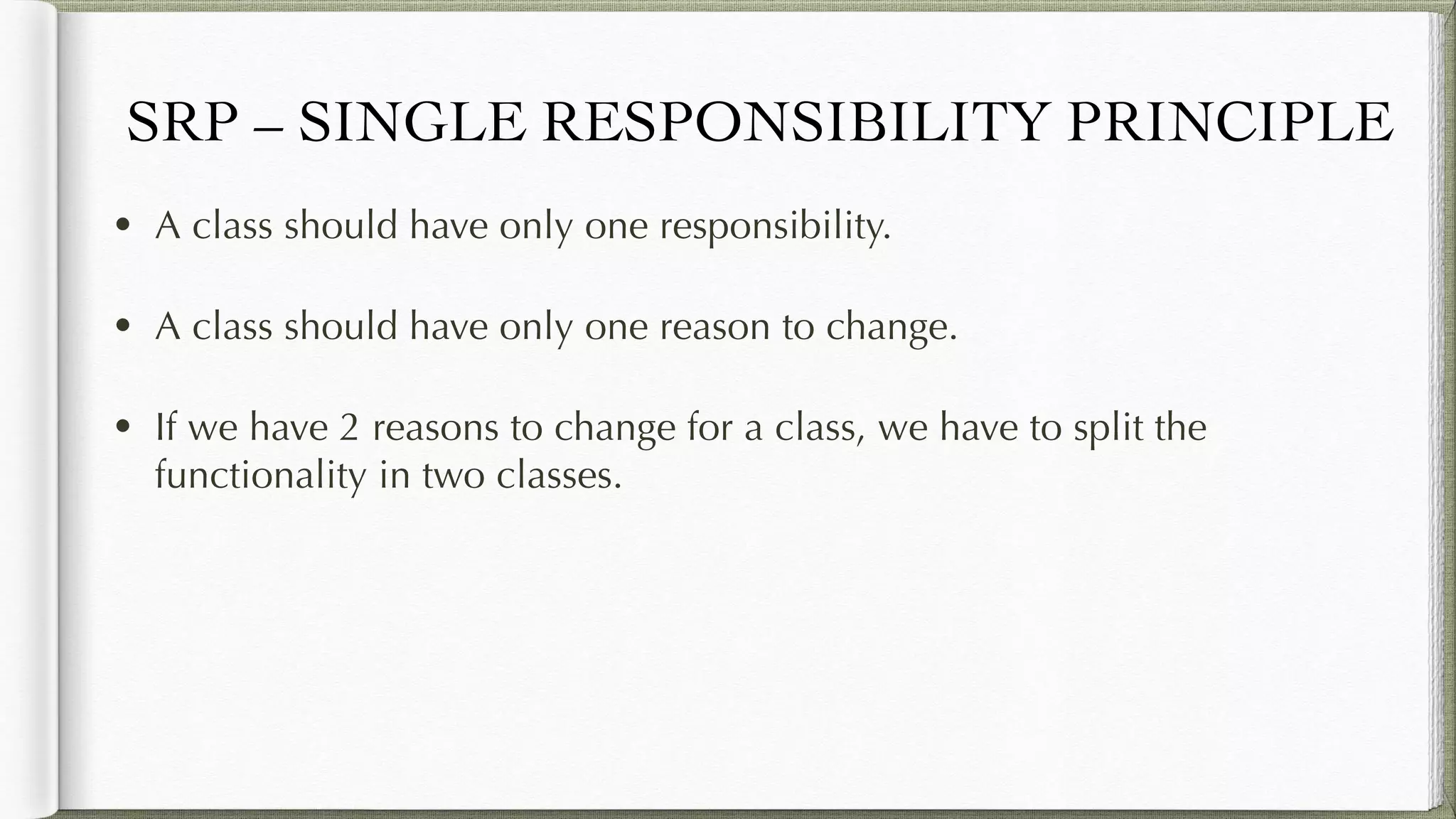
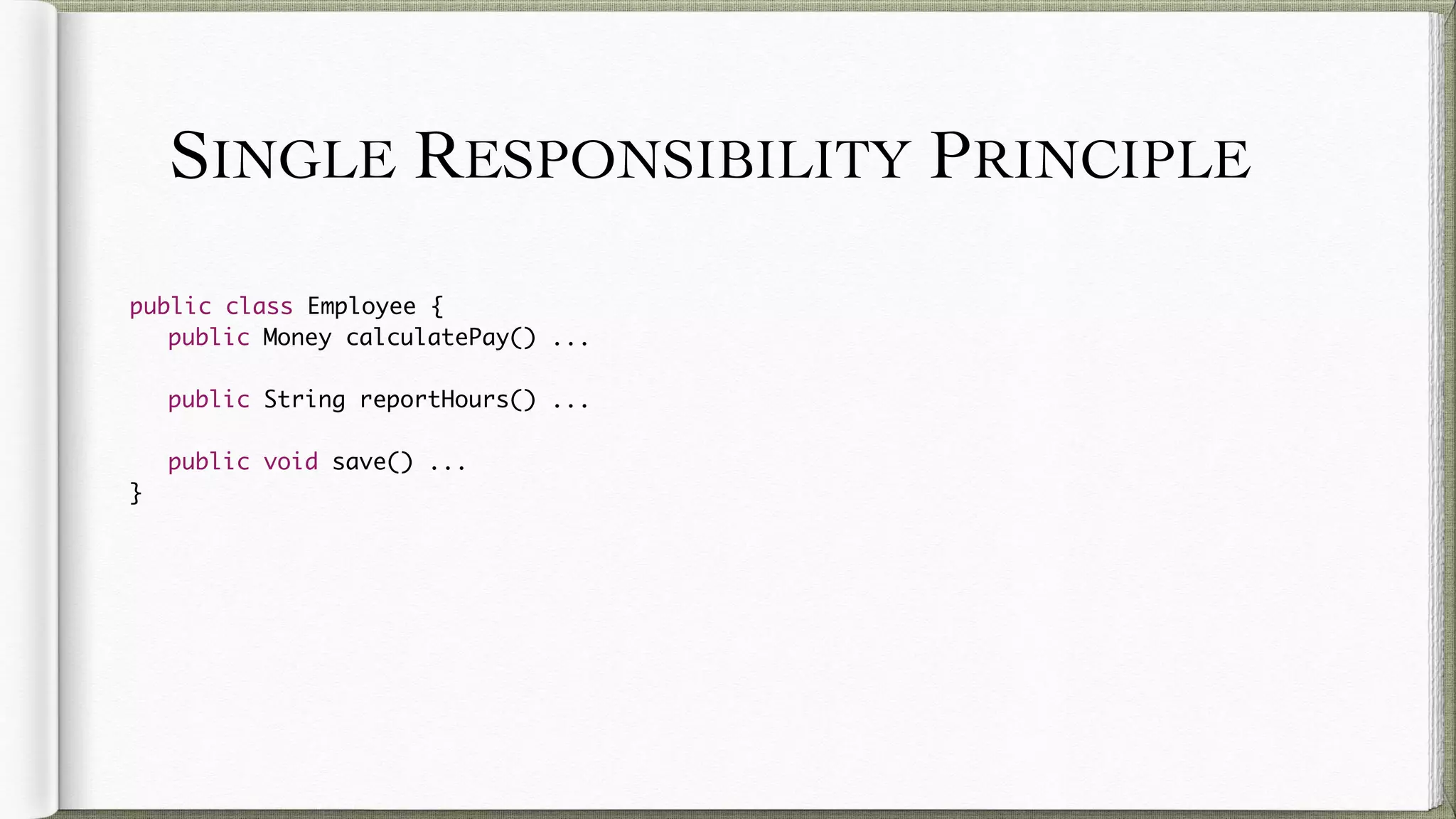
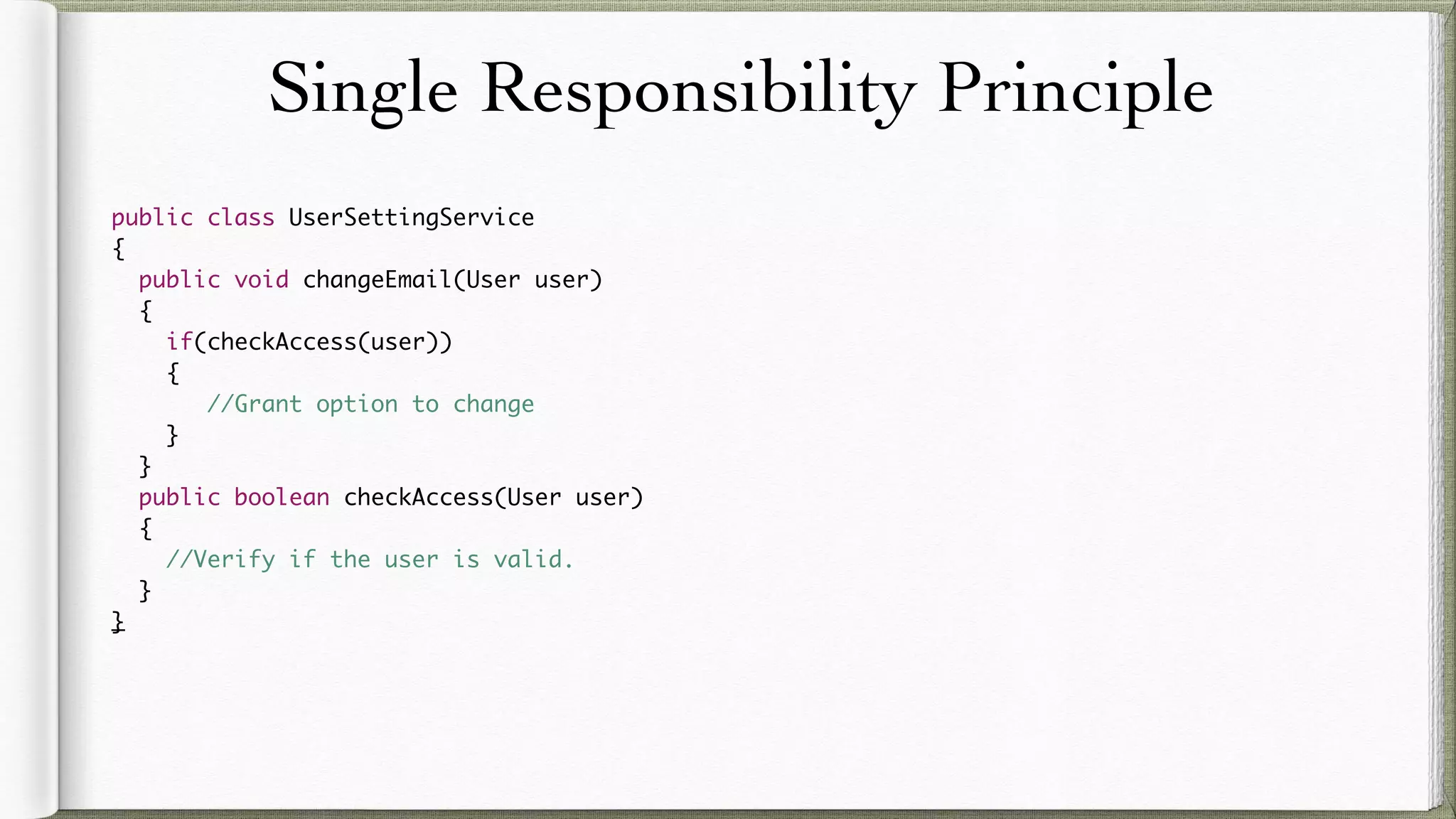
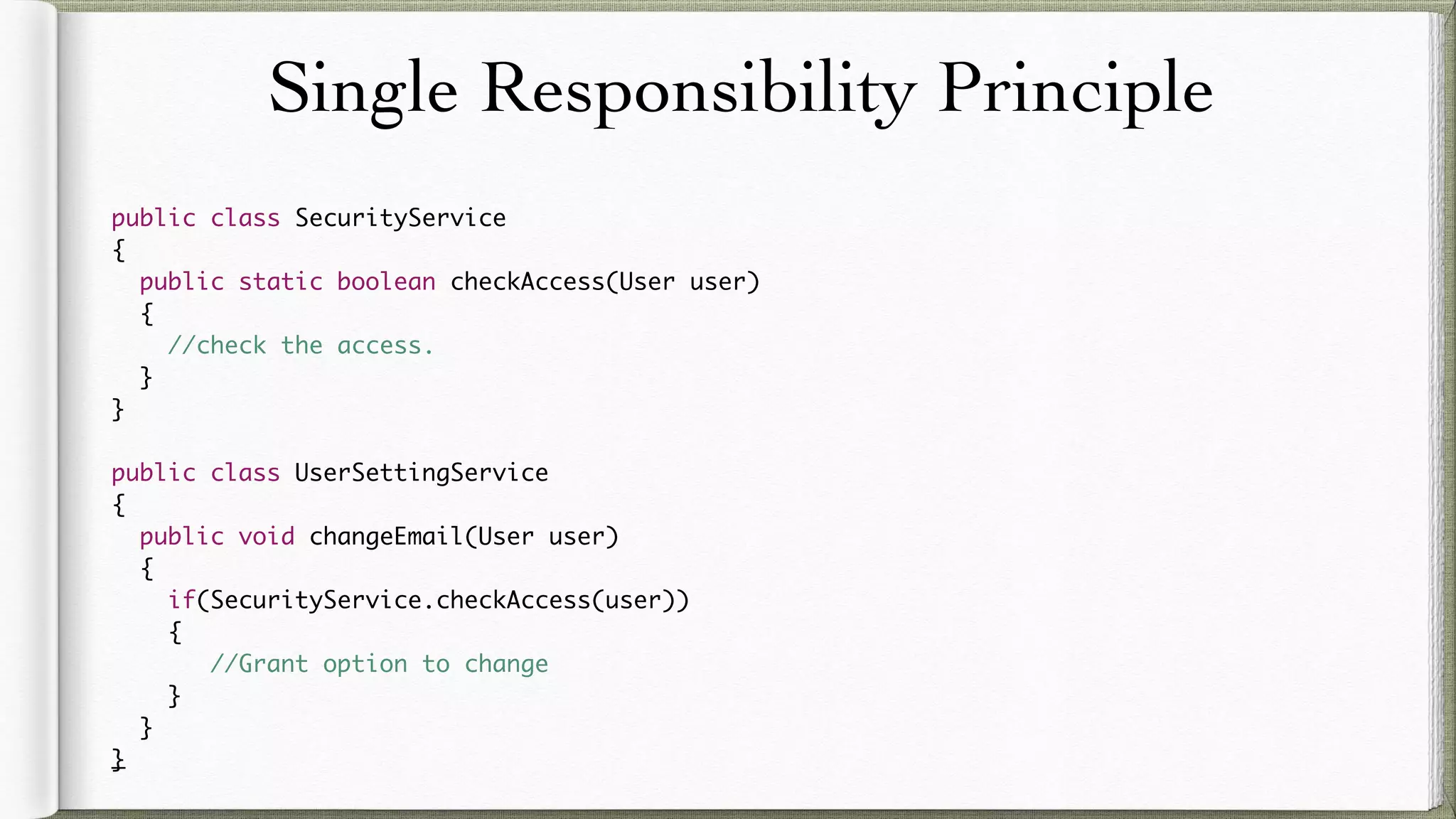
Introduction to SRP, emphasizing classes should have a single responsibility to aid maintainability.
OCP states that software should be open for extension but closed for modification, encouraging stable designs.
Benefits of SRP and OCP include fewer merge conflicts and easier bug tracing.
LSP ensures child classes must not break parent class's type; critical for OCP success.
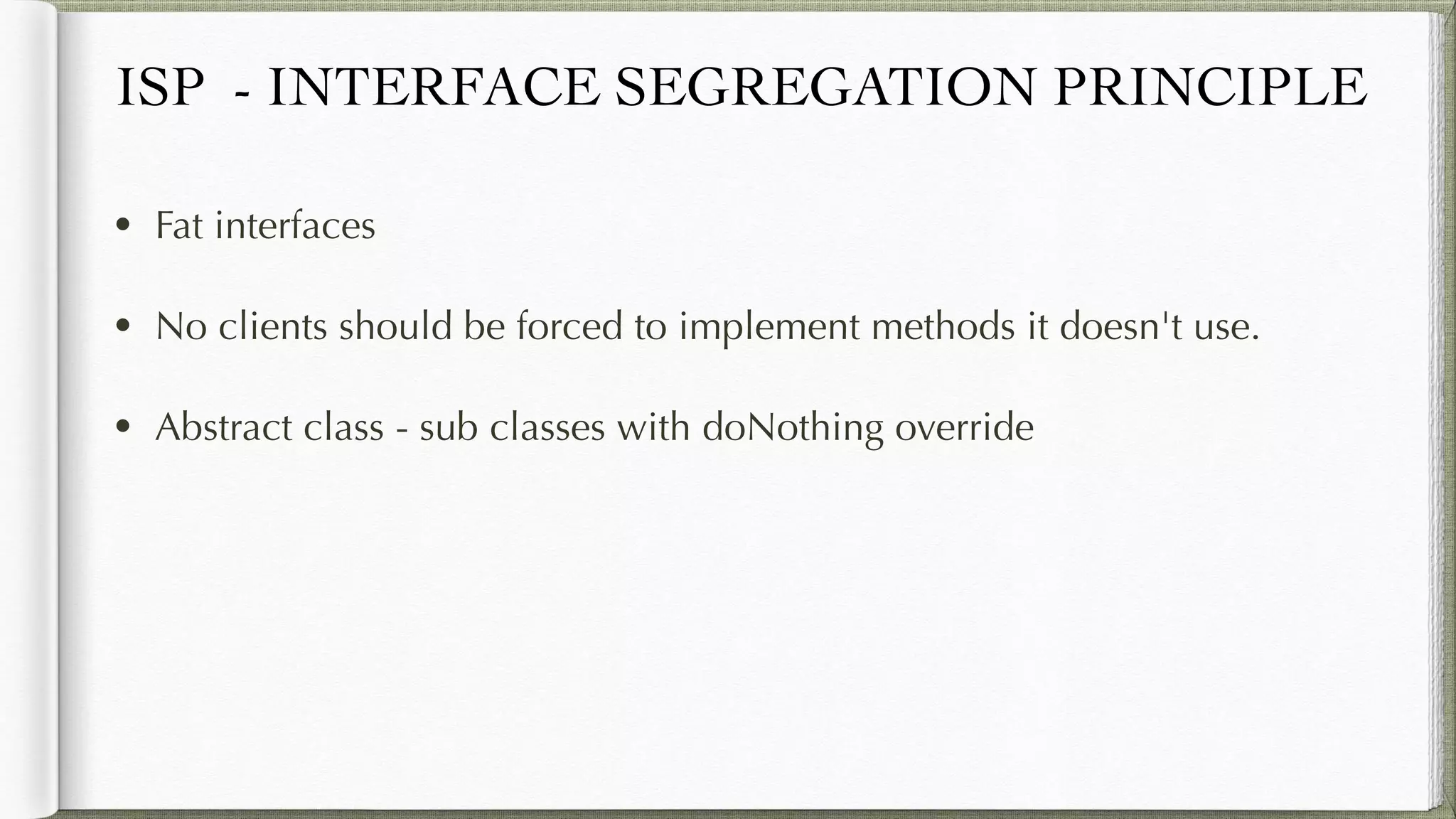
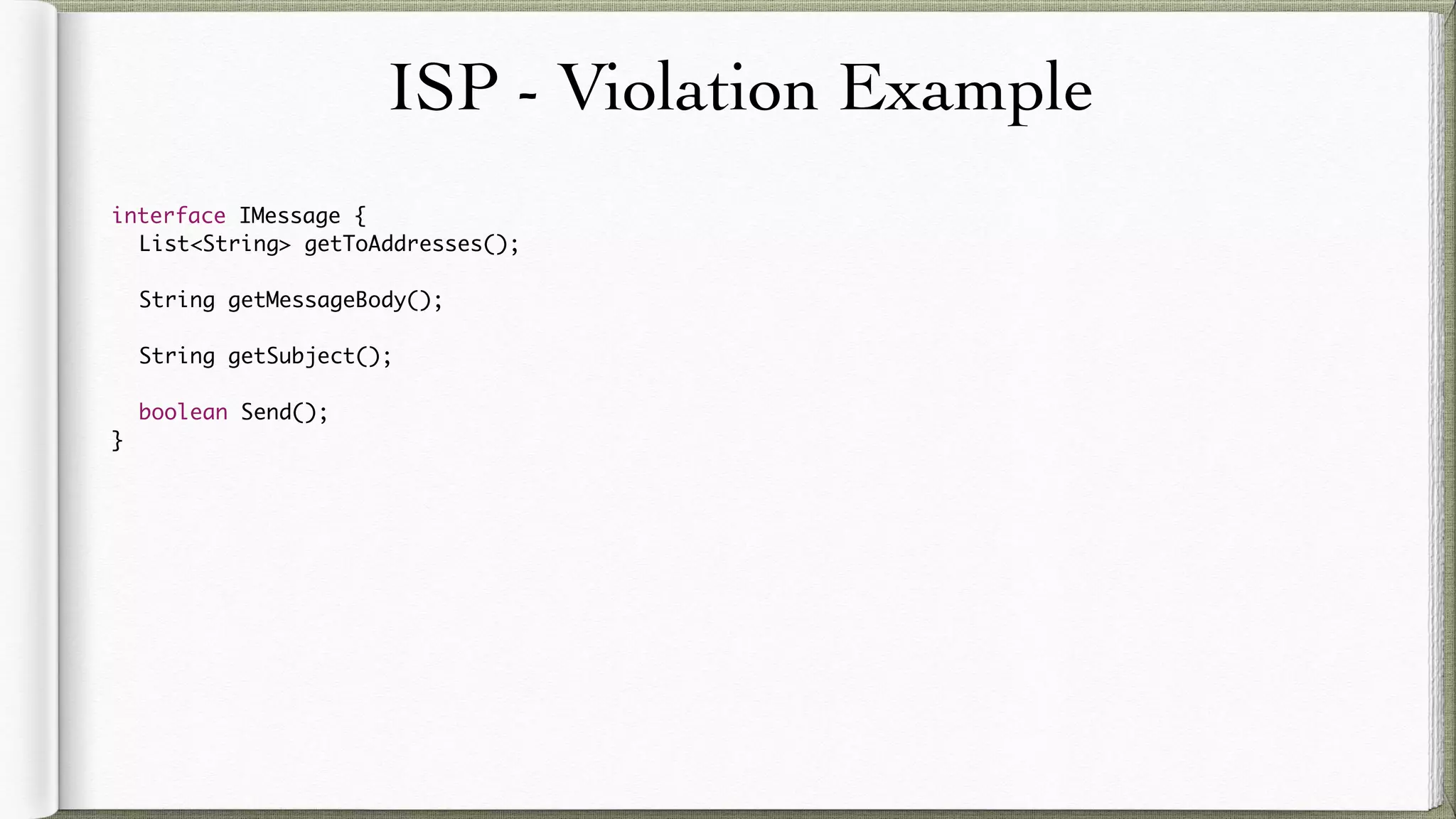
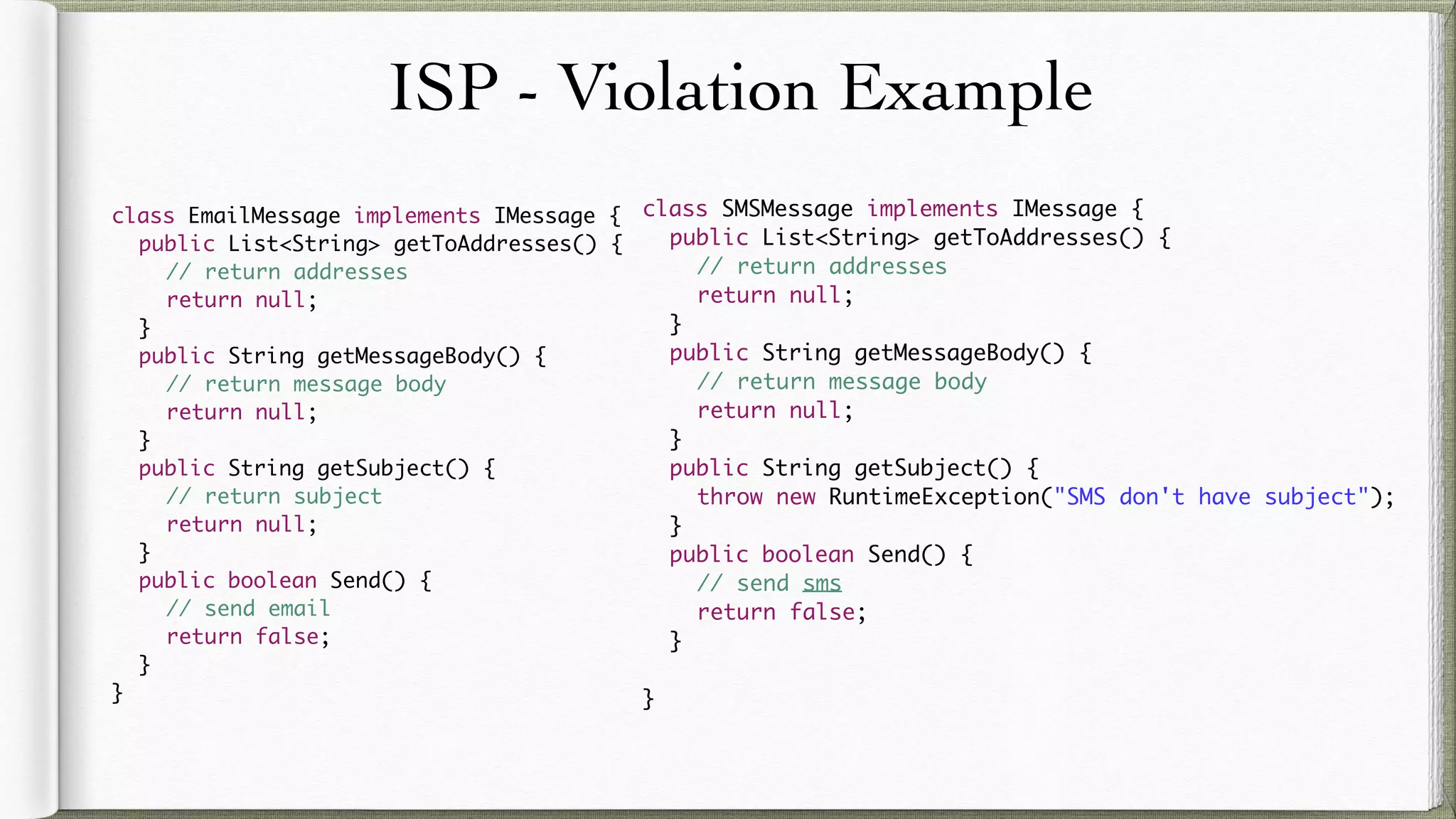
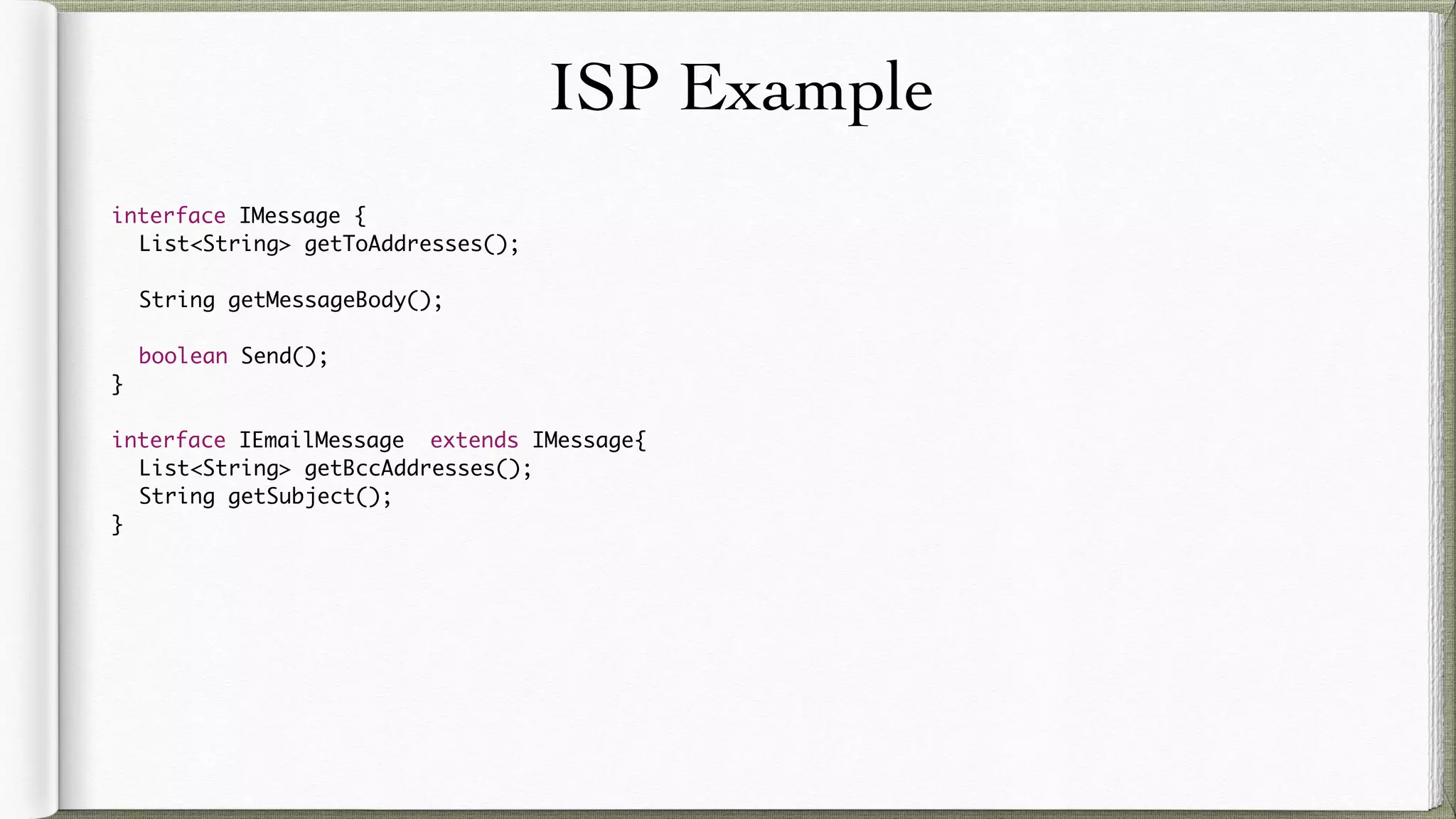
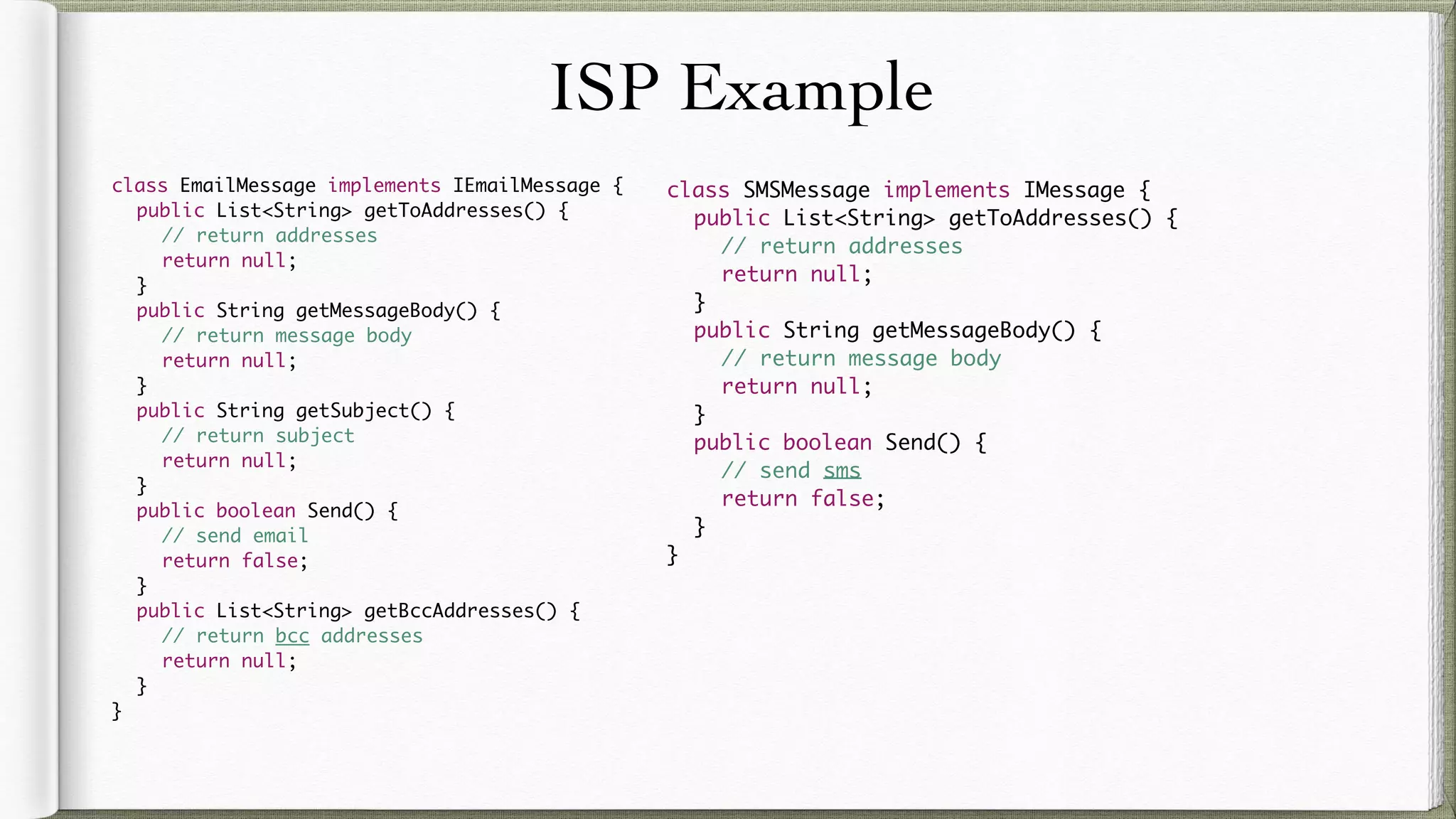
ISP prevents forcing clients to depend on unused methods, promoting lean interfaces.
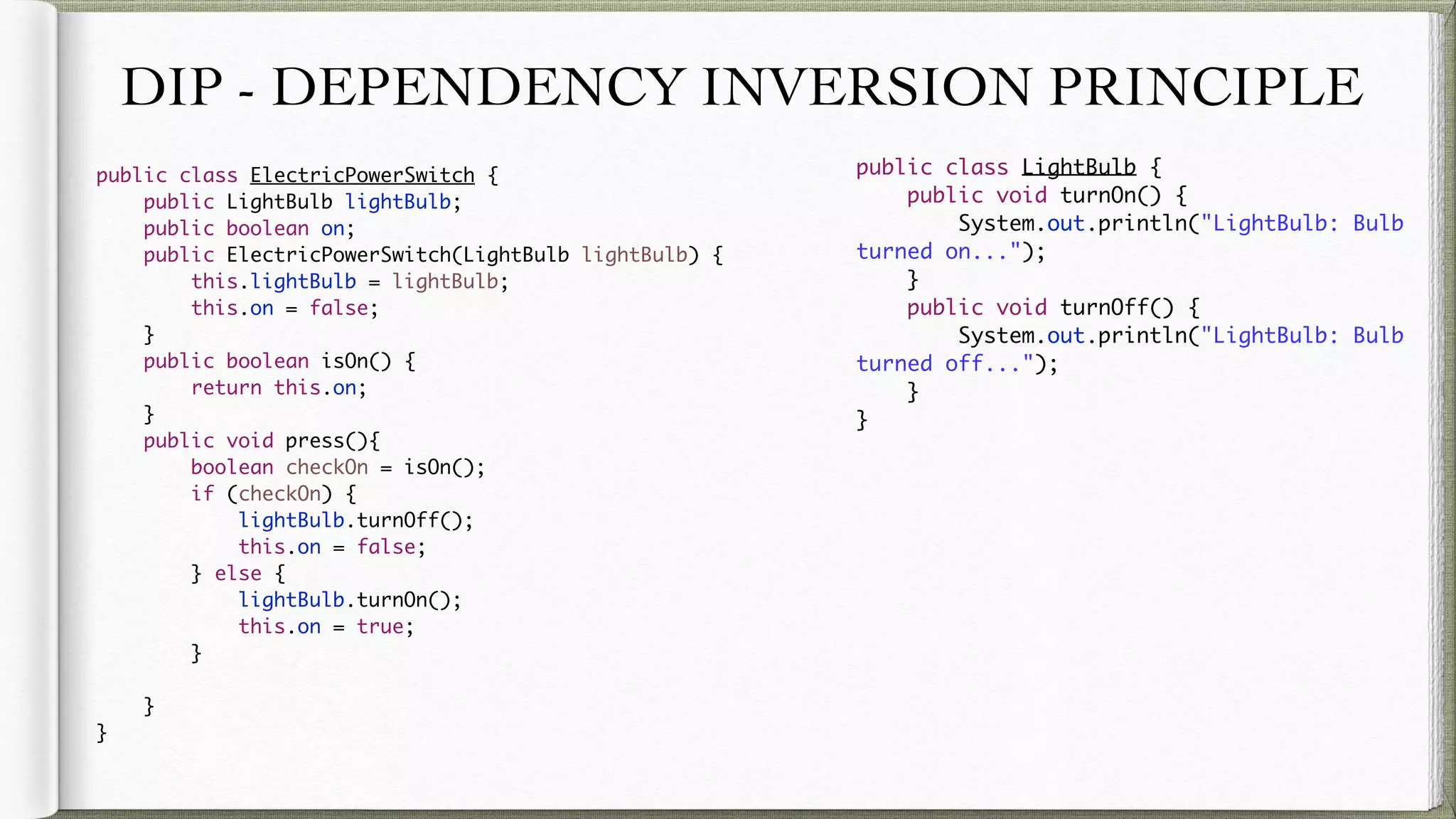
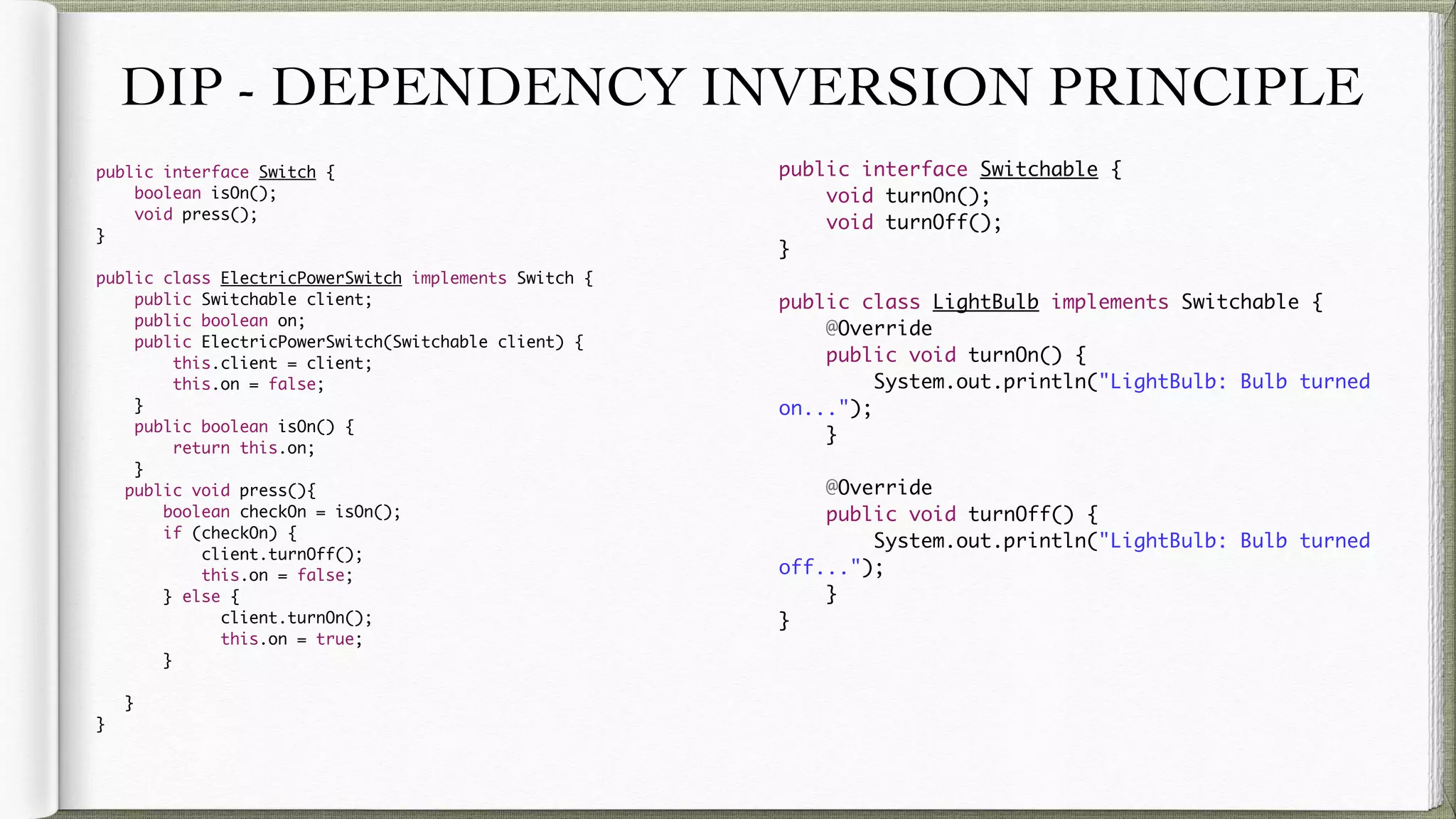
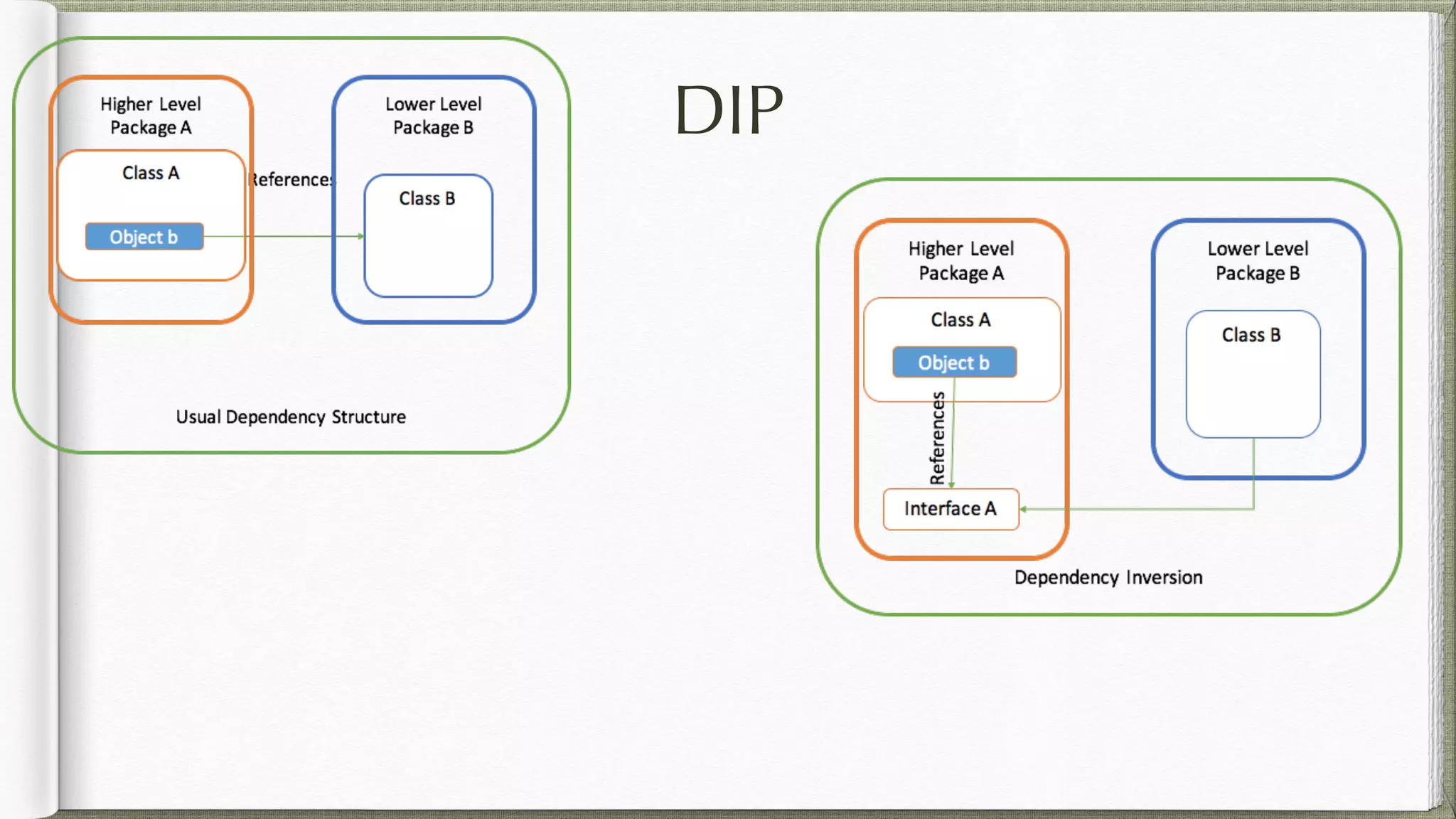
DIP advocates for high-level modules not being dependent on low-level modules; promotes flexibility.
Overview of additional principles like DRY/WET, abstract classes, and package principles.
Closing remarks and references to contributions from Robert Martin in the field of software design.


