
Design for Public Services –
The Fourth Way
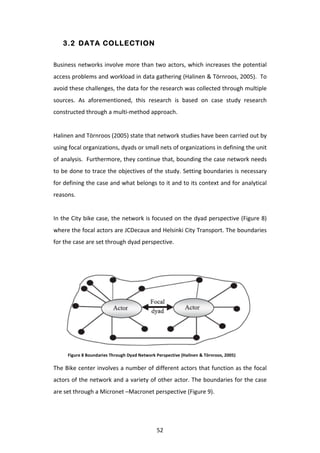
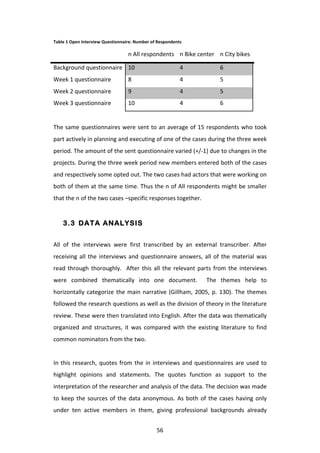
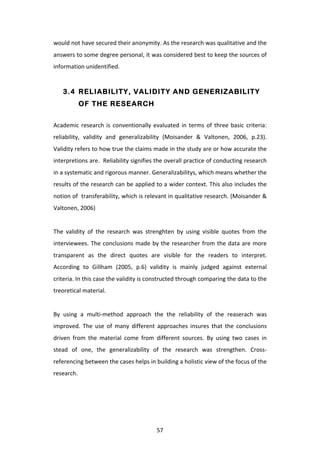
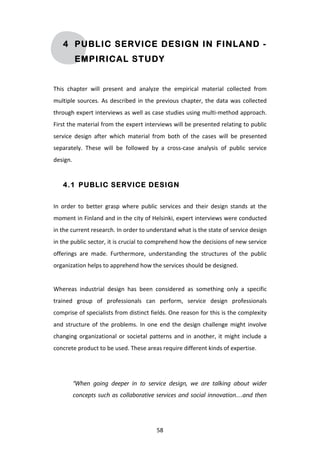
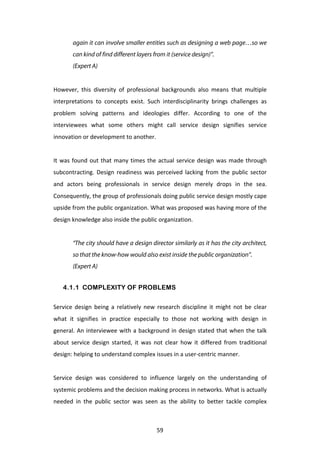
Fostering public service design though multi-
organizational entities


                                Master´s Thesis
                                Susanna Ollila
                                05.09.2012
                                Marketing


TABLE OF CONTENTS


1 	
   INTRODUCTION ..................................... 8 	
  
       1.1	
   PARTNERSHIPS	
  IN	
  PUBLIC	
  SERVICE	
  DESIGN	
  ....................................................	
  8	
  
       1.2	
   OBJECTIVES	
  OF	
  THE	
  STUDY	
  ............................................................................	
  11	
  
       1.3	
   RESEARCH	
  STRATEGY	
  
                                   .....................................................................................	
  13	
  
       1.4	
   DEFINITION	
  OF	
  TERMS	
  ..................................................................................	
  13	
  
       1.5	
   STRUCTURE	
  OF	
  THE	
  THESIS	
  ...........................................................................	
  14	
  

2 	
   DESIGN FOR PUBLIC SERVICES –
REVIEW OF CURRENT LITERATURE ........... 16 	
  
       2.1	
   DESIGNING	
  SERVICES	
  
                                    .....................................................................................	
  16	
  
          2.1.1	
   SERVICE	
  REVOLUTION	
  ..............................................................................................	
  17	
  
          2.1.2	
   FROM	
  DESIGN	
  TO	
  DESIGN	
  FOR	
  SERVICES	
  ................................................................	
  17	
  
          2.1.3	
   CO-­‐CREATION	
  IN	
  SERVICE	
  DESIGN	
  ...........................................................................	
  22	
  
          2.1.4	
   SERVICE	
  DESIGN	
  METHODS	
  ......................................................................................	
  23	
  

       2.2	
   DESIGNING	
  PUBLIC	
  SERVICES	
  ........................................................................	
  24	
  
          2.2.1	
   PUBLIC	
  SERVICE	
  DESIGN	
  ...........................................................................................	
  25	
  
          2.2.2	
   PUBLIC	
  SERVICE	
  DESIGN	
  IN	
  FINLAND	
  .......................................................................	
  27	
  

       2.3	
   MULTI	
  ORGANIZATIONAL	
  ENTITIES	
  IN	
  PUBLIC	
  SERVICES	
  ..............................	
  28	
  
          2.3.1	
   PUBLIC	
  PRIVATE	
  PARTNERSHIPS	
  –	
  THE	
  THIRD	
  WAY	
  .................................................	
  29	
  
          2.3.2	
   NETWORKS	
  ...............................................................................................................	
  31	
  

       2.4	
   FOSTERING	
  THE	
  CHANGE	
  IN	
  PUBLIC	
  SERVICE	
  DESIGN	
  ..................................	
  33	
  
          2.4.1	
   SOCIAL	
  INNOVATION	
  ................................................................................................	
  34	
  
          2.4.2	
   TRANSFORMATIONAL	
  DESIGN	
  .................................................................................	
  34	
  
          2.4.3	
   MANAGING	
  PUBLIC	
  SERVICE	
  DESIGN	
  .......................................................................	
  35	
  
          2.4.4	
   FROM	
  GOVERNMENT	
  TO	
  GOVERNANCE	
  ..................................................................	
  37	
  
          2.4.5	
   CHALLENGES	
  OF	
  SERVICE	
  DESIGN	
  IN	
  THE	
  PUBLIC	
  SECTOR	
  
                                                                                          .......................................	
  38	
  

       2.5	
   THE	
  FOURTH	
  WAY	
  –	
  FROM	
  PARTNERSHIPS	
  TO	
  NETWORKS	
  OF	
  
       INTERDISCIPLINARY	
  ACTORS:	
  FRAMEWORK	
  FOR	
  THE	
  STUDY	
  ................................	
  45	
  

3 	
   METHODOLOGY ................................... 49 	
  
       3.1	
   RESEARCH	
  METHODS	
  ....................................................................................	
  49	
  
          3.1.1	
   UNDERSTANDING	
  THE	
  WORLD	
  OF	
  PUBLIC	
  SERVICE	
  DESIGN	
  ...................................	
  50	
  

       3.2	
   DATA	
  COLLECTION	
  .........................................................................................	
  52	
  
          3.2.1	
   MULTI-­‐	
  METHOD	
  APPROACH	
  ...................................................................................	
  53	


                                                                         2	
  
3.3	
   DATA	
  ANALYSIS	
  
                               ..............................................................................................	
  56	
  
       3.4	
   RELIABILITY,	
  VALIDITY	
  AND	
  GENERIZABILITY	
  OF	
  THE	
  RESEARCH	
  ..................	
  57	
  

4 	
   PUBLIC SERVICE DESIGN IN FINLAND -
EMPIRICAL STUDY .................................. 58 	
  
       4.1	
   PUBLIC	
  SERVICE	
  DESIGN	
  ................................................................................	
  58	
  
           4.1.1	
   COMPLEXITY	
  OF	
  PROBLEMS	
  .....................................................................................	
  59	
  
           4.1.2	
   GOVERNMENTAL	
  STRUCTURES	
  ................................................................................	
  61	
  
           4.1.3	
   DESIGNING	
  SERVICES	
  TOGETHER	
  .............................................................................	
  65	
  
           4.1.4	
   SUMMARY	
  OF	
  THE	
  FINDINGS	
  ...................................................................................	
  66	
  

       4.2	
   CASE	
  1:	
  CITY	
  BIKES	
  .........................................................................................	
  68	
  
           4.2.1	
   OWNERSHIP	
  AND	
  LEADERSHIP	
  .................................................................................	
  69	
  
           4.2.2	
   RELATIONSHIPS	
  AND	
  PRACTICES	
  ..............................................................................	
  71	
  
           4.2.3	
   SUMMARY	
  OF	
  THE	
  EMPIRICAL	
  FINDINGS	
  ................................................................	
  73	
  

       4.3	
   CASE	
  2:	
  BIKE	
  CENTER	
  .....................................................................................	
  75	
  
           4.3.1	
   OWNERSHIP	
  AND	
  LEADERSHIP	
  .................................................................................	
  76	
  
           4.3.2	
   RELATIONSHIPS	
  AND	
  PRACTICES	
  ..............................................................................	
  78	
  
           4.3.3	
   SUMMARY	
  OF	
  THE	
  EMPIRICAL	
  FINDINGS	
  ................................................................	
  81	
  

       4.4	
   CROSS-­‐CASE	
  ANALYSIS	
  
                                       ...................................................................................	
  82	
  

5 	
   DISCUSSION ....................................... 85 	
  
       5.1	
   GOVERNMENTAL	
  STRUCTURES	
  .....................................................................	
  85	
  
           5.1.1	
   DESIGN	
  READINESS	
  
                                        ...................................................................................................	
  86	
  

       5.2	
   RELATIONSHIPS	
  AND	
  PRACTICES	
  ...................................................................	
  88	
  
       5.3	
   OWNERSHIP	
  AND	
  LEADERSHIP	
  ......................................................................	
  89	
  
       5.4	
   REVISION	
  OF	
  THE	
  FRAMEWORK	
  ....................................................................	
  90	
  

6 	
   CONCLUSIONS .................................... 94 	
  
       6.1	
   SUMMARY	
  OF	
  THE	
  FINDINGS	
  ........................................................................	
  95	
  
       6.2	
   PRACTICAL	
  IMPLICATIONS	
  OF	
  THE	
  STUDY	
  .....................................................	
  97	
  
       6.3	
   THEORETICAL	
  IMPLICATIONS	
  OF	
  THE	
  STUDY	
  ................................................	
  97	
  
       6.4	
   LIMITATIONS	
  OF	
  THE	
  STUDY	
  .........................................................................	
  98	
  
       6.5	
   SUGGESTIONS	
  FOR	
  FURTHER	
  RESEARCH	
  
                                                        .......................................................	
  99	


REFERENCES	


           100


APPENDIX 1: DATA COLLECTION	
                                                                               	
            	
           105


                                                                         3	
  
TABLE OF FIGURES
	
  
Figure	
  1	
  Structure	
  of	
  the	
  Thesis	


     15	
  
Figure	
  2	
  Service	
  Design	
  Expertise	


     18	
  
(Moritz,	
  2005	
  p.49)	
  
Figure	
  3	
  Different	
  Stages	
  of	
  Service	
  Design	


     21	
     	
  
(Moritz,	
  2005,	
  p.23)	
  
Figure	
  4	
  Ideal	
  Partnership	
  Types	


     32	
  
(Modified:	
  Ysa,	
  2007,	
  p.50)	
  
Figure	
  5	
  Challenge	
  Complexity	
  Shift	


     40	
  
(Next	
  Design	
  Leadership	
  Institute,	
  2011)	
  
Figure	
  6	
  The	
  Process	
  of	
  Hierarchical	
  Development	


     42	
  
(Modified:	
  Järvensivu,	
  Nykänen	
  &	
  Rajala,	
  2010)	
  
Figure	
  7	
  Theoretical	
  Framework	
  of	
  the	
  Study	


     47	
  
Figure	
  8	
  Boundaries	
  Through	
  Dyad	
  Network	
  Perspective	
                	
     	
     51	
  
(Halinen	
  &	
  Törnroos,	
  2005)	
  
Figure	
  9	
  Boundaries	
  Through	
  a	
  Micronet-­‐Macronet	
  Perspective	
              	
     52	
  
(Halinen	
  &	
  Törnroos,	
  2005)	
  
Figure	
  10	
  Case	
  Study	
  Research	
  Methods	


     54	
  
Figure	
  11	
  Main	
  Challenges	
  in	
  the	
  City	
  bike	
  –Case	


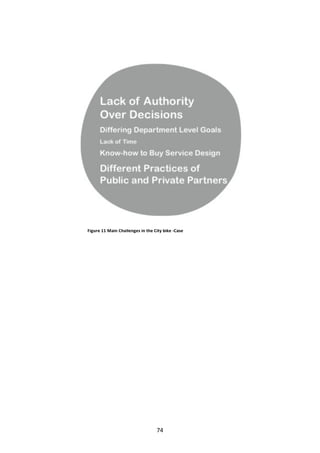
     73	
  
Figure	
  12	
  Main	
  Challenges	
  of	
  the	
  Bike	
  center	
  –Case	


     80	
  
Figure	
  13	
  Cross-­‐Case	
  Comparison	
  of	
  the	
  Challenges	


     82	
  
Figure	
  14	
  Cross-­‐	
  Case	
  Comparison	
  of	
  the	
  Challenges	
  	
  
with	
  Expert	
  Interview	
  Results	


     83	
  
Figure	
  15	
  Revised	
  Framework	
  of	
  the	
  Study	


     92	


LIST OF TABLES
	
  
Table	
  1	
  Open	
  Interview	
  Questionnaire:	
  Number	
  of	
  Respondents	
   	
               55	


                                                              4	
  
Aalto University, P.O. BOX 11000,
                                                                                                        00076 AALTO
                                                            	
  
                                                                                                          www.aalto.fi
                                                                                          Abstract of master’s thesis


Author Susanna Ollila
Title of thesis Design for Public Services – The Fourth Way
Fostering public service design though multi-organizational entities
Degree Master of Science in Economics
Degree programme Marketing
Thesis advisor Arto Rajala
Year of approval 2012                                              Number of pages 105                          Language English

Abstract
It	
   has	
   been	
   suggested	
   that	
   service	
   design	
   could	
   be	
   used	
   as	
   a	
   solution	
   for	
   the	
   public	
  
sector	
  to	
  the	
  complex	
  challenges	
  it	
  is	
  facing.	
  In	
  order	
  to	
  provide	
  useful	
  services	
  to	
  
the	
  public	
  it	
  is	
  important	
  to	
  focus	
  on	
  how	
  these	
  services	
  are	
  designed.	
  In	
  previous	
  
research,	
  partnerships	
  between	
  the	
  public	
  and	
  private	
  sector	
  have	
  been	
  proposed	
  
to	
  develop	
  design	
  in	
  public	
  services.	
  The	
  objective	
  of	
  the	
  research	
  is	
  to	
  identify	
  how	
  
service	
  design	
  can	
  be	
  fostered	
  within	
  the	
  public	
  sector.	
  Furthermore	
  the	
  objective	
  
is	
  to	
  find	
  solutions	
  for	
  the	
  challenges	
  that	
  partnerships	
  bring	
  out.	


The	
   theoretical	
   framework	
   of	
   the	
   research	
   is	
   constructed	
   through	
   presenting	
  
theories	
  from	
  service	
  design	
  and	
  multi	
  organizational	
  models	
  in	
  public	
  services.	
  The	
  
empirical	
   research	
   is	
   conducted	
   through	
   expert	
   interviews	
   and	
   case	
   studies.	
   Two	
  
case	
  studies	
  from	
  the	
  field	
  of	
  cycling	
  are	
  further	
  examined	
  through	
  a	
  multi-­‐method	
  
approach.	
   The	
   methods	
   used	
   in	
   examining	
   the	
   two	
   cases	
   are	
   background	
   research,	
  
interviews	
  and	
  questionnaires.	


The	
   research	
   suggests	
   the	
   fourth	
   way	
   of	
   collaboration	
   through	
   multi	
   organizational	
  
entities	
  as	
  a	
  solution	
  for	
  fostering	
  the	
  design	
  for	
  public	
  services.	
  Relationships	
  	
  not	
  
only	
   between	
   the	
   different	
   silos	
   in	
   the	
   public	
   sector	
   but	
   also	
   between	
   the	
   different	
  
disciplines	
   arose	
   as	
   one	
   of	
   the	
   main	
   challenges.	
   Therefore	
   shared	
   goals	
   and	
   clear	
  
leadership	
  were	
  identified	
  as	
  important	
  relation-­‐	
  and	
  leadership	
  based	
  factors.	
  As	
  a	
  
solution	
  design	
  readiness	
  and	
  open	
  access	
  to	
  service	
  production	
  are	
  suggested	
  to	
  
assist	
   in	
   fostering	
   public	
   service	
   design.	
   The	
   results	
   seem	
   to	
   indicate	
   that	
   the	
  
government	
  should	
  provide	
  an	
  open	
  and	
  supportive	
  environment	
  where	
  its	
  role	
  is	
  
to	
  act	
  as	
  an	
  enabler	
  	
  rather	
  than	
  the	
  producer	
  of	
  those	
  services.	


Keywords Service design, public services, public sector, networks, partnerships


                                                                    5	
  
Aalto-yliopisto, PL 11000,
                                                                                         00076 AALTO
                                                 	
                                        www.aalto.fi
                                                                                    Maisterintutkinnon
                                                                                 tutkielman tiivistelmä


Tekijä Susanna Ollila
Työn nimi Palvelumuotoilun edistäminen julkisella sektorilla.
Tutkinto Kauppatieteiden maisteri
Koulutusohjelma Markkinointi
Työn ohjaaja(t) Arto Rajala
Hyväksymisvuosi 2012                                    Sivumäärä 105                          Kieli Englanti


Tiivistelmä
Julkisen	
   sektorin	
   kohtaamien	
   haasteiden	
   monimutkaistuessa,	
   on	
   palveluiden	
  
suunnittelun	
   ratkaisuksi	
   ehdotettu	
   palvelumuotoilua.	
   Jotta	
   kaupunkilaisille	
  
voidaan	
   tuottaa	
   palveluita	
   mahdollisimman	
   saumattomasti,	
   on	
   tärkeää	
  
kiinnittää	
   huomiota	
   siihen,	
   miten	
   nämä	
   palvelut	
   on	
   muotoiltu.	
   Aiemmassa	
  
kirjallisuudessa	
   kumppanuudet	
   on	
   nähty	
   mahdollisuutena	
   kehittää	
   julkisten	
  
palvelujen	
  muotoilua.	
  Tarkemmin	
  tutkimuksen	
  tavoitteena	
  on	
  määritellä,	
  kuinka	
  
palvelumuotoilua	
   voitaisiin	
   edistää	
   julkisella	
   sektorilla.	
   Tätä	
   tutkitaan	
  
määrittelemällä	
  ensin	
  sektorin	
  kohtaamat	
  haasteet.	


Tutkimuksen	
   teoreettinen	
   viitekehys	
   rakentuu	
   palvelumuotoiluun	
   ja	
  
monituottaja	
   -­‐malleihin	
   pohjautuvaan	
   tutkimukseen.	
   Empiirisessä	
   osuudessa	
  
tarkastellaan	
  kahta	
  kaupunkipyöräilyyn	
  liittyvää	
  projektia	
  Helsingissä	
  laadullisen	
  
tapaustutkimuksen	
   avulla.	
   Taustatutkimuksen,	
   haastattelujen	
   ja	
   kyselyiden	
  
avulla	
   kerättyä	
   materiaalia	
   analysoimalla	
   pyritään	
   saamaan	
   mahdollisimman	
  
kokonaisvaltainen	
  kuva	
  aihe-­‐alueeseen.	


Tutkimus	
   esittelee	
   yhteistyön	
   neljännen	
   tavan	
   tuottaa	
   palveluita	
   joka	
   tähtää	
  
julkisen	
   ja	
   yksityissektorin	
   toimijoiden	
   yhteiseen	
   palvelutuotantoon.	
  
Tutkimuksen	
   tulokset	
   osoittavat,	
   että	
   palvelumuotoilun	
   edistäminen	
   julkisella	
  
sektorilla	
   vaatii	
   rakenteellisia	
   uudistuksia.	
   Muotoiluvalmius	
   ja	
   avoin	
   pääsy	
  
palvelutuottamiseen	
   korostuivat	
   palvelumuotoilun	
   edistämisessä.	
   Lisäksi	
  
julkisen	
   sektorin	
   eri	
   toimijoiden	
   väliset	
   suhteet	
   sekä	
   julkisen	
   ja	
   yksityisen	
  
sektorin	
   väliset	
   suhteet	
   nähtiin	
   tärkeinä	
   palvelua	
   muotoiltaessa.	
   Yhteiset	
  
tavoitteet	
   ja	
   selkeä	
   johtajuus	
   nousivat	
   esiin	
   suhde-­‐	
   ja	
   johtajuustekijöinä	
  
projekteissa.	
  Julkisen	
  hallinnon	
  roolin	
  tulisi	
  olla	
  uusien	
  palvelujen	
  mahdollistaja	
  
avoimilla	
  ja	
  tukea	
  antavilla	
  rakenteilla.	


Avainsanat Palvelumuotoilu, julkiset palvelut, julkinen sektori, verkostot,
kumppanuudet


                                                        6	
  
THANK YOU!


       Forum	
  Virium	
  Helsinki,	
  Kaisa	
  and	
  Pekka,	
  for	
  giving	
  initial	
  
             ideas	
  for	
  the	
  study	
  and	
  for	
  prepping	
  and	
  guidance!	


          Interviewees,	
  for	
  giving	
  insight	
  to	
  the	
  actual	
  projects	
  
                                                                    and	
  processes.	


          Arto	
  Rajala	
  and	
  Annukka	
  Jyrämä,	
  for	
  supervising	
  and	
  
                                                           commenting	
  the	
  study.	


             Family	
  and	
  friends,	
  you	
  know	
  who	
  you	
  are,	
  KIITOS,	
  	
  
            for	
  supporting	
  and	
  encouraging	
  me	
  throughout	
  the	
  
                                                                               process!	


                             7	
  
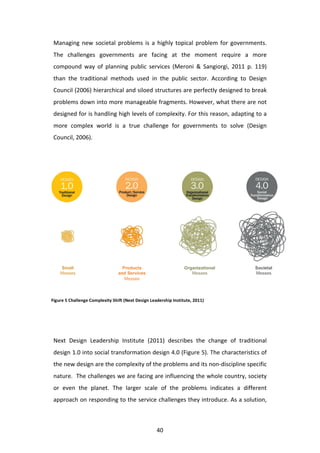
1 INTRODUCTION


Service	
   design	
   has	
   been	
   suggested	
   as	
   a	
   solution	
   for	
   the	
   public	
   sector	
   to	
   the	
  
complex	
  challenges	
  it	
  is	
  facing.	
  In	
  order	
  to	
  provide	
  useful	
  services	
  to	
  the	
  public	
  it	
  
is	
   important	
   to	
   focus	
   on	
   how	
   these	
   services	
   are	
   designed	
   and	
   produced.	
   In	
  
creating	
  public	
  services,	
  much	
  of	
  the	
  resources	
  of	
  the	
  public	
  authorities	
  are	
  used	
  
up	
   already	
   when	
   generating	
   services	
   and	
   planning	
   proper	
   infrastructures.	
   As	
   a	
  
solution,	
   partnerships	
   with	
   private	
   sector	
   have	
  been	
   proposed	
   to	
   develop	
   design	
  
in	
   public	
   services	
   (Tuulaniemi	
   2001,	
   Meidutē	
   and	
   Paliulis	
   2011	
   &	
   Robinson	
   and	
  
Scott	
  2009).	


The	
   Finnish	
   Ministry	
   of	
   Transport	
   and	
   Communications	
   (2011)	
   aims	
   to	
  
strengthen	
  the	
  position	
  of	
  walking	
  and	
  cycling	
  nationally	
  during	
  the	
  next	
  years.	
  
Distinct	
  public	
  services	
  and	
  projects	
  have	
  been	
  set	
  up	
  to	
  support	
  this	
  goal	
  in	
  the	
  
field	
   of	
   cycling.	
   This	
   research	
   sets	
   out	
   to	
   examine	
   two	
   cycling	
   service	
   projects	
  
with	
  public	
  and	
  private	
  actors	
  from	
  the	
  aspect	
  of	
  public	
  service	
  design.	


       1.1 PARTNERSHIPS IN PUBLIC SERVICE DESIGN


The	
   share	
   of	
   services	
   in	
   the	
   turnover	
   of	
   companies	
   manufacturing	
   traditional	
  
consumer-­‐	
   and	
   industry	
   products	
   has	
   augmented.	
   	
   According	
   to	
   Statistics	
  
Finland,	
  the	
  share	
  of	
  services	
  in	
  the	
  GDP	
  is	
  already	
  over	
  60	
  per	
  cent.	
  (Miettinen,	
  
2011,	
   p.21)	
   	
   The	
   shift	
   from	
   product-­‐based	
   society	
   to	
   one	
   based	
   on	
   services	
   is	
  
advancing	
  at	
  full	
  speed	
  and	
  thus	
  the	
  design	
  of	
  those	
  services	
  is	
  crucial.	


The	
   background	
   to	
   conduct	
   the	
   research	
   arose	
   from	
   the	
   lack	
   of	
   structures	
   in	
   the	
  
public	
   sector	
   to	
   support	
   service	
   design.	
   Organizational	
   structures	
   in	
   the	
   public	
  
sector	
  are	
  sometimes	
  complex.	
  Due	
  to	
  this	
  complexity,	
  it	
  can	
  be	
  challenging	
  to	
  
develop	
  seamless	
  processes	
  for	
  citizens,	
  or	
  to	
  facilitate	
  the	
  implementation	
  and	


                                                               8	
  
roll-­‐out	
  of	
  projects	
  (Scherfig,	
  Brunander	
  &	
  Melander,	
  2010,	
  p.	
  12).	
  	
  Furthermore,	
  
the	
   societal	
   problems	
   governments	
   are	
   facing	
   at	
   the	
   moment	
   such	
   as	
   ageing	
  
population,	
   sustainability	
   and	
   economic	
   downturn	
   require	
   a	
   more	
   compound	
  
way	
  of	
  planning	
  public	
  services	
  (Meroni	
  &	
  Sangiorgi,	
  2011	
  p.	
  119).	


Service	
   design	
   could	
   help	
   organizations,	
   both	
   public	
   and	
   private,	
   to	
   better	
   plan	
  
complex	
  service	
  systems.	
  Moritz	
  (2005	
  p.	
  39)	
  defines	
  service	
  design	
  as	
  the	
  design	
  
of	
   the	
   overall	
   experience	
   of	
   a	
   service	
   as	
   well	
   as	
   design	
   of	
   the	
   process	
   and	
  
strategy	
  to	
  provide	
  that	
  service.	
  Because	
  of	
  its	
  novelty,	
  service	
  design	
  has	
  not	
  yet	
  
been	
   fully	
   embedded	
   to	
   the	
   structures	
   of	
   the	
   public	
   sector	
   and	
   expertise	
   from	
  
the	
  field	
  is	
  missing	
  (Tuulaniemi,	
  2011).	


With	
   the	
   rise	
   of	
   the	
   service	
   era	
   and	
   emphasis	
   to	
   service	
   design,	
   models	
   and	
  
examples	
  for	
  successful	
  public	
  service	
  design	
  are	
  needed.	
  Public	
  sector	
  has	
  a	
  long	
  
history	
  of	
  providing	
  services	
  but,	
  due	
  to	
  the	
  lack	
  of	
  structures,	
  the	
  emphasis	
  has	
  
been	
  on	
  the	
  efficiency	
  and	
  cost-­‐savings	
  of	
  the	
  service	
  rather	
  than	
  in	
  the	
  design	
  
(Tuulaniemi,	
  2011).	
  Due	
  to	
  the	
  incapability	
  of	
  financing	
  all	
  feasible	
  projects	
  that	
  
are	
  planned,	
  the	
  implementation	
  of	
  the	
  projects	
  might	
  be	
  delayed	
  or	
  not	
  occur	
  
(Meidutē	
  &	
  Paliulis,	
  2011).	
  Therefore	
  public-­‐	
  private	
  partnerships	
  have	
  become	
  a	
  
more	
  commonly	
  used	
  method	
  of	
  collaboration	
  in	
  creating	
  public	
  services.	


One	
  of	
  the	
  solutions	
  to	
  enhance	
  service	
  design	
  in	
  the	
  public	
  sector	
  has	
  been	
  the	
  
producing	
  of	
  the	
  services	
  through	
  public-­‐	
  private	
  partnership	
  (PPP).	
  As	
  Meidutē	
  
and	
   Paliulis	
   state,	
   the	
   main	
   goal	
   of	
   public-­‐private	
   partnership	
   is	
   to	
   ensure	
   high	
  
standards	
   of	
   public	
   service,	
   to	
   create,	
   maintain,	
   renew	
   and	
   develop	
   quality	
   living	
  
environment	
   (2011).	
   By	
   combining	
   resources,	
   high	
   quality	
   services	
   can	
   be	
  
created	
   with	
   better	
   expertise	
   and	
   capabilities	
   that	
   would	
   not	
   otherwise	
   exist	
  
(Robinson	
   &	
   Scott,	
   2009).	
   However,	
   in	
   order	
   to	
   successfully	
   follow	
   through	
  
service	
  design	
  partnerships,	
  it	
  is	
  crucial	
  to	
  find	
  the	
  main	
  challenges	
  that	
  need	
  to	
  
be	
  tackled	
  in	
  these	
  projects.	


                                                               9	
  
Service	
   design	
   has	
   gained	
   extensive	
   interest	
   from	
   different	
   fields	
   of	
   research	
  
during	
  the	
  last	
  few	
  years.	
  However,	
  service	
  design	
  in	
  the	
  public	
  sector	
  is	
  quite	
  a	
  
new	
  topic	
  and	
  lacks	
  further	
  research.	
  	
  Service	
  design	
  has	
  been	
  considered	
  largely	
  
from	
   the	
   perspective	
   of	
   design	
   in	
   existing	
   literature.	
   What	
   current	
   research	
   lacks	
  
is	
  applying	
  proper	
  service	
  design	
  models	
  for	
  the	
  public	
  sector.	
  Previous	
  literature	
  
has	
   mainly	
   focused	
   on	
   the	
   governance	
   and	
   networks	
   of	
   public-­‐	
   private	
  
partnerships.	
  However,	
  it	
  dismisses	
  the	
  aspect	
  of	
  how	
  to	
  acquire	
  service	
  design	
  
know-­‐how,	
  which	
  is	
  the	
  aim	
  of	
  the	
  present	
  study.	


The	
  case	
  studies	
  that	
  the	
  research	
  is	
  based	
  on	
  are	
  both	
  related	
  to	
  the	
  theme	
  of	
  
cycling	
   in	
   the	
   city.	
   The	
   Finnish	
   Ministry	
   of	
   Transport	
   and	
   Communications	
   (2011)	
  
has	
   prepared	
   a	
   new	
   strategy	
   to	
   strengthen	
   the	
   position	
   of	
   walking	
   and	
   cycling	
  
nationally	
  by	
  the	
  end	
  of	
  2020.	
  The	
  target	
  is	
  to	
  increase	
  the	
  share	
  of	
  walking	
  and	
  
cycling	
  from	
  32	
  per	
  cent	
  to	
  35	
  -­‐	
  38	
  per	
  cent	
  in	
  the	
  transport	
  mode	
  split,	
  and	
  to	
  
correspondingly,	
  decrease	
  the	
  proportion	
  of	
  short	
  trips	
  made	
  by	
  private	
  cars.	


The	
  two	
  cases	
  examined	
  in	
  this	
  research	
  are	
  City	
  bikes	
  and	
  Bike	
  center.	
  Shared	
  
bicycles,	
   City	
   bikes,	
   are	
   brought	
   to	
   the	
   cityscape	
   for	
   being	
   part	
   of	
   the	
   city’s	
  
transportation	
   infrastructure	
   to	
   improve	
   journey	
   times,	
   to	
   reduce	
   carbon	
  
emissions	
   and	
   ultimately	
   to	
   ease	
   short	
   distance	
   commuting	
   in	
   the	
   city.	
   Bike	
  
center	
   functions	
   as	
   a	
   service	
   point	
   or	
   a	
   network	
   of	
   service	
   points	
   offering	
   cycling	
  
related	
   services	
   to	
   current	
   and	
   future	
   cyclists	
   (WSP,	
   2012).	
   Both	
   of	
   these	
   city	
  
services	
   are	
   formed	
   through	
   collaboration	
   of	
   public	
   and	
   private	
   sectors	
   in	
   the	
  
city	
   of	
   Helsinki	
   in	
   Finland	
   and	
   the	
   research	
   focuses	
   on	
   the	
   challenges	
   faced	
   by	
  
the	
  partners	
  in	
  the	
  design	
  of	
  these	
  services.	


Forum	
   Virium	
   Helsinki,	
   a	
   company	
   partly	
   owned	
   by	
   the	
   City	
   of	
   Helsinki,	
   whose	
  
main	
   activity	
   is	
   to	
   manage	
   development	
   projects	
   together	
   with	
   the	
   public	
   sector	
  
and	
   business	
   partners,	
   commissioned	
   this	
   research.	
   Developing	
   digital	
   services	
  
with	
   the	
   public	
   sector	
   to	
   assist	
   in	
   tackling	
   societal	
   challenges,	
   Forum	
   Virium	
  
Helsinki	
  is	
  interested	
  in	
  public	
  sector	
  development	
  and	
  piloting	
  the	
  services	
  in	
  a	
  
real	
  life	
  context.	
  In	
  further	
  detail,	
  the	
  thesis	
  is	
  done	
  in	
  the	
  context	
  of	
  the	
  Smart	


                                                                10	
  
city	
  project	
  area,	
  which	
  is	
  involved	
  in	
  the	
  development	
  of	
  digital	
  urban	
  services	
  
that	
   make	
   travelling	
   and	
   living	
   in	
   the	
   city	
   easier.	
   The	
   two	
   projects	
   chosen	
   for	
   the	
  
cases	
  are	
  complementing	
  other	
  Forum	
  Virium	
  Helsinki's	
  projects	
  and	
  support	
  its	
  
activities	
  relating	
  to	
  transportation	
  and	
  biking	
  in	
  the	
  city.	


       1.2 OBJECTIVES OF THE STUDY


Service	
  design	
  being	
  a	
  relatively	
  new	
  phenomenon,	
  the	
  public	
  sector	
  in	
  Finland	
  
has	
   not	
   yet	
   obtained	
   proper	
   infrastructures	
   to	
   design	
   public	
   services.	
  
Furthermore,	
   because	
   of	
   immense	
   governmental	
   structures,	
   new	
   methods	
   of	
  
planning	
   the	
   processes	
   are	
   difficult	
   to	
   integrate.	
   In	
   order	
   to	
   create	
   better	
  
services	
   to	
   the	
   public	
   by	
   acquiring	
   know-­‐how,	
   financial	
   or	
   other	
   resources,	
  
partnerships	
  with	
  the	
  private	
  sector	
  are	
  formed.	


The	
   importance	
   of	
   this	
   study	
   is	
   based	
   on	
   the	
   challenges	
   that	
   occur	
   when	
  
designing	
  public	
  services	
  through	
  collaboration	
  with	
  the	
  private	
  sector.	
  In	
  these	
  
service	
  design	
  projects	
  many	
  of	
  service	
  design	
  elements	
  are	
  missing	
  due	
  to	
  the	
  
novelty	
   of	
   service	
   design	
   practices	
   and	
   the	
   lack	
   of	
   resources	
   or	
   knowledge	
   in	
   the	
  
public	
  sector	
  to	
  use	
  these.	
  More	
  research	
  needs	
  to	
  be	
  made	
  in	
  order	
  to	
  find	
  out	
  
how	
  to	
  successfully	
  follow	
  through	
  a	
  public	
  service	
  design	
  project.	


If	
   the	
   planning	
   of	
   the	
   service	
   fails,	
   public	
   service	
   design	
   project	
   is	
   not	
   likely	
   to	
  
succeed	
   or	
   be	
   initiated	
   at	
   all.	
   That	
   is	
   why	
   it	
   is	
   crucial	
   to	
   find	
   out	
   what	
   kind	
   of	
  
partnerships	
   most	
   likely	
   result	
   in	
   successful	
   service	
   design.	
   Furthermore,	
  
identifying	
   the	
   common	
   challenges	
   in	
   partnerships	
   between	
   public	
   and	
   private	
  
sectors	
   would	
   help	
   in	
   understanding	
   the	
   complexity	
   and	
   governance	
   of	
   such	
  
collaboration	
   projects.	
   Moreover,	
   methods	
   to	
   overcome	
   these	
   challenges	
   are	
  
missing	
  and	
  in	
  need	
  for	
  further	
  examination.	


The	
   governmental	
   structures	
   being	
   massive	
   and	
   processes	
   long	
   lasting,	
  
collaboration	
   with	
   private	
   sector	
   has	
   assisted	
   in	
   making	
   higher-­‐quality	
   services	
  
available	
  to	
  a	
  wider	
  public.	
  The	
  aim	
  of	
  the	
  research	
  is	
  to	
  enlighten	
  the	
  function	
  of	


                                                                        11	
  
service	
   design	
   in	
   the	
   planning	
   of	
   public	
   services.	
   As	
   the	
   design	
   of	
   the	
   public	
  
services	
   much	
   depends	
   on	
   the	
   governmental	
   structures	
   and	
   practices	
   of	
  
different	
   municipalities	
   the	
   empirical	
   research	
   is	
   performed	
   in	
   one	
   location,	
  
Helsinki.	
  	
  
Consequently,	
  the	
  1st	
  objective	
  of	
  the	
  research	
  is:	
  
Assess	
  the	
  integration	
  of	
  service	
  design	
  in	
  the	
  public	
  sector	
  in	
  Finland	
  and	
  more	
  
specifically	
  in	
  Helsinki.	


Furthermore,	
  the	
  objectives	
  of	
  the	
  research	
  is	
  to	
  examine	
  how	
  to	
  foster	
  service	
  
design	
   in	
   the	
   public	
   sector	
   and	
   what	
   are	
   the	
   challenges	
   in	
   the	
   design	
   of	
   public	
  
services.	
   	
   Through	
   the	
   two	
   case	
   studies	
   of	
   public	
   service	
   projects	
   two	
   different	
  
types	
  of	
  models	
  of	
  using	
  partnerships	
  are	
  observed.	
  The	
  collaboration	
  of	
  the	
  two	
  
sectors	
  aims	
  to	
  create	
  a	
  better	
  service	
  to	
  the	
  public	
  to	
  consume.	
  Subsequently,	
  
the	
  2nd	
  objective	
  of	
  the	
  research	
  is:	
  
Evaluate	
  how	
  to	
  tackle	
  the	
  challenges	
  identified.	


Driven	
   from	
   these	
   objectives,	
   the	
   research	
   questions	
   of	
   the	
   study	
   are	
  
approached	
  through	
  first	
  examining	
  the	
  following	
  sub-­‐	
  questions:	


What	
  are	
  the	
  main	
  challenges	
  in	
  obtaining	
  service	
  design	
  know-­‐how	
  in	
  the	
  public	
  
sector?	
  
What	
   are	
   the	
   main	
   challenges	
   partnerships	
   bring	
   out	
   in	
   public	
   service	
   design	
  
projects?	


The	
  main	
  research	
  questions	
  this	
  study	
  aims	
  to	
  answer	
  are:	


// What kind of procedures would assist in fostering service design
in the public sector?


// How to overcome the challenges brought forth by partnerships in
public service design?


                                                                12	
  
1.3 RESEARCH STRATEGY


One	
   of	
   the	
   first	
   steps	
   of	
   the	
   research	
   was	
   identifying	
   and	
   developing	
   the	
  
research	
  objectives.	
  The	
  strategy	
  of	
  the	
  study	
  was	
  to	
  first	
  examine	
  the	
  topic	
  from	
  
theoretical	
   perspective	
   and	
   then,	
   by	
   conducting	
   an	
   empirical	
   research,	
   to	
   collect	
  
results	
   from	
   practice.	
   The	
   empirical	
   research	
   is	
   based	
   on	
   qualitative	
   multi-­‐
method	
   approach	
   in	
   accordance	
   to	
   the	
   research	
   objectives	
   of	
   the	
   study.	
   The	
  
nature	
  of	
  the	
  research	
  is	
  mainly	
  deductive	
  where	
  the	
  theory	
  is	
  narrowed	
  down	
  
by	
   conducting	
   research	
   and	
   confirming	
   the	
   obtained	
   observations.	
   However,	
  
inductive	
  elements	
  of	
  the	
  research	
  arise	
  in	
  the	
  discussion	
  chapter	
  where	
  results	
  
are	
  evaluated	
  and	
  then	
  constructed	
  into	
  further	
  suggestions.	


       1.4 DEFINITION OF TERMS


The	
   following	
   terms	
   form	
   the	
   core	
   of	
   the	
   research.	
   As	
   to	
   limit	
   their	
  
interpretation,	
  the	
  next	
  definitions	
  will	
  enlighten	
  in	
  what	
  context	
  the	
  terms	
  are	
  
used	
  in	
  this	
  study.	


SERVICE DESIGN
Service	
  Design	
  in	
  this	
  research	
  is	
  considered	
  in	
  its	
  widest	
  form.	
  It	
  is	
  a	
  discipline	
  
helping	
  to	
  improve	
  and	
  create	
  services	
  and	
  the	
  process	
  and	
  strategy	
  to	
  provide	
  
those	
  services	
  in	
  a	
  human	
  centric	
  manner.	
  In	
  one	
  end	
  it	
  is	
  considered	
  almost	
  as	
  
strategic	
  design	
  and	
  on	
  the	
  other,	
  it	
  is	
  the	
  design	
  of	
  the	
  actual	
  elements	
  of	
  the	
  
service.	
   (Meroni	
   &	
   Sangiorgi;	
   2011,	
   Moritz,	
   2005;	
   Miettinen,	
   2011)	
   The	
   design	
  
skills	
   are	
   applied	
   in	
   the	
   everyday	
   life	
   of	
   the	
   service	
   designers	
   and	
   the	
   users.	
  
Actually,	
  the	
  users	
  are	
  always	
  also	
  part	
  of	
  designing	
  the	
  services.	


PUBLIC SERVICES
Public	
  services	
  are	
  services	
  that	
  the	
  government	
  offers	
  to	
  the	
  citizens.	
  They	
  are	
  
not	
  necessarily	
  produced	
  by	
  the	
  government	
  nor	
  are	
  they	
  inevitably	
  massive	
  at	
  
structure.	
  These	
  encompass	
  a	
  variety	
  of	
  services	
  from	
  social	
  services	
  to	
  guidance	
  
offered	
  in	
  the	
  streets	
  of	
  the	
  city.	


                                                              13	
  
 
PUBLIC SECTOR
The	
   public	
   sector	
   also	
   known	
   as	
   the	
   government	
   has	
   the	
   responsibility	
   to	
   offer	
  
services	
  to	
  the	
  citizens.	
  It	
  works	
  both	
  nationally	
  and	
  locally	
  and	
  comprises	
  of	
  its	
  
employees,	
   officers.	
   The	
   goal	
   of	
   the	
   public	
   sector	
   is	
   ultimately	
   to	
   work	
   for	
   the	
  
common	
  good	
  of	
  the	
  citizens.	


PRIVATE SECTOR
The	
   actors	
   and	
   companies	
   that	
   are	
   not	
   controlled	
   by	
   the	
   state	
   and	
   who	
   are	
  
working	
   towards	
   profit,	
   may	
   it	
   be	
   financial	
   or	
   measured	
   in	
   other	
   terms.	
   The	
  
private	
   sector	
   encompasses	
   also	
   actors	
   of	
   the	
   community.	
   Private	
   non-­‐profit	
  
organizations	
  are	
  also	
  part	
  of	
  the	
  private	
  sector.	


PARTNERSHIPS
Public	
  sector	
  and	
  private	
  sector	
  are	
  forming	
  partnerships	
  for	
  the	
  mutual	
  interest.	
  
Partnerships	
   can	
   also	
   happen	
   in	
   networks	
   of	
   multiple	
   actors	
   (Powell,1990;	
   Ysa,	
  
2007)	
  and	
  are	
  set	
  out	
  to	
  achieve	
  effectiveness	
  for	
  both	
  parties	
  (Osborne,	
  2000;	
  
Tuulaniemi,	
  2011).	


       1.5 STRUCTURE OF THE THESIS


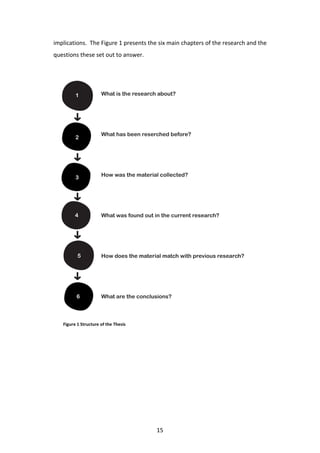
The	
   thesis	
   will	
   comprise	
   of	
   six	
   main	
   chapters	
   (Figure	
   1).	
   After	
   the	
   first	
  
introductory	
   chapter,	
   a	
   review	
   of	
   the	
   current	
   literature	
   will	
   be	
   presented.	
   The	
  
research	
  gap	
  is	
  built	
  through	
  a	
  theoretical	
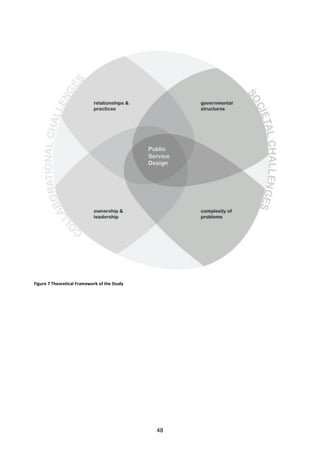
  framework	
  around	
  which	
  this	
  research	
  
takes	
   place.	
   In	
   the	
   third	
   chapter,	
   the	
   qualitative	
   research	
   methods	
   to	
   examine	
  
the	
  two	
  case	
  studies	
  are	
  presented.	
  	
  In	
  the	
  material	
  chapter	
  the	
  qualitative	
  data	
  
acquired	
  by	
  expert	
  interviews	
  and	
  the	
  results	
  of	
  the	
  multi-­‐method	
  approach	
  to	
  
the	
   case	
   studies	
   are	
   presented.	
   In	
   the	
   discussion	
   chapter,	
   the	
   main	
   findings	
   of	
  
the	
  case	
  studies	
  and	
  interviews	
  are	
  presented.	
  To	
  conclude,	
  the	
  sixth	
  chapter	
  will	
  
summarize	
   the	
   research	
   as	
   well	
   as	
   give	
   practical	
   implications	
   of	
   the	
   study.	
  
Furthermore,	
   suggestions	
   for	
   further	
   research	
   are	
   drawn	
   from	
   these	


                                                               14	
  
implications.	
  	
  The	
  Figure	
  1	
  presents	
  the	
  six	
  main	
  chapters	
  of	
  the	
  research	
  and	
  the	
  
questions	
  these	
  set	
  out	
  to	
  answer.	


                1                    What is the research about?


                                     What has been reserched before?
                2


                3                    How was the material collected?


                4                    What was found out in the current research?


                  5                  How does the material match with previous research?


                 6                   What are the conclusions?


       Figure	
  1	
  Structure	
  of	
  the	
  Thesis	


                                                           15	
  
2 DESIGN                             FOR                 PUBLIC                         SERVICES                              –
             REVIEW OF CURRENT LITERATURE


The	
   review	
   of	
   literature	
   summons	
   up	
   the	
   existing	
   relevant	
   research	
   of	
   the	
  
examined	
  subject.	
  	
  Furthermore,	
  it	
  presents	
  the	
  scientific	
  background	
  on	
  top	
  of	
  
which	
  an	
  appropriate	
  framework	
  is	
  built.	
  First,	
  an	
  introduction	
  to	
  service	
  design	
  
is	
   presented	
   and	
   its	
   implications	
   for	
   public	
   services	
   are	
   shown.	
   To	
   understand	
  
better	
   the	
   relationships	
   between	
   the	
   public	
   and	
   private	
   sectors,	
   different	
  
theories	
   of	
   partnerships	
   are	
   examined	
   further.	
   Through	
   underlining	
   the	
   key	
  
issues	
   in	
   the	
   different	
   areas	
   of	
   research,	
   a	
   theoretical	
   framework	
   is	
   built	
   upon	
  
which,	
   an	
   in	
   depth	
   evaluation	
   can	
   be	
   constructed	
   for	
   further	
   analysis	
   in	
   the	
  
discussion	
  -­‐chapter.	


       2.1 DESIGNING SERVICES


Interest	
   to	
   service	
   design	
   has	
   risen	
   from	
   the	
   beginning	
   of	
   the	
   service	
   era.	
   Today,	
  
services	
   dominate	
   the	
   economic	
   landscape	
   (Sundbo	
   &	
   Toivonen,	
   2011	
   p.3).	
  
Moritz	
   (2005,	
   p.23)	
   identified	
   booming	
   service	
   economy,	
   satisfied	
   product	
  
market,	
   developed	
   technology	
   and	
   the	
   individual	
   needs	
   of	
   humans	
   as	
   main	
  
drivers	
   to	
   service	
   revolution.	
   However,	
   services	
   are	
   not	
   just	
   productions	
  
separated	
  form	
  the	
  entities	
  around	
  them.	
  Gummesson	
  (2012)	
  sees	
  society	
  as	
  a	
  
network	
  of	
  service	
  systems	
  in	
  which	
  we	
  are	
  all	
  actively	
  involved.	


Professionals	
   working	
   in	
   the	
   service	
   sector	
   are	
   not	
   necessarily	
   aware	
   that	
   they	
  
are	
  working	
  with	
  design	
  and	
  use	
  Service	
  Design	
  to	
  improve	
  it	
  (Moritz,	
  2005).	
  In	
  
order	
   to	
   better	
   understand	
   the	
   design	
   of	
   services,	
   first	
   the	
   characteristics	
   of	
  
services	
  and	
  the	
  rise	
  of	
  service	
  era	
  should	
  be	
  looked	
  into	
  in	
  further	
  detail.	


                                                                16	
  
2.1.1 SERVICE REVOLUTION

The	
   share	
   of	
   services	
   in	
   the	
   turnover	
   of	
   companies	
   manufacturing	
   traditional	
  
consumer-­‐	
   and	
   industry	
   products	
   has	
   augmented	
   and	
   there	
   seems	
   to	
   be	
   no	
   stop	
  
in	
  this.	
  	
  According	
  to	
  Statistics	
  Finland,	
  the	
  share	
  of	
  services	
  in	
  the	
  GDP	
  is	
  already	
  
over	
  60	
  per	
  cent	
  (Miettinen,	
  2011,	
  p.21).	
  A	
  common	
  phenomenon	
  has	
  been	
  the	
  
increasing	
  role	
  of	
  intangible	
  assets	
  as	
  sources	
  of	
  value	
  in	
  comparison	
  to	
  tangible	
  
assets	
  (Sundbo	
  &	
  Toivonen,	
  2011	
  p.2).	


Through	
  blooming	
  service	
  industry,	
  the	
  traditional	
  distinction	
  between	
  products	
  
and	
   services	
   has	
   begun	
   to	
   blur.	
   Products	
   are	
   more	
   often	
   tied	
   up	
   with	
   services.	
  
This	
   makes	
   them	
   more	
   desirable	
   for	
   the	
   public	
   or	
   generates	
   novel	
   attributes.	
  
Plenty	
  of	
  examples	
  of	
  such	
  coalitions	
  exist	
  such	
  as	
  combining	
  web-­‐based	
  services	
  
to	
  products	
  (Miettinen,	
  2011,	
  p.	
  22).	


Gummesson	
   (2012)	
   sees	
   the	
   division	
   in	
   goods	
   and	
   services	
   is	
   irrelevant.	
   	
   What	
   is	
  
relevant	
  instead,	
  is	
  that	
  the	
  supplier	
  offers	
  value	
  propositions.	
  Value	
  is	
  created	
  in	
  
co-­‐operation	
   with	
   stakeholders	
   in	
   a	
   network	
   of	
   relationships	
   in	
   which	
   they	
  
interact,	
   called	
   co-­‐creation	
   of	
   value.	
   All	
   who	
   are	
   involved	
   in	
   this	
   add	
   value	
   and	
  
become	
   active	
   (Gummesson,	
   2012).	
   Value	
   creation	
   and	
   co-­‐	
   creation	
   are	
  
important	
  concepts	
  when	
  talking	
  about	
  services	
  and	
  service	
  design.	


Research	
   in	
   services	
   have	
   been	
   traditionally	
   carried	
   out	
   in	
   both	
   on	
   the	
   basis	
   of	
  
general	
   innovation	
   theories	
   and	
   on	
   the	
   basis	
   of	
   service	
   specific	
   theories	
  
However,	
  in	
  recent	
  years,	
  a	
  third	
  approach,	
  service	
  design,	
  has	
  gained	
  ground.	


       2.1.2 FROM DESIGN TO DESIGN FOR SERVICES

Services	
   have	
   been	
   provided	
   for	
   a	
   long	
   time.	
   However,	
   when	
   offering	
   slightly	
  
complex	
  services	
  such	
  as	
  whole	
  systems	
  instead	
  of	
  simple	
  functions,	
  design	
  can	
  
provide	
  help	
  (Moritz,	
  2005	
  p.	
  39).	
  Moritz	
  (2005,	
  p.	
  19)	
  describes	
  service	
  design	
  as	
  
a	
   multidisciplinary	
   approach.	
   	
   Business,	
   design	
   and	
   related	
   fields	
   such	
   as	
  
technology	
   have	
   been	
   identified	
   as	
   overlapping	
   components	
   when	
   designing	


                                                                17	
  
services	
  (Miettinen	
  2011,	
  Moritz	
  2005	
  &	
  Tuulaniemi	
  2011).	
  	
  The	
  main	
  challenge	
  
is	
  to	
  overcome	
  the	
  differences	
  between	
  the	
  three	
  different	
  schools	
  of	
  thought.	
  
(Sundbo	
   &	
   Toivonen,	
   2011	
   pp.3-­‐4).	
   Moritz	
   (2005)	
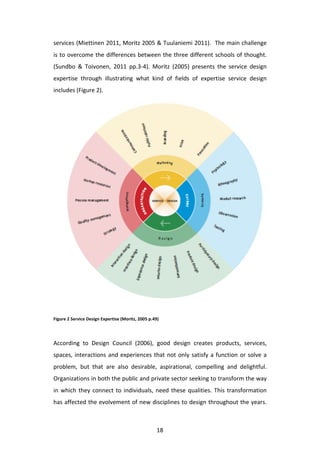
   presents	
   the	
   service	
   design	
  
expertise	
   through	
   illustrating	
   what	
   kind	
   of	
   fields	
   of	
   expertise	
   service	
   design	
  
includes	
  (Figure	
  2).	


Figure	
  2	
  Service	
  Design	
  Expertise	
  (Moritz,	
  2005	
  p.49)	


According	
   to	
   Design	
   Council	
   (2006),	
   good	
   design	
   creates	
   products,	
   services,	
  
spaces,	
   interactions	
   and	
   experiences	
   that	
   not	
   only	
   satisfy	
   a	
   function	
   or	
   solve	
   a	
  
problem,	
   but	
   that	
   are	
   also	
   desirable,	
   aspirational,	
   compelling	
   and	
   delightful.	
  
Organizations	
  in	
  both	
  the	
  public	
  and	
  private	
  sector	
  seeking	
  to	
  transform	
  the	
  way	
  
in	
   which	
   they	
   connect	
   to	
   individuals,	
   need	
   these	
   qualities.	
   This	
   transformation	
  
has	
  affected	
  the	
  evolvement	
  of	
  new	
  disciplines	
  to	
  design	
  throughout	
  the	
  years.	


                                                                         18	
  
In	
  the	
  first	
  decade	
  of	
  the	
  21st	
  century	
  two	
  important	
  shifts	
  have	
  arisen:	
  firstly,	
  in	
  
where	
  design	
  skills	
  are	
  being	
  applied,	
  and	
  secondly,	
  in	
  who	
  is	
  actually	
  doing	
  the	
  
designing	
  (Design	
  Council,	
  2006).	


Arising	
   from	
   Design	
   Thinking,	
   service	
   design	
   possesses	
   much	
   of	
   its	
   qualities	
  
(Moritz,	
   2005).	
   Design	
   Thinking	
   is	
   a	
   deeply	
   human	
   process	
   that	
   taps	
   into	
   abilities	
  
we	
  all	
  have	
  but	
  get	
  overlooked	
  by	
  more	
  conventional	
  problem-­‐solving	
  practices.	
  	
  
This	
  discipline	
  driven	
  forth	
  originally	
  by	
  IDEO	
  design	
  agency	
  brings	
  together	
  what	
  
is	
  desirable	
  from	
  a	
  human	
  point	
  of	
  view	
  with	
  what	
  is	
  technologically	
  feasible	
  and	
  
economically	
   viable	
   (IDEO).	
   This	
   human	
   centric	
   approach	
   is	
   also	
   dominant	
   in	
  
service	
  design.	


As	
   such	
   services	
   are	
   not	
   as	
   productive	
   and	
   satisfying	
   as	
   they	
   could	
   be.	
   Service	
  
Design	
   helps	
   to	
   innovate	
   or	
   improve	
   services	
   (Moritz	
   2005).	
   It	
   can	
   provide	
  
assistance	
  when	
  designing	
  complex	
  systems	
  and	
  processes.	
  	
  Service	
  design	
  (SD)	
  
helps	
   to	
   construct	
   a	
   service	
   organization,	
   which	
   wraps	
   around	
   interaction	
   and	
  
user	
  experiences	
  (Miettinen,	
  2011,	
  p.30).	
  	
  The	
  ultimate	
  goal	
  of	
  designing	
  services	
  
is	
   an	
   entity	
   that	
   is	
   not	
   only	
   desirable	
   and	
   usable	
   from	
   the	
   customer’s	
   point	
   of	
  
view	
   but	
   also	
   efficient	
   and	
   recognizable	
   from	
   the	
   producers	
   point	
   or	
   view.	
  	
  
Designing	
   services	
   is	
   described	
   as	
   an	
   ongoing	
   process	
   rather	
   than	
   a	
   process	
   of	
  
short	
   duration.	
   It	
   is	
   used	
   to	
   plan	
   and	
   shape	
   meaningful	
   service	
   experiences	
   as	
  
well	
  as	
  to	
  provide	
  guidelines	
  and	
  strategies	
  (Moritz,	
  2005,	
  p.40).	


In	
   the	
   core	
   of	
   service	
   design	
   from	
   the	
   perspective	
   of	
   the	
   company	
   is	
   customer	
  
value.	
  In	
  this	
  context,	
  service	
  design	
  should	
  answer	
  the	
  question	
  of	
  how	
  many	
  of	
  
the	
   service	
   improvements	
   actually	
   influence	
   on	
   the	
   customer	
   value.	
   In	
   the	
   end	
  
this	
  comes	
  up	
  to:	
  1)	
  how	
  much	
  the	
  customer	
  is	
  willing	
  to	
  pay	
  from	
  the	
  service,	
  2)	
  
how	
   frequently	
   will	
   the	
   customer	
   buy	
   the	
   service	
   and	
   3)	
   would	
   the	
   customer	
  
recommend	
  the	
  service	
  to	
  his	
  peers.	
  	
  By	
  covering	
  these	
  three	
  goals,	
  the	
  service	
  
can	
  actually	
  be	
  said	
  to	
  bring	
  value	
  to	
  the	
  customer	
  (Tuulaniemi,	
  2011).	


                                                                19	
  
Koskinen	
   (n.d.,	
   p.22)	
   describes	
   service	
   design	
   as	
   designing	
   service	
   related	
  
communication.	
  It	
  consists	
  of	
  three	
  areas.	
  Firstly,	
  designing	
  service	
  environment	
  
related	
   communication,	
   which	
   includes	
   communication	
   with	
   several	
   of	
   the	
  
senses.	
   Secondly,	
   designing	
   service	
   process	
   related	
   communication,	
   which	
  
includes	
   the	
   design	
   of	
   communication	
   material	
   such	
   as	
   brochures	
   and	
   web	
  
pages.	
  Third	
  area	
  is	
  the	
  development	
  of	
  the	
  communication	
  of	
  service	
  personnel.	
  
Service	
  design	
  is	
  seen	
  as	
  part	
  of	
  brand	
  development	
  or	
  even	
  the	
  development	
  of	
  
the	
  service	
  brand.	


The	
   problem	
   that	
   companies	
   are	
   facing	
   in	
   many	
   cases	
   is	
   that	
   the	
   service	
   being	
  
marketed	
   is	
   not	
   in	
   line	
   with	
   the	
   service	
   designed.	
   This	
   can	
   cause	
   confusion	
  
among	
   the	
   consumers	
   and	
   dissatisfaction	
   to	
   the	
   service.	
   This	
   is	
   partly	
   due	
   to	
   the	
  
silos	
   in	
   the	
   companies.	
   Marketing,	
   production	
   and	
   implementation	
   of	
   the	
  
services	
  are	
  done	
  each	
  in	
  different	
  departments.	
  Here,	
  service	
  design	
  has	
  risen	
  
to	
   be	
   a	
   combining	
   factor	
   to	
   a	
   set	
   of	
   actions	
   that	
   an	
   enterprise	
   should	
   do	
   (Palmu,	
  
2012).	


Meroni	
   and	
   Sangiorgi	
   (2011)	
   foresee	
   a	
   shift	
   from	
   service	
   design	
   to	
   design	
   for	
  
services	
   as	
   a	
   means	
   for	
   a	
   societal	
   change.	
   	
   There	
   has	
   been	
   a	
   service	
   design	
  
practice	
  transformation	
  that	
  has	
  changed	
  the	
  process	
  from	
  the	
  design	
  for	
  service	
  
interactions	
   into	
   a	
   new	
   kind	
   of	
   Design	
   for	
   Services.	
   In	
   a	
   wider	
   context,	
   design	
   for	
  
services	
  contributes	
  to	
  strategic	
  design	
  that	
  aims	
  to	
  introduce	
  major	
  changes	
  in	
  
local	
  patterns,	
  behaviors	
  and	
  systems	
  (Meroni	
  &	
  Sangiorgi,	
  2011	
  p.	
  155).	
  This	
  is	
  
done	
  through	
  a	
  system	
  of	
  rules,	
  values,	
  believes	
  and	
  tools.	
  In	
  practice,	
  however,	
  
service	
   improvement	
   is	
   seldom	
   done	
   regularly,	
   systematically	
   or	
   even	
  
intentionally	
  (Moritz,	
  2005).	


                                                                   20	
  
Designing	
   services	
   can	
   be	
   looked	
   at	
   from	
   a	
   process	
   perspective	
   (Figure	
   3).	
  
Different	
   processes	
   are	
   identified	
   to	
   describe	
   the	
   design	
   path	
   that	
   leads	
   to	
  
services	
  being	
  ready	
  for	
  the	
  user	
  to	
  consume.	
  It	
  is	
  important	
  to	
  understand	
  the	
  
process	
   in	
   order	
   to	
   develop	
   an	
   understanding	
   of	
   what	
   service	
   design	
  
encompasses.	


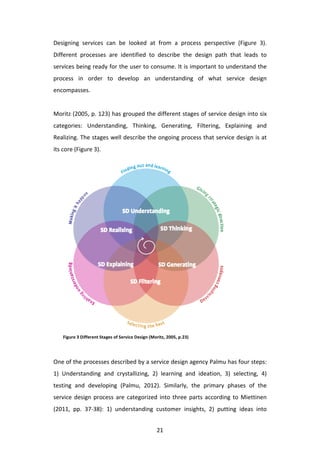
Moritz	
  (2005,	
  p.	
  123)	
  has	
  grouped	
  the	
  different	
  stages	
  of	
  service	
  design	
  into	
  six	
  
categories:	
   Understanding,	
   Thinking,	
   Generating,	
   Filtering,	
   Explaining	
   and	
  
Realizing.	
  The	
  stages	
  well	
  describe	
  the	
  ongoing	
  process	
  that	
  service	
  design	
  is	
  at	
  
its	
  core	
  (Figure	
  3).	


       Figure	
  3	
  Different	
  Stages	
  of	
  Service	
  Design	
  (Moritz,	
  2005,	
  p .23)	


One	
   of	
   the	
   processes	
   described	
   by	
   a	
   service	
   design	
   agency	
   Palmu	
   has	
   four	
   steps:	
  
1)	
   Understanding	
   and	
   crystallizing,	
   2)	
   learning	
   and	
   ideation,	
   3)	
   selecting,	
   4)	
  
testing	
   and	
   developing	
   (Palmu,	
   2012).	
   Similarly,	
   the	
   primary	
   phases	
   of	
   the	
  
service	
   design	
   process	
   are	
   categorized	
   into	
   three	
   parts	
   according	
   to	
   Miettinen	
  
(2011,	
   pp.	
   37-­‐38):	
   1)	
   understanding	
   customer	
   insights,	
   2)	
   putting	
   ideas	
   into	


                                                                            21	
  
service	
   concepts	
   and	
   3)	
   developing	
   the	
   idea	
   further	
   through	
   modeling.	
  	
  
Additionally,	
  the	
  process	
  is	
  replenished	
  through	
  the	
  launch	
  and	
  maintenance	
  of	
  
the	
  service.	


What	
   most	
   of	
   these	
   service	
   design	
   process	
   descriptions	
   are	
   lacking	
   is	
   the	
  
continuity	
   of	
   the	
   design	
   after	
   the	
   implementation.	
   Maintenance	
   and	
  
development	
   are	
   mentioned,	
   however	
   not	
   necessarily	
   sufficient	
   to	
   maintain	
   and	
  
renew	
   the	
   service.	
   Moreover,	
   these	
   processes	
   are	
   defined	
   in	
   the	
   setting	
   of	
  
service	
  design	
  in	
  general.	
  These	
  processes	
  seem	
  to	
  be	
  more	
  suitable	
  for	
  simple	
  
processes.	
  Their	
  adjustability	
  into	
  describing	
  the	
  design	
  process	
  of	
  public	
  services	
  
might	
   not	
   however	
   apply.	
   Especially	
   in	
   public	
   services,	
   it	
   is	
   crucial	
   to	
   take	
   in	
  
concern	
  how	
  the	
  service	
  develops	
  after	
  being	
  implemented.	


       2.1.3 CO-CREATION IN SERVICE DESIGN

The	
  traditional	
  development	
  of	
  services	
  has	
  lately	
  been	
  replaced	
  by	
  co-­‐creative	
  
service	
   design.	
   Miettinen	
   (2011,	
   p.21)	
   describes	
   it	
   being	
   part	
   of	
   a	
   wider	
  
phenomenon	
   where	
   the	
   emphasis	
   of	
   product	
   development	
   has	
   shifted	
   to	
  
generate	
   new	
   ideas	
   based	
   on	
   the	
   creative	
   process	
   done	
   together	
   with	
   the	
  
customers,	
  called	
  co-­‐design.	


Although	
  user-­‐centric	
  design	
  has	
  been	
  an	
  acknowledged	
  phenomenon	
  for	
  quite	
  a	
  
while,	
   Miettinen	
   (2011,	
   p.23)	
   finds	
   service	
   design	
   demanding	
   an	
   even	
   more	
  
intensive	
   collaboration	
   with	
   the	
   customer	
   and	
   other	
   partners	
   involved.	
   Meroni	
  
and	
   Sangiorgi	
   (2011	
   p.	
   203),	
   in	
   their	
   analysis	
   of	
   17	
   case	
   studies,	
   observed	
   that	
  
service	
   design	
   includes	
   a	
   strong	
   human-­‐centered	
   approach.	
   	
   This	
   approach	
   for	
  
services	
  establishes	
  in	
  the	
  capacity	
  and	
  methods	
  to	
  investigate	
  and	
  understand	
  
experiences	
   and	
   interactions	
   when	
   designing	
   new	
   services.	
   Service	
   interactions	
  
can	
  be	
  examined	
  from	
  various	
  perspectives.	
  Firstly	
  public’s	
  interactions	
  with	
  the	
  
service,	
   and	
   in	
   a	
   wider	
   scale	
   their	
   communities	
   or	
   organizations.	
   Secondly,	
  
exchange	
   between	
   staff	
   and	
   their	
   organizations	
   and	
   thirdly,	
   between	
   the	
  
different	
  service	
  systems.	


                                                               22	
  
 
In	
  their	
  research	
  about	
  the	
  co-­‐creation	
  of	
  value	
  in	
  public	
  transport,	
  Heiko,	
  Mikael	
  
and	
   Bo	
   (2010)	
   found	
   out	
   that	
   consumers	
   co-­‐create	
   value	
   with	
   the	
   public	
  
authority	
   in	
   many	
   levels.	
   Self-­‐	
   service	
   functions	
   such	
   as	
   buying	
   a	
   train	
   ticket	
  
reduced	
  both	
  time	
  and	
  expenses	
  of	
  the	
  consumers.	
  In	
  addition,	
  automated	
  ticket	
  
machines	
  with	
  informational	
  touchscreens	
  facilitated	
  the	
  process	
  and	
  gave	
  more	
  
information	
  for	
  example	
  about	
  paying	
  methods.	


In	
  this	
  research,	
  service	
  design	
  is	
  considered	
  to	
  encompass	
  a	
  highly	
  user-­‐centric	
  
aspect	
   as	
   such.	
   Therefore	
   the	
   impact	
   and	
   role	
   of	
   co-­‐creation	
   with	
   users	
   is	
   not	
  
examined	
  in	
  further	
  detail	
  separately.	


         2.1.4 SERVICE DESIGN METHODS

Different	
  methods	
  have	
  proven	
  to	
  assist	
  innovation	
  in	
  the	
  public	
  services	
  (Design	
  
Council,	
   2008).	
   	
   Furthermore,	
   Design	
   Council	
   (2008)	
   states	
   that	
   design	
  
methodologies	
  can	
  improve	
  service	
  delivery	
  in	
  five	
  key	
  ways:	
  	
  
1)	
        Developing	
  more	
  personalized	
  services	
  
2)	
        Harnessing	
  the	
  knowledge	
  of	
  frontline	
  staff	
  
3)	
        Managing	
  risk	
  by	
  prototyping	
  new	
  ideas	
  
4)	
        Improving	
  efficiency	
  and	
  value	
  for	
  money	
  
5)	
        Giving	
  service	
  users	
  more	
  control.	


Rapid	
   prototyping	
   helps	
   to	
   bring	
   out	
   problems	
   already	
   in	
   the	
   early	
   stage	
   and	
   the	
  
collaborative	
   nature	
   of	
   many	
   methods	
   help	
   in	
   engaging	
   public	
   sector	
   workers,	
  
frontline	
   staff	
   and	
   users	
   in	
   the	
   development	
   of	
   the	
   services	
   (Design	
   Council,	
  
2008).	
   	
   User	
   observation	
   helps	
   in	
   revealing	
   hidden	
   needs,	
   motives	
   and	
   values.	
  
Creating	
   personas	
   or	
   behavior	
   profiles	
   helps	
   in	
   getting	
   into	
   the	
   users	
   position	
  
(Sorsimo,	
  2010).	
  With	
  service	
  blueprint	
  a	
  model	
  of	
  the	
  service	
  is	
  created	
  where	
  
the	
   interaction	
   between	
   the	
   different	
   parts	
   of	
   the	
   service	
   can	
   be	
   better	
   seen	
  
(Sorsimo,	
  2010).	


                                                               23	
  
Service	
   path	
   is	
   a	
   set	
   of	
   sequential	
   instants	
   that	
   establish	
   from	
   the	
   choices	
   that	
  
the	
  customer	
  makes	
  and	
  the	
  process	
  that	
  the	
  service	
  provider	
  has.	
  It	
  is	
  a	
  tool	
  to	
  
describe	
  the	
  service	
  offering	
  (Tuulaniemi,	
  2011,	
  p.	
  79).	


Pilot	
   projects,	
   service	
   prototypes	
   and	
   living	
   labs	
   are	
   common	
   for	
   testing	
   the	
  
service	
  solutions	
  with	
  the	
  actual	
  users.	
  They	
  allow	
  for	
  new	
  system	
  configurations	
  
to	
   gradually	
   emerge,	
   based	
   on	
   shared	
   learning	
   process	
   (Meroni	
   &	
   Sangiorgi,	
  
2011	
  p.	
  121).	
  Pilot	
  projects	
  are	
  used	
  to	
  test	
  the	
  service	
  before	
  the	
  actual	
  launch	
  
of	
   the	
   system	
   in	
   a	
   wider	
   context.	
   Pilots	
   normally	
   last	
   for	
   a	
   shorter	
   period	
   of	
   time	
  
and	
   are	
   carefully	
   reported	
   to	
   draw	
   conclusions	
   for	
   the	
   further	
   service	
  
improvements	
  (Design	
  Council,	
  2008).	


The	
   design	
   methods	
   are	
   seen	
   to	
   assist	
   in	
   the	
   overall	
   service	
   delivery	
   and	
   could	
  
assist	
  in	
  obtaining	
  service	
  design-­‐know	
  how	
  through	
  practice.	
  As	
  such,	
  different	
  
methods	
   are	
   appropriate	
   for	
   distinct	
   types	
   of	
   services	
   and	
   researching	
   the	
   effect	
  
of	
  the	
  methods	
  to	
  the	
  service	
  outcome	
  would	
  be	
  a	
  topic	
  lacking	
  proper	
  research.	
  
However,	
   in	
   the	
   current	
   research	
   service	
   methodologies	
   are	
   not	
   further	
  
investigated,	
  but	
  as	
  such	
  presenting	
  them	
  will	
  assist	
  in	
  understanding	
  the	
  service	
  
design	
  process.	


       2.2 DESIGNING PUBLIC SERVICES


One	
  of	
  the	
  areas	
  service	
  design	
  has	
  gained	
  ground	
  recently	
  has	
  been	
  the	
  public	
  
sector.	
   In	
   order	
   to	
   comprehend	
   the	
   position	
   of	
   service	
   design	
   in	
   the	
   making	
   of	
  
public	
   services,	
   it	
   is	
   crucial	
   to	
   look	
   at	
   the	
   background	
   of	
   service	
   design	
   in	
   the	
  
public	
   sector	
   at	
   the	
   moment	
   and	
   whether	
   there	
   is	
   actually	
   a	
   need	
   for	
   it.	
   Since	
  
this	
  research	
  is	
  based	
  on	
  two	
  case	
  studies	
  of	
  service	
  design	
  projects	
  in	
  Helsinki,	
  	
  
examples	
  of	
  service	
  design	
  in	
  the	
  public	
  sector	
  in	
  Finland	
  are	
  looked	
  at	
  in	
  further	
  
detail.	


Societies	
  are	
  facing	
  new	
  kind	
  of	
  challenges,	
  which	
  has	
  forced	
  the	
  governments	
  to	
  
take	
   innovation	
   in	
   public	
   services	
   more	
   seriously.	
   Ageing	
   population,	


                                                                    24	
  
immigration,	
   climate	
   change,	
   environmental	
   degradation	
   and	
   the	
   economic	
  
downturn	
   are	
   all	
   problems	
   that	
   the	
   public	
   organizations	
   seek	
   to	
   solve	
   (Meroni	
   &	
  
Sangiorgi,	
   2011	
   p.	
   119).	
   The	
   citizens	
   tend	
   to	
   see	
   the	
   public	
   sector	
   as	
   an	
  
environment	
  not	
  so	
  easy	
  to	
  comprehend	
  and	
  where	
  performing	
  tasks	
  is	
  difficult	
  
(Määttä,	
  2010).	


Public	
  services	
  have	
  traditionally	
  developed	
  through	
  the	
  structures	
  of	
  the	
  society	
  
and	
   the	
   development	
   of	
   the	
   systems.	
   Actually,	
   most	
   of	
   the	
   services	
   we	
   consume	
  
at	
  the	
  moment	
  have	
  not	
  been	
  designed	
  as	
  the	
  services	
  of	
  2010’s.	
  	
  Governmental	
  
reforms	
   have	
   also	
   changed	
   the	
   way	
   services	
   are	
   governed	
   and	
   designed.	
  	
  
Reforms	
   made	
   during	
   the	
   regression	
   in	
   the	
   90’s	
   in	
   Finland	
   started	
   the	
   shift	
   for	
  
the	
   development	
   of	
   new,	
   more	
   collaborative	
   models	
   for	
   service	
   production.	
  	
  
Before,	
   the	
   steering	
   system	
   of	
   service	
   production	
   had	
   mainly	
   been	
   hierarchy	
  
where	
   services	
   were	
   produced	
   inside	
   the	
   organization	
   (Määttä	
   2010).	
   The	
  
traditional	
   ways	
   of	
   providing	
   services	
   were	
   classified	
   as	
   market	
   production	
   and	
  
government	
   production	
   (Osborne,	
   2000	
   p.84)	
   According	
   to	
   Plummer	
   (2000,	
   p.	
  
21)	
  in	
  the	
  past	
  the	
  aim	
  was	
  to	
  provide	
  municipal	
  services	
  almost	
  solely	
  through	
  
the	
   public	
   machinery	
   since	
   municipalities	
   had	
   concerns	
   in	
   private	
   sector	
  
involvement	
  in	
  providing	
  services.	


In	
  public	
  services,	
  the	
  market	
  orientated	
  mechanisms	
  and	
  especially	
  the	
  internal,	
  
co-­‐operation	
   based	
   purchaser-­‐producer	
   split	
   of	
   the	
   corporation,	
   which	
   has	
  
developed	
   towards	
   hybrid	
   organization,	
   have	
   become	
   common	
   in	
   recent	
   years	
  
(Määttä,	
  2010	
  p.13).	


       2.2.1 PUBLIC SERVICE DESIGN


Current	
   research	
   has	
   dealt	
   with	
   public	
   service	
   design	
   from	
   different	
   standpoints,	
  
discussed	
  about	
  same	
  topics	
  with	
  diverse	
  concepts.	
  The	
  design	
  of	
  public	
  services,	
  
like	
   service	
   design	
   in	
   general,	
   can	
   be	
   looked	
   at	
   from	
   multiple	
   interdisciplinary	
  
perspectives.	
   Different	
   organizations,	
   departments	
   and	
   even	
   individuals	
   inside	
  
the	
   public	
   organization	
   have	
   different	
   practical	
   implication	
   on	
   what	
   service	


                                                              25	
  
design	
   signifies.	
   Sundbo	
   and	
   Toivonen	
   (2011	
   pp.3-­‐4)	
   identify	
   three	
   different	
  
schools	
   of	
   thought	
   in	
   their	
   research:	
   general	
   innovation	
   theories,	
   service	
   specific	
  
theories	
   and	
   service	
   design	
   theories.	
   Overcoming	
   the	
   gaps	
   between	
   these	
  
perspectives	
  remains	
  a	
  challenge	
  also	
  in	
  the	
  public	
  sector.	


Meroni	
  and	
  Sangiorgi	
  (2011	
  p.	
  119)	
  identify	
  more	
  collaborative	
  service	
  models	
  as	
  
a	
  way	
  of	
  redesigning	
  public	
  and	
  community	
  services.	
  As	
  for	
  describing	
  the	
  new	
  
service	
  configurations	
  that	
  a	
  more	
  complex	
  service	
  design	
  that	
  is	
  needed	
  in	
  the	
  
public	
  sector	
  requires,	
  Meroni	
  and	
  Sangiorgi	
  (2011	
  p.122)	
  present	
  the	
  new	
  role	
  
of	
   design	
   for	
   services.	
   The	
   core	
   of	
   it	
   is	
   supporting	
   the	
   sense-­‐making	
   process	
   of	
  
the	
   partners,	
   through	
   field	
   studies,	
   strategic	
   conversations,	
   idea	
   generation,	
  
visualizations	
   and	
   prototyping,	
   as	
   they	
   configure	
   the	
   opportunities	
   for	
   radically	
  
new	
  service	
  solutions.	


However,	
   bringing	
   design	
   into	
   the	
   public	
   organizations	
   structures	
   is	
   not	
  
dependent	
   only	
   on	
   physical	
   resources	
   and	
   governmental	
   structures.	
   There	
   still	
  
exists	
  a	
  gap	
  between	
  the	
  private	
  sector’s	
  service	
  design	
  and	
  the	
  service	
  design	
  in	
  
the	
  public	
  sector.	
  It	
  is	
  essential	
  for	
  the	
  organization	
  to	
  be	
  capable	
  to	
  apply	
  and	
  
assimilate	
  design	
  thinking	
  in	
  order	
  for	
  the	
  designed	
  propositions	
  to	
  develop	
  into	
  
a	
   service	
   delivery.	
   So	
   as	
   to	
   create	
   design	
   readiness,	
   organizations	
   have	
   to	
  
enlighten	
   where	
   design	
   fits	
   in	
   their	
   wider	
   development	
   process	
   (Bailey,	
   2010).	
  
Design	
   readiness,	
   or	
   absorptive	
   capacity,	
   develops	
   cumulatively	
   and	
   requires	
   a	
  
long-­‐term	
  investment	
  from	
  the	
  state.	


Well-­‐established	
   public	
   service	
   reforms	
   have	
   been	
   made	
   in	
   the	
   UK	
   and	
   Denmark	
  
(Hardley	
  &	
  Pederson,	
  2008)	
  and	
  they	
  are,	
  therefore,	
  sites	
  of	
  particular	
  academic	
  
and	
  policy	
  interest.	
  Both	
  of	
  the	
  countries	
  engage	
  in	
  comprehensive	
  programs	
  of	
  
development	
  of	
  public	
  services.	
  Denmark	
  also	
  has	
  a	
  long	
  history	
  of	
  having	
  service	
  
design	
   in	
   the	
   political	
   agenda	
   and	
   programs	
   have	
   been	
   launched	
   to	
   promote	
  
design	
   in	
   solving	
   the	
   challenges	
   in	
   the	
   public	
   sector	
   (Scherfig,	
   Brunander	
   &	
  
Melander,	
   2010).	
   	
   In	
   the	
   UK,	
   the	
   Design	
   Council	
   is	
   the	
   national	
   strategic	
   body	
   for	
  
design.	
  According	
  to	
  the	
  Design	
  Council	
  (2006)	
  their	
  process	
  is	
  human-­‐centered	


                                                                  26	
  
and	
   interdisciplinary.	
   Their	
   goal	
   is	
   to	
   enable	
   UK	
   managers	
   to	
   become	
   the	
   best	
  
users	
   of	
   design	
   in	
   the	
   world.	
   However,	
   this	
   is	
   not	
   the	
   situation	
   in	
   most	
   countries	
  
and	
   a	
   true	
   need	
   for	
   service	
   design	
   professionals	
   in	
   the	
   public	
   sector	
   exist	
  
(Tuulaniemi,	
  2011	
  p.	
  285).	


       2.2.2 PUBLIC SERVICE DESIGN IN FINLAND


Governmental	
   guidelines	
   and	
   reforms	
   made	
   influence	
   on	
   how	
   service	
   design	
   is	
  
realized	
   in	
   practice	
   and	
   therefore	
   this	
   varies	
   from	
   country	
   and	
   location	
   to	
  
another.	
  Since	
  the	
  current	
  research	
  is	
  based	
  on	
  the	
  empirical	
  data	
  on	
  two	
  cases	
  
in	
  Helsinki,	
  the	
  context	
  in	
  which	
  public	
  service	
  design	
  is	
  discussed	
  in	
  this	
  research	
  
is	
  Finland,	
  and	
  more	
  specifically,	
  the	
  City	
  of	
  Helsinki.	


Public	
  service	
  design	
  being	
  relatively	
  novel	
  procedure,	
  the	
  public	
  sector	
  is	
  lacking	
  
experience	
  and	
  supportive	
  structures.	
  	
  Successful	
  service	
  pilots	
  and	
  projects	
  exist	
  
and	
  have	
  lately	
  been	
  developed	
  more	
  openly	
  together	
  with	
  the	
  users.	
  However,	
  
the	
  design	
  of	
  public	
  services	
  lacks	
  government	
  commitment	
  and	
  structures	
  and	
  
projects	
  work	
  rather	
  separately	
  from	
  one	
  another.	
  Provoke	
  (2010)	
  suggests	
  that	
  
the	
   role	
   of	
   the	
   public	
   sector	
   is	
   to	
   be	
   an	
   example	
   –	
   develop	
   its	
   services	
   and	
  
publish	
  the	
  experiences	
  openly	
  for	
  everyone	
  to	
  see.	


The	
   City	
   of	
   Helsinki	
   introduced	
   a	
   Business	
   friendly	
   partner	
   –	
   project	
   area	
   to	
  
produce	
  more	
  user-­‐friendly	
  services	
  in	
  the	
  future	
  during	
  2008-­‐2010.	
  One	
  of	
  the	
  
goals	
  of	
  the	
  project	
  was	
  to	
  ease	
  the	
  process	
  of	
  private	
  event	
  organizers	
  to	
  apply	
  
for	
  a	
  license	
  from	
  the	
  city.	
  Through	
  an	
  e-­‐service,	
  the	
  organizer	
  could	
  better	
  apply	
  
for	
   needed	
   permissions	
   and	
   search	
   for	
   information.	
   Normally	
   each	
   of	
   the	
  
licenses	
   have	
   to	
   be	
   applied	
   from	
   as	
   many	
   as	
   18	
   different	
   city	
   offices	
   and	
   other	
  
actors	
  so	
  this	
  procedure	
  takes	
  time.	
  Through	
  the	
  methods	
  of	
  service	
  design,	
  the	
  
process	
   could	
   be	
   redesigned	
   to	
   a	
   more	
   customer-­‐oriented	
   service	
   (The	
   City	
   of	
  
Helsinki,	
   2012).	
   	
   Two	
   Master’s	
   lever	
   researches	
   were	
   made	
   concerning	
   the	
  
service	
  paths	
  of	
  the	
  project	
  in	
  Aalto	
  University.	
  A	
  Master’s	
  Thesis	
  focusing	
  on	
  the	
  
development	
  of	
  customer-­‐oriented	
  service	
  networks	
  in	
  city	
  context	
  was	
  done	
  for	


                                                                  27	
  
the	
  Business	
  friendly	
  partner	
  –project	
  in	
  the	
  department	
  of	
  marketing	
  by	
  Monika	
  
Rautvuori	
  in	
  2010.	
  Kirsi	
  Haikio	
  examined	
  the	
  same	
  project	
  from	
  the	
  perspective	
  
of	
  using	
  design	
  methods	
  as	
  support	
  for	
  service	
  design	
  in	
  her	
  Master’s	
  work	
  in	
  the	
  
School	
  of	
  Art	
  and	
  Design	
  in	
  2010.	


A	
  pilot	
  program	
  called	
  Design	
  Exchange	
  (2012)	
  focuses	
  on	
  bringing	
  government	
  
and	
   design	
   together.	
   In	
   the	
   exchange,	
   the	
   strategic	
   designers	
   are	
   embedded	
   in	
  
the	
  municipalities	
  and	
  ministries	
  in	
  Finland.	
  The	
  goal	
  of	
  the	
  program	
  is	
  to	
  build	
  
design	
   capability	
   to	
   public	
   sector	
   and	
   prepare	
   a	
   new	
   generation	
   of	
   strategic	
  
designers	
   in	
   Finland.	
   It	
   is	
   led	
   by	
   Sitra,	
   The	
   Finnish	
   Innovation	
   Fund	
   and	
   is	
   a	
  
globally	
   unique	
   initiative	
   with	
   a	
   number	
   of	
   yearlong	
   placements	
   opening	
   up	
  
during	
  2012.	


There	
  are	
  development	
  companies	
  offering	
  support	
  in	
  producing	
  and	
  facilitating	
  
service	
   projects	
   in	
   Finland,	
   owned	
   partly	
   or	
   fully	
   by	
   the	
   cities.	
   These	
   include	
  
Forum	
  Virium	
  Helsinki,	
  which	
  is	
  focusing	
  on	
  digital	
  services	
  in	
  the	
  City	
  of	
  Helsinki,	
  
and	
  Culminatum	
  Innovation,	
  which	
  is	
  developing	
  services	
  and	
  competitiveness	
  in	
  
the	
  Helsinki	
  Region.	


Universities	
   are	
   also	
   taking	
   part	
   in	
   the	
   design	
   of	
   public	
   services	
   and	
   through	
  
collaboration	
   projects.	
   For	
   instance,	
   Aalto	
   University’s	
   365	
   Wellbeing	
   program	
  
contains	
  12	
  projects,	
  relating	
  to	
  healthcare	
  and	
  wellbeing	
  which	
  represent	
  actual	
  
services	
  in	
  the	
  cities	
  of	
  Helsinki,	
  Espoo,	
  Kauniainen	
  and	
  Lahti.	
  	
  It	
  underlines	
  new	
  
working	
  methods	
  in	
  design,	
  such	
  as	
  service	
  design	
  and	
  the	
  openings	
  it	
  provides	
  
for	
  municipal	
  decision-­‐makers	
  and	
  the	
  public	
  using	
  the	
  services	
  (Aalto	
  University,	
  
2012).	


       2.3 MULTI ORGANIZATIONAL ENTITIES IN PUBLIC
                SERVICES


A	
   growing	
   recognition	
   has	
   been	
   that	
   service	
   is	
   increasingly	
   being	
   delivered	
   by	
  
multi-­‐	
  rather	
  than	
  single-­‐organizational	
  entities	
  (Purchase,	
  Mills	
  &	
  Parry,	
  2011).	


                                                                28	
  
The	
  obligations	
  that	
  the	
  public	
  sector	
  has	
  to	
  follow	
  such	
  as	
  legislative	
  regulations	
  
might	
   cause	
   a	
   short-­‐handed	
   service	
   structure	
   and	
   massive	
   overall	
  
infrastructures.	
   It	
   has	
   been	
   noticed	
   that	
   these	
   structures	
   could	
   benefit	
   from	
  
financial	
  exchange	
  with	
  consumers	
  or	
  private	
  organizations	
  that,	
  in	
  return,	
  would	
  
get	
  value	
  by	
  using	
  the	
  public	
  resources	
  (Tuulaniemi,	
  2011	
  p.42).	


       2.3.1 PUBLIC PRIVATE PARTNERSHIPS – THE THIRD WAY

Partnership	
  is	
  based	
  on	
  joint	
  decision-­‐making	
  and	
  production	
  in	
  order	
  to	
  achieve	
  
effectiveness	
   for	
   both	
   parties	
   (Osborne,	
   2000	
   p.85).	
   This	
   relationship,	
   also	
   called	
  
‘third	
   way’,	
   positions	
   itself	
   between	
   market	
   and	
   government	
   production	
   and	
   is	
  
known	
   as	
   public-­‐private	
   partnerships	
   (PPP)	
   (Osborne,	
   2000	
   p.84).	
   	
   Hartley	
   and	
  
Pedersen	
  (2008)	
  describe	
  the	
  “Third	
  Way”	
  as	
  a	
  rhetoric	
  aimed	
  to	
  capture	
  a	
  fusion	
  
of	
  neo-­‐liberal	
  economic	
  policies	
  with	
  social	
  inclusion	
  and	
  citizen	
  involvement	
  in	
  
governance.	


Ysa	
  (2007)	
  defines	
  PPPs	
  as	
  institutional	
  arrangements	
  capable	
  of	
  mobilizing	
  the	
  
necessary	
   resources	
   for	
   public	
   management	
   by	
   activating	
   the	
   creation	
   of	
  
complex	
  cross-­‐organizational	
  networks	
  in	
  which	
  both	
  public	
  and	
  private	
  players	
  
participate.	


OECD	
   (2010,	
   p.20)	
   underlines	
   in	
   its	
   innovation	
   strategy	
   that	
   public-­‐private	
  
partnerships	
  based	
  on	
  established	
  good	
  practices,	
  such	
  as	
  affordability,	
  value	
  for	
  
money,	
  risk	
  sharing,	
  competition	
  and	
  transparency,	
  can	
  help	
  strengthen	
  public-­‐
sector	
   innovation.	
   What	
   the	
   public	
   sector	
   needs	
   to	
   have	
   is	
   capacity	
   to	
   create,	
  
manage	
  and	
  evaluate	
  such	
  partnerships.	


The	
   exchange	
   relationships	
   between	
   the	
   customer	
   and	
   the	
   service	
   can	
   be	
  
distinctive	
   depending	
   on	
   whether	
   the	
   sector	
   providing	
   the	
   service	
   is	
   private	
   or	
  
public.	
  In	
  private	
  sector	
  the	
  relationship	
  is	
  economic,	
  so	
  that	
  money	
  is	
  exchanged	
  
for	
  a	
  service,	
  voluntary	
  in	
  that	
  the	
  customer	
  has	
  the	
  option	
  to	
  choose	
  whether	
  to	
  
buy	
  or	
  not	
  and	
  direct	
  in	
  that	
  the	
  money	
  directly	
  relates	
  to	
  the	
  service	
  (Alford	
  &	


                                                            29	
  
Speed,	
   2006).	
   In	
   the	
   public	
   sector	
   the	
   customer	
   relationship	
   is	
   more	
   complex.	
  
Value	
   is	
   not	
   created	
   to	
   certain	
   shareholders	
   but	
   rather	
   for	
   the	
   public	
   and	
  
consumed	
  collectively.	
  In	
  addition	
  the	
  interaction	
  can	
  be	
  involuntary.	
  Alford	
  and	
  
Speed	
   state	
   that	
   the	
   agency	
   seeks	
   to	
   make	
   certain	
   that	
   it	
   can	
   achieve	
   its	
  
regulatory	
   outcomes	
   at	
   minimum	
   cost	
   to	
   the	
   public	
   purse	
   (2006,	
   p.	
   318).	
   	
   The	
  
differences	
  in	
  the	
  relationships	
  between	
  the	
  customer	
  and	
  the	
  producer	
  causes	
  
challenges	
  in	
  managing	
  multi	
  producer	
  projects.	


However,	
   similarities	
   in	
   the	
   service	
   production	
   can	
   be	
   seen	
   as	
   well.	
   Tuulaniemi	
  
states	
   that	
   the	
   customers	
   that	
   the	
   private	
   and	
   public	
   sectors	
   have	
   are	
   same,	
   the	
  
needs	
   that	
   the	
   services	
   are	
   trying	
   to	
   fulfill	
   are	
   same	
   for	
   both	
   (2011,	
   p.281).	
  
Therefore	
  both	
  sectors	
  have	
  the	
  same	
  goal:	
  to	
  offer	
  as	
  much	
  results	
  as	
  possible	
  
with	
  as	
  few	
  resources	
  as	
  possible	
  (Tuulaniemi,	
  2011,	
  p.281).	


The	
  driver	
  for	
  providing	
  service	
  to	
  the	
  public	
  through	
  a	
  partnership	
  seems	
  to	
  be	
  
ensuring	
   the	
   quality	
   of	
   the	
   service.	
   Meidutē	
   and	
   Paliulis	
   	
   (2011)	
   state	
   that	
   the	
  
main	
  reason	
  to	
  form	
  public-­‐private	
  partnerships	
  is	
  to	
  ensure	
  that	
  the	
  standards	
  
of	
   public	
   services	
   remain	
   high.	
   This	
   is	
   done	
   in	
   order	
   to	
   achieve	
   and	
   develop	
   a	
  
quality	
  living	
  environment.	
  Through	
  co-­‐operation	
  with	
  the	
  private	
  sector,	
  public	
  
authorities	
   can	
   offer	
   high	
   –quality	
   services	
   with	
   private	
   sector	
   expertise	
   and	
  
finance	
  that	
  they	
  would	
  not	
  have	
  the	
  capabilities	
  or	
  resources	
  to	
  offer	
  otherwise	
  
(Robinson	
  &	
  Scott,	
  2009.	
  p.	
  183).	


Improving	
   output	
   specifications	
   and	
   creating	
   a	
   partnership	
   with	
   mutually	
   agreed	
  
goals	
   are	
   the	
   main	
   ingredients	
   for	
   a	
   successful	
   public–	
   private	
   partnership	
  
according	
  to	
  the	
  research	
  made	
  by	
  Robinson	
  and	
  Scott	
  (2009).	
  In	
  order	
  to	
  resolve	
  
whether	
  a	
  public	
  private	
  partnership	
  is	
  successful	
  or	
  is	
  meeting	
  the	
  service	
  needs	
  
of	
   the	
   municipality,	
   it	
   is	
   necessary	
   to	
   identify	
   the	
   needs	
   that	
   will	
   be	
   addressed	
  
and	
  agree	
  on	
  objectives	
  (Plummer,	
  2000	
  p.	
  19).	


                                                                30	
  
2.3.2 NETWORKS

Networking	
   has	
   had	
   a	
   wide	
   scale	
   of	
   synonyms	
   during	
   the	
   years:	
   team	
   working,	
  
multiprofessional	
   collaboration	
   and	
   constructing	
   partnerships.	
   However,	
   often	
  
these	
   different	
   concepts,	
   their	
   content	
   and	
   relations	
   among	
   them	
   come	
   out	
  
ambiguous	
  (Järvensivu,	
  Nykänen	
  &	
  Rajala	
  2010).	
  Järvensivu,	
  Nykänen	
  and	
  Rajala	
  
(2010)	
   state	
   that	
   many	
   barriers	
   for	
   networking	
   exist	
   which	
   prevent	
   the	
   actual	
  
change	
  towards	
  a	
  functioning	
  network	
  to	
  take	
  place.	
  These	
  barriers	
  include:	
  the	
  
daily	
   routines	
   leave	
   no	
   time	
   for	
   collaborative	
   work,	
   the	
   interests	
   of	
   ones	
   own	
  
organization	
  do	
  not	
  match	
  the	
  interests	
  of	
  the	
  others,	
  hierarchical	
  management	
  
and	
   horizontal	
   collaboration	
   do	
   not	
   match,	
   the	
   structures	
   do	
   not	
   support	
  
collaboration	
  or	
  simply	
  that	
  personal	
  chemistries	
  are	
  not	
  in	
  balance.	


Powell	
   (1990)	
   identifies	
   three	
   modes	
   of	
   organization	
   for	
   networks:	
   Market,	
  
Hierarchy	
   and	
   Network.	
   	
   In	
   market-­‐based	
   relationships,	
   the	
   collaboration	
  
between	
   the	
   parties	
   tends	
   to	
   be	
   short-­‐term	
   and	
   is	
   based	
   on	
   invite	
   to	
   tender.	
  
Markets	
  define	
  the	
  price.	
  Clear	
  products	
  or	
  services	
  are	
  best	
  suited	
  for	
  market-­‐	
  
based	
   model,	
   whereas	
   more	
   complicated	
   systems	
   hard	
   to	
   manage	
   though	
   it.	
  
Applying	
   market	
   oriented	
   working	
   methods	
   to	
   municipal	
   hierarchy,	
   means	
   in	
  
practice	
   that	
   the	
   hierarchy	
   is	
   divided	
   into	
   two	
   parts,	
   separating	
   the	
   purchasers	
  
and	
  producers.	
  The	
  contracts	
  between	
  the	
  two	
  parties	
  define	
  the	
  more	
  specific	
  
guidelines	
  of	
  the	
  contract	
  (Määttä	
  2010,	
  p.102).	


                                                              31	
  
In	
   hierarchical	
   relationships,	
   long	
   contracts	
   outlining	
   who	
   has	
   the	
   control	
   over	
  
the	
   other	
   in	
   the	
   relationship	
   are	
   normally	
   formed.	
   	
   Municipalities	
   are	
   one	
  
example	
   of	
   such	
   models.	
   In	
   networks,	
   each	
   actor	
   is	
   free	
   to	
   perform	
   independent	
  
decisions	
   and	
   the	
   contract	
   between	
   the	
   parties	
   is	
   redefined	
   throughout	
   the	
  
process.	
  Networks	
  are	
  flexible	
  and	
  the	
  relationships	
  in	
  them	
  based	
  on	
  trust	
  and	
  
commitment.	


                                                             MARKET


                                                           Instrumental


                                                   Organic              Symbolic


                                      NETWORK                                    HIERARCHY


                       Figure	
  4	
  Ideal	
  Partnership	
  Types	
  (Modified:	
  Ysa,	
  2007,	
  p.50)	


Based	
  on	
  the	
  organizational	
  division	
  of	
  networks,	
  Ysa	
  (2007,	
  p.50)	
  has	
  classified	
  
ideal	
  partnership	
  types	
  into	
  three	
  categories:	
  instrumental,	
  symbolic	
  and	
  organic	
  
(Figure	
   4).	
   	
   Instrumental	
   PPP’s	
   are	
   based	
   on	
   markets	
   and	
   the	
   relationship	
  
between	
   actors	
   is	
   competitive.	
   Symbolic	
   partnerships	
   depend	
   on	
   hierarchy	
  
operating	
   though	
   a	
   chair	
   of	
   command.	
   Organic	
   PPP’s	
   are	
   based	
   on	
   trust	
   and	
  
governed	
   through	
   networks.	
   The	
   form	
   of	
   governance	
   depends	
   on	
   the	
   power	
  
relationships	
  between	
  parties	
  and	
  evolves	
  over	
  time.	


Instrumental	
   partnerships	
   aim	
   to	
   achieve	
   measurable	
   objectives	
   shared	
   by	
   the	
  
parties	
   involved.	
   Most	
   common	
   uses	
   are	
   linked	
   to	
   the	
   execution	
   of	
  
infrastructures	
   or	
   providing	
   a	
   service	
   by	
   making	
   the	
   project	
   viable.	
   The	
   key	
  
variable	
  is	
  the	
  risk	
  transferred	
  from	
  the	
  public	
  to	
  private	
  sector.	


                                                                    32	
  
Symbolic	
   PPP’s	
   have	
   developed	
   from	
   the	
   need	
   to	
   strengthen	
   bureaucratic	
  
control	
   over	
   the	
   public-­‐private	
   collaboration.	
   The	
   symbolic	
   nature	
   of	
   the	
  
partnership	
   arises	
   from	
   uncertainty	
   of	
   pursued	
   goals	
   or	
   simply	
   indulgence	
   in	
  
public	
   relations.	
   The	
   desire	
   is	
   to	
   strengthen	
   the	
   hierarchy	
   and	
   position	
   of	
   the	
  
stronger	
  party	
  in	
  relation	
  to	
  other	
  participants.	


Organic	
   partnership	
   is	
   based	
   on	
   intention	
   and	
   the	
   relationship	
   between	
  
stakeholders	
   is	
   determined	
   through	
   negotiated	
   standards.	
   	
   In	
   such	
   network,	
  
motivation	
   and	
   involvement	
   are	
   shared	
   despite	
   of	
   differing	
   contributions.	
  
Mutual	
  trust	
  of	
  parties	
  helps	
  to	
  achieve	
  common	
  goals.	
  This	
  is	
  the	
  ideal	
  type	
  of	
  
partnership	
  studied	
  in	
  the	
  literature	
  but	
  seldom	
  found	
  in	
  practice.	
  (Ysa,	
  2007)	


         2.4 FOSTERING THE CHANGE IN PUBLIC SERVICE
                DESIGN


In	
   order	
   to	
   develop	
   platforms	
   and	
   skills	
   to	
   enable	
   a	
   culture	
   of	
   change,	
   to	
   explore	
  
new	
   radical	
   service	
   models	
   and	
   use	
   social	
   technologies	
   innovatively	
   within	
  
service	
   processes,	
   new	
   collaborative	
   service	
   models	
   are	
   needed	
   according	
   to	
  
Meroni	
   and	
   Sangiorgi	
   (2011	
   p.	
   119).	
   	
   In	
   Finland,	
   the	
   ministry	
   of	
   Transport	
   and	
  
Communications	
  (2010)	
  emphasize	
  the	
  importance	
  of	
  open	
  collaboration	
  in	
  our	
  
society,	
   where	
   third	
   sector,	
   research	
   and	
   the	
   public	
   solve	
   problems	
   and	
   draw	
  
common	
   guidelines,	
   in	
   their	
   Digital	
   agenda	
   for	
   2011-­‐2020.	
   One	
   of	
   the	
   goals	
   of	
  
the	
   agenda	
   is	
   to	
   transform	
   the	
   siloed	
   management	
   into	
   a	
   more	
   interactive	
  
collaboration.	
   In	
   order	
   to	
   achieve	
   this	
   although	
   the	
   roles	
   and	
   activities	
   of	
   the	
  
sectors	
   differ,	
   the	
   different	
   sectors	
   need	
   to	
   commit	
   to	
   joint	
   processes	
   to	
   reach	
  
common	
  goals.	


Societal	
   challenges	
   also	
   demand	
   new	
   innovations	
   and	
   methods	
   of	
   working	
   for	
  
governments.	
   Meroni	
   and	
   Sangiorgi	
   (2011,	
   p.120)	
   identify	
   four	
   main	
  
characteristics	
   as	
   conditions	
   for	
   the	
   development	
   of	
   more	
   collaborative	
  
solutions.	
  
1)	
        Emphasis	
  on	
  co-­‐creation	


                                                                  33	
  
2)	
       Transformational	
  and	
  experimental	
  design	
  methods	
  
3)	
       New	
   service	
   system	
   configurations	
   that	
   bring	
   in	
   new	
   innovation	
   actors	
  
and	
  explore	
  new	
  business	
  models	
  
4)	
       New	
  media	
  as	
  enabling	
  platforms	


Through	
  the	
  fulfillment	
  of	
  the	
  aforementioned	
  characteristics	
  public	
  services	
  can	
  
be	
  redesigned	
  in	
  order	
  to	
  achieve	
  a	
  culture	
  of	
  change.	
  	
  That	
  is	
  co-­‐design,	
  design	
  
methods	
   that	
   build	
   capacities	
   and	
   engage	
   service	
   participants,	
   new	
   actors	
   in	
  
service	
   production	
   and	
   digital	
   technologies	
   that	
   ease	
   collaboration	
   and	
  
communication	
  could	
  be	
  the	
  key	
  for	
  a	
  major	
  transformation	
  (Meroni	
  &	
  Sangiorgi,	
  
2011,	
  pp.	
  120-­‐123).	


         2.4.1 SOCIAL INNOVATION

We	
   can	
   no	
   longer	
   regard	
   the	
   public	
   as	
   a	
   separate	
   actor	
   using	
   and	
   consuming	
  
public	
  services.	
  Collaborative	
  solutions	
  aim	
  to	
  release	
  design	
  for	
  public	
  services	
  
from	
   the	
   traditional	
   top-­‐down	
   approach.	
   To	
   continue,	
   here	
   the	
   people	
   are	
  
transformed	
   from	
   passive	
   receivers	
   to	
   active	
   participants	
   (Jégou	
   &	
   Manzini,	
  
2008).	
  A	
  new	
  way	
  of	
  providing	
  innovative	
  social	
  solutions	
  has	
  embarked	
  where	
  
people	
   come	
   together	
   and	
   develop	
   solutions	
   of	
   their	
   own	
   and	
   others’	
   needs	
  
without	
   waiting	
   for	
   the	
   government	
   or	
   the	
   market	
   to	
   provide	
   these	
   solutions	
  
(Warnke	
   &	
   Luiten,	
   2008).	
   	
   Warnke	
   and	
   Luiten	
   (2008)	
   see	
   these	
   social	
  
innovations,	
  called	
  social	
  enterprises,	
  now	
  mainly	
  run	
  by	
  “heroines	
  and	
  heroes”.	
  
However,	
   a	
   shift	
   to	
   a	
   more	
   wide	
   range	
   of	
   actors	
   producing	
   these	
   services	
   is	
  
happening.	
   Including	
   elements	
   from	
   co-­‐creation,	
   community-­‐centered	
   design	
  
approach	
  narrows	
  the	
  gap	
  between	
  the	
  users	
  and	
  the	
  producers	
  of	
  the	
  services.	


         2.4.2 TRANSFORMATIONAL DESIGN

Design	
   Council	
   (2006)	
   describes	
   a	
   new	
   approach	
   to	
   take	
   design	
   thinking	
   to	
   the	
  
transformation	
   of	
   public	
   services	
   called	
   transformation	
   design.	
   	
   The	
   aim	
   of	
   the	
  
approach	
   is	
   to	
   transform	
   the	
   ways	
   in	
   which	
   the	
   public	
   interacts	
   with	
   systems,	
  
services,	
  organizations	
  and	
  policies.	


                                                             34	
  
 
Transformation	
   design	
   happens	
   in	
   a	
   truly	
   interdisciplinary	
   environment.	
  
Participants	
   such	
   as	
   economists,	
   policy	
   analysts	
   and	
   psychologists	
   take	
   part	
   in	
  
the	
  design	
  process.	
  According	
  to	
  the	
  discipline,	
  a	
  top-­‐down	
  innovation	
  strategy	
  is	
  
no	
   longer	
   appropriate	
   for	
   solving	
   today’s	
   complex	
   problems.	
   Instead,	
   solutions	
  
must	
  be	
  able	
  to	
  be	
  picked	
  up	
  by	
  those	
  who	
  will	
  provide	
  them.	
  It	
  seeks	
  construct	
  
the	
  tools,	
  skills	
  and	
  organizational	
  capacity	
  for	
  ongoing	
  change	
  rather	
  than	
  just	
  
the	
  solution	
  for	
  the	
  initial	
  setting	
  (Design	
  Council,	
  2006).	


Abovementioned	
   characteristics	
   come	
   down	
   to	
   the	
   basic	
   elements	
   of	
  
Transformation	
   Design.	
   Meroni	
   and	
   Sangiorgi	
   (2011)	
   describe	
   two	
  
transformative	
   design	
   strategies.	
   From	
   outside-­‐in,	
   where	
   users	
   are	
   involved	
   in	
  
collaborative	
   services	
   and	
   bottom-­‐up	
   initiatives	
   and	
   from	
   inside-­‐out	
   where	
  
organizations	
  drive	
  for	
  organizational	
  change	
  and	
  new	
  service	
  models.	


The	
   practical	
   problems	
   raised	
   to	
   the	
   designers	
   and	
   actors	
   working	
   with	
  
transformation	
   design	
   include	
   leadership,	
   value,	
   tools	
   and	
   business	
   models.	
   	
   The	
  
philosophical	
  problems	
  in	
  the	
  same	
  context	
  facing	
  designers	
  are	
  identified	
  as:	
  
the	
   loss	
   of	
   personal	
   creative	
   authorship,	
   shaping	
   behavior	
   rather	
   than	
   form,	
  
transformation	
  design	
  is	
  never	
  done,	
  creativity	
  happens	
  in	
  run-­‐time,	
  not	
  just	
  in	
  
design-­‐time,	
   	
   diversity	
   over	
   quality	
   and	
   that	
   design	
   becomes	
   a	
   pro-­‐amateurs	
  
community	
  (Design	
  Council,	
  2006).	


The	
   elements	
   and	
   methods	
   used	
   in	
   Transformation	
   design	
   are	
   used	
   in	
   other	
  
disciplines	
   as	
   well.	
   However,	
   joining	
   up	
   all	
   these	
   approaches	
   into	
   a	
   consistent	
  
methodology	
  is	
  still	
  comparatively	
  uncommon.	


       2.4.3 MANAGING PUBLIC SERVICE DESIGN


Both	
  Denmark	
  and	
  the	
  UK	
  have	
  invested	
  in	
  management	
  development	
  focusing	
  
on	
   public	
   organizational	
   units	
   and	
   services	
   engaging	
   in	
   self-­‐governance.	
   The	
  
dynamic	
   society	
   demands	
   new	
   methods	
   of	
   leadership	
   from	
   public	
   service	


                                                             35	
  
managers	
   who	
   must	
   continue	
   to	
   provide	
   ever-­‐improving	
   and	
   reliable	
   services	
  
while	
   also	
   dismantling	
   and	
   reconfiguring	
   these	
   same	
   services	
   (Hardley	
   &	
  
Pedersen,	
  2008).	
  Moreover,	
  Hardley	
  and	
  Pedersen	
  (2008)	
  state	
  that	
  high	
  public	
  
expectations	
   signify	
   that	
   managers	
   are	
   expected	
   to	
   act	
   professionally	
   and	
   calmly	
  
while	
   their	
   tasks	
   being	
   uncertain,	
   contested	
   and	
   ambiguous.	
   To	
   continue,	
  
Hardley	
   and	
   Pedersen	
   (2008,	
   p.335)	
   state	
   the	
   following	
   about	
   managerial	
  
authority:	


           “Self-­‐constitution	
   becomes	
   increasingly	
   important	
   alongside	
   statute	
   and	
  
           constitutional	
   law.	
   Thus,	
   the	
   stability	
   and	
   scope	
   of	
   managerial	
   authority	
  
           depends	
   on	
   whether	
   the	
   management	
   position	
   is	
   accepted.	
   The	
  
           consequence	
   is	
   that	
   a	
   struggle	
   over	
   the	
   right	
   to	
   manage	
   and	
   make	
  
           decisions	
   emerges	
   both	
   with	
   respect	
   to	
   the	
   classical	
   governmental	
  
           institutions	
         and	
      between	
          the	
     competing	
           administrative	
            and	
  
           organizational	
  units.”	


Hardley	
   and	
   Pedersen	
   (2008)	
   see	
   public	
   sector	
   management	
   as	
   strategic	
  
communication.	
   Management	
   positions	
   in	
   network-­‐like	
   governance	
   structures	
  
are	
  created	
  through	
  negotiated	
  relations	
  and	
  positions	
  are	
  not	
  solely	
  fixed.	
  This	
  
can	
   cause	
   struggles	
   with	
   the	
   recognition	
   of	
   negotiation	
   interests	
   and	
   positions	
  
and	
  dialogue	
  and	
  mutual	
  agreements	
  (Hardley,	
  Pedersen,	
  2008	
  p.	
  336)	


The	
  proper	
  management	
  of	
  partnerships	
  is	
  crucial	
  since	
  successful	
  partnerships	
  
are	
   not	
   easy	
   to	
   achieve.	
   Osborne	
   (2000)	
   identifies	
   three	
   types	
   of	
   strategies	
   to	
  
make	
   partnerships	
   work:	
   process	
   management,	
   project	
   management	
   and	
  
network	
  constitution.	
  Projects	
  evolve	
  from	
  long-­‐term	
  interaction	
  and	
  that	
  is	
  why	
  
the	
   subject	
   of	
   cooperation	
   can	
   change	
   shape	
   over	
   and	
   over	
   again.	
   Process	
  
management	
   influences	
   and	
   facilitates	
   interaction	
   processes	
   and	
   helps	
   to	
   carry	
  
out	
  processes	
  of	
  interaction	
  between	
  the	
  actors.	


                                                             36	
  
2.4.4 FROM GOVERNMENT TO GOVERNANCE

The	
   shift	
   from	
   government	
   to	
   governance	
   shows	
   in	
   the	
   development	
   of	
   public	
  
management	
   practices.	
   Governance	
   has	
   been	
   the	
   concept	
   to	
   describe	
   a	
   model	
  
where	
   stakeholders	
   and	
   involved	
   in	
   taking	
   responsibility	
   for	
   the	
   political,	
  
economic	
   and	
   juridical	
   development	
   in	
   societies,	
   in	
   dialogue	
   with	
   political	
  
authorities	
   (Stø	
   &	
   Strandbakken,	
   2008).	
   In	
   this	
   context	
   stakeholders	
   include	
   all	
  
actors	
   that	
   are	
   involved	
   in	
   decision	
   making	
   process	
   both	
   as	
   individuals,	
  
businesses,	
  NGO’s	
  and	
  political	
  actors.	


Theories	
   of	
   public	
   governance	
   linked	
   to	
   user-­‐based	
   service	
   approaches	
   can	
   be	
  
divided	
   into	
   three	
   models:	
   Public	
   Administration,	
   New	
   Public	
   Management	
  
(NPM)	
   and	
   Network	
   Governance	
   (Li	
   Langergaard,	
   2011;	
   Blomgren,	
   Bingham,	
  
Nabatvhi	
  &	
  O'Leary,	
  2005).	
  Public	
  Administration	
  holds	
  a	
  top-­‐down	
  view	
  of	
  the	
  
public	
   sector,	
   which	
   is	
   based	
   largely	
   on	
   legislative,	
   bureaucratic	
   and	
   rule-­‐based	
  
order.	
   It	
   sees	
   the	
   users	
   of	
   the	
   public	
   services	
   as	
   clients	
   without	
   any	
   direct	
  
influence	
   on	
   the	
   service	
   and	
   considered	
   out-­‐of	
   date	
   for	
   managing	
   modern	
  
services.	


New	
   Public	
   Management	
   (NPM)	
   model	
   has	
   its	
   roots	
   in	
   the	
   1980’s	
   and	
   ultimately	
  
aims	
   at	
   increasing	
   the	
   public	
   efficiency	
   by	
   imitating	
   the	
   private	
   sector	
   (Li	
  
Langergaard,	
   2011,	
   p.205).	
   It	
   underlines	
   that	
   politicians	
   and	
   officials	
   have	
  
separate	
   tasks	
   and	
   that	
   service	
   delivery	
   should	
   be	
   separated	
   from	
   policy	
  
development.	
   Rather	
   than	
   offering	
   bulk	
   services	
   to	
   the	
   user,	
   according	
   to	
   the	
  
NPM,	
  consumers	
  should	
  have	
  a	
  choice	
  between	
  the	
  different	
  service	
  providers,	
  
which	
   requires	
   extreme	
   flexibility	
   and	
   adaptability	
   from	
   the	
   public	
   sector	
  
institutions.	
   Furthermore,	
   it	
   builds	
   on	
   used-­‐based	
   services,	
   where	
   the	
   public	
  
sector	
  services	
  are	
  modeled	
  according	
  to	
  a	
  market	
  and	
  commercial	
  model.	
  
New	
   Public	
   Management	
   (NPM)	
   model	
   has	
   shown	
   in	
   the	
   public	
   sector	
   through	
  
the	
   blurring	
   of	
   the	
   boundaries	
   of	
   public	
   and	
   private	
   sectors	
   (Osborne,	
   2000	
   p.	
  
57).	


                                                             37	
  
Network	
   Governance	
   model	
   has	
   developed	
   further	
   from	
   the	
   New	
   Public	
  
Management	
  and	
  includes	
  the	
  rise	
  of	
  networks	
  and	
  partnerships,	
  innovation	
  in	
  
democratic	
   practice,	
   the	
   development	
   of	
   choice	
   and	
   co-­‐production	
   as	
   service	
  
models	
  (Li	
  Langergaard,	
  2011,	
  p.210).	


In	
   order	
   to	
   better	
   understand	
   the	
   concept	
   of	
   network	
   governance,	
   it	
   is	
   crucial	
   to	
  
comprehend	
   what	
   networks	
   are.	
   Networks	
   are	
   defined	
   as	
   connected	
  
governmental	
   and	
   nongovernmental	
   agencies.	
   What	
   combines	
   them	
   is	
   the	
  
involvement	
   in	
   a	
   public	
   policy-­‐making	
   and/or	
   administrative	
   structure	
   through	
  
which	
  information	
  and/or	
  public	
  goods	
  and	
  services	
  may	
  be	
  planned,	
  designed,	
  
produced,	
  and	
  delivered	
  (McGuire	
  &	
  Agranoff,	
  2011,	
  p.	
  2).	


In	
   the	
   Network	
   Governance	
   model,	
   governance	
   refers	
   to	
   networks	
   involving	
  
different	
   organizations:	
   from	
   the	
   private,	
   public	
   and	
   voluntary	
   sectors,	
  
communities	
   and	
   service	
   users.	
   The	
   public	
   service	
   production	
   is	
   done	
   in	
  
partnerships	
   where	
   different	
   actors	
   are	
   working	
   with	
   issues	
   that	
   they	
   share	
  
concern	
  with.	
  Horizontal	
  networks	
  of	
  public,	
  private,	
  and	
  nonprofit	
  organizations	
  
are	
  seen	
  as	
  a	
  new	
  way	
  of	
  constructing	
  structures	
  of	
  governance	
  as	
  opposed	
  to	
  
hierarchical	
  decision-­‐making	
  (Blomgren,	
  Bingham,	
  Nabatvhi	
  &	
  O'Leary,	
  2005).	


According	
   to	
   Blomgren	
   Bingham,	
   Nabatvhi	
   and	
   O'Leary	
   (2005)	
   the	
   new	
  
governance	
   also	
   involves	
   people—	
   the	
   toolmakers	
   and	
   tool	
   users—and	
   the	
  
processes	
   through	
   which	
   they	
   participate	
   in	
   the	
   work	
   of	
   government.	
   Moreover,	
  
in	
   addition	
   to	
   the	
   tools	
   and	
   people	
   involved,	
   new	
   governance	
   involves	
   also	
  
practices	
  and	
  processes	
  for	
  people	
  to	
  participate	
  in	
  the	
  work	
  of	
  government.	


       2.4.5 CHALLENGES OF SERVICE DESIGN IN THE PUBLIC
                  SECTOR

Tuulaniemi	
   describes	
   a	
   service	
   design	
   mission,	
   which	
   rises	
   from	
   the	
   huge	
  
challenges	
   that	
   the	
   public	
   sector	
   has	
   with	
   treading	
   a	
   tightrope	
   between	
   scarce	


                                                               38	
  
resources	
  and	
  services	
  that	
  meet	
  the	
  demands	
  of	
  the	
  public	
  (2011,	
  p.279).	
  	
  The	
  
mission	
  is	
  to	
  use	
  design	
  in	
  shaping	
  public	
  services.	


However,	
  service	
  design	
  in	
  the	
  public	
  sector	
  brings	
  out	
  new	
  kinds	
  of	
  challenges.	
  	
  
The	
  complexity	
  of	
  societal	
  problems	
  and	
  massive	
  governmental	
  structures	
  are	
  a	
  
difficult	
  combination	
  to	
  master.	
  In	
  addition,	
  managerial	
  issues	
  of	
  multi-­‐producer	
  
projects	
   such	
   as	
   the	
   ownership	
   and	
   management	
   and	
   the	
   relationships	
   and	
  
practices	
  within	
  them	
  have	
  to	
  be	
  dealt	
  with	
  carefully.	


Challenges	
   in	
   the	
   previous	
   research	
   on	
   public	
   service	
   design	
   seem	
   to	
   relate	
  
either	
   to	
   the	
   society	
   as	
   a	
   whole	
   or	
   to	
   the	
   actual	
   service	
   design	
   project	
  
proceedings.	
   The	
   challenges	
   dealt	
   by	
   previous	
   research	
   are	
   thus	
   in	
   the	
   current	
  
research	
   classified	
   into	
   two	
   different	
   groups:	
   societal	
   and	
   collaborational	
  
challenges.	


           2.4.5.1 SOCIETAL CHALLENGES

The	
   way	
   problems	
   and	
   challenges	
   are	
   viewed	
   has	
   changes	
   over	
   the	
   years.	
  
Traditional	
  view	
  to	
  problem-­‐	
  solving	
  has	
  been	
  breaking	
  them	
  down	
  into	
  smaller	
  
and	
  smaller	
  chunks	
  –	
  like	
  fixing	
  a	
  car.	
  However,	
  modern	
  problems	
  are	
  complex	
  
rather	
   than	
   complicated.	
   Complex	
   problems	
   are	
   messier	
   and	
   more	
   ambiguous	
   in	
  
nature;	
   they	
   are	
   more	
   connected	
   to	
   other	
   problems	
   and	
   difficult	
   to	
   predict	
  
(Design	
  Council,	
  2006).	


                                                            39	
  
Managing	
   new	
   societal	
   problems	
   is	
   a	
   highly	
   topical	
   problem	
   for	
   governments.	
  
 The	
   challenges	
   governments	
   are	
   facing	
   at	
   the	
   moment	
   require	
   a	
   more	
  
 compound	
   way	
   of	
   planning	
   public	
   services	
   (Meroni	
   &	
   Sangiorgi,	
   2011	
   p.	
   119)	
  
 than	
   the	
   traditional	
   methods	
   used	
   in	
   the	
   public	
   sector.	
   According	
   to	
   Design	
  
 Council	
  (2006)	
  hierarchical	
  and	
  siloed	
  structures	
  are	
  perfectly	
  designed	
  to	
  break	
  
 problems	
  down	
  into	
  more	
  manageable	
  fragments.	
  However,	
  what	
  there	
  are	
  not	
  
 designed	
  for	
  is	
  handling	
  high	
  levels	
  of	
  complexity.	
  For	
  this	
  reason,	
  adapting	
  to	
  a	
  
 more	
   complex	
   world	
   is	
   a	
   true	
   challenge	
   for	
   governments	
   to	
   solve	
   (Design	
  
 Council,	
  2006).	


Figure	
  5	
  Challenge	
  Complexity	
  Shift	
  (Next	
  Design	
  Leadership	
  Institute,	
  2011)	


 Next	
   Design	
   Leadership	
   Institute	
   (2011)	
   describes	
   the	
   change	
   of	
   traditional	
  
 design	
  1.0	
  into	
  social	
  transformation	
  design	
  4.0	
  (Figure	
  5).	
  The	
  characteristics	
  of	
  
 the	
  new	
  design	
  are	
  the	
  complexity	
  of	
  the	
  problems	
  and	
  its	
  non-­‐discipline	
  specific	
  
 nature.	
  	
  The	
  challenges	
  we	
  are	
  facing	
  are	
  influencing	
  the	
  whole	
  country,	
  society	
  
 or	
   even	
   the	
   planet.	
   The	
   larger	
   scale	
   of	
   the	
   problems	
   indicates	
   a	
   different	
  
 approach	
  on	
  responding	
  to	
  the	
  service	
  challenges	
  they	
  introduce.	
  As	
  a	
  solution,	


                                                                      40	
  
the	
   synchronization	
   of	
   methods	
   and	
   tools	
   to	
   the	
   scale	
   and	
   complexity	
   that	
   we	
  
now	
  face.	


Organizational	
   structures	
   in	
   the	
   public	
   sector	
   can	
   be	
   complex.	
   This	
   complexity	
  
also	
   implies	
   that	
   is	
   not	
   conducive	
   to	
   develop	
   seamless	
   processes	
   for	
   citizens	
  
(Scherfig,	
  Brunander	
  &	
  Melander,	
  2010,	
  pp.	
  12).	


The	
   ability	
   of	
   municipal	
   organizations	
   to	
   take	
   advantage	
   of	
   private	
   partners	
  
potential	
   for	
   development	
   is	
   often	
   weak	
   (Järvensivu,	
   Nykänen	
   &	
   Rajala	
   2010,	
  
p.7).	
   This	
   is	
   due	
   to	
   the	
   governmental	
   structures	
   in	
   which	
   the	
   boundaries	
  
between	
   different	
   units	
   prevent	
   the	
   building	
   of	
   collective	
   solutions.	
   	
   The	
   current	
  
governmental	
   structure	
   in	
   Finland	
   is	
   based	
   on	
   top	
   to	
   down	
   mechanisms	
   and	
  
strong	
   self-­‐governance.	
   Especially	
   the	
   siloed	
   structures	
   of	
   the	
   government	
   are	
  
seen	
   to	
   slow	
   down	
   efficient	
   service	
   development	
   (Ministry	
   of	
   Transport	
   and	
  
Communications,	
  2010).	


Small	
   working	
   groups	
   are	
   formed	
   to	
   develop	
   solutions	
   to	
   perceived	
   problems.	
  	
  
However,	
  in	
  the	
  long	
  run	
  a	
  new	
  challenge	
  to	
  commitment	
  arises	
  and	
  continuous	
  
development	
   becomes	
   challenging.	
   This	
   is	
   described	
   as	
   the	
   process	
   of	
  
hierarchical	
   development	
   (Figure	
   6).	
   	
   The	
   challenge	
   in	
   such	
   process	
   is	
   how	
   to	
  
sustain	
   continuous	
   development	
   when	
   facing	
   points	
   of	
   irregularity	
   where	
   the	
  
trust	
   and	
   commitment	
   of	
   the	
   actors	
   needs	
   to	
   be	
   rebuilt	
   all	
   over	
   again	
  
(Järvensivu,	
  Nykänen	
  &	
  Rajala	
  2010,	
  p.7).	


                                                            41	
  
Figure	
  6	
  The	
  Process	
  of	
  Hierarchical	
  Development	
  (Modified:	
  Järvensivu,	
  Nykänen	
  &	
  Rajala,	
  2010)	


The	
  obligations	
  that	
  the	
  public	
  sector	
  has	
  to	
  follow	
  such	
  as	
  legislative	
  regulations	
  
might	
  cause	
  a	
  short-­‐handed	
  service	
  structure	
  and	
  massive	
  overall	
  infrastructures	
  
(Tuulaniemi,	
   2011,	
   p.42).	
   This	
   makes	
   applying	
   of	
   service	
   design	
   difficult.	
  
According	
  to	
  Koskinen	
  (n.d.,	
  p.26)	
  it	
  is	
  vital	
  to	
  include	
  multidisciplinary	
  scientific	
  
and	
   technological	
   competence	
   in	
   the	
   project	
   when	
   developing	
   service	
   design	
  
competence.	
   Governmental	
   structures	
   being	
   immense	
   managing	
   projects	
   with	
  
multidisciplinary	
  expertise	
  becomes	
  even	
  more	
  difficult.	


Because	
  of	
  the	
  lack	
  of	
  posts	
  responsible	
  of	
  the	
  design	
  and	
  design	
  regulations	
  in	
  
the	
  public	
  sector,	
  the	
  traditions	
  to	
  better	
  use	
  design	
  are	
  inexistent.	
  In	
  addition,	
  
the	
   bidding	
   process	
   with	
   the	
   service	
   providers	
   has	
   been	
   one	
   of	
   the	
   main	
  
challenges,	
  since	
  the	
  design	
  is	
  often	
  left	
  unnoticed.	
  Helsinki	
  has	
  been	
  one	
  of	
  the	
  
first	
   cities	
   in	
   Finland	
   to	
   develop	
   production-­‐oriented	
   services	
   towards	
   user	
  
orientation.	
  (Tuulaniemi,	
  2011,	
  pp.282-­‐284)	


                                                                    42	
  
Design	
   Council	
   (2008)	
   has	
   indicated	
   three	
   major	
   barriers	
   for	
   design-­‐led	
  
innovation	
   in	
   the	
   public	
   sector.	
   Firstly,	
   public	
   service	
   providers	
   are	
   often	
  
unfamiliar	
   with	
   strategic	
   approaches	
   to	
   service	
   design	
   and	
   only	
   use	
   design	
  
techniques	
   informally.	
   Secondly,	
   purchasing	
   processes	
   of	
   governments	
  
disadvantage	
   small	
   design	
   agencies	
   due	
   to	
   inflexible	
   budgets,	
   processes	
   better	
  
suited	
   for	
   products	
   than	
   services	
   and	
   larger	
   initiatives.	
   Third	
   barrier	
   was	
  
identified	
  as	
  creativity-­‐restricting	
  organization	
  of	
  the	
  public	
  sector.	
  The	
  fact	
  that	
  
public	
   organizations	
   tend	
   to	
   work	
   in	
   silos	
   signifies	
   that	
   new	
   ideas	
   cannot	
   flow	
  
around	
   organizations	
   or	
   cut	
   across	
   departmental	
   boundaries.	
   In	
   their	
   paper,	
  
Hakio,	
  Jyrämä	
  and	
  Mattelmäki	
  (2011)	
  similarly	
  observed	
  that	
  siloed	
  departments	
  
and	
   perceived	
   high	
   hierarchy	
   in	
   the	
   public	
   organization	
   created	
   obstacles	
   for	
  
joint	
  activity.	
  The	
  organization	
  of	
  the	
  sector	
  has	
  been	
  seen	
  as	
  a	
  huge	
  challenge	
  in	
  
the	
  Danish	
  public	
  sector	
  as	
  well	
  (Scherfig,	
  Brunander	
  &	
  Melander,	
  2010,	
  p.	
  12).	


In	
   the	
   private	
   sector	
   service	
   modularity	
   has	
   assisted	
   in	
   providing	
   services	
   that	
   fit	
  
into	
   the	
   needs	
   of	
   individual	
   users	
   (Lehtonen	
   &	
   Tuominen,	
   2011	
   p.	
   248).	
  
Conversely,	
   a	
   challenge	
   for	
   the	
   public	
   sector	
   is	
   that	
   a	
   single	
   service	
   needs	
   to	
  
simultaneously	
  create	
  value	
  for	
  different	
  user	
  groups.	
  Hence,	
  it	
  is	
  proposed	
  that	
  
service	
   models	
   where	
   differing	
   value	
   propositions	
   could	
   be	
   taken	
   into	
   account	
  
could	
  be	
  developed.	


             2.4.5.2 COLLABORATIONAL CHALLENGES

Municipal	
   organizations	
   are	
   hierarchically	
   organized.	
   Although	
   service	
  
production	
   is	
   being	
   tendered,	
   the	
   municipal	
   actor	
   is	
   often	
   responsible	
   of	
  
organizing	
  and	
  developing	
  the	
  services	
  in	
  practice	
  (Järvensivu,	
  Nykänen	
  &	
  Rajala	
  
2010,	
  p.9).	


One	
  of	
  the	
  challenges	
  the	
  public	
  sector	
  faces	
  is	
  the	
  realization	
  of	
  already	
  created	
  
service	
   concepts.	
   Public	
   sector	
   can	
   acquire	
   service	
   design	
   knowhow	
   to	
   its	
  
structures	
   by	
   buying	
   the	
   concept	
   design	
   from	
   a	
   private	
   company.	
   However,	
   in	
  
many	
   cases	
   only	
   small	
   parts	
   of	
   the	
   delivered	
   concept,	
   often	
   the	
   most	


                                                               43	
  
inexpensive,	
  have	
  been	
  realized	
  rather	
  than	
  the	
  concept	
  as	
  a	
  whole	
  (Vesterdal,	
  
2009).	
   Vesterdal	
   (2009)	
   states	
   that	
   the	
   reason	
   for	
   this	
   is	
   the	
   lack	
   of	
   concrete	
  
business	
  cases	
  and	
  understanding	
  of	
  the	
  formal	
  and	
  informal	
  relations	
  within	
  the	
  
public	
  sector.	
  Furthermore,	
  there	
  is	
  often	
  no	
  one	
  to	
  take	
  ownership	
  within	
  the	
  
public	
   organization	
   and	
   implement	
   the	
   service	
   concept	
   that	
   has	
   been	
   built	
   by	
   an	
  
external	
   service	
   designer.	
   If	
   no-­‐one	
   takes	
   responsibility	
   or	
   leadership	
   of	
   the	
  
project,	
  they	
  might	
  not	
  be	
  realized	
  at	
  all.	


What	
  Hakio,	
  Jyrämä	
  and	
  Mattelmäki	
  (2011)	
  concluded	
  in	
  their	
  research	
  involving	
  
co-­‐design	
   workshops,	
   bringing	
   the	
   different	
   actors	
   out	
   from	
   the	
   organizational	
  
culture	
   to	
   meet	
   in	
   informal	
   encounters,	
   eased	
   to	
   create	
   trust	
   and	
   build	
  
relationships.	
   Trust	
   between	
   the	
   people	
   and	
   organization	
   involved	
   is	
   seen	
   as	
   a	
  
facilitator	
   for	
   better	
   communication	
   and	
   learning	
   (Bailey	
   2010;	
   Järvensivu,	
  
Nykänen	
   &	
   Rajala	
   2010).	
   Trust	
   is	
   a	
   crucial	
   challenge,	
   where	
   the	
   public	
   party	
  
needs	
  to	
  trust	
  the	
  service	
  provider	
  to	
  define	
  what	
  is	
  required	
  and	
  how	
  to	
  do	
  it.	


Bailey	
   (2010)	
   identifies	
   three	
   kinds	
   of	
   challenges	
   in	
   designing	
   public	
   sector	
  
services:	
   trust,	
   gestation	
   period	
   and	
   design	
   readiness.	
   Whether	
   designers	
   can	
  
develop	
   a	
   way	
   of	
   working	
   within	
   organizations	
   where	
   change	
   will	
   take	
   time,	
   is	
  
called	
   a	
   gestation	
   period.	
   Thirdly,	
   the	
   public	
   organization	
   needs	
   to	
   have	
   design	
  
readiness	
  to	
  be	
  capable	
  to	
  actually	
  make	
  the	
  change	
  that	
  the	
  solution	
  requires.	


Commitment	
   to	
   common	
   goals	
   and	
   action	
   is	
   also	
   crucial	
   and	
   trust	
   and	
  
commitment	
   are	
   seen	
   as	
   qualities	
   feeding	
   each	
   other	
   (Järvensivu,	
   Nykänen	
   &	
  
Rajala	
  2010).	


                                                              44	
  
2.5 THE FOURTH WAY – FROM PARTNERSHIPS TO
               NETWORKS OF INTERDISCIPLINARY ACTORS:
               FRAMEWORK FOR THE STUDY


What	
   came	
   up	
   clearly	
   when	
   investigating	
   the	
   current	
   research	
   was	
   that	
   public	
  
services	
   are	
   already	
   produced	
   almost	
   without	
   exception	
   through	
   multi	
  
organizational	
   entities.	
   The	
   current	
   research	
   aligns	
   partnerships	
   to	
   assist	
   in	
  
acquiring	
  service	
  design	
  know-­‐how	
  to	
  the	
  public	
  sector.	
  As	
  it	
  is	
  itself	
  a	
  relatively	
  
new	
  discipline,	
  all	
  the	
  more	
  thoroughly	
  applying	
  it	
  in	
  the	
  public	
  sector	
  is	
  a	
  true	
  
challenge.	
  	
  This	
  framework	
  presents	
  theoretical	
  conclusions	
  of	
  this	
  study	
  based	
  
on	
  existing	
  literature.	


In	
  order	
  to	
  answer	
  the	
  research	
  question	
  presented	
  in	
  the	
  introduction,	
  the	
  sub	
  
questions	
  need	
  to	
  be	
  examined	
  first.	
  These	
  sub	
  questions	
  that	
  the	
  current	
  study	
  
set	
  out	
  to	
  answer	
  were:	


What	
  are	
  the	
  main	
  challenges	
  in	
  obtaining	
  service	
  design	
  know-­‐how	
  in	
  the	
  public	
  
sector?	


What	
   are	
   the	
   main	
   challenges	
   partnerships	
   bring	
   out	
   in	
   public	
   service	
   design	
  
projects?	


These	
   questions	
   were	
   answered	
   by	
   first	
   classifying	
   the	
   challenges	
   of	
   public	
  
service	
   design	
   presented	
   by	
   previous	
   literature	
   into	
   two	
   parts:	
   societal	
   and	
  
collaborational	
   challenges.	
   The	
   first	
   sub	
   question	
   is	
   countered	
   through	
   the	
  
societal	
   challenges	
   identified.	
   The	
   second	
   sub	
   question	
   is	
   similarly	
   examined	
  
through	
  identifying	
  the	
  collaborational	
  challenges	
  partnerships	
  bring	
  out.	


Societal	
   challenges	
   arise	
   from	
   the	
   society	
   itself	
   that	
   the	
   services	
   are	
   planned	
   for.	
  
This	
   is	
   much	
   in	
   line	
   with	
   	
   what	
   the	
   Next	
   Design	
   Leadership	
   Institute	
   (2011)	
  
describes	
   as	
   social	
   transformation	
   design	
   including	
   complex,	
   societal	
   messes.	
  
These	
   societal	
   challenges	
   include	
   the	
   governmental	
   structures	
   of	
   the	
   public	


                                                               45	
  
sector,	
  such	
  as	
  siloed	
  departments	
  and	
  hierarchical	
  and	
  bureaucratic	
  structures.	
  
The	
  complexity	
  of	
  problems	
  is	
  a	
  more	
  wider	
  societal	
  challenge	
  which	
  relates	
  to	
  
the	
   massive	
   problems	
   that	
   the	
   societies	
   are	
   facing	
   today	
   such	
   as	
   ageing	
  
population	
  and	
  economic	
  downturn.	


Collaborational	
   challenges	
   again	
   relate	
   to	
   the	
   challenges	
   that	
   arise	
   from	
  
collaborative	
   work	
   of	
   several	
   actors.	
   	
   Relationships	
   and	
   practices	
   refer	
   to	
   the	
  
practical	
   arrangements	
   that	
   each	
   project	
   network	
   has	
   and	
   how	
   these	
   are	
  
organized.	
   Communication,	
   internal	
   responsibilities	
   and	
   motivation	
   are	
   topics	
  
that	
  can	
  be	
  included	
  in	
  this	
  area.	
  Challenges	
  related	
  to	
  ownership	
  and	
  leadership	
  
include	
   the	
   management	
   and	
   follow	
   through	
   of	
   the	
   projects.	
   Furthermore,	
   it	
  
includes	
  the	
  continuity	
  of	
  the	
  services	
  designed	
  and	
  	
  the	
  challenge	
  of	
  who	
  takes	
  
the	
  ownership	
  over	
  them.	


Where	
   as	
   public-­‐	
   private	
   partnerships	
   have	
   been	
   called	
   as	
   the	
   third	
   way	
   aside	
  
with	
  traditional	
  government	
  and	
  market	
  production.	
  This	
  study	
  suggests	
  a	
  fourth	
  
way	
  as	
  more	
  networked	
  and	
  collaborative	
  form	
  of	
  partnership.	
  In	
  contrast	
  to	
  the	
  
third	
   way,	
   (Hartley	
   &	
   Pedersen,	
   2008;	
   Osbourne,	
   2000)	
   public-­‐private	
  
partnerships,	
  the	
  fourth	
  way	
  tries	
  not	
  to	
  make	
  the	
  distinction	
  between	
  the	
  public	
  
and	
   private	
   sectors.	
   The	
   collaboration	
   happens	
   in	
   an	
   interdisciplinary	
  
environment	
   including	
   participation	
   from	
   the	
   public	
   according	
   to	
  
transformational	
   design	
   strategies.	
   Multidisciplinarity	
   is	
   seen	
   as	
   an	
   important	
  
contributor	
   alike	
   in	
   the	
   findings	
   of	
   Moritz	
   (2005).	
   Public	
   services	
   should	
   be	
  
designed	
   by	
   multi-­‐organizational	
   entities	
   consisting	
   of	
   both	
   public	
   and	
   private	
  
actors.	
   Similarly	
   as	
   in	
   the	
   New	
   Public	
   Management	
   –model,	
   flexibility	
   is	
   required	
  
from	
  the	
  public	
  sector.	


In	
  the	
  theoretical	
  framework	
  of	
  this	
  research	
  (Figure	
  7),	
  the	
  main	
  challenges	
  that	
  
are	
   a	
   barrier	
   to	
   public	
   service	
   design	
   are	
   mapped	
   out.	
   Determined	
   from	
   the	
  
previous	
  research,	
  the	
  main	
  challenges	
  that	
  public	
  service	
  design	
  faces	
  are	
  in	
  the	
  
current	
   study	
   classified	
   into	
   two	
   distinct	
   types	
   of	
   challenges:	
   societal	
   and	
  
collaborational.	
   These	
   two	
   inevitably	
   manifest	
   side	
   by	
   side	
   in	
   the	
   context	
   of	


                                                             46	
  
public	
   service	
   design.	
   	
   Furthermore	
   the	
   societal	
   challenges	
   are	
   divided	
   into	
   the	
  
complexity	
   of	
   problems	
   and	
   governmental	
   structures.	
   Correspondingly,	
   the	
  
collaborational	
   challenges	
   are	
   divided	
   into	
   ownership	
   and	
   leadership	
   and	
  
relationships	
  and	
  practices.	


Through	
   fluent	
   practices	
   among	
   the	
   actors	
   we	
   have	
   better	
   capabilities	
   in	
  
succeeding	
   in	
   the	
   service	
   and	
   resolving	
   complex	
   problems.	
   On	
   the	
   other	
   hand	
  
the	
   governmental	
   structures,	
   for	
   instance,	
   influence	
   on	
   how	
   the	
   ownership	
   of	
  
the	
  projects	
  is	
  formed.	


                                                           47	
  
Figure	
  7	
  Theoretical	
  Framework	
  of	
  the	
  Study	


                                                            48	
  
3 METHODOLOGY


This	
  chapter	
  describes	
  the	
  research	
  methods	
  chosen	
  for	
  the	
  current	
  research.	
  It	
  
starts	
   with	
   presenting	
   the	
   qualitative	
   research	
   method	
   that	
   the	
   study	
   is	
   based	
  
on.	
  Subsequently,	
  methods	
  for	
  colleting	
  and	
  analyzing	
  the	
  data	
  of	
  the	
  research	
  
are	
   introduced.	
   As	
   to	
   reaffirm	
   the	
   credibility	
   of	
   the	
   research	
   the	
   quality	
   of	
   the	
  
research	
  is	
  then	
  evaluated	
  through	
  its	
  credibility	
  and	
  validity.	


       3.1 RESEARCH METHODS


The	
   research	
   focuses	
   on	
   how	
   to	
   foster	
   service	
   design	
   in	
   public	
   sector	
   and	
  
overcome	
   the	
   challenges	
   brought	
   forth	
   by	
   it.	
   Furthermore,	
   in	
   order	
   to	
   better	
  
understand	
   why	
   there	
   is	
   a	
   need	
   for	
   knowhow	
   of	
   service	
   design	
   in	
   the	
   public	
  
sector,	
   it	
   is	
   important	
   to	
   form	
   a	
   holistic	
   view	
   of	
   public	
   service	
   design.	
   	
   After	
  
constructing	
   the	
   theoretical	
   background	
   of	
   the	
   research	
   in	
   the	
   review	
   of	
   the	
  
literature,	
   the	
   research	
   process	
   continues	
   with	
   presenting	
   the	
   research	
   methods	
  
and	
   ultimately	
   analyzing	
   the	
   material	
   through	
   going	
   back	
   and	
   forth	
   between	
  
empirical	
   observations	
   and	
   theory.	
   The	
   preliminary	
   theoretical	
   framework	
  
consists	
   of	
   articulated	
   presumptions.	
   Over	
   time,	
   it	
   is	
   developed	
   according	
   to	
  
what	
   is	
   discovered	
   through	
   the	
   empirical	
   fieldwork,	
   as	
   well	
   as	
   through	
   analysis	
  
and	
  interpretation	
  (Dubois	
  &	
  Gadde,	
  2002).	


Network	
   research	
   was	
   specified	
   as	
   an	
   important	
   theoretical	
   base	
   for	
   the	
   current	
  
research	
  in	
  the	
  review	
  of	
  the	
  literature.	
  Halinen	
  and	
  Törnroos	
  (2005)	
  state	
  that	
  
the	
   focus	
   of	
   a	
   research	
   being	
   networks,	
   increases	
   the	
   complexity	
   of	
   the	
   research	
  
in	
   many	
   ways.	
   In	
   practice	
   this	
   means	
   the	
   planning	
   of	
   research	
   design,	
   the	
  
identification	
  of	
  cases	
  and	
  the	
  collection	
  of	
  data.	


                                                                 49	
  
3.1.1 UNDERSTANDING THE WORLD OF PUBLIC SERVICE
                   DESIGN

Qualitative	
   research	
   is	
   about	
   understanding	
   someone	
   else’s	
   world	
   –	
   and	
   being	
  
concernd	
   about	
   the	
   discovery	
   itself	
   (Gillham,	
   2005,	
   p.45).	
   Qualitative	
   methods	
  
are	
   descriptive	
   and	
   inferential	
   in	
   character	
   and	
   focus	
   on	
   evidence	
   that	
   will	
  
enable	
  one	
  to	
  understand	
  the	
  meaning	
  of	
  current	
  events	
  (Gillham,	
  2010,	
  p.	
  10).	
  	
  
Furthermore	
  they	
  allow	
  to	
  explore	
  complexities	
  and	
  view	
  examined	
  phenomena	
  
from	
   inside	
   out	
   (Gillham,	
   2010,	
   p.11),	
   which	
   are	
   both	
   crucial	
   in	
   the	
   present	
  
context.	
   Consequently	
   qualitative	
   methods	
   were	
   seen	
   appropriate	
   for	
   the	
  
current	
  research.	


As	
   the	
   units	
   of	
   analysis	
   in	
   this	
   research	
   are	
   two	
   cases,	
   it	
   is	
   important	
   to	
   first	
  
analyze	
  in	
  more	
  depth	
  the	
  nature	
  of	
  a	
  case	
  study.	
  A	
  case	
  study	
  is	
  defined	
  as	
  an	
  
empirical	
  investigation	
  that	
  examines	
  a	
  contemporary	
  phenomenon	
  in	
  a	
  real-­‐life	
  
context	
   (Yin,	
   2009,	
   p.	
   13).	
   Although	
   criticized	
   of	
   being	
   too	
   situation-­‐specific	
   for	
  
generalization,	
   to	
   an	
   increasing	
   extent,	
   the	
   case	
   study	
   approach	
   has	
   become	
   a	
  
common	
   method	
   in	
   many	
   scientific	
   disciplines	
   (Dubois	
   &	
   Gadde,	
   2002).	
   Case	
  
studies	
  provide	
  unique	
  means	
  of	
  developing	
  theory	
  by	
  utilizing	
  in-­‐depth	
  insights	
  
of	
  empirical	
  phenomena	
  and	
  their	
  contexts	
  (Dubois	
  &	
  Gadde,	
  2002).	


A	
   case	
   study	
   is	
   a	
   particularly	
   effective	
   method	
   for	
   examining	
   “why”	
   as	
   well	
   as	
  
“how”	
   and	
   “what”	
   questions.	
   These	
   questions	
   are	
   examinations	
   about	
   ongoing	
  
contemporary	
  events	
  over	
  which	
  the	
  researcher	
  has	
  very	
  little	
  control	
  (Yin,	
  2009,	
  
p.13).	
  The	
  research	
  questions	
  presented	
  in	
  the	
  introduction	
  were	
  based	
  on	
  how	
  
and	
  what	
  questions.	


In	
  light	
  of	
  these	
  specifications	
  it	
  is	
  obvious	
  that	
  case	
  study	
  is	
  most	
  suitable	
  for	
  the	
  
study	
   of	
   service	
   design	
   projects	
   in	
   the	
   current	
   research.	
   Halinen	
   and	
   Törnroos	
  
(2005,	
   p.1287)	
   present	
   four	
   major	
   challenges	
   of	
   case	
   research	
   for	
   a	
   network	
  
researcher:	
  problem	
  of	
  network	
  boundaries,	
  problem	
  of	
  complexity,	
  problem	
  of	
  
time	
   and	
   problem	
   of	
   case	
   comparisons.	
   The	
   problem	
   of	
   network	
   boundaries	


                                                                   50	
  
relates	
   to	
   the	
   difficulty	
   of	
   separating	
   the	
   content	
   and	
   context	
   of	
   a	
   business	
  
network.	
   The	
   problem	
   of	
   complexity	
   formed	
   by	
   structure	
   and	
   embeddedness	
  
creates	
   central	
   problems	
   for	
   a	
   researcher	
   as	
   it	
   is	
   not	
   easy	
   to	
   describe	
   a	
   network.	
  
The	
   dynamic	
   nature	
   of	
   networks	
   creates	
   problems	
   with	
   the	
   timing	
   of	
   the	
  
research.	
  	
  The	
  problem	
  of	
  case	
  comparisons	
  is	
  relatively	
  important	
  in	
  the	
  current	
  
research	
  as	
  the	
  goal	
  is	
  to	
  create	
  cross-­‐	
  case	
  comparisons.	
  This	
  is	
  crucial	
  especially	
  
when	
  establishing	
  generality	
  of	
  some	
  sort.	


Case	
   study	
   in	
   itself	
   is	
   a	
   main	
   method	
   using	
   different	
   sub-­‐methods	
   within	
   it	
  
(Gillham,	
  2010,	
  p.	
  13).	
  	
  In	
  the	
  current	
  research,	
  interviews,	
  observations,	
  open-­‐
ended	
   questionnaires	
   and	
   document	
   analysis	
   are	
   used	
   as	
   sub-­‐methods.	
   Data	
  
accumulated	
   by	
   different	
   methods	
   but	
   bearing	
   on	
   the	
   same	
   issue	
   is	
   called	
   a	
  
multi-­‐method	
  approach	
  (Gillham,	
  2010,	
  p.13).	


Halinen	
   and	
   Törnroos	
   (2005)	
   suggest	
   a	
   framework	
   for	
   network	
   analysis	
   that	
  
includes	
   temporal	
   dimension	
   in	
   terms	
   of	
   past,	
   present	
   and	
   future.	
   In	
   this	
  
research	
   the	
   past	
   is	
   researched	
   through	
   background	
   research	
   and	
   the	
   present	
  
and	
  future,	
  through	
  interviews	
  and	
  open-­‐ended	
  questionnaires.	


Dubois	
   and	
   Gadde	
   (2002)	
   describe	
   an	
   approach	
   called	
   systematic	
   combining	
  
which	
   can	
   be	
   described	
   as	
   a	
   nonlinear,	
   path-­‐dependent	
   process	
   of	
   combining	
  
efforts	
  with	
  the	
  ultimate	
  objective	
  of	
  matching	
  theory	
  and	
  reality.	
  	
  Thus	
  it	
  can	
  be	
  
said	
   that	
   systematic	
   combining	
   is	
   used	
   in	
   the	
   current	
   research	
   through	
   case	
  
studies	
  and	
  the	
  review	
  of	
  literature.	


                                                                  51	
  
3.2 DATA COLLECTION


Business	
  networks	
  involve	
  more	
  than	
  two	
  actors,	
  which	
  increases	
  the	
  potential	
  
access	
   problems	
   and	
   workload	
   in	
   data	
   gathering	
   (Halinen	
   &	
   Törnroos,	
   2005).	
   	
   To	
  
avoid	
   these	
   challenges,	
   the	
   data	
   for	
   the	
   research	
   was	
   collected	
   through	
   multiple	
  
sources.	
   As	
   aforementioned,	
   this	
   research	
   is	
   based	
   on	
   case	
   study	
   research	
  
constructed	
  through	
  a	
  multi-­‐method	
  approach.	


Halinen	
  and	
  Törnroos	
  (2005)	
  state	
  that	
  network	
  studies	
  have	
  been	
  carried	
  out	
  by	
  
using	
  focal	
  organizations,	
  dyads	
  or	
  small	
  nets	
  of	
  organizations	
  in	
  defining	
  the	
  unit	
  
of	
  analysis.	
  	
  Furthermore,	
  they	
  continue	
  that,	
  bounding	
  the	
  case	
  network	
  needs	
  
to	
  be	
  done	
  to	
  trace	
  the	
  objectives	
  of	
  the	
  study.	
  Setting	
  boundaries	
  is	
  necessary	
  
for	
  defining	
  the	
  case	
  and	
  what	
  belongs	
  to	
  it	
  and	
  to	
  its	
  context	
  and	
  for	
  analytical	
  
reasons.	


In	
  the	
  City	
  bike	
  case,	
  the	
  network	
  is	
  focused	
  on	
  the	
  dyad	
  perspective	
  (Figure	
  8)	
  
where	
   the	
   focal	
   actors	
   are	
   JCDecaux	
   and	
   Helsinki	
   City	
   Transport.	
   The	
   boundaries	
  
for	
  the	
  case	
  are	
  set	
  through	
  dyad	
  perspective.	


        Figure	
  8	
  Boundaries	
  Through	
  Dyad	
  Network	
  Perspective	
  (Halinen	
  &	
  Törnroos,	
  2005)	
  

The	
  Bike	
  center	
  involves	
  a	
  number	
  of	
  different	
  actors	
  that	
  function	
  as	
  the	
  focal	
  
actors	
  of	
  the	
  network	
  and	
  a	
  variety	
  of	
  other	
  actor.	
  The	
  boundaries	
  for	
  the	
  case	
  
are	
  set	
  through	
  a	
  Micronet	
  –Macronet	
  perspective	
  (Figure	
  9).	


                                                                 52	


       Figure	
  9	
  Boundaries	
  Through	
  a	
  Micronet-­‐Macronet	
  Perspective	
  (Halinen	
  &	
  Törnroos,	
  2005)	


       3.2.1 MULTI- METHOD APPROACH

In	
   order	
   to	
   get	
   a	
   comprehensive	
   idea	
   of	
   the	
   two	
   case	
   studies	
   investigated,	
  
multiple	
  methods	
  are	
  used.	
  The	
  methods	
  used	
  in	
  examining	
  the	
  two	
  cases	
  were	
  
background	
  research,	
  interviews	
  and	
  questionnaires.	
  The	
  three	
  methods	
  form	
  a	
  
broad	
  view	
  to	
  the	
  projects	
  through	
  which	
  the	
  research	
  problem	
  can	
  be	
  examined	
  
more	
  comprehensively.	
  They	
  allow	
  the	
  investigation	
  of	
  the	
  research	
  from	
  within	
  
the	
   organizations.	
   	
   The	
   aim	
   of	
   the	
   multi-­‐method	
   approach	
   was	
   to	
   insure	
   the	
  
triangulation	
   of	
   the	
   material.	
   Triangulation	
   refers	
   to	
   the	
   combining	
   of	
   multiple	
  
theories,	
   methods,	
   observers	
   and	
   empirical	
   material	
   (Moisander	
   &	
   Valtonen,	
  
2006,	
  p.24).	


Since	
  the	
  whole	
  research	
  in	
  constructed	
  in	
  two	
  levels;	
  challenges	
  in	
  public	
  service	
  
design	
   and	
   in	
   service	
   design	
   cases.	
   Align	
   with	
   the	
   research	
   questions,	
   the	
  
interviews	
  were	
  done	
  in	
  two	
  levels.	
  In	
  one	
  lever,	
  professionals	
  and	
  researchers	
  
working	
   with	
   service	
   design	
   were	
   interviewed	
   about	
   public	
   sector	
   and	
   service	
  
design	
   in	
   general.	
   In	
   another	
   level,	
   some	
   of	
   the	
   actors	
   in	
   the	
   two	
   cases	
   were	


                                                                   53	
  
interviewed	
   to	
   get	
   more	
   insight	
   on	
   the	
   actual	
   projects	
   as	
   well	
   as	
   collect	
  
background	
  information	
  about	
  them.	


The	
  available	
  documents	
  and	
  memos	
  are	
  used	
  as	
  references	
  for	
  the	
  background	
  
research	
   and	
   presentation	
   of	
   the	
   cases.	
   The	
   public	
   sector	
   documents	
   are	
  
generally	
  at	
  everyone’s	
  hand,	
  so	
  that	
  they	
  were	
  easy	
  to	
  find.	
  However,	
  in	
  order	
  
to	
  get	
  inside	
  to	
  the	
  ways	
  of	
  working	
  inside	
  the	
  public	
  –private	
  partnerships,	
  more	
  
participatory	
  methods	
  of	
  research	
  were	
  conducted	
  as	
  well.	


Unstructured	
  interviews	
  were	
  used	
  in	
  the	
  research.	
  Through	
  a	
  looser	
  structure,	
  
the	
   interviewees	
   are	
   allowed	
   to	
   give	
   their	
   account	
   in	
   their	
   own	
   way	
   where	
   more	
  
structured	
   interviews	
   may	
   loose	
   the	
   thread	
   of	
   the	
   narrative	
   (Gillham,	
   2005,	
   p.	
  
45).	
   The	
   interviews	
   were	
   made	
   by	
   outlining	
   the	
   topic	
   areas	
   and	
   wider	
   questions.	
  
However,	
   the	
   questions	
   and	
   content	
   was	
   built	
   during	
   the	
   actual	
   conversation.	
  
The	
  interviews	
  were	
  recorded	
  through	
  notes	
  and	
  taping.	


The	
   data	
   for	
   public	
   service	
   design	
   was	
   collected	
   through	
   expert	
   interviews.	
  
Expert	
   interviews,	
   also	
   known	
   as	
   élite	
   interviews,	
   were	
   conducted	
   to	
   three	
  
professionals	
   who	
   have	
   worked	
   with	
   service	
   design	
   and	
   public	
   services	
   for	
  
multiple	
  years.	
  Consequently	
  all	
  of	
  the	
  interviewees	
  had	
  a	
  strong	
  experience	
  in	
  
working	
  with	
  services	
  and	
  formed	
  an	
  interdisciplinary	
  view	
  to	
  the	
  topic	
  through	
  
backgrounds	
  from	
  distinct	
  fields	
  of	
  discipline.	
  Élite	
  interviews	
  have	
  to	
  be	
  loosely	
  
structured	
  at	
  best	
  (Gillham,	
  2005,	
  p.	
  54)	
  so	
  unstructured	
  interviews	
  were	
  seen	
  as	
  
best	
  suited	
  for	
  the	
  research.	
  One	
  of	
  the	
  interviews	
  was	
  conducted	
  at	
  a	
  distance	
  
and	
  two	
  were	
  conducted	
  face	
  to	
  face.	


One	
   method	
   for	
   collecting	
   the	
   data	
   for	
   partnerships	
   in	
   service	
   design	
   was	
  
through	
   interviews	
   to	
   the	
   case	
   project	
   participants.	
   The	
   interviews	
   were	
  
conducted	
   to	
   three	
   actors	
   of	
   the	
   Bike	
   center	
   case	
   and	
   three	
   actors	
   of	
   the	
   City	
  
bike	
  case.	
  The	
  three	
  methods	
  for	
  collecting	
  the	
  data	
  for	
  the	
  case	
  studies	
  allow	
  an	
  
in-­‐depth	
  understanding	
  of	
  the	
  examined	
  projects	
  (Figure	
  10).	


                                                                54	


             Figure	
  10	
  Case	
  Study	
  Research	
  Methods	


Gillham	
   (2005,	
   p.113)	
   presents	
   the	
   open	
   questionnaire	
   interview	
   which	
   lies	
  
somewhere	
   between	
   a	
   live	
   interview	
   and	
   a	
   standardized-­‐format	
   questionnaire.	
  
This	
  was	
  used	
  to	
  collect	
  more	
  specific	
  information	
  on	
  the	
  two	
  cases	
  in	
  the	
  form	
  
of	
   open	
   ended	
   web	
   questionnaires	
   during	
   a	
   three-­‐week	
   period.	
   First	
   a	
  
background	
   information	
   questionnaire	
   was	
   sent	
   after	
   which	
   the	
   actors	
   were	
  
asked	
   to	
   answer	
   open-­‐ended	
   questions	
   about	
   the	
   week’s	
   proceedings	
   during	
   a	
  
three-­‐week	
  period.	


The	
   aim	
   of	
   the	
   questionnaires	
   was	
   to	
   map	
   out	
   the	
   frequency	
   of	
   meetings	
   and	
  
contact	
  with	
  other	
  participants	
  in	
  the	
  project.	
  Also	
  the	
  goal	
  was	
  to	
  find	
  out	
  the	
  
major	
   challenges	
   that	
   the	
   actors	
   were	
   facing	
   weekly.	
   The	
   respondents	
   were	
  
asked	
   about	
   the	
   case	
   they	
   were	
   working	
   with,	
   their	
   background	
   information	
   and	
  
in	
   the	
   final	
   questionnaire	
   overall	
   challenges	
   and	
   views	
   about	
   public	
   service	
  
design	
  were	
  asked	
  more	
  specifically.	


The	
   number	
   of	
   the	
   respondents	
   of	
   the	
   open	
   interview	
   questionnaires	
   were	
  
following:	


                                                                      55	
  
Table	
  1	
  Open	
  Interview	
  Questionnaire:	
  Number	
  of	
  Respondents	


                                              n	
  All	
  respondents	
   n	
  Bike	
  center	
   n	
  City	
  bikes	
  

Background	
  questionnaire	
   10	
                                              4	
                      6	
  
Week	
  1	
  questionnaire	
                    8	
                               4	
                      5	
  
Week	
  2	
  questionnaire	
                    9	
                               4	
                      5	
  
Week	
  3	
  questionnaire	
                    10	
                              4	
                      6	


The	
  same	
  questionnaires	
  were	
  sent	
  to	
  an	
  average	
  of	
  15	
  respondents	
  who	
  took	
  
part	
  actively	
  in	
  planning	
  and	
  executing	
  of	
  one	
  of	
  the	
  cases	
  during	
  the	
  three	
  week	
  
period.	
  The	
  amount	
  of	
  the	
  sent	
  questionnaire	
  varied	
  (+/-­‐1)	
  due	
  to	
  changes	
  in	
  the	
  
projects.	
  During	
  the	
  three	
  week	
  period	
  new	
  members	
  entered	
  both	
  of	
  the	
  cases	
  
and	
  respectively	
  some	
  opted	
  out.	
  The	
  two	
  cases	
  had	
  actors	
  that	
  were	
  working	
  on	
  
both	
  of	
  them	
  at	
  the	
  same	
  time.	
  Thus	
  the	
  n	
  of	
  All	
  respondents	
  might	
  be	
  smaller	
  
that	
  the	
  n	
  of	
  the	
  two	
  cases	
  –specific	
  responses	
  together.	


       3.3 DATA ANALYSIS


All	
   of	
   the	
   interviews	
   were	
   first	
   transcribed	
   by	
   an	
   external	
   transcriber.	
   After	
  
receiving	
   all	
   the	
   interviews	
   and	
   questionnaire	
   answers,	
   all	
   of	
   the	
   material	
   was	
  
read	
   through	
   thoroughly.	
   	
   After	
   this	
   all	
   the	
   relevant	
   parts	
   from	
   the	
   interviews	
  
were	
   combined	
   thematically	
   into	
   one	
   document.	
   	
   The	
   themes	
   help	
   to	
  
horizontally	
   categorize	
   the	
   main	
   narrative	
   (Gillham,	
   2005,	
   p.	
   130).	
   The	
   themes	
  
followed	
   the	
   research	
   questions	
   as	
   well	
   as	
   the	
   division	
   of	
   theory	
   in	
   the	
   literature	
  
review.	
  These	
  were	
  then	
  translated	
  into	
  English.	
  After	
  the	
  data	
  was	
  thematically	
  
organized	
   and	
   structures,	
   it	
   was	
   compared	
   with	
   the	
   existing	
   literature	
   to	
   find	
  
common	
  nominators	
  from	
  the	
  two.	


In	
   this	
   research,	
   quotes	
   from	
   the	
   in	
   interviews	
   and	
   questionnaires	
   are	
   used	
   to	
  
highlight	
   opinions	
   and	
   statements.	
   The	
   quotes	
   function	
   as	
   support	
   to	
   the	
  
interpretation	
  of	
  the	
  researcher	
  and	
  analysis	
  of	
  the	
  data.	
  The	
  decision	
  was	
  made	
  
to	
   keep	
   the	
   sources	
   of	
   the	
   data	
   anonymous.	
   As	
   both	
   of	
   the	
   cases	
   having	
   only	
  
under	
   ten	
   active	
   members	
   in	
   them,	
   giving	
   professional	
   backgrounds	
   already	


                                                                 56	
  
would	
  not	
  have	
  secured	
  their	
  anonymity.	
  As	
  the	
  research	
  was	
  qualitative	
  and	
  the	
  
answers	
   to	
   some	
   degree	
   personal,	
   it	
   was	
   considered	
   best	
   to	
   keep	
   the	
   sources	
   of	
  
information	
  unidentified.	


       3.4 RELIABILITY, VALIDITY AND GENERIZABILITY
                OF THE RESEARCH


Academic	
   research	
   is	
   conventionally	
   evaluated	
   in	
   terms	
   of	
   three	
   basic	
   criteria:	
  
reliability,	
   validity	
   and	
   generalizability	
   (Moisander	
   &	
   Valtonen,	
   2006,	
   p.23).	
  	
  
Validity	
   refers	
   to	
   how	
   true	
   the	
   claims	
   made	
   in	
   the	
   study	
   are	
   or	
   how	
   accurate	
   the	
  
interpretions	
   are.	
   	
   Reliability	
   signifies	
   the	
   overall	
   practice	
   of	
   conducting	
   research	
  
in	
  a	
  systematic	
  and	
  rigorous	
  manner.	
  Generalizabilitys,	
  which	
  means	
  whether	
  the	
  
results	
  of	
  the	
  research	
  can	
  be	
  applied	
  to	
  a	
  wider	
  context.	
  This	
  also	
  includes	
  the	
  
notion	
  of	
  	
  transferability,	
  which	
  is	
  relevant	
  in	
  qualitative	
  research.	
  (Moisander	
  &	
  
Valtonen,	
  2006)	


The	
   validity	
   of	
   the	
   research	
   was	
   strenghten	
   by	
   using	
   visible	
   quotes	
   from	
   the	
  
interviewees.	
   The	
   conclusions	
   made	
   by	
   the	
   researcher	
   from	
   the	
   data	
   are	
   more	
  
transparent	
   as	
   the	
   direct	
   quotes	
   are	
   visible	
   for	
   the	
   readers	
   to	
   interpret.	
  
According	
   to	
   Gillham	
   (2005,	
   p.6)	
   validity	
   is	
   mainly	
   judged	
   against	
   external	
  
criteria.	
  In	
  this	
  case	
  the	
  validity	
  is	
  constructed	
  through	
  comparing	
  the	
  data	
  to	
  the	
  
treoretical	
  material.	


By	
   using	
   a	
   multi-­‐method	
   approach	
   the	
   the	
   reliability	
   of	
   the	
   reaserach	
   was	
  
improved.	
   The	
   use	
   of	
   many	
   different	
   approaches	
   insures	
   that	
   the	
   conclusions	
  
driven	
   from	
   the	
   material	
   come	
   from	
   different	
   sources.	
   By	
   using	
   two	
   cases	
   in	
  
stead	
   of	
   one,	
   the	
   generalizability	
   of	
   the	
   research	
   was	
   strengthen.	
   Cross-­‐	
  
referencing	
  between	
  the	
  cases	
  helps	
  in	
  building	
  a	
  holistic	
  view	
  of	
  the	
  focus	
  of	
  the	
  
research.	


                                                                   57	
  
4 PUBLIC SERVICE DESIGN IN FINLAND -
              EMPIRICAL STUDY


This	
   chapter	
   will	
   present	
   and	
   analyze	
   the	
   empirical	
   material	
   collected	
   from	
  
multiple	
   sources.	
   As	
   described	
   in	
   the	
   previous	
   chapter,	
   the	
   data	
   was	
   collected	
  
through	
  expert	
  interviews	
  as	
  well	
  as	
  case	
  studies	
  using	
  multi-­‐method	
  approach.	
  
First	
  the	
  material	
  from	
  the	
  expert	
  interviews	
  will	
  be	
  presented	
  relating	
  to	
  public	
  
service	
   design	
   after	
   which	
   material	
   from	
   both	
   of	
   the	
   cases	
   will	
   be	
   presented	
  
separately.	
   These	
   will	
   be	
   followed	
   by	
   a	
   cross-­‐case	
   analysis	
   of	
   public	
   service	
  
design.	


       4.1 PUBLIC SERVICE DESIGN


In	
   order	
   to	
   better	
   grasp	
   where	
   public	
   services	
   and	
   their	
   design	
   stands	
   at	
   the	
  
moment	
  in	
  Finland	
  and	
  in	
  the	
  city	
  of	
  Helsinki,	
  expert	
  interviews	
  were	
  conducted	
  
in	
  the	
  current	
  research.	
  In	
  order	
  to	
  understand	
  what	
  is	
  the	
  state	
  of	
  service	
  design	
  
in	
  the	
  public	
  sector,	
  it	
  is	
  crucial	
  to	
  comprehend	
  how	
  the	
  decisions	
  of	
  new	
  service	
  
offerings	
   are	
   made.	
   Furthermore,	
   understanding	
   the	
   structures	
   of	
   the	
   public	
  
organization	
  helps	
  to	
  apprehend	
  how	
  the	
  services	
  should	
  be	
  designed.	


Whereas	
   industrial	
   design	
   has	
   been	
   considered	
   as	
   something	
   only	
   a	
   specific	
  
trained	
   group	
   of	
   professionals	
   can	
   perform,	
   service	
   design	
   professionals	
  
comprise	
  of	
  specialists	
  from	
  distinct	
  fields.	
  One	
  reason	
  for	
  this	
  is	
  the	
  complexity	
  
and	
   structure	
   of	
   the	
   problems.	
   In	
   one	
   end	
   the	
   design	
   challenge	
   might	
   involve	
  
changing	
   organizational	
   or	
   societal	
   patterns	
   and	
   in	
   another,	
   it	
   might	
   include	
   a	
  
concrete	
  product	
  to	
  be	
  used.	
  These	
  areas	
  require	
  different	
  kinds	
  of	
  expertise.	


           “When going deeper in to service design, we are talking about wider
           concepts such as collaborative services and social innovation…and then


                                                             58	
  
again it can involve smaller entities such as designing a web page…so we
           can kind of find different layers from it (service design)”.
           (Expert A)
	
  
However,	
   this	
   diversity	
   of	
   professional	
   backgrounds	
   also	
   means	
   that	
   multiple	
  
interpretations	
   to	
   concepts	
   exist.	
   Such	
   interdisciplinarity	
   brings	
   challenges	
   as	
  
problem	
   solving	
   patterns	
   and	
   ideologies	
   differ.	
   According	
   to	
   one	
   of	
   the	
  
interviewees	
   what	
   some	
   others	
   might	
   call	
   service	
   design	
   signifies	
   service	
  
innovation	
  or	
  development	
  to	
  another.	


It	
   was	
   found	
   out	
   that	
   many	
   times	
   the	
   actual	
   service	
   design	
   was	
   made	
   through	
  
subcontracting.	
   Design	
   readiness	
   was	
   perceived	
   lacking	
   from	
   the	
   public	
   sector	
  
and	
   actors	
   being	
   professionals	
   in	
   service	
   design	
   merely	
   drops	
   in	
   the	
   sea.	
  
Consequently,	
  the	
  group	
  of	
  professionals	
  doing	
  public	
  service	
  design	
  mostly	
  cape	
  
upside	
  from	
  the	
  public	
  organization.	
  What	
  was	
  proposed	
  was	
  having	
  more	
  of	
  the	
  
design	
  knowledge	
  also	
  inside	
  the	
  public	
  organization.	


           “The city should have a design director similarly as it has the city architect,
           so that the know-how would also exist inside the public organization”.
           (Expert A)


       4.1.1 COMPLEXITY OF PROBLEMS

Service	
   design	
   being	
   a	
   relatively	
   new	
   research	
   discipline	
   it	
   might	
   not	
   be	
   clear	
  
what	
   it	
   signifies	
   in	
   practice	
   especially	
   to	
   those	
   not	
   working	
   with	
   design	
   in	
  
general.	
   An	
   interviewee	
   with	
   a	
   background	
   in	
   design	
   stated	
   that	
   when	
   the	
   talk	
  
about	
   service	
   design	
   started,	
   it	
   was	
   not	
   clear	
   how	
   it	
   differed	
   from	
   traditional	
  
design:	
  helping	
  to	
  understand	
  complex	
  issues	
  in	
  a	
  user-­‐centric	
  manner.	


Service	
   design	
   was	
   considered	
   to	
   influence	
   largely	
   on	
   the	
   understanding	
   of	
  
systemic	
  problems	
  and	
  the	
  decision	
  making	
  process	
  in	
  networks.	
  What	
  is	
  actually	
  
needed	
   in	
   the	
   public	
   sector	
   was	
   seen	
   as	
   the	
   ability	
   to	
   better	
   tackle	
   complex	


                                                             59	
  
problems	
   and	
   service	
   design	
   as	
   a	
   one	
   solution	
   to	
   solve	
   this	
   problem.	
   Actors	
  
designing	
  services	
  were	
  seen	
  as	
  versatile	
  having	
  different	
  interests.	
  The	
  following	
  
was	
  commented	
  about	
  service	
  design	
  in	
  the	
  public	
  sector:	


             “Service design focused on a specific service is not sufficient to tackle
             complex societal challenges…instead it can actually make the
             fundamental problem worse by using resources that would be needed
             somewhere else…pre-emptive development that would save money from
             heavy services is needed”.
             (Expert B)


             “New kind of expertise is needed that differs from the traditional
             design…this is what we are learning now together with different kinds of
             actors”.
             (Expert A)


             “Service design is trying to find the solutions for the mutual interest”.
             (Expert C)
	
  
Based	
   on	
   the	
   interviews,	
   cases	
   of	
   using	
   service	
   design	
   in	
   Finland	
   in	
   a	
   holistic	
   way	
  
are	
   still	
   rare.	
   There	
   are	
   several	
   actors	
   working	
   with	
   service	
   design,	
   but	
   not	
   many	
  
projects	
   tackling	
   complex	
   societal	
   challenges	
   exist.	
   Public	
   services	
   as	
   such	
  
actually	
   include	
   a	
   variety	
   of	
   services	
   that	
   need	
   different	
   kind	
   of	
   resources.	
  
Service	
   design	
   might	
   not	
   even	
   be	
   needed	
   in	
   all	
   cases	
   but	
   for	
   some	
   it	
   might	
   proof	
  
to	
  be	
  useful.	


             “…we have services such as public spaces, which are an investment by
             themselves, but they require minimum operational costs. Then again we
             have other services, like medical services where the investments are small
             compared to the operational costs”.
             (Expert B)


                                                                   60	
  
It	
  came	
  up	
  in	
  many	
  contexts	
  that	
  the	
  service	
  design	
  done	
  at	
  the	
  moment	
  in	
  the	
  
public	
   sector	
   was	
   lacking	
   continuity.	
   Concepts	
   and	
   proposals	
   for	
   service	
  
improvements	
  exist.	
  However	
  it	
  is	
  a	
  different	
  thing	
  whether	
  these	
  are	
  realized	
  in	
  
practice	
   and	
   functioning.	
   Since	
   one	
   of	
   the	
   core	
   principles	
   of	
   service	
   design	
   is	
  
participatory	
  design	
  and	
  coming	
  up	
  with	
  solutions	
  together,	
  this	
  should	
  be	
  also	
  
seen	
   in	
   practice	
   according	
   to	
   one	
   interviewee.	
   It	
   was	
   stated	
   that	
   any	
  
professionals	
  in	
  the	
  public	
  sector,	
  may	
  they	
  be	
  nurses	
  or	
  officers	
  could	
  be	
  trained	
  
to	
  use	
  service	
  design	
  as	
  an	
  internal	
  tool.	


            “So that the consults are not just making solutions and taking them to an
            environment but so that we can actually teach and train any actors…to
            work with the same tools and develop the organization”.
            (Expert A)


       4.1.2 GOVERNMENTAL STRUCTURES

The	
   siloed	
   structures	
   of	
   the	
   city	
   governance	
   come	
   from	
   each	
   office	
   inside	
   the	
  
public	
   organization	
   operating	
   around	
   their	
   own	
   budget	
   and	
   objectives.	
   	
   This	
   was	
  
perceived	
  to	
  cause	
  each	
  office	
  working	
  only	
  according	
  to	
  its	
  own	
  functions	
  rather	
  
than	
  according	
  to	
  the	
  overall	
  goals	
  of	
  the	
  city.	
  A	
  more	
  holistic	
  perspective	
  from	
  
the	
  private	
  sector	
  was	
  longed	
  after:	


            “…there (in the city organization) should be courage to take a holistic
            perspective to the process, to step over the functions independently, and
            state that this is not in accordance with the total benefit of the city”.
            (Expert C)
	
  
According	
  to	
  one	
  interviewee	
  the	
  challenge	
  in	
  the	
  management	
  is	
  that	
  who	
  can	
  
decide	
   the	
   responsibilities	
   and	
   managerial	
   issues.	
   Consequently,	
   is	
   it	
   right	
   that	
  
someone	
  has	
  the	
  right	
  to	
  make	
  the	
  decision	
  for	
  all	
  of	
  the	
  actors	
  involved.	
  On	
  the	
  
other	
   hand,	
   hierarchical	
   organization	
   might	
   not	
   be	
   a	
   better	
   solution	
   either.	
   With	
  
politics,	
  things	
  might	
  become	
  even	
  more	
  difficult.	


                                                               61	
  
 
The	
  public	
  sector	
  was	
  seen	
  to	
  operate	
  in	
  a	
  stiff	
  manner.	
  The	
  massive	
  structures	
  
were	
  seen	
  as	
  a	
  difficult	
  environment	
  to	
  test	
  new	
  services	
  in.	
  Rather	
  the	
  services	
  
were	
  many	
  times	
  planned	
  for	
  stabile	
  and	
  long-­‐term	
  use.	


            “A certain kind of stiffness, which of course is part of the big organizations,
            kind of character…and that you just can’t try out but instead you always
            have to somehow start to build new with a big wheel”.
            (Expert A)
	
  
Posts	
   in	
   the	
   public	
   sector	
   are	
   often	
   secured	
   and	
   this	
   was	
   seen	
   to	
   bring	
   certain	
  
kind	
   of	
   stability	
   to	
   the	
   way	
   of	
   working.	
   Abilities	
   such	
   as	
   persuasiveness	
   and	
  
selling	
   needed	
   in	
   the	
   private	
   sector	
   in	
   similar	
   posts	
   might	
   be	
   qualities	
   missing	
  
when	
   working	
   in	
   the	
   public	
   sector.	
   An	
   interviewee	
   saw	
   questioning	
   ones	
   own	
  
working	
  habits	
  as	
  a	
  quality	
  bringing	
  more	
  to	
  the	
  actual	
  work	
  done.	


            “That’s the thing in the private sector that nothing is secured. And I think
            that the uncertainty, its not a bad thing”.
            (Expert C)


            4.1.2.1 USER -CENTEREDNESS

One	
   of	
   the	
   positive	
   aspects	
   service	
   design	
   could	
   bring	
   to	
   the	
   public	
   sector	
   was	
  
seen	
   as	
   user	
   centeredness.	
   In	
   practice	
   this	
   means	
   that	
   the	
   users,	
   the	
   public	
  
would	
   be	
   seen	
   as	
   separate	
   personalities	
   rather	
   that	
   a	
   mass.	
   However,	
   the	
   reality	
  
of	
   user	
   centric	
   design	
   might	
   not	
   be	
   realized	
   in	
   practice	
   and	
   combining	
   it	
   and	
  
large-­‐scale	
  services	
  a	
  hard	
  equation.	


            “We have pretty strong posts (in the city)…they (officers) know that they
            have partly civil servant responsibility to think what are the needs that their
            objects need. But can they think about us community members as subjects,
            that we would also want to take a stand?”


                                                                62	
  
(Expert C)
	
  
One	
   of	
   the	
   views	
   of	
   an	
   interviewee	
   was	
   that	
   when	
   it	
   comes	
   to	
   public	
   services,	
  
the	
  users	
  are	
  often	
  seen	
  as	
  a	
  homogenous	
  mass	
  that	
  consumes	
  common	
  services	
  
cohesively.	
  In	
  fact,	
  the	
  basic	
  principal	
  in	
  producing	
  public	
  services	
  is	
  that	
  they	
  are	
  
homogeneously	
  at	
  public’s	
  hand.	
  This	
  differs	
  from	
  many	
  of	
  the	
  services	
  produced	
  
in	
   the	
   private	
   sector.	
   Therefore	
   the	
   way	
   the	
   public	
   services	
   are	
   produced	
   was	
  
also	
  challenged.	
  In	
  different	
  cities	
  and	
  even	
  in	
  districts	
  inside	
  a	
  city,	
  the	
  quality	
  
and	
  availability	
  of	
  the	
  services	
  varies.	


            “No one thinks about whether it (homogenous services) is what people
            need, because it isn’t. And in reality, anyhow, in different locations you get
            the same services with different criteria”.
            (Expert C)
	
  
The	
   public	
   sectors’	
   questioning	
   of	
   user-­‐centric	
   approach	
   also	
   cape	
   up	
   in	
   the	
  
interviews.	
   	
   According	
   to	
   one	
   interviewee,	
   the	
   general	
   assumption	
   might	
   be	
   that	
  
user	
   centeredness	
   makes	
   the	
   overall	
   costs	
   higher.	
   And	
   in	
   another	
   end,	
   user	
  
centered	
  design	
  should	
  ensure	
  that	
  services	
  are	
  equal	
  to	
  everyone.	
  It	
  was	
  seen	
  
challenging	
  to	
  define	
  who	
  are	
  the	
  users	
  whose	
  voices	
  are	
  heard.	
  In	
  many	
  cases	
  
they	
   are	
   the	
   ones	
   who	
   can	
   state	
   their	
   opinion.	
   However	
   the	
   ones	
   that	
   are	
   not	
  
able	
  to	
  communicate	
  their	
  opinion	
  should	
  also	
  have	
  their	
  voices	
  heard.	


            4.1.2.2 TENDERING


The	
   public	
   organization	
   has	
   a	
   set	
   of	
   specific	
   rules	
   that	
   define	
   in	
   what	
  
circumstances	
   and	
   how	
   the	
   tendering	
   of	
   the	
   services	
   should	
   be	
   made.	
   When	
   the	
  
city	
   organization	
   places	
   a	
   service	
   for	
   tender	
   already	
   the	
   specifications	
   in	
   the	
  
tender	
   define	
   what	
   kind	
   of	
   companies	
   can	
   take	
   part.	
   Many	
   times	
   the	
  
specifications	
  for	
  the	
  tender	
  are	
  placed	
  so	
  that	
  managing	
  the	
  service	
  is	
  as	
  easy	
  as	
  
possible.	
  As	
  one	
  of	
  the	
  experts	
  exemplifies,	
  in	
  practice	
  it	
  is	
  easier	
  for	
  the	
  entity	
  
placing	
  the	
  tender	
  to	
  manage	
  one	
  bigger	
  contract	
  compared	
  to	
  10	
  smaller	
  ones.	


                                                                63	
  
 
           “They are defined so that only bigger companies can make a bid that is
           cost- effective”.
           (Expert C)
	
  
           “When you are tendering for a product or service, the idea is that you are
           trying to specify as well as possible what you are buying. You are buying an
           already existing product, all these kind of innovative elements are left out”.
           (Expert C)
	
  
One	
   problem	
   related	
   to	
   tendering	
   rose	
   in	
   many	
   discussions,	
   the	
   public	
   sectors	
  
knowhow	
   for	
   purchasing.	
   According	
   to	
   one	
   interviewee,	
   in	
   buying	
   service	
   design	
  
one	
  has	
  to	
  know	
  what	
  is	
  bought.	
  This	
  becomes	
  difficult	
  if	
  only	
  little	
  expertise	
  on	
  
the	
  field	
  the	
  consulting	
  or	
  service	
  is	
  bought	
  from	
  exists:	


           “…consults offering service design don’t necessarily master that kind of
           process (tendering). That could be one challenge in getting the know-how
           to support the city”.
           (Expert A)


           4.1.2.3 BUDGETING


The	
  city	
  works	
  in	
  the	
  basis	
  of	
  an	
  annual	
  budget,	
  and	
  this	
  was	
  perceived	
  as	
  a	
  huge	
  
challenge	
   when	
   making	
   decisions	
   on	
   larger	
   entities.	
   It	
   causes	
   discontinuity	
   and	
  
insecurity	
  as	
  each	
  year,	
  new	
  decisions	
  and	
  plans	
  for	
  the	
  budget	
  need	
  to	
  be	
  made.	
  
Contradictory	
   to	
   the	
   budget	
   model,	
   many	
   of	
   the	
   contracts	
   the	
   city	
   makes	
   are	
  
juridically	
   binding	
   for	
   a	
   longer	
   period	
   of	
   time.	
   Contracts,	
   with	
   for	
   instance	
  
commercial	
   partners,	
   are	
   made	
   for	
   several	
   years	
   and	
   therefore	
   the	
   basic	
   costs	
  
are	
  already	
  known	
  for	
  the	
  future.	


           “The budgeting model is in my opinion, one of the biggest problems”.
           (Expert C)


                                                             64	
  
The	
  city’s	
  ability	
  to	
  make	
  calculations	
  based	
  on	
  opportunity	
  cost	
  was	
  perceived	
  
low.	
  	
  Cost-­‐benefit	
  assessment	
  would	
  help	
  the	
  government	
  in	
  evaluating	
  a	
  variety	
  
of	
  influences	
  distinct	
  alternatives	
  have	
  on	
  external	
  factors.	


             “Cities are making investment plans for long term relating to for instance
             infrastructure, buildings and others, but there is no investment plan for the
             service development!”
             (Expert C)
	
  
According	
   to	
   one	
   interviewee,	
   the	
   city	
   is	
   structured	
   so	
   that	
   the	
   budget	
   itself	
   sets	
  
limits	
   to	
   the	
   design	
   of	
   the	
   services.	
   When	
   something	
   new	
   is	
   created	
   that	
  
generates	
   value,	
   one	
   has	
   to	
   think	
   how	
   this	
   is	
   financed.	
   How	
   the	
   value	
  
constructed	
  reduces	
  costs	
  of	
  something	
  else	
  is	
  what	
  was	
  perceived	
  significant.	


             “But money talks, and as we go to the budgets, that is the question of
             management in there. That from whose budget is it that we are taking
             from”.
             (Expert B)
	
  
As	
   the	
   budget	
   money	
   runs	
   out,	
   the	
   question	
   of	
   leadership	
   arises,	
   who	
   should	
  
take	
   the	
   responsibility	
   of	
   the	
   project.	
   That	
   makes	
   the	
   phase	
   after	
   the	
   project	
  
crucial,	
  how	
  to	
  root	
  the	
  services	
  as	
  part	
  of	
  the	
  daily	
  activities.	


           4.1.3 DESIGNING SERVICES TOGETHER

Many	
   of	
   the	
   interviewees	
   saw	
   neither	
   solely	
   publicly	
   nor	
   privately	
   produced	
  
services	
   as	
   an	
   option	
   for	
   producing	
   services	
   but	
   rather	
   as	
   both	
   of	
   the	
   two	
  
functioning	
   together.	
   Multi	
   producing	
   was	
   seen	
   as	
   a	
   healthier	
   way	
   to	
   produce	
  
services.	


                                                                65	
  
“This multiproducer –model for example, I have noted many times that it is
            not a thing that we choose, it has already happened, each and every
            municipality almost live in the multi producer –model”.
            (Expert C)
	
  
The	
  core	
  challenges	
  in	
  the	
  collaboration	
  of	
  public	
  and	
  private	
  entities	
  was	
  seen	
  
as	
  cultural	
  differences.	
  Also	
  one	
  of	
  the	
  most	
  important	
  issues	
  was	
  perceived	
  to	
  
be	
   the	
   clear	
   division	
   of	
   roles.	
   One	
   of	
   the	
   interviewees	
   highlighted	
   that	
  
collaboration	
  is	
  difficult	
  because	
  the	
  culture	
  of	
  doing	
  differs	
  greatly.	
  However,	
  it	
  
was	
  noted	
  that	
  one	
  of	
  the	
  richness’s	
  in	
  the	
  collaboration	
  is	
  also	
  the	
  questioning	
  
of	
   things,	
   which	
   rises	
   from	
   differences.	
   	
   It	
   was	
   stated	
   that	
   typically	
   change	
  
management	
   relates	
   to	
   issues	
   such	
   as	
   resistance	
   and	
   confusion.	
   These	
   kind	
   of	
  
reactions	
   cannot	
   be	
   set	
   aside	
   since	
   they	
   create	
   the	
   gap	
   between	
   the	
   private	
   and	
  
public	
   sector	
   actors.	
   As	
   it	
   was	
   stated	
   the	
   public	
   sector	
   has	
   difficulties	
   in	
   seeing	
  
the	
  possibilities	
  of	
  the	
  collaboration:	


            “I haven’t ever seen a case where this (collaboration) could have been
            properly lead through so that it is our (public sectors), possibility”.
            (Expert C)


When	
   running	
   projects	
   with	
   both	
   private	
   and	
   public	
   entities	
   the	
   roles	
   and	
  
management	
   is	
   an	
   important	
   issue	
   to	
   take	
   in	
   concern.	
   The	
   city	
   has	
   its	
   basic	
  
service	
  functions	
  that	
  it	
  has	
  to	
  take	
  in	
  concern.	


            “The role of the city could always be more as an enabler, so that it always
            doesn’t have to be the, initiator”.
            (Expert C)


       4.1.4 SUMMARY OF THE FINDINGS

The	
   expert	
   interviews	
   highlighted	
   many	
   of	
   the	
   same	
   expectations	
   found	
   in	
   the	
  
review	
  of	
  the	
  literature.	
  Regarding	
  service	
  design,	
  much	
  of	
  its	
  qualities	
  were	
  seen	


                                                                66	
  
missing	
   at	
   least	
   from	
   a	
   wider	
   perspective	
   of	
   societal	
   services.	
   In	
   addition,	
   the	
  
public	
  sector	
  was	
  perceived	
  as	
  seeing	
  the	
  public	
  as	
  a	
  mass	
  rather	
  than	
  a	
  group	
  of	
  
individuals.	
  The	
  following	
  topics	
  that	
  were	
  perceived	
  to	
  hinder	
  service	
  design	
  in	
  
the	
  public	
  sector	
  arose	
  through	
  the	
  expert	
  interviews	
  made:	


Public Service Design
-­‐    There	
  are	
  distinct	
  public	
  sector	
  challenges	
  
-­‐    Design	
  know-­‐how	
  needed	
  inside	
  the	
  public	
  organization	
  
-­‐    Siloed	
  structures	
  prevent	
  collaboration	
  
-­‐    Public	
  and	
  private	
  actors	
  work	
  with	
  different	
  motivations	


Lack of User Centeredness
-­‐    Thinking	
  the	
  community	
  members	
  as	
  objects	
  
-­‐    Seeing	
  the	
  community	
  as	
  a	
  homogenous	
  mass	


Tendering
-­‐    Procedures	
  are	
  in	
  favor	
  of	
  big	
  companies	
  
-­‐    Dismisses	
  innovative	
  elements	
  of	
  services	
  
-­‐    Public	
  tendering	
  practices	
  not	
  clear	
  to	
  private	
  actors	


Budgeting
-­‐    Need	
  for	
  an	
  investment	
  plan	
  for	
  services	
  
-­‐    Short	
  sighted	


Continuity of Services
-­‐    Lack	
  of	
  ownership	
  of	
  projects	
  
-­‐    Public	
  sector	
  doesn’t	
  have	
  to	
  be	
  the	
  provider	


These	
  findings	
  outline	
  the	
  main	
  characteristics	
  of	
  public	
  organization’s	
  service	
  
design.	
  In	
  the	
  next	
  subchapters	
  the	
  partnerships	
  and	
  the	
  challenges	
  they	
  bring	
  
forth	
  are	
  analyzed	
  in	
  further	
  detail	
  through	
  the	
  two	
  case	
  studies	
  researched.	


                                                             67	
  
4.2 CASE 1: CITY BIKES


Helsinki	
  City	
  bikes	
  is	
  a	
  project	
  where	
  shared	
  bikes	
  for	
  public	
  use	
  are	
  brought	
  to	
  
the	
  cityscape	
  for	
  being	
  part	
  of	
  the	
  city’s	
  transportation	
  infrastructure	
  to	
  improve	
  
journey	
   times,	
   reduce	
   carbon	
   emissions	
   and	
   ultimately	
   to	
   ease	
   short	
   distance	
  
commuting	
  in	
  the	
  city.	
  The	
  City	
  bikes	
  are	
  considered	
  as	
  a	
  vital	
  part	
  of	
  the	
  Helsinki	
  
transportation	
   system	
   in	
   the	
   future	
   and	
   should	
   be	
   considered	
   as	
   a	
   means	
   of	
  
commuting	
   aside	
   with	
   other	
   public	
   transportation.	
   This	
   is	
   why	
   the	
   Helsinki	
  
Region	
   travel	
   card	
   is	
   a	
   requirement	
   for	
   the	
   new	
   bike	
   system	
   –	
   to	
   integrate	
   the	
  
bikes	
   better	
   to	
   the	
   other	
   means	
   of	
   public	
   transportation.	
   The	
   bike	
   system	
   is	
  
planned	
  to	
  be	
  ready	
  for	
  use	
  starting	
  from	
  the	
  summer	
  of	
  2013.	


Helsinki	
  City	
  Transport	
  is	
  executing	
  the	
  bike	
  system	
  through	
  co-­‐operation	
  with	
  an	
  
outdoor	
   advertising	
   company.	
   The	
   planning	
   of	
   the	
   new	
   City	
   bike	
   system	
   is	
  
proceeding	
   now	
   through	
   a	
   partnership	
   between	
   the	
   purchaser,	
   Helsinki	
   City	
  
Transport	
   (HKL),	
   supplier	
   JCDecaux	
   and	
   collaborative	
   partner,	
   Helsinki	
   Region	
  
Transport	
  (HSL).	
  It	
  is	
  financed	
  completely	
  through	
  commercial	
  incomes.	
  In	
  return	
  
of	
  providing	
  the	
  bike	
  system,	
  the	
  contract	
  requires	
  the	
  city	
  to	
  give	
  advertisement	
  
space	
  from	
  the	
  cityscape	
  to	
  JCDecaux.	


In	
  the	
  previous	
  Helsinki	
  City	
  bike	
  system,	
  introduced	
  in	
  2000,	
  the	
  bikes	
  were	
  lent	
  
against	
   a	
   two-­‐Euro	
   deposit.	
   However,	
   vandalism	
   towards	
   the	
   bikes	
   was	
   a	
  
problem	
   and	
   their	
   use	
   had	
   been	
   rather	
   limited.	
   Thus,	
   Helsinki	
   City	
   Transport	
  
started	
   to	
   investigate	
   options	
   for	
   renewing	
   the	
   system	
   in	
   order	
   to	
   better	
   answer	
  
the	
   needs	
   of	
   passengers.	
   The	
   solution	
   was	
   seen	
   as	
   following	
   the	
   example	
   of	
  
many	
   other	
   cities	
   in	
   Europe,	
   that	
   is,	
   implementing	
   the	
   system	
   through	
   co-­‐
operation	
  with	
  outdoor	
  advertising	
  companies.	
  The	
  system	
  must	
  be	
  planned	
  and	
  
marketed,	
   before	
   all,	
   as	
   a	
   service,	
   in	
   which	
   customer	
   orientation	
   is	
   of	
   central	
  
significance.	
  (The	
  Helsinki	
  City	
  Transport,	
  2008)	


                                                                68	
  
4.2.1 OWNERSHIP AND LEADERSHIP

The	
   City	
   bike	
   system	
   is	
   proposed	
   to	
   be	
   contracted	
   for	
   a	
   ten	
   year	
   period	
   where	
  
most	
  of	
  the	
  costs	
  can	
  be	
  financed	
  by	
  advertising	
  profit.	
  One	
  of	
  the	
  biggest	
  issues	
  
of	
  the	
  project	
  has	
  been	
  the	
  positioning	
  of	
  the	
  advertisements	
  and	
  bike	
  stations.	
  
Since	
   an	
   agreement	
   of	
   the	
   matter	
   has	
   not	
   been	
   made,	
   the	
   contract	
   between	
   the	
  
purchaser	
  and	
  producer	
  remains	
  unclosed.	


            “…it is difficult due to the advertisement-issue still being open and we don’t
            have a contract”.
            (Public actor 1A)
	
  
One	
   of	
   the	
   main	
   reasons	
   why	
   the	
   contract	
   had	
   not	
   been	
   formed	
   was	
   that	
   a	
  
common	
  view	
  of	
  the	
  positioning	
  of	
  the	
  advertisements	
  had	
  not	
  been	
  obtained.	
  
JCDecaux	
  has	
  realized	
  the	
  same	
  concept	
  as	
  their	
  product	
  in	
  several	
  destinations	
  
around	
   the	
   word	
   and	
   thus	
   has	
   expertise	
   on	
   the	
   positioning,	
   maintenance	
   and	
  
care-­‐taking	
   of	
   the	
   bikes.	
   However,	
   the	
   city	
   has	
   its	
   own	
   guidelines	
   for	
  
advertisement	
  placement	
  that	
  it	
  has	
  to	
  follow.	
  It	
  was	
  seen	
  problematic	
  that	
  the	
  
different	
   offices	
   of	
   the	
   city	
   have	
   differing	
   views	
   on	
   how	
   to	
   place	
   the	
  
advertisements.	
   In	
   addition	
   thiese	
   view	
   should	
   also	
   be	
   acceptable	
   by	
   the	
   other	
  
party	
  of	
  the	
  contract,	
  the	
  commercial	
  actor:	


            “The problem is how to get these silos to solve the issue with the
            advertisement placement…so that the placements are also commercially
            reasonable”.
            (Private Actor 1A)
	
  
            “…the settling of advertisement equipment is difficult between the offices
            of the city”.
            (Private Actor 1B)


                                                               69	
  
One	
  of	
  the	
  problems	
  was	
  stated	
  as	
  the	
  different	
  departments	
  of	
  the	
  city	
  working	
  
for	
   distinct	
   goals.	
   The	
   different	
   silos	
   and	
   personal	
   interests	
   influence	
   on	
   the	
  
measures	
  set	
  for	
  making	
  decisions	
  regarding	
  the	
  public	
  spaces	
  in	
  the	
  city.	
  It	
  was	
  
seen	
   problematic	
   that	
   the	
   city	
   of	
   Helsinki	
   has	
   defined	
   instructions	
   for	
   outdoor	
  
advertisements	
   which	
   define	
   distances	
   from	
   crossroads	
   for	
   instance.	
   However	
  
these	
   were	
   not	
   perceived	
   to	
   take	
   the	
   bigger	
   picture	
   in	
   concern.	
   Esthetical	
   and	
  
personal	
   views	
   of	
   the	
   parties	
   add	
   up	
   to	
   these	
   more	
   tangible	
   set	
   of	
   regulations	
  
and	
  make	
  the	
  decision	
  making	
  process	
  complex.	
  For	
  some	
  it	
  seems	
  as	
  there	
  were	
  
no	
  regulation	
  of	
  it	
  at	
  all:	


             “Concrete measures for the image of the cityscape do not exist”
             (Private Actor 1A)
	
  
The	
  responsibilities	
  of	
  specific	
  officers	
  was	
  seen	
  as	
  having	
  a	
  significant	
  influence	
  
to	
   the	
   project.	
   One	
   of	
   the	
   private	
   sector	
   parties	
   stated	
   that	
   it	
   seemed	
   as	
   since	
  
each	
   of	
   the	
   officers	
   has	
   only	
   a	
   small	
   area	
   of	
   responsibility,	
   big	
   decisions	
   were	
  
difficult	
  to	
  make:	


             “The decision-making is difficult because we have to take many opinions in
             concern without the end result being an odorless and tasteless
             compromise”.
             (Public Actor 1B)


             “The projects should be more shared between the offices than they are now
             as the offices are dodging responsibility and blaming each other”.
             (Public actor 1A)
	
  
However,	
  it	
  seemed	
  as	
  even	
  though	
  decisions	
  were	
  made,	
  the	
  city	
  did	
  not	
  have	
  
internal	
   coherence	
   to	
   follow	
   these	
   decisions.	
   This	
   again	
   was	
   said	
   to	
   relate	
   to	
   the	
  
overall	
   good	
   of	
   the	
   citizens.	
   A	
   more	
   holistic	
   view	
   to	
   issues	
   was	
   perceived	
  
important:	


                                                                 70	
  
“The officers sometimes have difficulties to consent even though decisions
            would come from the city board. The concern government should have a
            bigger authority over the offices when it comes to issues beneficial to the
            whole city”.
            (Public Actor 1C)
	
  
Furthermore,	
   it	
   was	
   stated	
   that	
   inside	
   the	
   city,	
   the	
   service	
   producing	
   model	
  
should	
  be	
  so	
  smooth	
  that	
  the	
  quality	
  of	
  the	
  service	
  does	
  not	
  decline	
  due	
  to	
  the	
  
officers	
   not	
   taking	
   responsibility	
   or	
   taking	
   the	
   responsibility	
   of	
   producing	
   the	
  
service.	
  That	
  is	
  there	
  should	
  be	
  clear	
  set	
  of	
  guidelines	
  for	
  similar	
  situations	
  that	
  
would	
   guarantee	
   that	
   personal	
   conflict	
   would	
   not	
   go	
   ahead	
   of	
   the	
   over	
   all	
   good.	
  
As	
  another	
  actor	
  suggested	
  as	
  a	
  solution,	
  the	
  hierarchy	
  in	
  the	
  public	
  sector	
  is	
  in	
  
need	
  of	
  renewal	
  in	
  order	
  for	
  the	
  co-­‐operation	
  to	
  work	
  better:	


            “We should take the existing hierarchy of the city to a total renovation, so
            that the co-operation would be simple and straightforward”.
            (Private Actor 1C)


       4.2.2 RELATIONSHIPS AND PRACTICES


Some	
  felt	
  left	
  between	
  the	
  two	
  parties	
  –public	
  and	
  private.	
  It	
  was	
  seen	
  difficult	
  
to	
  further	
  ones	
  issues	
  without	
  compromising	
  on	
  the	
  others:	


            “Finding the balance between the interests of the city and private actors. On
            the other hand, convincing other officers that you are also forwarding their
            interest and not only the interests of the private entities”.
            (Public Actor 1A)


It	
  seemed	
  to	
  be	
  difficult	
  to	
  find	
  time	
  for	
  the	
  project	
  among	
  the	
  actors:	


                                                              71	
  
“Finding time from my own calendar to forward the project has been
            difficult”.
            (Public Actor 1A)
	
  
The	
   project	
   is	
   not	
   considered	
   as	
   a	
   pilot,	
   but	
   rather	
   as	
   a	
   development	
   project	
  
which	
  is	
  realized	
  as	
  it	
  is	
  (Lähdetie,	
  2012	
  ).	
  Since	
  the	
  outset	
  of	
  the	
  project	
  was	
  to	
  
build	
   a	
   permanent	
   solution,	
   planning	
   the	
   brand	
   and	
   communication	
   of	
   the	
  
system	
  was	
  a	
  challenge.	
  	
  It	
  felt	
  difficult	
  to	
  plan	
  the	
  brand	
  of	
  the	
  City	
  bikes	
  as	
  it	
  
was	
   done	
   somewhat	
   separately	
   from	
   other	
   cycling	
   related	
   services	
   in	
   the	
   city.	
  
After	
  all,	
  all	
  the	
  cycling	
  services	
  produced	
  by	
  the	
  city	
  had	
  arisen	
  from	
  the	
  same	
  
cycling	
  strategy	
  for	
  2020	
  and	
  were	
  part	
  of	
  the	
  three	
  year-­‐	
  Cycling	
  project.	


            “Although we are planning the branding of the City bikes, I see that it would
            be best for Helsinki to have a common design base for all the cycling
            services”.
            (Private Actor 1C)
	
  
The	
  City	
  Planning	
  Department	
  has	
  in	
  fact	
  concept	
  the	
  brand	
  of	
  	
  cycling	
  in	
  Helsinki	
  
through	
   workshops	
   with	
   WSP	
   Consultancy.	
   However,	
   the	
   challenge	
   is	
   how	
   to	
  
carry	
  through	
  the	
  brand	
  throughout	
  the	
  city	
  organization.	
  One	
  of	
  the	
  city	
  officers	
  
questioned	
  how	
  these	
  kinds	
  of	
  report	
  actually	
  help	
  in	
  brand-­‐constructing.	
  After	
  
all	
   Copenhagen	
   or	
   other	
   cycling	
   cities	
   have	
   built	
   their	
   brand	
   without	
   any	
  
preliminary	
  concepts.	
  Evidently	
  the	
  idea	
  had	
  been	
  in	
  helping	
  Helsinki	
  to	
  become	
  
a	
  cycling-­‐friendly	
  city	
  and	
  buying	
  a	
  brand	
  or	
  a	
  concept	
  for	
  it	
  as	
  a	
  one	
  solution	
  for	
  
this.	


            “…problem is that the city doesn’t have the know-how to buy service
            development”.
            (Private Actor 1C)
	
  
The	
   private	
   sector	
   saw	
   concrete	
   meeting	
   procedures	
   somewhat	
   differing	
  
between	
   the	
   public	
   and	
   private	
   sector.	
   In	
   the	
   private	
   sector	
   meetings	
   were	
   seen	


                                                                72	
  
as	
  scheduled	
  with	
  a	
  concrete	
  agenda.	
  However,	
  especially	
  the	
  decision	
  -­‐making	
  
in	
  the	
  meetings	
  with	
  the	
  public	
  sector	
  seemed	
  to	
  differ	
  to	
  some	
  extent.	


       4.2.3 SUMMARY OF THE EMPIRICAL FINDINGS

Much	
  of	
  the	
  case	
  research	
  was	
  dominated	
  by	
  the	
  fact	
  that	
  during	
  the	
  research,	
  
the	
  final	
  contract	
  was	
  not	
  completed	
  between	
  the	
  parties	
  due	
  to	
  the	
  issue	
  with	
  
advertisement	
   placement.	
   However,	
   the	
   other	
   aspects	
   of	
   the	
   service	
   such	
   as	
   the	
  
brand	
  and	
  communication	
  were	
  meanwhile	
  developed	
  together	
  with	
  the	
  overall	
  
brand	
  of	
  cycling	
  services	
  in	
  Helsinki.	


The	
   challenges	
   with	
   the	
   decision-­‐making	
   were	
   partly	
   due	
   to	
   the	
   decision	
   –
making	
   process	
   of	
   the	
   public	
   sector.	
   The	
   different	
   departments	
   having	
   distinct	
  
interest	
   and,	
   furthermore,	
   these	
   interests	
   differing	
   from	
   the	
   private	
   sector’s	
  
interests,	
   the	
   project	
   included	
   a	
   variety	
   of	
   different	
   views	
   to	
   the	
   topic.	
   The	
  
overall	
   practices	
   of	
   the	
   two	
   sectors	
   were	
   perceived	
   to	
   cause	
   encounters	
   in	
   the	
  
case	
  as	
  well.	
  	
  Lack	
  of	
  time	
  due	
  to	
  other	
  duties	
  was	
  seen	
  as	
  a	
  problem	
  to	
  promote	
  
issues	
   relating	
   to	
   the	
   city	
   bikes.	
   Know-­‐how	
   to	
   buy	
   service	
   design	
   was	
   seen	
   as	
  
problematic	
  as	
  well.	


The	
   main	
   challenges	
   that	
   rose	
   from	
   the	
   open	
   interview	
   questionnaires	
   were	
  
identified	
   as	
   following,	
   showing	
   the	
   occurrence	
   of	
   the	
   challenges	
   through	
   the	
  
size	
  of	
  the	
  font:	


                                                              73	
  
Figure	
  11	
  Main	
  Challenges	
  in	
  the	
  City	
  bike	
  -­‐Case	


                                                            74	
  
4.3 CASE 2: BIKE CENTER


Helsinki	
  Bike	
  center	
  is	
  a	
  service	
  point	
  or	
  a	
  network	
  of	
  service	
  points	
  where	
  biking	
  
related	
   services	
   are	
   offered	
   to	
   current	
   and	
   future	
   cyclists	
   (WSP,	
   2012).	
   The	
  
center	
  aims	
  to	
  strengthen	
  the	
  position	
  of	
  cycling	
  as	
  being	
  part	
  of	
  the	
  transport	
  
system	
   and	
   encourage	
   other	
   than	
   only	
   active	
   bikers	
   to	
   bike	
   more.	
   The	
   project	
  
will	
  be	
  piloted	
  during	
  the	
  biking	
  season	
  of	
  the	
  World	
  Design	
  Capital	
  year	
  2012.	
  
The	
   goal	
   of	
   the	
   pilot	
   is	
   to	
   create	
   a	
   Bike	
   center	
   to	
   a	
   central	
   location	
   in	
   Helsinki,	
  
Kamppi’s	
   Narinkka	
   -­‐	
   square,	
   in	
   order	
   to	
   learn	
   from	
   the	
   service	
   methods	
   and	
  
space	
  to	
  create	
  the	
  best	
  possible	
  center	
  in	
  the	
  future.	
  The	
  center	
  will	
  include	
  a	
  
physical	
   space	
   for	
   commercial	
   and	
   maintenance	
   use,	
   exhibition	
   in	
   a	
   separate	
  
building,	
  Laituri,	
  and	
  a	
  webpage,	
  Fiilari.fi.	
  What	
  is	
  characteristic	
  for	
  the	
  campaign	
  
–oriented	
  center	
  are	
  events	
  and	
  visibility	
  in	
  web.	


The	
  aim	
  of	
  the	
  center	
  is	
  to	
  be	
  part	
  of	
  Helsinki’s	
  biking	
  scene	
  and	
  to	
  provide	
  also	
  
an	
   intangible	
   appearance	
   for	
   biking	
   in	
   Helsinki	
   through	
   a	
   visual	
   identity	
   and	
  
presence	
   in	
   the	
   web.	
   The	
   center	
   aims	
   to	
   encourage	
   commuters	
   using	
   private	
  
vehicles	
  to	
  use	
  biking	
  services	
  in	
  the	
  city.	
  In	
  the	
  long	
  haul,	
  the	
  aim	
  is	
  to	
  stabilize	
  
the	
  status	
  of	
  biking	
  as	
  being	
  part	
  of	
  the	
  public	
  transport	
  system	
  rather	
  than	
  just	
  a	
  
hobby	
   or	
   amusement	
   for	
   a	
   certain	
   group	
   of	
   enthusiastic.	
   Funded	
   by	
   the	
   city,	
   the	
  
Bike	
  center	
  includes	
  many	
  private	
  and	
  public	
  sector	
  actors.	


The	
   Bike	
   center	
   has	
   been	
   central	
   part	
   of	
   Helsinki’s	
   three-­‐year	
   (2009-­‐1012)	
  
Cycling	
   project.	
   What	
   has	
   been	
   distinctive	
   to	
   the	
   Bike	
   center	
   is	
   the	
   lack	
   of	
  
ownership	
   from	
   the	
   city’s	
   side.	
   A	
   natural	
   place	
   for	
   the	
   project	
   has	
   not	
   been	
  
found.	
   The	
   most	
   crucial	
   services	
   that	
   the	
   center	
   offers	
   are	
   maintenance	
   and	
  
repair	
   of	
   bikes	
   as	
   well	
   as	
   rental-­‐	
   and	
   information	
   services.	
   Additionally,	
   the	
   goals	
  
is	
  that	
  the	
  center	
  will	
  function	
  as	
  a	
  meeting	
  spot	
  and	
  a	
  location	
  for	
  varoius	
  biking	
  
events.	
   The	
   containers	
   are	
   placed	
   in	
   the	
   Narinkka	
   square	
   and	
   they	
   will	
   include	
  
services	
   from	
   private	
   companies	
   such	
   as	
   bike-­‐	
   rental	
   form	
   Greenbike	
   and	
  
maintenance	
  services	
  provided	
  by	
  the	
  Kamppi	
  shoemaker.	
  Laituri	
  is	
  the	
  Helsinki	
  
City	
   Planning	
   Department's	
   information	
   and	
   exhibition	
   space.	
   During	
   the	


                                                                      75	
  
summer,	
  it	
  will	
  host	
  a	
  Fiilari	
  -­‐exhibition	
  with	
  a	
  biking	
  theme	
  and	
  possibly	
  function	
  
as	
  a	
  spot	
  to	
  give	
  feedback	
  and	
  suggestions	
  for	
  the	
  City’s	
  biking	
  related	
  plans.	
  The	
  
fiilari.fi	
  website	
  will	
  function	
  together	
  with	
  the	
  exhibition	
  to	
  give	
  information	
  and	
  
inspiration	
  related	
  to	
  biking.	


       4.3.1 OWNERSHIP AND LEADERSHIP


One	
   of	
   the	
   most	
   challenging	
   qualities	
   of	
   the	
   Bike	
   center	
   was	
   seen	
   as	
   its	
  
temporary	
  nature.	
  For	
  participants	
  it	
  was	
  hard	
  to	
  plan	
  ahead	
  in	
  the	
  long	
  haul	
  as	
  
the	
  plans	
  for	
  the	
  center	
  were	
  at	
  the	
  moment	
  for	
  one	
  year	
  ahead.	
  Furthermore	
  
the	
  large	
  amount	
  of	
  actors	
  and	
  the	
  information	
  flow	
  between	
  them	
  was	
  seen	
  as	
  
a	
  main	
  challenge	
  and	
  perceived	
  lack	
  of	
  ownership	
  made	
  planning	
  difficult:	


           “The planning of the Bike center hasn’t been assigned to any office and
           there aren’t any dedicated personnel resources planned for it”.
           (Public Actor 2A)


           “Too many messages and actors”.
           (Private Actor 2A)


           “The amount of different actors in the project is large – the solution should
           be functional form all actors’ perspective”.
           (Public Actor 2B)


For	
  private	
  sector	
  actor	
  it	
  seemed	
  as	
  the	
  roles	
  between	
  the	
  different	
  offices	
  of	
  
the	
   city	
   were	
   ambiguous	
   for	
   the	
   city	
   officers	
   themselves.	
   	
   Not	
   surprisingly,	
   the	
  
structures	
  and	
  decision-­‐making	
  processes	
  in	
  the	
  public	
  sector	
  were	
  mentioned	
  as	
  
unclear	
  from	
  the	
  private	
  sectors	
  perspective:	


           “I still cannot identify how all of these different responsibilities are divided
           between city offices…I don’t know whether I have to…but it makes it
           difficult to understand the bigger picture”.


                                                             76	
  
(Private Actor 2B)
	
  
           “…(it is challenging)to understand the responsibilities of all the different
           entities and how the decisions are approved”.
           (Private Actor 2C)
	
  
The	
   bureaucracy	
   of	
   the	
   decision	
   making	
   process	
   in	
   the	
   public	
   sector	
   was	
   a	
  
surprise	
  to	
  some	
  of	
  the	
  private	
  sector	
  participants:	


           “As I am strongly a private sector actor, we can usually agree on the spot
           whether something is too much or too little and you don’t have to present
           each issue forward to someone else…”.
           (Private Actor 2B)


Strong	
  traditions	
  were	
  seen	
  to	
  lead	
  intensely	
  certain	
  projects	
  or	
  areas	
  of	
  interest	
  
to	
   specific	
   departments	
   in	
   the	
   city	
   organization.	
   That	
   is	
   some	
   tasks	
   are	
   rather	
  
assigned	
   to	
   departments	
   and	
   officers	
   due	
   to	
   historical	
   reasons	
   than	
   for	
   case-­‐
specific	
   reasons.	
   	
   Sometimes,	
   however,	
   one	
   department	
   being	
   responsible	
   of	
   a	
  
certain	
  project	
  does	
  not	
  necessarily	
  make	
  the	
  division	
  of	
  tasks	
  and	
  responsibility	
  
of	
  the	
  project	
  easier	
  among	
  all	
  participants:	


           “If one department is assigned to be responsible of a certain project, it
           causes others to back off”.
           (Public Actor 2C)


As	
   it	
   was	
   seen	
   problematic	
   that	
   the	
   Bike	
   center	
   has	
   no	
   clear	
   ownership,	
   the	
  
actors	
  had	
  their	
  own	
  opinions	
  on	
  how	
  to	
  manage	
  similar	
  projects	
  in	
  the	
  future.	
  
As	
  an	
  ideal	
  way	
  to	
  manage	
  the	
  Bike	
  center	
  in	
  the	
  future	
  was	
  suggested	
  as	
  the	
  city	
  
offering	
  the	
  facilities	
  to	
  use	
  and	
  operational	
  side	
  functioning	
  on	
  its	
  own:	


           “The city should offer the facilities and the operational side would run by
           itself”.


                                                             77	
  
(Public Actor 2C)


       4.3.2 RELATIONSHIPS AND PRACTICES

The	
   public	
   sectors	
   internal	
   differences	
   in	
   views	
   were	
   not	
   the	
   only	
   distinctions	
  
that	
  existed.	
  The	
  division	
  between	
  the	
  public	
  and	
  private	
  sectors	
  was	
  perceived	
  
visible	
  in	
  the	
  case.	
  It	
  was	
  noted	
  that	
  public	
  sector	
  actors	
  and	
  private	
  sector	
  actors	
  
speak	
  almost	
  a	
  different	
  language.	


             “Already our languages are different. Meaning what specific things signify”.
             (Private Actor 2B)
	
  
Differences	
   in	
   the	
   decision	
   making	
   processes	
   of	
   public	
   and	
   private	
   sector	
   were	
  
perceived	
   very	
   large.	
   Financed	
   by	
   the	
   city,	
   the	
   stiffness	
   of	
   the	
   decision-­‐making	
  
and	
   budget	
   decisions	
   in	
   the	
   project	
   were	
   a	
   challenge.	
   For	
   the	
   private	
   sector	
  
actors	
   it	
   was	
   unclear	
   in	
   which	
   point	
   you	
   actually	
   could	
   rely	
   on	
   the	
   planned	
  
financing	
   to	
   be	
   realized	
   and	
   start	
   making	
   plans	
   in	
   the	
   base	
   of	
   it.	
   However,	
   as	
   the	
  
public	
   sector	
   actors	
   were	
   used	
   to	
   such	
   uncertainty,	
   the	
   fact	
   that	
   you	
   have	
   to	
  
proceed	
   with	
   actions	
   and	
   trust	
   that	
   the	
   planned	
   finance	
   will	
   be	
   admitted	
   was	
  
underlined:	


             “To get the Bike center ready in the beginning of the summer, it was crucial
             to trust that the financing will be admitted for the project”.
             (Public Actor 2C)
	
  
However,	
  how	
  the	
  financing	
  worked	
  was	
  not	
  clear	
  to	
  all	
  and	
  opening	
  it	
  up	
  to	
  all	
  
the	
  actors	
  would	
  have	
  eased	
  the	
  process.	


             “It has been really difficult to find out whether there still is money to use and
             if so, how much”.
             (Private Actor 2B)


                                                                    78	
  
 
General	
  meeting	
  proceedings	
  were	
  also	
  perceived	
  different.	
  	
  The	
  meetings	
  were	
  
more	
  focused	
  on	
  actors	
  presenting	
  what	
  they	
  have	
  done	
  than	
  what	
  would	
  have	
  
been	
   useful:	
   deciding	
   and	
   planning	
   together	
   the	
   next	
   steps	
   to	
   be	
   made.	
   Also	
  
practical	
   issues	
   concerning	
   meetings	
   were	
   perceived	
   important.	
   For	
   instance	
   it	
  
was	
   suggested	
   that	
   to	
   save	
   time	
   there	
   should	
   be	
   general	
   guidelines	
   to	
   make	
   a	
  
memo	
  and	
  deciding	
  next	
  meetings.	


            “Everyone has their own methods to work, so that it is hard to support
            others methods or ways of communication and adjust to them, I’ve noted”.
            (Private Actor 2B)


One	
   of	
   the	
   private	
   sector	
   actors	
   noted	
   that	
   it	
   is	
   difficult	
   to	
   conceive	
   the	
  
responsibilities	
   so	
   that	
   both	
   the	
   private	
   sector	
   and	
   public	
   sector	
   actors	
   see	
   them	
  
similarly.	
  Accomplishing	
  tasks	
  seemed	
  to	
  relate	
  to	
  assigning	
  the	
  specific	
  duties	
  to	
  
someone’s	
  responsibility:	


            “If it’s not in anyone’s contract, that you are responsible of these things,
            then no-one takes the responsibility”.
            (Public Actor 2C)
	
  
One	
   of	
   the	
   problems	
   that	
   arose	
   clearly	
   in	
   the	
   open	
   questionnaire	
   interviews	
   was	
  
the	
  lack	
  of	
  time	
  to	
  further	
  the	
  Bike	
  center	
  project	
  due	
  to	
  other	
  duties.	
  Since	
  all	
  
the	
   actors	
   working	
   on	
   the	
   project	
   also	
   had	
   other	
   duties	
   to	
   perform,	
   things	
   might	
  
be	
   left	
   undone	
   because	
   of	
   other	
   tasks.	
   Contacting	
   other	
   actors	
   and	
   controlling	
  
processes	
   related	
   to	
   the	
   project	
   were	
   left	
   undone.	
   One	
   of	
   the	
   replants	
   implied	
  
that	
  the	
  choice	
  between	
  the	
  tasks	
  to	
  perform	
  is	
  not	
  always	
  self-­‐chosen:	


            “…due to other duties I haven’t had time to promote issues related to Bike
            center as much as I would have hoped”.
            (Public Actor 2A)


                                                               79	
  
In	
  addition,	
  when	
  tackling	
  multiple	
  projects	
  at	
  a	
  time,	
  their	
  prioritizing	
  becomes	
  
inevitable.	
   The	
   decisions	
   on	
   which	
   projects	
   to	
   work	
   on	
   and	
   further	
   arise	
   from	
  
example	
   from	
   the	
   urgency	
   and	
   financial	
   weight.	
   The	
   following	
   comments	
  
describe	
  well	
  the	
  basic	
  issues	
  guiding	
  the	
  priorities:	


             “You can only advance one case at a time, so evidently you choose the one
             that gets burned first”.
             (Private Actor 2C)
	
  
             “…I consider these small issues in itself as important but in the investment
             conversations – when talking about projects with a budget of hundreds of
             millions – the conventional engineer way of thinking arises where the
             meaning of issues is measured primarily based on money”.
             (Public Actor 2C)
	
  
The	
  actual	
  presence	
  of	
  all	
  actors	
  in	
  the	
  same	
  location	
  to	
  further	
  things	
  rose	
  as	
  an	
  
important	
   factor	
   in	
   public	
   and	
   private	
   sector	
   collaboration.	
   Working	
   from	
  
distance	
  seemed	
  challenging	
  and	
  many	
  replied	
  that	
  it	
  was	
  difficult	
  to	
  get	
  people	
  
to	
  meet	
  face	
  to	
  face:	


             “It would be easiest if all the actors could gather to the same place at the
             same time, but it hasn’t been possible”.
             (Public Actor 2B)
	
  
             “It has been difficult because people haven’t attended the meetings
             arranged”.
             (Private Actor 2B)
	
  
Since	
   not	
   everyone	
   could	
   be	
   present	
   in	
   all	
   of	
   the	
   meetings	
   as	
   people’s	
   schedules	
  
are	
  full	
  of	
  other	
  projects	
  as	
  well.	
  Communicating	
  solely	
  through	
  e-­‐mail	
  was	
  the	
  
case	
   during	
   some	
   weeks,	
   and	
   one	
   of	
   the	
   respondents	
   saw	
   this	
   as	
   extremely	
  
difficult.	


                                                               80	
  
4.3.3 SUMMARY OF THE EMPIRICAL FINDINGS

What	
  was	
  seen	
  as	
  characteristic	
  for	
  the	
  case	
  was	
  the	
  large	
  amount	
  of	
  actors.	
  By	
  
functioning	
   through	
   a	
   network	
   –structure,	
   there	
   were	
   a	
   large	
   amount	
   of	
   both	
  
private	
   and	
   public	
   actors	
   involved	
   in	
   the	
   Bike	
   Center	
   –project.	
   Furthermore	
   from	
  
the	
   very	
   beginning,	
   the	
   project	
   did	
   not	
   find	
   its	
   place	
   naturally	
   from	
   any	
   of	
   the	
  
existing	
   departments	
   of	
   the	
   city.	
   It	
   ended	
   up	
   being	
   on	
   the	
   City’s	
   Planning	
  
Departments	
  shoulders	
  although	
  these	
  types	
  of	
  projects	
  would	
  not	
  necessarily	
  fit	
  
in	
  their	
  regular	
  array	
  of	
  projects.	


The	
  prospect	
  of	
  the	
  project	
  remained	
  unclear	
  due	
  partly	
  to	
  the	
  temporary	
  nature	
  
of	
  the	
  center.	
  Although	
  intensions	
  to	
  promote	
  the	
  Bike	
  Center	
  existed	
  over	
  the	
  
long	
   haul,	
   most	
   of	
   the	
   current	
   concrete	
   plans	
   were	
   only	
   for	
   the	
   next	
   season.	
   The	
  
continuity	
  of	
  the	
  project	
  was	
  not	
  clear	
  and	
  this	
  was	
  partly	
  due	
  to	
  the	
  temporary	
  
nature	
   of	
   the	
   pilot.	
   The	
   private	
   and	
   public	
   actors	
   saw	
   differing	
   practices	
   of	
   the	
  
two	
  sectors	
  as	
  a	
  challenge.	
  Furthermore,	
  unclear	
  division	
  of	
  workload	
  and	
  roles	
  
caused	
  ambiguity.	
  The	
  main	
  challenges	
  are	
  illustrated	
  in	
  the	
  Figure	
  12,	
  showing	
  
the	
  occurrence	
  of	
  the	
  challenges	
  through	
  the	
  size	
  of	
  the	
  font.	


                         Figure	
  12	
  Main	
  Challenges	
  of	
  the	
  Bike	
  center	
  -­‐Case

	
                                                                       81	
  
4.4 CROSS-CASE ANALYSIS


In	
  both	
  of	
  the	
  cases	
  the	
  main	
  challenges	
  mentioned	
  were	
  related	
  more	
  or	
  less	
  to	
  
the	
   general	
   collaboration	
   and	
   proceeding	
   of	
   the	
   project.	
   However,	
   the	
  
possibilities	
   of	
   the	
   projects	
   were	
   seen	
   from	
   a	
   wider	
   point	
   of	
   view.	
   These	
   were	
  
the	
  promoting	
  of	
  cycling	
  in	
  general	
  and	
  getting	
  citizens	
  to	
  use	
  cycling	
  aside	
  with	
  
other	
  means	
  of	
  public	
  transport.	


The	
   main	
   challenges	
   in	
   the	
   Bike	
   center	
   were	
   related	
   to	
   the	
   network	
   -­‐structure	
  
and	
   the	
   large	
   amount	
   of	
   actors	
   in	
   the	
   project.	
   Whereas	
   the	
   City	
   bike	
   project	
   was	
  
struggling	
  with	
  the	
  decision	
  -­‐making	
  process.	


The	
  two	
  cases	
  were	
  researched	
  simultaneously	
  but	
  during	
  the	
  research	
  the	
  cases	
  
were	
   not	
   in	
   the	
   same	
   phase.	
   The	
   Bike	
   center	
   was	
   weeks	
   away	
   from	
   the	
   actual	
  
opening	
  whereas	
  the	
  City	
  bike	
  project	
  was	
  still	
  at	
  a	
  planning	
  phase	
  and	
  almost	
  a	
  
year	
   away	
   from	
   execution.	
   This	
   was	
   also	
   visible	
   in	
   the	
   open	
   questionnaire	
  
interviews.	
  	
  The	
  events	
  and	
  accomplishments	
  were	
  reported	
  more	
  actively	
  in	
  the	
  
Bike	
  center	
  than	
  in	
  the	
  City	
  bike	
  –case.	
  This	
  was	
  probably	
  due	
  to	
  the	
  active	
  phase	
  
that	
   the	
   Bike	
   center	
   was	
   in.	
   Furthermore,	
   the	
   advertisement	
   placement	
   decision	
  
in	
   the	
   City	
   bike	
   case	
   was	
   slowing	
   down	
   the	
   proceeding	
   of	
   the	
   case	
   during	
   the	
  
time	
  of	
  the	
  research.	


All	
   of	
   the	
   actors	
   in	
   the	
   two	
   cases	
   were	
   asked	
   to	
   describe	
   what	
   service	
   design	
  
means	
   to	
   them	
   in	
   the	
   open	
   interview	
   questionnaire.	
   Half	
   of	
   the	
   respondents	
  
mentioned	
   the	
   users,	
   citizens,	
   as	
   the	
   target	
   of	
   design.	
   The	
   fluency	
   and	
  
functioning	
  of	
  the	
  services	
  were	
  also	
  seen	
  as	
  an	
  important	
  factors:	


            “The fluency of things, the ease and understandability of everyday”.
            (Private Actor 2C)


However,	
   in	
   order	
   to	
   achieve	
   the	
   ideal	
   state	
   of	
   public	
   service	
   design,	
   challenging	
  
the	
  current	
  practices	
  was	
  seen	
  as	
  important:	


                                                                 82	
  
“Harmonization and clarity. Current practices and purposeless meetings
             should be questioned.”
             (Private Actor 1C)


Consequently,	
  the	
  ideal	
  goals	
  of	
  public	
  service	
  design	
  that	
  the	
  actors	
  had	
  in	
  both	
  
of	
   the	
   cases	
   being	
   coherent,	
   it	
   seems	
   as	
   the	
   practical	
   methods	
   are	
   the	
   factors	
  
preventing	
   the	
   ease	
   and	
   fluency	
   of	
   the	
   design	
   process.	
   When	
   comparing	
   the	
  
challenges	
   identified	
   in	
   the	
   two	
   case	
   studies,	
   similarities	
   exist	
   (Figure	
   13).	
  
Differing	
  practices	
  of	
  the	
  two	
  sectors	
  and	
  lack	
  of	
  time	
  are	
  factors	
  shared	
  by	
  the	
  
two	
  projects.	


Figure	
  13	
  Cross-­‐Case	
  Comparison	
  of	
  the	
  Challenges	


One	
   of	
   the	
   main	
   differences	
   between	
   the	
   two	
   cases	
   influencing	
   on	
   the	
   type	
   of	
  
challenges	
   that	
   rose	
   up	
   in	
   the	
   cases	
   is	
   how	
   they	
   were	
   financed.	
   The	
  
advertisement-­‐based	
   contract	
   in	
   the	
   City	
   bikes	
   was	
   planned	
   for	
   long	
   ahead.	
  
However,	
  the	
  financing	
  for	
  the	
  Bike	
  Center	
  came	
  from	
  the	
  city	
  and	
  was	
  granted	
  
for	
   a	
   short	
   –term	
   project.	
   Despite	
   the	
   differences	
   in	
   the	
   financing,	
   both	
   of	
   the	
  
cases	
  were	
  influenced	
  by	
  the	
  differing	
  goals	
  of	
  the	
  city’s	
  departments.	


                                                                          83	
  
Figure	
  14	
  Cross-­‐	
  Case	
  Comparison	
  of	
  the	
  Challenges	
  with	
  Expert	
  Interview	
  Results	


                Going	
   back	
   to	
   the	
   results	
   of	
   the	
   expert	
   interviews,	
   the	
   results	
   suggest	
   that	
  
                similarities	
   to	
   the	
   challenges	
   arisen	
   from	
   the	
   cases	
   exist.	
   In	
   the	
   figure	
   14,	
   	
   the	
  
                challenges	
   that	
   came	
   out	
   in	
   the	
   expert	
   interviews	
   relating	
   to	
   public	
   services	
   in	
  
                general	
  are	
  circled.	
  Lack	
  of	
  continuity	
  of	
  the	
  projects	
  as	
  well	
  as	
  lack	
  of	
  ownership	
  
                were	
   factors	
   that	
   were	
   seen	
   to	
   decrease	
   motivation	
   of	
   the	
   actors.	
   Siloed	
  
                structures	
   of	
   the	
   public	
   sector	
   were	
   seen	
   to	
   cause	
   differing	
   department	
   level	
  
                goals.	
  Furthermore,	
  the	
  goals	
  and	
  basic	
  functionalities	
  of	
  the	
  private	
  and	
  public	
  
                sector	
  being	
  different	
  challenges	
  easily	
  occur.	
  Service	
  design	
  know-­‐how	
  was	
  still	
  
                seen	
  lacking	
  from	
  the	
  public	
  sector	
  and	
  there	
  seemed	
  to	
  be	
  little	
  knowledge	
  of	
  
                buying	
  service	
  design	
  from	
  external	
  actors.	


                                                                        84	
  
5 DISCUSSION


The	
   discussion	
   chapter	
   compares	
   what	
   was	
   found	
   through	
   the	
   empirical	
  
fieldwork	
   to	
   the	
   framework	
   constructed	
   in	
   the	
   review	
   of	
   the	
   literature.	
   These	
  
findings	
   are	
   further	
   developed	
   into	
   concrete	
   suggestions.	
   Ultimately	
   the	
  
framework	
  of	
  the	
  current	
  research	
  is	
  presented.	


       5.1 GOVERNMENTAL STRUCTURES


In	
   a	
   general	
   level	
   it	
   was	
   clear	
   that	
   the	
   governmental	
   structures	
   and	
   practices	
   are	
  
deep-­‐rooted	
  to	
  the	
  different	
  departments	
  of	
  the	
  city.	
  This	
  makes	
  the	
  changing	
  of	
  
habits	
   difficult	
   although	
   motivation	
   for	
   the	
   change	
   would	
   exist.	
   The	
   empirical	
  
data	
  clearly	
  shows	
  that	
  the	
  public	
  sector	
  officers	
  had	
  interest	
  in	
  improving	
  their	
  
own	
  procedures	
  and	
  realized	
  the	
  problems	
  that	
  the	
  sector	
  is	
  facing.	


The	
  main	
  barriers	
  identified	
  in	
  the	
  review	
  of	
  literature	
  included	
  siloed	
  structures,	
  
unfamiliarity	
  with	
  service	
  design	
  and	
  purchasing	
  processes	
  (Design	
  Council,	
  2008;	
  
Hakio,	
   Jyrämä	
   &	
   Mattelmäki,	
   2011).	
   The	
   results	
   of	
   the	
   empirical	
   study	
   indicate	
  
the	
   same.	
   The	
   differing	
   goals	
   and	
   guidelines	
   of	
   the	
   different	
   departments	
  
created	
   obstacles	
   for	
   joint	
   activity.	
   Furthermore	
   unfamiliarity	
   with	
   the	
   services	
  
subcontracted	
   made	
   the	
   actual	
   application	
   of	
   them	
   more	
   difficult.	
   The	
   siloed	
  
structures	
   of	
   the	
   public	
   organization	
   bring	
   out	
   the	
   fact	
   that	
   novel	
   ideas	
   cannot	
  
move	
  easily	
  across	
  departmental	
  boundaries.	
  This	
  was	
  one	
  of	
  the	
  most	
  strongly	
  
communicated	
  challenge	
  both	
  in	
  the	
  case	
  studies	
  and	
  expert	
  interviews.	
  Siloed	
  
structures	
   were	
   seen	
   not	
   only	
   making	
   the	
   collaboration	
   between	
   public	
   and	
  
private	
  parties	
  challenging,	
  but	
  also	
  complicating	
  the	
  collaboration	
  between	
  the	
  
departments.	


A	
  specific	
   character	
  that	
  was	
  perceived	
  to	
  exist	
  in	
  the	
  public	
  sector	
  was	
  a	
  certain	
  
kind	
   of	
   willingness	
   to	
   stay	
   at	
   ones	
   comfort	
   zone.	
   The	
   security	
   that	
   public	
   posts	
  
bring	
  to	
  the	
  officers,	
  for	
  example,	
  was	
  ultimately	
  seen	
  to	
  cause	
  the	
  unwillingness	


                                                                85	
  
to	
   take	
   risks.	
   The	
   uncertainty	
   that	
   private	
   sector	
   actors	
   need	
   to	
   face	
   was	
   seen	
   as	
  
a	
  possibility	
  to	
  change	
  and	
  vigilance.	


Aspect	
  emphasized	
  especially	
  in	
  the	
  expert	
  interviews	
  was	
  the	
  role	
  of	
  the	
  City’s	
  
budgeting	
  model	
  to	
  the	
  service	
  production	
  and	
  design.	
  As	
  the	
  City	
  works	
  with	
  a	
  
one	
   –year	
   budget,	
   long	
   term	
   development	
   plans	
   for	
   services	
   for	
   instance	
   are	
   not	
  
made.	
   Obviously	
   this	
   myopia	
   influences	
   on	
   the	
   practical	
   level	
   implications	
   as	
  
well.	
   For	
   instance,	
   in	
   the	
   Bike	
   center	
   the	
   temporariness	
   and	
   uncertainty	
   of	
   the	
  
financing	
   was	
   seen	
   as	
   a	
   constraint.	
   On	
   the	
   other	
   hand,	
   contracts	
   such	
   as	
   the	
  
advertisement	
   placements	
   in	
   the	
   City	
   bike	
   –case	
   are	
   made	
   for	
   long	
   periods	
   of	
  
time.	
   This	
   inconsistency	
   of	
   commitment	
   to	
   services	
   might	
   be	
   interpreted	
   as	
  
inequality	
  between	
  the	
  stakeholders.	
  This	
  phenomena	
  relates	
  to	
  the	
  process	
  of	
  
Hierarchical	
   Development	
   identified	
   by	
   Järvensivu,	
   Nykänen	
   and	
   Rajala	
   (2010,	
  
p.7).	
   The	
   challenge	
   is	
   how	
   to	
   sustain	
   continuous	
   development	
   whilst	
   having	
  
points	
   where	
   commitments	
   needs	
   to	
   be	
   rebuilt.	
   Whenever	
   the	
   finance	
   of	
   a	
  
project	
   needs	
   to	
   be	
   renegotiated	
   a	
   period	
   where	
   commitment	
   is	
   questioned	
  
occurs.	


In	
   current	
   literature,	
   New	
   Public	
   Management	
   -­‐model	
   has	
   been	
   suggested	
   as	
   a	
  
solution	
   for	
   modern	
   public	
   service	
   management.	
   It	
   underlines	
   extreme	
   flexibility	
  
and	
   adaptability	
   from	
   the	
   public	
   sector	
   institutions	
   in	
   order	
   to	
   provide	
   user-­‐
based	
   services	
   provided	
   by	
   public	
   and	
   private	
   entities.	
   Such	
   multi	
   producer	
  
model	
   was	
   also	
   seen	
   more	
   as	
   a	
   rule	
   than	
   an	
   exception	
   in	
   the	
   current	
   service	
  
production	
  in	
  Finland	
  at	
  the	
  moment	
  in	
  the	
  expert	
  interviews	
  conducted.	


       5.1.1 DESIGN READINESS


Moritz	
  (2005,	
  p.40)	
  described	
  designing	
  services	
  as	
  an	
  ongoing	
  process	
  used	
  to	
  
plan	
  and	
  shape	
  meaningful	
  service	
  experiences	
  as	
  well	
  as	
  to	
  provide	
  guidelines	
  
and	
   strategies.	
   This	
   continuance	
   is	
   almost	
   impossible	
   to	
   accomplish	
   by	
   solely	
  
subcontracting	
  the	
  service	
  design	
  know	
  how	
  for	
  specific	
  projects.	
  Instead	
  rooting	


                                                                  86	
  
it	
   as	
   part	
   of	
   the	
   public	
   sectors	
   inner	
   capacity	
   would	
   help	
   in	
   guaranteeing	
   the	
  
ongoing	
  process	
  of	
  development.	


Highlighted	
  also	
  in	
  the	
  current	
  literature	
  (Design	
  Council,2008;	
  Haikio,	
  Jyrämä	
  &	
  
Mattelmäki,2011	
  ;	
  Tuulaniemi,	
  2011),	
  acquiring	
  service	
  design	
  know-­‐how	
  to	
  the	
  
public	
  sector	
  has	
  been	
  difficult.	
  One	
  solution	
  for	
  acquiring	
  design	
  readiness	
  could	
  
be	
   appointing	
   service	
   design	
   professionals	
   to	
   the	
   public	
   organization	
   as	
  
responsible	
  for	
  preserving	
  a	
  holistic	
  view	
  on	
  the	
  developed	
  services.	
  A	
  national	
  
strategic	
  body	
  for	
  design	
  such	
  as	
  the	
  design	
  council	
  in	
  the	
  UK	
  could	
  proof	
  to	
  be	
  
helpful	
  in	
  getting	
  the	
  know-­‐how	
  inside	
  the	
  public	
  organization.	


Ultimately	
   the	
   design	
   readiness	
   arises	
   from	
   having	
   design	
   professionals	
   also	
   in	
  
the	
  public	
  sector.	
  The	
  professionals	
  could	
  work	
  on	
  different	
  thematic	
  areas	
  such	
  
as	
  in	
  the	
  cases	
  researched,	
  cycling	
  services.	
  In	
  practice	
  this	
  does	
  not	
  imply	
  that	
  
the	
   city	
   should	
   necessarily	
   use	
   its	
   own	
   resources	
   to	
   service	
   development	
   or	
  
design	
   solely.	
   Instead,	
   the	
   competence	
   would	
   assist	
   in	
   getting	
   a	
   wider	
   view	
   of	
  
the	
   service	
   production	
   in	
   the	
   city.	
   In	
   the	
   city	
   organization,	
   the	
   most	
   crucial	
  
characteristics	
   of	
   these	
   kind	
   of	
   service	
   ambassadors	
   would	
   be	
   the	
   ability	
   to	
  
connect	
   the	
   siloed	
   city	
   department	
   to	
   one	
   another	
   in	
   a	
   project	
   level.	
  
Furthermore,	
  the	
  goals	
  should	
  be	
  project,	
  rather	
  than	
  department	
  -­‐specific.	


The	
  lack	
  of	
  know-­‐how	
  to	
  purchase	
  service	
  development	
  in	
  the	
  city	
  organization	
  
came	
  up	
  both	
  in	
  the	
  current	
  research	
  and	
  in	
  previous	
  literature.	
  According	
  to	
  the	
  
Design	
   Council	
   (2008)	
   the	
   purchaser	
   processes	
   of	
   governments	
   disadvantage	
  	
  
small	
   design	
   agencies.	
   This	
   was	
   perceived	
   as	
   a	
   problem	
   also	
   in	
   the	
   current	
  
research.	
   One	
   of	
   the	
   interviewees	
   noted	
   that	
   many	
   times	
   the	
   definitions	
   for	
  
tendering	
   are	
   already	
   outlined	
   so	
   that	
   only	
   specific	
   companies	
   can	
   fulfill	
   these	
  
and	
  this	
  leaves	
  no	
  room	
  for	
  innovation	
  nor	
  small	
  actors.	


Know-­‐how	
  of	
  service	
  design	
  could	
  bring	
  new	
  tools	
  for	
  the	
  city	
  to	
  tackle	
  complex	
  
entities	
  and	
  services.	
  Investing	
  in	
  development	
  such	
  as	
  service	
  design	
  was	
  seen	
  
as	
   a	
   challenge	
   for	
   the	
   city	
   in	
   the	
   current	
   research	
   since	
   it	
   was	
   considered	
   as	
   a	


                                                                   87	
  
factor	
  adding	
  costs.	
  Whereas	
  according	
  to	
  the	
  expert	
  interviews,	
  the	
  increase	
  of	
  
efficient	
  service	
  design	
  could	
  factually	
  reduce	
  the	
  costs	
  of	
  the	
  city.	
  While	
  offering	
  
better	
  and	
  functioning	
  services	
  at	
  once	
  costs	
  are	
  lower	
  than	
  when	
  people	
  have	
  
to	
   use	
   the	
   same	
   services	
   all	
   over	
   again.	
   This	
   is	
   an	
   ideology	
   that	
   needs	
   to	
   be	
  
entrenched	
  to	
  the	
  public	
  organization.	


       5.2 RELATIONSHIPS AND PRACTICES


Aforementioned	
   as	
   an	
   important	
   factor	
   to	
   enhance	
   cross-­‐departmental	
  
collaboration,	
   the	
   importance	
   on	
   shared	
   goals	
   has	
   also	
   been	
   underlined	
   in	
  
previous	
   literature	
   about	
   partnerships	
   (Robinson	
   &	
   Scott,	
   2009;	
   Järvensivu,	
  
Nykänen	
  &	
  Rajala,	
  2010).	
  However,	
  we	
  cannot	
  set	
  aside	
  the	
  important	
  functions	
  
the	
  departments	
  have	
  and	
  the	
  fact	
  that	
  they	
  have	
  distinct	
  objectives	
  by	
  nature.	
  
The	
   main	
   challenge	
   in	
   cross	
   departmental	
   projects	
   is	
   the	
   ability	
   to	
   construct	
   a	
  
common	
   shared	
   vision	
   that	
   the	
   project	
   aims	
   to	
   accomplish	
   without	
  
compromising	
  too	
  much	
  on	
  the	
  department-­‐level	
  goals.	


As	
  found	
  out	
  in	
  the	
  review	
  of	
  literature,	
  service	
  design	
  is	
  at	
  most,	
  part	
  the	
  design	
  
of	
  service	
  related	
  communication	
  (Koskinen,	
  n.d.).	
  	
  The	
  communication,	
  part	
  of	
  
the	
  overall	
  interaction,	
  happens	
  in	
  all	
  levels	
  and	
  between	
  all	
  participants	
  of	
  the	
  
design	
   process	
   (Meroni	
   &	
   Sangiorgi,	
   2011).	
   	
   Communication	
   also	
   rose	
   as	
   an	
  
important	
  factor	
  in	
  the	
  two	
  cases	
  in	
  the	
  current	
  research.	
  In	
  a	
  general	
  level,	
  the	
  
communication	
   about	
   the	
   services	
   to	
   the	
   public	
   was	
   a	
   crucial	
   part	
   of	
   both	
   of	
   the	
  
cases.	
   It	
   was	
   challenging	
   to	
   communicate	
   about	
   the	
   general	
   goals	
   of	
   the	
   city:	
  
promoting	
  cycling	
  as	
  a	
  one	
  mean	
  of	
  public	
  transport	
  and	
  strengthen	
  the	
  position	
  
of	
  cycling.	
  Communication	
  was	
  seen	
  defective	
  partly	
  due	
  to	
  the	
  lack	
  of	
  general	
  
brand	
   or	
   embodiment	
   of	
   cycling	
   in	
   Helsinki.	
   	
   More	
   specifically	
   the	
  
communicative	
   problems	
   related	
   to	
   the	
   communication	
   between	
   the	
   different	
  
city	
   offices	
   and	
   between	
   the	
   public	
   and	
   private	
   partners.	
   The	
   former	
   was	
   the	
  
case	
   especially	
   in	
   the	
   City	
   bike	
   case	
   where	
   the	
   whole	
   execution	
   of	
   the	
   project	
  
was	
   lagging	
   behind	
   since	
   no	
   resolution	
   concerning	
   the	
   advertisement	
  
placements	
  had	
  not	
  been	
  made.	


                                                                 88	
  
 
Communication	
   was	
   considered	
   more	
   effective	
   face-­‐to-­‐face.	
   Therefore	
   physical	
  
presence	
  rose	
  as	
  an	
  important	
  factor	
  in	
  advancing	
  the	
  project.	
  Especially	
  in	
  the	
  
Bike	
   center	
   case,	
   it	
   seemed	
   difficult	
   to	
   find	
   time	
   for	
   all	
   the	
   actors	
   to	
   meet	
   up	
  
together.	
  Furthermore,	
  inefficient	
  meeting	
  practices	
  were	
  seen	
  to	
  slow	
  down	
  the	
  
projects.	


       5.3 OWNERSHIP AND LEADERSHIP


It	
   became	
   evident	
   that	
   	
   for	
   the	
   actors	
   service	
   design	
   signified	
   that	
   the	
   services	
  
designed	
   seam	
   seamless	
   and	
   functional	
   for	
   the	
   users	
   regardless	
   of	
   who	
   is	
   the	
  
owner	
  of	
  the	
  service,	
  the	
  public	
  or	
  private	
  sector.	
  Moreover,	
  it	
  stated	
  that	
  for	
  the	
  
users	
  it	
  is	
  irrelevant	
  who	
  provides	
  the	
  public	
  services,	
  but	
  what	
  matters	
  is	
  their	
  
quality	
   and	
   availableness.	
   Ideally	
   the	
   City’s	
   role	
   in	
   service	
   design	
   projects	
   was	
  
seen	
  more	
  as	
  an	
  enabler	
  than	
  the	
  producer	
  of	
  those	
  services.	
  In	
  the	
  core	
  of	
  the	
  
empowering	
   should	
   be,	
   however,	
   structures	
   easier	
   to	
   access	
   and	
   shared	
  
information.	
   To	
   bring	
   about	
   such	
   complex	
   changes	
   total	
   renovation	
   of	
   the	
  
governance	
  should	
  be	
  made	
  and	
  therefore	
  the	
  transformation	
  is	
  not	
  that	
  simple.	


Surprisingly	
   centralized	
   governance	
   was	
   seen	
   as	
   crucial	
   in	
   the	
   public	
   sector.	
   In	
  
order	
   to	
   get	
   decisions	
   made	
   in	
   the	
   public	
   sector,	
   a	
   stronger	
   control	
   over	
   the	
  
departments	
   was	
   suggested	
   as	
   a	
   solution.	
   The	
   public	
   actors	
   involved	
   in	
   the	
  
projects	
  should	
  also	
  be	
  the	
  ones	
  who	
  have	
  the	
  authority	
  to	
  make	
  decisions.	


The	
  leadership	
  of	
  the	
  projects	
  should	
  be	
  more	
  targeted	
  to	
  the	
  entity	
  who	
  has	
  the	
  
time	
   and	
   dedication	
   to	
   successfully	
   lead	
   through	
   the	
   project.	
   As	
   motivation	
  
seemed	
   to	
   be	
   an	
   important	
   factor	
   in	
   contributing	
   to	
   the	
   project,	
   especially	
   the	
  
management	
   of	
   the	
   project	
   should	
   arise	
   from	
   ones	
   own	
   motivation.	
  	
  
Transformation	
   design	
   presented	
   by	
   the	
   Design	
   Council	
   (2006)	
   aims	
   in	
   such	
  
motivation-­‐based	
   leadership	
   models.	
   According	
   to	
   the	
   discipline,	
   solutions	
  
should	
  be	
  able	
  to	
  be	
  picked	
  up	
  by	
  those	
  who	
  will	
  provide	
  them.	


                                                                   89	
  
Through	
  the	
  empirical	
  research	
  made	
  it	
  came	
  clear	
  that	
  services	
  in	
  Finland	
  and	
  in	
  
Helsinki	
  are	
  almost	
  as	
  a	
  rule	
  delivered	
  through	
  multi-­‐organizational	
  entities.	
  The	
  
collaboration	
   happened	
   between	
   the	
   private	
   and	
   public	
   sector	
   as	
   well	
   as	
  
between	
   the	
   departments	
   in	
   the	
   public	
   sector.	
   In	
   the	
   current	
   research	
   the	
  	
  
collaboration	
   -­‐related	
   problems	
   were	
   not	
   only	
   between	
   the	
   public	
   and	
   private	
  
sector	
   but	
   also	
   between	
   the	
   different	
   silos	
   of	
   the	
   public	
   sector.	
   That	
   is,	
   the	
   main	
  
challenge	
  is	
  not	
  the	
  differences	
  of	
  thought	
  between	
  the	
  public	
  and	
  private	
  sector	
  
but	
   differences	
   between	
   the	
   three	
   different	
   schools	
   of	
   thought.	
   This	
   has	
   been	
  
identified	
  as	
  one	
  of	
  the	
  main	
  challenges	
  of	
  service	
  design	
  in	
  previous	
  literature	
  as	
  
well	
   (Sundbo	
   &	
   Toivonen,	
   2011	
   pp.3-­‐4).	
   Transformational	
   design	
   involves	
   a	
  
strong	
   interdisciplinary	
   environment	
   (Design	
   Council,	
   2006)	
   which,	
   in	
   order	
   to	
  
demonstrate	
  its	
  advantages	
  needs	
  consistent	
  management.	


       5.4 REVISION OF THE FRAMEWORK


The	
   theoretical	
   framework	
   presented	
   in	
   the	
   review	
   of	
   the	
   literature	
   illustrated	
  
the	
   main	
   challenges	
   the	
   current	
   literature	
   has	
   presented	
   when	
   talked	
   about	
  
public	
   service	
   design.	
   This	
   	
   framework	
   was	
   revised	
   according	
   to	
   the	
   results	
  
obtained	
  in	
  the	
  empirical	
  study	
  (Figure	
  14).	
  The	
  revised	
  framework	
  answers	
  the	
  
research	
   questions	
   by	
   presenting	
   the	
   proposed	
   solution	
   for	
   the	
   challenges	
  
identified.	


The	
   research	
   was	
   divided	
   into	
   two	
   levels.	
   	
   First,	
   looking	
   at	
   the	
   public	
   service	
  
design,	
  through	
  social	
  challenges	
  and	
  secondly,	
  investigating	
  multi-­‐organizational	
  
entities	
   in	
   service	
   design	
   projects	
   through	
   collaborational	
   challenges.	
   The	
   first	
  
two	
  suggestions	
  are	
  proposed	
  as	
  solution	
  for	
  the	
  social	
  challenges	
  identified:	


1. INCREASED DESIGN READINESS
In	
   order	
   to	
   increase	
   the	
   know-­‐how	
   for	
   service	
   design	
   in	
   the	
   public	
   sector,	
   the	
  
knowledge	
  needs	
  to	
  come	
  from	
  within	
  the	
  public	
  organization.	
  Furthermore,	
  this	
  
internal	
   know-­‐how	
   can	
   be	
   acquired	
   through	
   partnerships	
   as	
   well	
   as	
   hiring	
   and	
  
appointing	
  design	
  professionals.	
  Service	
  design	
  posts	
  should	
  be	
  created	
  and	
  they	


                                                                  90	
  
should	
   work	
   across	
   the	
   departmental	
   silos.	
   These	
   actions	
   would	
   increase	
  
interdiciplinarity	
   of	
   the	
   sector,	
   which,	
   according	
   to	
   the	
   service	
   design	
  
community,	
   has	
   been	
   seen	
   to	
   assist	
   in	
   acquiring	
   a	
   comprehensive	
   view	
   to	
   the	
  
problems	
  faced.	
  Public	
  entities	
  working	
  on	
  service	
  design	
  such	
  as	
  Design	
  Council	
  
in	
  the	
  UK	
  would	
  assist	
  in	
  rooting	
  the	
  practices	
  inside	
  the	
  public	
  sector.	


2. OPEN ACCESS TO SERVICE PRODUCTION
The	
   City’s	
   role	
   in	
   service	
   production	
   should	
   be	
   more	
   as	
   an	
   enabler	
   than	
   the	
  
producer	
  of	
  the	
  services.	
  Enabling	
  new	
  services	
  and	
  service	
  design	
  to	
  occur	
  in	
  the	
  
public	
   sector,	
   the	
   access	
   and	
   information	
   needs	
   to	
   be	
   open.	
   Tendering	
  
procedures	
   should	
   be	
   opened	
   up	
   to	
   the	
   wider	
   public	
   in	
   an	
   understandable	
  
manner	
   so	
   that	
   also	
   smaller	
   companies	
   would	
   have	
   similar	
   opportunities	
   in	
  
participating	
   to	
   tendering.	
   Long	
   -­‐term	
   development	
   plans	
   should	
   be	
   also	
  
developed	
  relating	
  to	
  service	
  development.	


The	
  two	
  latter	
  solutions	
  refer	
  to	
  the	
  collaborational	
  challenges	
  identified	
  in	
  the	
  
multi	
  organizational	
  service	
  design	
  projects:	


3. SHARED GOALS
Shared,	
   project	
   level	
   goals	
   need	
   to	
   exist.	
   This	
   signifies	
   that	
   the	
   public	
   sector	
  
should	
   be	
   able	
   to	
   communicate	
   common	
   goals	
   across	
   the	
   silos	
   to	
   the	
   distinct	
  
departments.	
  The	
  project	
  groups	
  should	
  have	
  a	
  common	
  shared	
  vision	
  and	
  this	
  
signifies	
  a	
  tight	
  collaboration	
  already	
  from	
  the	
  beginning.	


4. CLEAR LEADERSHIP
Firstly,	
   this	
   signifies	
   that	
   the	
   management	
   of	
   the	
   projects	
   should	
   arise	
   from	
   ones	
  
own	
   motivation.	
   In	
   the	
   other	
   hand,	
   clear	
   leadership	
   would	
   assist	
   in	
   facilitating	
  
the	
   decision-­‐making	
   process	
   in	
   the	
   public	
   sector.	
   	
   One	
   of	
   the	
   results	
   of	
   the	
   study	
  
was	
  that	
  when	
  the	
  projects	
  landed	
  on	
  no-­‐ones	
  territory,	
  taking	
  responsibility	
  was	
  
avoided.	


                                                                   91	
  
Based	
  on	
  these	
  findings,	
  the	
  framework	
  of	
  the	
  study	
  is	
  further	
  revised.	
  The	
  more	
  
networked	
  and	
  collaborative	
  production	
  was	
  suggested	
  as	
  a	
  Fourth	
  way.	
  Where	
  
as	
   public-­‐	
   private	
   partnerships	
   have	
   been	
   called	
   as	
   the	
   third	
   way	
   aside	
   with	
  
traditional	
   government	
   and	
   market	
   production.	
   Not	
   only	
   is	
   it	
   a	
   partnership	
  
between	
  the	
  two	
  sides,	
  public	
  and	
  private,	
  but	
  also	
  it	
  created	
  more	
  vague	
  limits	
  
of	
  the	
  two	
  parties	
  and	
  includes	
  the	
  societal	
  challenges	
  to	
  the	
  relationship	
  more	
  
intensively.	


The	
   governmental	
   structures	
   were	
   seen	
   to	
   relate	
   to	
   the	
   collaborational	
  
challenges	
  more	
  than	
  to	
  the	
  societal	
  ones.	
  In	
  the	
  research	
  the	
  actors	
  strongly	
  felt	
  
the	
  public	
  sector	
  structures	
  influencing	
  on	
  the	
  actual	
  project	
  level	
  collaboration.	


Furthermore	
   the	
   factors	
   presented	
   in	
   the	
   discussion	
   –chapter	
   to	
   foster	
   public	
  
service	
  design	
  were	
  added	
  to	
  the	
  outer	
  circles	
  of	
  the	
  framework	
  to	
  illustrate	
  how	
  
they	
   should	
   encompass	
   the	
   whole	
   scope	
   of	
   public	
   service	
   design.	
   Societal	
  
opportunities	
   to	
   foster	
   public	
   service	
   design	
   were	
   design	
   readiness	
   and	
   open	
  
access.	
   Collaborational	
   opportunities	
   to	
   overcome	
   the	
   challenges	
   in	
  
multiproducing	
  are	
  shared	
  goals	
  and	
  clear	
  leadership.	


                                                            92	


       Figure	
  15	
  Revised	
  Framework	
  of	
  the	
  Study	


                                                                      93	
  
6 CONCLUSIONS


To	
   conclude,	
   this	
   chapter	
   presents	
   a	
   summary	
   of	
   the	
   current	
   study.	
   This	
   is	
  
followed	
   by	
   practical	
   implications	
   of	
   the	
   study,	
   meaning	
   how	
   the	
   research	
   can	
  
actually	
   be	
   applied	
   in	
   practice.	
   Theoretical	
   implications	
   and	
   limitations	
   of	
   the	
  
study	
   are	
   further	
   presented.	
   Ultimately,	
   suggestions	
   for	
   research	
   in	
   the	
   same	
  
topic	
  area	
  are	
  suggested.	


The	
   purpose	
   of	
   this	
   thesis	
   was	
   to	
   investigate	
   how	
   to	
   foster	
   public	
   service	
   design.	
  
As	
  a	
  solution	
  for	
  the	
  public	
  sector	
  to	
  the	
  complex	
  challenges	
  it	
  is	
  facing,	
  previous	
  
research	
  has	
  suggested	
  service	
  design	
  to	
  provide	
  help.	
  Lately,	
  providing	
  services	
  
through	
   networks	
   of	
   multi	
   –organizational	
   actors	
   from	
   both	
   the	
   private	
   and	
  
public	
  sector,	
  has	
  gained	
  ground	
  in	
  public	
  service	
  design.	
  The	
  scarce	
  resources	
  of	
  
the	
  public	
  sector,	
  generate	
  the	
  need	
  for	
  collaboration	
  with	
  the	
  private	
  sector.	


The	
  research	
  questions	
  that	
  the	
  current	
  study	
  set	
  out	
  to	
  answer	
  were:	


// What kind of procedures would assist in fostering service design
in the public sector?


// How to overcome the challenges brought forth by partnerships in
public service design?


The	
  study	
  examined	
  the	
  research	
  questions	
  by	
  first	
  outlining	
  the	
  main	
  challenges	
  
in	
  public	
  service	
  design	
  through	
  existing	
  theory	
  in	
  the	
  literature	
  review	
  section.	
  
The	
   main	
   theoretical	
   background	
   of	
   the	
   research	
   arises	
   from	
   service	
   design	
  
research	
   as	
   well	
   as	
   research	
   on	
   networks	
   and	
   public-­‐private	
   partnerships.	
   A	
  
framework	
  of	
  the	
  study	
  was	
  built	
  through	
  combining	
  these	
  research	
  fields.	


The	
  empirical	
  study	
  was	
  conducted	
  through	
  qualitative	
  multi-­‐method	
  approach.	
  
The	
  first	
  research	
  question	
  was	
  examined	
  through	
  expert	
  interviews.	
  The	
  second	


                                                                94	
  
research	
   question	
   was	
   examined	
   by	
   using	
   case	
   study	
   approach.	
   The	
   two	
   cases	
  
researched	
  were	
  both	
  related	
  to	
  cycling	
  services.	
  The	
  bike	
  center	
  and	
  City	
  bike	
  
projects	
   were	
   investigated	
   through	
   background	
   research,	
   case	
   interviews	
   and	
  
open	
  questionnaire	
  interviews.	
  The	
  results	
  of	
  the	
  empirical	
  study	
  were	
  analyzed	
  
and	
   compared	
   with	
   the	
   existing	
   literature	
   in	
   order	
   to	
   answer	
   the	
   proposed	
  
research	
  questions.	


       6.1 SUMMARY OF THE FINDINGS


The	
   results	
   of	
   the	
   research	
   propose	
   multi	
   organizational	
   entities	
   of	
   public	
   and	
  
private	
   actors	
   as	
   a	
   solution	
   for	
   better	
   designing	
   services	
   to	
   the	
   public.	
  
Furthermore,	
  the	
  research	
  suggests	
  the	
  fourth	
  way	
  of	
  collaboration	
  as	
  a	
  solution	
  
for	
   the	
   challenges	
   in	
   the	
   design	
   for	
   public	
   services.	
   The	
   design	
   for	
   public	
   services	
  
through	
  the	
  fourth	
  way	
  implies	
  that	
  the	
  government	
  should	
  aim	
  for	
  a	
  more	
  open	
  
and	
  supportive	
  environment.	
  In	
  this	
  ecosystem	
  it	
  acts	
  as	
  an	
  enabler,	
  rather	
  than	
  
producer,	
   attracting	
   multiple	
   actors	
   from	
   public	
   and	
   private	
   sectors	
   to	
   design	
  
and	
   produce	
   services	
   in	
   collaboration.	
   Furthermore,	
   the	
   findings	
   of	
   the	
   expert	
  
interviews	
  conclude	
  that	
  efficient	
  service	
  design	
  could	
  factually	
  reduce	
  the	
  costs	
  
of	
   the	
   city.	
   This	
   is	
   an	
   ideology	
   that	
   remains	
   challenging	
   to	
   entrench	
   to	
   the	
   public	
  
organization.	


It	
   was	
   noted	
   that	
   cross-­‐sectorial	
   and	
   departmental	
   collaboration	
   brings	
   about	
  
challenges.	
  What	
  came	
  up	
  in	
  the	
  empirical	
  research	
  was	
  that	
  the	
  differing	
  goals	
  
and	
  guidelines	
  of	
  the	
  different	
  departments	
  created	
  obstacles	
  for	
  joint	
  activity.	
  
After	
   all,	
   one	
   of	
   the	
   main	
   challenges	
   highlighted	
   both	
   in	
   the	
   case	
   studies	
   and	
  
expert	
  interviews	
  was	
  the	
  siloed	
  structures	
  of	
  public	
  organisation.	
  These	
  findings	
  
lend	
   support	
   to,	
   for	
   example,	
   Haikio,	
   Jyrämä	
   and	
   Mattelmäki	
   (2011)	
   and	
   the	
  
ministry	
  of	
  Transport	
  and	
  Communications	
  (2010).	
  However,	
  what	
  arose	
  as	
  new	
  
in	
   the	
   current	
   research	
   was	
   that	
   the	
   collaborational	
   challenges	
   exist	
   not	
   only	
  
between	
   the	
   private	
   and	
   public	
   parties	
   but	
   also	
   between	
   the	
   different	
  
disciplines.	
   The	
   main	
   challenge	
   in	
   cross	
   departmental	
   projects	
   is	
   the	
   ability	
   to	
  
construct	
  a	
  common	
  shared	
  vision	
  that	
  the	
  project	
  aims	
  to	
  accomplish	
  without	


                                                                  95	
  
compromising	
  too	
  much	
  on	
  the	
  department	
  level	
  goals.	
  As	
  multi	
  organizational	
  
entities	
   in	
   public	
   service	
   design	
   have	
   become	
   common,	
   it	
   became	
   evident	
   that	
  
clear	
  roles	
  of	
  the	
  public	
  and	
  private	
  sectors	
  need	
  to	
  exist.	


Design	
  readiness	
  and	
  the	
   know-­‐how	
  for	
  purchasing	
  service	
  design	
  was	
  perceived	
  
lacking	
   from	
   the	
   public	
   sector.	
   Unfamiliarity	
   with	
   the	
   services	
   subcontracted	
  
made	
   the	
   actual	
   application	
   of	
   them	
   more	
   difficult.	
   These	
   findings	
   are	
   in	
  
conformity	
   with	
   the	
   findings	
   of	
   Bailey	
   (2010),	
   Design	
   Council	
   (2008)	
   and	
  
Vesterdal	
   (2009).	
   Rooting	
   service	
   design	
   as	
   part	
   of	
   the	
   public	
   sectors	
   inner	
  
capacity	
   would	
   help	
   in	
   guaranteeing	
   the	
   ongoing	
   process	
   of	
   development.	
  
Discontinuity	
  of	
  services	
  was	
  seen	
  as	
  a	
  common	
  factor	
  for	
  many	
  services.	
  Myopia	
  
caused	
   by	
   short	
   term	
   development	
   plans	
   for	
   services	
   made	
   committing	
   of	
   the	
  
actors	
  difficult.	


The	
   fourth	
   way	
   of	
   partnerships	
   in	
   service	
   design	
   projects	
   is	
   suggested	
   as	
   a	
  
solution	
   to	
   the	
   design	
   of	
   public	
   services.	
   Unlike	
   the	
   third	
   way,	
   (Hartley	
   &	
  
Pedersen,	
   2008;	
   Osbourne,	
   2000)	
   public-­‐private	
   partnerships,	
   which	
   has	
   been	
  
proposed	
  as	
  a	
  solution	
  for	
  collaboration	
  in	
  public	
  services,	
  the	
  fourth	
  way	
  tries	
  
not	
   to	
   make	
   the	
   distinction	
   between	
   the	
   public	
   and	
   private	
   sectors	
   but	
   rather	
  
sees	
   the	
   collaboration	
   as	
   a	
   challenge	
   between	
   the	
   different	
   disciplines.	
   	
   Much	
   of	
  
the	
   ideologies	
   presented	
   in	
   the	
   Design	
   for	
   services	
   introduced	
   by	
   Meroni	
   and	
  
Sangiorgi	
   (2011)	
   are	
   present	
   in	
   the	
   current	
   framework.	
   Alike	
   transformational	
  
design	
   (Design	
   Council,	
   2006),	
   and	
   the	
   findings	
   of	
   Moritz	
   (2005),	
   a	
   strong	
  
multidisciplinary	
   approach	
   is	
   included.	
   Public	
   services	
   should	
   be	
   designed	
   by	
  
multi-­‐organizational	
   entities	
   consisting	
   of	
   both	
   public	
   and	
   private	
   actors.	
   It	
  
proposes	
   that	
   the	
   role	
   of	
   the	
   city	
   should	
   be	
   seen	
   more	
   as	
   an	
   enabler	
   than	
   the	
  
producer	
   of	
   those	
   services.	
   Whereas	
   the	
   private	
   sector	
   actors	
   should	
   more	
  
actively	
  take	
  part	
  in	
  the	
  actual	
  production.	


                                                                 96	
  
6.2 PRACTICAL IMPLICATIONS OF THE STUDY


One	
  of	
  the	
  practical	
  implications	
  that	
  the	
  current	
  research	
  has	
  already	
  initiated	
  is	
  
commencing	
   the	
   conversation	
   between	
   the	
   different	
   disciplines.	
   A	
   common	
  
language	
  should	
  be	
  constructed	
  firstly	
  between	
  the	
  different	
  schools	
  of	
  thought	
  
and	
  secondly	
  between	
  the	
  public	
  and	
  private	
  sector	
  actors.	
  	
  In	
  order	
  to	
  achieve	
  
this,	
   more	
   emphasis	
   should	
   be	
   put	
   in	
   to	
   the	
   development	
   of	
   interdisciplinary	
  
capabilities	
  inside	
  the	
  public	
  organization.	


Furthermore,	
  when	
  the	
  research	
  was	
  initiated	
  it	
  was	
  clear	
  that	
  suggestions,	
  for	
  
how	
   the	
   service	
   design	
   projects	
   with	
   actors	
   from	
   public	
   and	
   private	
   sectors	
  
should	
   be	
   governed,	
   were	
   longed	
   after.	
   The	
   present	
   research	
   gives	
  
recommendations	
   on	
   the	
   ownership	
   as	
   well	
   as	
   practical	
   implications	
   for	
   better	
  
planning	
  	
  the	
  inner	
  project	
  capabilities.	


Through	
   the	
   empirical	
   fieldwork,	
   the	
   cases	
   were	
   inspected	
   from	
   close-­‐up.	
   The	
  
documentation	
  of	
  the	
  challenges	
  that	
  rose	
  as	
  well	
  as	
  publishing	
  them	
  as	
  a	
  open	
  
publication,	
   is	
   already	
   a	
   step	
   forward	
   from	
   the	
   project	
   actors	
   to	
   willingly	
   get	
  
involved	
   in	
   the	
   improvement	
   of	
   public	
   service	
   design	
   projects.	
   In	
   the	
   future,	
  
opening	
   up	
   project	
   results	
   from	
   within	
   the	
   project	
   members	
   as	
   well	
   would	
   assist	
  
in	
  identifying	
  the	
  main	
  challenges	
  and	
  how	
  to	
  overcome	
  them.	


       6.3 THEORETICAL IMPLICATIONS OF THE STUDY


Much	
   of	
   the	
   theoretical	
   assumptions	
   driven	
   from	
   the	
   existing	
   literature	
   were	
  
supported	
   by	
   the	
   findings	
   from	
   the	
   qualitative	
   research.	
   	
   For	
   example	
   the	
  
challenges	
   of	
   public	
   service	
   design	
   that	
   the	
   previous	
   literature	
   has	
   highlighted	
  
were	
  verified	
  by	
  the	
  current	
  empirical	
  research.	
  The	
  theoretical	
  base	
  for	
  service	
  
design	
   being	
   strong	
   as	
   it	
   is,	
   new	
   kind	
   of	
   design	
   for	
   public	
   services	
   still	
   lacks	
  
theoretical	
  research	
  from	
  a	
  comprehensive	
  perspective.	


                                                                 97	
  
The	
   fourth	
   way	
   of	
   partnerships	
   for	
   public	
   service	
   design	
   that	
   is	
   suggested	
   as	
   a	
  
solution	
   for	
   collaboration	
   in	
   public	
   service	
   design	
   brings	
   an	
   important	
  
contribution	
  to	
  current	
  research	
  on	
  public	
  service	
  research.	
  It	
  is	
  important	
  to	
  go	
  
deeper	
  into	
  the	
  role	
  of	
  the	
  city	
  in	
  service	
  production	
  and	
  design	
  and	
  what	
  kind	
  of	
  
possibilities	
  it	
  should	
  offer	
  for	
  participating	
  in	
  service	
  design.	


       6.4 LIMITATIONS OF THE STUDY


Because	
   of	
   the	
   qualitative	
   nature	
   of	
   the	
   research,	
   care	
   should	
   be	
   taken	
   in	
  
generalizing	
  the	
  results.	
  The	
  research	
  dealt	
  with	
  only	
  two	
  cases	
  of	
  public	
  service	
  
design	
   projects.	
   However,	
   a	
   bigger	
   amount	
   of	
   cases	
   would	
   have	
   guaranteed	
   a	
  
better	
  coverage	
  of	
  the	
  subject.	
  Since	
  the	
  data	
  for	
  the	
  study	
  was	
  relatively	
  small,	
  
the	
   implications	
   made	
   should	
   be	
   considered	
   as	
   only	
   suggestive.	
   Moreover,	
  
generalizability	
  of	
  the	
  two	
  –biking	
  related	
  projects	
  might	
  differ	
  in	
  another	
  field	
  of	
  
services.	
   Furthermore,	
   this	
   research	
   focused	
   on	
   Finland	
   and	
   specifically	
   to	
   the	
  
city	
   of	
   Helsinki.	
   As	
   procedures,	
   models	
   of	
   production	
   and	
   competition	
   differ	
  
largely	
   from	
   city	
   to	
   another,	
   the	
   results	
   might	
   not	
   be	
   generalizable	
   to	
   another	
  
city.	


The	
  problem	
  of	
  time,	
  presented	
  by	
  	
  Halinen	
  and	
  Törnroos	
  (2005,	
  p.1287)	
  as	
  one	
  
of	
   the	
   major	
   challenges	
   of	
   case	
   research	
   might	
   influence	
   the	
   results	
   of	
   the	
  
current	
   research.	
   The	
   data	
   collection	
   of	
   the	
   cases	
   was	
   done	
   in	
   a	
   short,	
   three	
  
week,	
   time-­‐period.	
   As	
   both	
   of	
   the	
   cases	
   researched	
   have	
   a	
   wider	
   duration,	
   the	
  
responses	
  of	
  the	
  actors	
  might	
  have	
  been	
  distinctive	
  in	
  a	
  different	
  time.	


One	
  limitation	
  of	
  this	
  study	
  arises	
  from	
  the	
  fact	
  that	
  the	
  interviews	
  were	
  done	
  in	
  
Finnish	
  and	
  the	
  transcriptions	
  received	
  translated	
  by	
  the	
  author	
  to	
  English.	
  Thus	
  
these	
   steps	
   increase	
   the	
   possibility	
   of	
   misinterpretation.	
   Gillham	
   (2005,	
   p.6)	
  
states	
   that	
   when	
   analyzing	
   interview	
   data,	
   an	
   interpretive	
   construction	
   is	
  
inevitably	
   made.	
   The	
   interpretations	
   done	
   when	
   analyzing	
   the	
   data	
   are	
   thus	
  
typically	
  constructed	
  somewhat	
  subjectively.	


                                                              98	
  
6.5 SUGGESTIONS FOR FURTHER RESEARCH


As	
  the	
  current	
  research	
  focused	
  on	
  a	
  specific	
  area	
  of	
  interest	
  in	
  the	
  wide	
  concept	
  
of	
   public	
   services,	
   	
   many	
   interesting	
   research	
   topics	
   arose	
   that	
   still	
   are	
   lacking	
  
proper	
  research.	
  Further	
  research	
  is	
  needed	
  on	
  the	
  topic	
  of	
  inner	
  structures	
  of	
  
the	
  city	
  and	
  its	
  departments.	
  As	
  one	
  of	
  the	
  conclusions	
  of	
  the	
  current	
  research	
  
was	
  that	
  siloed	
  structures	
  need	
  to	
  be	
  broken	
  down	
  in	
  order	
  to	
  properly	
  integrate	
  
service	
   design	
   in	
   the	
   public	
   sector,	
   it	
   would	
   be	
   important	
   to	
   first	
   look	
   at	
   how	
  
these	
  structures	
  are	
  formed.	


Furthermore,	
   as	
   experience	
   from	
   having	
   design	
   know-­‐how	
   in	
   the	
   public	
   sector	
  
starts	
   to	
   arise,	
   it	
   would	
   be	
   crucial	
   to	
   look	
   at	
   the	
   results	
   of	
   those	
   cases.	
   Finding	
  
out	
  in	
  which	
  ways	
  service	
  design	
  know-­‐how	
  can	
  be	
  best	
  integrated	
  to	
  the	
  public	
  
organization	
  is	
  important.	
  The	
  current	
  study	
  paves	
  the	
  way	
  for	
  further	
  research	
  
into	
   how	
   the	
   integration	
   of	
   service	
   design	
   professionals	
   into	
   public	
   service	
  
projects	
  advances.	


Much	
   more	
   research	
   and	
   concrete	
   changes	
   need	
   to	
   take	
   place	
   before	
   we	
   can	
  
actually	
   see	
   the	
   results	
   of	
   broader	
   public	
   service	
   design	
   cases.	
   However,	
   the	
  
current	
  study	
  indicates	
  that	
  Helsinki	
  is	
  at	
  a	
  phase	
  where	
  it	
  is	
  starting	
  to	
  integrate	
  
service	
   design	
   in	
   its	
   structures.	
   Motivation	
   exists	
   both	
   within	
   the	
   public	
  
organization	
   and	
   among	
   the	
   private	
   sector	
   actors	
   to	
   change	
   the	
   way	
   public	
  
services	
   are	
   designed.	
   After	
   all	
   it	
   is	
   one	
   of	
   the	
   most	
   important	
   factors	
   to	
   bring	
  
about	
  transformation.	


                                                                    99	
  
REFERENCES
	
  
Aalto	
  University,	
  2012.	
  365	
  Wellbeing	
  [online]	
  Available	
  at:	
  
<http://living.aalto.fi/en/program/1e1255bd9df67d0255b11e1aff19bc0fbfd95af95af/>	
  
Accessed	
  [April	
  25	
  2012]	


Alford,	
  J.	
  &	
  Speed,	
  R.,	
  2006,	
  'Client	
  focus	
  in	
  regulatory	
  agencies',	
  Public	
  Management	
  
Review,	
  8,	
  2,	
  pp.	
  313-­‐331,	
  Business	
  Source	
  Complete,	
  EBSCOhost,	
  viewed	
  2	
  February	
  
2012.	


Bailey,	
  S.,	
  2010.	
  Innovating	
  implementation	
  and	
  design	
  of	
  services	
  within	
  the	
  public	
  
sector.	
  [presentation]	
  Serv.	
  Des.	
  Conference,	
  Linköping:	
  Sweden.	
  December	
  3rd	
  2010.	


Blomgren	
  Bingham,	
  L.,	
  Nabatvhi,	
  T.	
  &	
  O'Leary,	
  R.,	
  2005.	
  	
  The	
  New	
  Governance:	
  Practices	
  
and	
  Processes	
  for	
  Stakeholder	
  and	
  Citizen	
  Participation	
  in	
  the	
  Work	
  of	
  Government.	
  
Public	
  Administration	
  Review,	
  65:5,	
  pp.	
  547-­‐558.	


Brinkerhoff,	
  D,	
  &	
  Brinkerhoff,	
  J	
  2011,	
  'Public-­‐private	
  partnerships:	
  Perspectives	
  on	
  
purposes,	
  publicness,	
  and	
  good	
  governance'.	
  Public	
  Administration	
  &	
  Development,	
  
31:1,	
  pp.	
  2-­‐14,	
  Business	
  Source	
  Complete,	
  EBSCOhost,	
  viewed	
  6	
  February	
  2012.	


Candi,	
  M.,	
  2007,	
  The	
  role	
  of	
  design	
  in	
  the	
  development	
  of	
  technology-­‐based	
  services.	
  
Design	
  Studies,	
  28:6,	
  November	
  2007.	


Dalla	
  Longa,	
  R.,	
  2011,	
  Urban	
  Models	
  and	
  Public-­‐Private	
  Partnership,	
  Berlin	
  Heidelberg:	
  
Springer-­‐Verlag.	


Design	
  Council,	
  2006.	
  Transformation	
  Design.	
  Red	
  paper	
  02.	
  (Charity	
  number:	
  	
  27209)	
  
London.	


Design	
  Council,	
  2008.	
  The	
  Role	
  of	
  Design	
  in	
  Public	
  Services.	
  Design	
  Council	
  Breafing.	
  
London	
  Available	
  at:	
  
<http://www.designcouncil.org.uk/Documents/Documents/Publications/Research/Briefi
ngs/DesignCouncilBriefing02_TheRoleOfDesignInPublicServices.pdf>	
  Accessed	
  [March	
  
07	
  2012]	


Design	
  Exchange	
  (2012),	
  Available	
  at:	
  <www.insidejob.fi>	
  Accessed	
  [April	
  13	
  2012]	


Dubois,	
  A,	
  &	
  Gadde,	
  L	
  2002,	
  'Systematic	
  combining:	
  an	
  abductive	
  approach	
  to	
  case	
  
research',	
  Journal	
  Of	
  Business	
  Research,	
  55:7,	
  pp.	
  553-­‐560,	
  Business	
  Source	
  Complete,	
  
EBSCOhost,	
  viewed	
  15	
  June	
  2012.	
  
Finnish	
  Ministry	
  of	
  Transport	
  and	
  Communications,	
  2011.	
  Strategy	
  for	
  walking	
  and	
  
cycling	
  released.	
  [press	
  release]	
  21	
  April	
  2011,	
  Available	
  at:	
  
<http://www.lvm.fi/web/en/pressreleases/-­‐/view/1244151>	


Gillham,B.,	
  2005.	
  Research	
  Interviewing	
  :	
  The	
  Range	
  of	
  Techniques.	
  Berkshire:	
  McGraw-­‐
Hill	
  Education.	


Gillham,B.,	
  2010.	
  Case	
  Study	
  Research	
  Methods.	
  London:	
  Continuum	
  International	
  
Publishing.	


                                                           100	
  
Gummesson,	
  E.,	
  2012,	
  Designing	
  	
  a	
  complex	
  service	
  system.	
  Service	
  Design	
  and	
  
Innovation	
  Conference.	
  [keynote	
  speech]	
  Espoo:	
  Finland,	
  10	
  February,	
  2012.	


Hakio,	
  K.,	
  Jyrämä,	
  A.,	
  Mattelmäki,	
  T.,	
  2011,	
  Public	
  Service	
  journeys	
  -­‐	
  the	
  introduction	
  of	
  
networks	
  and	
  co-­‐design.	
  Department	
  of	
  Design:	
  Aalto	
  University,	
  Available	
  
at:<www.naplesforumonservice.it>	


Halinen,	
  A.	
  &	
  Törnroos,	
  J.,	
  2005.	
  Using	
  case	
  methods	
  in	
  the	
  study	
  of	
  contemporary	
  
business	
  networks,	
  Journal	
  of	
  Business	
  Research,	
  58,	
  pp.1285-­‐1297.	


Hartley,	
  J.,	
  Pedersen,	
  D.,	
  2008,	
  The	
  changing	
  context	
  of	
  public	
  leadership	
  and	
  
management	
  Implications	
  for	
  roles	
  and	
  dynamics.	
  International	
  Journal	
  of	
  Public	
  Sector	
  
Management,	
  21:4,	
  pp.	
  327-­‐339.	
  Business	
  Source	
  Complete,	
  EBSCOhost,	
  viewed	
  9	
  
March	
  2012.	


Heiko,	
  G,	
  Mikael,	
  J,	
  &	
  Bo,	
  E	
  2010,	
  'Value	
  co-­‐creation	
  as	
  a	
  determinant	
  of	
  success	
  in	
  
public	
  transport	
  services:	
  A	
  study	
  of	
  the	
  Swiss	
  Federal	
  Railway	
  operator	
  (SBB),	
  Managing	
  
Service	
  Quality,	
  20:6,	
  pp.	
  511-­‐530,	
  Business	
  Source	
  Complete,	
  EBSCOhost,	
  viewed	
  1	
  
February	
  2012.	


Helsinki	
  City	
  Transport,	
  Planning	
  Unit,	
  2008.	
  Kaupunkipyöräjärjestelmän	
  uudistaminen	
  –	
  
hankesuunnitelma.	
  (C:	
  3/2008)	
  Helsinki.	


IDEO	
  (website)	
  Available	
  at:	
  <http://www.ideo.com/about/>	
  Accessed	
  [April	
  11	
  2012]	


Jégou,	
  F.,	
  Manzini,	
  E.,	
  (2008)	
  Collaborative	
  Services	
  -­‐	
  Social	
  innovation	
  and	
  design	
  for	
  
sustainability.	
  Milano:	
  Edizioni	
  POLI.design.	


Jung,	
  T	
  2010,	
  'Citizens,	
  co-­‐producers,	
  customers,	
  clients,	
  captives?	
  A	
  critical	
  review	
  of	
  
consumerism	
  and	
  public	
  services',	
  Public	
  Management	
  Review,	
  12:3,	
  pp.	
  439-­‐446,	
  
Business	
  Source	
  Complete,	
  EBSCOhost,	
  viewed	
  1	
  February	
  2012.	


Järvensivu,	
  T.,	
  Nykänen,	
  K.	
  and	
  Rajala,	
  R.,	
  2010,	
  Verkostojohtamisen	
  opas:	
  
Verkostotyöskentely	
  sosiaali-­‐	
  ja	
  terveysalalla.	
  [pdf]	
  Helsinki:	
  Aalto	
  University	
  School	
  of	
  
Economics,	
  version	
  1.0	
  (30.12.2010)	
  Available	
  at:	
  <http://verkostojohtaminen.fi/wp-­‐
content/uploads/2010/12/Verkostojohtamisen-­‐opas-­‐versio-­‐1-­‐0-­‐30-­‐12-­‐2010.pdf>	
  
Accessed	
  [March	
  16	
  2012].	


Koskinen,	
  J.,	
  (n.d.)	
  Service	
  Design.	
  Perspectives	
  on	
  Turning-­‐Points	
  in	
  Design.	
  Available	
  at:	
  
<http://www.service-­‐design-­‐
network.org/system/files/media/7_Koskinen_Service%20Design_0.pdf>	
  Accessed	
  
[February	
  29	
  2012].	


Lehtonen,	
  M.,	
  Tuominen	
  T.	
  2011,	
  Multiple	
  voices	
  of	
  the	
  user	
  in	
  public	
  sector	
  services.	
  
Appears	
  in:	
  Sundbo,	
  J.,Toivonen,	
  M.,	
  2011,	
  User-­‐based	
  innovation	
  in	
  Services.	
  
Gheltenham:	
  Edward	
  Elgar	
  Publishing	
  Limited.	


Li	
  Langergaard,	
  L.,	
  2011,	
  Understandings	
  of	
  'users'	
  and	
  'innovation'	
  in	
  a	
  public	
  sector	
  
context.	
  Appears	
  in:	
  Sundbo,	
  J.,Toivonen,	
  M.,	
  2011,	
  User-­‐based	
  innovation	
  in	
  Services.	
  
Gheltenham:	
  Edward	
  Elgar	
  Publishing	
  Limited.	


                                                              101	
  
Lin,	
  J,	
  &	
  Yang,	
  T	
  2011,	
  'Strategic	
  design	
  of	
  public	
  bicycle	
  sharing	
  systems	
  with	
  service	
  
level	
  constraints',	
  Transportation	
  Research:	
  Part	
  E,	
  47:2,	
  pp.	
  284-­‐294,	
  Business	
  Source	
  
Complete,	
  EBSCOhost,	
  viewed	
  1	
  February	
  2012.	


Mager,	
  B.,	
  2009,	
  Introduction	
  to	
  service	
  design.	
  Digital	
  communications	
  tool.	
  
Culminatum	
  Innovation	
  2009.	
  Available	
  at:	
  
<http://share2solve.org/introtosd/start/Main.html>	
  Accessed	
  [March	
  04	
  2012].	


McGuire,	
  M.	
  and	
  Agranoff,	
  R.,	
  (2011),	
  The	
  limitations	
  of	
  public	
  management	
  networks.	
  
Public	
  Administration,	
  89:	
  265–284.	


Meidutē,	
  I.,	
  &	
  Paliulis,	
  N.,	
  2011,	
  'Feasibility	
  study	
  of	
  public-­‐private	
  
partnership',	
  International	
  Journal	
  Of	
  Strategic	
  Property	
  Management,	
  15:3,	
  pp.	
  257-­‐
274,	
  Business	
  Source	
  Complete,	
  EBSCOhost,	
  viewed	
  1	
  February	
  2012.	


Meroni,	
  A.,	
  &	
  Sangiorgi,	
  D.,	
  2011.	
  Design	
  for	
  Services.	
  Surrey:	
  Ashgate	
  Publishing	
  Group.	


Miettinen,	
  S.,	
  2011.	
  Palvelumuotoilu	
  -­‐	
  uusia	
  menetelmiä	
  käyttäjätiedon	
  hankintaan	
  ja	
  
hyödyntämiseen.	
  Kuopio:Teknologiateollisuus.	


Ministry	
  of	
  Transport	
  and	
  Communication,	
  2010.	
  Tuottava	
  ja	
  uudistuva	
  Suomi.	
  
Digitaalinen	
  agenda	
  vuosille	
  2011-­‐2020.	
  [Digital	
  agenda	
  for	
  2011-­‐2020].	
  Vantaa:	
  Juvenes	
  
Print	
  Tampereen	
  yliopistopaino	
  Of	


Moisander,	
  J.,	
  &	
  Valtonen,	
  A.,	
  2006,	
  Qualitative	
  Marketing	
  Research	
  :	
  A	
  Cultural	
  
Approach.	
  London:	
  SAGE	
  Publications	
  Inc.	


Moritz,	
  S.,	
  2005,	
  	
  Service	
  Design:	
  Practical	
  Access	
  to	
  an	
  Evolving	
  Field.	
  Köln	
  International	
  
School	
  of	
  Design.	
  University	
  of	
  Applied	
  Sciences	
  Cologne.	
  Available	
  at:	
  <http://stefan-­‐
moritz.com/welcome/Service_Design_files/Practical%20Access%20to%20Service%20De
sign.pdf>	
  Accessed	
  [March	
  01	
  2012]	


Määttä,	
  J.,	
  2010,	
  	
  Hybridiorganisaatioiden	
  ja	
  niiden	
  konsernijohtamisen	
  muotoutuminen.	
  
ACTA	
  -­‐	
  Doctoral	
  Dissertation.	
  Helsinki:	
  Kuntatalon	
  paino.	


Next	
  Design	
  Leadership	
  Institute,	
  2011,	
  Next	
  Design	
  Geographies	
  2002-­‐2011:	
  
Understanding	
  Design	
  Thinking	
  1,2,3,4.	
  [presentation]	
  Next	
  Design	
  Journal:	
  New	
  York.	
  
Available	
  at:	
  <http://issuu.com/nextd/docs/nextdfutures2011_v02>	
  Accessed	
  [	
  March	
  
16	
  2012].	


OECD	
  (2010),	
  The	
  OECD	
  Innovation	
  Strategy:	
  Key	
  Findings	
  (pdf)	
  OECD	
  Publishing.	
  
Available	
  at:	
  <www.oecd.org/innovation/strategy/>	
  Accessed:	
  [April	
  13	
  2012]	


Osborne,	
  S.,	
  2000.	
  Public-­‐Private	
  Partnerships	
  for	
  Public	
  Services:	
  An	
  International	
  
Perspective.	
  London:	
  Routledge.	


Palmu,	
  2012.	
  Palvelumuotoilu	
  yritysneuvojien	
  työkaluiksi?.	
  [presentation]	
  20.4.2012,	
  
Helsinki.	


Plummer,	
  J.,	
  2000.	
  Focusing	
  Partnerships	
  :	
  A	
  Sourcebook	
  for	
  Municipal	
  Capacity	
  Building	
  
in	
  Public-­‐Private	
  Partnerships.	
  London:	
  Eartscan.	


                                                              102	
  
 
Powell,	
  W.	
  (1990).	
  Neither	
  market	
  nor	
  hierarchy:	
  Network	
  forms	
  of	
  organization.	
  
Research	
  in	
  Organizational	
  Behavior,	
  12,	
  295-­‐336.	


Prahalad,	
  C.,	
  K.,	
  Ramaswamy,	
  W.,	
  2004.	
  The	
  future	
  of	
  competition:	
  Co-­‐creating	
  unique	
  
value	
  with	
  the	
  customers.	
  Boston:	
  Harward	
  Business	
  School	
  Publishing.	


Provoke	
  Design	
  Oy,2010,	
  Muotoilun	
  muuttunut	
  rooli.	
  [report]	
  Ordered	
  by	
  the	
  Ministry	
  of	
  
Employment	
  and	
  Economy.	
  Available	
  at:	
  <	
  http://www.tem.fi/index.phtml?s=3372>	
  
Accessed:	
  [April	
  16	
  2012].	


Purchase,	
  V.	
  Mills,	
  J.m	
  Parry,	
  G.	
  2011.	
  A	
  Multiorganisational	
  Approach	
  to	
  Service	
  
Delivery	
  in	
  Macintyre,	
  M.	
  Et	
  al.,	
  Service	
  Design	
  and	
  Delivery,	
  Service	
  Science	
  Research	
  
and	
  Innovations	
  in	
  the	
  Service	
  Economy.	
  Springer	
  Science+Business	
  Media.	


Robinson,	
  H,	
  &	
  Scott,	
  J	
  2009,	
  'Service	
  delivery	
  and	
  performance	
  monitoring	
  in	
  PFI/PPP	
  
projects',	
  Construction	
  Management	
  &	
  Economics,	
  27,	
  2,	
  pp.	
  181-­‐197,	
  Business	
  Source	
  
Complete,	
  EBSCOhost,	
  viewed	
  6	
  February	
  2012.	


Scherfig,	
  C,	
  Brunander,	
  M,	
  &	
  Melander,	
  C	
  2010,	
  'From	
  the	
  World's	
  First	
  Design	
  Policy	
  to	
  
the	
  World's	
  Best	
  Design	
  Policy',	
  Design	
  Management	
  Review,	
  21,	
  4,	
  pp.	
  6-­‐14,	
  Business	
  
Source	
  Complete,	
  EBSCOhost,	
  viewed	
  1	
  February	
  2012.	


Sorsimo,	
  J.,	
  2010.	
  Workshop	
  on	
  Design	
  and	
  Service	
  Innovations.	
  [ppt]	
  Service	
  Innovation	
  
Circus	
  2010,	
  Helsinki:	
  Finland.	
  	
  Available	
  at:	
  
<http://www.tekes.fi/fi/gateway/PTARGS_0_201_403_994_2095_43/http%3B/tekes-­‐
ali1%3B7087/publishedcontent/publish/programmes/serve/documents/seminaariaineis
tot/jussisorsimo.pdf>	
  Accessed	
  [March	
  16	
  2012].	


Stø,	
  E.	
  &	
  Strandbakken,	
  P.	
  (2008)	
  Political	
  challenges:	
  To	
  create	
  frameworks	
  for	
  social	
  
enterprises.	
  Background	
  reflection	
  in:	
  Jégou,	
  F.,	
  Manzini,	
  E.,	
  (2008)	
  Collaborative	
  
Services	
  -­‐	
  Social	
  innovation	
  and	
  design	
  for	
  sustainability.	
  Milano:	
  Edizioni	
  POLI.design.	


Sundbo,	
  J.,Toivonen,	
  M.,	
  2011,	
  User-­‐based	
  innovation	
  in	
  Services.	
  Gheltenham:	
  Edward	
  
Elgar	
  Publishing	
  Limited.	


The	
  City	
  Of	
  Helsinki,	
  2012,	
  Yritysmyönteinen	
  kumppani,	
  Available	
  at:	
  
<http://www.hel.fi/hki/elinkeinopalvelu/fi/Kehitt_mishankkeita/Yritysmyonteinen+kum
ppani>	
  Accessed	
  [June	
  25,	
  2012]	


The	
  City	
  Planning	
  Department,	
  2012,	
  Pyöräilyn	
  edistäminen.	
  Available	
  at:	
  
<http://www.hel.fi/hki/ksv/fi/Liikennesuunnittelu/Pyoraily/Pyorailyn+edistaminen>	
  
Accessed	
  [June	
  26,	
  2012]	


Tuulaniemi,	
  J.,	
  2011.	
  Palvelumuotoilu.	
  Karisto:	
  Talentum	
  Media	
  Oy.	


Vesterdal,	
  I.	
  2009.	
  Service	
  design	
  in	
  the	
  public	
  sector.	
  1st	
  Nordic	
  conference	
  on	
  service	
  
design	
  and	
  innovation.	
  Oslo:	
  Norway.	
  25th	
  November	
  2009.	
  Available	
  
at:<http://www.aho.no/PageFiles/6819/IdaV_public_sector.pdf	
  >	


                                                             103	
  
Warnke,	
  P.	
  &	
  Luiten,	
  H.,	
  (2008)	
  The	
  diffused	
  social	
  entreprise	
  on	
  the	
  policy	
  agenda.	
  
Background	
  reflection	
  in:	
  Jégou,	
  F.,	
  Manzini,	
  E.,	
  (2008)	
  Collaborative	
  Services	
  -­‐	
  Social	
  
innovation	
  and	
  design	
  for	
  sustainability.	
  Milano:	
  Edizioni	
  POLI.design.	


WSP	
  &The	
  City	
  Planning	
  Department,	
  (2012),	
  Pyöräkeskus	
  1.0	
  Helsinki;	
  Service	
  Concept	
  
[PDF]	
  8.3.2012.	


Yin,	
  R.K.	
  (2009)	
  Case	
  study	
  research:	
  design	
  and	
  methods.	
  United	
  Kingdom:	
  SAGE	
  
Publication.	


Ysa,	
  T.,	
  2007,	
  Governance	
  Forms	
  In	
  Urban	
  Public-­‐Private	
  Partnerships.	
  International	
  
Public	
  Management	
  Journal,	
  10:1,	
  pp.	
  35–57.	
  	
  Business	
  Source	
  Complete,	
  EBSCOhost,	
  
viewed	
  9	
  March	
  2012.	


                                                           104	
  
APPENDIX 1: DATA COLLECTION


EXPERT INTERVIEWS ON PUBLIC SERVICE DESIGN
	
  
Code for the Interviewee             Date of Interview Type of Notes
Expert	
  A	


   23.3.2012	
      	
       Audio+Memo	
  
Expert	
  B	


   12.4.2012	
      	
       Audio+Memo	
  
Expert	
  C	


   17.4.2012	
      	
       Audio+Memo	


CASE STUDIES
	
  
City Bikes
Code for the Interviewee             Methodology
Private	
  Actor	
  1A	
   	
   	
   Open	
  Interview	
  Questionnaire	
  
Private	
  Actor	
  1B	
   	
   	
   Open	
  Interview	
  Questionnaire	
  
Private	
  Actor	
  1C	
   	
   	
   Open	
  Interview	
  Questionnaire	


Public	
  Actor	
  1A	
    	
   	
   Open	
  Interview	
  Questionnaire	
  
Public	
  Actor	
  1B	
    	
   	
   Open	
  Interview	
  Questionnaire	
  
Public	
  Actor	
  1C	
    	
   	
   Open	
  Interview	
  Questionnaire	


Bike Center
Code for the Interviewee             Methodology
Private	
  Actor	
  2A	
   	
   	
   Open	
  Interview	
  Questionnaire	
  
Private	
  Actor	
  2B	
   	
   	
   Open	
  Interview	
  Questionnaire	
  
Private	
  Actor	
  2C	
   	
   	
   Open	
  Interview	
  Questionnaire	


Public	
  Actor	
  2A	
    	
   	
   Open	
  Interview	
  Questionnaire	
  
Public	
  Actor	
  2B	
    	
   	
   Open	
  Interview	
  Questionnaire	
  
Public	
  Actor	
  2C	
    	
   	
   Open	
  Interview	
  Questionnaire	


Background interviews for the case studies:

Name                                  Project                Date            Type Of Notes
Artturi	
  Lähteenmäki	
       	
     City	
  bikes	
        6.2.2012	
      Memo	
  
Arto	
  Sivonen	
   	
         	
     Bike	
  Center	
       1.3.2012	
      Memo	
  
Riitta	
  Mettomäki	
          	
     Bike	
  Center	
       29.3.2012	
     Audio	
  
Esko	
  Martikainen,	
  	
  
Laine	
  Spellmann	
           	
     City	
  bikes	
        10.4.2012	
     Audio	
  
Leena	
  Silfverberg	
         	
     Bike	
  Center	
       15.5.2012	
     Notes	


                                                 105	
  

Design for public services- The fourth way

  • 1.
                Design for Public Services – The Fourth Way Fostering public service design though multi- organizational entities Master´s Thesis Susanna Ollila 05.09.2012 Marketing  
  • 2.
    TABLE OF CONTENTS   1   INTRODUCTION ..................................... 8   1.1   PARTNERSHIPS  IN  PUBLIC  SERVICE  DESIGN  ....................................................  8   1.2   OBJECTIVES  OF  THE  STUDY  ............................................................................  11   1.3   RESEARCH  STRATEGY   .....................................................................................  13   1.4   DEFINITION  OF  TERMS  ..................................................................................  13   1.5   STRUCTURE  OF  THE  THESIS  ...........................................................................  14   2   DESIGN FOR PUBLIC SERVICES – REVIEW OF CURRENT LITERATURE ........... 16   2.1   DESIGNING  SERVICES   .....................................................................................  16   2.1.1   SERVICE  REVOLUTION  ..............................................................................................  17   2.1.2   FROM  DESIGN  TO  DESIGN  FOR  SERVICES  ................................................................  17   2.1.3   CO-­‐CREATION  IN  SERVICE  DESIGN  ...........................................................................  22   2.1.4   SERVICE  DESIGN  METHODS  ......................................................................................  23   2.2   DESIGNING  PUBLIC  SERVICES  ........................................................................  24   2.2.1   PUBLIC  SERVICE  DESIGN  ...........................................................................................  25   2.2.2   PUBLIC  SERVICE  DESIGN  IN  FINLAND  .......................................................................  27   2.3   MULTI  ORGANIZATIONAL  ENTITIES  IN  PUBLIC  SERVICES  ..............................  28   2.3.1   PUBLIC  PRIVATE  PARTNERSHIPS  –  THE  THIRD  WAY  .................................................  29   2.3.2   NETWORKS  ...............................................................................................................  31   2.4   FOSTERING  THE  CHANGE  IN  PUBLIC  SERVICE  DESIGN  ..................................  33   2.4.1   SOCIAL  INNOVATION  ................................................................................................  34   2.4.2   TRANSFORMATIONAL  DESIGN  .................................................................................  34   2.4.3   MANAGING  PUBLIC  SERVICE  DESIGN  .......................................................................  35   2.4.4   FROM  GOVERNMENT  TO  GOVERNANCE  ..................................................................  37   2.4.5   CHALLENGES  OF  SERVICE  DESIGN  IN  THE  PUBLIC  SECTOR   .......................................  38   2.5   THE  FOURTH  WAY  –  FROM  PARTNERSHIPS  TO  NETWORKS  OF   INTERDISCIPLINARY  ACTORS:  FRAMEWORK  FOR  THE  STUDY  ................................  45   3   METHODOLOGY ................................... 49   3.1   RESEARCH  METHODS  ....................................................................................  49   3.1.1   UNDERSTANDING  THE  WORLD  OF  PUBLIC  SERVICE  DESIGN  ...................................  50   3.2   DATA  COLLECTION  .........................................................................................  52   3.2.1   MULTI-­‐  METHOD  APPROACH  ...................................................................................  53     2  
  • 3.
    3.3   DATA  ANALYSIS   ..............................................................................................  56   3.4   RELIABILITY,  VALIDITY  AND  GENERIZABILITY  OF  THE  RESEARCH  ..................  57   4   PUBLIC SERVICE DESIGN IN FINLAND - EMPIRICAL STUDY .................................. 58   4.1   PUBLIC  SERVICE  DESIGN  ................................................................................  58   4.1.1   COMPLEXITY  OF  PROBLEMS  .....................................................................................  59   4.1.2   GOVERNMENTAL  STRUCTURES  ................................................................................  61   4.1.3   DESIGNING  SERVICES  TOGETHER  .............................................................................  65   4.1.4   SUMMARY  OF  THE  FINDINGS  ...................................................................................  66   4.2   CASE  1:  CITY  BIKES  .........................................................................................  68   4.2.1   OWNERSHIP  AND  LEADERSHIP  .................................................................................  69   4.2.2   RELATIONSHIPS  AND  PRACTICES  ..............................................................................  71   4.2.3   SUMMARY  OF  THE  EMPIRICAL  FINDINGS  ................................................................  73   4.3   CASE  2:  BIKE  CENTER  .....................................................................................  75   4.3.1   OWNERSHIP  AND  LEADERSHIP  .................................................................................  76   4.3.2   RELATIONSHIPS  AND  PRACTICES  ..............................................................................  78   4.3.3   SUMMARY  OF  THE  EMPIRICAL  FINDINGS  ................................................................  81   4.4   CROSS-­‐CASE  ANALYSIS   ...................................................................................  82   5   DISCUSSION ....................................... 85   5.1   GOVERNMENTAL  STRUCTURES  .....................................................................  85   5.1.1   DESIGN  READINESS   ...................................................................................................  86   5.2   RELATIONSHIPS  AND  PRACTICES  ...................................................................  88   5.3   OWNERSHIP  AND  LEADERSHIP  ......................................................................  89   5.4   REVISION  OF  THE  FRAMEWORK  ....................................................................  90   6   CONCLUSIONS .................................... 94   6.1   SUMMARY  OF  THE  FINDINGS  ........................................................................  95   6.2   PRACTICAL  IMPLICATIONS  OF  THE  STUDY  .....................................................  97   6.3   THEORETICAL  IMPLICATIONS  OF  THE  STUDY  ................................................  97   6.4   LIMITATIONS  OF  THE  STUDY  .........................................................................  98   6.5   SUGGESTIONS  FOR  FURTHER  RESEARCH   .......................................................  99   REFERENCES               100 APPENDIX 1: DATA COLLECTION       105     3  
  • 4.
    TABLE OF FIGURES   Figure  1  Structure  of  the  Thesis             15   Figure  2  Service  Design  Expertise             18   (Moritz,  2005  p.49)   Figure  3  Different  Stages  of  Service  Design           21     (Moritz,  2005,  p.23)   Figure  4  Ideal  Partnership  Types             32   (Modified:  Ysa,  2007,  p.50)   Figure  5  Challenge  Complexity  Shift             40   (Next  Design  Leadership  Institute,  2011)   Figure  6  The  Process  of  Hierarchical  Development         42   (Modified:  Järvensivu,  Nykänen  &  Rajala,  2010)   Figure  7  Theoretical  Framework  of  the  Study         47   Figure  8  Boundaries  Through  Dyad  Network  Perspective       51   (Halinen  &  Törnroos,  2005)   Figure  9  Boundaries  Through  a  Micronet-­‐Macronet  Perspective     52   (Halinen  &  Törnroos,  2005)   Figure  10  Case  Study  Research  Methods           54   Figure  11  Main  Challenges  in  the  City  bike  –Case         73   Figure  12  Main  Challenges  of  the  Bike  center  –Case         80   Figure  13  Cross-­‐Case  Comparison  of  the  Challenges         82   Figure  14  Cross-­‐  Case  Comparison  of  the  Challenges     with  Expert  Interview  Results               83   Figure  15  Revised  Framework  of  the  Study           92       LIST OF TABLES   Table  1  Open  Interview  Questionnaire:  Number  of  Respondents     55       4  
  • 5.
    Aalto University, P.O.BOX 11000, 00076 AALTO   www.aalto.fi Abstract of master’s thesis Author Susanna Ollila Title of thesis Design for Public Services – The Fourth Way Fostering public service design though multi-organizational entities Degree Master of Science in Economics Degree programme Marketing Thesis advisor Arto Rajala Year of approval 2012 Number of pages 105 Language English Abstract It   has   been   suggested   that   service   design   could   be   used   as   a   solution   for   the   public   sector  to  the  complex  challenges  it  is  facing.  In  order  to  provide  useful  services  to   the  public  it  is  important  to  focus  on  how  these  services  are  designed.  In  previous   research,  partnerships  between  the  public  and  private  sector  have  been  proposed   to  develop  design  in  public  services.  The  objective  of  the  research  is  to  identify  how   service  design  can  be  fostered  within  the  public  sector.  Furthermore  the  objective   is  to  find  solutions  for  the  challenges  that  partnerships  bring  out.     The   theoretical   framework   of   the   research   is   constructed   through   presenting   theories  from  service  design  and  multi  organizational  models  in  public  services.  The   empirical   research   is   conducted   through   expert   interviews   and   case   studies.   Two   case  studies  from  the  field  of  cycling  are  further  examined  through  a  multi-­‐method   approach.   The   methods   used   in   examining   the   two   cases   are   background   research,   interviews  and  questionnaires.     The   research   suggests   the   fourth   way   of   collaboration   through   multi   organizational   entities  as  a  solution  for  fostering  the  design  for  public  services.  Relationships    not   only   between   the   different   silos   in   the   public   sector   but   also   between   the   different   disciplines   arose   as   one   of   the   main   challenges.   Therefore   shared   goals   and   clear   leadership  were  identified  as  important  relation-­‐  and  leadership  based  factors.  As  a   solution  design  readiness  and  open  access  to  service  production  are  suggested  to   assist   in   fostering   public   service   design.   The   results   seem   to   indicate   that   the   government  should  provide  an  open  and  supportive  environment  where  its  role  is   to  act  as  an  enabler    rather  than  the  producer  of  those  services.     Keywords Service design, public services, public sector, networks, partnerships   5  
  • 6.
    Aalto-yliopisto, PL 11000, 00076 AALTO   www.aalto.fi Maisterintutkinnon tutkielman tiivistelmä Tekijä Susanna Ollila Työn nimi Palvelumuotoilun edistäminen julkisella sektorilla. Tutkinto Kauppatieteiden maisteri Koulutusohjelma Markkinointi Työn ohjaaja(t) Arto Rajala Hyväksymisvuosi 2012 Sivumäärä 105 Kieli Englanti Tiivistelmä Julkisen   sektorin   kohtaamien   haasteiden   monimutkaistuessa,   on   palveluiden   suunnittelun   ratkaisuksi   ehdotettu   palvelumuotoilua.   Jotta   kaupunkilaisille   voidaan   tuottaa   palveluita   mahdollisimman   saumattomasti,   on   tärkeää   kiinnittää   huomiota   siihen,   miten   nämä   palvelut   on   muotoiltu.   Aiemmassa   kirjallisuudessa   kumppanuudet   on   nähty   mahdollisuutena   kehittää   julkisten   palvelujen  muotoilua.  Tarkemmin  tutkimuksen  tavoitteena  on  määritellä,  kuinka   palvelumuotoilua   voitaisiin   edistää   julkisella   sektorilla.   Tätä   tutkitaan   määrittelemällä  ensin  sektorin  kohtaamat  haasteet.     Tutkimuksen   teoreettinen   viitekehys   rakentuu   palvelumuotoiluun   ja   monituottaja   -­‐malleihin   pohjautuvaan   tutkimukseen.   Empiirisessä   osuudessa   tarkastellaan  kahta  kaupunkipyöräilyyn  liittyvää  projektia  Helsingissä  laadullisen   tapaustutkimuksen   avulla.   Taustatutkimuksen,   haastattelujen   ja   kyselyiden   avulla   kerättyä   materiaalia   analysoimalla   pyritään   saamaan   mahdollisimman   kokonaisvaltainen  kuva  aihe-­‐alueeseen.     Tutkimus   esittelee   yhteistyön   neljännen   tavan   tuottaa   palveluita   joka   tähtää   julkisen   ja   yksityissektorin   toimijoiden   yhteiseen   palvelutuotantoon.   Tutkimuksen   tulokset   osoittavat,   että   palvelumuotoilun   edistäminen   julkisella   sektorilla   vaatii   rakenteellisia   uudistuksia.   Muotoiluvalmius   ja   avoin   pääsy   palvelutuottamiseen   korostuivat   palvelumuotoilun   edistämisessä.   Lisäksi   julkisen   sektorin   eri   toimijoiden   väliset   suhteet   sekä   julkisen   ja   yksityisen   sektorin   väliset   suhteet   nähtiin   tärkeinä   palvelua   muotoiltaessa.   Yhteiset   tavoitteet   ja   selkeä   johtajuus   nousivat   esiin   suhde-­‐   ja   johtajuustekijöinä   projekteissa.  Julkisen  hallinnon  roolin  tulisi  olla  uusien  palvelujen  mahdollistaja   avoimilla  ja  tukea  antavilla  rakenteilla.       Avainsanat Palvelumuotoilu, julkiset palvelut, julkinen sektori, verkostot, kumppanuudet   6  
  • 7.
    THANK YOU! Forum  Virium  Helsinki,  Kaisa  and  Pekka,  for  giving  initial   ideas  for  the  study  and  for  prepping  and  guidance!     Interviewees,  for  giving  insight  to  the  actual  projects   and  processes.     Arto  Rajala  and  Annukka  Jyrämä,  for  supervising  and   commenting  the  study.     Family  and  friends,  you  know  who  you  are,  KIITOS,     for  supporting  and  encouraging  me  throughout  the   process!         7  
  • 8.
    1 INTRODUCTION Service  design   has   been   suggested   as   a   solution   for   the   public   sector   to   the   complex  challenges  it  is  facing.  In  order  to  provide  useful  services  to  the  public  it   is   important   to   focus   on   how   these   services   are   designed   and   produced.   In   creating  public  services,  much  of  the  resources  of  the  public  authorities  are  used   up   already   when   generating   services   and   planning   proper   infrastructures.   As   a   solution,   partnerships   with   private   sector   have  been   proposed   to   develop   design   in   public   services   (Tuulaniemi   2001,   Meidutē   and   Paliulis   2011   &   Robinson   and   Scott  2009).     The   Finnish   Ministry   of   Transport   and   Communications   (2011)   aims   to   strengthen  the  position  of  walking  and  cycling  nationally  during  the  next  years.   Distinct  public  services  and  projects  have  been  set  up  to  support  this  goal  in  the   field   of   cycling.   This   research   sets   out   to   examine   two   cycling   service   projects   with  public  and  private  actors  from  the  aspect  of  public  service  design.   1.1 PARTNERSHIPS IN PUBLIC SERVICE DESIGN The   share   of   services   in   the   turnover   of   companies   manufacturing   traditional   consumer-­‐   and   industry   products   has   augmented.     According   to   Statistics   Finland,  the  share  of  services  in  the  GDP  is  already  over  60  per  cent.  (Miettinen,   2011,   p.21)     The   shift   from   product-­‐based   society   to   one   based   on   services   is   advancing  at  full  speed  and  thus  the  design  of  those  services  is  crucial.       The   background   to   conduct   the   research   arose   from   the   lack   of   structures   in   the   public   sector   to   support   service   design.   Organizational   structures   in   the   public   sector  are  sometimes  complex.  Due  to  this  complexity,  it  can  be  challenging  to   develop  seamless  processes  for  citizens,  or  to  facilitate  the  implementation  and     8  
  • 9.
    roll-­‐out  of  projects  (Scherfig,  Brunander  &  Melander,  2010,  p.  12).    Furthermore,   the   societal   problems   governments   are   facing   at   the   moment   such   as   ageing   population,   sustainability   and   economic   downturn   require   a   more   compound   way  of  planning  public  services  (Meroni  &  Sangiorgi,  2011  p.  119).     Service   design   could   help   organizations,   both   public   and   private,   to   better   plan   complex  service  systems.  Moritz  (2005  p.  39)  defines  service  design  as  the  design   of   the   overall   experience   of   a   service   as   well   as   design   of   the   process   and   strategy  to  provide  that  service.  Because  of  its  novelty,  service  design  has  not  yet   been   fully   embedded   to   the   structures   of   the   public   sector   and   expertise   from   the  field  is  missing  (Tuulaniemi,  2011).     With   the   rise   of   the   service   era   and   emphasis   to   service   design,   models   and   examples  for  successful  public  service  design  are  needed.  Public  sector  has  a  long   history  of  providing  services  but,  due  to  the  lack  of  structures,  the  emphasis  has   been  on  the  efficiency  and  cost-­‐savings  of  the  service  rather  than  in  the  design   (Tuulaniemi,  2011).  Due  to  the  incapability  of  financing  all  feasible  projects  that   are  planned,  the  implementation  of  the  projects  might  be  delayed  or  not  occur   (Meidutē  &  Paliulis,  2011).  Therefore  public-­‐  private  partnerships  have  become  a   more  commonly  used  method  of  collaboration  in  creating  public  services.       One  of  the  solutions  to  enhance  service  design  in  the  public  sector  has  been  the   producing  of  the  services  through  public-­‐  private  partnership  (PPP).  As  Meidutē   and   Paliulis   state,   the   main   goal   of   public-­‐private   partnership   is   to   ensure   high   standards   of   public   service,   to   create,   maintain,   renew   and   develop   quality   living   environment   (2011).   By   combining   resources,   high   quality   services   can   be   created   with   better   expertise   and   capabilities   that   would   not   otherwise   exist   (Robinson   &   Scott,   2009).   However,   in   order   to   successfully   follow   through   service  design  partnerships,  it  is  crucial  to  find  the  main  challenges  that  need  to   be  tackled  in  these  projects.         9  
  • 10.
    Service   design   has   gained   extensive   interest   from   different   fields   of   research   during  the  last  few  years.  However,  service  design  in  the  public  sector  is  quite  a   new  topic  and  lacks  further  research.    Service  design  has  been  considered  largely   from   the   perspective   of   design   in   existing   literature.   What   current   research   lacks   is  applying  proper  service  design  models  for  the  public  sector.  Previous  literature   has   mainly   focused   on   the   governance   and   networks   of   public-­‐   private   partnerships.  However,  it  dismisses  the  aspect  of  how  to  acquire  service  design   know-­‐how,  which  is  the  aim  of  the  present  study.     The  case  studies  that  the  research  is  based  on  are  both  related  to  the  theme  of   cycling   in   the   city.   The   Finnish   Ministry   of   Transport   and   Communications   (2011)   has   prepared   a   new   strategy   to   strengthen   the   position   of   walking   and   cycling   nationally  by  the  end  of  2020.  The  target  is  to  increase  the  share  of  walking  and   cycling  from  32  per  cent  to  35  -­‐  38  per  cent  in  the  transport  mode  split,  and  to   correspondingly,  decrease  the  proportion  of  short  trips  made  by  private  cars.       The  two  cases  examined  in  this  research  are  City  bikes  and  Bike  center.  Shared   bicycles,   City   bikes,   are   brought   to   the   cityscape   for   being   part   of   the   city’s   transportation   infrastructure   to   improve   journey   times,   to   reduce   carbon   emissions   and   ultimately   to   ease   short   distance   commuting   in   the   city.   Bike   center   functions   as   a   service   point   or   a   network   of   service   points   offering   cycling   related   services   to   current   and   future   cyclists   (WSP,   2012).   Both   of   these   city   services   are   formed   through   collaboration   of   public   and   private   sectors   in   the   city   of   Helsinki   in   Finland   and   the   research   focuses   on   the   challenges   faced   by   the  partners  in  the  design  of  these  services.       Forum   Virium   Helsinki,   a   company   partly   owned   by   the   City   of   Helsinki,   whose   main   activity   is   to   manage   development   projects   together   with   the   public   sector   and   business   partners,   commissioned   this   research.   Developing   digital   services   with   the   public   sector   to   assist   in   tackling   societal   challenges,   Forum   Virium   Helsinki  is  interested  in  public  sector  development  and  piloting  the  services  in  a   real  life  context.  In  further  detail,  the  thesis  is  done  in  the  context  of  the  Smart     10  
  • 11.
    city  project  area,  which  is  involved  in  the  development  of  digital  urban  services   that   make   travelling   and   living   in   the   city   easier.   The   two   projects   chosen   for   the   cases  are  complementing  other  Forum  Virium  Helsinki's  projects  and  support  its   activities  relating  to  transportation  and  biking  in  the  city.   1.2 OBJECTIVES OF THE STUDY Service  design  being  a  relatively  new  phenomenon,  the  public  sector  in  Finland   has   not   yet   obtained   proper   infrastructures   to   design   public   services.   Furthermore,   because   of   immense   governmental   structures,   new   methods   of   planning   the   processes   are   difficult   to   integrate.   In   order   to   create   better   services   to   the   public   by   acquiring   know-­‐how,   financial   or   other   resources,   partnerships  with  the  private  sector  are  formed.     The   importance   of   this   study   is   based   on   the   challenges   that   occur   when   designing  public  services  through  collaboration  with  the  private  sector.  In  these   service  design  projects  many  of  service  design  elements  are  missing  due  to  the   novelty   of   service   design   practices   and   the   lack   of   resources   or   knowledge   in   the   public  sector  to  use  these.  More  research  needs  to  be  made  in  order  to  find  out   how  to  successfully  follow  through  a  public  service  design  project.       If   the   planning   of   the   service   fails,   public   service   design   project   is   not   likely   to   succeed   or   be   initiated   at   all.   That   is   why   it   is   crucial   to   find   out   what   kind   of   partnerships   most   likely   result   in   successful   service   design.   Furthermore,   identifying   the   common   challenges   in   partnerships   between   public   and   private   sectors   would   help   in   understanding   the   complexity   and   governance   of   such   collaboration   projects.   Moreover,   methods   to   overcome   these   challenges   are   missing  and  in  need  for  further  examination.     The   governmental   structures   being   massive   and   processes   long   lasting,   collaboration   with   private   sector   has   assisted   in   making   higher-­‐quality   services   available  to  a  wider  public.  The  aim  of  the  research  is  to  enlighten  the  function  of     11  
  • 12.
    service   design   in   the   planning   of   public   services.   As   the   design   of   the   public   services   much   depends   on   the   governmental   structures   and   practices   of   different   municipalities   the   empirical   research   is   performed   in   one   location,   Helsinki.     Consequently,  the  1st  objective  of  the  research  is:   Assess  the  integration  of  service  design  in  the  public  sector  in  Finland  and  more   specifically  in  Helsinki.     Furthermore,  the  objectives  of  the  research  is  to  examine  how  to  foster  service   design   in   the   public   sector   and   what   are   the   challenges   in   the   design   of   public   services.     Through   the   two   case   studies   of   public   service   projects   two   different   types  of  models  of  using  partnerships  are  observed.  The  collaboration  of  the  two   sectors  aims  to  create  a  better  service  to  the  public  to  consume.  Subsequently,   the  2nd  objective  of  the  research  is:   Evaluate  how  to  tackle  the  challenges  identified.     Driven   from   these   objectives,   the   research   questions   of   the   study   are   approached  through  first  examining  the  following  sub-­‐  questions:     What  are  the  main  challenges  in  obtaining  service  design  know-­‐how  in  the  public   sector?   What   are   the   main   challenges   partnerships   bring   out   in   public   service   design   projects?     The  main  research  questions  this  study  aims  to  answer  are:     // What kind of procedures would assist in fostering service design in the public sector? // How to overcome the challenges brought forth by partnerships in public service design?     12  
  • 13.
    1.3 RESEARCH STRATEGY One   of   the   first   steps   of   the   research   was   identifying   and   developing   the   research  objectives.  The  strategy  of  the  study  was  to  first  examine  the  topic  from   theoretical   perspective   and   then,   by   conducting   an   empirical   research,   to   collect   results   from   practice.   The   empirical   research   is   based   on   qualitative   multi-­‐ method   approach   in   accordance   to   the   research   objectives   of   the   study.   The   nature  of  the  research  is  mainly  deductive  where  the  theory  is  narrowed  down   by   conducting   research   and   confirming   the   obtained   observations.   However,   inductive  elements  of  the  research  arise  in  the  discussion  chapter  where  results   are  evaluated  and  then  constructed  into  further  suggestions.   1.4 DEFINITION OF TERMS The   following   terms   form   the   core   of   the   research.   As   to   limit   their   interpretation,  the  next  definitions  will  enlighten  in  what  context  the  terms  are   used  in  this  study.     SERVICE DESIGN Service  Design  in  this  research  is  considered  in  its  widest  form.  It  is  a  discipline   helping  to  improve  and  create  services  and  the  process  and  strategy  to  provide   those  services  in  a  human  centric  manner.  In  one  end  it  is  considered  almost  as   strategic  design  and  on  the  other,  it  is  the  design  of  the  actual  elements  of  the   service.   (Meroni   &   Sangiorgi;   2011,   Moritz,   2005;   Miettinen,   2011)   The   design   skills   are   applied   in   the   everyday   life   of   the   service   designers   and   the   users.   Actually,  the  users  are  always  also  part  of  designing  the  services.     PUBLIC SERVICES Public  services  are  services  that  the  government  offers  to  the  citizens.  They  are   not  necessarily  produced  by  the  government  nor  are  they  inevitably  massive  at   structure.  These  encompass  a  variety  of  services  from  social  services  to  guidance   offered  in  the  streets  of  the  city.     13  
  • 14.
      PUBLIC SECTOR The  public   sector   also   known   as   the   government   has   the   responsibility   to   offer   services  to  the  citizens.  It  works  both  nationally  and  locally  and  comprises  of  its   employees,   officers.   The   goal   of   the   public   sector   is   ultimately   to   work   for   the   common  good  of  the  citizens.     PRIVATE SECTOR The   actors   and   companies   that   are   not   controlled   by   the   state   and   who   are   working   towards   profit,   may   it   be   financial   or   measured   in   other   terms.   The   private   sector   encompasses   also   actors   of   the   community.   Private   non-­‐profit   organizations  are  also  part  of  the  private  sector.     PARTNERSHIPS Public  sector  and  private  sector  are  forming  partnerships  for  the  mutual  interest.   Partnerships   can   also   happen   in   networks   of   multiple   actors   (Powell,1990;   Ysa,   2007)  and  are  set  out  to  achieve  effectiveness  for  both  parties  (Osborne,  2000;   Tuulaniemi,  2011).     1.5 STRUCTURE OF THE THESIS The   thesis   will   comprise   of   six   main   chapters   (Figure   1).   After   the   first   introductory   chapter,   a   review   of   the   current   literature   will   be   presented.   The   research  gap  is  built  through  a  theoretical  framework  around  which  this  research   takes   place.   In   the   third   chapter,   the   qualitative   research   methods   to   examine   the  two  case  studies  are  presented.    In  the  material  chapter  the  qualitative  data   acquired  by  expert  interviews  and  the  results  of  the  multi-­‐method  approach  to   the   case   studies   are   presented.   In   the   discussion   chapter,   the   main   findings   of   the  case  studies  and  interviews  are  presented.  To  conclude,  the  sixth  chapter  will   summarize   the   research   as   well   as   give   practical   implications   of   the   study.   Furthermore,   suggestions   for   further   research   are   drawn   from   these     14  
  • 15.
    implications.    The  Figure  1  presents  the  six  main  chapters  of  the  research  and  the   questions  these  set  out  to  answer.     1 What is the research about? What has been reserched before? 2 3 How was the material collected? 4 What was found out in the current research? 5 How does the material match with previous research? 6 What are the conclusions? Figure  1  Structure  of  the  Thesis     15  
  • 16.
    2 DESIGN FOR PUBLIC SERVICES – REVIEW OF CURRENT LITERATURE The   review   of   literature   summons   up   the   existing   relevant   research   of   the   examined  subject.    Furthermore,  it  presents  the  scientific  background  on  top  of   which  an  appropriate  framework  is  built.  First,  an  introduction  to  service  design   is   presented   and   its   implications   for   public   services   are   shown.   To   understand   better   the   relationships   between   the   public   and   private   sectors,   different   theories   of   partnerships   are   examined   further.   Through   underlining   the   key   issues   in   the   different   areas   of   research,   a   theoretical   framework   is   built   upon   which,   an   in   depth   evaluation   can   be   constructed   for   further   analysis   in   the   discussion  -­‐chapter.   2.1 DESIGNING SERVICES Interest   to   service   design   has   risen   from   the   beginning   of   the   service   era.   Today,   services   dominate   the   economic   landscape   (Sundbo   &   Toivonen,   2011   p.3).   Moritz   (2005,   p.23)   identified   booming   service   economy,   satisfied   product   market,   developed   technology   and   the   individual   needs   of   humans   as   main   drivers   to   service   revolution.   However,   services   are   not   just   productions   separated  form  the  entities  around  them.  Gummesson  (2012)  sees  society  as  a   network  of  service  systems  in  which  we  are  all  actively  involved.     Professionals   working   in   the   service   sector   are   not   necessarily   aware   that   they   are  working  with  design  and  use  Service  Design  to  improve  it  (Moritz,  2005).  In   order   to   better   understand   the   design   of   services,   first   the   characteristics   of   services  and  the  rise  of  service  era  should  be  looked  into  in  further  detail.     16  
  • 17.
    2.1.1 SERVICE REVOLUTION The   share   of   services   in   the   turnover   of   companies   manufacturing   traditional   consumer-­‐   and   industry   products   has   augmented   and   there   seems   to   be   no   stop   in  this.    According  to  Statistics  Finland,  the  share  of  services  in  the  GDP  is  already   over  60  per  cent  (Miettinen,  2011,  p.21).  A  common  phenomenon  has  been  the   increasing  role  of  intangible  assets  as  sources  of  value  in  comparison  to  tangible   assets  (Sundbo  &  Toivonen,  2011  p.2).       Through  blooming  service  industry,  the  traditional  distinction  between  products   and   services   has   begun   to   blur.   Products   are   more   often   tied   up   with   services.   This   makes   them   more   desirable   for   the   public   or   generates   novel   attributes.   Plenty  of  examples  of  such  coalitions  exist  such  as  combining  web-­‐based  services   to  products  (Miettinen,  2011,  p.  22).     Gummesson   (2012)   sees   the   division   in   goods   and   services   is   irrelevant.     What   is   relevant  instead,  is  that  the  supplier  offers  value  propositions.  Value  is  created  in   co-­‐operation   with   stakeholders   in   a   network   of   relationships   in   which   they   interact,   called   co-­‐creation   of   value.   All   who   are   involved   in   this   add   value   and   become   active   (Gummesson,   2012).   Value   creation   and   co-­‐   creation   are   important  concepts  when  talking  about  services  and  service  design.     Research   in   services   have   been   traditionally   carried   out   in   both   on   the   basis   of   general   innovation   theories   and   on   the   basis   of   service   specific   theories   However,  in  recent  years,  a  third  approach,  service  design,  has  gained  ground.     2.1.2 FROM DESIGN TO DESIGN FOR SERVICES Services   have   been   provided   for   a   long   time.   However,   when   offering   slightly   complex  services  such  as  whole  systems  instead  of  simple  functions,  design  can   provide  help  (Moritz,  2005  p.  39).  Moritz  (2005,  p.  19)  describes  service  design  as   a   multidisciplinary   approach.     Business,   design   and   related   fields   such   as   technology   have   been   identified   as   overlapping   components   when   designing     17  
  • 18.
    services  (Miettinen  2011,  Moritz  2005  &  Tuulaniemi  2011).    The  main  challenge   is  to  overcome  the  differences  between  the  three  different  schools  of  thought.   (Sundbo   &   Toivonen,   2011   pp.3-­‐4).   Moritz   (2005)   presents   the   service   design   expertise   through   illustrating   what   kind   of   fields   of   expertise   service   design   includes  (Figure  2).     Figure  2  Service  Design  Expertise  (Moritz,  2005  p.49)     According   to   Design   Council   (2006),   good   design   creates   products,   services,   spaces,   interactions   and   experiences   that   not   only   satisfy   a   function   or   solve   a   problem,   but   that   are   also   desirable,   aspirational,   compelling   and   delightful.   Organizations  in  both  the  public  and  private  sector  seeking  to  transform  the  way   in   which   they   connect   to   individuals,   need   these   qualities.   This   transformation   has  affected  the  evolvement  of  new  disciplines  to  design  throughout  the  years.     18  
  • 19.
    In  the  first  decade  of  the  21st  century  two  important  shifts  have  arisen:  firstly,  in   where  design  skills  are  being  applied,  and  secondly,  in  who  is  actually  doing  the   designing  (Design  Council,  2006).     Arising   from   Design   Thinking,   service   design   possesses   much   of   its   qualities   (Moritz,   2005).   Design   Thinking   is   a   deeply   human   process   that   taps   into   abilities   we  all  have  but  get  overlooked  by  more  conventional  problem-­‐solving  practices.     This  discipline  driven  forth  originally  by  IDEO  design  agency  brings  together  what   is  desirable  from  a  human  point  of  view  with  what  is  technologically  feasible  and   economically   viable   (IDEO).   This   human   centric   approach   is   also   dominant   in   service  design.     As   such   services   are   not   as   productive   and   satisfying   as   they   could   be.   Service   Design   helps   to   innovate   or   improve   services   (Moritz   2005).   It   can   provide   assistance  when  designing  complex  systems  and  processes.    Service  design  (SD)   helps   to   construct   a   service   organization,   which   wraps   around   interaction   and   user  experiences  (Miettinen,  2011,  p.30).    The  ultimate  goal  of  designing  services   is   an   entity   that   is   not   only   desirable   and   usable   from   the   customer’s   point   of   view   but   also   efficient   and   recognizable   from   the   producers   point   or   view.     Designing   services   is   described   as   an   ongoing   process   rather   than   a   process   of   short   duration.   It   is   used   to   plan   and   shape   meaningful   service   experiences   as   well  as  to  provide  guidelines  and  strategies  (Moritz,  2005,  p.40).       In   the   core   of   service   design   from   the   perspective   of   the   company   is   customer   value.  In  this  context,  service  design  should  answer  the  question  of  how  many  of   the   service   improvements   actually   influence   on   the   customer   value.   In   the   end   this  comes  up  to:  1)  how  much  the  customer  is  willing  to  pay  from  the  service,  2)   how   frequently   will   the   customer   buy   the   service   and   3)   would   the   customer   recommend  the  service  to  his  peers.    By  covering  these  three  goals,  the  service   can  actually  be  said  to  bring  value  to  the  customer  (Tuulaniemi,  2011).       19  
  • 20.
    Koskinen   (n.d.,   p.22)   describes   service   design   as   designing   service   related   communication.  It  consists  of  three  areas.  Firstly,  designing  service  environment   related   communication,   which   includes   communication   with   several   of   the   senses.   Secondly,   designing   service   process   related   communication,   which   includes   the   design   of   communication   material   such   as   brochures   and   web   pages.  Third  area  is  the  development  of  the  communication  of  service  personnel.   Service  design  is  seen  as  part  of  brand  development  or  even  the  development  of   the  service  brand.       The   problem   that   companies   are   facing   in   many   cases   is   that   the   service   being   marketed   is   not   in   line   with   the   service   designed.   This   can   cause   confusion   among   the   consumers   and   dissatisfaction   to   the   service.   This   is   partly   due   to   the   silos   in   the   companies.   Marketing,   production   and   implementation   of   the   services  are  done  each  in  different  departments.  Here,  service  design  has  risen   to   be   a   combining   factor   to   a   set   of   actions   that   an   enterprise   should   do   (Palmu,   2012).     Meroni   and   Sangiorgi   (2011)   foresee   a   shift   from   service   design   to   design   for   services   as   a   means   for   a   societal   change.     There   has   been   a   service   design   practice  transformation  that  has  changed  the  process  from  the  design  for  service   interactions   into   a   new   kind   of   Design   for   Services.   In   a   wider   context,   design   for   services  contributes  to  strategic  design  that  aims  to  introduce  major  changes  in   local  patterns,  behaviors  and  systems  (Meroni  &  Sangiorgi,  2011  p.  155).  This  is   done  through  a  system  of  rules,  values,  believes  and  tools.  In  practice,  however,   service   improvement   is   seldom   done   regularly,   systematically   or   even   intentionally  (Moritz,  2005).       20  
  • 21.
    Designing   services   can   be   looked   at   from   a   process   perspective   (Figure   3).   Different   processes   are   identified   to   describe   the   design   path   that   leads   to   services  being  ready  for  the  user  to  consume.  It  is  important  to  understand  the   process   in   order   to   develop   an   understanding   of   what   service   design   encompasses.     Moritz  (2005,  p.  123)  has  grouped  the  different  stages  of  service  design  into  six   categories:   Understanding,   Thinking,   Generating,   Filtering,   Explaining   and   Realizing.  The  stages  well  describe  the  ongoing  process  that  service  design  is  at   its  core  (Figure  3).   Figure  3  Different  Stages  of  Service  Design  (Moritz,  2005,  p .23)     One   of   the   processes   described   by   a   service   design   agency   Palmu   has   four   steps:   1)   Understanding   and   crystallizing,   2)   learning   and   ideation,   3)   selecting,   4)   testing   and   developing   (Palmu,   2012).   Similarly,   the   primary   phases   of   the   service   design   process   are   categorized   into   three   parts   according   to   Miettinen   (2011,   pp.   37-­‐38):   1)   understanding   customer   insights,   2)   putting   ideas   into     21  
  • 22.
    service   concepts   and   3)   developing   the   idea   further   through   modeling.     Additionally,  the  process  is  replenished  through  the  launch  and  maintenance  of   the  service.     What   most   of   these   service   design   process   descriptions   are   lacking   is   the   continuity   of   the   design   after   the   implementation.   Maintenance   and   development   are   mentioned,   however   not   necessarily   sufficient   to   maintain   and   renew   the   service.   Moreover,   these   processes   are   defined   in   the   setting   of   service  design  in  general.  These  processes  seem  to  be  more  suitable  for  simple   processes.  Their  adjustability  into  describing  the  design  process  of  public  services   might   not   however   apply.   Especially   in   public   services,   it   is   crucial   to   take   in   concern  how  the  service  develops  after  being  implemented.   2.1.3 CO-CREATION IN SERVICE DESIGN The  traditional  development  of  services  has  lately  been  replaced  by  co-­‐creative   service   design.   Miettinen   (2011,   p.21)   describes   it   being   part   of   a   wider   phenomenon   where   the   emphasis   of   product   development   has   shifted   to   generate   new   ideas   based   on   the   creative   process   done   together   with   the   customers,  called  co-­‐design.       Although  user-­‐centric  design  has  been  an  acknowledged  phenomenon  for  quite  a   while,   Miettinen   (2011,   p.23)   finds   service   design   demanding   an   even   more   intensive   collaboration   with   the   customer   and   other   partners   involved.   Meroni   and   Sangiorgi   (2011   p.   203),   in   their   analysis   of   17   case   studies,   observed   that   service   design   includes   a   strong   human-­‐centered   approach.     This   approach   for   services  establishes  in  the  capacity  and  methods  to  investigate  and  understand   experiences   and   interactions   when   designing   new   services.   Service   interactions   can  be  examined  from  various  perspectives.  Firstly  public’s  interactions  with  the   service,   and   in   a   wider   scale   their   communities   or   organizations.   Secondly,   exchange   between   staff   and   their   organizations   and   thirdly,   between   the   different  service  systems.     22  
  • 23.
      In  their  research  about  the  co-­‐creation  of  value  in  public  transport,  Heiko,  Mikael   and   Bo   (2010)   found   out   that   consumers   co-­‐create   value   with   the   public   authority   in   many   levels.   Self-­‐   service   functions   such   as   buying   a   train   ticket   reduced  both  time  and  expenses  of  the  consumers.  In  addition,  automated  ticket   machines  with  informational  touchscreens  facilitated  the  process  and  gave  more   information  for  example  about  paying  methods.       In  this  research,  service  design  is  considered  to  encompass  a  highly  user-­‐centric   aspect   as   such.   Therefore   the   impact   and   role   of   co-­‐creation   with   users   is   not   examined  in  further  detail  separately.   2.1.4 SERVICE DESIGN METHODS Different  methods  have  proven  to  assist  innovation  in  the  public  services  (Design   Council,   2008).     Furthermore,   Design   Council   (2008)   states   that   design   methodologies  can  improve  service  delivery  in  five  key  ways:     1)   Developing  more  personalized  services   2)   Harnessing  the  knowledge  of  frontline  staff   3)   Managing  risk  by  prototyping  new  ideas   4)   Improving  efficiency  and  value  for  money   5)   Giving  service  users  more  control.     Rapid   prototyping   helps   to   bring   out   problems   already   in   the   early   stage   and   the   collaborative   nature   of   many   methods   help   in   engaging   public   sector   workers,   frontline   staff   and   users   in   the   development   of   the   services   (Design   Council,   2008).     User   observation   helps   in   revealing   hidden   needs,   motives   and   values.   Creating   personas   or   behavior   profiles   helps   in   getting   into   the   users   position   (Sorsimo,  2010).  With  service  blueprint  a  model  of  the  service  is  created  where   the   interaction   between   the   different   parts   of   the   service   can   be   better   seen   (Sorsimo,  2010).       23  
  • 24.
    Service   path   is   a   set   of   sequential   instants   that   establish   from   the   choices   that   the  customer  makes  and  the  process  that  the  service  provider  has.  It  is  a  tool  to   describe  the  service  offering  (Tuulaniemi,  2011,  p.  79).     Pilot   projects,   service   prototypes   and   living   labs   are   common   for   testing   the   service  solutions  with  the  actual  users.  They  allow  for  new  system  configurations   to   gradually   emerge,   based   on   shared   learning   process   (Meroni   &   Sangiorgi,   2011  p.  121).  Pilot  projects  are  used  to  test  the  service  before  the  actual  launch   of   the   system   in   a   wider   context.   Pilots   normally   last   for   a   shorter   period   of   time   and   are   carefully   reported   to   draw   conclusions   for   the   further   service   improvements  (Design  Council,  2008).     The   design   methods   are   seen   to   assist   in   the   overall   service   delivery   and   could   assist  in  obtaining  service  design-­‐know  how  through  practice.  As  such,  different   methods   are   appropriate   for   distinct   types   of   services   and   researching   the   effect   of  the  methods  to  the  service  outcome  would  be  a  topic  lacking  proper  research.   However,   in   the   current   research   service   methodologies   are   not   further   investigated,  but  as  such  presenting  them  will  assist  in  understanding  the  service   design  process.   2.2 DESIGNING PUBLIC SERVICES One  of  the  areas  service  design  has  gained  ground  recently  has  been  the  public   sector.   In   order   to   comprehend   the   position   of   service   design   in   the   making   of   public   services,   it   is   crucial   to   look   at   the   background   of   service   design   in   the   public   sector   at   the   moment   and   whether   there   is   actually   a   need   for   it.   Since   this  research  is  based  on  two  case  studies  of  service  design  projects  in  Helsinki,     examples  of  service  design  in  the  public  sector  in  Finland  are  looked  at  in  further   detail.     Societies  are  facing  new  kind  of  challenges,  which  has  forced  the  governments  to   take   innovation   in   public   services   more   seriously.   Ageing   population,     24  
  • 25.
    immigration,   climate   change,   environmental   degradation   and   the   economic   downturn   are   all   problems   that   the   public   organizations   seek   to   solve   (Meroni   &   Sangiorgi,   2011   p.   119).   The   citizens   tend   to   see   the   public   sector   as   an   environment  not  so  easy  to  comprehend  and  where  performing  tasks  is  difficult   (Määttä,  2010).     Public  services  have  traditionally  developed  through  the  structures  of  the  society   and   the   development   of   the   systems.   Actually,   most   of   the   services   we   consume   at  the  moment  have  not  been  designed  as  the  services  of  2010’s.    Governmental   reforms   have   also   changed   the   way   services   are   governed   and   designed.     Reforms   made   during   the   regression   in   the   90’s   in   Finland   started   the   shift   for   the   development   of   new,   more   collaborative   models   for   service   production.     Before,   the   steering   system   of   service   production   had   mainly   been   hierarchy   where   services   were   produced   inside   the   organization   (Määttä   2010).   The   traditional   ways   of   providing   services   were   classified   as   market   production   and   government   production   (Osborne,   2000   p.84)   According   to   Plummer   (2000,   p.   21)  in  the  past  the  aim  was  to  provide  municipal  services  almost  solely  through   the   public   machinery   since   municipalities   had   concerns   in   private   sector   involvement  in  providing  services.     In  public  services,  the  market  orientated  mechanisms  and  especially  the  internal,   co-­‐operation   based   purchaser-­‐producer   split   of   the   corporation,   which   has   developed   towards   hybrid   organization,   have   become   common   in   recent   years   (Määttä,  2010  p.13).   2.2.1 PUBLIC SERVICE DESIGN Current   research   has   dealt   with   public   service   design   from   different   standpoints,   discussed  about  same  topics  with  diverse  concepts.  The  design  of  public  services,   like   service   design   in   general,   can   be   looked   at   from   multiple   interdisciplinary   perspectives.   Different   organizations,   departments   and   even   individuals   inside   the   public   organization   have   different   practical   implication   on   what   service     25  
  • 26.
    design   signifies.   Sundbo   and   Toivonen   (2011   pp.3-­‐4)   identify   three   different   schools   of   thought   in   their   research:   general   innovation   theories,   service   specific   theories   and   service   design   theories.   Overcoming   the   gaps   between   these   perspectives  remains  a  challenge  also  in  the  public  sector.     Meroni  and  Sangiorgi  (2011  p.  119)  identify  more  collaborative  service  models  as   a  way  of  redesigning  public  and  community  services.  As  for  describing  the  new   service  configurations  that  a  more  complex  service  design  that  is  needed  in  the   public  sector  requires,  Meroni  and  Sangiorgi  (2011  p.122)  present  the  new  role   of   design   for   services.   The   core   of   it   is   supporting   the   sense-­‐making   process   of   the   partners,   through   field   studies,   strategic   conversations,   idea   generation,   visualizations   and   prototyping,   as   they   configure   the   opportunities   for   radically   new  service  solutions.     However,   bringing   design   into   the   public   organizations   structures   is   not   dependent   only   on   physical   resources   and   governmental   structures.   There   still   exists  a  gap  between  the  private  sector’s  service  design  and  the  service  design  in   the  public  sector.  It  is  essential  for  the  organization  to  be  capable  to  apply  and   assimilate  design  thinking  in  order  for  the  designed  propositions  to  develop  into   a   service   delivery.   So   as   to   create   design   readiness,   organizations   have   to   enlighten   where   design   fits   in   their   wider   development   process   (Bailey,   2010).   Design   readiness,   or   absorptive   capacity,   develops   cumulatively   and   requires   a   long-­‐term  investment  from  the  state.     Well-­‐established   public   service   reforms   have   been   made   in   the   UK   and   Denmark   (Hardley  &  Pederson,  2008)  and  they  are,  therefore,  sites  of  particular  academic   and  policy  interest.  Both  of  the  countries  engage  in  comprehensive  programs  of   development  of  public  services.  Denmark  also  has  a  long  history  of  having  service   design   in   the   political   agenda   and   programs   have   been   launched   to   promote   design   in   solving   the   challenges   in   the   public   sector   (Scherfig,   Brunander   &   Melander,   2010).     In   the   UK,   the   Design   Council   is   the   national   strategic   body   for   design.  According  to  the  Design  Council  (2006)  their  process  is  human-­‐centered     26  
  • 27.
    and   interdisciplinary.   Their   goal   is   to   enable   UK   managers   to   become   the   best   users   of   design   in   the   world.   However,   this   is   not   the   situation   in   most   countries   and   a   true   need   for   service   design   professionals   in   the   public   sector   exist   (Tuulaniemi,  2011  p.  285).   2.2.2 PUBLIC SERVICE DESIGN IN FINLAND Governmental   guidelines   and   reforms   made   influence   on   how   service   design   is   realized   in   practice   and   therefore   this   varies   from   country   and   location   to   another.  Since  the  current  research  is  based  on  the  empirical  data  on  two  cases   in  Helsinki,  the  context  in  which  public  service  design  is  discussed  in  this  research   is  Finland,  and  more  specifically,  the  City  of  Helsinki.     Public  service  design  being  relatively  novel  procedure,  the  public  sector  is  lacking   experience  and  supportive  structures.    Successful  service  pilots  and  projects  exist   and  have  lately  been  developed  more  openly  together  with  the  users.  However,   the  design  of  public  services  lacks  government  commitment  and  structures  and   projects  work  rather  separately  from  one  another.  Provoke  (2010)  suggests  that   the   role   of   the   public   sector   is   to   be   an   example   –   develop   its   services   and   publish  the  experiences  openly  for  everyone  to  see.       The   City   of   Helsinki   introduced   a   Business   friendly   partner   –   project   area   to   produce  more  user-­‐friendly  services  in  the  future  during  2008-­‐2010.  One  of  the   goals  of  the  project  was  to  ease  the  process  of  private  event  organizers  to  apply   for  a  license  from  the  city.  Through  an  e-­‐service,  the  organizer  could  better  apply   for   needed   permissions   and   search   for   information.   Normally   each   of   the   licenses   have   to   be   applied   from   as   many   as   18   different   city   offices   and   other   actors  so  this  procedure  takes  time.  Through  the  methods  of  service  design,  the   process   could   be   redesigned   to   a   more   customer-­‐oriented   service   (The   City   of   Helsinki,   2012).     Two   Master’s   lever   researches   were   made   concerning   the   service  paths  of  the  project  in  Aalto  University.  A  Master’s  Thesis  focusing  on  the   development  of  customer-­‐oriented  service  networks  in  city  context  was  done  for     27  
  • 28.
    the  Business  friendly  partner  –project  in  the  department  of  marketing  by  Monika   Rautvuori  in  2010.  Kirsi  Haikio  examined  the  same  project  from  the  perspective   of  using  design  methods  as  support  for  service  design  in  her  Master’s  work  in  the   School  of  Art  and  Design  in  2010.     A  pilot  program  called  Design  Exchange  (2012)  focuses  on  bringing  government   and   design   together.   In   the   exchange,   the   strategic   designers   are   embedded   in   the  municipalities  and  ministries  in  Finland.  The  goal  of  the  program  is  to  build   design   capability   to   public   sector   and   prepare   a   new   generation   of   strategic   designers   in   Finland.   It   is   led   by   Sitra,   The   Finnish   Innovation   Fund   and   is   a   globally   unique   initiative   with   a   number   of   yearlong   placements   opening   up   during  2012.     There  are  development  companies  offering  support  in  producing  and  facilitating   service   projects   in   Finland,   owned   partly   or   fully   by   the   cities.   These   include   Forum  Virium  Helsinki,  which  is  focusing  on  digital  services  in  the  City  of  Helsinki,   and  Culminatum  Innovation,  which  is  developing  services  and  competitiveness  in   the  Helsinki  Region.       Universities   are   also   taking   part   in   the   design   of   public   services   and   through   collaboration   projects.   For   instance,   Aalto   University’s   365   Wellbeing   program   contains  12  projects,  relating  to  healthcare  and  wellbeing  which  represent  actual   services  in  the  cities  of  Helsinki,  Espoo,  Kauniainen  and  Lahti.    It  underlines  new   working  methods  in  design,  such  as  service  design  and  the  openings  it  provides   for  municipal  decision-­‐makers  and  the  public  using  the  services  (Aalto  University,   2012).   2.3 MULTI ORGANIZATIONAL ENTITIES IN PUBLIC SERVICES A   growing   recognition   has   been   that   service   is   increasingly   being   delivered   by   multi-­‐  rather  than  single-­‐organizational  entities  (Purchase,  Mills  &  Parry,  2011).     28  
  • 29.
    The  obligations  that  the  public  sector  has  to  follow  such  as  legislative  regulations   might   cause   a   short-­‐handed   service   structure   and   massive   overall   infrastructures.   It   has   been   noticed   that   these   structures   could   benefit   from   financial  exchange  with  consumers  or  private  organizations  that,  in  return,  would   get  value  by  using  the  public  resources  (Tuulaniemi,  2011  p.42).       2.3.1 PUBLIC PRIVATE PARTNERSHIPS – THE THIRD WAY Partnership  is  based  on  joint  decision-­‐making  and  production  in  order  to  achieve   effectiveness   for   both   parties   (Osborne,   2000   p.85).   This   relationship,   also   called   ‘third   way’,   positions   itself   between   market   and   government   production   and   is   known   as   public-­‐private   partnerships   (PPP)   (Osborne,   2000   p.84).     Hartley   and   Pedersen  (2008)  describe  the  “Third  Way”  as  a  rhetoric  aimed  to  capture  a  fusion   of  neo-­‐liberal  economic  policies  with  social  inclusion  and  citizen  involvement  in   governance.     Ysa  (2007)  defines  PPPs  as  institutional  arrangements  capable  of  mobilizing  the   necessary   resources   for   public   management   by   activating   the   creation   of   complex  cross-­‐organizational  networks  in  which  both  public  and  private  players   participate.       OECD   (2010,   p.20)   underlines   in   its   innovation   strategy   that   public-­‐private   partnerships  based  on  established  good  practices,  such  as  affordability,  value  for   money,  risk  sharing,  competition  and  transparency,  can  help  strengthen  public-­‐ sector   innovation.   What   the   public   sector   needs   to   have   is   capacity   to   create,   manage  and  evaluate  such  partnerships.     The   exchange   relationships   between   the   customer   and   the   service   can   be   distinctive   depending   on   whether   the   sector   providing   the   service   is   private   or   public.  In  private  sector  the  relationship  is  economic,  so  that  money  is  exchanged   for  a  service,  voluntary  in  that  the  customer  has  the  option  to  choose  whether  to   buy  or  not  and  direct  in  that  the  money  directly  relates  to  the  service  (Alford  &     29  
  • 30.
    Speed,   2006).   In   the   public   sector   the   customer   relationship   is   more   complex.   Value   is   not   created   to   certain   shareholders   but   rather   for   the   public   and   consumed  collectively.  In  addition  the  interaction  can  be  involuntary.  Alford  and   Speed   state   that   the   agency   seeks   to   make   certain   that   it   can   achieve   its   regulatory   outcomes   at   minimum   cost   to   the   public   purse   (2006,   p.   318).     The   differences  in  the  relationships  between  the  customer  and  the  producer  causes   challenges  in  managing  multi  producer  projects.     However,   similarities   in   the   service   production   can   be   seen   as   well.   Tuulaniemi   states   that   the   customers   that   the   private   and   public   sectors   have   are   same,   the   needs   that   the   services   are   trying   to   fulfill   are   same   for   both   (2011,   p.281).   Therefore  both  sectors  have  the  same  goal:  to  offer  as  much  results  as  possible   with  as  few  resources  as  possible  (Tuulaniemi,  2011,  p.281).     The  driver  for  providing  service  to  the  public  through  a  partnership  seems  to  be   ensuring   the   quality   of   the   service.   Meidutē   and   Paliulis     (2011)   state   that   the   main  reason  to  form  public-­‐private  partnerships  is  to  ensure  that  the  standards   of   public   services   remain   high.   This   is   done   in   order   to   achieve   and   develop   a   quality  living  environment.  Through  co-­‐operation  with  the  private  sector,  public   authorities   can   offer   high   –quality   services   with   private   sector   expertise   and   finance  that  they  would  not  have  the  capabilities  or  resources  to  offer  otherwise   (Robinson  &  Scott,  2009.  p.  183).     Improving   output   specifications   and   creating   a   partnership   with   mutually   agreed   goals   are   the   main   ingredients   for   a   successful   public–   private   partnership   according  to  the  research  made  by  Robinson  and  Scott  (2009).  In  order  to  resolve   whether  a  public  private  partnership  is  successful  or  is  meeting  the  service  needs   of   the   municipality,   it   is   necessary   to   identify   the   needs   that   will   be   addressed   and  agree  on  objectives  (Plummer,  2000  p.  19).     30  
  • 31.
    2.3.2 NETWORKS Networking  has   had   a   wide   scale   of   synonyms   during   the   years:   team   working,   multiprofessional   collaboration   and   constructing   partnerships.   However,   often   these   different   concepts,   their   content   and   relations   among   them   come   out   ambiguous  (Järvensivu,  Nykänen  &  Rajala  2010).  Järvensivu,  Nykänen  and  Rajala   (2010)   state   that   many   barriers   for   networking   exist   which   prevent   the   actual   change  towards  a  functioning  network  to  take  place.  These  barriers  include:  the   daily   routines   leave   no   time   for   collaborative   work,   the   interests   of   ones   own   organization  do  not  match  the  interests  of  the  others,  hierarchical  management   and   horizontal   collaboration   do   not   match,   the   structures   do   not   support   collaboration  or  simply  that  personal  chemistries  are  not  in  balance.     Powell   (1990)   identifies   three   modes   of   organization   for   networks:   Market,   Hierarchy   and   Network.     In   market-­‐based   relationships,   the   collaboration   between   the   parties   tends   to   be   short-­‐term   and   is   based   on   invite   to   tender.   Markets  define  the  price.  Clear  products  or  services  are  best  suited  for  market-­‐   based   model,   whereas   more   complicated   systems   hard   to   manage   though   it.   Applying   market   oriented   working   methods   to   municipal   hierarchy,   means   in   practice   that   the   hierarchy   is   divided   into   two   parts,   separating   the   purchasers   and  producers.  The  contracts  between  the  two  parties  define  the  more  specific   guidelines  of  the  contract  (Määttä  2010,  p.102).       31  
  • 32.
    In   hierarchical   relationships,   long   contracts   outlining   who   has   the   control   over   the   other   in   the   relationship   are   normally   formed.     Municipalities   are   one   example   of   such   models.   In   networks,   each   actor   is   free   to   perform   independent   decisions   and   the   contract   between   the   parties   is   redefined   throughout   the   process.  Networks  are  flexible  and  the  relationships  in  them  based  on  trust  and   commitment.   MARKET Instrumental Organic Symbolic NETWORK HIERARCHY Figure  4  Ideal  Partnership  Types  (Modified:  Ysa,  2007,  p.50)     Based  on  the  organizational  division  of  networks,  Ysa  (2007,  p.50)  has  classified   ideal  partnership  types  into  three  categories:  instrumental,  symbolic  and  organic   (Figure   4).     Instrumental   PPP’s   are   based   on   markets   and   the   relationship   between   actors   is   competitive.   Symbolic   partnerships   depend   on   hierarchy   operating   though   a   chair   of   command.   Organic   PPP’s   are   based   on   trust   and   governed   through   networks.   The   form   of   governance   depends   on   the   power   relationships  between  parties  and  evolves  over  time.       Instrumental   partnerships   aim   to   achieve   measurable   objectives   shared   by   the   parties   involved.   Most   common   uses   are   linked   to   the   execution   of   infrastructures   or   providing   a   service   by   making   the   project   viable.   The   key   variable  is  the  risk  transferred  from  the  public  to  private  sector.       32  
  • 33.
    Symbolic   PPP’s   have   developed   from   the   need   to   strengthen   bureaucratic   control   over   the   public-­‐private   collaboration.   The   symbolic   nature   of   the   partnership   arises   from   uncertainty   of   pursued   goals   or   simply   indulgence   in   public   relations.   The   desire   is   to   strengthen   the   hierarchy   and   position   of   the   stronger  party  in  relation  to  other  participants.       Organic   partnership   is   based   on   intention   and   the   relationship   between   stakeholders   is   determined   through   negotiated   standards.     In   such   network,   motivation   and   involvement   are   shared   despite   of   differing   contributions.   Mutual  trust  of  parties  helps  to  achieve  common  goals.  This  is  the  ideal  type  of   partnership  studied  in  the  literature  but  seldom  found  in  practice.  (Ysa,  2007)   2.4 FOSTERING THE CHANGE IN PUBLIC SERVICE DESIGN In   order   to   develop   platforms   and   skills   to   enable   a   culture   of   change,   to   explore   new   radical   service   models   and   use   social   technologies   innovatively   within   service   processes,   new   collaborative   service   models   are   needed   according   to   Meroni   and   Sangiorgi   (2011   p.   119).     In   Finland,   the   ministry   of   Transport   and   Communications  (2010)  emphasize  the  importance  of  open  collaboration  in  our   society,   where   third   sector,   research   and   the   public   solve   problems   and   draw   common   guidelines,   in   their   Digital   agenda   for   2011-­‐2020.   One   of   the   goals   of   the   agenda   is   to   transform   the   siloed   management   into   a   more   interactive   collaboration.   In   order   to   achieve   this   although   the   roles   and   activities   of   the   sectors   differ,   the   different   sectors   need   to   commit   to   joint   processes   to   reach   common  goals.     Societal   challenges   also   demand   new   innovations   and   methods   of   working   for   governments.   Meroni   and   Sangiorgi   (2011,   p.120)   identify   four   main   characteristics   as   conditions   for   the   development   of   more   collaborative   solutions.   1)   Emphasis  on  co-­‐creation     33  
  • 34.
    2)   Transformational  and  experimental  design  methods   3)   New   service   system   configurations   that   bring   in   new   innovation   actors   and  explore  new  business  models   4)   New  media  as  enabling  platforms     Through  the  fulfillment  of  the  aforementioned  characteristics  public  services  can   be  redesigned  in  order  to  achieve  a  culture  of  change.    That  is  co-­‐design,  design   methods   that   build   capacities   and   engage   service   participants,   new   actors   in   service   production   and   digital   technologies   that   ease   collaboration   and   communication  could  be  the  key  for  a  major  transformation  (Meroni  &  Sangiorgi,   2011,  pp.  120-­‐123).   2.4.1 SOCIAL INNOVATION We   can   no   longer   regard   the   public   as   a   separate   actor   using   and   consuming   public  services.  Collaborative  solutions  aim  to  release  design  for  public  services   from   the   traditional   top-­‐down   approach.   To   continue,   here   the   people   are   transformed   from   passive   receivers   to   active   participants   (Jégou   &   Manzini,   2008).  A  new  way  of  providing  innovative  social  solutions  has  embarked  where   people   come   together   and   develop   solutions   of   their   own   and   others’   needs   without   waiting   for   the   government   or   the   market   to   provide   these   solutions   (Warnke   &   Luiten,   2008).     Warnke   and   Luiten   (2008)   see   these   social   innovations,  called  social  enterprises,  now  mainly  run  by  “heroines  and  heroes”.   However,   a   shift   to   a   more   wide   range   of   actors   producing   these   services   is   happening.   Including   elements   from   co-­‐creation,   community-­‐centered   design   approach  narrows  the  gap  between  the  users  and  the  producers  of  the  services.   2.4.2 TRANSFORMATIONAL DESIGN Design   Council   (2006)   describes   a   new   approach   to   take   design   thinking   to   the   transformation   of   public   services   called   transformation   design.     The   aim   of   the   approach   is   to   transform   the   ways   in   which   the   public   interacts   with   systems,   services,  organizations  and  policies.     34  
  • 35.
      Transformation   design   happens   in   a   truly   interdisciplinary   environment.   Participants   such   as   economists,   policy   analysts   and   psychologists   take   part   in   the  design  process.  According  to  the  discipline,  a  top-­‐down  innovation  strategy  is   no   longer   appropriate   for   solving   today’s   complex   problems.   Instead,   solutions   must  be  able  to  be  picked  up  by  those  who  will  provide  them.  It  seeks  construct   the  tools,  skills  and  organizational  capacity  for  ongoing  change  rather  than  just   the  solution  for  the  initial  setting  (Design  Council,  2006).       Abovementioned   characteristics   come   down   to   the   basic   elements   of   Transformation   Design.   Meroni   and   Sangiorgi   (2011)   describe   two   transformative   design   strategies.   From   outside-­‐in,   where   users   are   involved   in   collaborative   services   and   bottom-­‐up   initiatives   and   from   inside-­‐out   where   organizations  drive  for  organizational  change  and  new  service  models.     The   practical   problems   raised   to   the   designers   and   actors   working   with   transformation   design   include   leadership,   value,   tools   and   business   models.     The   philosophical  problems  in  the  same  context  facing  designers  are  identified  as:   the   loss   of   personal   creative   authorship,   shaping   behavior   rather   than   form,   transformation  design  is  never  done,  creativity  happens  in  run-­‐time,  not  just  in   design-­‐time,     diversity   over   quality   and   that   design   becomes   a   pro-­‐amateurs   community  (Design  Council,  2006).     The   elements   and   methods   used   in   Transformation   design   are   used   in   other   disciplines   as   well.   However,   joining   up   all   these   approaches   into   a   consistent   methodology  is  still  comparatively  uncommon.   2.4.3 MANAGING PUBLIC SERVICE DESIGN Both  Denmark  and  the  UK  have  invested  in  management  development  focusing   on   public   organizational   units   and   services   engaging   in   self-­‐governance.   The   dynamic   society   demands   new   methods   of   leadership   from   public   service     35  
  • 36.
    managers   who   must   continue   to   provide   ever-­‐improving   and   reliable   services   while   also   dismantling   and   reconfiguring   these   same   services   (Hardley   &   Pedersen,  2008).  Moreover,  Hardley  and  Pedersen  (2008)  state  that  high  public   expectations   signify   that   managers   are   expected   to   act   professionally   and   calmly   while   their   tasks   being   uncertain,   contested   and   ambiguous.   To   continue,   Hardley   and   Pedersen   (2008,   p.335)   state   the   following   about   managerial   authority:     “Self-­‐constitution   becomes   increasingly   important   alongside   statute   and   constitutional   law.   Thus,   the   stability   and   scope   of   managerial   authority   depends   on   whether   the   management   position   is   accepted.   The   consequence   is   that   a   struggle   over   the   right   to   manage   and   make   decisions   emerges   both   with   respect   to   the   classical   governmental   institutions   and   between   the   competing   administrative   and   organizational  units.”     Hardley   and   Pedersen   (2008)   see   public   sector   management   as   strategic   communication.   Management   positions   in   network-­‐like   governance   structures   are  created  through  negotiated  relations  and  positions  are  not  solely  fixed.  This   can   cause   struggles   with   the   recognition   of   negotiation   interests   and   positions   and  dialogue  and  mutual  agreements  (Hardley,  Pedersen,  2008  p.  336)     The  proper  management  of  partnerships  is  crucial  since  successful  partnerships   are   not   easy   to   achieve.   Osborne   (2000)   identifies   three   types   of   strategies   to   make   partnerships   work:   process   management,   project   management   and   network  constitution.  Projects  evolve  from  long-­‐term  interaction  and  that  is  why   the   subject   of   cooperation   can   change   shape   over   and   over   again.   Process   management   influences   and   facilitates   interaction   processes   and   helps   to   carry   out  processes  of  interaction  between  the  actors.       36  
  • 37.
    2.4.4 FROM GOVERNMENTTO GOVERNANCE The   shift   from   government   to   governance   shows   in   the   development   of   public   management   practices.   Governance   has   been   the   concept   to   describe   a   model   where   stakeholders   and   involved   in   taking   responsibility   for   the   political,   economic   and   juridical   development   in   societies,   in   dialogue   with   political   authorities   (Stø   &   Strandbakken,   2008).   In   this   context   stakeholders   include   all   actors   that   are   involved   in   decision   making   process   both   as   individuals,   businesses,  NGO’s  and  political  actors.     Theories   of   public   governance   linked   to   user-­‐based   service   approaches   can   be   divided   into   three   models:   Public   Administration,   New   Public   Management   (NPM)   and   Network   Governance   (Li   Langergaard,   2011;   Blomgren,   Bingham,   Nabatvhi  &  O'Leary,  2005).  Public  Administration  holds  a  top-­‐down  view  of  the   public   sector,   which   is   based   largely   on   legislative,   bureaucratic   and   rule-­‐based   order.   It   sees   the   users   of   the   public   services   as   clients   without   any   direct   influence   on   the   service   and   considered   out-­‐of   date   for   managing   modern   services.         New   Public   Management   (NPM)   model   has   its   roots   in   the   1980’s   and   ultimately   aims   at   increasing   the   public   efficiency   by   imitating   the   private   sector   (Li   Langergaard,   2011,   p.205).   It   underlines   that   politicians   and   officials   have   separate   tasks   and   that   service   delivery   should   be   separated   from   policy   development.   Rather   than   offering   bulk   services   to   the   user,   according   to   the   NPM,  consumers  should  have  a  choice  between  the  different  service  providers,   which   requires   extreme   flexibility   and   adaptability   from   the   public   sector   institutions.   Furthermore,   it   builds   on   used-­‐based   services,   where   the   public   sector  services  are  modeled  according  to  a  market  and  commercial  model.   New   Public   Management   (NPM)   model   has   shown   in   the   public   sector   through   the   blurring   of   the   boundaries   of   public   and   private   sectors   (Osborne,   2000   p.   57).         37  
  • 38.
    Network   Governance   model   has   developed   further   from   the   New   Public   Management  and  includes  the  rise  of  networks  and  partnerships,  innovation  in   democratic   practice,   the   development   of   choice   and   co-­‐production   as   service   models  (Li  Langergaard,  2011,  p.210).       In   order   to   better   understand   the   concept   of   network   governance,   it   is   crucial   to   comprehend   what   networks   are.   Networks   are   defined   as   connected   governmental   and   nongovernmental   agencies.   What   combines   them   is   the   involvement   in   a   public   policy-­‐making   and/or   administrative   structure   through   which  information  and/or  public  goods  and  services  may  be  planned,  designed,   produced,  and  delivered  (McGuire  &  Agranoff,  2011,  p.  2).     In   the   Network   Governance   model,   governance   refers   to   networks   involving   different   organizations:   from   the   private,   public   and   voluntary   sectors,   communities   and   service   users.   The   public   service   production   is   done   in   partnerships   where   different   actors   are   working   with   issues   that   they   share   concern  with.  Horizontal  networks  of  public,  private,  and  nonprofit  organizations   are  seen  as  a  new  way  of  constructing  structures  of  governance  as  opposed  to   hierarchical  decision-­‐making  (Blomgren,  Bingham,  Nabatvhi  &  O'Leary,  2005).     According   to   Blomgren   Bingham,   Nabatvhi   and   O'Leary   (2005)   the   new   governance   also   involves   people—   the   toolmakers   and   tool   users—and   the   processes   through   which   they   participate   in   the   work   of   government.   Moreover,   in   addition   to   the   tools   and   people   involved,   new   governance   involves   also   practices  and  processes  for  people  to  participate  in  the  work  of  government.   2.4.5 CHALLENGES OF SERVICE DESIGN IN THE PUBLIC SECTOR Tuulaniemi   describes   a   service   design   mission,   which   rises   from   the   huge   challenges   that   the   public   sector   has   with   treading   a   tightrope   between   scarce     38  
  • 39.
    resources  and  services  that  meet  the  demands  of  the  public  (2011,  p.279).    The   mission  is  to  use  design  in  shaping  public  services.     However,  service  design  in  the  public  sector  brings  out  new  kinds  of  challenges.     The  complexity  of  societal  problems  and  massive  governmental  structures  are  a   difficult  combination  to  master.  In  addition,  managerial  issues  of  multi-­‐producer   projects   such   as   the   ownership   and   management   and   the   relationships   and   practices  within  them  have  to  be  dealt  with  carefully.       Challenges   in   the   previous   research   on   public   service   design   seem   to   relate   either   to   the   society   as   a   whole   or   to   the   actual   service   design   project   proceedings.   The   challenges   dealt   by   previous   research   are   thus   in   the   current   research   classified   into   two   different   groups:   societal   and   collaborational   challenges.   2.4.5.1 SOCIETAL CHALLENGES The   way   problems   and   challenges   are   viewed   has   changes   over   the   years.   Traditional  view  to  problem-­‐  solving  has  been  breaking  them  down  into  smaller   and  smaller  chunks  –  like  fixing  a  car.  However,  modern  problems  are  complex   rather   than   complicated.   Complex   problems   are   messier   and   more   ambiguous   in   nature;   they   are   more   connected   to   other   problems   and   difficult   to   predict   (Design  Council,  2006).       39  
  • 40.
    Managing   new   societal   problems   is   a   highly   topical   problem   for   governments.   The   challenges   governments   are   facing   at   the   moment   require   a   more   compound   way   of   planning   public   services   (Meroni   &   Sangiorgi,   2011   p.   119)   than   the   traditional   methods   used   in   the   public   sector.   According   to   Design   Council  (2006)  hierarchical  and  siloed  structures  are  perfectly  designed  to  break   problems  down  into  more  manageable  fragments.  However,  what  there  are  not   designed  for  is  handling  high  levels  of  complexity.  For  this  reason,  adapting  to  a   more   complex   world   is   a   true   challenge   for   governments   to   solve   (Design   Council,  2006).   Figure  5  Challenge  Complexity  Shift  (Next  Design  Leadership  Institute,  2011)     Next   Design   Leadership   Institute   (2011)   describes   the   change   of   traditional   design  1.0  into  social  transformation  design  4.0  (Figure  5).  The  characteristics  of   the  new  design  are  the  complexity  of  the  problems  and  its  non-­‐discipline  specific   nature.    The  challenges  we  are  facing  are  influencing  the  whole  country,  society   or   even   the   planet.   The   larger   scale   of   the   problems   indicates   a   different   approach  on  responding  to  the  service  challenges  they  introduce.  As  a  solution,     40  
  • 41.
    the   synchronization   of   methods   and   tools   to   the   scale   and   complexity   that   we   now  face.     Organizational   structures   in   the   public   sector   can   be   complex.   This   complexity   also   implies   that   is   not   conducive   to   develop   seamless   processes   for   citizens   (Scherfig,  Brunander  &  Melander,  2010,  pp.  12).         The   ability   of   municipal   organizations   to   take   advantage   of   private   partners   potential   for   development   is   often   weak   (Järvensivu,   Nykänen   &   Rajala   2010,   p.7).   This   is   due   to   the   governmental   structures   in   which   the   boundaries   between   different   units   prevent   the   building   of   collective   solutions.     The   current   governmental   structure   in   Finland   is   based   on   top   to   down   mechanisms   and   strong   self-­‐governance.   Especially   the   siloed   structures   of   the   government   are   seen   to   slow   down   efficient   service   development   (Ministry   of   Transport   and   Communications,  2010).       Small   working   groups   are   formed   to   develop   solutions   to   perceived   problems.     However,  in  the  long  run  a  new  challenge  to  commitment  arises  and  continuous   development   becomes   challenging.   This   is   described   as   the   process   of   hierarchical   development   (Figure   6).     The   challenge   in   such   process   is   how   to   sustain   continuous   development   when   facing   points   of   irregularity   where   the   trust   and   commitment   of   the   actors   needs   to   be   rebuilt   all   over   again   (Järvensivu,  Nykänen  &  Rajala  2010,  p.7).       41  
  • 42.
    Figure  6  The  Process  of  Hierarchical  Development  (Modified:  Järvensivu,  Nykänen  &  Rajala,  2010)   The  obligations  that  the  public  sector  has  to  follow  such  as  legislative  regulations   might  cause  a  short-­‐handed  service  structure  and  massive  overall  infrastructures   (Tuulaniemi,   2011,   p.42).   This   makes   applying   of   service   design   difficult.   According  to  Koskinen  (n.d.,  p.26)  it  is  vital  to  include  multidisciplinary  scientific   and   technological   competence   in   the   project   when   developing   service   design   competence.   Governmental   structures   being   immense   managing   projects   with   multidisciplinary  expertise  becomes  even  more  difficult.     Because  of  the  lack  of  posts  responsible  of  the  design  and  design  regulations  in   the  public  sector,  the  traditions  to  better  use  design  are  inexistent.  In  addition,   the   bidding   process   with   the   service   providers   has   been   one   of   the   main   challenges,  since  the  design  is  often  left  unnoticed.  Helsinki  has  been  one  of  the   first   cities   in   Finland   to   develop   production-­‐oriented   services   towards   user   orientation.  (Tuulaniemi,  2011,  pp.282-­‐284)       42  
  • 43.
    Design   Council   (2008)   has   indicated   three   major   barriers   for   design-­‐led   innovation   in   the   public   sector.   Firstly,   public   service   providers   are   often   unfamiliar   with   strategic   approaches   to   service   design   and   only   use   design   techniques   informally.   Secondly,   purchasing   processes   of   governments   disadvantage   small   design   agencies   due   to   inflexible   budgets,   processes   better   suited   for   products   than   services   and   larger   initiatives.   Third   barrier   was   identified  as  creativity-­‐restricting  organization  of  the  public  sector.  The  fact  that   public   organizations   tend   to   work   in   silos   signifies   that   new   ideas   cannot   flow   around   organizations   or   cut   across   departmental   boundaries.   In   their   paper,   Hakio,  Jyrämä  and  Mattelmäki  (2011)  similarly  observed  that  siloed  departments   and   perceived   high   hierarchy   in   the   public   organization   created   obstacles   for   joint  activity.  The  organization  of  the  sector  has  been  seen  as  a  huge  challenge  in   the  Danish  public  sector  as  well  (Scherfig,  Brunander  &  Melander,  2010,  p.  12).     In   the   private   sector   service   modularity   has   assisted   in   providing   services   that   fit   into   the   needs   of   individual   users   (Lehtonen   &   Tuominen,   2011   p.   248).   Conversely,   a   challenge   for   the   public   sector   is   that   a   single   service   needs   to   simultaneously  create  value  for  different  user  groups.  Hence,  it  is  proposed  that   service   models   where   differing   value   propositions   could   be   taken   into   account   could  be  developed.   2.4.5.2 COLLABORATIONAL CHALLENGES Municipal   organizations   are   hierarchically   organized.   Although   service   production   is   being   tendered,   the   municipal   actor   is   often   responsible   of   organizing  and  developing  the  services  in  practice  (Järvensivu,  Nykänen  &  Rajala   2010,  p.9).       One  of  the  challenges  the  public  sector  faces  is  the  realization  of  already  created   service   concepts.   Public   sector   can   acquire   service   design   knowhow   to   its   structures   by   buying   the   concept   design   from   a   private   company.   However,   in   many   cases   only   small   parts   of   the   delivered   concept,   often   the   most     43  
  • 44.
    inexpensive,  have  been  realized  rather  than  the  concept  as  a  whole  (Vesterdal,   2009).   Vesterdal   (2009)   states   that   the   reason   for   this   is   the   lack   of   concrete   business  cases  and  understanding  of  the  formal  and  informal  relations  within  the   public  sector.  Furthermore,  there  is  often  no  one  to  take  ownership  within  the   public   organization   and   implement   the   service   concept   that   has   been   built   by   an   external   service   designer.   If   no-­‐one   takes   responsibility   or   leadership   of   the   project,  they  might  not  be  realized  at  all.     What  Hakio,  Jyrämä  and  Mattelmäki  (2011)  concluded  in  their  research  involving   co-­‐design   workshops,   bringing   the   different   actors   out   from   the   organizational   culture   to   meet   in   informal   encounters,   eased   to   create   trust   and   build   relationships.   Trust   between   the   people   and   organization   involved   is   seen   as   a   facilitator   for   better   communication   and   learning   (Bailey   2010;   Järvensivu,   Nykänen   &   Rajala   2010).   Trust   is   a   crucial   challenge,   where   the   public   party   needs  to  trust  the  service  provider  to  define  what  is  required  and  how  to  do  it.     Bailey   (2010)   identifies   three   kinds   of   challenges   in   designing   public   sector   services:   trust,   gestation   period   and   design   readiness.   Whether   designers   can   develop   a   way   of   working   within   organizations   where   change   will   take   time,   is   called   a   gestation   period.   Thirdly,   the   public   organization   needs   to   have   design   readiness  to  be  capable  to  actually  make  the  change  that  the  solution  requires.     Commitment   to   common   goals   and   action   is   also   crucial   and   trust   and   commitment   are   seen   as   qualities   feeding   each   other   (Järvensivu,   Nykänen   &   Rajala  2010).         44  
  • 45.
    2.5 THE FOURTHWAY – FROM PARTNERSHIPS TO NETWORKS OF INTERDISCIPLINARY ACTORS: FRAMEWORK FOR THE STUDY What   came   up   clearly   when   investigating   the   current   research   was   that   public   services   are   already   produced   almost   without   exception   through   multi   organizational   entities.   The   current   research   aligns   partnerships   to   assist   in   acquiring  service  design  know-­‐how  to  the  public  sector.  As  it  is  itself  a  relatively   new  discipline,  all  the  more  thoroughly  applying  it  in  the  public  sector  is  a  true   challenge.    This  framework  presents  theoretical  conclusions  of  this  study  based   on  existing  literature.     In  order  to  answer  the  research  question  presented  in  the  introduction,  the  sub   questions  need  to  be  examined  first.  These  sub  questions  that  the  current  study   set  out  to  answer  were:     What  are  the  main  challenges  in  obtaining  service  design  know-­‐how  in  the  public   sector?     What   are   the   main   challenges   partnerships   bring   out   in   public   service   design   projects?     These   questions   were   answered   by   first   classifying   the   challenges   of   public   service   design   presented   by   previous   literature   into   two   parts:   societal   and   collaborational   challenges.   The   first   sub   question   is   countered   through   the   societal   challenges   identified.   The   second   sub   question   is   similarly   examined   through  identifying  the  collaborational  challenges  partnerships  bring  out.     Societal   challenges   arise   from   the   society   itself   that   the   services   are   planned   for.   This   is   much   in   line   with     what   the   Next   Design   Leadership   Institute   (2011)   describes   as   social   transformation   design   including   complex,   societal   messes.   These   societal   challenges   include   the   governmental   structures   of   the   public     45  
  • 46.
    sector,  such  as  siloed  departments  and  hierarchical  and  bureaucratic  structures.   The  complexity  of  problems  is  a  more  wider  societal  challenge  which  relates  to   the   massive   problems   that   the   societies   are   facing   today   such   as   ageing   population  and  economic  downturn.       Collaborational   challenges   again   relate   to   the   challenges   that   arise   from   collaborative   work   of   several   actors.     Relationships   and   practices   refer   to   the   practical   arrangements   that   each   project   network   has   and   how   these   are   organized.   Communication,   internal   responsibilities   and   motivation   are   topics   that  can  be  included  in  this  area.  Challenges  related  to  ownership  and  leadership   include   the   management   and   follow   through   of   the   projects.   Furthermore,   it   includes  the  continuity  of  the  services  designed  and    the  challenge  of  who  takes   the  ownership  over  them.     Where   as   public-­‐   private   partnerships   have   been   called   as   the   third   way   aside   with  traditional  government  and  market  production.  This  study  suggests  a  fourth   way  as  more  networked  and  collaborative  form  of  partnership.  In  contrast  to  the   third   way,   (Hartley   &   Pedersen,   2008;   Osbourne,   2000)   public-­‐private   partnerships,  the  fourth  way  tries  not  to  make  the  distinction  between  the  public   and   private   sectors.   The   collaboration   happens   in   an   interdisciplinary   environment   including   participation   from   the   public   according   to   transformational   design   strategies.   Multidisciplinarity   is   seen   as   an   important   contributor   alike   in   the   findings   of   Moritz   (2005).   Public   services   should   be   designed   by   multi-­‐organizational   entities   consisting   of   both   public   and   private   actors.   Similarly   as   in   the   New   Public   Management   –model,   flexibility   is   required   from  the  public  sector.       In  the  theoretical  framework  of  this  research  (Figure  7),  the  main  challenges  that   are   a   barrier   to   public   service   design   are   mapped   out.   Determined   from   the   previous  research,  the  main  challenges  that  public  service  design  faces  are  in  the   current   study   classified   into   two   distinct   types   of   challenges:   societal   and   collaborational.   These   two   inevitably   manifest   side   by   side   in   the   context   of     46  
  • 47.
    public   service   design.     Furthermore   the   societal   challenges   are   divided   into   the   complexity   of   problems   and   governmental   structures.   Correspondingly,   the   collaborational   challenges   are   divided   into   ownership   and   leadership   and   relationships  and  practices.     Through   fluent   practices   among   the   actors   we   have   better   capabilities   in   succeeding   in   the   service   and   resolving   complex   problems.   On   the   other   hand   the   governmental   structures,   for   instance,   influence   on   how   the   ownership   of   the  projects  is  formed.       47  
  • 48.
    Figure  7  Theoretical  Framework  of  the  Study           48  
  • 49.
    3 METHODOLOGY This  chapter  describes  the  research  methods  chosen  for  the  current  research.  It   starts   with   presenting   the   qualitative   research   method   that   the   study   is   based   on.  Subsequently,  methods  for  colleting  and  analyzing  the  data  of  the  research   are   introduced.   As   to   reaffirm   the   credibility   of   the   research   the   quality   of   the   research  is  then  evaluated  through  its  credibility  and  validity.   3.1 RESEARCH METHODS The   research   focuses   on   how   to   foster   service   design   in   public   sector   and   overcome   the   challenges   brought   forth   by   it.   Furthermore,   in   order   to   better   understand   why   there   is   a   need   for   knowhow   of   service   design   in   the   public   sector,   it   is   important   to   form   a   holistic   view   of   public   service   design.     After   constructing   the   theoretical   background   of   the   research   in   the   review   of   the   literature,   the   research   process   continues   with   presenting   the   research   methods   and   ultimately   analyzing   the   material   through   going   back   and   forth   between   empirical   observations   and   theory.   The   preliminary   theoretical   framework   consists   of   articulated   presumptions.   Over   time,   it   is   developed   according   to   what   is   discovered   through   the   empirical   fieldwork,   as   well   as   through   analysis   and  interpretation  (Dubois  &  Gadde,  2002).     Network   research   was   specified   as   an   important   theoretical   base   for   the   current   research  in  the  review  of  the  literature.  Halinen  and  Törnroos  (2005)  state  that   the   focus   of   a   research   being   networks,   increases   the   complexity   of   the   research   in   many   ways.   In   practice   this   means   the   planning   of   research   design,   the   identification  of  cases  and  the  collection  of  data.         49  
  • 50.
    3.1.1 UNDERSTANDING THEWORLD OF PUBLIC SERVICE DESIGN Qualitative   research   is   about   understanding   someone   else’s   world   –   and   being   concernd   about   the   discovery   itself   (Gillham,   2005,   p.45).   Qualitative   methods   are   descriptive   and   inferential   in   character   and   focus   on   evidence   that   will   enable  one  to  understand  the  meaning  of  current  events  (Gillham,  2010,  p.  10).     Furthermore  they  allow  to  explore  complexities  and  view  examined  phenomena   from   inside   out   (Gillham,   2010,   p.11),   which   are   both   crucial   in   the   present   context.   Consequently   qualitative   methods   were   seen   appropriate   for   the   current  research.       As   the   units   of   analysis   in   this   research   are   two   cases,   it   is   important   to   first   analyze  in  more  depth  the  nature  of  a  case  study.  A  case  study  is  defined  as  an   empirical  investigation  that  examines  a  contemporary  phenomenon  in  a  real-­‐life   context   (Yin,   2009,   p.   13).   Although   criticized   of   being   too   situation-­‐specific   for   generalization,   to   an   increasing   extent,   the   case   study   approach   has   become   a   common   method   in   many   scientific   disciplines   (Dubois   &   Gadde,   2002).   Case   studies  provide  unique  means  of  developing  theory  by  utilizing  in-­‐depth  insights   of  empirical  phenomena  and  their  contexts  (Dubois  &  Gadde,  2002).       A   case   study   is   a   particularly   effective   method   for   examining   “why”   as   well   as   “how”   and   “what”   questions.   These   questions   are   examinations   about   ongoing   contemporary  events  over  which  the  researcher  has  very  little  control  (Yin,  2009,   p.13).  The  research  questions  presented  in  the  introduction  were  based  on  how   and  what  questions.       In  light  of  these  specifications  it  is  obvious  that  case  study  is  most  suitable  for  the   study   of   service   design   projects   in   the   current   research.   Halinen   and   Törnroos   (2005,   p.1287)   present   four   major   challenges   of   case   research   for   a   network   researcher:  problem  of  network  boundaries,  problem  of  complexity,  problem  of   time   and   problem   of   case   comparisons.   The   problem   of   network   boundaries     50  
  • 51.
    relates   to   the   difficulty   of   separating   the   content   and   context   of   a   business   network.   The   problem   of   complexity   formed   by   structure   and   embeddedness   creates   central   problems   for   a   researcher   as   it   is   not   easy   to   describe   a   network.   The   dynamic   nature   of   networks   creates   problems   with   the   timing   of   the   research.    The  problem  of  case  comparisons  is  relatively  important  in  the  current   research  as  the  goal  is  to  create  cross-­‐  case  comparisons.  This  is  crucial  especially   when  establishing  generality  of  some  sort.     Case   study   in   itself   is   a   main   method   using   different   sub-­‐methods   within   it   (Gillham,  2010,  p.  13).    In  the  current  research,  interviews,  observations,  open-­‐ ended   questionnaires   and   document   analysis   are   used   as   sub-­‐methods.   Data   accumulated   by   different   methods   but   bearing   on   the   same   issue   is   called   a   multi-­‐method  approach  (Gillham,  2010,  p.13).       Halinen   and   Törnroos   (2005)   suggest   a   framework   for   network   analysis   that   includes   temporal   dimension   in   terms   of   past,   present   and   future.   In   this   research   the   past   is   researched   through   background   research   and   the   present   and  future,  through  interviews  and  open-­‐ended  questionnaires.     Dubois   and   Gadde   (2002)   describe   an   approach   called   systematic   combining   which   can   be   described   as   a   nonlinear,   path-­‐dependent   process   of   combining   efforts  with  the  ultimate  objective  of  matching  theory  and  reality.    Thus  it  can  be   said   that   systematic   combining   is   used   in   the   current   research   through   case   studies  and  the  review  of  literature.       51  
  • 52.
    3.2 DATA COLLECTION Business  networks  involve  more  than  two  actors,  which  increases  the  potential   access   problems   and   workload   in   data   gathering   (Halinen   &   Törnroos,   2005).     To   avoid   these   challenges,   the   data   for   the   research   was   collected   through   multiple   sources.   As   aforementioned,   this   research   is   based   on   case   study   research   constructed  through  a  multi-­‐method  approach.     Halinen  and  Törnroos  (2005)  state  that  network  studies  have  been  carried  out  by   using  focal  organizations,  dyads  or  small  nets  of  organizations  in  defining  the  unit   of  analysis.    Furthermore,  they  continue  that,  bounding  the  case  network  needs   to  be  done  to  trace  the  objectives  of  the  study.  Setting  boundaries  is  necessary   for  defining  the  case  and  what  belongs  to  it  and  to  its  context  and  for  analytical   reasons.     In  the  City  bike  case,  the  network  is  focused  on  the  dyad  perspective  (Figure  8)   where   the   focal   actors   are   JCDecaux   and   Helsinki   City   Transport.   The   boundaries   for  the  case  are  set  through  dyad  perspective.         Figure  8  Boundaries  Through  Dyad  Network  Perspective  (Halinen  &  Törnroos,  2005)   The  Bike  center  involves  a  number  of  different  actors  that  function  as  the  focal   actors  of  the  network  and  a  variety  of  other  actor.  The  boundaries  for  the  case   are  set  through  a  Micronet  –Macronet  perspective  (Figure  9).       52  
  • 53.
      Figure  9  Boundaries  Through  a  Micronet-­‐Macronet  Perspective  (Halinen  &  Törnroos,  2005)   3.2.1 MULTI- METHOD APPROACH In   order   to   get   a   comprehensive   idea   of   the   two   case   studies   investigated,   multiple  methods  are  used.  The  methods  used  in  examining  the  two  cases  were   background  research,  interviews  and  questionnaires.  The  three  methods  form  a   broad  view  to  the  projects  through  which  the  research  problem  can  be  examined   more  comprehensively.  They  allow  the  investigation  of  the  research  from  within   the   organizations.     The   aim   of   the   multi-­‐method   approach   was   to   insure   the   triangulation   of   the   material.   Triangulation   refers   to   the   combining   of   multiple   theories,   methods,   observers   and   empirical   material   (Moisander   &   Valtonen,   2006,  p.24).     Since  the  whole  research  in  constructed  in  two  levels;  challenges  in  public  service   design   and   in   service   design   cases.   Align   with   the   research   questions,   the   interviews  were  done  in  two  levels.  In  one  lever,  professionals  and  researchers   working   with   service   design   were   interviewed   about   public   sector   and   service   design   in   general.   In   another   level,   some   of   the   actors   in   the   two   cases   were     53  
  • 54.
    interviewed   to   get   more   insight   on   the   actual   projects   as   well   as   collect   background  information  about  them.     The  available  documents  and  memos  are  used  as  references  for  the  background   research   and   presentation   of   the   cases.   The   public   sector   documents   are   generally  at  everyone’s  hand,  so  that  they  were  easy  to  find.  However,  in  order   to  get  inside  to  the  ways  of  working  inside  the  public  –private  partnerships,  more   participatory  methods  of  research  were  conducted  as  well.     Unstructured  interviews  were  used  in  the  research.  Through  a  looser  structure,   the   interviewees   are   allowed   to   give   their   account   in   their   own   way   where   more   structured   interviews   may   loose   the   thread   of   the   narrative   (Gillham,   2005,   p.   45).   The   interviews   were   made   by   outlining   the   topic   areas   and   wider   questions.   However,   the   questions   and   content   was   built   during   the   actual   conversation.   The  interviews  were  recorded  through  notes  and  taping.     The   data   for   public   service   design   was   collected   through   expert   interviews.   Expert   interviews,   also   known   as   élite   interviews,   were   conducted   to   three   professionals   who   have   worked   with   service   design   and   public   services   for   multiple  years.  Consequently  all  of  the  interviewees  had  a  strong  experience  in   working  with  services  and  formed  an  interdisciplinary  view  to  the  topic  through   backgrounds  from  distinct  fields  of  discipline.  Élite  interviews  have  to  be  loosely   structured  at  best  (Gillham,  2005,  p.  54)  so  unstructured  interviews  were  seen  as   best  suited  for  the  research.  One  of  the  interviews  was  conducted  at  a  distance   and  two  were  conducted  face  to  face.       One   method   for   collecting   the   data   for   partnerships   in   service   design   was   through   interviews   to   the   case   project   participants.   The   interviews   were   conducted   to   three   actors   of   the   Bike   center   case   and   three   actors   of   the   City   bike  case.  The  three  methods  for  collecting  the  data  for  the  case  studies  allow  an   in-­‐depth  understanding  of  the  examined  projects  (Figure  10).     54  
  • 55.
      Figure  10  Case  Study  Research  Methods   Gillham   (2005,   p.113)   presents   the   open   questionnaire   interview   which   lies   somewhere   between   a   live   interview   and   a   standardized-­‐format   questionnaire.   This  was  used  to  collect  more  specific  information  on  the  two  cases  in  the  form   of   open   ended   web   questionnaires   during   a   three-­‐week   period.   First   a   background   information   questionnaire   was   sent   after   which   the   actors   were   asked   to   answer   open-­‐ended   questions   about   the   week’s   proceedings   during   a   three-­‐week  period.       The   aim   of   the   questionnaires   was   to   map   out   the   frequency   of   meetings   and   contact  with  other  participants  in  the  project.  Also  the  goal  was  to  find  out  the   major   challenges   that   the   actors   were   facing   weekly.   The   respondents   were   asked   about   the   case   they   were   working   with,   their   background   information   and   in   the   final   questionnaire   overall   challenges   and   views   about   public   service   design  were  asked  more  specifically.     The   number   of   the   respondents   of   the   open   interview   questionnaires   were   following:     55  
  • 56.
    Table  1  Open  Interview  Questionnaire:  Number  of  Respondents     n  All  respondents   n  Bike  center   n  City  bikes   Background  questionnaire   10   4   6   Week  1  questionnaire   8   4   5   Week  2  questionnaire   9   4   5   Week  3  questionnaire   10   4   6       The  same  questionnaires  were  sent  to  an  average  of  15  respondents  who  took   part  actively  in  planning  and  executing  of  one  of  the  cases  during  the  three  week   period.  The  amount  of  the  sent  questionnaire  varied  (+/-­‐1)  due  to  changes  in  the   projects.  During  the  three  week  period  new  members  entered  both  of  the  cases   and  respectively  some  opted  out.  The  two  cases  had  actors  that  were  working  on   both  of  them  at  the  same  time.  Thus  the  n  of  All  respondents  might  be  smaller   that  the  n  of  the  two  cases  –specific  responses  together.   3.3 DATA ANALYSIS All   of   the   interviews   were   first   transcribed   by   an   external   transcriber.   After   receiving   all   the   interviews   and   questionnaire   answers,   all   of   the   material   was   read   through   thoroughly.     After   this   all   the   relevant   parts   from   the   interviews   were   combined   thematically   into   one   document.     The   themes   help   to   horizontally   categorize   the   main   narrative   (Gillham,   2005,   p.   130).   The   themes   followed   the   research   questions   as   well   as   the   division   of   theory   in   the   literature   review.  These  were  then  translated  into  English.  After  the  data  was  thematically   organized   and   structures,   it   was   compared   with   the   existing   literature   to   find   common  nominators  from  the  two.     In   this   research,   quotes   from   the   in   interviews   and   questionnaires   are   used   to   highlight   opinions   and   statements.   The   quotes   function   as   support   to   the   interpretation  of  the  researcher  and  analysis  of  the  data.  The  decision  was  made   to   keep   the   sources   of   the   data   anonymous.   As   both   of   the   cases   having   only   under   ten   active   members   in   them,   giving   professional   backgrounds   already     56  
  • 57.
    would  not  have  secured  their  anonymity.  As  the  research  was  qualitative  and  the   answers   to   some   degree   personal,   it   was   considered   best   to   keep   the   sources   of   information  unidentified.     3.4 RELIABILITY, VALIDITY AND GENERIZABILITY OF THE RESEARCH Academic   research   is   conventionally   evaluated   in   terms   of   three   basic   criteria:   reliability,   validity   and   generalizability   (Moisander   &   Valtonen,   2006,   p.23).     Validity   refers   to   how   true   the   claims   made   in   the   study   are   or   how   accurate   the   interpretions   are.     Reliability   signifies   the   overall   practice   of   conducting   research   in  a  systematic  and  rigorous  manner.  Generalizabilitys,  which  means  whether  the   results  of  the  research  can  be  applied  to  a  wider  context.  This  also  includes  the   notion  of    transferability,  which  is  relevant  in  qualitative  research.  (Moisander  &   Valtonen,  2006)     The   validity   of   the   research   was   strenghten   by   using   visible   quotes   from   the   interviewees.   The   conclusions   made   by   the   researcher   from   the   data   are   more   transparent   as   the   direct   quotes   are   visible   for   the   readers   to   interpret.   According   to   Gillham   (2005,   p.6)   validity   is   mainly   judged   against   external   criteria.  In  this  case  the  validity  is  constructed  through  comparing  the  data  to  the   treoretical  material.     By   using   a   multi-­‐method   approach   the   the   reliability   of   the   reaserach   was   improved.   The   use   of   many   different   approaches   insures   that   the   conclusions   driven   from   the   material   come   from   different   sources.   By   using   two   cases   in   stead   of   one,   the   generalizability   of   the   research   was   strengthen.   Cross-­‐   referencing  between  the  cases  helps  in  building  a  holistic  view  of  the  focus  of  the   research.     57  
  • 58.
    4 PUBLIC SERVICEDESIGN IN FINLAND - EMPIRICAL STUDY This   chapter   will   present   and   analyze   the   empirical   material   collected   from   multiple   sources.   As   described   in   the   previous   chapter,   the   data   was   collected   through  expert  interviews  as  well  as  case  studies  using  multi-­‐method  approach.   First  the  material  from  the  expert  interviews  will  be  presented  relating  to  public   service   design   after   which   material   from   both   of   the   cases   will   be   presented   separately.   These   will   be   followed   by   a   cross-­‐case   analysis   of   public   service   design.   4.1 PUBLIC SERVICE DESIGN In   order   to   better   grasp   where   public   services   and   their   design   stands   at   the   moment  in  Finland  and  in  the  city  of  Helsinki,  expert  interviews  were  conducted   in  the  current  research.  In  order  to  understand  what  is  the  state  of  service  design   in  the  public  sector,  it  is  crucial  to  comprehend  how  the  decisions  of  new  service   offerings   are   made.   Furthermore,   understanding   the   structures   of   the   public   organization  helps  to  apprehend  how  the  services  should  be  designed.     Whereas   industrial   design   has   been   considered   as   something   only   a   specific   trained   group   of   professionals   can   perform,   service   design   professionals   comprise  of  specialists  from  distinct  fields.  One  reason  for  this  is  the  complexity   and   structure   of   the   problems.   In   one   end   the   design   challenge   might   involve   changing   organizational   or   societal   patterns   and   in   another,   it   might   include   a   concrete  product  to  be  used.  These  areas  require  different  kinds  of  expertise.       “When going deeper in to service design, we are talking about wider concepts such as collaborative services and social innovation…and then   58  
  • 59.
    again it caninvolve smaller entities such as designing a web page…so we can kind of find different layers from it (service design)”. (Expert A)   However,   this   diversity   of   professional   backgrounds   also   means   that   multiple   interpretations   to   concepts   exist.   Such   interdisciplinarity   brings   challenges   as   problem   solving   patterns   and   ideologies   differ.   According   to   one   of   the   interviewees   what   some   others   might   call   service   design   signifies   service   innovation  or  development  to  another.       It   was   found   out   that   many   times   the   actual   service   design   was   made   through   subcontracting.   Design   readiness   was   perceived   lacking   from   the   public   sector   and   actors   being   professionals   in   service   design   merely   drops   in   the   sea.   Consequently,  the  group  of  professionals  doing  public  service  design  mostly  cape   upside  from  the  public  organization.  What  was  proposed  was  having  more  of  the   design  knowledge  also  inside  the  public  organization.     “The city should have a design director similarly as it has the city architect, so that the know-how would also exist inside the public organization”. (Expert A) 4.1.1 COMPLEXITY OF PROBLEMS Service   design   being   a   relatively   new   research   discipline   it   might   not   be   clear   what   it   signifies   in   practice   especially   to   those   not   working   with   design   in   general.   An   interviewee   with   a   background   in   design   stated   that   when   the   talk   about   service   design   started,   it   was   not   clear   how   it   differed   from   traditional   design:  helping  to  understand  complex  issues  in  a  user-­‐centric  manner.     Service   design   was   considered   to   influence   largely   on   the   understanding   of   systemic  problems  and  the  decision  making  process  in  networks.  What  is  actually   needed   in   the   public   sector   was   seen   as   the   ability   to   better   tackle   complex     59  
  • 60.
    problems   and   service   design   as   a   one   solution   to   solve   this   problem.   Actors   designing  services  were  seen  as  versatile  having  different  interests.  The  following   was  commented  about  service  design  in  the  public  sector:     “Service design focused on a specific service is not sufficient to tackle complex societal challenges…instead it can actually make the fundamental problem worse by using resources that would be needed somewhere else…pre-emptive development that would save money from heavy services is needed”. (Expert B) “New kind of expertise is needed that differs from the traditional design…this is what we are learning now together with different kinds of actors”. (Expert A) “Service design is trying to find the solutions for the mutual interest”. (Expert C)   Based   on   the   interviews,   cases   of   using   service   design   in   Finland   in   a   holistic   way   are   still   rare.   There   are   several   actors   working   with   service   design,   but   not   many   projects   tackling   complex   societal   challenges   exist.   Public   services   as   such   actually   include   a   variety   of   services   that   need   different   kind   of   resources.   Service   design   might   not   even   be   needed   in   all   cases   but   for   some   it   might   proof   to  be  useful.     “…we have services such as public spaces, which are an investment by themselves, but they require minimum operational costs. Then again we have other services, like medical services where the investments are small compared to the operational costs”. (Expert B)     60  
  • 61.
    It  came  up  in  many  contexts  that  the  service  design  done  at  the  moment  in  the   public   sector   was   lacking   continuity.   Concepts   and   proposals   for   service   improvements  exist.  However  it  is  a  different  thing  whether  these  are  realized  in   practice   and   functioning.   Since   one   of   the   core   principles   of   service   design   is   participatory  design  and  coming  up  with  solutions  together,  this  should  be  also   seen   in   practice   according   to   one   interviewee.   It   was   stated   that   any   professionals  in  the  public  sector,  may  they  be  nurses  or  officers  could  be  trained   to  use  service  design  as  an  internal  tool.     “So that the consults are not just making solutions and taking them to an environment but so that we can actually teach and train any actors…to work with the same tools and develop the organization”. (Expert A) 4.1.2 GOVERNMENTAL STRUCTURES The   siloed   structures   of   the   city   governance   come   from   each   office   inside   the   public   organization   operating   around   their   own   budget   and   objectives.     This   was   perceived  to  cause  each  office  working  only  according  to  its  own  functions  rather   than  according  to  the  overall  goals  of  the  city.  A  more  holistic  perspective  from   the  private  sector  was  longed  after:     “…there (in the city organization) should be courage to take a holistic perspective to the process, to step over the functions independently, and state that this is not in accordance with the total benefit of the city”. (Expert C)   According  to  one  interviewee  the  challenge  in  the  management  is  that  who  can   decide   the   responsibilities   and   managerial   issues.   Consequently,   is   it   right   that   someone  has  the  right  to  make  the  decision  for  all  of  the  actors  involved.  On  the   other   hand,   hierarchical   organization   might   not   be   a   better   solution   either.   With   politics,  things  might  become  even  more  difficult.     61  
  • 62.
      The  public  sector  was  seen  to  operate  in  a  stiff  manner.  The  massive  structures   were  seen  as  a  difficult  environment  to  test  new  services  in.  Rather  the  services   were  many  times  planned  for  stabile  and  long-­‐term  use.     “A certain kind of stiffness, which of course is part of the big organizations, kind of character…and that you just can’t try out but instead you always have to somehow start to build new with a big wheel”. (Expert A)   Posts   in   the   public   sector   are   often   secured   and   this   was   seen   to   bring   certain   kind   of   stability   to   the   way   of   working.   Abilities   such   as   persuasiveness   and   selling   needed   in   the   private   sector   in   similar   posts   might   be   qualities   missing   when   working   in   the   public   sector.   An   interviewee   saw   questioning   ones   own   working  habits  as  a  quality  bringing  more  to  the  actual  work  done.     “That’s the thing in the private sector that nothing is secured. And I think that the uncertainty, its not a bad thing”. (Expert C) 4.1.2.1 USER -CENTEREDNESS One   of   the   positive   aspects   service   design   could   bring   to   the   public   sector   was   seen   as   user   centeredness.   In   practice   this   means   that   the   users,   the   public   would   be   seen   as   separate   personalities   rather   that   a   mass.   However,   the   reality   of   user   centric   design   might   not   be   realized   in   practice   and   combining   it   and   large-­‐scale  services  a  hard  equation.       “We have pretty strong posts (in the city)…they (officers) know that they have partly civil servant responsibility to think what are the needs that their objects need. But can they think about us community members as subjects, that we would also want to take a stand?”   62  
  • 63.
    (Expert C)   One   of   the   views   of   an   interviewee   was   that   when   it   comes   to   public   services,   the  users  are  often  seen  as  a  homogenous  mass  that  consumes  common  services   cohesively.  In  fact,  the  basic  principal  in  producing  public  services  is  that  they  are   homogeneously  at  public’s  hand.  This  differs  from  many  of  the  services  produced   in   the   private   sector.   Therefore   the   way   the   public   services   are   produced   was   also  challenged.  In  different  cities  and  even  in  districts  inside  a  city,  the  quality   and  availability  of  the  services  varies.       “No one thinks about whether it (homogenous services) is what people need, because it isn’t. And in reality, anyhow, in different locations you get the same services with different criteria”. (Expert C)   The   public   sectors’   questioning   of   user-­‐centric   approach   also   cape   up   in   the   interviews.     According   to   one   interviewee,   the   general   assumption   might   be   that   user   centeredness   makes   the   overall   costs   higher.   And   in   another   end,   user   centered  design  should  ensure  that  services  are  equal  to  everyone.  It  was  seen   challenging  to  define  who  are  the  users  whose  voices  are  heard.  In  many  cases   they   are   the   ones   who   can   state   their   opinion.   However   the   ones   that   are   not   able  to  communicate  their  opinion  should  also  have  their  voices  heard.   4.1.2.2 TENDERING The   public   organization   has   a   set   of   specific   rules   that   define   in   what   circumstances   and   how   the   tendering   of   the   services   should   be   made.   When   the   city   organization   places   a   service   for   tender   already   the   specifications   in   the   tender   define   what   kind   of   companies   can   take   part.   Many   times   the   specifications  for  the  tender  are  placed  so  that  managing  the  service  is  as  easy  as   possible.  As  one  of  the  experts  exemplifies,  in  practice  it  is  easier  for  the  entity   placing  the  tender  to  manage  one  bigger  contract  compared  to  10  smaller  ones.       63  
  • 64.
      “They are defined so that only bigger companies can make a bid that is cost- effective”. (Expert C)   “When you are tendering for a product or service, the idea is that you are trying to specify as well as possible what you are buying. You are buying an already existing product, all these kind of innovative elements are left out”. (Expert C)   One   problem   related   to   tendering   rose   in   many   discussions,   the   public   sectors   knowhow   for   purchasing.   According   to   one   interviewee,   in   buying   service   design   one  has  to  know  what  is  bought.  This  becomes  difficult  if  only  little  expertise  on   the  field  the  consulting  or  service  is  bought  from  exists:     “…consults offering service design don’t necessarily master that kind of process (tendering). That could be one challenge in getting the know-how to support the city”. (Expert A) 4.1.2.3 BUDGETING The  city  works  in  the  basis  of  an  annual  budget,  and  this  was  perceived  as  a  huge   challenge   when   making   decisions   on   larger   entities.   It   causes   discontinuity   and   insecurity  as  each  year,  new  decisions  and  plans  for  the  budget  need  to  be  made.   Contradictory   to   the   budget   model,   many   of   the   contracts   the   city   makes   are   juridically   binding   for   a   longer   period   of   time.   Contracts,   with   for   instance   commercial   partners,   are   made   for   several   years   and   therefore   the   basic   costs   are  already  known  for  the  future.     “The budgeting model is in my opinion, one of the biggest problems”. (Expert C)   64  
  • 65.
    The  city’s  ability  to  make  calculations  based  on  opportunity  cost  was  perceived   low.    Cost-­‐benefit  assessment  would  help  the  government  in  evaluating  a  variety   of  influences  distinct  alternatives  have  on  external  factors.       “Cities are making investment plans for long term relating to for instance infrastructure, buildings and others, but there is no investment plan for the service development!” (Expert C)   According   to   one   interviewee,   the   city   is   structured   so   that   the   budget   itself   sets   limits   to   the   design   of   the   services.   When   something   new   is   created   that   generates   value,   one   has   to   think   how   this   is   financed.   How   the   value   constructed  reduces  costs  of  something  else  is  what  was  perceived  significant.     “But money talks, and as we go to the budgets, that is the question of management in there. That from whose budget is it that we are taking from”. (Expert B)   As   the   budget   money   runs   out,   the   question   of   leadership   arises,   who   should   take   the   responsibility   of   the   project.   That   makes   the   phase   after   the   project   crucial,  how  to  root  the  services  as  part  of  the  daily  activities.   4.1.3 DESIGNING SERVICES TOGETHER Many   of   the   interviewees   saw   neither   solely   publicly   nor   privately   produced   services   as   an   option   for   producing   services   but   rather   as   both   of   the   two   functioning   together.   Multi   producing   was   seen   as   a   healthier   way   to   produce   services.       65  
  • 66.
    “This multiproducer –modelfor example, I have noted many times that it is not a thing that we choose, it has already happened, each and every municipality almost live in the multi producer –model”. (Expert C)   The  core  challenges  in  the  collaboration  of  public  and  private  entities  was  seen   as  cultural  differences.  Also  one  of  the  most  important  issues  was  perceived  to   be   the   clear   division   of   roles.   One   of   the   interviewees   highlighted   that   collaboration  is  difficult  because  the  culture  of  doing  differs  greatly.  However,  it   was  noted  that  one  of  the  richness’s  in  the  collaboration  is  also  the  questioning   of   things,   which   rises   from   differences.     It   was   stated   that   typically   change   management   relates   to   issues   such   as   resistance   and   confusion.   These   kind   of   reactions   cannot   be   set   aside   since   they   create   the   gap   between   the   private   and   public   sector   actors.   As   it   was   stated   the   public   sector   has   difficulties   in   seeing   the  possibilities  of  the  collaboration:     “I haven’t ever seen a case where this (collaboration) could have been properly lead through so that it is our (public sectors), possibility”. (Expert C) When   running   projects   with   both   private   and   public   entities   the   roles   and   management   is   an   important   issue   to   take   in   concern.   The   city   has   its   basic   service  functions  that  it  has  to  take  in  concern.     “The role of the city could always be more as an enabler, so that it always doesn’t have to be the, initiator”. (Expert C) 4.1.4 SUMMARY OF THE FINDINGS The   expert   interviews   highlighted   many   of   the   same   expectations   found   in   the   review  of  the  literature.  Regarding  service  design,  much  of  its  qualities  were  seen     66  
  • 67.
    missing   at   least   from   a   wider   perspective   of   societal   services.   In   addition,   the   public  sector  was  perceived  as  seeing  the  public  as  a  mass  rather  than  a  group  of   individuals.  The  following  topics  that  were  perceived  to  hinder  service  design  in   the  public  sector  arose  through  the  expert  interviews  made:   Public Service Design -­‐ There  are  distinct  public  sector  challenges   -­‐ Design  know-­‐how  needed  inside  the  public  organization   -­‐ Siloed  structures  prevent  collaboration   -­‐ Public  and  private  actors  work  with  different  motivations     Lack of User Centeredness -­‐ Thinking  the  community  members  as  objects   -­‐ Seeing  the  community  as  a  homogenous  mass     Tendering -­‐ Procedures  are  in  favor  of  big  companies   -­‐ Dismisses  innovative  elements  of  services   -­‐ Public  tendering  practices  not  clear  to  private  actors     Budgeting -­‐ Need  for  an  investment  plan  for  services   -­‐ Short  sighted     Continuity of Services -­‐ Lack  of  ownership  of  projects   -­‐ Public  sector  doesn’t  have  to  be  the  provider     These  findings  outline  the  main  characteristics  of  public  organization’s  service   design.  In  the  next  subchapters  the  partnerships  and  the  challenges  they  bring   forth  are  analyzed  in  further  detail  through  the  two  case  studies  researched.     67  
  • 68.
    4.2 CASE 1:CITY BIKES Helsinki  City  bikes  is  a  project  where  shared  bikes  for  public  use  are  brought  to   the  cityscape  for  being  part  of  the  city’s  transportation  infrastructure  to  improve   journey   times,   reduce   carbon   emissions   and   ultimately   to   ease   short   distance   commuting  in  the  city.  The  City  bikes  are  considered  as  a  vital  part  of  the  Helsinki   transportation   system   in   the   future   and   should   be   considered   as   a   means   of   commuting   aside   with   other   public   transportation.   This   is   why   the   Helsinki   Region   travel   card   is   a   requirement   for   the   new   bike   system   –   to   integrate   the   bikes   better   to   the   other   means   of   public   transportation.   The   bike   system   is   planned  to  be  ready  for  use  starting  from  the  summer  of  2013.     Helsinki  City  Transport  is  executing  the  bike  system  through  co-­‐operation  with  an   outdoor   advertising   company.   The   planning   of   the   new   City   bike   system   is   proceeding   now   through   a   partnership   between   the   purchaser,   Helsinki   City   Transport   (HKL),   supplier   JCDecaux   and   collaborative   partner,   Helsinki   Region   Transport  (HSL).  It  is  financed  completely  through  commercial  incomes.  In  return   of  providing  the  bike  system,  the  contract  requires  the  city  to  give  advertisement   space  from  the  cityscape  to  JCDecaux.       In  the  previous  Helsinki  City  bike  system,  introduced  in  2000,  the  bikes  were  lent   against   a   two-­‐Euro   deposit.   However,   vandalism   towards   the   bikes   was   a   problem   and   their   use   had   been   rather   limited.   Thus,   Helsinki   City   Transport   started   to   investigate   options   for   renewing   the   system   in   order   to   better   answer   the   needs   of   passengers.   The   solution   was   seen   as   following   the   example   of   many   other   cities   in   Europe,   that   is,   implementing   the   system   through   co-­‐ operation  with  outdoor  advertising  companies.  The  system  must  be  planned  and   marketed,   before   all,   as   a   service,   in   which   customer   orientation   is   of   central   significance.  (The  Helsinki  City  Transport,  2008)     68  
  • 69.
    4.2.1 OWNERSHIP ANDLEADERSHIP The   City   bike   system   is   proposed   to   be   contracted   for   a   ten   year   period   where   most  of  the  costs  can  be  financed  by  advertising  profit.  One  of  the  biggest  issues   of  the  project  has  been  the  positioning  of  the  advertisements  and  bike  stations.   Since   an   agreement   of   the   matter   has   not   been   made,   the   contract   between   the   purchaser  and  producer  remains  unclosed.       “…it is difficult due to the advertisement-issue still being open and we don’t have a contract”. (Public actor 1A)   One   of   the   main   reasons   why   the   contract   had   not   been   formed   was   that   a   common  view  of  the  positioning  of  the  advertisements  had  not  been  obtained.   JCDecaux  has  realized  the  same  concept  as  their  product  in  several  destinations   around   the   word   and   thus   has   expertise   on   the   positioning,   maintenance   and   care-­‐taking   of   the   bikes.   However,   the   city   has   its   own   guidelines   for   advertisement  placement  that  it  has  to  follow.  It  was  seen  problematic  that  the   different   offices   of   the   city   have   differing   views   on   how   to   place   the   advertisements.   In   addition   thiese   view   should   also   be   acceptable   by   the   other   party  of  the  contract,  the  commercial  actor:     “The problem is how to get these silos to solve the issue with the advertisement placement…so that the placements are also commercially reasonable”. (Private Actor 1A)   “…the settling of advertisement equipment is difficult between the offices of the city”. (Private Actor 1B)     69  
  • 70.
    One  of  the  problems  was  stated  as  the  different  departments  of  the  city  working   for   distinct   goals.   The   different   silos   and   personal   interests   influence   on   the   measures  set  for  making  decisions  regarding  the  public  spaces  in  the  city.  It  was   seen   problematic   that   the   city   of   Helsinki   has   defined   instructions   for   outdoor   advertisements   which   define   distances   from   crossroads   for   instance.   However   these   were   not   perceived   to   take   the   bigger   picture   in   concern.   Esthetical   and   personal   views   of   the   parties   add   up   to   these   more   tangible   set   of   regulations   and  make  the  decision  making  process  complex.  For  some  it  seems  as  there  were   no  regulation  of  it  at  all:     “Concrete measures for the image of the cityscape do not exist” (Private Actor 1A)   The  responsibilities  of  specific  officers  was  seen  as  having  a  significant  influence   to   the   project.   One   of   the   private   sector   parties   stated   that   it   seemed   as   since   each   of   the   officers   has   only   a   small   area   of   responsibility,   big   decisions   were   difficult  to  make:     “The decision-making is difficult because we have to take many opinions in concern without the end result being an odorless and tasteless compromise”. (Public Actor 1B) “The projects should be more shared between the offices than they are now as the offices are dodging responsibility and blaming each other”. (Public actor 1A)   However,  it  seemed  as  even  though  decisions  were  made,  the  city  did  not  have   internal   coherence   to   follow   these   decisions.   This   again   was   said   to   relate   to   the   overall   good   of   the   citizens.   A   more   holistic   view   to   issues   was   perceived   important:       70  
  • 71.
    “The officers sometimeshave difficulties to consent even though decisions would come from the city board. The concern government should have a bigger authority over the offices when it comes to issues beneficial to the whole city”. (Public Actor 1C)   Furthermore,   it   was   stated   that   inside   the   city,   the   service   producing   model   should  be  so  smooth  that  the  quality  of  the  service  does  not  decline  due  to  the   officers   not   taking   responsibility   or   taking   the   responsibility   of   producing   the   service.  That  is  there  should  be  clear  set  of  guidelines  for  similar  situations  that   would   guarantee   that   personal   conflict   would   not   go   ahead   of   the   over   all   good.   As  another  actor  suggested  as  a  solution,  the  hierarchy  in  the  public  sector  is  in   need  of  renewal  in  order  for  the  co-­‐operation  to  work  better:   “We should take the existing hierarchy of the city to a total renovation, so that the co-operation would be simple and straightforward”. (Private Actor 1C)   4.2.2 RELATIONSHIPS AND PRACTICES Some  felt  left  between  the  two  parties  –public  and  private.  It  was  seen  difficult   to  further  ones  issues  without  compromising  on  the  others:     “Finding the balance between the interests of the city and private actors. On the other hand, convincing other officers that you are also forwarding their interest and not only the interests of the private entities”. (Public Actor 1A) It  seemed  to  be  difficult  to  find  time  for  the  project  among  the  actors:       71  
  • 72.
    “Finding time frommy own calendar to forward the project has been difficult”. (Public Actor 1A)   The   project   is   not   considered   as   a   pilot,   but   rather   as   a   development   project   which  is  realized  as  it  is  (Lähdetie,  2012  ).  Since  the  outset  of  the  project  was  to   build   a   permanent   solution,   planning   the   brand   and   communication   of   the   system  was  a  challenge.    It  felt  difficult  to  plan  the  brand  of  the  City  bikes  as  it   was   done   somewhat   separately   from   other   cycling   related   services   in   the   city.   After  all,  all  the  cycling  services  produced  by  the  city  had  arisen  from  the  same   cycling  strategy  for  2020  and  were  part  of  the  three  year-­‐  Cycling  project.     “Although we are planning the branding of the City bikes, I see that it would be best for Helsinki to have a common design base for all the cycling services”. (Private Actor 1C)   The  City  Planning  Department  has  in  fact  concept  the  brand  of    cycling  in  Helsinki   through   workshops   with   WSP   Consultancy.   However,   the   challenge   is   how   to   carry  through  the  brand  throughout  the  city  organization.  One  of  the  city  officers   questioned  how  these  kinds  of  report  actually  help  in  brand-­‐constructing.  After   all   Copenhagen   or   other   cycling   cities   have   built   their   brand   without   any   preliminary  concepts.  Evidently  the  idea  had  been  in  helping  Helsinki  to  become   a  cycling-­‐friendly  city  and  buying  a  brand  or  a  concept  for  it  as  a  one  solution  for   this.     “…problem is that the city doesn’t have the know-how to buy service development”. (Private Actor 1C)   The   private   sector   saw   concrete   meeting   procedures   somewhat   differing   between   the   public   and   private   sector.   In   the   private   sector   meetings   were   seen     72  
  • 73.
    as  scheduled  with  a  concrete  agenda.  However,  especially  the  decision  -­‐making   in  the  meetings  with  the  public  sector  seemed  to  differ  to  some  extent.     4.2.3 SUMMARY OF THE EMPIRICAL FINDINGS Much  of  the  case  research  was  dominated  by  the  fact  that  during  the  research,   the  final  contract  was  not  completed  between  the  parties  due  to  the  issue  with   advertisement   placement.   However,   the   other   aspects   of   the   service   such   as   the   brand  and  communication  were  meanwhile  developed  together  with  the  overall   brand  of  cycling  services  in  Helsinki.       The   challenges   with   the   decision-­‐making   were   partly   due   to   the   decision   – making   process   of   the   public   sector.   The   different   departments   having   distinct   interest   and,   furthermore,   these   interests   differing   from   the   private   sector’s   interests,   the   project   included   a   variety   of   different   views   to   the   topic.   The   overall   practices   of   the   two   sectors   were   perceived   to   cause   encounters   in   the   case  as  well.    Lack  of  time  due  to  other  duties  was  seen  as  a  problem  to  promote   issues   relating   to   the   city   bikes.   Know-­‐how   to   buy   service   design   was   seen   as   problematic  as  well.     The   main   challenges   that   rose   from   the   open   interview   questionnaires   were   identified   as   following,   showing   the   occurrence   of   the   challenges   through   the   size  of  the  font:       73  
  • 74.
    Figure  11  Main  Challenges  in  the  City  bike  -­‐Case         74  
  • 75.
    4.3 CASE 2:BIKE CENTER Helsinki  Bike  center  is  a  service  point  or  a  network  of  service  points  where  biking   related   services   are   offered   to   current   and   future   cyclists   (WSP,   2012).   The   center  aims  to  strengthen  the  position  of  cycling  as  being  part  of  the  transport   system   and   encourage   other   than   only   active   bikers   to   bike   more.   The   project   will  be  piloted  during  the  biking  season  of  the  World  Design  Capital  year  2012.   The   goal   of   the   pilot   is   to   create   a   Bike   center   to   a   central   location   in   Helsinki,   Kamppi’s   Narinkka   -­‐   square,   in   order   to   learn   from   the   service   methods   and   space  to  create  the  best  possible  center  in  the  future.  The  center  will  include  a   physical   space   for   commercial   and   maintenance   use,   exhibition   in   a   separate   building,  Laituri,  and  a  webpage,  Fiilari.fi.  What  is  characteristic  for  the  campaign   –oriented  center  are  events  and  visibility  in  web.     The  aim  of  the  center  is  to  be  part  of  Helsinki’s  biking  scene  and  to  provide  also   an   intangible   appearance   for   biking   in   Helsinki   through   a   visual   identity   and   presence   in   the   web.   The   center   aims   to   encourage   commuters   using   private   vehicles  to  use  biking  services  in  the  city.  In  the  long  haul,  the  aim  is  to  stabilize   the  status  of  biking  as  being  part  of  the  public  transport  system  rather  than  just  a   hobby   or   amusement   for   a   certain   group   of   enthusiastic.   Funded   by   the   city,   the   Bike  center  includes  many  private  and  public  sector  actors.     The   Bike   center   has   been   central   part   of   Helsinki’s   three-­‐year   (2009-­‐1012)   Cycling   project.   What   has   been   distinctive   to   the   Bike   center   is   the   lack   of   ownership   from   the   city’s   side.   A   natural   place   for   the   project   has   not   been   found.   The   most   crucial   services   that   the   center   offers   are   maintenance   and   repair   of   bikes   as   well   as   rental-­‐   and   information   services.   Additionally,   the   goals   is  that  the  center  will  function  as  a  meeting  spot  and  a  location  for  varoius  biking   events.   The   containers   are   placed   in   the   Narinkka   square   and   they   will   include   services   from   private   companies   such   as   bike-­‐   rental   form   Greenbike   and   maintenance  services  provided  by  the  Kamppi  shoemaker.  Laituri  is  the  Helsinki   City   Planning   Department's   information   and   exhibition   space.   During   the     75  
  • 76.
    summer,  it  will  host  a  Fiilari  -­‐exhibition  with  a  biking  theme  and  possibly  function   as  a  spot  to  give  feedback  and  suggestions  for  the  City’s  biking  related  plans.  The   fiilari.fi  website  will  function  together  with  the  exhibition  to  give  information  and   inspiration  related  to  biking.   4.3.1 OWNERSHIP AND LEADERSHIP One   of   the   most   challenging   qualities   of   the   Bike   center   was   seen   as   its   temporary  nature.  For  participants  it  was  hard  to  plan  ahead  in  the  long  haul  as   the  plans  for  the  center  were  at  the  moment  for  one  year  ahead.  Furthermore   the  large  amount  of  actors  and  the  information  flow  between  them  was  seen  as   a  main  challenge  and  perceived  lack  of  ownership  made  planning  difficult:     “The planning of the Bike center hasn’t been assigned to any office and there aren’t any dedicated personnel resources planned for it”. (Public Actor 2A) “Too many messages and actors”. (Private Actor 2A) “The amount of different actors in the project is large – the solution should be functional form all actors’ perspective”. (Public Actor 2B) For  private  sector  actor  it  seemed  as  the  roles  between  the  different  offices  of   the   city   were   ambiguous   for   the   city   officers   themselves.     Not   surprisingly,   the   structures  and  decision-­‐making  processes  in  the  public  sector  were  mentioned  as   unclear  from  the  private  sectors  perspective:     “I still cannot identify how all of these different responsibilities are divided between city offices…I don’t know whether I have to…but it makes it difficult to understand the bigger picture”.   76  
  • 77.
    (Private Actor 2B)   “…(it is challenging)to understand the responsibilities of all the different entities and how the decisions are approved”. (Private Actor 2C)   The   bureaucracy   of   the   decision   making   process   in   the   public   sector   was   a   surprise  to  some  of  the  private  sector  participants:     “As I am strongly a private sector actor, we can usually agree on the spot whether something is too much or too little and you don’t have to present each issue forward to someone else…”. (Private Actor 2B) Strong  traditions  were  seen  to  lead  intensely  certain  projects  or  areas  of  interest   to   specific   departments   in   the   city   organization.   That   is   some   tasks   are   rather   assigned   to   departments   and   officers   due   to   historical   reasons   than   for   case-­‐ specific   reasons.     Sometimes,   however,   one   department   being   responsible   of   a   certain  project  does  not  necessarily  make  the  division  of  tasks  and  responsibility   of  the  project  easier  among  all  participants:     “If one department is assigned to be responsible of a certain project, it causes others to back off”. (Public Actor 2C) As   it   was   seen   problematic   that   the   Bike   center   has   no   clear   ownership,   the   actors  had  their  own  opinions  on  how  to  manage  similar  projects  in  the  future.   As  an  ideal  way  to  manage  the  Bike  center  in  the  future  was  suggested  as  the  city   offering  the  facilities  to  use  and  operational  side  functioning  on  its  own:     “The city should offer the facilities and the operational side would run by itself”.   77  
  • 78.
    (Public Actor 2C) 4.3.2 RELATIONSHIPS AND PRACTICES The   public   sectors   internal   differences   in   views   were   not   the   only   distinctions   that  existed.  The  division  between  the  public  and  private  sectors  was  perceived   visible  in  the  case.  It  was  noted  that  public  sector  actors  and  private  sector  actors   speak  almost  a  different  language.     “Already our languages are different. Meaning what specific things signify”. (Private Actor 2B)   Differences   in   the   decision   making   processes   of   public   and   private   sector   were   perceived   very   large.   Financed   by   the   city,   the   stiffness   of   the   decision-­‐making   and   budget   decisions   in   the   project   were   a   challenge.   For   the   private   sector   actors   it   was   unclear   in   which   point   you   actually   could   rely   on   the   planned   financing   to   be   realized   and   start   making   plans   in   the   base   of   it.   However,   as   the   public   sector   actors   were   used   to   such   uncertainty,   the   fact   that   you   have   to   proceed   with   actions   and   trust   that   the   planned   finance   will   be   admitted   was   underlined:     “To get the Bike center ready in the beginning of the summer, it was crucial to trust that the financing will be admitted for the project”. (Public Actor 2C)   However,  how  the  financing  worked  was  not  clear  to  all  and  opening  it  up  to  all   the  actors  would  have  eased  the  process.     “It has been really difficult to find out whether there still is money to use and if so, how much”. (Private Actor 2B)   78  
  • 79.
      General  meeting  proceedings  were  also  perceived  different.    The  meetings  were   more  focused  on  actors  presenting  what  they  have  done  than  what  would  have   been   useful:   deciding   and   planning   together   the   next   steps   to   be   made.   Also   practical   issues   concerning   meetings   were   perceived   important.   For   instance   it   was   suggested   that   to   save   time   there   should   be   general   guidelines   to   make   a   memo  and  deciding  next  meetings.       “Everyone has their own methods to work, so that it is hard to support others methods or ways of communication and adjust to them, I’ve noted”. (Private Actor 2B) One   of   the   private   sector   actors   noted   that   it   is   difficult   to   conceive   the   responsibilities   so   that   both   the   private   sector   and   public   sector   actors   see   them   similarly.  Accomplishing  tasks  seemed  to  relate  to  assigning  the  specific  duties  to   someone’s  responsibility:     “If it’s not in anyone’s contract, that you are responsible of these things, then no-one takes the responsibility”. (Public Actor 2C)   One   of   the   problems   that   arose   clearly   in   the   open   questionnaire   interviews   was   the  lack  of  time  to  further  the  Bike  center  project  due  to  other  duties.  Since  all   the   actors   working   on   the   project   also   had   other   duties   to   perform,   things   might   be   left   undone   because   of   other   tasks.   Contacting   other   actors   and   controlling   processes   related   to   the   project   were   left   undone.   One   of   the   replants   implied   that  the  choice  between  the  tasks  to  perform  is  not  always  self-­‐chosen:     “…due to other duties I haven’t had time to promote issues related to Bike center as much as I would have hoped”. (Public Actor 2A)     79  
  • 80.
    In  addition,  when  tackling  multiple  projects  at  a  time,  their  prioritizing  becomes   inevitable.   The   decisions   on   which   projects   to   work   on   and   further   arise   from   example   from   the   urgency   and   financial   weight.   The   following   comments   describe  well  the  basic  issues  guiding  the  priorities:     “You can only advance one case at a time, so evidently you choose the one that gets burned first”. (Private Actor 2C)   “…I consider these small issues in itself as important but in the investment conversations – when talking about projects with a budget of hundreds of millions – the conventional engineer way of thinking arises where the meaning of issues is measured primarily based on money”. (Public Actor 2C)   The  actual  presence  of  all  actors  in  the  same  location  to  further  things  rose  as  an   important   factor   in   public   and   private   sector   collaboration.   Working   from   distance  seemed  challenging  and  many  replied  that  it  was  difficult  to  get  people   to  meet  face  to  face:     “It would be easiest if all the actors could gather to the same place at the same time, but it hasn’t been possible”. (Public Actor 2B)   “It has been difficult because people haven’t attended the meetings arranged”. (Private Actor 2B)   Since   not   everyone   could   be   present   in   all   of   the   meetings   as   people’s   schedules   are  full  of  other  projects  as  well.  Communicating  solely  through  e-­‐mail  was  the   case   during   some   weeks,   and   one   of   the   respondents   saw   this   as   extremely   difficult.       80  
  • 81.
    4.3.3 SUMMARY OFTHE EMPIRICAL FINDINGS What  was  seen  as  characteristic  for  the  case  was  the  large  amount  of  actors.  By   functioning   through   a   network   –structure,   there   were   a   large   amount   of   both   private   and   public   actors   involved   in   the   Bike   Center   –project.   Furthermore   from   the   very   beginning,   the   project   did   not   find   its   place   naturally   from   any   of   the   existing   departments   of   the   city.   It   ended   up   being   on   the   City’s   Planning   Departments  shoulders  although  these  types  of  projects  would  not  necessarily  fit   in  their  regular  array  of  projects.     The  prospect  of  the  project  remained  unclear  due  partly  to  the  temporary  nature   of  the  center.  Although  intensions  to  promote  the  Bike  Center  existed  over  the   long   haul,   most   of   the   current   concrete   plans   were   only   for   the   next   season.   The   continuity  of  the  project  was  not  clear  and  this  was  partly  due  to  the  temporary   nature   of   the   pilot.   The   private   and   public   actors   saw   differing   practices   of   the   two  sectors  as  a  challenge.  Furthermore,  unclear  division  of  workload  and  roles   caused  ambiguity.  The  main  challenges  are  illustrated  in  the  Figure  12,  showing   the  occurrence  of  the  challenges  through  the  size  of  the  font.   Figure  12  Main  Challenges  of  the  Bike  center  -­‐Case   81  
  • 82.
    4.4 CROSS-CASE ANALYSIS In  both  of  the  cases  the  main  challenges  mentioned  were  related  more  or  less  to   the   general   collaboration   and   proceeding   of   the   project.   However,   the   possibilities   of   the   projects   were   seen   from   a   wider   point   of   view.   These   were   the  promoting  of  cycling  in  general  and  getting  citizens  to  use  cycling  aside  with   other  means  of  public  transport.     The   main   challenges   in   the   Bike   center   were   related   to   the   network   -­‐structure   and   the   large   amount   of   actors   in   the   project.   Whereas   the   City   bike   project   was   struggling  with  the  decision  -­‐making  process.       The  two  cases  were  researched  simultaneously  but  during  the  research  the  cases   were   not   in   the   same   phase.   The   Bike   center   was   weeks   away   from   the   actual   opening  whereas  the  City  bike  project  was  still  at  a  planning  phase  and  almost  a   year   away   from   execution.   This   was   also   visible   in   the   open   questionnaire   interviews.    The  events  and  accomplishments  were  reported  more  actively  in  the   Bike  center  than  in  the  City  bike  –case.  This  was  probably  due  to  the  active  phase   that   the   Bike   center   was   in.   Furthermore,   the   advertisement   placement   decision   in   the   City   bike   case   was   slowing   down   the   proceeding   of   the   case   during   the   time  of  the  research.     All   of   the   actors   in   the   two   cases   were   asked   to   describe   what   service   design   means   to   them   in   the   open   interview   questionnaire.   Half   of   the   respondents   mentioned   the   users,   citizens,   as   the   target   of   design.   The   fluency   and   functioning  of  the  services  were  also  seen  as  an  important  factors:     “The fluency of things, the ease and understandability of everyday”. (Private Actor 2C) However,   in   order   to   achieve   the   ideal   state   of   public   service   design,   challenging   the  current  practices  was  seen  as  important:     82  
  • 83.
    “Harmonization and clarity.Current practices and purposeless meetings should be questioned.” (Private Actor 1C) Consequently,  the  ideal  goals  of  public  service  design  that  the  actors  had  in  both   of   the   cases   being   coherent,   it   seems   as   the   practical   methods   are   the   factors   preventing   the   ease   and   fluency   of   the   design   process.   When   comparing   the   challenges   identified   in   the   two   case   studies,   similarities   exist   (Figure   13).   Differing  practices  of  the  two  sectors  and  lack  of  time  are  factors  shared  by  the   two  projects.       Figure  13  Cross-­‐Case  Comparison  of  the  Challenges   One   of   the   main   differences   between   the   two   cases   influencing   on   the   type   of   challenges   that   rose   up   in   the   cases   is   how   they   were   financed.   The   advertisement-­‐based   contract   in   the   City   bikes   was   planned   for   long   ahead.   However,  the  financing  for  the  Bike  Center  came  from  the  city  and  was  granted   for   a   short   –term   project.   Despite   the   differences   in   the   financing,   both   of   the   cases  were  influenced  by  the  differing  goals  of  the  city’s  departments.       83  
  • 84.
    Figure  14  Cross-­‐  Case  Comparison  of  the  Challenges  with  Expert  Interview  Results   Going   back   to   the   results   of   the   expert   interviews,   the   results   suggest   that   similarities   to   the   challenges   arisen   from   the   cases   exist.   In   the   figure   14,     the   challenges   that   came   out   in   the   expert   interviews   relating   to   public   services   in   general  are  circled.  Lack  of  continuity  of  the  projects  as  well  as  lack  of  ownership   were   factors   that   were   seen   to   decrease   motivation   of   the   actors.   Siloed   structures   of   the   public   sector   were   seen   to   cause   differing   department   level   goals.  Furthermore,  the  goals  and  basic  functionalities  of  the  private  and  public   sector  being  different  challenges  easily  occur.  Service  design  know-­‐how  was  still   seen  lacking  from  the  public  sector  and  there  seemed  to  be  little  knowledge  of   buying  service  design  from  external  actors.         84  
  • 85.
    5 DISCUSSION The  discussion   chapter   compares   what   was   found   through   the   empirical   fieldwork   to   the   framework   constructed   in   the   review   of   the   literature.   These   findings   are   further   developed   into   concrete   suggestions.   Ultimately   the   framework  of  the  current  research  is  presented.   5.1 GOVERNMENTAL STRUCTURES In   a   general   level   it   was   clear   that   the   governmental   structures   and   practices   are   deep-­‐rooted  to  the  different  departments  of  the  city.  This  makes  the  changing  of   habits   difficult   although   motivation   for   the   change   would   exist.   The   empirical   data  clearly  shows  that  the  public  sector  officers  had  interest  in  improving  their   own  procedures  and  realized  the  problems  that  the  sector  is  facing.       The  main  barriers  identified  in  the  review  of  literature  included  siloed  structures,   unfamiliarity  with  service  design  and  purchasing  processes  (Design  Council,  2008;   Hakio,   Jyrämä   &   Mattelmäki,   2011).   The   results   of   the   empirical   study   indicate   the   same.   The   differing   goals   and   guidelines   of   the   different   departments   created   obstacles   for   joint   activity.   Furthermore   unfamiliarity   with   the   services   subcontracted   made   the   actual   application   of   them   more   difficult.   The   siloed   structures   of   the   public   organization   bring   out   the   fact   that   novel   ideas   cannot   move  easily  across  departmental  boundaries.  This  was  one  of  the  most  strongly   communicated  challenge  both  in  the  case  studies  and  expert  interviews.  Siloed   structures   were   seen   not   only   making   the   collaboration   between   public   and   private  parties  challenging,  but  also  complicating  the  collaboration  between  the   departments.     A  specific   character  that  was  perceived  to  exist  in  the  public  sector  was  a  certain   kind   of   willingness   to   stay   at   ones   comfort   zone.   The   security   that   public   posts   bring  to  the  officers,  for  example,  was  ultimately  seen  to  cause  the  unwillingness     85  
  • 86.
    to   take   risks.   The   uncertainty   that   private   sector   actors   need   to   face   was   seen   as   a  possibility  to  change  and  vigilance.     Aspect  emphasized  especially  in  the  expert  interviews  was  the  role  of  the  City’s   budgeting  model  to  the  service  production  and  design.  As  the  City  works  with  a   one   –year   budget,   long   term   development   plans   for   services   for   instance   are   not   made.   Obviously   this   myopia   influences   on   the   practical   level   implications   as   well.   For   instance,   in   the   Bike   center   the   temporariness   and   uncertainty   of   the   financing   was   seen   as   a   constraint.   On   the   other   hand,   contracts   such   as   the   advertisement   placements   in   the   City   bike   –case   are   made   for   long   periods   of   time.   This   inconsistency   of   commitment   to   services   might   be   interpreted   as   inequality  between  the  stakeholders.  This  phenomena  relates  to  the  process  of   Hierarchical   Development   identified   by   Järvensivu,   Nykänen   and   Rajala   (2010,   p.7).   The   challenge   is   how   to   sustain   continuous   development   whilst   having   points   where   commitments   needs   to   be   rebuilt.   Whenever   the   finance   of   a   project   needs   to   be   renegotiated   a   period   where   commitment   is   questioned   occurs.     In   current   literature,   New   Public   Management   -­‐model   has   been   suggested   as   a   solution   for   modern   public   service   management.   It   underlines   extreme   flexibility   and   adaptability   from   the   public   sector   institutions   in   order   to   provide   user-­‐ based   services   provided   by   public   and   private   entities.   Such   multi   producer   model   was   also   seen   more   as   a   rule   than   an   exception   in   the   current   service   production  in  Finland  at  the  moment  in  the  expert  interviews  conducted.   5.1.1 DESIGN READINESS Moritz  (2005,  p.40)  described  designing  services  as  an  ongoing  process  used  to   plan  and  shape  meaningful  service  experiences  as  well  as  to  provide  guidelines   and   strategies.   This   continuance   is   almost   impossible   to   accomplish   by   solely   subcontracting  the  service  design  know  how  for  specific  projects.  Instead  rooting     86  
  • 87.
    it   as   part   of   the   public   sectors   inner   capacity   would   help   in   guaranteeing   the   ongoing  process  of  development.     Highlighted  also  in  the  current  literature  (Design  Council,2008;  Haikio,  Jyrämä  &   Mattelmäki,2011  ;  Tuulaniemi,  2011),  acquiring  service  design  know-­‐how  to  the   public  sector  has  been  difficult.  One  solution  for  acquiring  design  readiness  could   be   appointing   service   design   professionals   to   the   public   organization   as   responsible  for  preserving  a  holistic  view  on  the  developed  services.  A  national   strategic  body  for  design  such  as  the  design  council  in  the  UK  could  proof  to  be   helpful  in  getting  the  know-­‐how  inside  the  public  organization.     Ultimately   the   design   readiness   arises   from   having   design   professionals   also   in   the  public  sector.  The  professionals  could  work  on  different  thematic  areas  such   as  in  the  cases  researched,  cycling  services.  In  practice  this  does  not  imply  that   the   city   should   necessarily   use   its   own   resources   to   service   development   or   design   solely.   Instead,   the   competence   would   assist   in   getting   a   wider   view   of   the   service   production   in   the   city.   In   the   city   organization,   the   most   crucial   characteristics   of   these   kind   of   service   ambassadors   would   be   the   ability   to   connect   the   siloed   city   department   to   one   another   in   a   project   level.   Furthermore,  the  goals  should  be  project,  rather  than  department  -­‐specific.         The  lack  of  know-­‐how  to  purchase  service  development  in  the  city  organization   came  up  both  in  the  current  research  and  in  previous  literature.  According  to  the   Design   Council   (2008)   the   purchaser   processes   of   governments   disadvantage     small   design   agencies.   This   was   perceived   as   a   problem   also   in   the   current   research.   One   of   the   interviewees   noted   that   many   times   the   definitions   for   tendering   are   already   outlined   so   that   only   specific   companies   can   fulfill   these   and  this  leaves  no  room  for  innovation  nor  small  actors.     Know-­‐how  of  service  design  could  bring  new  tools  for  the  city  to  tackle  complex   entities  and  services.  Investing  in  development  such  as  service  design  was  seen   as   a   challenge   for   the   city   in   the   current   research   since   it   was   considered   as   a     87  
  • 88.
    factor  adding  costs.  Whereas  according  to  the  expert  interviews,  the  increase  of   efficient  service  design  could  factually  reduce  the  costs  of  the  city.  While  offering   better  and  functioning  services  at  once  costs  are  lower  than  when  people  have   to   use   the   same   services   all   over   again.   This   is   an   ideology   that   needs   to   be   entrenched  to  the  public  organization.   5.2 RELATIONSHIPS AND PRACTICES Aforementioned   as   an   important   factor   to   enhance   cross-­‐departmental   collaboration,   the   importance   on   shared   goals   has   also   been   underlined   in   previous   literature   about   partnerships   (Robinson   &   Scott,   2009;   Järvensivu,   Nykänen  &  Rajala,  2010).  However,  we  cannot  set  aside  the  important  functions   the  departments  have  and  the  fact  that  they  have  distinct  objectives  by  nature.   The   main   challenge   in   cross   departmental   projects   is   the   ability   to   construct   a   common   shared   vision   that   the   project   aims   to   accomplish   without   compromising  too  much  on  the  department-­‐level  goals.       As  found  out  in  the  review  of  literature,  service  design  is  at  most,  part  the  design   of  service  related  communication  (Koskinen,  n.d.).    The  communication,  part  of   the  overall  interaction,  happens  in  all  levels  and  between  all  participants  of  the   design   process   (Meroni   &   Sangiorgi,   2011).     Communication   also   rose   as   an   important  factor  in  the  two  cases  in  the  current  research.  In  a  general  level,  the   communication   about   the   services   to   the   public   was   a   crucial   part   of   both   of   the   cases.   It   was   challenging   to   communicate   about   the   general   goals   of   the   city:   promoting  cycling  as  a  one  mean  of  public  transport  and  strengthen  the  position   of  cycling.  Communication  was  seen  defective  partly  due  to  the  lack  of  general   brand   or   embodiment   of   cycling   in   Helsinki.     More   specifically   the   communicative   problems   related   to   the   communication   between   the   different   city   offices   and   between   the   public   and   private   partners.   The   former   was   the   case   especially   in   the   City   bike   case   where   the   whole   execution   of   the   project   was   lagging   behind   since   no   resolution   concerning   the   advertisement   placements  had  not  been  made.       88  
  • 89.
      Communication   was   considered   more   effective   face-­‐to-­‐face.   Therefore   physical   presence  rose  as  an  important  factor  in  advancing  the  project.  Especially  in  the   Bike   center   case,   it   seemed   difficult   to   find   time   for   all   the   actors   to   meet   up   together.  Furthermore,  inefficient  meeting  practices  were  seen  to  slow  down  the   projects.     5.3 OWNERSHIP AND LEADERSHIP It   became   evident   that     for   the   actors   service   design   signified   that   the   services   designed   seam   seamless   and   functional   for   the   users   regardless   of   who   is   the   owner  of  the  service,  the  public  or  private  sector.  Moreover,  it  stated  that  for  the   users  it  is  irrelevant  who  provides  the  public  services,  but  what  matters  is  their   quality   and   availableness.   Ideally   the   City’s   role   in   service   design   projects   was   seen  more  as  an  enabler  than  the  producer  of  those  services.  In  the  core  of  the   empowering   should   be,   however,   structures   easier   to   access   and   shared   information.   To   bring   about   such   complex   changes   total   renovation   of   the   governance  should  be  made  and  therefore  the  transformation  is  not  that  simple.     Surprisingly   centralized   governance   was   seen   as   crucial   in   the   public   sector.   In   order   to   get   decisions   made   in   the   public   sector,   a   stronger   control   over   the   departments   was   suggested   as   a   solution.   The   public   actors   involved   in   the   projects  should  also  be  the  ones  who  have  the  authority  to  make  decisions.     The  leadership  of  the  projects  should  be  more  targeted  to  the  entity  who  has  the   time   and   dedication   to   successfully   lead   through   the   project.   As   motivation   seemed   to   be   an   important   factor   in   contributing   to   the   project,   especially   the   management   of   the   project   should   arise   from   ones   own   motivation.     Transformation   design   presented   by   the   Design   Council   (2006)   aims   in   such   motivation-­‐based   leadership   models.   According   to   the   discipline,   solutions   should  be  able  to  be  picked  up  by  those  who  will  provide  them.       89  
  • 90.
    Through  the  empirical  research  made  it  came  clear  that  services  in  Finland  and  in   Helsinki  are  almost  as  a  rule  delivered  through  multi-­‐organizational  entities.  The   collaboration   happened   between   the   private   and   public   sector   as   well   as   between   the   departments   in   the   public   sector.   In   the   current   research   the     collaboration   -­‐related   problems   were   not   only   between   the   public   and   private   sector   but   also   between   the   different   silos   of   the   public   sector.   That   is,   the   main   challenge  is  not  the  differences  of  thought  between  the  public  and  private  sector   but   differences   between   the   three   different   schools   of   thought.   This   has   been   identified  as  one  of  the  main  challenges  of  service  design  in  previous  literature  as   well   (Sundbo   &   Toivonen,   2011   pp.3-­‐4).   Transformational   design   involves   a   strong   interdisciplinary   environment   (Design   Council,   2006)   which,   in   order   to   demonstrate  its  advantages  needs  consistent  management.   5.4 REVISION OF THE FRAMEWORK The   theoretical   framework   presented   in   the   review   of   the   literature   illustrated   the   main   challenges   the   current   literature   has   presented   when   talked   about   public   service   design.   This     framework   was   revised   according   to   the   results   obtained  in  the  empirical  study  (Figure  14).  The  revised  framework  answers  the   research   questions   by   presenting   the   proposed   solution   for   the   challenges   identified.       The   research   was   divided   into   two   levels.     First,   looking   at   the   public   service   design,  through  social  challenges  and  secondly,  investigating  multi-­‐organizational   entities   in   service   design   projects   through   collaborational   challenges.   The   first   two  suggestions  are  proposed  as  solution  for  the  social  challenges  identified:     1. INCREASED DESIGN READINESS In   order   to   increase   the   know-­‐how   for   service   design   in   the   public   sector,   the   knowledge  needs  to  come  from  within  the  public  organization.  Furthermore,  this   internal   know-­‐how   can   be   acquired   through   partnerships   as   well   as   hiring   and   appointing  design  professionals.  Service  design  posts  should  be  created  and  they     90  
  • 91.
    should   work   across   the   departmental   silos.   These   actions   would   increase   interdiciplinarity   of   the   sector,   which,   according   to   the   service   design   community,   has   been   seen   to   assist   in   acquiring   a   comprehensive   view   to   the   problems  faced.  Public  entities  working  on  service  design  such  as  Design  Council   in  the  UK  would  assist  in  rooting  the  practices  inside  the  public  sector.     2. OPEN ACCESS TO SERVICE PRODUCTION The   City’s   role   in   service   production   should   be   more   as   an   enabler   than   the   producer  of  the  services.  Enabling  new  services  and  service  design  to  occur  in  the   public   sector,   the   access   and   information   needs   to   be   open.   Tendering   procedures   should   be   opened   up   to   the   wider   public   in   an   understandable   manner   so   that   also   smaller   companies   would   have   similar   opportunities   in   participating   to   tendering.   Long   -­‐term   development   plans   should   be   also   developed  relating  to  service  development.     The  two  latter  solutions  refer  to  the  collaborational  challenges  identified  in  the   multi  organizational  service  design  projects:     3. SHARED GOALS Shared,   project   level   goals   need   to   exist.   This   signifies   that   the   public   sector   should   be   able   to   communicate   common   goals   across   the   silos   to   the   distinct   departments.  The  project  groups  should  have  a  common  shared  vision  and  this   signifies  a  tight  collaboration  already  from  the  beginning.     4. CLEAR LEADERSHIP Firstly,   this   signifies   that   the   management   of   the   projects   should   arise   from   ones   own   motivation.   In   the   other   hand,   clear   leadership   would   assist   in   facilitating   the   decision-­‐making   process   in   the   public   sector.     One   of   the   results   of   the   study   was  that  when  the  projects  landed  on  no-­‐ones  territory,  taking  responsibility  was   avoided.       91  
  • 92.
    Based  on  these  findings,  the  framework  of  the  study  is  further  revised.  The  more   networked  and  collaborative  production  was  suggested  as  a  Fourth  way.  Where   as   public-­‐   private   partnerships   have   been   called   as   the   third   way   aside   with   traditional   government   and   market   production.   Not   only   is   it   a   partnership   between  the  two  sides,  public  and  private,  but  also  it  created  more  vague  limits   of  the  two  parties  and  includes  the  societal  challenges  to  the  relationship  more   intensively.     The   governmental   structures   were   seen   to   relate   to   the   collaborational   challenges  more  than  to  the  societal  ones.  In  the  research  the  actors  strongly  felt   the  public  sector  structures  influencing  on  the  actual  project  level  collaboration.     Furthermore   the   factors   presented   in   the   discussion   –chapter   to   foster   public   service  design  were  added  to  the  outer  circles  of  the  framework  to  illustrate  how   they   should   encompass   the   whole   scope   of   public   service   design.   Societal   opportunities   to   foster   public   service   design   were   design   readiness   and   open   access.   Collaborational   opportunities   to   overcome   the   challenges   in   multiproducing  are  shared  goals  and  clear  leadership.       92  
  • 93.
          Figure  15  Revised  Framework  of  the  Study     93  
  • 94.
    6 CONCLUSIONS To  conclude,   this   chapter   presents   a   summary   of   the   current   study.   This   is   followed   by   practical   implications   of   the   study,   meaning   how   the   research   can   actually   be   applied   in   practice.   Theoretical   implications   and   limitations   of   the   study   are   further   presented.   Ultimately,   suggestions   for   research   in   the   same   topic  area  are  suggested.     The   purpose   of   this   thesis   was   to   investigate   how   to   foster   public   service   design.   As  a  solution  for  the  public  sector  to  the  complex  challenges  it  is  facing,  previous   research  has  suggested  service  design  to  provide  help.  Lately,  providing  services   through   networks   of   multi   –organizational   actors   from   both   the   private   and   public  sector,  has  gained  ground  in  public  service  design.  The  scarce  resources  of   the  public  sector,  generate  the  need  for  collaboration  with  the  private  sector.     The  research  questions  that  the  current  study  set  out  to  answer  were:     // What kind of procedures would assist in fostering service design in the public sector? // How to overcome the challenges brought forth by partnerships in public service design? The  study  examined  the  research  questions  by  first  outlining  the  main  challenges   in  public  service  design  through  existing  theory  in  the  literature  review  section.   The   main   theoretical   background   of   the   research   arises   from   service   design   research   as   well   as   research   on   networks   and   public-­‐private   partnerships.   A   framework  of  the  study  was  built  through  combining  these  research  fields.     The  empirical  study  was  conducted  through  qualitative  multi-­‐method  approach.   The  first  research  question  was  examined  through  expert  interviews.  The  second     94  
  • 95.
    research   question   was   examined   by   using   case   study   approach.   The   two   cases   researched  were  both  related  to  cycling  services.  The  bike  center  and  City  bike   projects   were   investigated   through   background   research,   case   interviews   and   open  questionnaire  interviews.  The  results  of  the  empirical  study  were  analyzed   and   compared   with   the   existing   literature   in   order   to   answer   the   proposed   research  questions.   6.1 SUMMARY OF THE FINDINGS The   results   of   the   research   propose   multi   organizational   entities   of   public   and   private   actors   as   a   solution   for   better   designing   services   to   the   public.   Furthermore,  the  research  suggests  the  fourth  way  of  collaboration  as  a  solution   for   the   challenges   in   the   design   for   public   services.   The   design   for   public   services   through  the  fourth  way  implies  that  the  government  should  aim  for  a  more  open   and  supportive  environment.  In  this  ecosystem  it  acts  as  an  enabler,  rather  than   producer,   attracting   multiple   actors   from   public   and   private   sectors   to   design   and   produce   services   in   collaboration.   Furthermore,   the   findings   of   the   expert   interviews  conclude  that  efficient  service  design  could  factually  reduce  the  costs   of   the   city.   This   is   an   ideology   that   remains   challenging   to   entrench   to   the   public   organization.     It   was   noted   that   cross-­‐sectorial   and   departmental   collaboration   brings   about   challenges.  What  came  up  in  the  empirical  research  was  that  the  differing  goals   and  guidelines  of  the  different  departments  created  obstacles  for  joint  activity.   After   all,   one   of   the   main   challenges   highlighted   both   in   the   case   studies   and   expert  interviews  was  the  siloed  structures  of  public  organisation.  These  findings   lend   support   to,   for   example,   Haikio,   Jyrämä   and   Mattelmäki   (2011)   and   the   ministry  of  Transport  and  Communications  (2010).  However,  what  arose  as  new   in   the   current   research   was   that   the   collaborational   challenges   exist   not   only   between   the   private   and   public   parties   but   also   between   the   different   disciplines.   The   main   challenge   in   cross   departmental   projects   is   the   ability   to   construct  a  common  shared  vision  that  the  project  aims  to  accomplish  without     95  
  • 96.
    compromising  too  much  on  the  department  level  goals.  As  multi  organizational   entities   in   public   service   design   have   become   common,   it   became   evident   that   clear  roles  of  the  public  and  private  sectors  need  to  exist.     Design  readiness  and  the   know-­‐how  for  purchasing  service  design  was  perceived   lacking   from   the   public   sector.   Unfamiliarity   with   the   services   subcontracted   made   the   actual   application   of   them   more   difficult.   These   findings   are   in   conformity   with   the   findings   of   Bailey   (2010),   Design   Council   (2008)   and   Vesterdal   (2009).   Rooting   service   design   as   part   of   the   public   sectors   inner   capacity   would   help   in   guaranteeing   the   ongoing   process   of   development.   Discontinuity  of  services  was  seen  as  a  common  factor  for  many  services.  Myopia   caused   by   short   term   development   plans   for   services   made   committing   of   the   actors  difficult.       The   fourth   way   of   partnerships   in   service   design   projects   is   suggested   as   a   solution   to   the   design   of   public   services.   Unlike   the   third   way,   (Hartley   &   Pedersen,   2008;   Osbourne,   2000)   public-­‐private   partnerships,   which   has   been   proposed  as  a  solution  for  collaboration  in  public  services,  the  fourth  way  tries   not   to   make   the   distinction   between   the   public   and   private   sectors   but   rather   sees   the   collaboration   as   a   challenge   between   the   different   disciplines.     Much   of   the   ideologies   presented   in   the   Design   for   services   introduced   by   Meroni   and   Sangiorgi   (2011)   are   present   in   the   current   framework.   Alike   transformational   design   (Design   Council,   2006),   and   the   findings   of   Moritz   (2005),   a   strong   multidisciplinary   approach   is   included.   Public   services   should   be   designed   by   multi-­‐organizational   entities   consisting   of   both   public   and   private   actors.   It   proposes   that   the   role   of   the   city   should   be   seen   more   as   an   enabler   than   the   producer   of   those   services.   Whereas   the   private   sector   actors   should   more   actively  take  part  in  the  actual  production.     96  
  • 97.
    6.2 PRACTICAL IMPLICATIONSOF THE STUDY One  of  the  practical  implications  that  the  current  research  has  already  initiated  is   commencing   the   conversation   between   the   different   disciplines.   A   common   language  should  be  constructed  firstly  between  the  different  schools  of  thought   and  secondly  between  the  public  and  private  sector  actors.    In  order  to  achieve   this,   more   emphasis   should   be   put   in   to   the   development   of   interdisciplinary   capabilities  inside  the  public  organization.     Furthermore,  when  the  research  was  initiated  it  was  clear  that  suggestions,  for   how   the   service   design   projects   with   actors   from   public   and   private   sectors   should   be   governed,   were   longed   after.   The   present   research   gives   recommendations   on   the   ownership   as   well   as   practical   implications   for   better   planning    the  inner  project  capabilities.     Through   the   empirical   fieldwork,   the   cases   were   inspected   from   close-­‐up.   The   documentation  of  the  challenges  that  rose  as  well  as  publishing  them  as  a  open   publication,   is   already   a   step   forward   from   the   project   actors   to   willingly   get   involved   in   the   improvement   of   public   service   design   projects.   In   the   future,   opening   up   project   results   from   within   the   project   members   as   well   would   assist   in  identifying  the  main  challenges  and  how  to  overcome  them.   6.3 THEORETICAL IMPLICATIONS OF THE STUDY Much   of   the   theoretical   assumptions   driven   from   the   existing   literature   were   supported   by   the   findings   from   the   qualitative   research.     For   example   the   challenges   of   public   service   design   that   the   previous   literature   has   highlighted   were  verified  by  the  current  empirical  research.  The  theoretical  base  for  service   design   being   strong   as   it   is,   new   kind   of   design   for   public   services   still   lacks   theoretical  research  from  a  comprehensive  perspective.       97  
  • 98.
    The   fourth   way   of   partnerships   for   public   service   design   that   is   suggested   as   a   solution   for   collaboration   in   public   service   design   brings   an   important   contribution  to  current  research  on  public  service  research.  It  is  important  to  go   deeper  into  the  role  of  the  city  in  service  production  and  design  and  what  kind  of   possibilities  it  should  offer  for  participating  in  service  design.     6.4 LIMITATIONS OF THE STUDY Because   of   the   qualitative   nature   of   the   research,   care   should   be   taken   in   generalizing  the  results.  The  research  dealt  with  only  two  cases  of  public  service   design   projects.   However,   a   bigger   amount   of   cases   would   have   guaranteed   a   better  coverage  of  the  subject.  Since  the  data  for  the  study  was  relatively  small,   the   implications   made   should   be   considered   as   only   suggestive.   Moreover,   generalizability  of  the  two  –biking  related  projects  might  differ  in  another  field  of   services.   Furthermore,   this   research   focused   on   Finland   and   specifically   to   the   city   of   Helsinki.   As   procedures,   models   of   production   and   competition   differ   largely   from   city   to   another,   the   results   might   not   be   generalizable   to   another   city.     The  problem  of  time,  presented  by    Halinen  and  Törnroos  (2005,  p.1287)  as  one   of   the   major   challenges   of   case   research   might   influence   the   results   of   the   current   research.   The   data   collection   of   the   cases   was   done   in   a   short,   three   week,   time-­‐period.   As   both   of   the   cases   researched   have   a   wider   duration,   the   responses  of  the  actors  might  have  been  distinctive  in  a  different  time.     One  limitation  of  this  study  arises  from  the  fact  that  the  interviews  were  done  in   Finnish  and  the  transcriptions  received  translated  by  the  author  to  English.  Thus   these   steps   increase   the   possibility   of   misinterpretation.   Gillham   (2005,   p.6)   states   that   when   analyzing   interview   data,   an   interpretive   construction   is   inevitably   made.   The   interpretations   done   when   analyzing   the   data   are   thus   typically  constructed  somewhat  subjectively.     98  
  • 99.
    6.5 SUGGESTIONS FORFURTHER RESEARCH As  the  current  research  focused  on  a  specific  area  of  interest  in  the  wide  concept   of   public   services,     many   interesting   research   topics   arose   that   still   are   lacking   proper  research.  Further  research  is  needed  on  the  topic  of  inner  structures  of   the  city  and  its  departments.  As  one  of  the  conclusions  of  the  current  research   was  that  siloed  structures  need  to  be  broken  down  in  order  to  properly  integrate   service   design   in   the   public   sector,   it   would   be   important   to   first   look   at   how   these  structures  are  formed.       Furthermore,   as   experience   from   having   design   know-­‐how   in   the   public   sector   starts   to   arise,   it   would   be   crucial   to   look   at   the   results   of   those   cases.   Finding   out  in  which  ways  service  design  know-­‐how  can  be  best  integrated  to  the  public   organization  is  important.  The  current  study  paves  the  way  for  further  research   into   how   the   integration   of   service   design   professionals   into   public   service   projects  advances.     Much   more   research   and   concrete   changes   need   to   take   place   before   we   can   actually   see   the   results   of   broader   public   service   design   cases.   However,   the   current  study  indicates  that  Helsinki  is  at  a  phase  where  it  is  starting  to  integrate   service   design   in   its   structures.   Motivation   exists   both   within   the   public   organization   and   among   the   private   sector   actors   to   change   the   way   public   services   are   designed.   After   all   it   is   one   of   the   most   important   factors   to   bring   about  transformation.         99  
  • 100.
    REFERENCES   Aalto  University,  2012.  365  Wellbeing  [online]  Available  at:   <http://living.aalto.fi/en/program/1e1255bd9df67d0255b11e1aff19bc0fbfd95af95af/>   Accessed  [April  25  2012]     Alford,  J.  &  Speed,  R.,  2006,  'Client  focus  in  regulatory  agencies',  Public  Management   Review,  8,  2,  pp.  313-­‐331,  Business  Source  Complete,  EBSCOhost,  viewed  2  February   2012.     Bailey,  S.,  2010.  Innovating  implementation  and  design  of  services  within  the  public   sector.  [presentation]  Serv.  Des.  Conference,  Linköping:  Sweden.  December  3rd  2010.     Blomgren  Bingham,  L.,  Nabatvhi,  T.  &  O'Leary,  R.,  2005.    The  New  Governance:  Practices   and  Processes  for  Stakeholder  and  Citizen  Participation  in  the  Work  of  Government.   Public  Administration  Review,  65:5,  pp.  547-­‐558.     Brinkerhoff,  D,  &  Brinkerhoff,  J  2011,  'Public-­‐private  partnerships:  Perspectives  on   purposes,  publicness,  and  good  governance'.  Public  Administration  &  Development,   31:1,  pp.  2-­‐14,  Business  Source  Complete,  EBSCOhost,  viewed  6  February  2012.     Candi,  M.,  2007,  The  role  of  design  in  the  development  of  technology-­‐based  services.   Design  Studies,  28:6,  November  2007.     Dalla  Longa,  R.,  2011,  Urban  Models  and  Public-­‐Private  Partnership,  Berlin  Heidelberg:   Springer-­‐Verlag.     Design  Council,  2006.  Transformation  Design.  Red  paper  02.  (Charity  number:    27209)   London.     Design  Council,  2008.  The  Role  of  Design  in  Public  Services.  Design  Council  Breafing.   London  Available  at:   <http://www.designcouncil.org.uk/Documents/Documents/Publications/Research/Briefi ngs/DesignCouncilBriefing02_TheRoleOfDesignInPublicServices.pdf>  Accessed  [March   07  2012]     Design  Exchange  (2012),  Available  at:  <www.insidejob.fi>  Accessed  [April  13  2012]     Dubois,  A,  &  Gadde,  L  2002,  'Systematic  combining:  an  abductive  approach  to  case   research',  Journal  Of  Business  Research,  55:7,  pp.  553-­‐560,  Business  Source  Complete,   EBSCOhost,  viewed  15  June  2012.   Finnish  Ministry  of  Transport  and  Communications,  2011.  Strategy  for  walking  and   cycling  released.  [press  release]  21  April  2011,  Available  at:   <http://www.lvm.fi/web/en/pressreleases/-­‐/view/1244151>     Gillham,B.,  2005.  Research  Interviewing  :  The  Range  of  Techniques.  Berkshire:  McGraw-­‐ Hill  Education.     Gillham,B.,  2010.  Case  Study  Research  Methods.  London:  Continuum  International   Publishing.       100  
  • 101.
    Gummesson,  E.,  2012,  Designing    a  complex  service  system.  Service  Design  and   Innovation  Conference.  [keynote  speech]  Espoo:  Finland,  10  February,  2012.     Hakio,  K.,  Jyrämä,  A.,  Mattelmäki,  T.,  2011,  Public  Service  journeys  -­‐  the  introduction  of   networks  and  co-­‐design.  Department  of  Design:  Aalto  University,  Available   at:<www.naplesforumonservice.it>     Halinen,  A.  &  Törnroos,  J.,  2005.  Using  case  methods  in  the  study  of  contemporary   business  networks,  Journal  of  Business  Research,  58,  pp.1285-­‐1297.     Hartley,  J.,  Pedersen,  D.,  2008,  The  changing  context  of  public  leadership  and   management  Implications  for  roles  and  dynamics.  International  Journal  of  Public  Sector   Management,  21:4,  pp.  327-­‐339.  Business  Source  Complete,  EBSCOhost,  viewed  9   March  2012.     Heiko,  G,  Mikael,  J,  &  Bo,  E  2010,  'Value  co-­‐creation  as  a  determinant  of  success  in   public  transport  services:  A  study  of  the  Swiss  Federal  Railway  operator  (SBB),  Managing   Service  Quality,  20:6,  pp.  511-­‐530,  Business  Source  Complete,  EBSCOhost,  viewed  1   February  2012.     Helsinki  City  Transport,  Planning  Unit,  2008.  Kaupunkipyöräjärjestelmän  uudistaminen  –   hankesuunnitelma.  (C:  3/2008)  Helsinki.     IDEO  (website)  Available  at:  <http://www.ideo.com/about/>  Accessed  [April  11  2012]     Jégou,  F.,  Manzini,  E.,  (2008)  Collaborative  Services  -­‐  Social  innovation  and  design  for   sustainability.  Milano:  Edizioni  POLI.design.     Jung,  T  2010,  'Citizens,  co-­‐producers,  customers,  clients,  captives?  A  critical  review  of   consumerism  and  public  services',  Public  Management  Review,  12:3,  pp.  439-­‐446,   Business  Source  Complete,  EBSCOhost,  viewed  1  February  2012.     Järvensivu,  T.,  Nykänen,  K.  and  Rajala,  R.,  2010,  Verkostojohtamisen  opas:   Verkostotyöskentely  sosiaali-­‐  ja  terveysalalla.  [pdf]  Helsinki:  Aalto  University  School  of   Economics,  version  1.0  (30.12.2010)  Available  at:  <http://verkostojohtaminen.fi/wp-­‐ content/uploads/2010/12/Verkostojohtamisen-­‐opas-­‐versio-­‐1-­‐0-­‐30-­‐12-­‐2010.pdf>   Accessed  [March  16  2012].     Koskinen,  J.,  (n.d.)  Service  Design.  Perspectives  on  Turning-­‐Points  in  Design.  Available  at:   <http://www.service-­‐design-­‐ network.org/system/files/media/7_Koskinen_Service%20Design_0.pdf>  Accessed   [February  29  2012].     Lehtonen,  M.,  Tuominen  T.  2011,  Multiple  voices  of  the  user  in  public  sector  services.   Appears  in:  Sundbo,  J.,Toivonen,  M.,  2011,  User-­‐based  innovation  in  Services.   Gheltenham:  Edward  Elgar  Publishing  Limited.     Li  Langergaard,  L.,  2011,  Understandings  of  'users'  and  'innovation'  in  a  public  sector   context.  Appears  in:  Sundbo,  J.,Toivonen,  M.,  2011,  User-­‐based  innovation  in  Services.   Gheltenham:  Edward  Elgar  Publishing  Limited.       101  
  • 102.
    Lin,  J,  &  Yang,  T  2011,  'Strategic  design  of  public  bicycle  sharing  systems  with  service   level  constraints',  Transportation  Research:  Part  E,  47:2,  pp.  284-­‐294,  Business  Source   Complete,  EBSCOhost,  viewed  1  February  2012.     Mager,  B.,  2009,  Introduction  to  service  design.  Digital  communications  tool.   Culminatum  Innovation  2009.  Available  at:   <http://share2solve.org/introtosd/start/Main.html>  Accessed  [March  04  2012].     McGuire,  M.  and  Agranoff,  R.,  (2011),  The  limitations  of  public  management  networks.   Public  Administration,  89:  265–284.     Meidutē,  I.,  &  Paliulis,  N.,  2011,  'Feasibility  study  of  public-­‐private   partnership',  International  Journal  Of  Strategic  Property  Management,  15:3,  pp.  257-­‐ 274,  Business  Source  Complete,  EBSCOhost,  viewed  1  February  2012.     Meroni,  A.,  &  Sangiorgi,  D.,  2011.  Design  for  Services.  Surrey:  Ashgate  Publishing  Group.     Miettinen,  S.,  2011.  Palvelumuotoilu  -­‐  uusia  menetelmiä  käyttäjätiedon  hankintaan  ja   hyödyntämiseen.  Kuopio:Teknologiateollisuus.     Ministry  of  Transport  and  Communication,  2010.  Tuottava  ja  uudistuva  Suomi.   Digitaalinen  agenda  vuosille  2011-­‐2020.  [Digital  agenda  for  2011-­‐2020].  Vantaa:  Juvenes   Print  Tampereen  yliopistopaino  Of     Moisander,  J.,  &  Valtonen,  A.,  2006,  Qualitative  Marketing  Research  :  A  Cultural   Approach.  London:  SAGE  Publications  Inc.     Moritz,  S.,  2005,    Service  Design:  Practical  Access  to  an  Evolving  Field.  Köln  International   School  of  Design.  University  of  Applied  Sciences  Cologne.  Available  at:  <http://stefan-­‐ moritz.com/welcome/Service_Design_files/Practical%20Access%20to%20Service%20De sign.pdf>  Accessed  [March  01  2012]     Määttä,  J.,  2010,    Hybridiorganisaatioiden  ja  niiden  konsernijohtamisen  muotoutuminen.   ACTA  -­‐  Doctoral  Dissertation.  Helsinki:  Kuntatalon  paino.     Next  Design  Leadership  Institute,  2011,  Next  Design  Geographies  2002-­‐2011:   Understanding  Design  Thinking  1,2,3,4.  [presentation]  Next  Design  Journal:  New  York.   Available  at:  <http://issuu.com/nextd/docs/nextdfutures2011_v02>  Accessed  [  March   16  2012].     OECD  (2010),  The  OECD  Innovation  Strategy:  Key  Findings  (pdf)  OECD  Publishing.   Available  at:  <www.oecd.org/innovation/strategy/>  Accessed:  [April  13  2012]     Osborne,  S.,  2000.  Public-­‐Private  Partnerships  for  Public  Services:  An  International   Perspective.  London:  Routledge.     Palmu,  2012.  Palvelumuotoilu  yritysneuvojien  työkaluiksi?.  [presentation]  20.4.2012,   Helsinki.     Plummer,  J.,  2000.  Focusing  Partnerships  :  A  Sourcebook  for  Municipal  Capacity  Building   in  Public-­‐Private  Partnerships.  London:  Eartscan.     102  
  • 103.
      Powell,  W.  (1990).  Neither  market  nor  hierarchy:  Network  forms  of  organization.   Research  in  Organizational  Behavior,  12,  295-­‐336.     Prahalad,  C.,  K.,  Ramaswamy,  W.,  2004.  The  future  of  competition:  Co-­‐creating  unique   value  with  the  customers.  Boston:  Harward  Business  School  Publishing.     Provoke  Design  Oy,2010,  Muotoilun  muuttunut  rooli.  [report]  Ordered  by  the  Ministry  of   Employment  and  Economy.  Available  at:  <  http://www.tem.fi/index.phtml?s=3372>   Accessed:  [April  16  2012].     Purchase,  V.  Mills,  J.m  Parry,  G.  2011.  A  Multiorganisational  Approach  to  Service   Delivery  in  Macintyre,  M.  Et  al.,  Service  Design  and  Delivery,  Service  Science  Research   and  Innovations  in  the  Service  Economy.  Springer  Science+Business  Media.     Robinson,  H,  &  Scott,  J  2009,  'Service  delivery  and  performance  monitoring  in  PFI/PPP   projects',  Construction  Management  &  Economics,  27,  2,  pp.  181-­‐197,  Business  Source   Complete,  EBSCOhost,  viewed  6  February  2012.     Scherfig,  C,  Brunander,  M,  &  Melander,  C  2010,  'From  the  World's  First  Design  Policy  to   the  World's  Best  Design  Policy',  Design  Management  Review,  21,  4,  pp.  6-­‐14,  Business   Source  Complete,  EBSCOhost,  viewed  1  February  2012.     Sorsimo,  J.,  2010.  Workshop  on  Design  and  Service  Innovations.  [ppt]  Service  Innovation   Circus  2010,  Helsinki:  Finland.    Available  at:   <http://www.tekes.fi/fi/gateway/PTARGS_0_201_403_994_2095_43/http%3B/tekes-­‐ ali1%3B7087/publishedcontent/publish/programmes/serve/documents/seminaariaineis tot/jussisorsimo.pdf>  Accessed  [March  16  2012].     Stø,  E.  &  Strandbakken,  P.  (2008)  Political  challenges:  To  create  frameworks  for  social   enterprises.  Background  reflection  in:  Jégou,  F.,  Manzini,  E.,  (2008)  Collaborative   Services  -­‐  Social  innovation  and  design  for  sustainability.  Milano:  Edizioni  POLI.design.     Sundbo,  J.,Toivonen,  M.,  2011,  User-­‐based  innovation  in  Services.  Gheltenham:  Edward   Elgar  Publishing  Limited.     The  City  Of  Helsinki,  2012,  Yritysmyönteinen  kumppani,  Available  at:   <http://www.hel.fi/hki/elinkeinopalvelu/fi/Kehitt_mishankkeita/Yritysmyonteinen+kum ppani>  Accessed  [June  25,  2012]     The  City  Planning  Department,  2012,  Pyöräilyn  edistäminen.  Available  at:   <http://www.hel.fi/hki/ksv/fi/Liikennesuunnittelu/Pyoraily/Pyorailyn+edistaminen>   Accessed  [June  26,  2012]     Tuulaniemi,  J.,  2011.  Palvelumuotoilu.  Karisto:  Talentum  Media  Oy.     Vesterdal,  I.  2009.  Service  design  in  the  public  sector.  1st  Nordic  conference  on  service   design  and  innovation.  Oslo:  Norway.  25th  November  2009.  Available   at:<http://www.aho.no/PageFiles/6819/IdaV_public_sector.pdf  >         103  
  • 104.
    Warnke,  P.  &  Luiten,  H.,  (2008)  The  diffused  social  entreprise  on  the  policy  agenda.   Background  reflection  in:  Jégou,  F.,  Manzini,  E.,  (2008)  Collaborative  Services  -­‐  Social   innovation  and  design  for  sustainability.  Milano:  Edizioni  POLI.design.     WSP  &The  City  Planning  Department,  (2012),  Pyöräkeskus  1.0  Helsinki;  Service  Concept   [PDF]  8.3.2012.     Yin,  R.K.  (2009)  Case  study  research:  design  and  methods.  United  Kingdom:  SAGE   Publication.     Ysa,  T.,  2007,  Governance  Forms  In  Urban  Public-­‐Private  Partnerships.  International   Public  Management  Journal,  10:1,  pp.  35–57.    Business  Source  Complete,  EBSCOhost,   viewed  9  March  2012.         104  
  • 105.
    APPENDIX 1: DATACOLLECTION   EXPERT INTERVIEWS ON PUBLIC SERVICE DESIGN   Code for the Interviewee Date of Interview Type of Notes Expert  A         23.3.2012     Audio+Memo   Expert  B         12.4.2012     Audio+Memo   Expert  C         17.4.2012     Audio+Memo     CASE STUDIES   City Bikes Code for the Interviewee Methodology Private  Actor  1A       Open  Interview  Questionnaire   Private  Actor  1B       Open  Interview  Questionnaire   Private  Actor  1C       Open  Interview  Questionnaire     Public  Actor  1A       Open  Interview  Questionnaire   Public  Actor  1B       Open  Interview  Questionnaire   Public  Actor  1C       Open  Interview  Questionnaire       Bike Center Code for the Interviewee Methodology Private  Actor  2A       Open  Interview  Questionnaire   Private  Actor  2B       Open  Interview  Questionnaire   Private  Actor  2C       Open  Interview  Questionnaire     Public  Actor  2A       Open  Interview  Questionnaire   Public  Actor  2B       Open  Interview  Questionnaire   Public  Actor  2C       Open  Interview  Questionnaire       Background interviews for the case studies: Name Project Date Type Of Notes Artturi  Lähteenmäki     City  bikes   6.2.2012   Memo   Arto  Sivonen       Bike  Center   1.3.2012   Memo   Riitta  Mettomäki     Bike  Center   29.3.2012   Audio   Esko  Martikainen,     Laine  Spellmann     City  bikes   10.4.2012   Audio   Leena  Silfverberg     Bike  Center   15.5.2012   Notes         105