V O C A B U L A R Y A N D E X E R C I S E S
DESCRIBING GRAPH
TRENDS
Geography Teacher´s Sala– Colegio Seminario
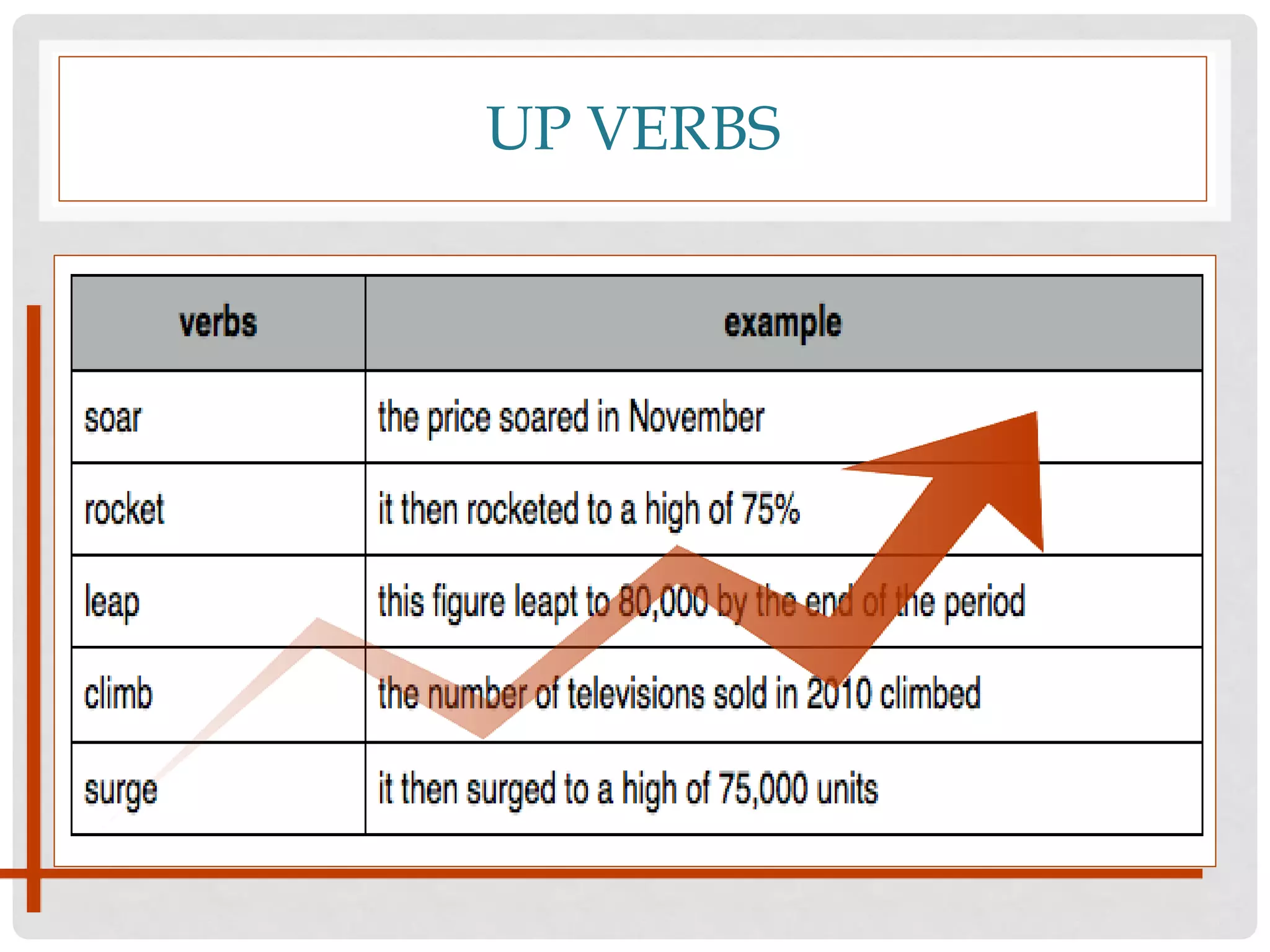
UP VERBS
IMPORTANT TO REMEMBER
• “Soar “and “rocket” are both very strong words that
describe large rises. “Rocket” is more sudden. You
probably do not need to qualify these verbs with
adverbs.
• “Leap” shows a large and sudden rise. Again, you
probably do not need to qualify it with an adverb.
• “Climb” is a relatively neutral verb that can be used
with adverbs.
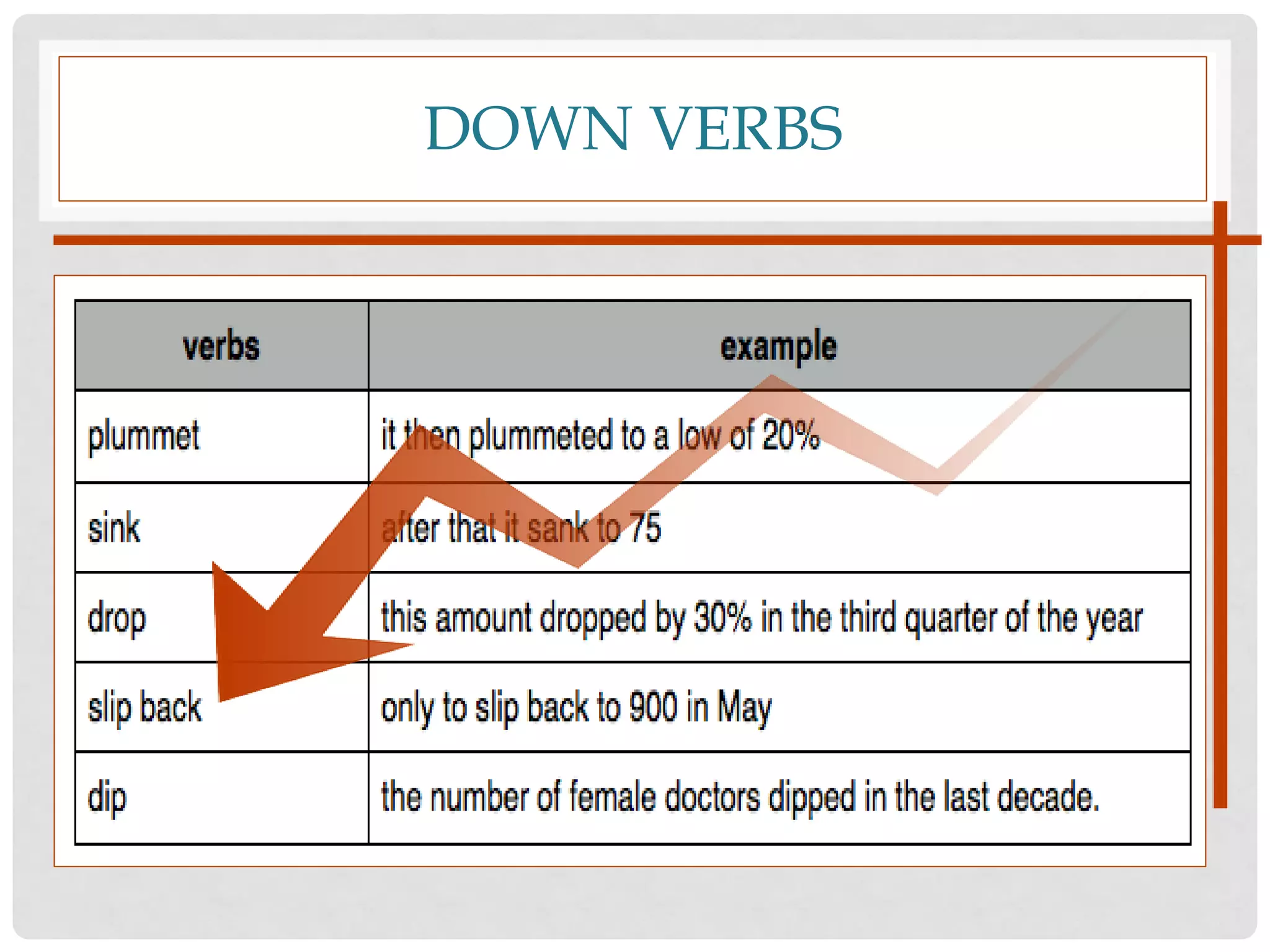
DOWN VERBS
MORE ABOUT IT
• “Plummet” is the strongest word here. It means to
fall very quickly and a long way.
• “Drop” and dip” are normally used for fairly small
decreases
• “Slip back” is used for falls that come after rises
• “Drop” and “Dip” are also frequently used as nouns:
eg “a slight dip” “a sudden drop”
• Sink is to deeply decrease even if it isn´t too abrupt.
ADJECTIVES AND ADVERBS
• This is a selection of some of the most common
adjectives and adverbs used for trend language.
Make sure that you use adjectives with nouns and
adverbs with verbs:
a significant rise – correct (adjective/noun)
rose significantly – correct (adverb/verb)
a significantly rise – wrong wrong wrong
• Please also note the spelling of the adverbs. There is
a particular problem with the word “dramatically:
dramatically – correct
dramaticly – wrong
dramaticaly – wrong
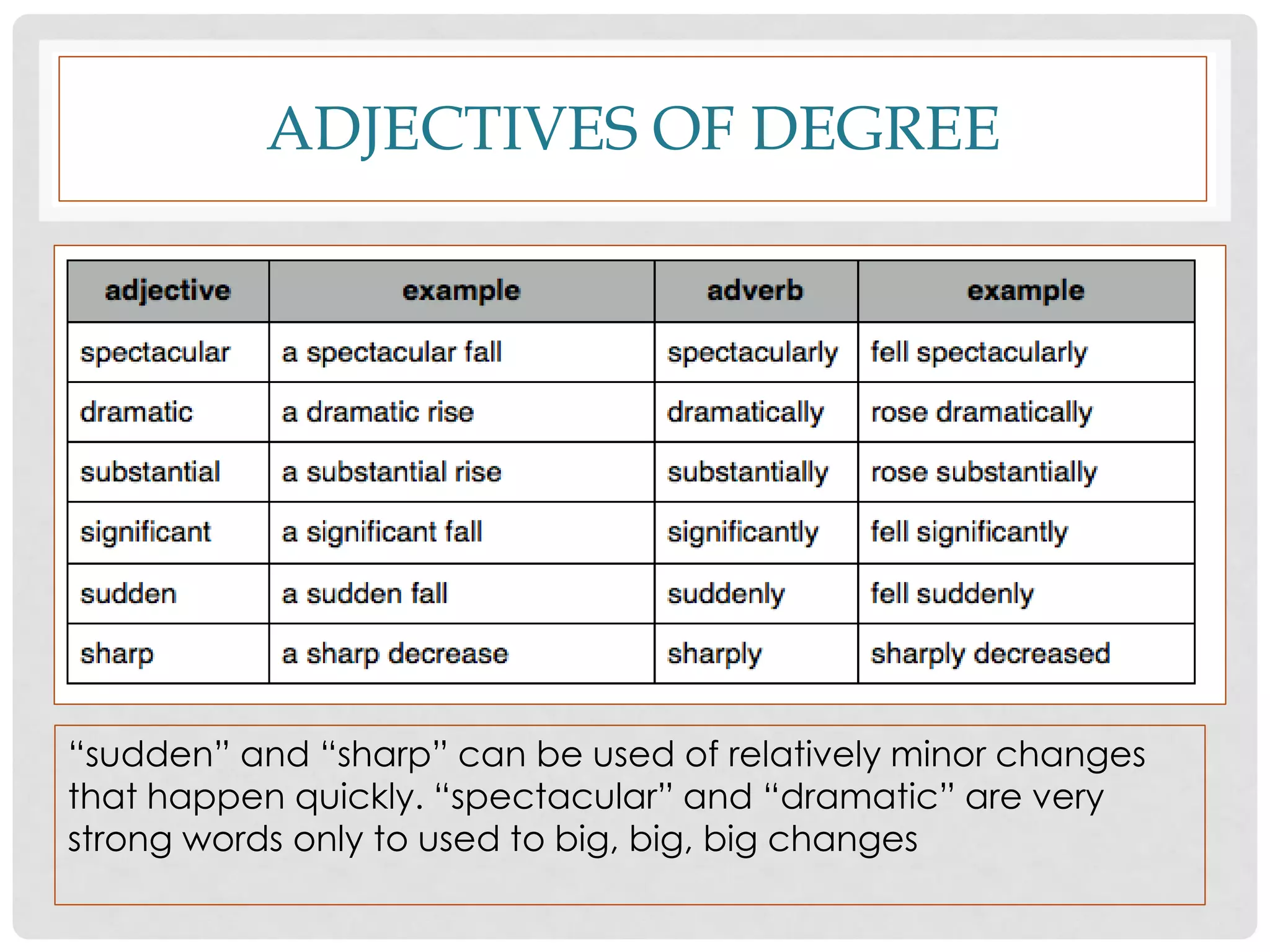
ADJECTIVES OF DEGREE
“sudden” and “sharp” can be used of relatively minor changes
that happen quickly. “spectacular” and “dramatic” are very
strong words only to used to big, big, big changes
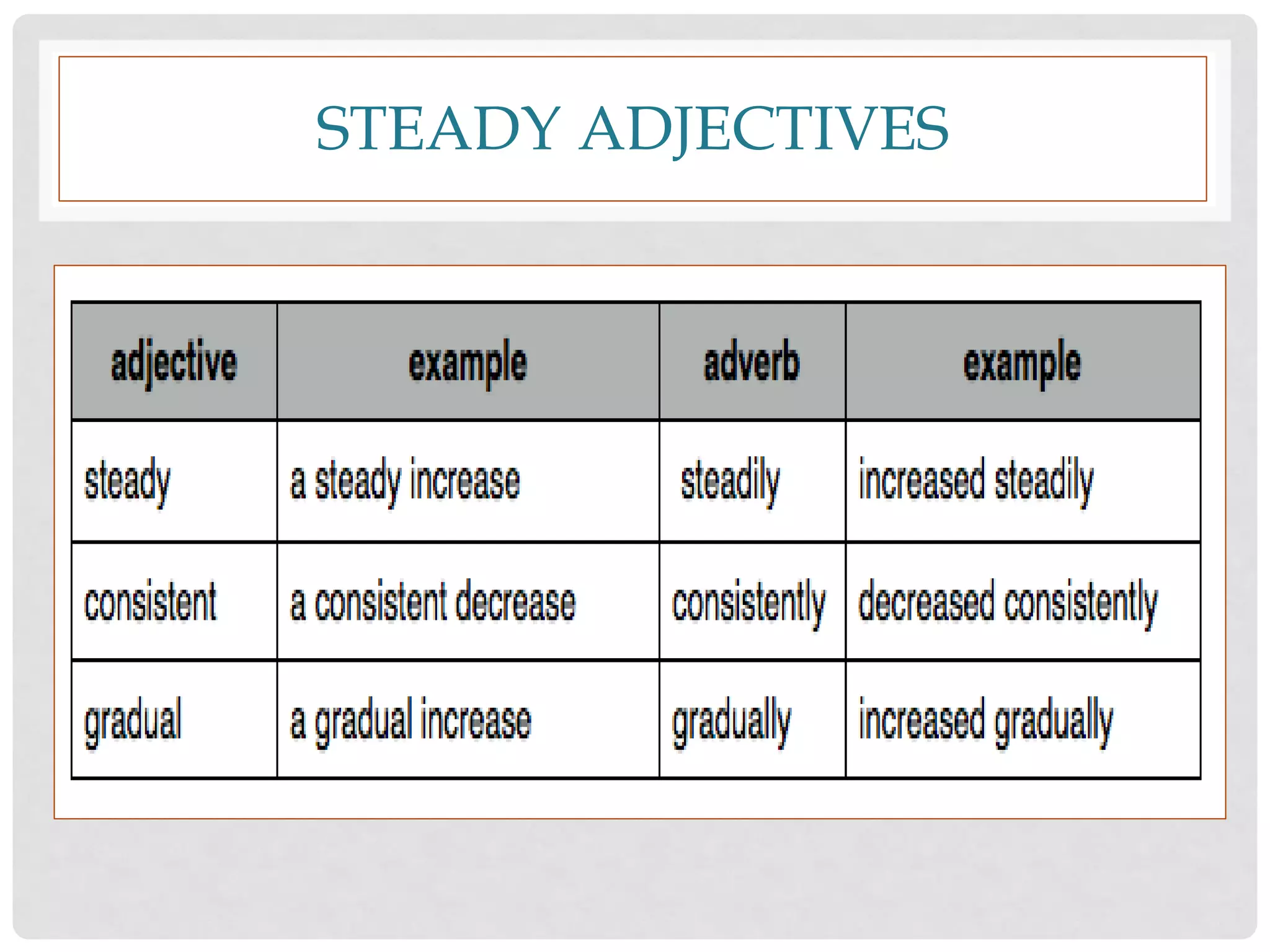
STEADY ADJECTIVES
SMALL ADJECTIVES
“marginal” is a particularly useful word for describing
very small changes
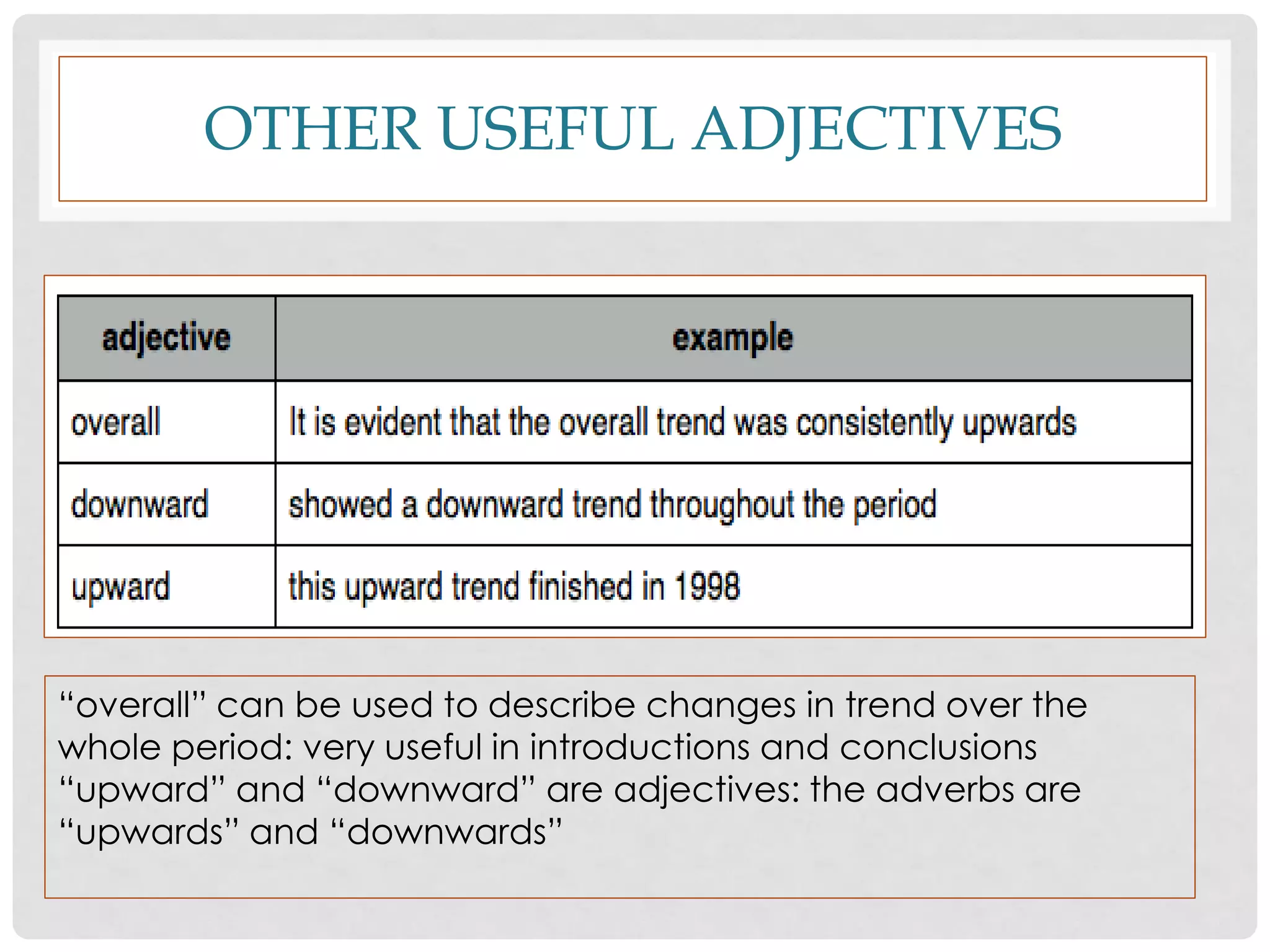
OTHER USEFUL ADJECTIVES
“overall” can be used to describe changes in trend over the
whole period: very useful in introductions and conclusions
“upward” and “downward” are adjectives: the adverbs are
“upwards” and “downwards”

Describing graph trends

  • 1.
    V O CA B U L A R Y A N D E X E R C I S E S DESCRIBING GRAPH TRENDS Geography Teacher´s Sala– Colegio Seminario
  • 2.
  • 3.
    IMPORTANT TO REMEMBER •“Soar “and “rocket” are both very strong words that describe large rises. “Rocket” is more sudden. You probably do not need to qualify these verbs with adverbs. • “Leap” shows a large and sudden rise. Again, you probably do not need to qualify it with an adverb. • “Climb” is a relatively neutral verb that can be used with adverbs.
  • 4.
  • 5.
    MORE ABOUT IT •“Plummet” is the strongest word here. It means to fall very quickly and a long way. • “Drop” and dip” are normally used for fairly small decreases • “Slip back” is used for falls that come after rises • “Drop” and “Dip” are also frequently used as nouns: eg “a slight dip” “a sudden drop” • Sink is to deeply decrease even if it isn´t too abrupt.
  • 6.
    ADJECTIVES AND ADVERBS •This is a selection of some of the most common adjectives and adverbs used for trend language. Make sure that you use adjectives with nouns and adverbs with verbs: a significant rise – correct (adjective/noun) rose significantly – correct (adverb/verb) a significantly rise – wrong wrong wrong • Please also note the spelling of the adverbs. There is a particular problem with the word “dramatically: dramatically – correct dramaticly – wrong dramaticaly – wrong
  • 7.
    ADJECTIVES OF DEGREE “sudden”and “sharp” can be used of relatively minor changes that happen quickly. “spectacular” and “dramatic” are very strong words only to used to big, big, big changes
  • 8.
  • 9.
    SMALL ADJECTIVES “marginal” isa particularly useful word for describing very small changes
  • 10.
    OTHER USEFUL ADJECTIVES “overall”can be used to describe changes in trend over the whole period: very useful in introductions and conclusions “upward” and “downward” are adjectives: the adverbs are “upwards” and “downwards”