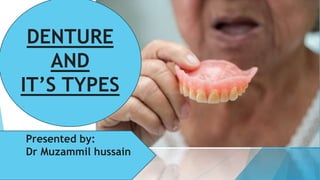
DENTURE
AND
IT’S TYPES
 Presented by:
Dr Muzammil hussain
 What is Denture
 Its type
 How it is prepared!
 Why to select denture.
 What's their benefits
 What’s the drawbacks..
𝐏𝐫𝐞𝐬𝐞𝐧𝐭𝐞𝐝 𝐛𝐲:
Dr Muzammil hussain
Topics:
Introduction
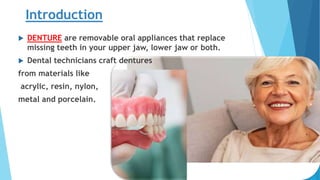
 DENTURE are removable oral appliances that replace
missing teeth in your upper jaw, lower jaw or both.
 Dental technicians craft dentures
from materials like
acrylic, resin, nylon,
metal and porcelain.
Types of Dentures
 There are two main types of dentures:
1. complete dentures
2. partial dentures
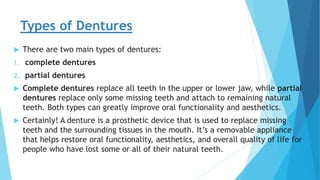
 Complete dentures replace all teeth in the upper or lower jaw, while partial
dentures replace only some missing teeth and attach to remaining natural
teeth. Both types can greatly improve oral functionality and aesthetics.
 Certainly! A denture is a prosthetic device that is used to replace missing
teeth and the surrounding tissues in the mouth. It’s a removable appliance
that helps restore oral functionality, aesthetics, and overall quality of life for
people who have lost some or all of their natural teeth.
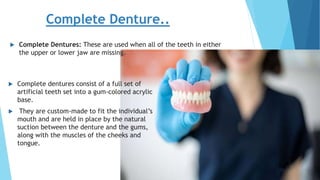
 Complete dentures consist of a full set of
artificial teeth set into a gum-colored acrylic
base.
 They are custom-made to fit the individual’s
mouth and are held in place by the natural
suction between the denture and the gums,
along with the muscles of the cheeks and
tongue.
Complete Denture..
 Complete Dentures: These are used when all of the teeth in either
the upper or lower jaw are missing.
Partial dentures..
 Partial Dentures: Partial dentures are used when
some natural teeth are still present.
 They consist of artificial teeth attached
to a metal or acrylic framework that
matches the color of the gums.
 Partial dentures are designed to fill in
the gaps left by missing teeth and are
often secured in place by clasps that
attach to the remaining natural teeth.
Process of making
dentures..
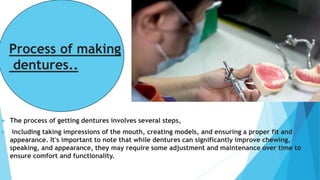
 The process of getting dentures involves several steps,
 including taking impressions of the mouth, creating models, and ensuring a proper fit and
appearance. It's important to note that while dentures can significantly improve chewing,
speaking, and appearance, they may require some adjustment and maintenance over time to
ensure comfort and functionality.
Why to use dentures..
 Dentures can be a valuable solution for people who have lost
teeth due to various reasons,
 such as tooth decay, gum disease, injury, or age-related factors.
 However, it's also important to maintain good oral hygiene and
regular dental check-ups even with dentures
to ensure the health of the
remaining natural teeth and
the overall condition of the mouth
Benefits of using
dentures
 What are the benefits of dentures?
 Dentures offer a number of benefits,
including:
1. Improved chewing function.
2. Enhanced appearance.
3. Improved speech function.•
4. Better nutrition (due to improved chewing
function).
Drawbacks of dentures..
 What are the drawbacks of dentures?
 Dentures also have their share of challenges
especially traditional - removable dentures.
 For instance, many traditional denture
wearers complain that their appliances:
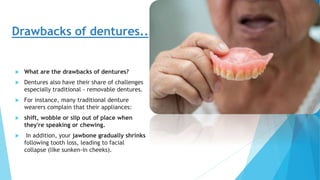
 shift, wobble or slip out of place when
they're speaking or chewing.
 In addition, your jawbone gradually shrinks
following tooth loss, leading to facial
collapse (like sunken-in cheeks).
Thanks!!
Questions?

Denture and types...pptx

  • 2.
  • 3.
     What isDenture  Its type  How it is prepared!  Why to select denture.  What's their benefits  What’s the drawbacks.. 𝐏𝐫𝐞𝐬𝐞𝐧𝐭𝐞𝐝 𝐛𝐲: Dr Muzammil hussain Topics:
  • 4.
    Introduction  DENTURE areremovable oral appliances that replace missing teeth in your upper jaw, lower jaw or both.  Dental technicians craft dentures from materials like acrylic, resin, nylon, metal and porcelain.
  • 5.
    Types of Dentures There are two main types of dentures: 1. complete dentures 2. partial dentures  Complete dentures replace all teeth in the upper or lower jaw, while partial dentures replace only some missing teeth and attach to remaining natural teeth. Both types can greatly improve oral functionality and aesthetics.  Certainly! A denture is a prosthetic device that is used to replace missing teeth and the surrounding tissues in the mouth. It’s a removable appliance that helps restore oral functionality, aesthetics, and overall quality of life for people who have lost some or all of their natural teeth.
  • 6.
     Complete denturesconsist of a full set of artificial teeth set into a gum-colored acrylic base.  They are custom-made to fit the individual’s mouth and are held in place by the natural suction between the denture and the gums, along with the muscles of the cheeks and tongue. Complete Denture..  Complete Dentures: These are used when all of the teeth in either the upper or lower jaw are missing.
  • 7.
    Partial dentures..  PartialDentures: Partial dentures are used when some natural teeth are still present.  They consist of artificial teeth attached to a metal or acrylic framework that matches the color of the gums.  Partial dentures are designed to fill in the gaps left by missing teeth and are often secured in place by clasps that attach to the remaining natural teeth.
  • 8.
    Process of making dentures.. The process of getting dentures involves several steps,  including taking impressions of the mouth, creating models, and ensuring a proper fit and appearance. It's important to note that while dentures can significantly improve chewing, speaking, and appearance, they may require some adjustment and maintenance over time to ensure comfort and functionality.
  • 9.
    Why to usedentures..  Dentures can be a valuable solution for people who have lost teeth due to various reasons,  such as tooth decay, gum disease, injury, or age-related factors.  However, it's also important to maintain good oral hygiene and regular dental check-ups even with dentures to ensure the health of the remaining natural teeth and the overall condition of the mouth
  • 10.
    Benefits of using dentures What are the benefits of dentures?  Dentures offer a number of benefits, including: 1. Improved chewing function. 2. Enhanced appearance. 3. Improved speech function.• 4. Better nutrition (due to improved chewing function).
  • 11.
    Drawbacks of dentures.. What are the drawbacks of dentures?  Dentures also have their share of challenges especially traditional - removable dentures.  For instance, many traditional denture wearers complain that their appliances:  shift, wobble or slip out of place when they're speaking or chewing.  In addition, your jawbone gradually shrinks following tooth loss, leading to facial collapse (like sunken-in cheeks).
  • 12.