Dentures?
Presented by University Periodontal
Associates
What are the 8 Types of
Denture & how it works?
What is
Dentures are removable dental prosthetics designed to
replace missing teeth and restore oral functionality.
They work by resting on the gums and, in the case of partial
dentures, attaching to existing teeth. Dentures improve
chewing, speech, and aesthetics, providing a practical
solution for individuals with missing teeth.
Full Dentures
Replace all-natural teeth in either the upper or
lower jaw.
Rest on the gums and are secured with
adhesives.
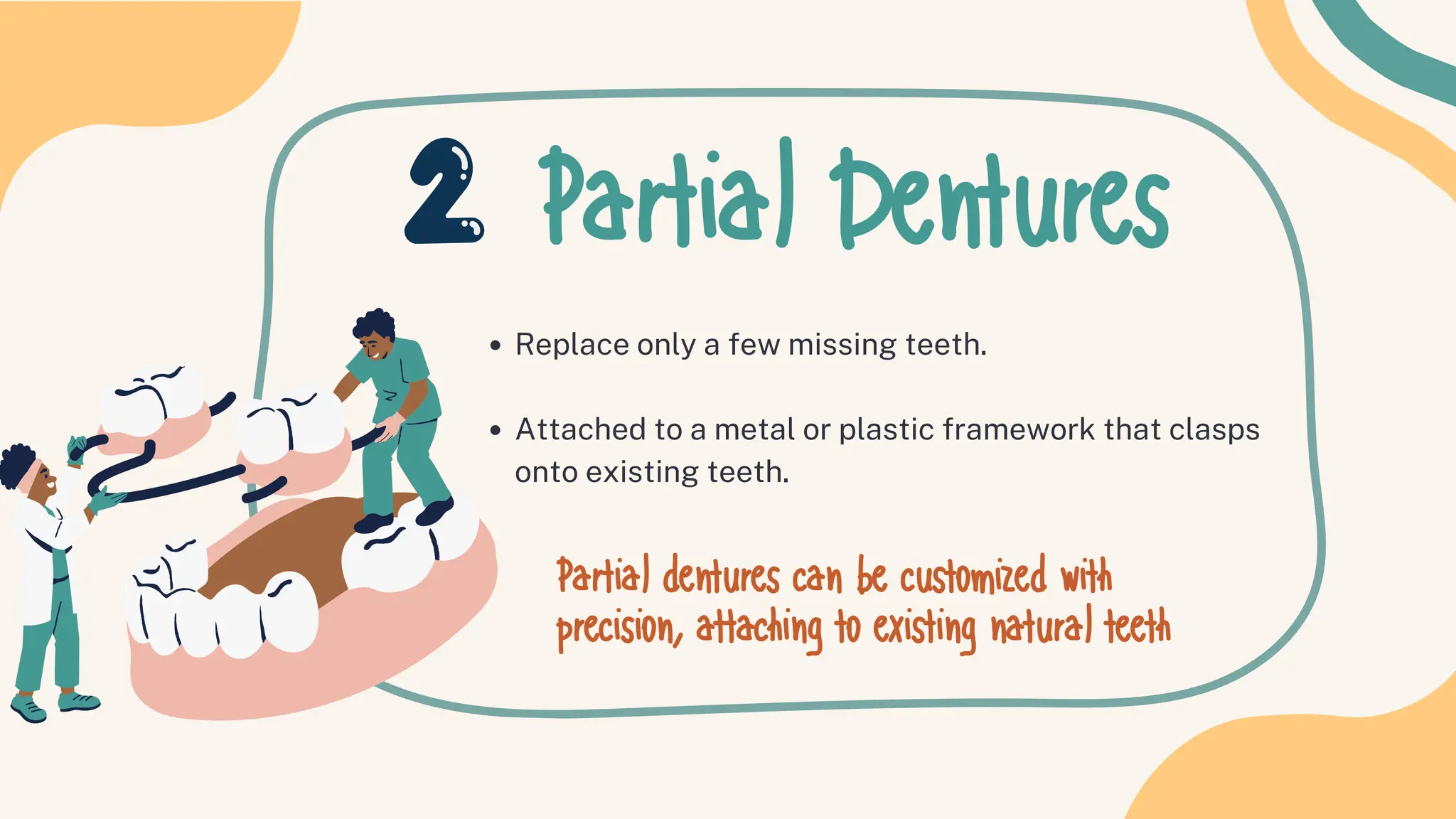
Partial Dentures
Replace only a few missing teeth.
Attached to a metal or plastic framework that clasps
onto existing teeth.
Partial dentures can be customized with
precision, attaching to existing natural teeth
I
m
mediate Dentures
Placed immediately after tooth extraction.
Allows for immediate restoration of teeth but
may require adjustments as the mouth heals.
Overdentures
Fit over a small number of remaining natural
teeth or dental implants.
Offers increased stability and support.
I
m
p
l
ant-Supported De
n
t
u
r
e
s
Secured to dental implants in the jawbone.
Provides enhanced stability and prevents bone
loss.
S
nap-in Dentures
Supported by implants but can be removed by
the wearer.
Offer greater stability than traditional dentures.
Upper Dentures
Replace missing teeth in the upper jaw.
Typically cover the palate for better suction and
stability.
E
conomy Dentures
Cost-effective option made from basic
materials.
Suitable for temporary use or as a budget-
friendly alternative.
Whether it's partial dentures to complement your existing teeth or a full set for
comprehensive restoration, our experts guarantee a comfortable fit and natural aesthetics.
(713) 523-9040 radiographs@swbell.net
3100 Richmond Ave., Houston, TX 77098

8 Types of Denture You Should Know

  • 1.
    Dentures? Presented by UniversityPeriodontal Associates What are the 8 Types of
  • 2.
    Denture & howit works? What is Dentures are removable dental prosthetics designed to replace missing teeth and restore oral functionality. They work by resting on the gums and, in the case of partial dentures, attaching to existing teeth. Dentures improve chewing, speech, and aesthetics, providing a practical solution for individuals with missing teeth.
  • 3.
    Full Dentures Replace all-naturalteeth in either the upper or lower jaw. Rest on the gums and are secured with adhesives.
  • 4.
    Partial Dentures Replace onlya few missing teeth. Attached to a metal or plastic framework that clasps onto existing teeth. Partial dentures can be customized with precision, attaching to existing natural teeth
  • 5.
    I m mediate Dentures Placed immediatelyafter tooth extraction. Allows for immediate restoration of teeth but may require adjustments as the mouth heals.
  • 6.
    Overdentures Fit over asmall number of remaining natural teeth or dental implants. Offers increased stability and support.
  • 7.
    I m p l ant-Supported De n t u r e s Secured todental implants in the jawbone. Provides enhanced stability and prevents bone loss.
  • 8.
    S nap-in Dentures Supported byimplants but can be removed by the wearer. Offer greater stability than traditional dentures.
  • 9.
    Upper Dentures Replace missingteeth in the upper jaw. Typically cover the palate for better suction and stability.
  • 10.
    E conomy Dentures Cost-effective optionmade from basic materials. Suitable for temporary use or as a budget- friendly alternative.
  • 11.
    Whether it's partialdentures to complement your existing teeth or a full set for comprehensive restoration, our experts guarantee a comfortable fit and natural aesthetics. (713) 523-9040 radiographs@swbell.net 3100 Richmond Ave., Houston, TX 77098