Dentures
By Sub Kanap KS
About Dentures
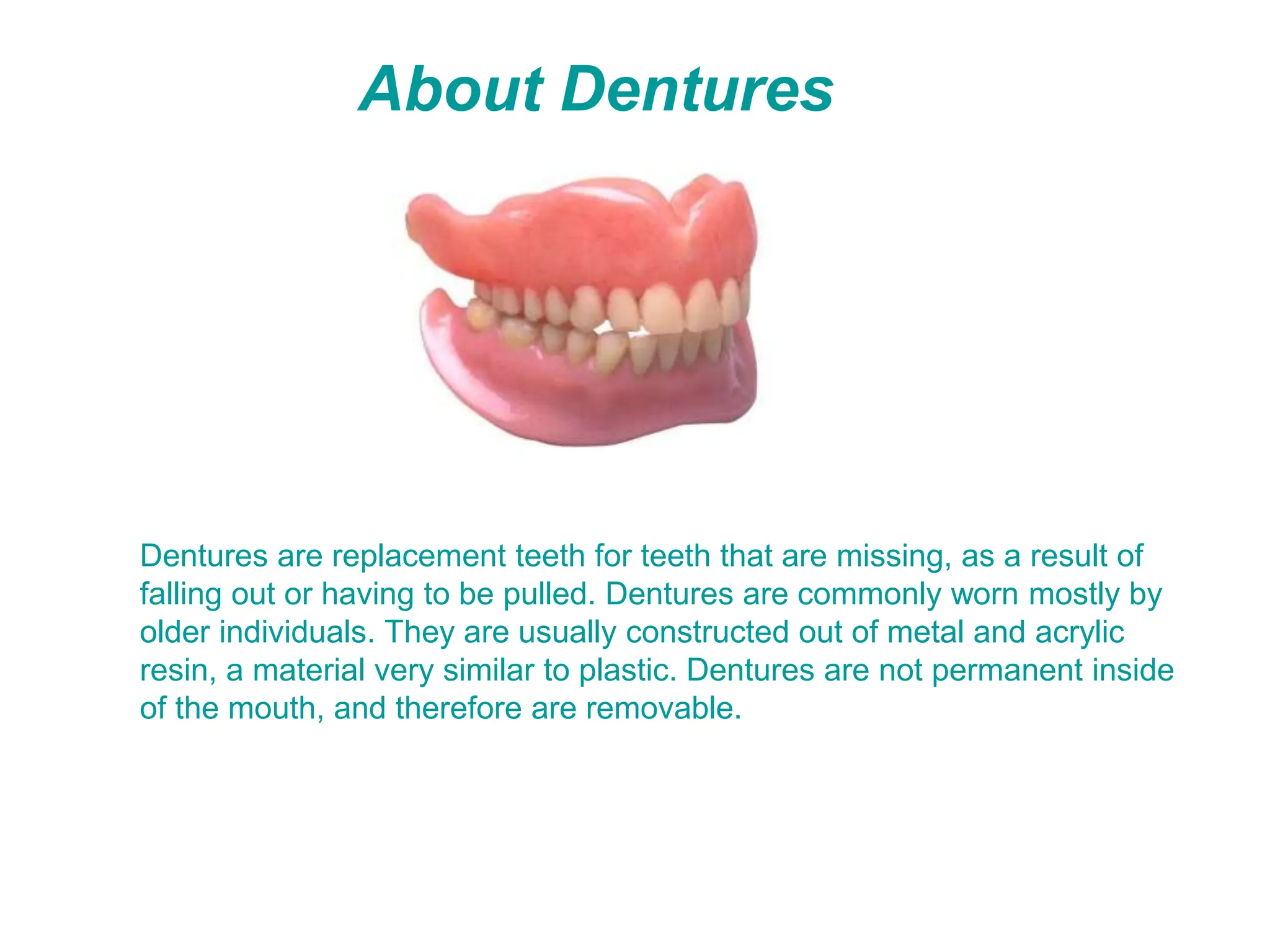
Dentures are replacement teeth for teeth that are missing, as a result of
falling out or having to be pulled. Dentures are commonly worn mostly by
older individuals. They are usually constructed out of metal and acrylic
resin, a material very similar to plastic. Dentures are not permanent inside
of the mouth, and therefore are removable.
Types of Dentures
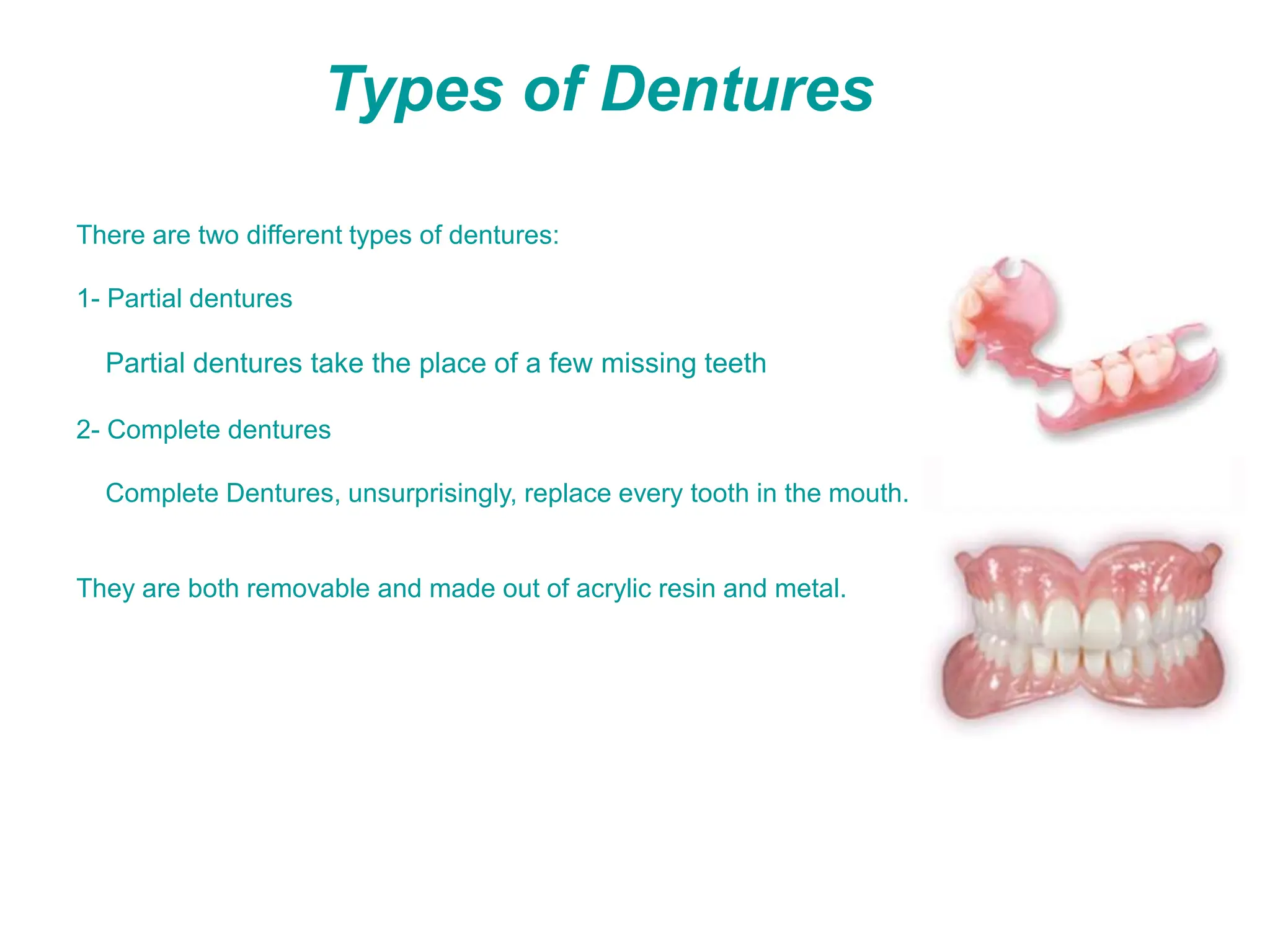
There are two different types of dentures:
1- Partial dentures
Partial dentures take the place of a few missing teeth
2- Complete dentures
Complete Dentures, unsurprisingly, replace every tooth in the mouth.
They are both removable and made out of acrylic resin and metal.
Significance
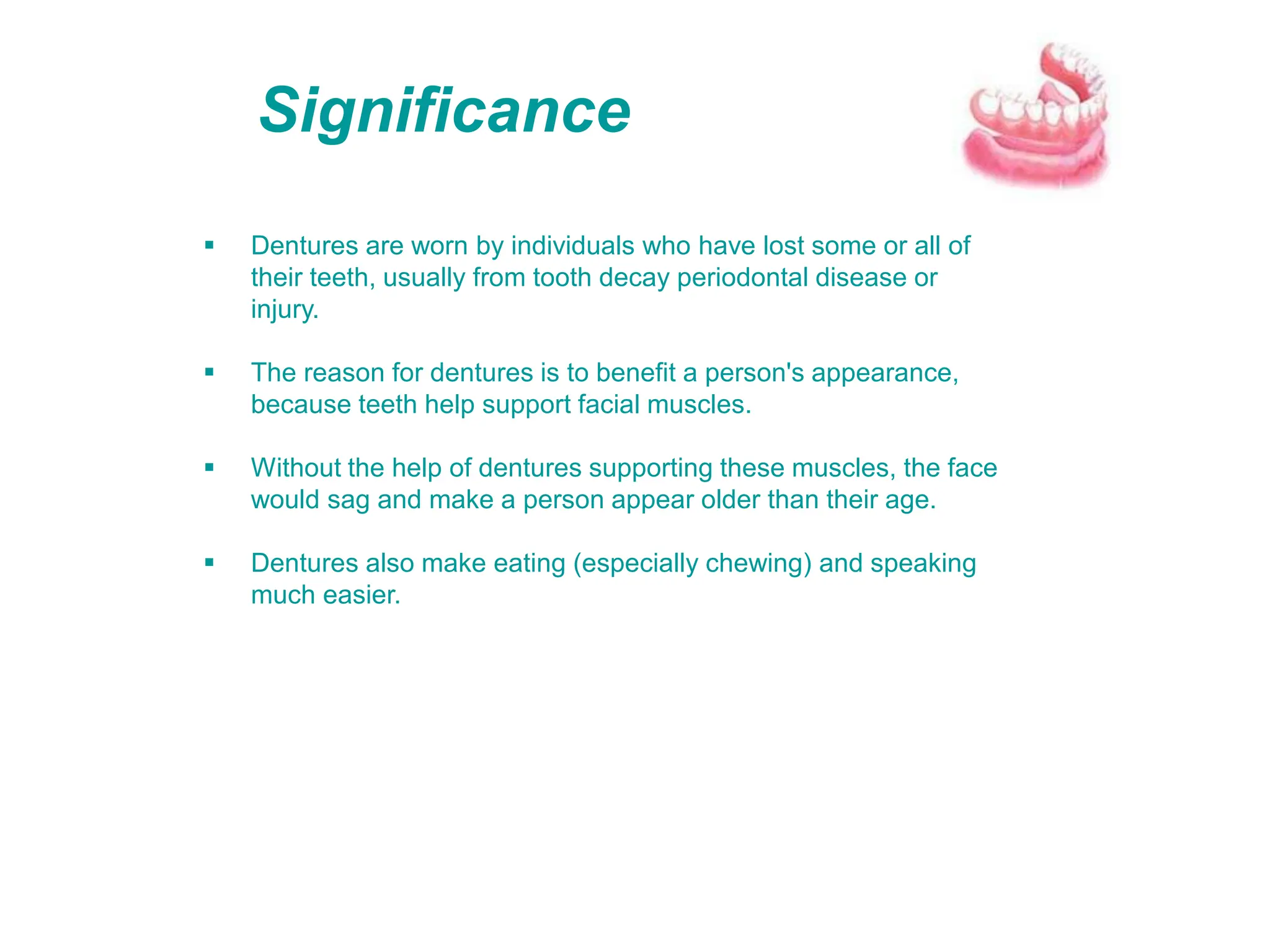
 Dentures are worn by individuals who have lost some or all of
their teeth, usually from tooth decay periodontal disease or
injury.
 The reason for dentures is to benefit a person's appearance,
because teeth help support facial muscles.
 Without the help of dentures supporting these muscles, the face
would sag and make a person appear older than their age.
 Dentures also make eating (especially chewing) and speaking
much easier.
Caring for Dentures
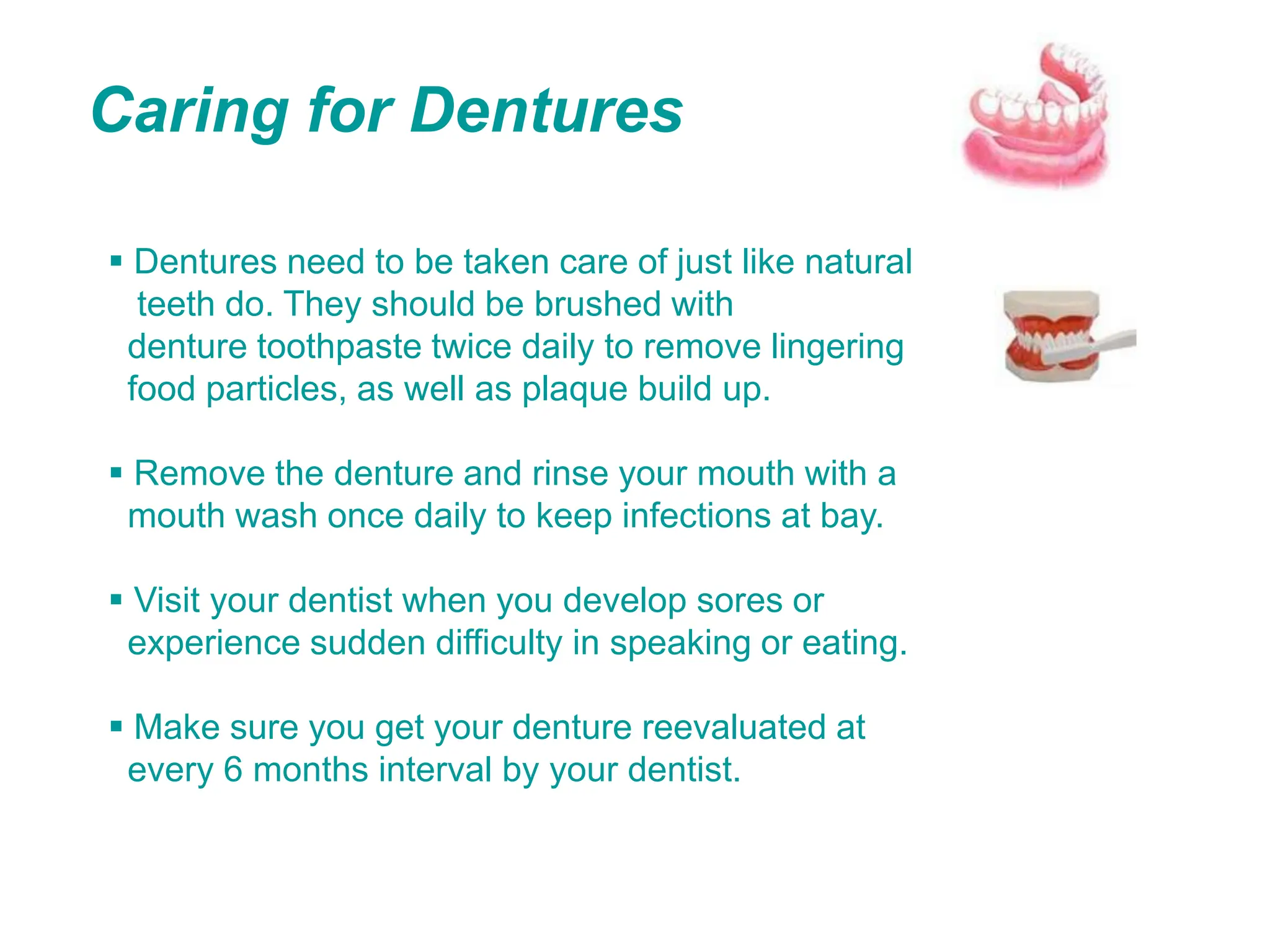
 Dentures need to be taken care of just like natural
teeth do. They should be brushed with
denture toothpaste twice daily to remove lingering
food particles, as well as plaque build up.
 Remove the denture and rinse your mouth with a
mouth wash once daily to keep infections at bay.
 Visit your dentist when you develop sores or
experience sudden difficulty in speaking or eating.
 Make sure you get your denture reevaluated at
every 6 months interval by your dentist.
Prevention/Solution
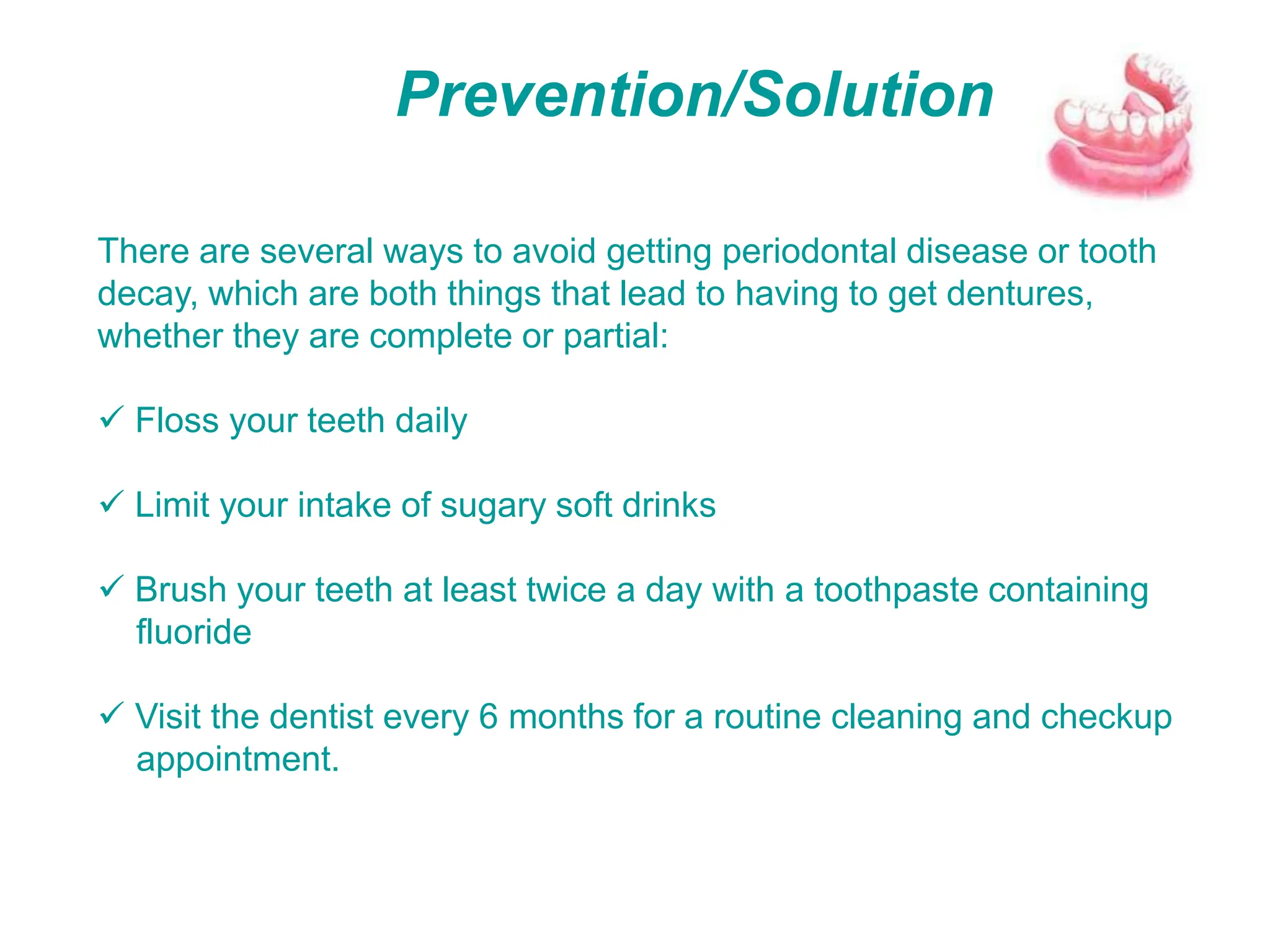
There are several ways to avoid getting periodontal disease or tooth
decay, which are both things that lead to having to get dentures,
whether they are complete or partial:
 Floss your teeth daily
 Limit your intake of sugary soft drinks
 Brush your teeth at least twice a day with a toothpaste containing
fluoride
 Visit the dentist every 6 months for a routine cleaning and checkup
appointment.
Considerations
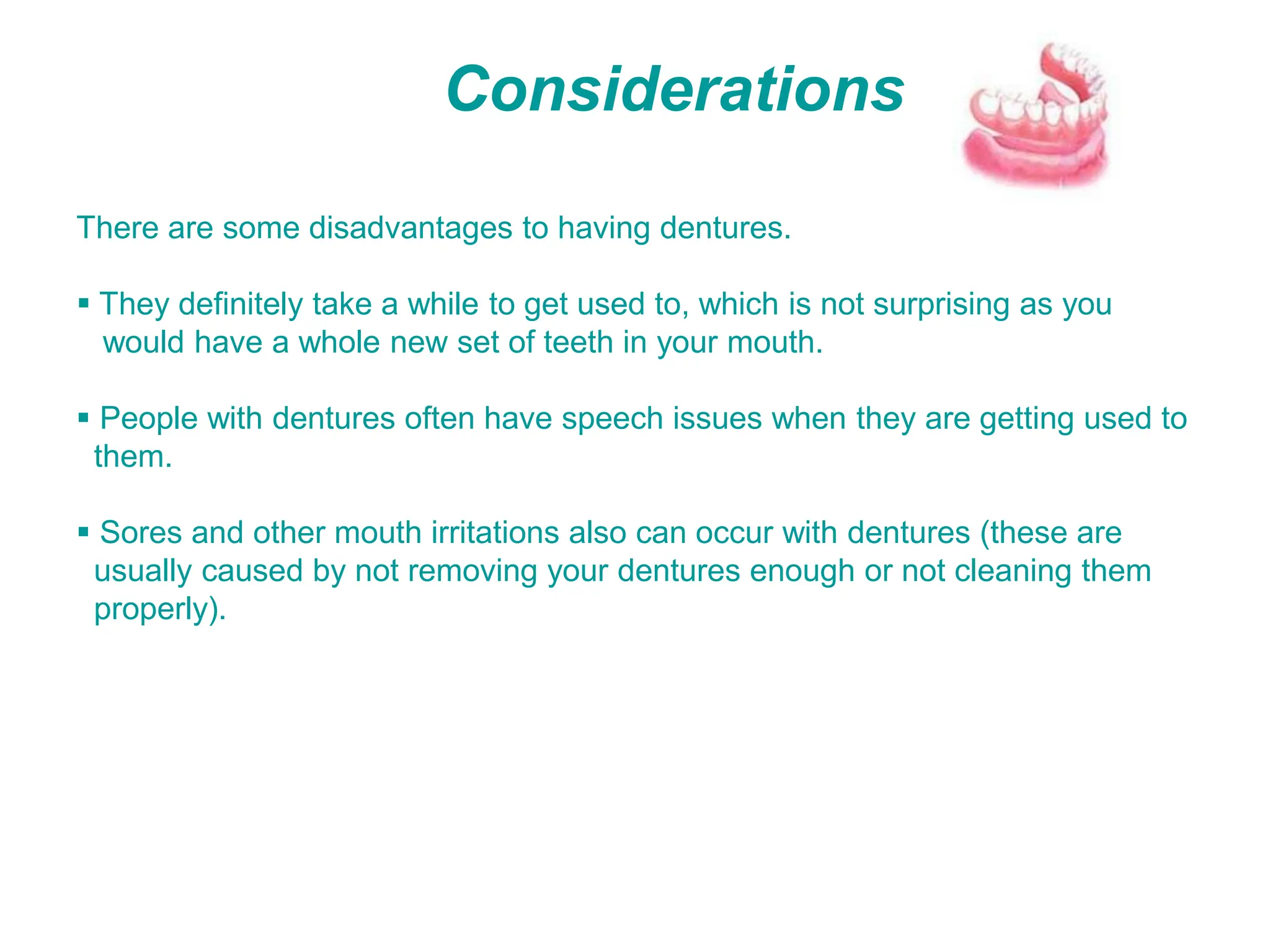
There are some disadvantages to having dentures.
 They definitely take a while to get used to, which is not surprising as you
would have a whole new set of teeth in your mouth.
 People with dentures often have speech issues when they are getting used to
them.
 Sores and other mouth irritations also can occur with dentures (these are
usually caused by not removing your dentures enough or not cleaning them
properly).
Facts
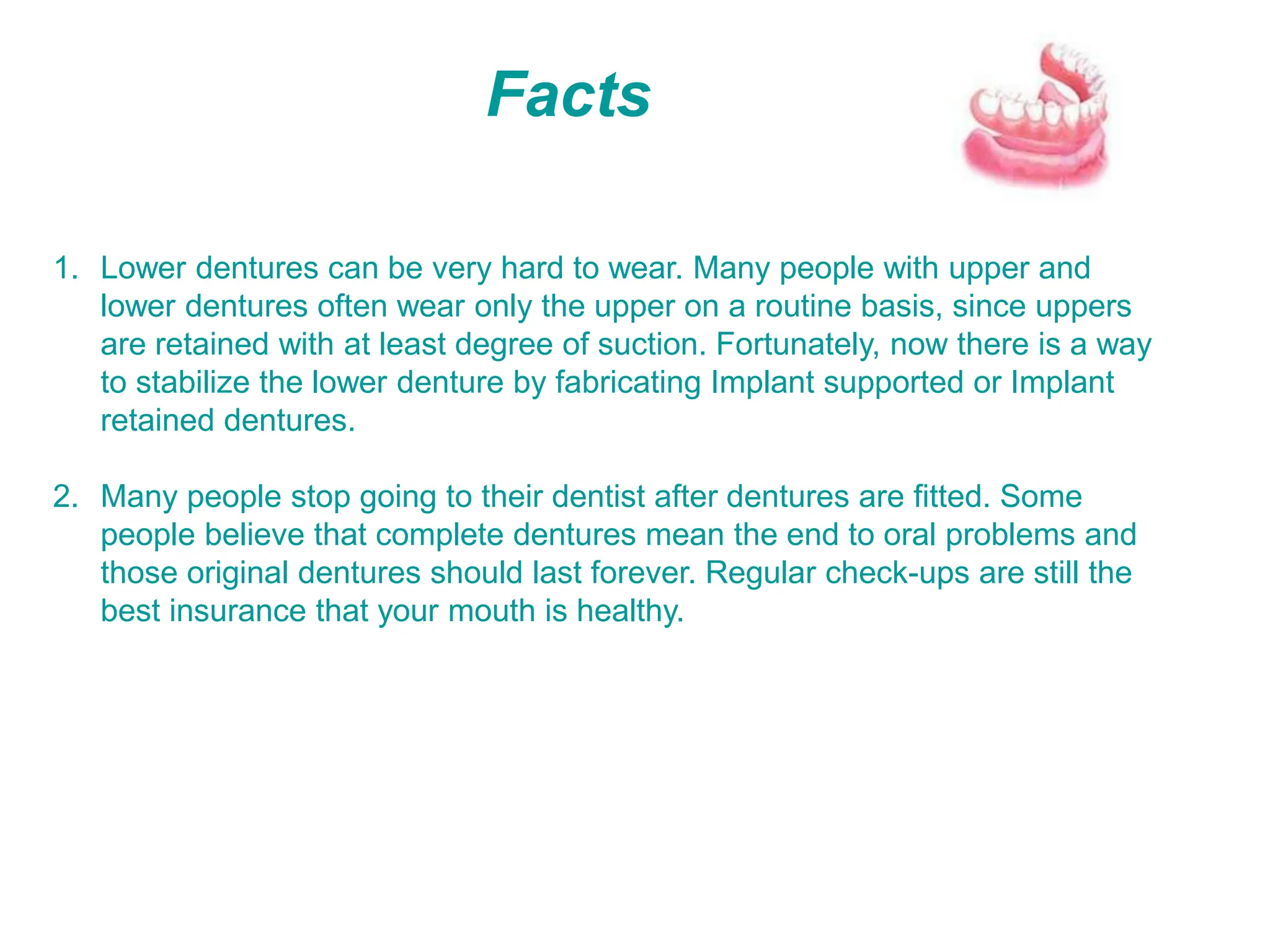
1. Lower dentures can be very hard to wear. Many people with upper and
lower dentures often wear only the upper on a routine basis, since uppers
are retained with at least degree of suction. Fortunately, now there is a way
to stabilize the lower denture by fabricating Implant supported or Implant
retained dentures.
2. Many people stop going to their dentist after dentures are fitted. Some
people believe that complete dentures mean the end to oral problems and
those original dentures should last forever. Regular check-ups are still the
best insurance that your mouth is healthy.
aboutdenture  in dentals-100811052540-phpapp02 (1).ppt

aboutdenture in dentals-100811052540-phpapp02 (1).ppt

  • 1.
  • 2.
    About Dentures Dentures arereplacement teeth for teeth that are missing, as a result of falling out or having to be pulled. Dentures are commonly worn mostly by older individuals. They are usually constructed out of metal and acrylic resin, a material very similar to plastic. Dentures are not permanent inside of the mouth, and therefore are removable.
  • 3.
    Types of Dentures Thereare two different types of dentures: 1- Partial dentures Partial dentures take the place of a few missing teeth 2- Complete dentures Complete Dentures, unsurprisingly, replace every tooth in the mouth. They are both removable and made out of acrylic resin and metal.
  • 4.
    Significance  Dentures areworn by individuals who have lost some or all of their teeth, usually from tooth decay periodontal disease or injury.  The reason for dentures is to benefit a person's appearance, because teeth help support facial muscles.  Without the help of dentures supporting these muscles, the face would sag and make a person appear older than their age.  Dentures also make eating (especially chewing) and speaking much easier.
  • 5.
    Caring for Dentures Dentures need to be taken care of just like natural teeth do. They should be brushed with denture toothpaste twice daily to remove lingering food particles, as well as plaque build up.  Remove the denture and rinse your mouth with a mouth wash once daily to keep infections at bay.  Visit your dentist when you develop sores or experience sudden difficulty in speaking or eating.  Make sure you get your denture reevaluated at every 6 months interval by your dentist.
  • 6.
    Prevention/Solution There are severalways to avoid getting periodontal disease or tooth decay, which are both things that lead to having to get dentures, whether they are complete or partial:  Floss your teeth daily  Limit your intake of sugary soft drinks  Brush your teeth at least twice a day with a toothpaste containing fluoride  Visit the dentist every 6 months for a routine cleaning and checkup appointment.
  • 7.
    Considerations There are somedisadvantages to having dentures.  They definitely take a while to get used to, which is not surprising as you would have a whole new set of teeth in your mouth.  People with dentures often have speech issues when they are getting used to them.  Sores and other mouth irritations also can occur with dentures (these are usually caused by not removing your dentures enough or not cleaning them properly).
  • 8.
    Facts 1. Lower denturescan be very hard to wear. Many people with upper and lower dentures often wear only the upper on a routine basis, since uppers are retained with at least degree of suction. Fortunately, now there is a way to stabilize the lower denture by fabricating Implant supported or Implant retained dentures. 2. Many people stop going to their dentist after dentures are fitted. Some people believe that complete dentures mean the end to oral problems and those original dentures should last forever. Regular check-ups are still the best insurance that your mouth is healthy.