
 GROUP MEMBERS:
 1. Sharzin Shavina Reza
 2. Arham Rafid
 3. Moshiur Rahman
 4. Zahra Razzak
 5. Uzma
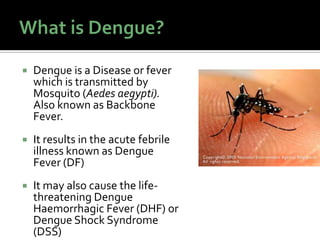
 Dengue is a Disease or fever
which is transmitted by
Mosquito (Aedes aegypti).
Also known as Backbone
Fever.
 It results in the acute febrile
illness known as Dengue
Fever (DF)
 It may also cause the life-
threatening Dengue
Haemorrhagic Fever (DHF) or
Dengue Shock Syndrome
(DSS)
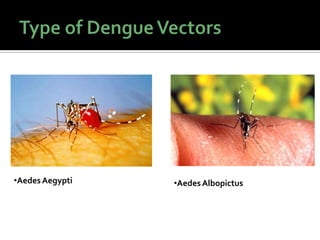
•AedesAegypti •AedesAlbopictus
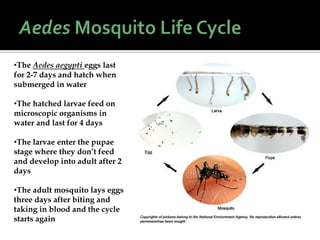
•The Aedes aegypti eggs last
for 2-7 days and hatch when
submerged in water
•The hatched larvae feed on
microscopic organisms in
water and last for 4 days
•The larvae enter the pupae
stage where they don’t feed
and develop into adult after 2
days
•The adult mosquito lays eggs
three days after biting and
taking in blood and the cycle
starts again
 Only the female Aedes mosquitoes bite and
take in blood to produce and develop eggs
 The mosquito becomes infective 7 days after
it has bitten a person carrying the virus
 Peak biting is at dawn and dusk
 The average life span of a mosquito in
general is 2 weeks
 The mosquito can lay eggs three times in its
lifetime (approx. 100 eggs each time)
 Type 1Virus
 Type 2Virus
 Type 3Virus
 Type 4Virus
 These viruses vary genetically based on
different geographic locations
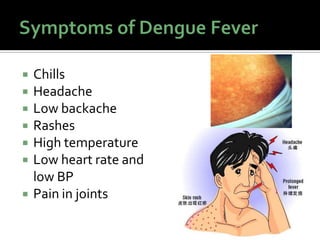
 Chills
 Headache
 Low backache
 Rashes
 High temperature
 Low heart rate and
low BP
 Pain in joints
 The mosquito is attracted by the body odors,
CO2 and heat emitted from animals or humans
 Aedes are day-biters, most active during dawn
and dusk.
 The female Aedes mosquito searches for
suitable places to lay their eggs.
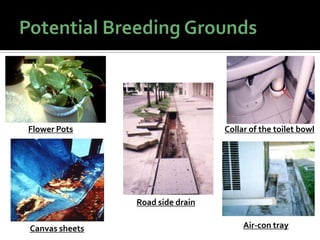
Flower Pots Collar of the toilet bowl
Road side drain
Canvas sheets Air-con tray
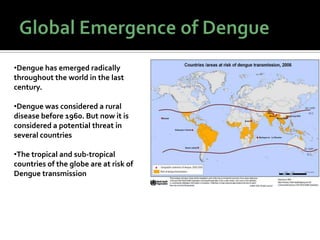
•Dengue has emerged radically
throughout the world in the last
century.
•Dengue was considered a rural
disease before 1960. But now it is
considered a potential threat in
several countries
•The tropical and sub-tropical
countries of the globe are at risk of
Dengue transmission
 Change water in vases/ bowls every other day.
 Checking landscape structures for any water
retention & mosquito breeding regularly.
 Wearing shoes, socks, long pants, long
sleeved shirt.
 Using mosquito repellents
▪ Mosquito Coils
▪ Mosquito nets

Dengue Fever Facts

  • 2.
     GROUP MEMBERS: 1. Sharzin Shavina Reza  2. Arham Rafid  3. Moshiur Rahman  4. Zahra Razzak  5. Uzma
  • 3.
     Dengue isa Disease or fever which is transmitted by Mosquito (Aedes aegypti). Also known as Backbone Fever.  It results in the acute febrile illness known as Dengue Fever (DF)  It may also cause the life- threatening Dengue Haemorrhagic Fever (DHF) or Dengue Shock Syndrome (DSS)
  • 4.
  • 5.
    •The Aedes aegyptieggs last for 2-7 days and hatch when submerged in water •The hatched larvae feed on microscopic organisms in water and last for 4 days •The larvae enter the pupae stage where they don’t feed and develop into adult after 2 days •The adult mosquito lays eggs three days after biting and taking in blood and the cycle starts again
  • 6.
     Only thefemale Aedes mosquitoes bite and take in blood to produce and develop eggs  The mosquito becomes infective 7 days after it has bitten a person carrying the virus  Peak biting is at dawn and dusk  The average life span of a mosquito in general is 2 weeks  The mosquito can lay eggs three times in its lifetime (approx. 100 eggs each time)
  • 7.
     Type 1Virus Type 2Virus  Type 3Virus  Type 4Virus  These viruses vary genetically based on different geographic locations
  • 8.
     Chills  Headache Low backache  Rashes  High temperature  Low heart rate and low BP  Pain in joints
  • 9.
     The mosquitois attracted by the body odors, CO2 and heat emitted from animals or humans  Aedes are day-biters, most active during dawn and dusk.  The female Aedes mosquito searches for suitable places to lay their eggs.
  • 10.
    Flower Pots Collarof the toilet bowl Road side drain Canvas sheets Air-con tray
  • 11.
    •Dengue has emergedradically throughout the world in the last century. •Dengue was considered a rural disease before 1960. But now it is considered a potential threat in several countries •The tropical and sub-tropical countries of the globe are at risk of Dengue transmission
  • 12.
     Change waterin vases/ bowls every other day.  Checking landscape structures for any water retention & mosquito breeding regularly.  Wearing shoes, socks, long pants, long sleeved shirt.  Using mosquito repellents ▪ Mosquito Coils ▪ Mosquito nets