Demystifying
OAuth 2
Nice to meet you
Software Engineer @Colpatria Scotiabank
Making things happen!
Loves reading, programming and teaching.
@yurynino
@yurynino
@yurynino
yury.nino.roa
Agenda
● Why OAuth?
● What is OAuth?
● How to OAuth works?
● OAuth Grant Types
What is the problem?
You have DIFFERENT
accounts for LinkedIn and
Google.
LinkedIn wants to add
your Google contacts to
your LinkedIn profile.
The bad old days: credential sharing
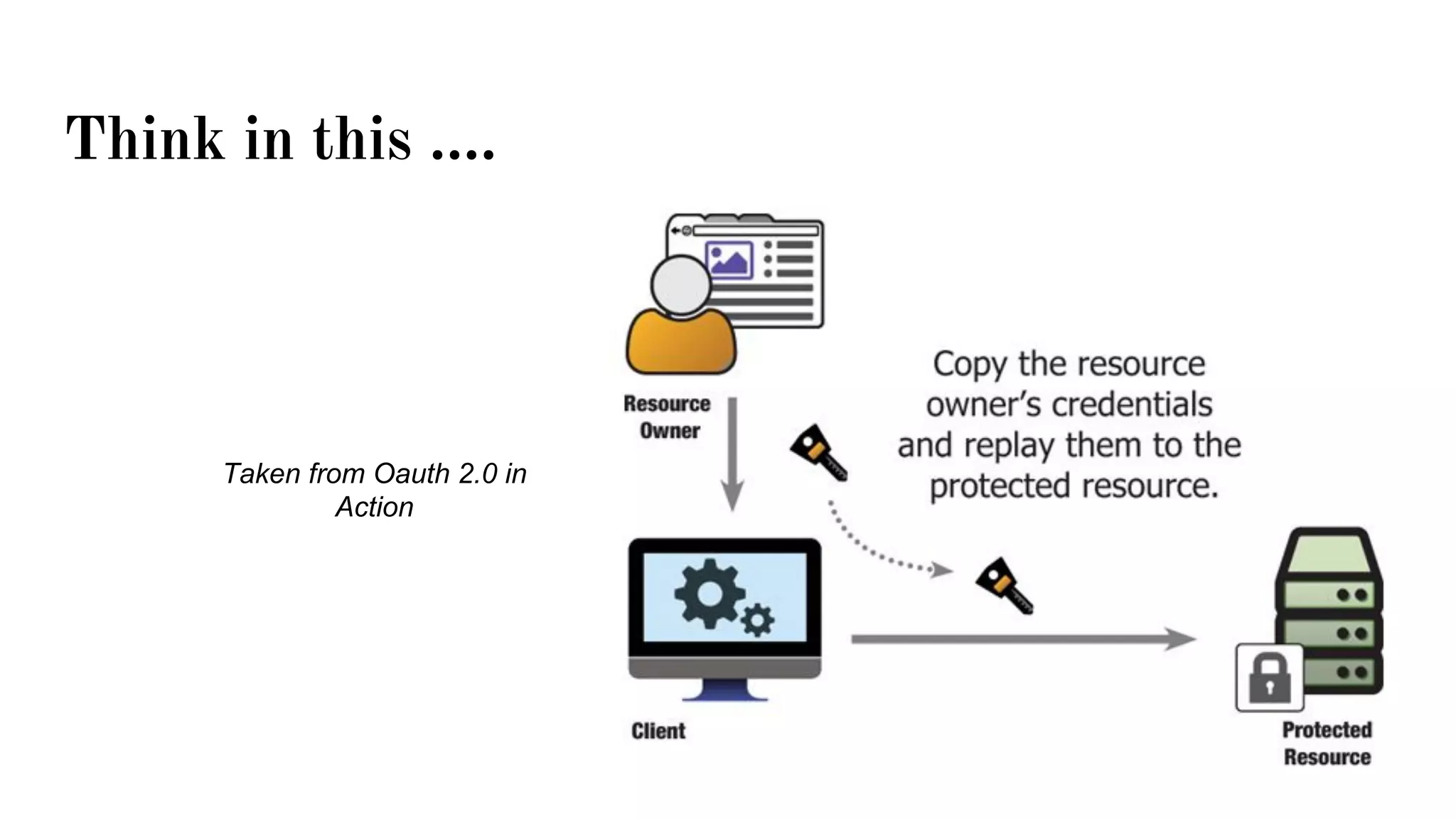
Think in this ….
Taken from Oauth 2.0 in
Action
It was bad because ...
● Same credentials at the client and
the protected resource are required.
● It exposed the user’s password to
the client application.
Taken from Oauth 2.0 in Action
What if we were able to have
this kind of limited credential,
issued separately for each
client and each user
combination, to be used at a
protected resource?
OAuth is a protocol
designed to do
exactly that:
Delegating.
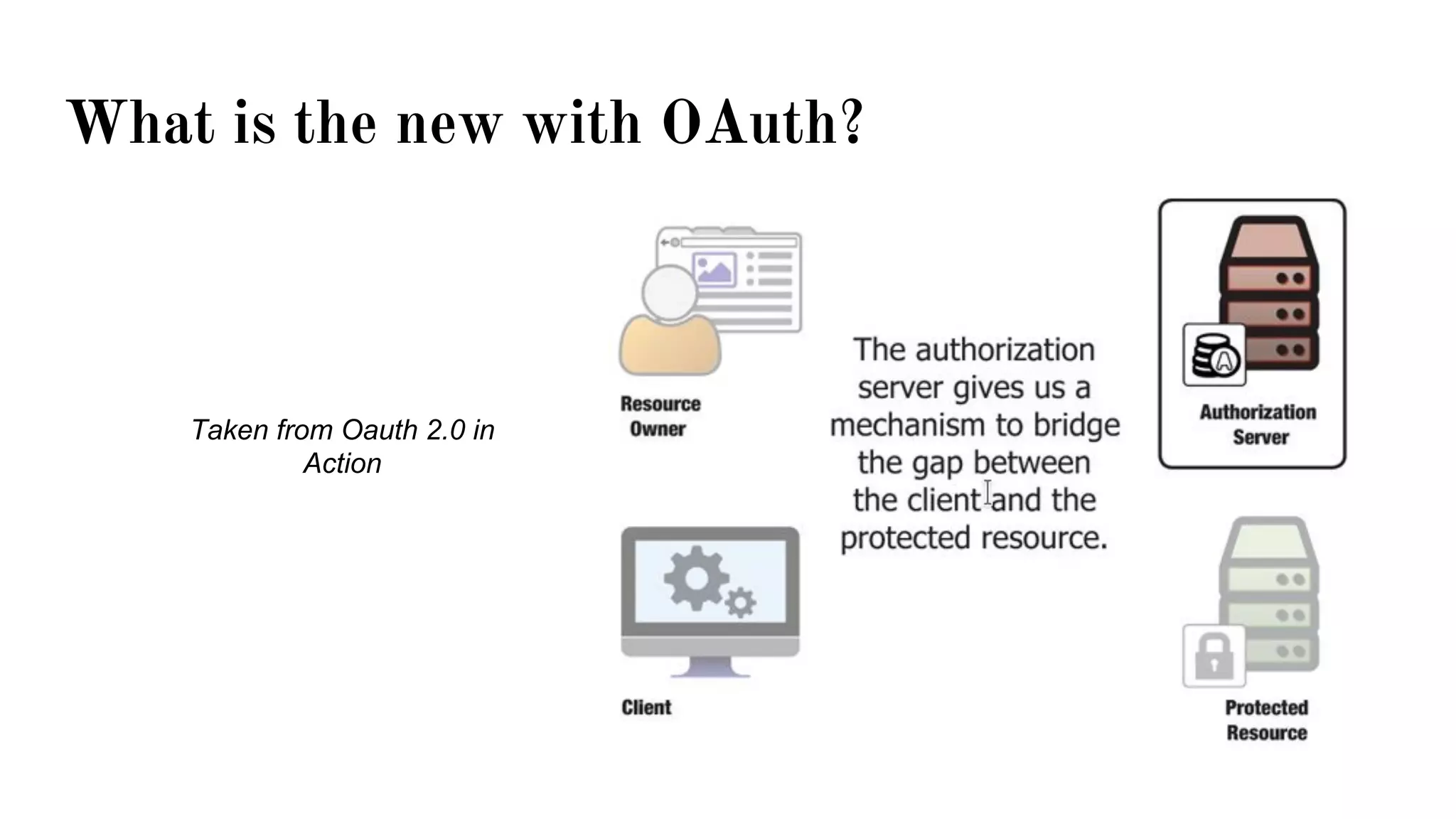
Taken from Oauth 2.0 in
Action
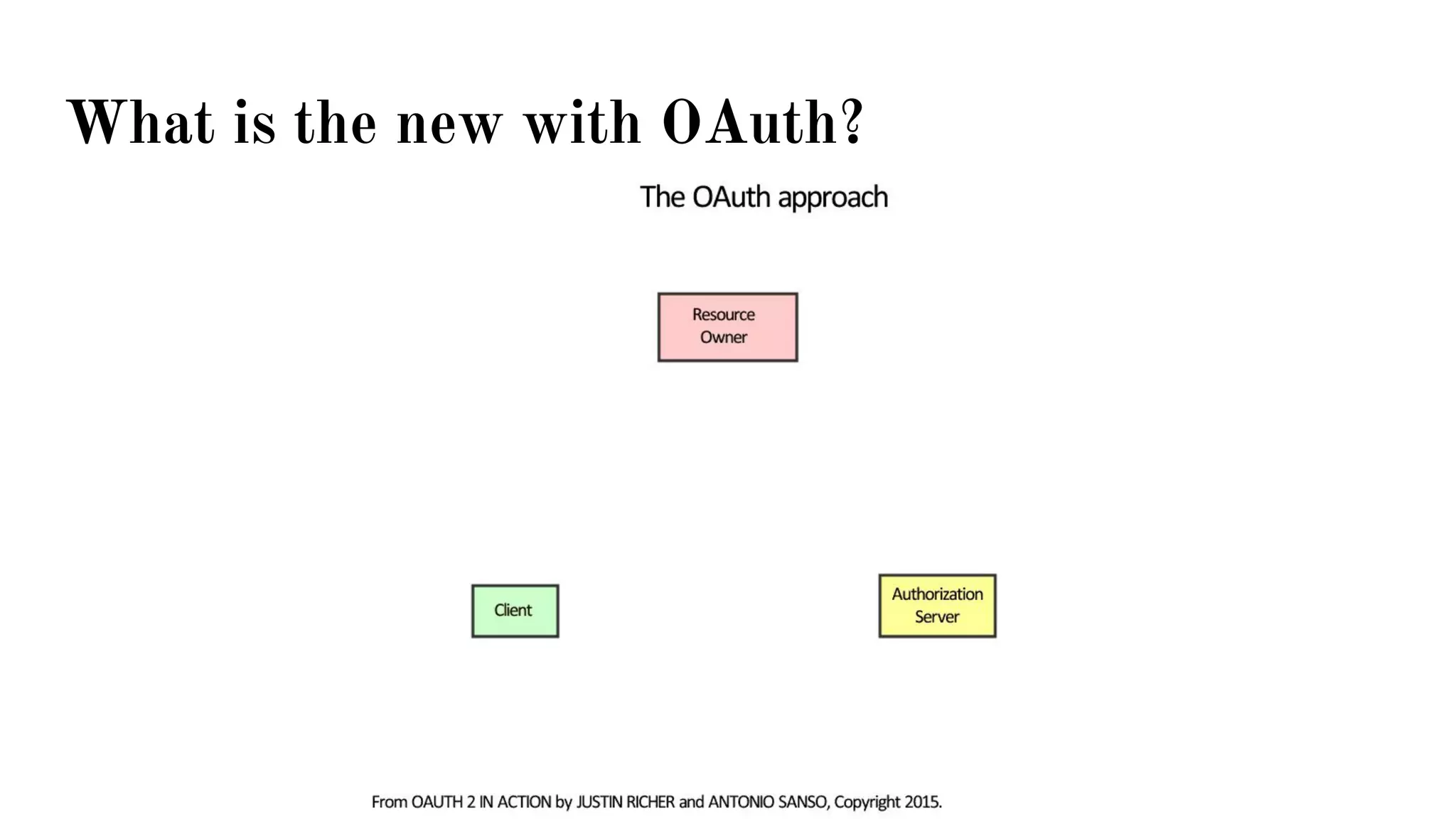
What is the new with OAuth?
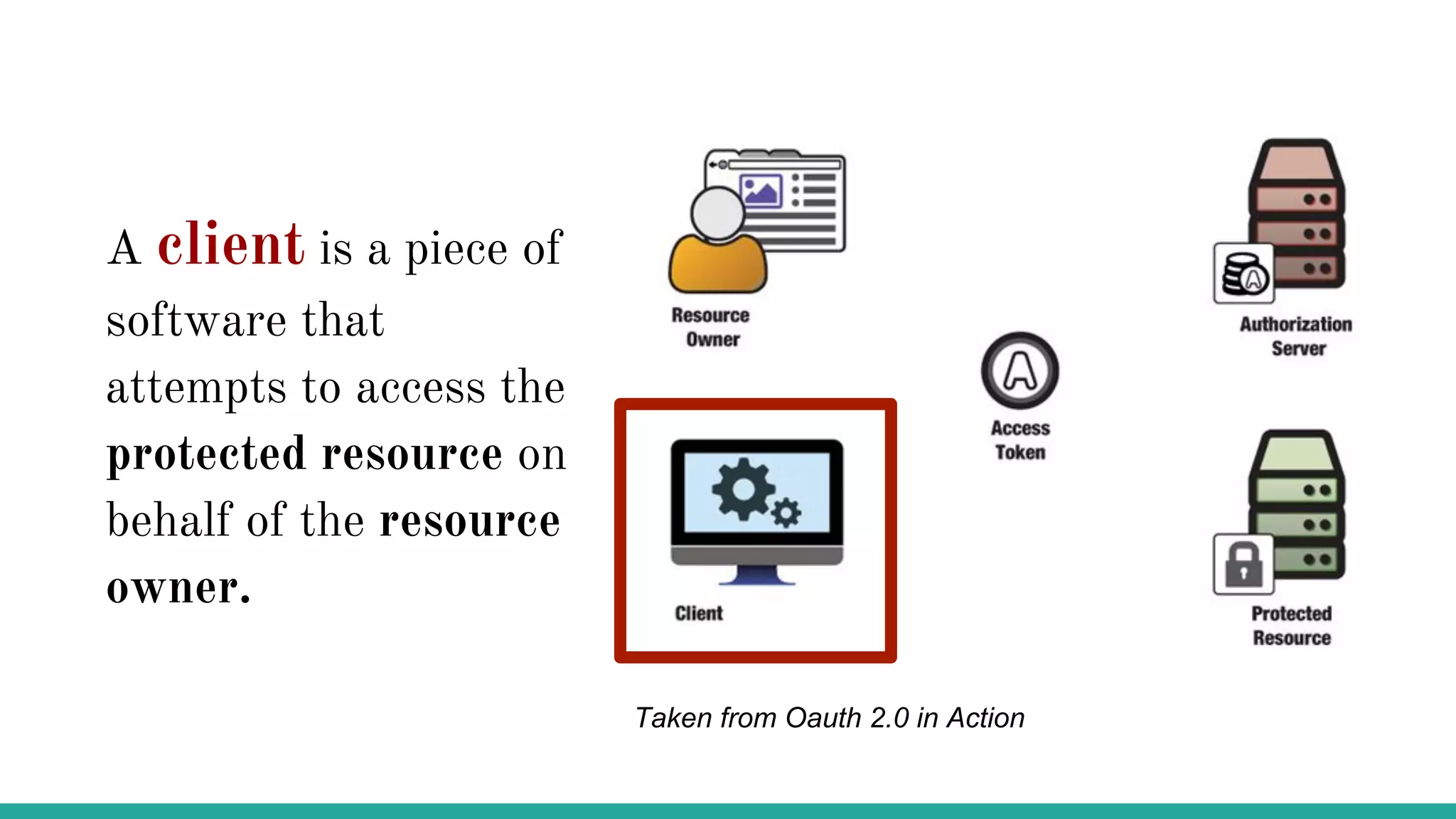
A client is a piece of
software that
attempts to access the
protected resource on
behalf of the resource
owner.
Taken from Oauth 2.0 in Action
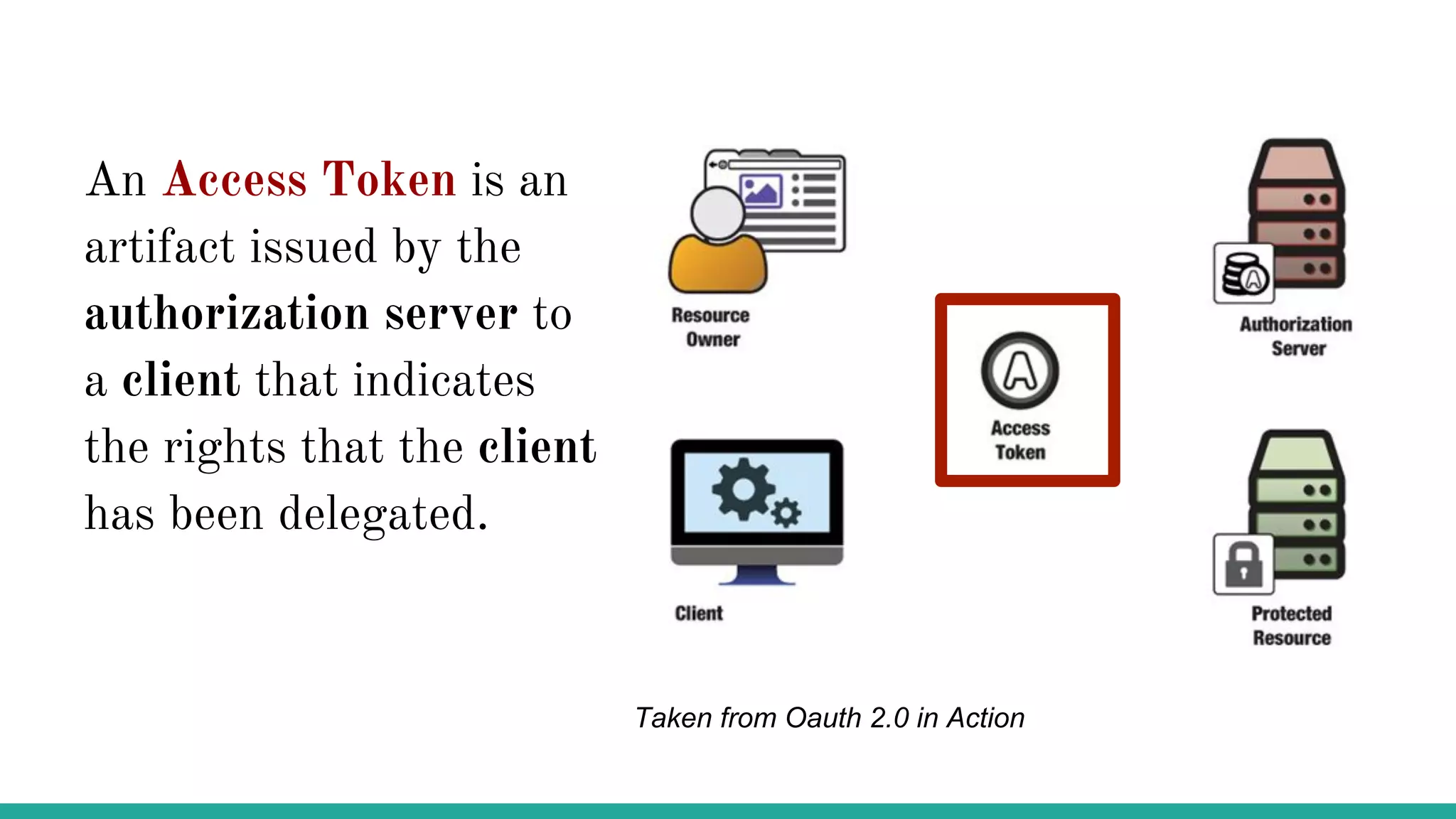
An Access Token is an
artifact issued by the
authorization server to
a client that indicates
the rights that the client
has been delegated.
Taken from Oauth 2.0 in Action
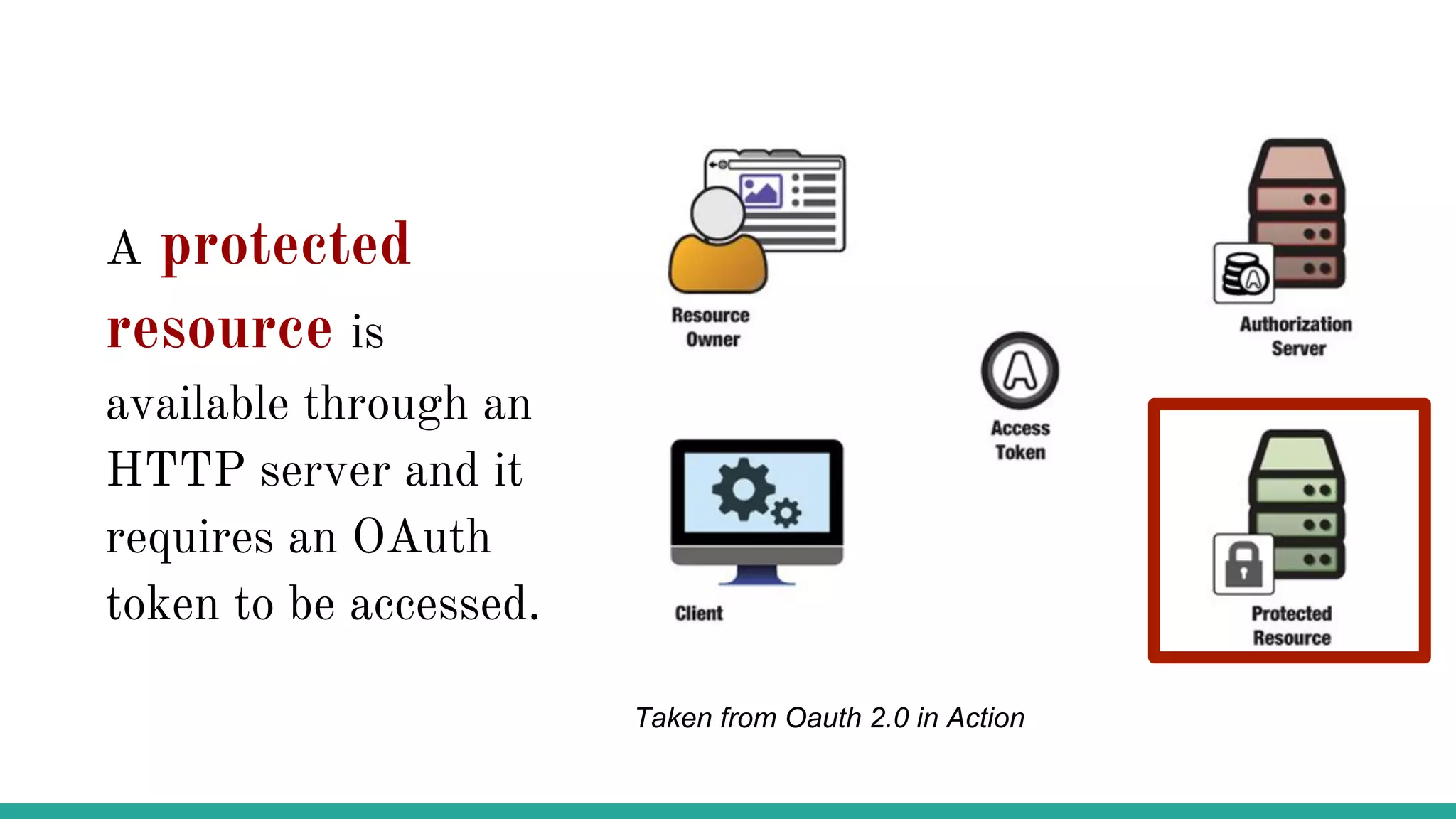
A protected
resource is
available through an
HTTP server and it
requires an OAuth
token to be accessed.
Taken from Oauth 2.0 in Action
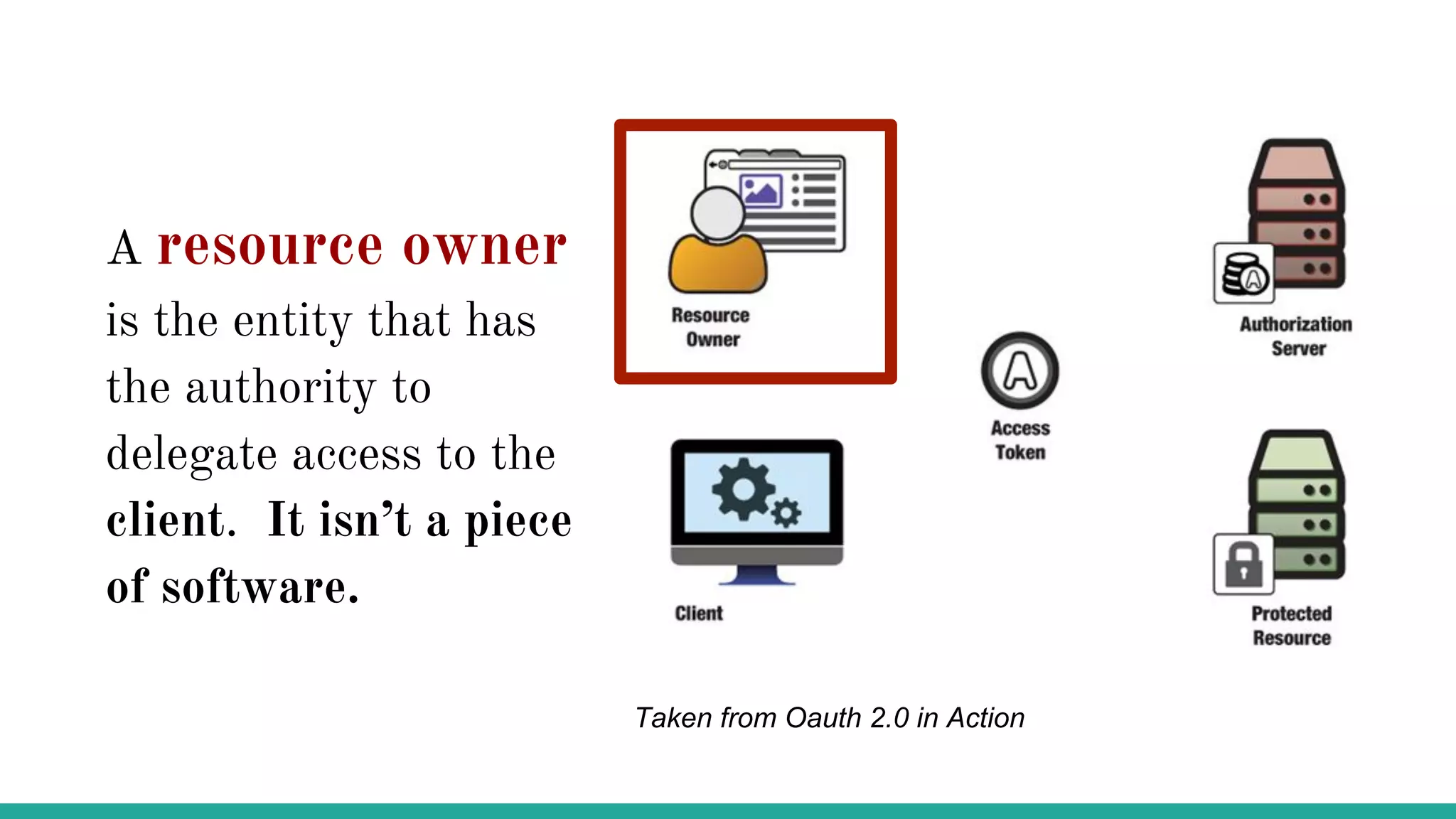
A resource owner
is the entity that has
the authority to
delegate access to the
client. It isn’t a piece
of software.
Taken from Oauth 2.0 in Action
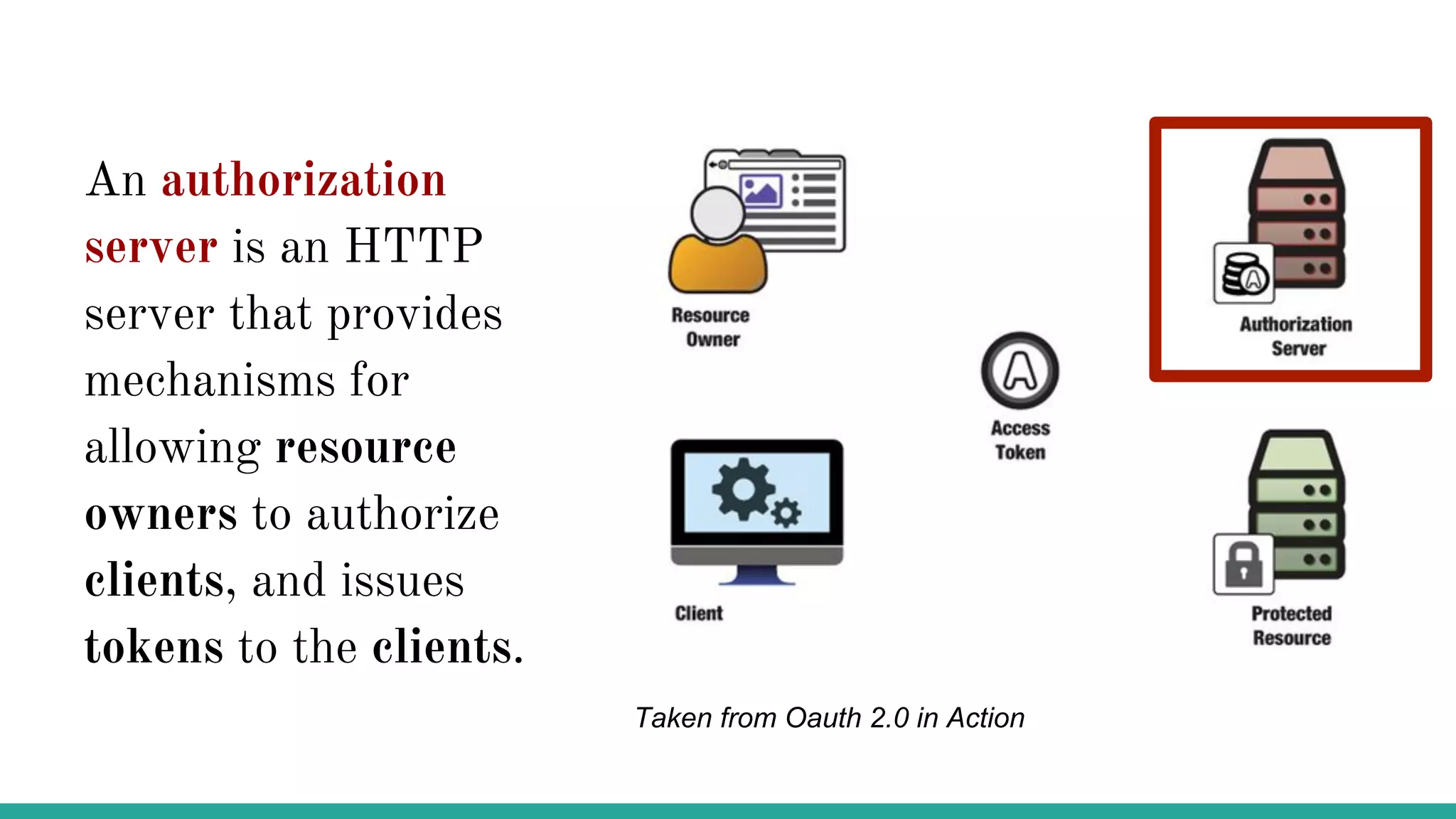
An authorization
server is an HTTP
server that provides
mechanisms for
allowing resource
owners to authorize
clients, and issues
tokens to the clients.
Taken from Oauth 2.0 in Action
Tokens, scopes, and authorization grants
An access token, sometimes
known as just a token is an
artifact issued by the
authorization server to a
client that indicates the
rights that the client has been
delegated.
OAuth a token represents the
combination of the client’s
requested access, the resource
owner that authorized the
client, and the rights conferred
during that authorization.
A scope is a
representation of a set of rights at
a protected resource. They are a
mechanism for limiting the access
granted to a client.
Are you paying attention?
1. Which components are no software?
2. Which components should know the token
content?
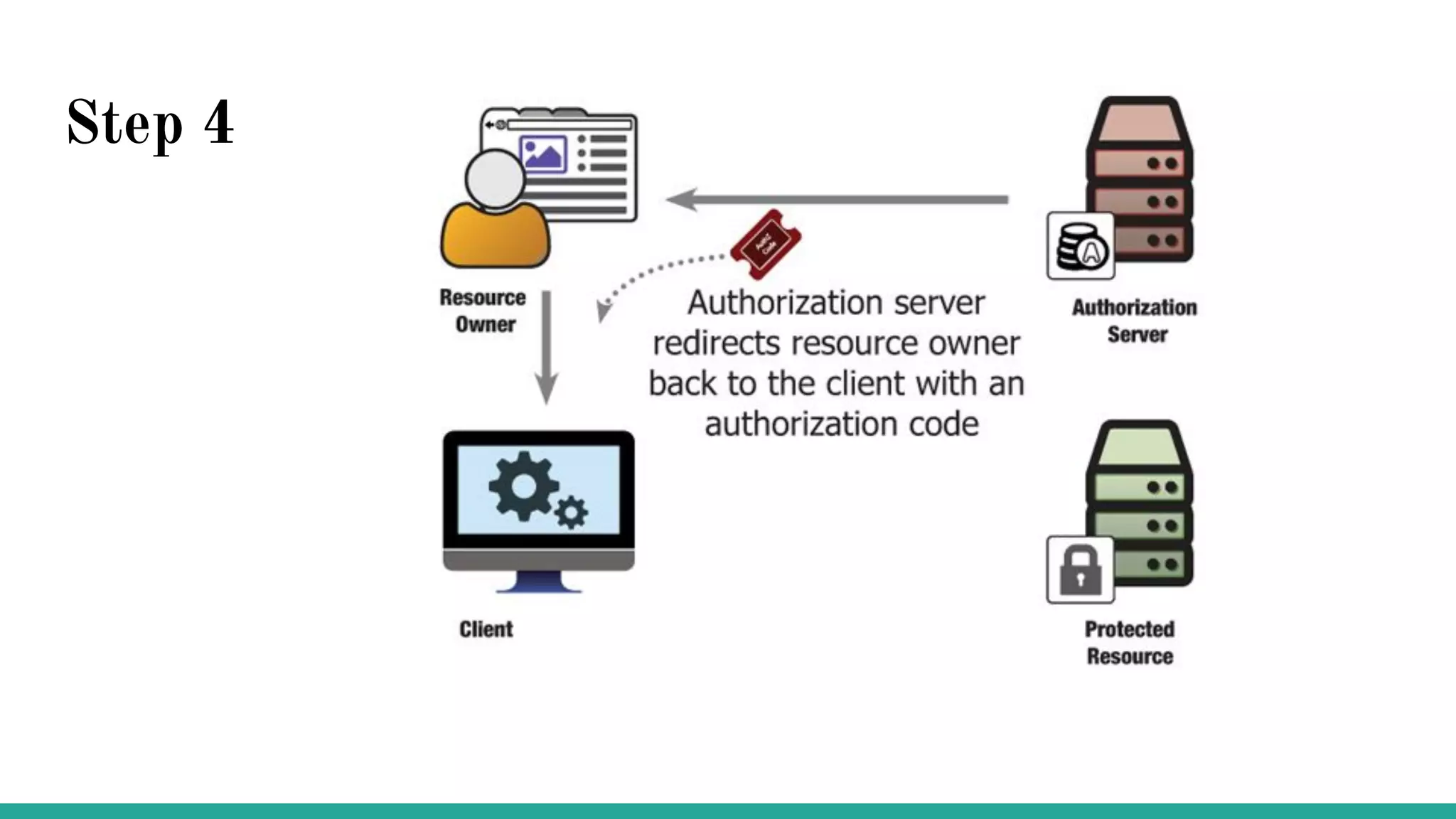
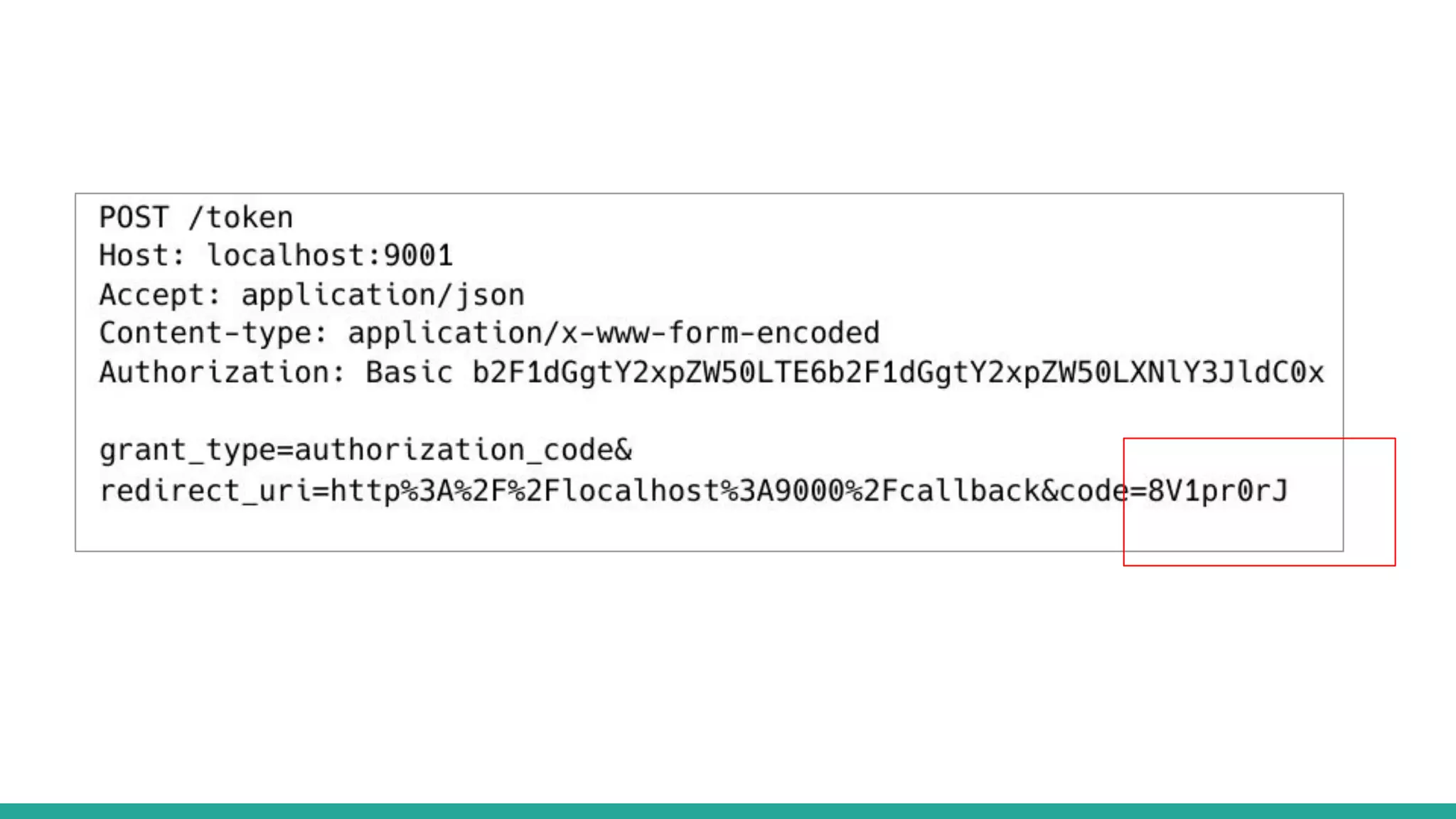
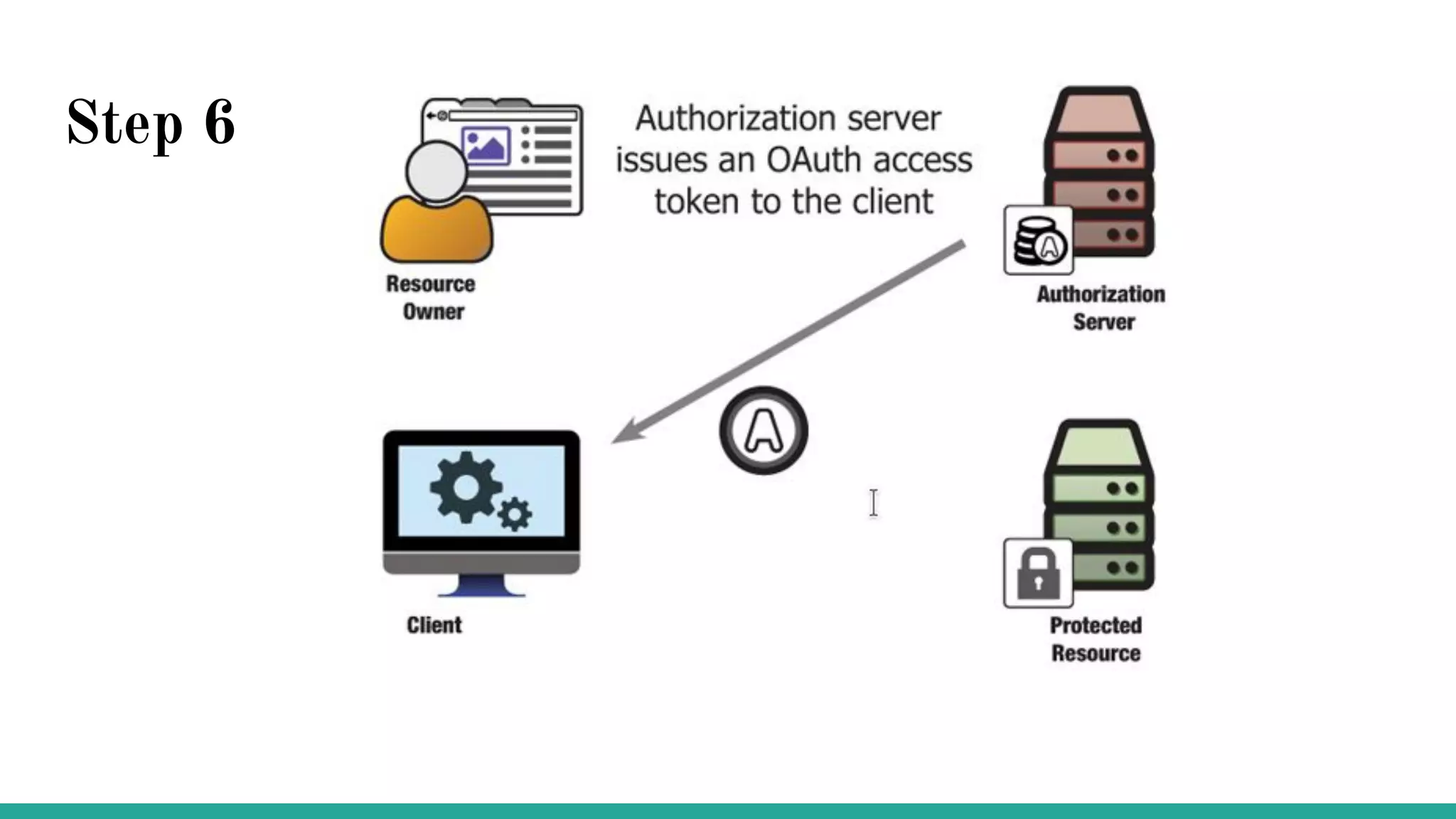
OAuth Dancing
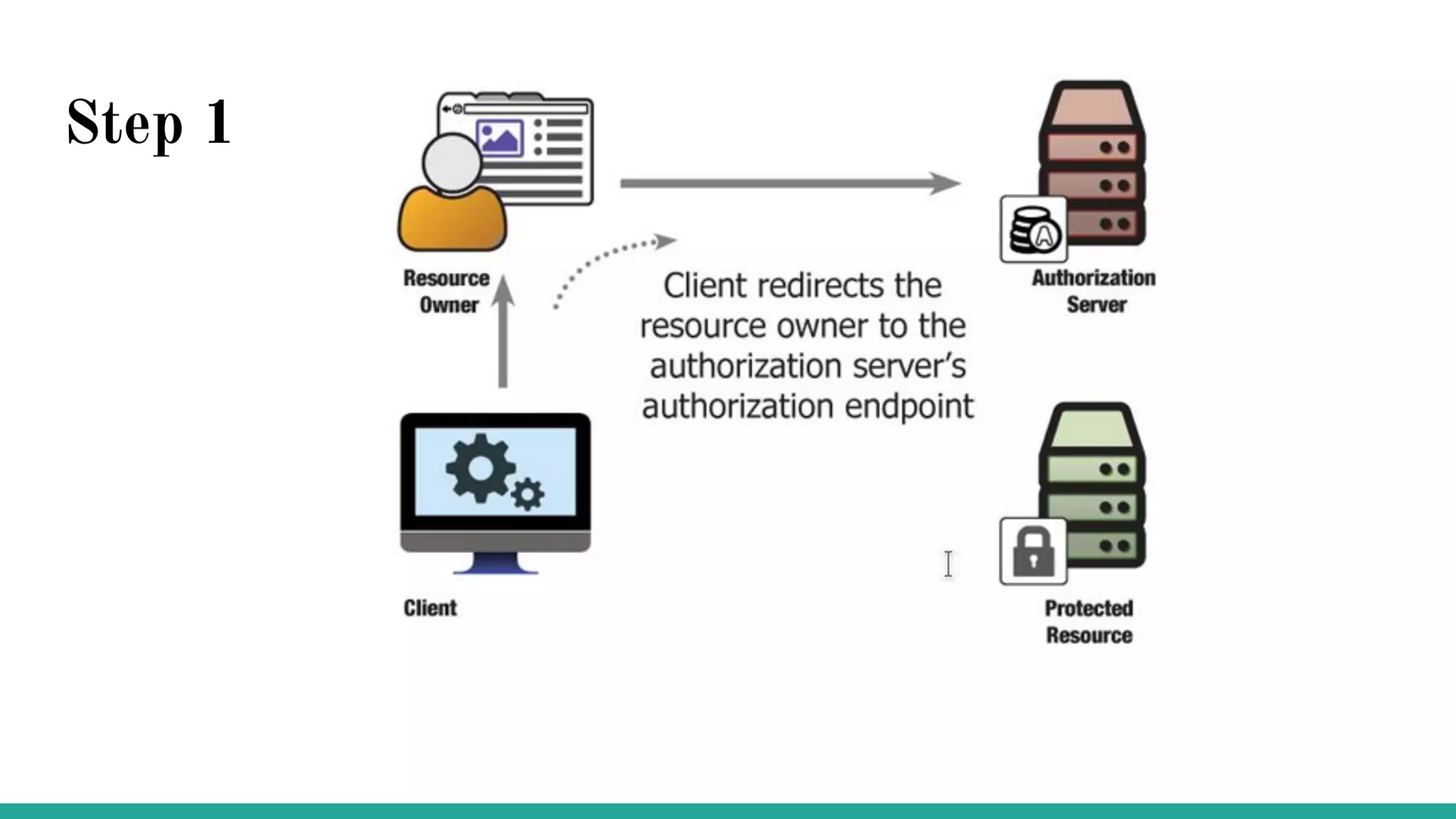
Step 1
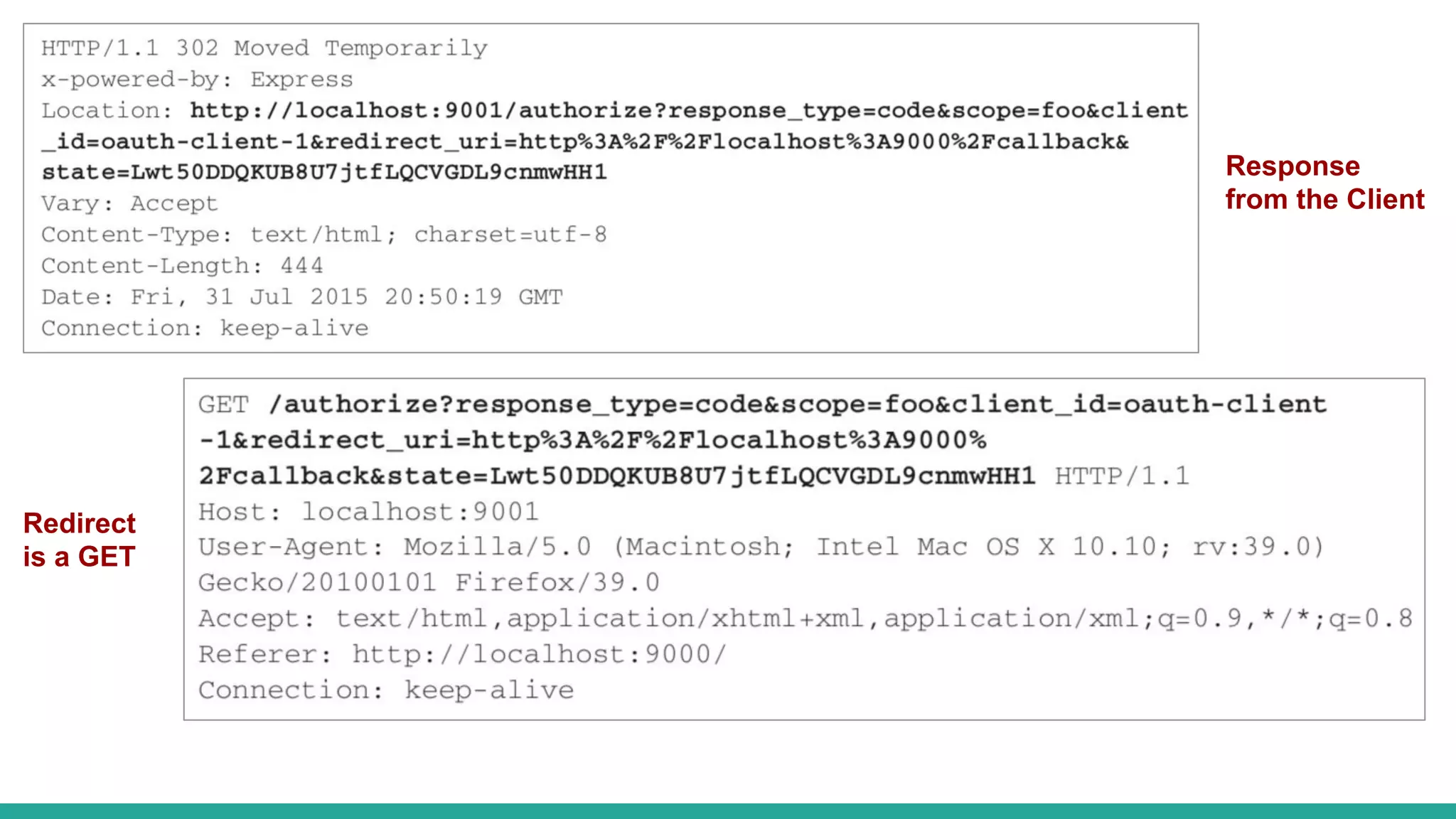
Response
from the Client
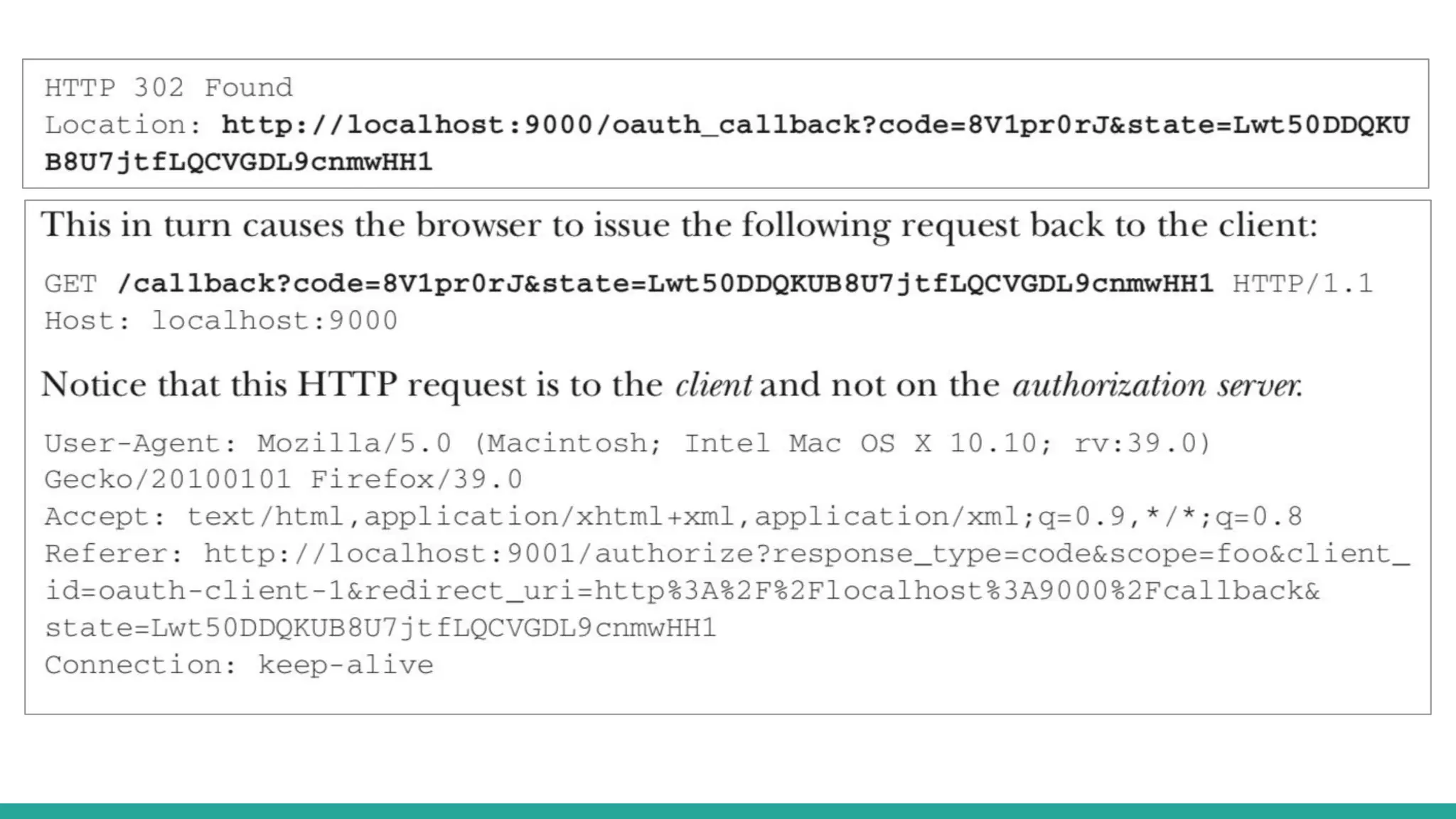
Redirect
is a GET
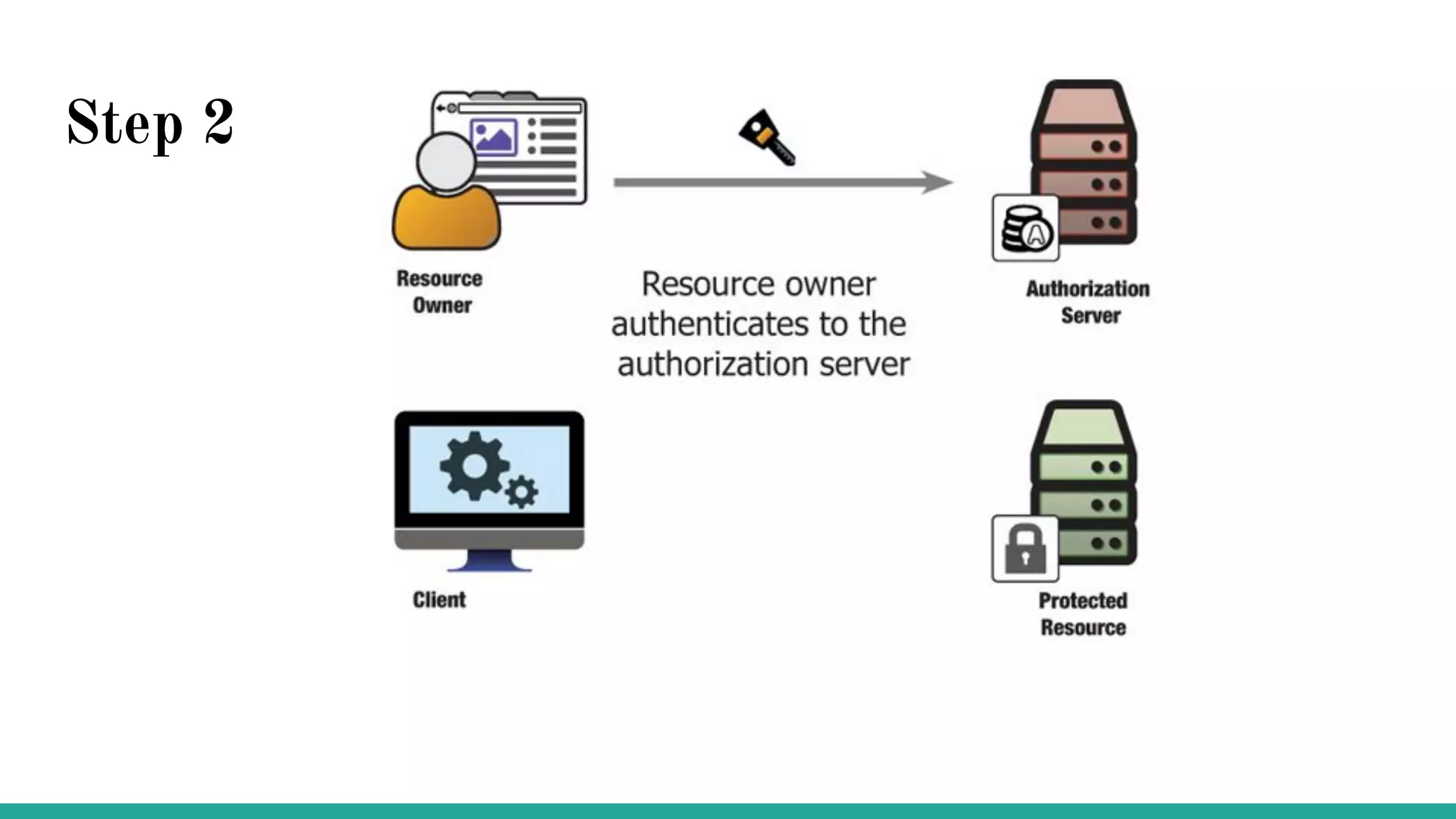
Step 2
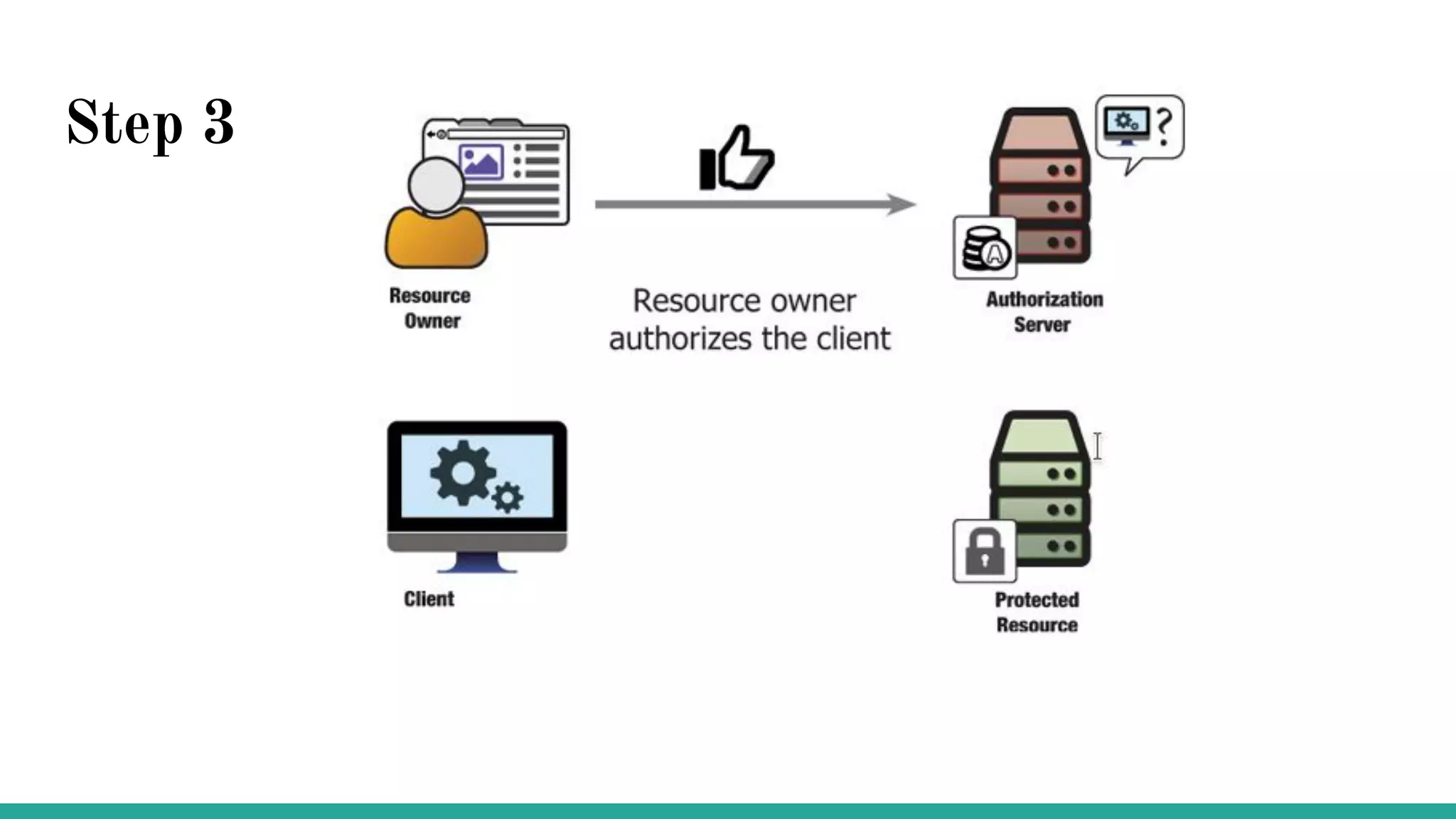
Step 3
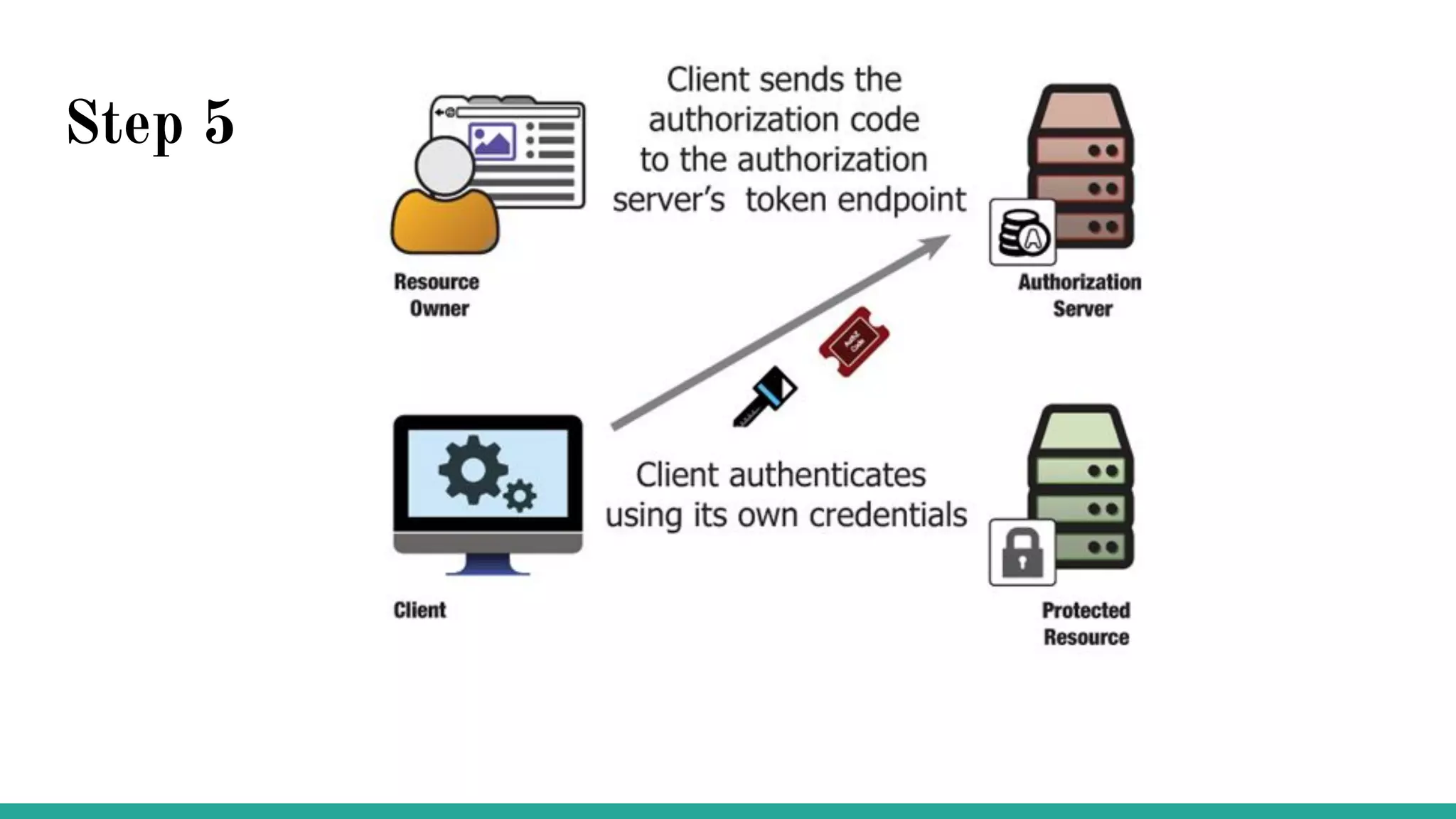
Step 5
Step 4
Step 6
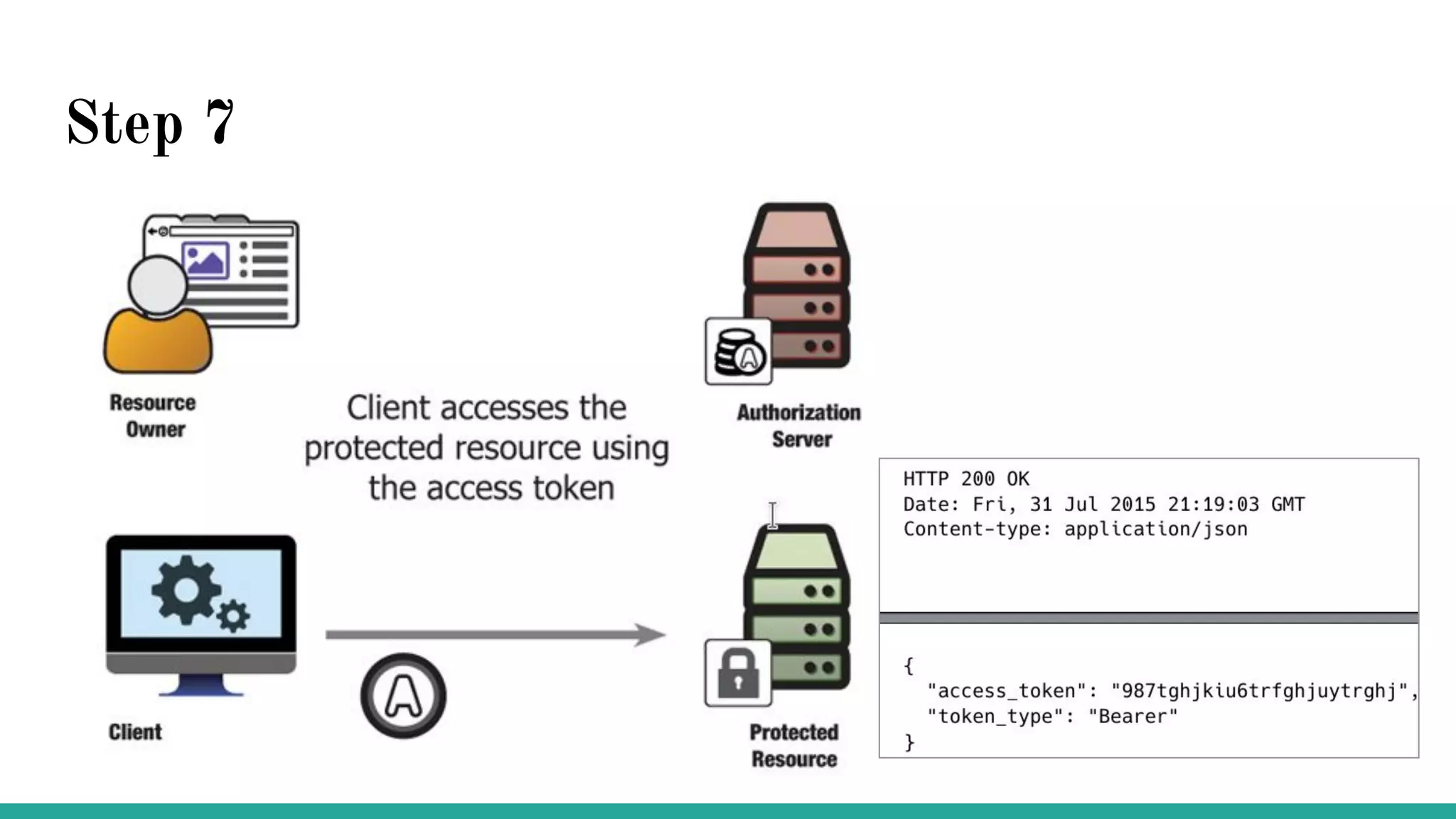
Step 7
What is the new with OAuth?
Are you paying attention?
1. How does Resource Owner authenticate
before Authorization Server grant the
access to the Resource?
2. How do you think a granted authorization
is removed?
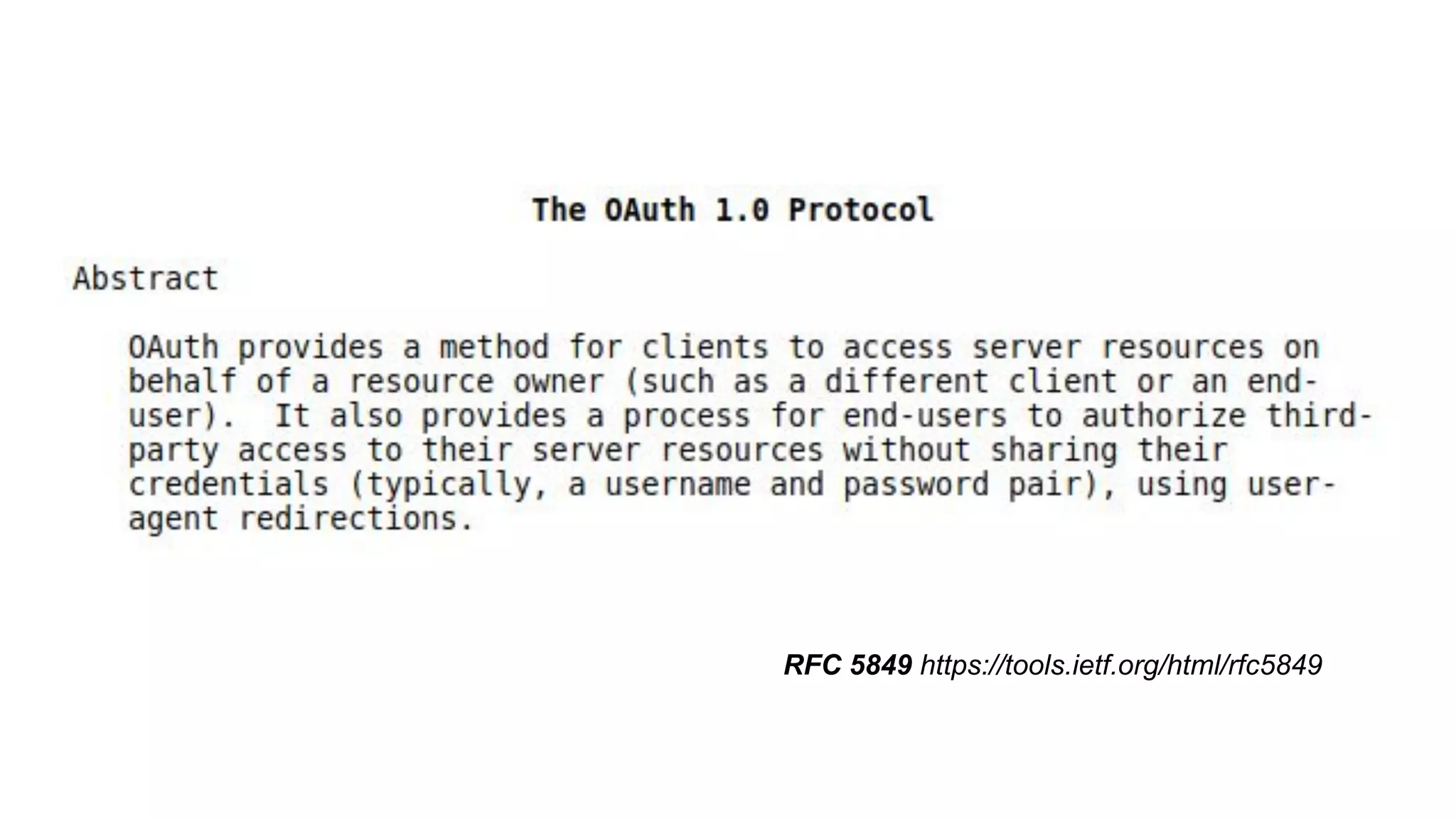
RFC 5849 https://tools.ietf.org/html/rfc5849
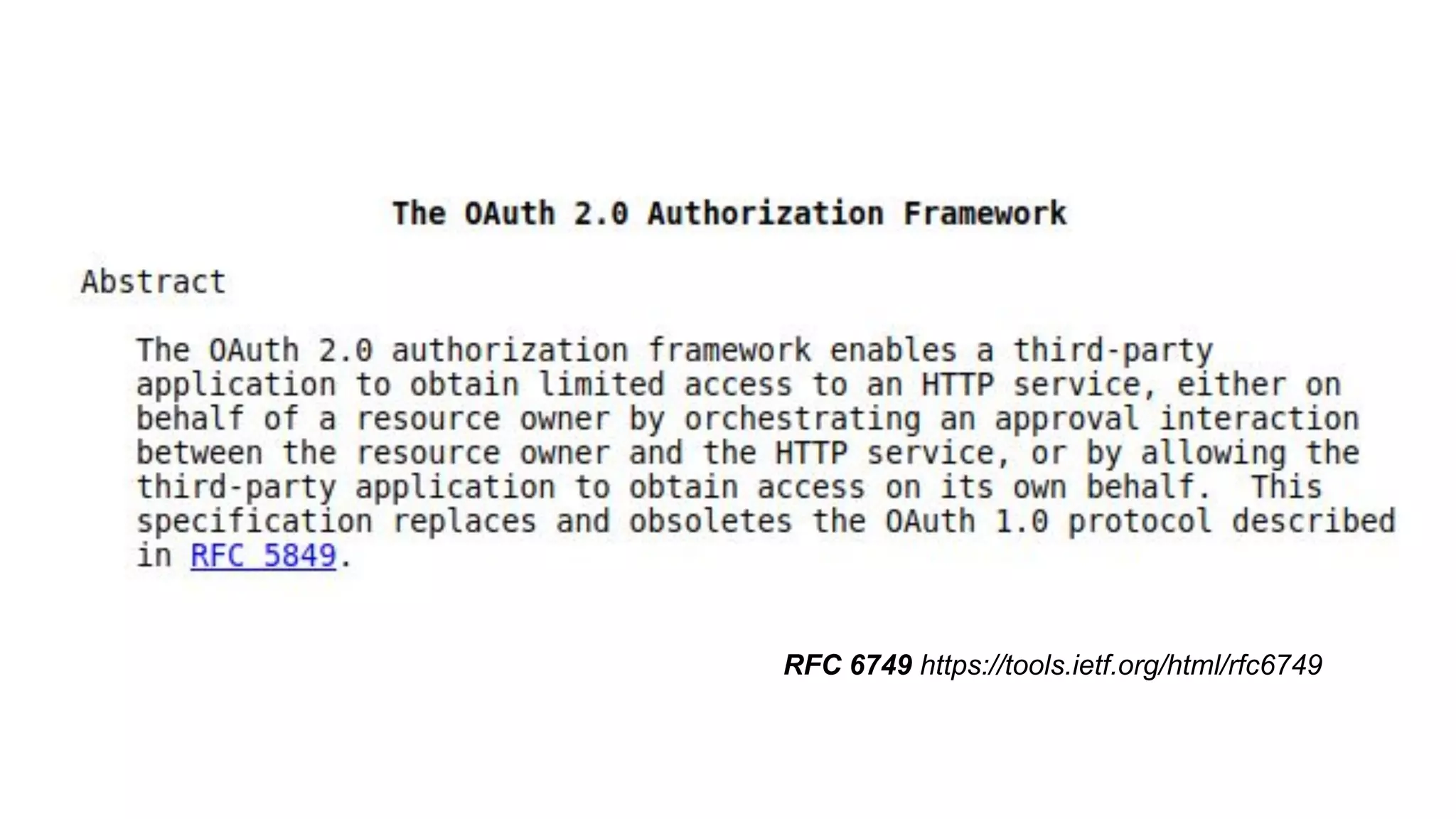
RFC 6749 https://tools.ietf.org/html/rfc6749
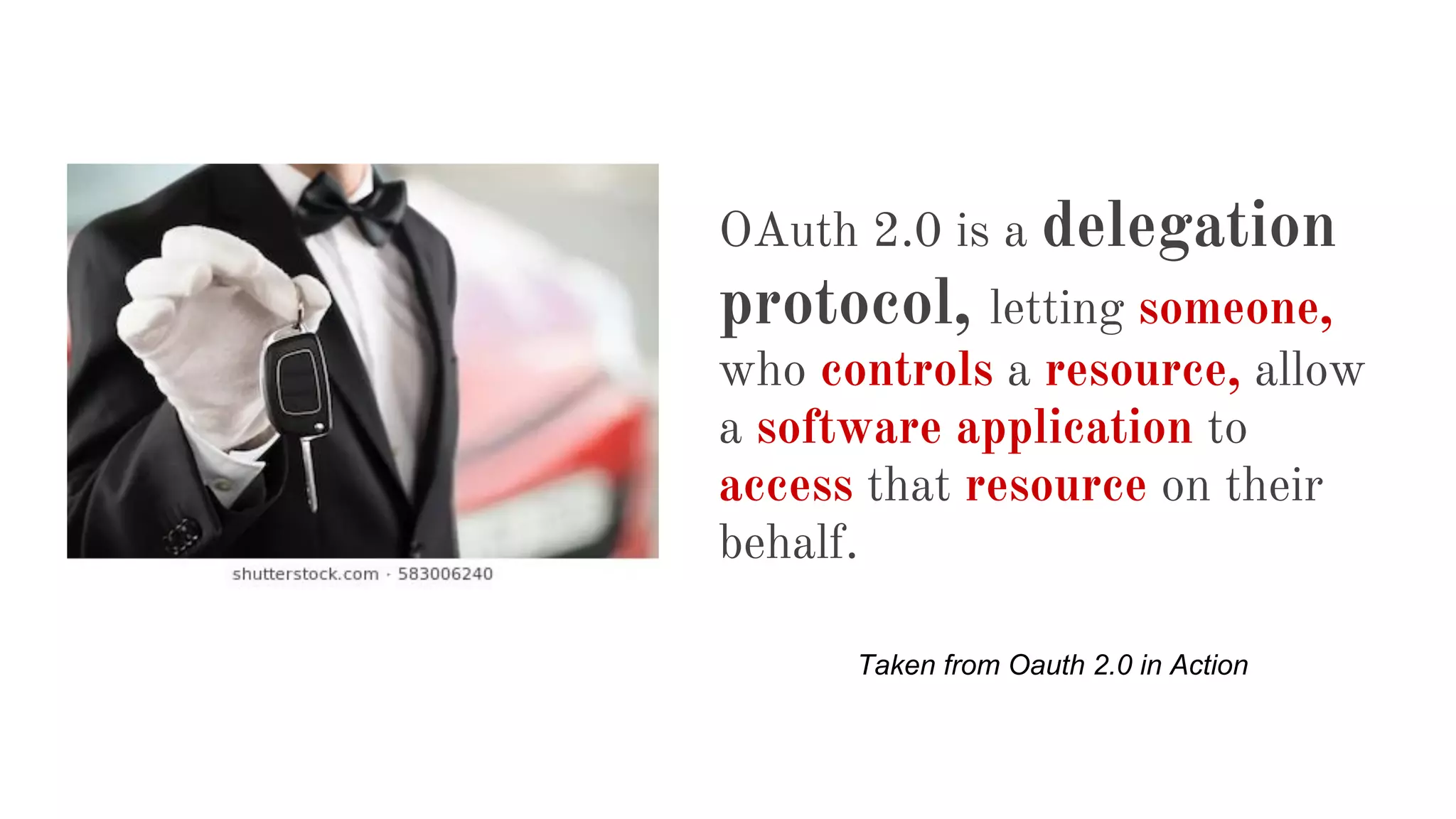
OAuth 2.0 is a delegation
protocol, letting someone,
who controls a resource, allow
a software application to
access that resource on their
behalf.
Taken from Oauth 2.0 in Action
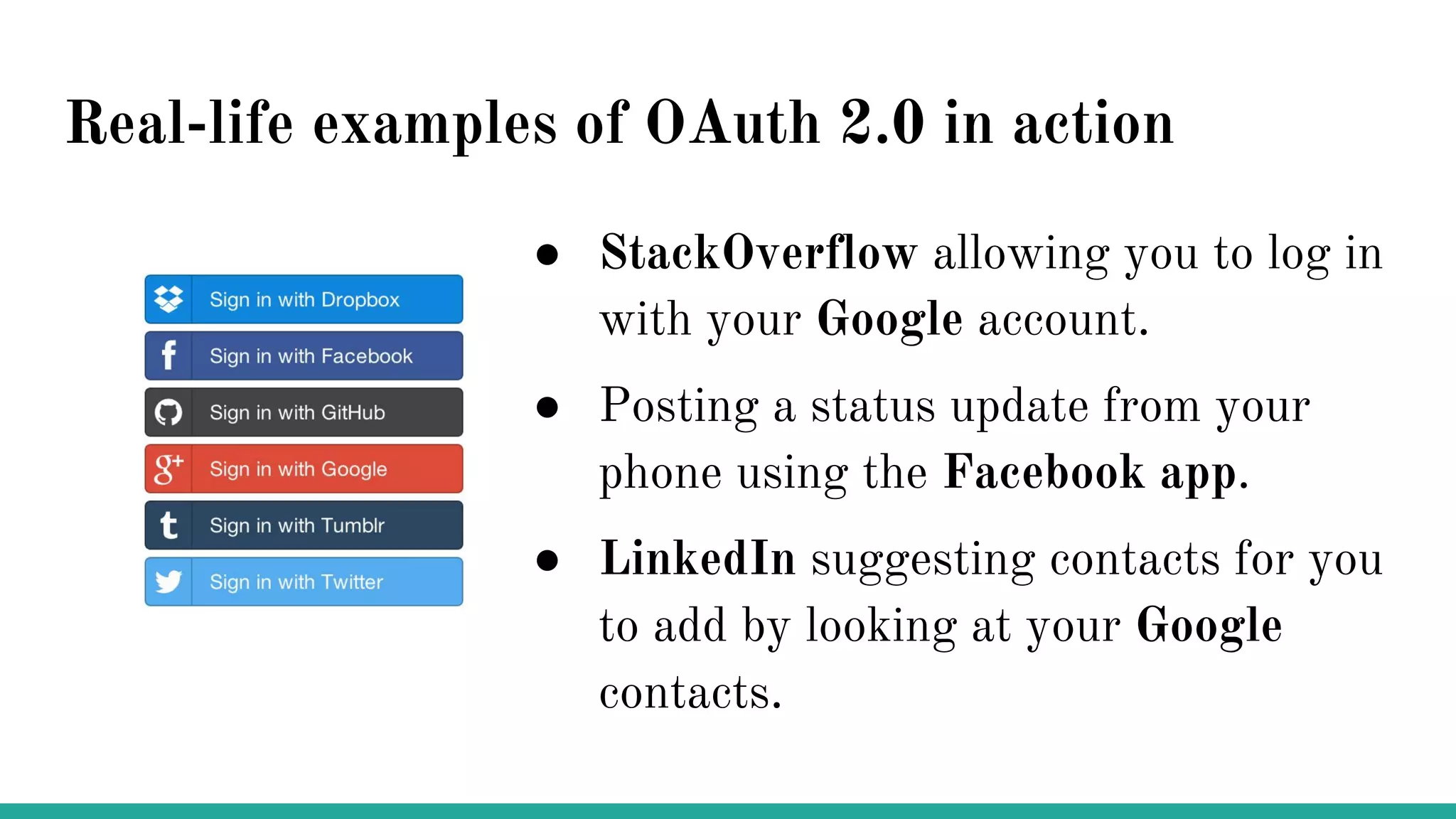
Real-life examples of OAuth 2.0 in action
● StackOverflow allowing you to log in
with your Google account.
● Posting a status update from your
phone using the Facebook app.
● LinkedIn suggesting contacts for you
to add by looking at your Google
contacts.
Fundamental to the power of OAuth 2.0 is
the notion of delegation. Although OAuth 2.0
is often called an authorization protocol (and
this is the name given to it in the RFC which
defines it), it is a delegation protocol.
How to get an access token … Grant Types
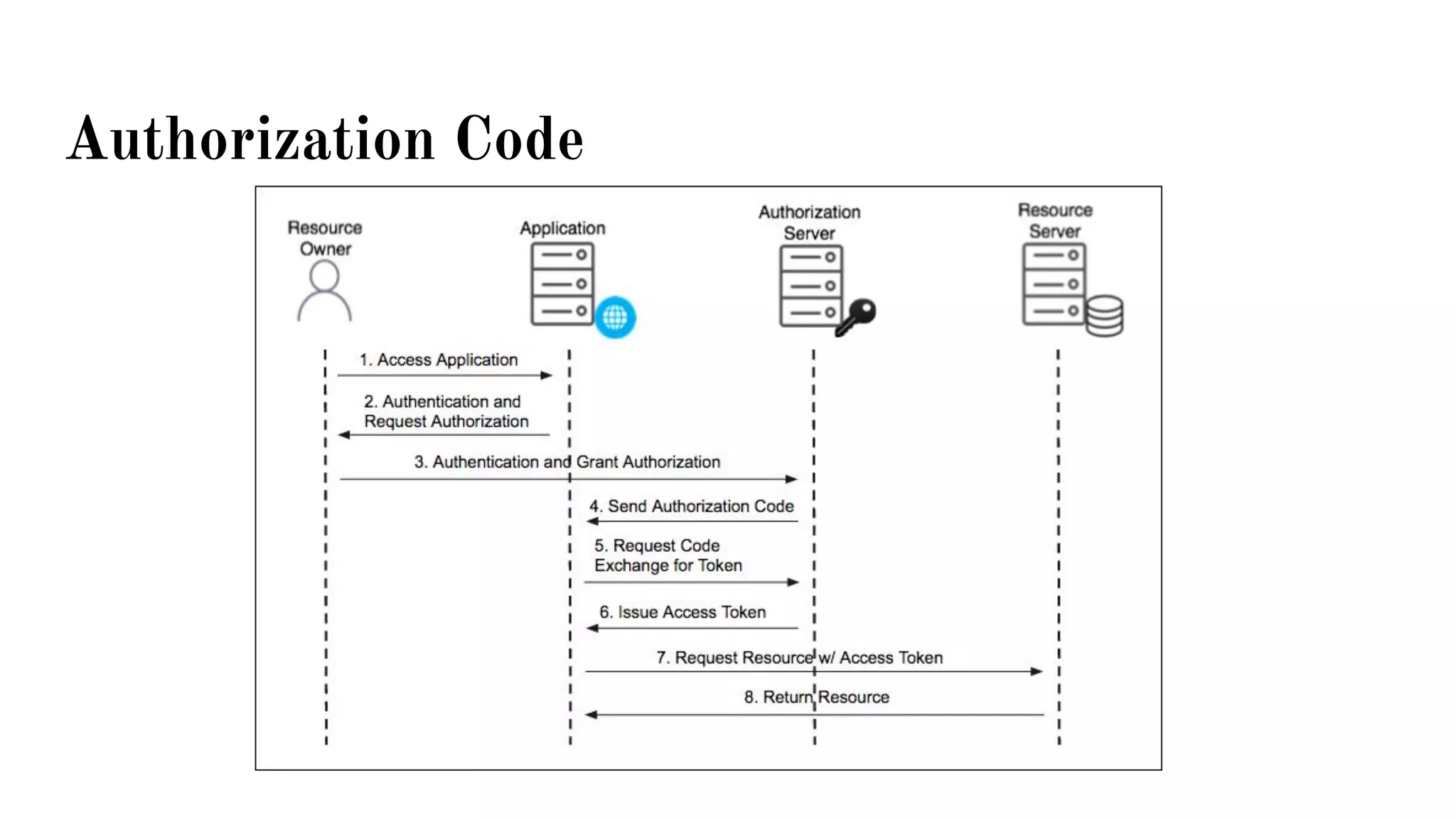
Authorization Code
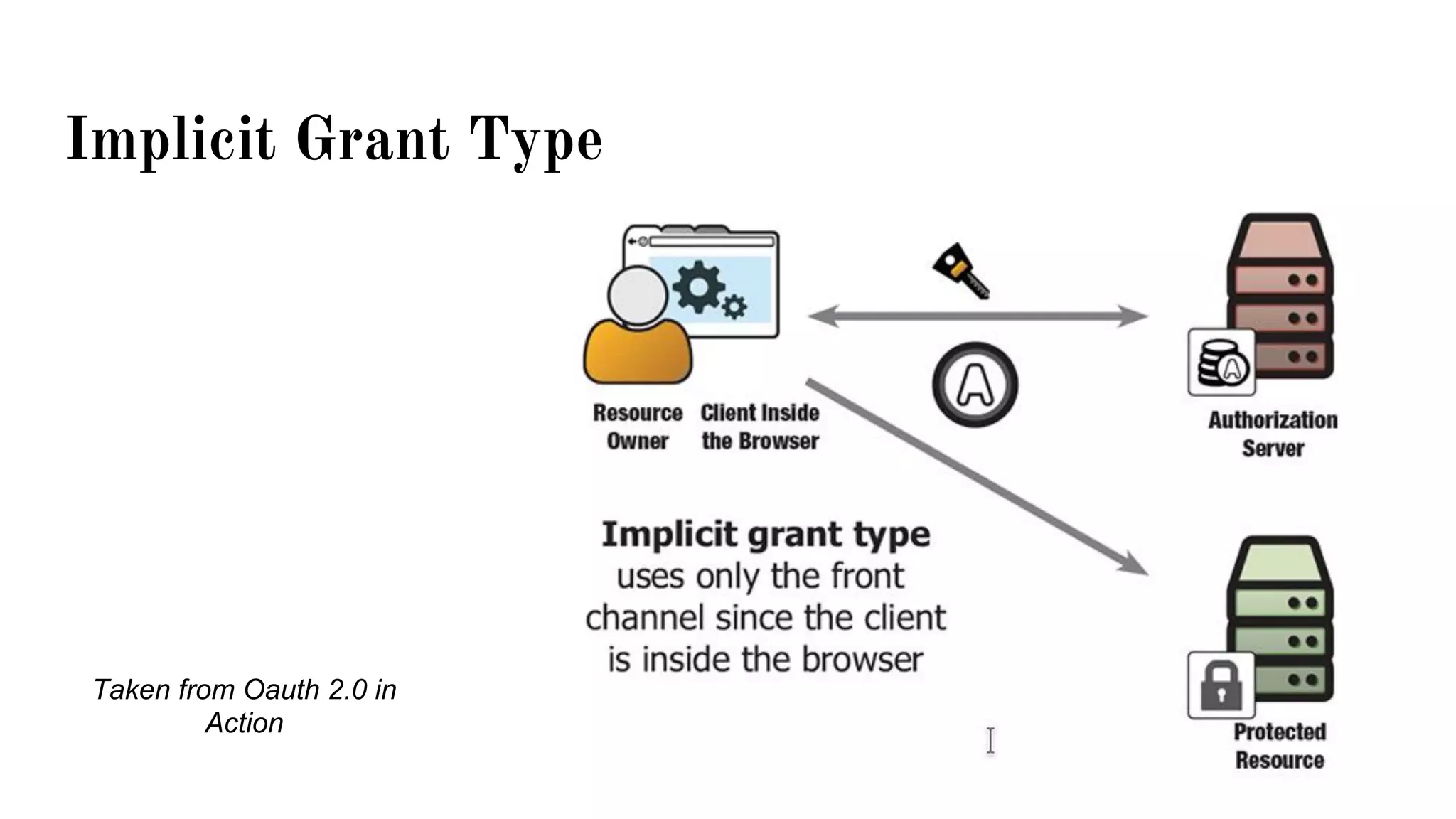
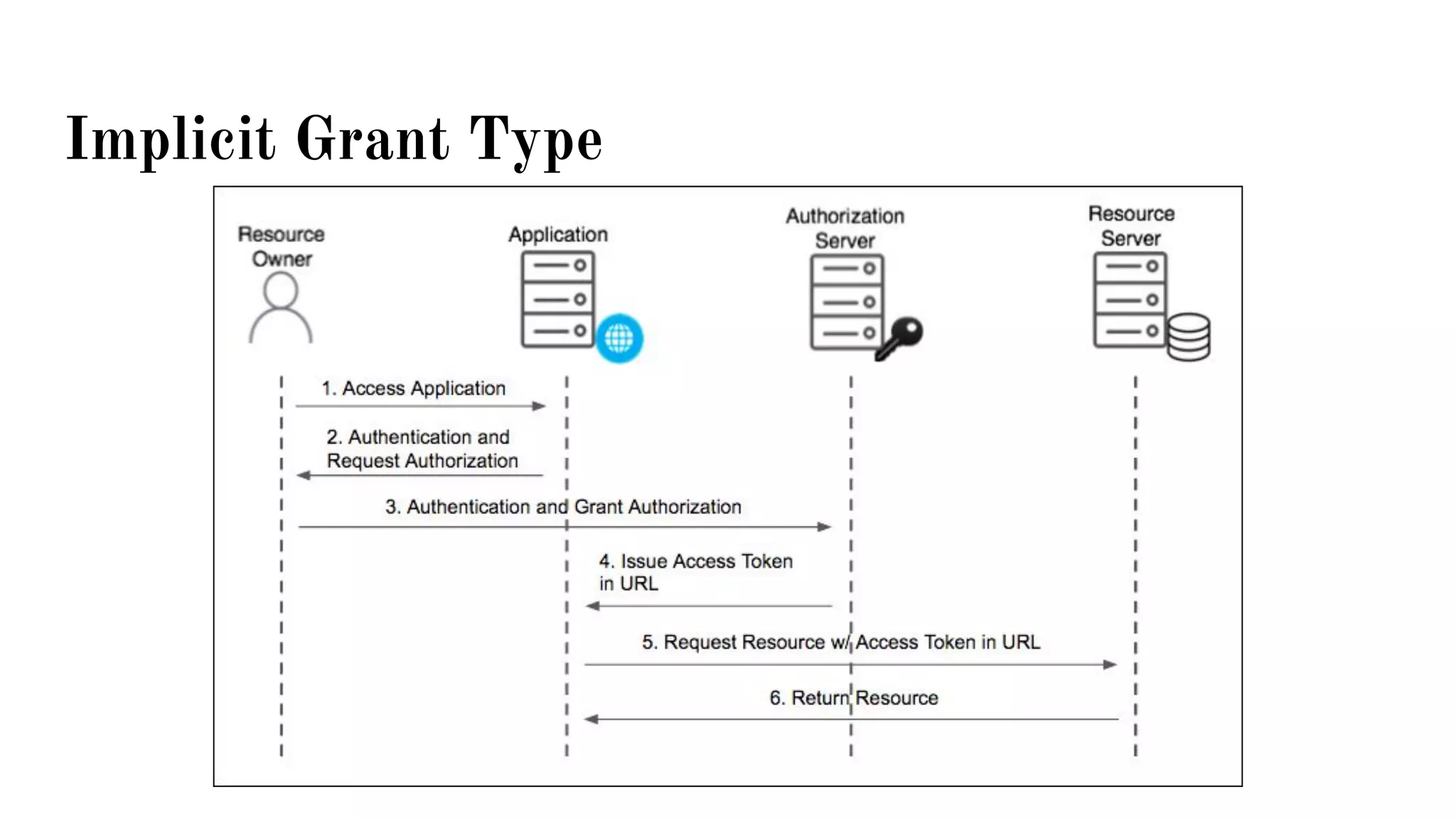
Implicit Grant Type
Taken from Oauth 2.0 in
Action
Implicit Grant Type
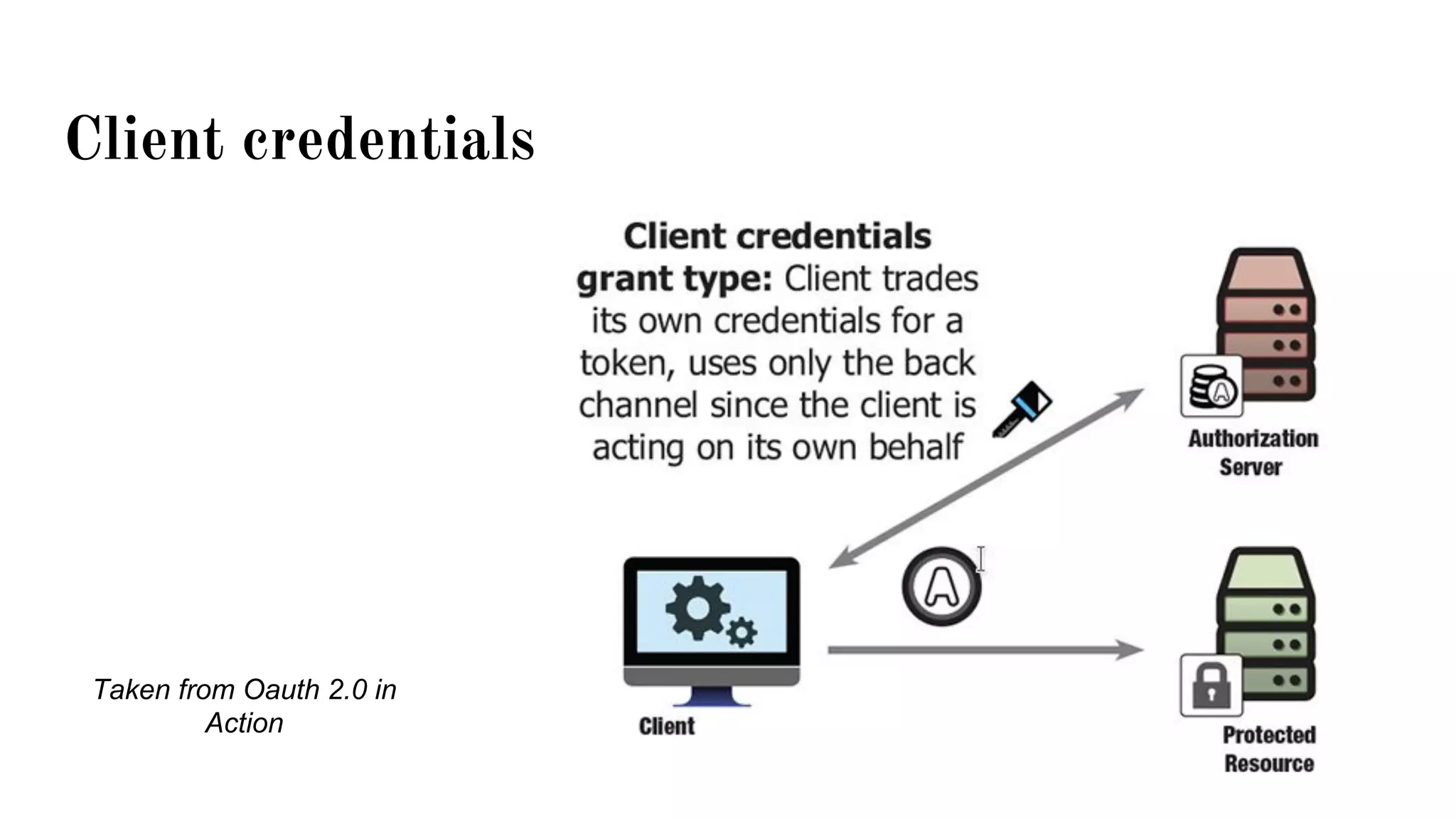
Client credentials
Taken from Oauth 2.0 in
Action
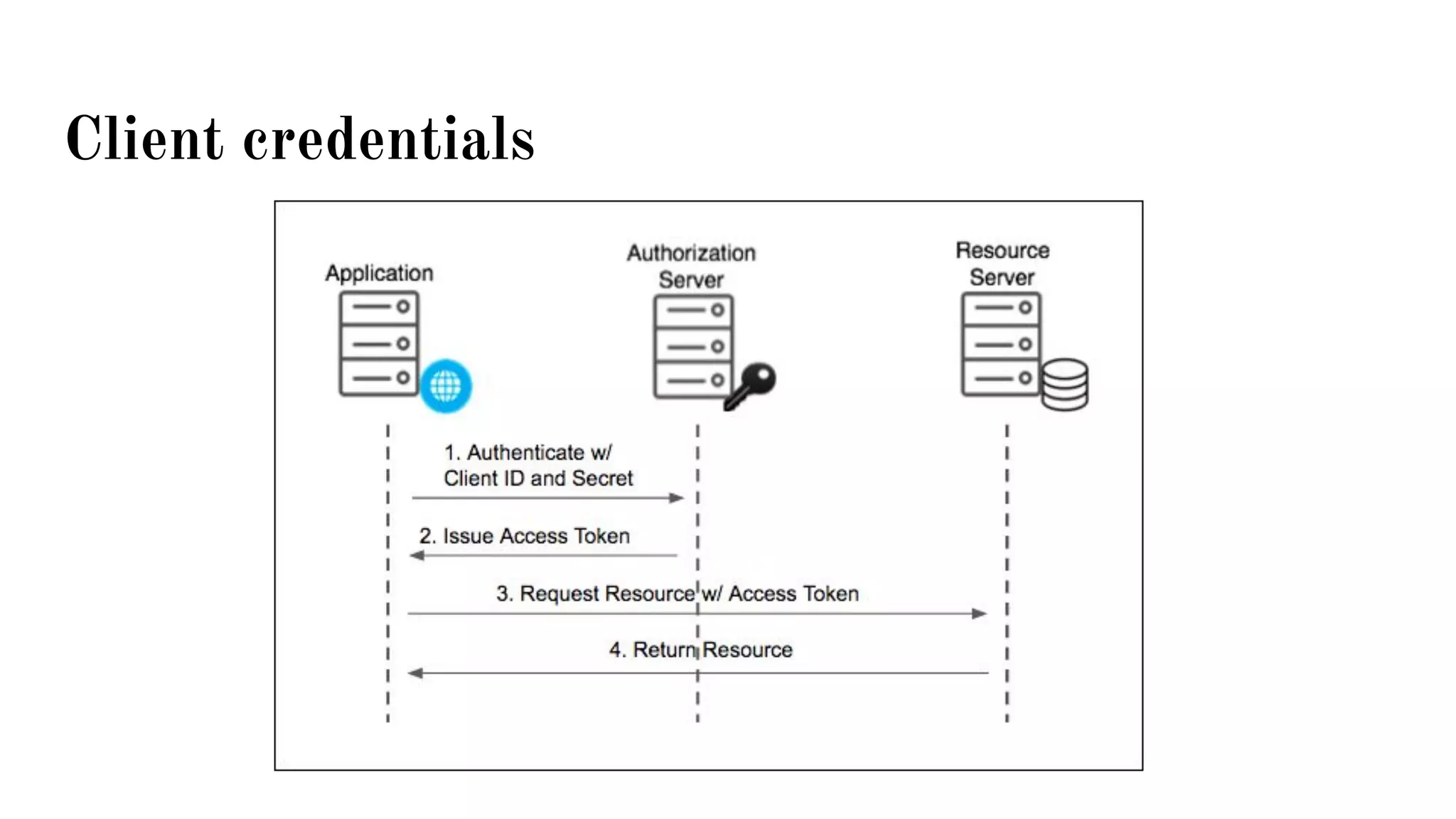
Client credentials
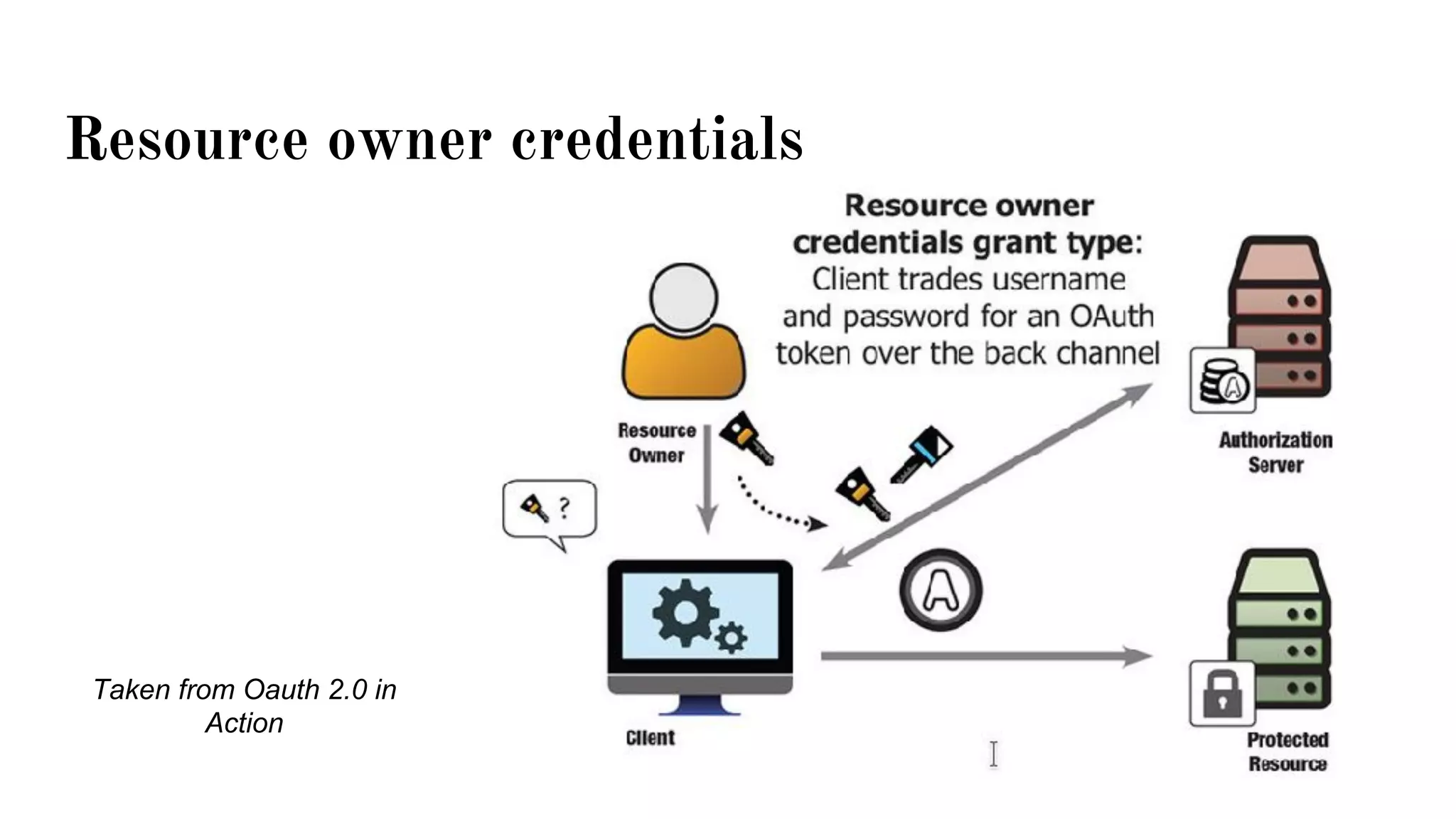
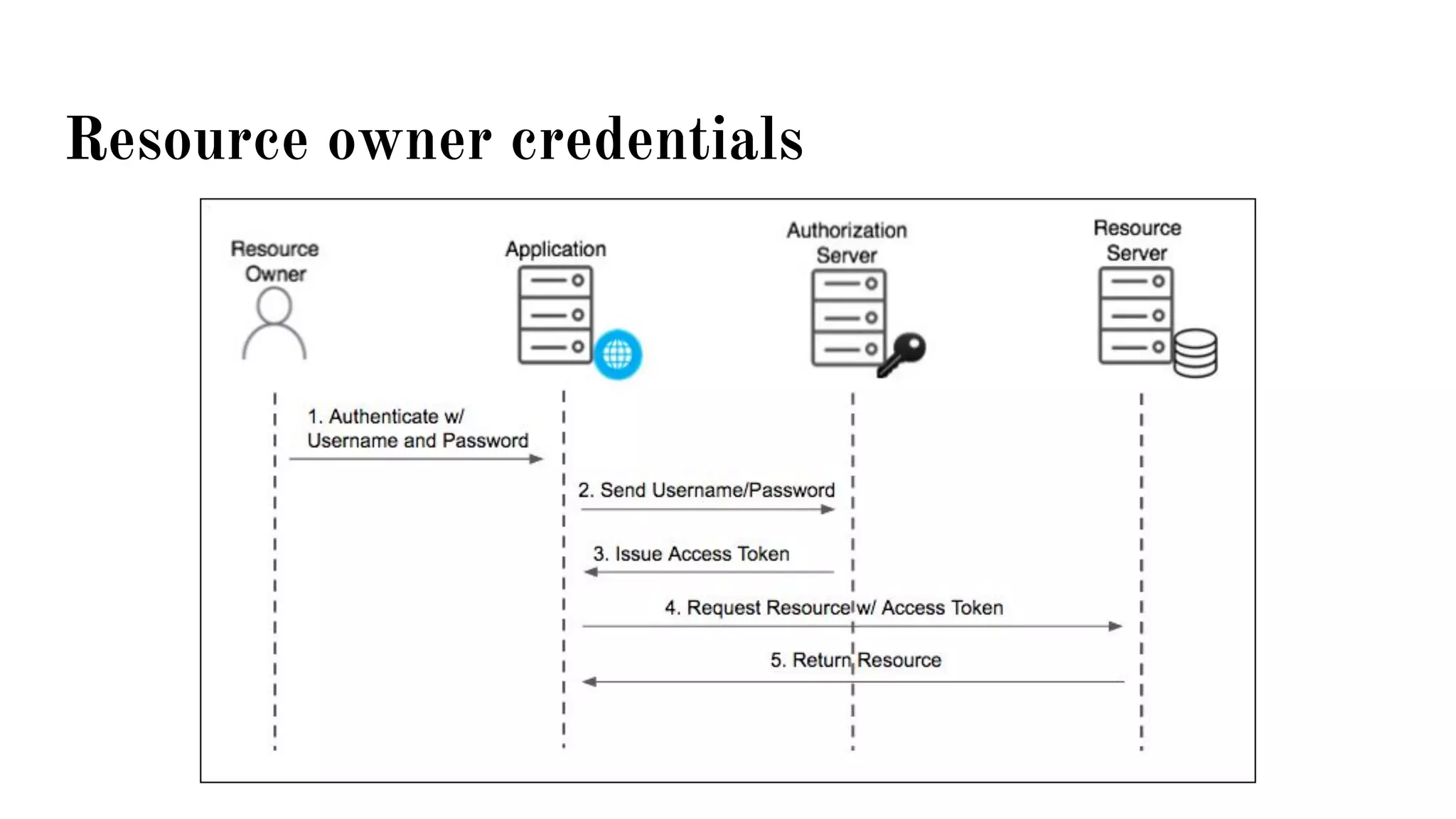
Resource owner credentials
Taken from Oauth 2.0 in
Action
Resource owner credentials
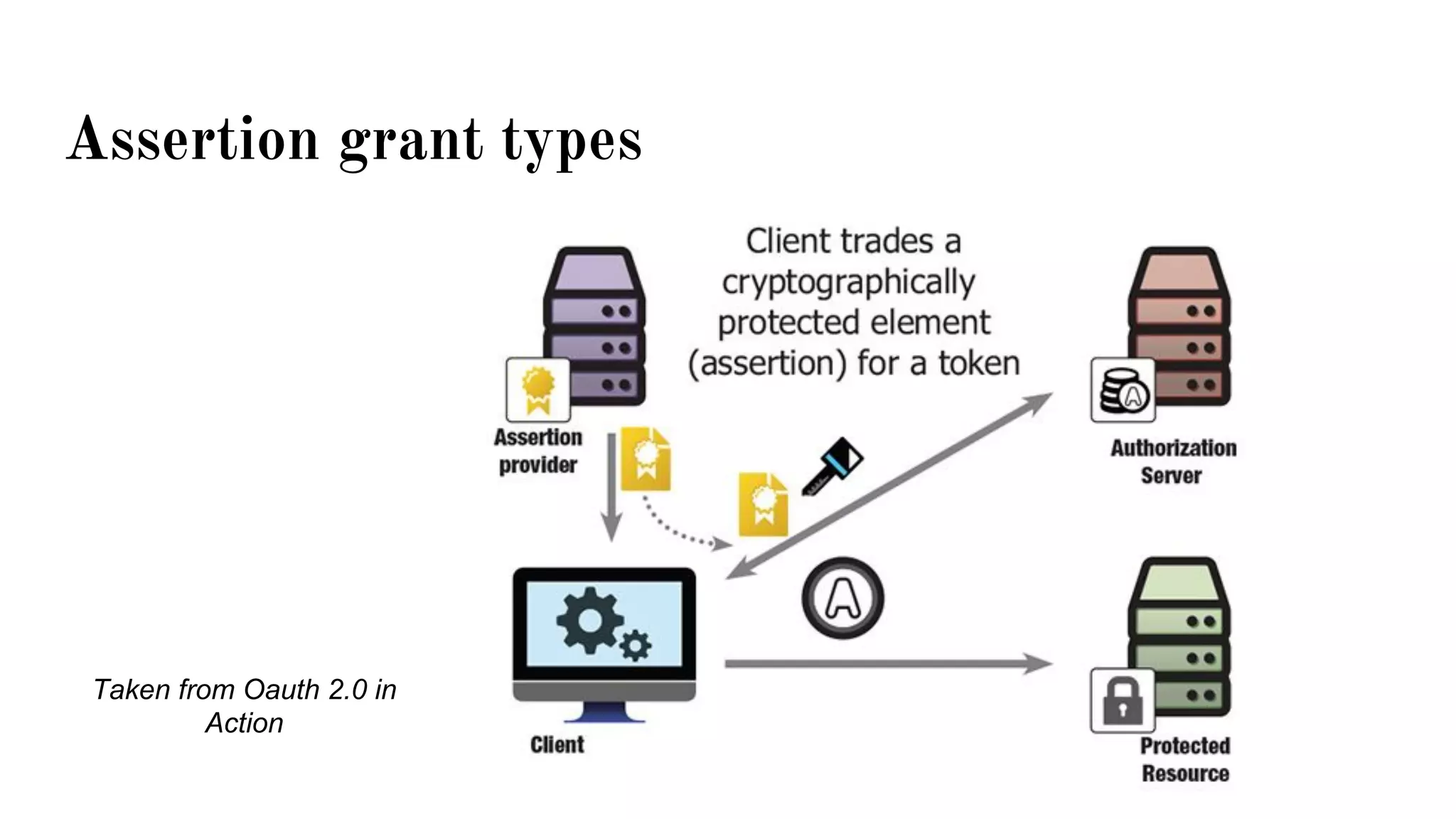
Assertion grant types
Taken from Oauth 2.0 in
Action
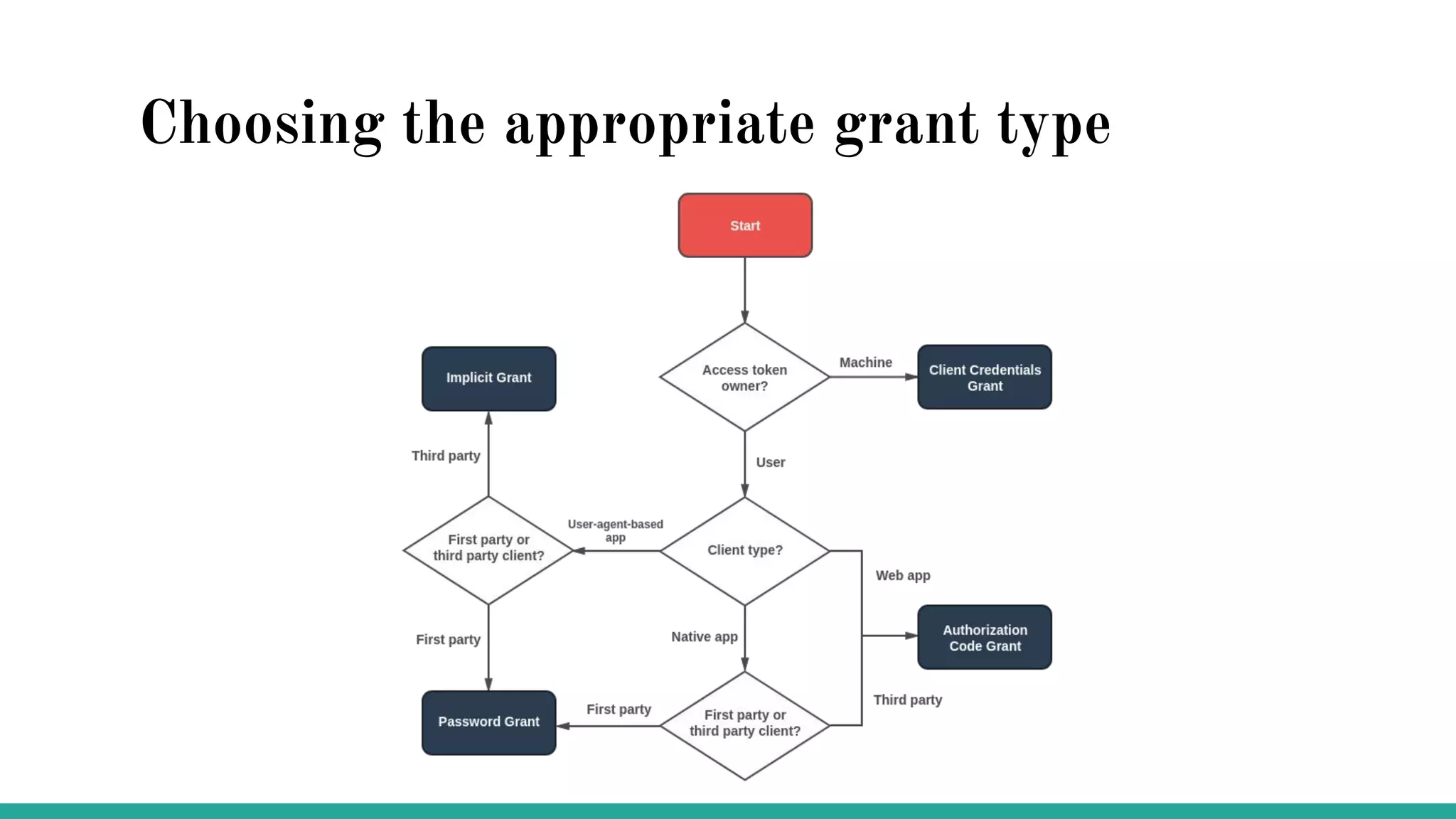
Choosing the appropriate grant type
OAuth 2.0 the good, the
bad, and the ugly
Demystifying OAuth 2.0

Demystifying OAuth 2.0

  • 1.
  • 2.
    Nice to meetyou Software Engineer @Colpatria Scotiabank Making things happen! Loves reading, programming and teaching. @yurynino @yurynino @yurynino yury.nino.roa
  • 3.
    Agenda ● Why OAuth? ●What is OAuth? ● How to OAuth works? ● OAuth Grant Types
  • 4.
    What is theproblem? You have DIFFERENT accounts for LinkedIn and Google. LinkedIn wants to add your Google contacts to your LinkedIn profile.
  • 5.
    The bad olddays: credential sharing
  • 6.
    Think in this…. Taken from Oauth 2.0 in Action
  • 7.
    It was badbecause ... ● Same credentials at the client and the protected resource are required. ● It exposed the user’s password to the client application. Taken from Oauth 2.0 in Action
  • 8.
    What if wewere able to have this kind of limited credential, issued separately for each client and each user combination, to be used at a protected resource?
  • 9.
    OAuth is aprotocol designed to do exactly that: Delegating.
  • 10.
    Taken from Oauth2.0 in Action What is the new with OAuth?
  • 12.
    A client isa piece of software that attempts to access the protected resource on behalf of the resource owner. Taken from Oauth 2.0 in Action
  • 13.
    An Access Tokenis an artifact issued by the authorization server to a client that indicates the rights that the client has been delegated. Taken from Oauth 2.0 in Action
  • 14.
    A protected resource is availablethrough an HTTP server and it requires an OAuth token to be accessed. Taken from Oauth 2.0 in Action
  • 15.
    A resource owner isthe entity that has the authority to delegate access to the client. It isn’t a piece of software. Taken from Oauth 2.0 in Action
  • 16.
    An authorization server isan HTTP server that provides mechanisms for allowing resource owners to authorize clients, and issues tokens to the clients. Taken from Oauth 2.0 in Action
  • 17.
    Tokens, scopes, andauthorization grants An access token, sometimes known as just a token is an artifact issued by the authorization server to a client that indicates the rights that the client has been delegated. OAuth a token represents the combination of the client’s requested access, the resource owner that authorized the client, and the rights conferred during that authorization. A scope is a representation of a set of rights at a protected resource. They are a mechanism for limiting the access granted to a client.
  • 18.
    Are you payingattention? 1. Which components are no software? 2. Which components should know the token content?
  • 19.
  • 20.
  • 21.
  • 22.
  • 23.
  • 24.
  • 25.
  • 28.
  • 29.
  • 30.
    What is thenew with OAuth?
  • 32.
    Are you payingattention? 1. How does Resource Owner authenticate before Authorization Server grant the access to the Resource? 2. How do you think a granted authorization is removed?
  • 33.
  • 34.
  • 35.
    OAuth 2.0 isa delegation protocol, letting someone, who controls a resource, allow a software application to access that resource on their behalf. Taken from Oauth 2.0 in Action
  • 36.
    Real-life examples ofOAuth 2.0 in action ● StackOverflow allowing you to log in with your Google account. ● Posting a status update from your phone using the Facebook app. ● LinkedIn suggesting contacts for you to add by looking at your Google contacts.
  • 37.
    Fundamental to thepower of OAuth 2.0 is the notion of delegation. Although OAuth 2.0 is often called an authorization protocol (and this is the name given to it in the RFC which defines it), it is a delegation protocol.
  • 38.
    How to getan access token … Grant Types
  • 39.
  • 40.
    Implicit Grant Type Takenfrom Oauth 2.0 in Action
  • 41.
  • 42.
    Client credentials Taken fromOauth 2.0 in Action
  • 43.
  • 44.
    Resource owner credentials Takenfrom Oauth 2.0 in Action
  • 45.
  • 46.
    Assertion grant types Takenfrom Oauth 2.0 in Action
  • 47.
  • 48.
    OAuth 2.0 thegood, the bad, and the ugly