







Demystifying
Electroconvulsive
Therapy (ECT)
Lisa McMurray, MD, FRCPC
Domenica Palermo, RN
Tanya McLendon, RN
DA
BA
Gregory McLeod, MHA
2
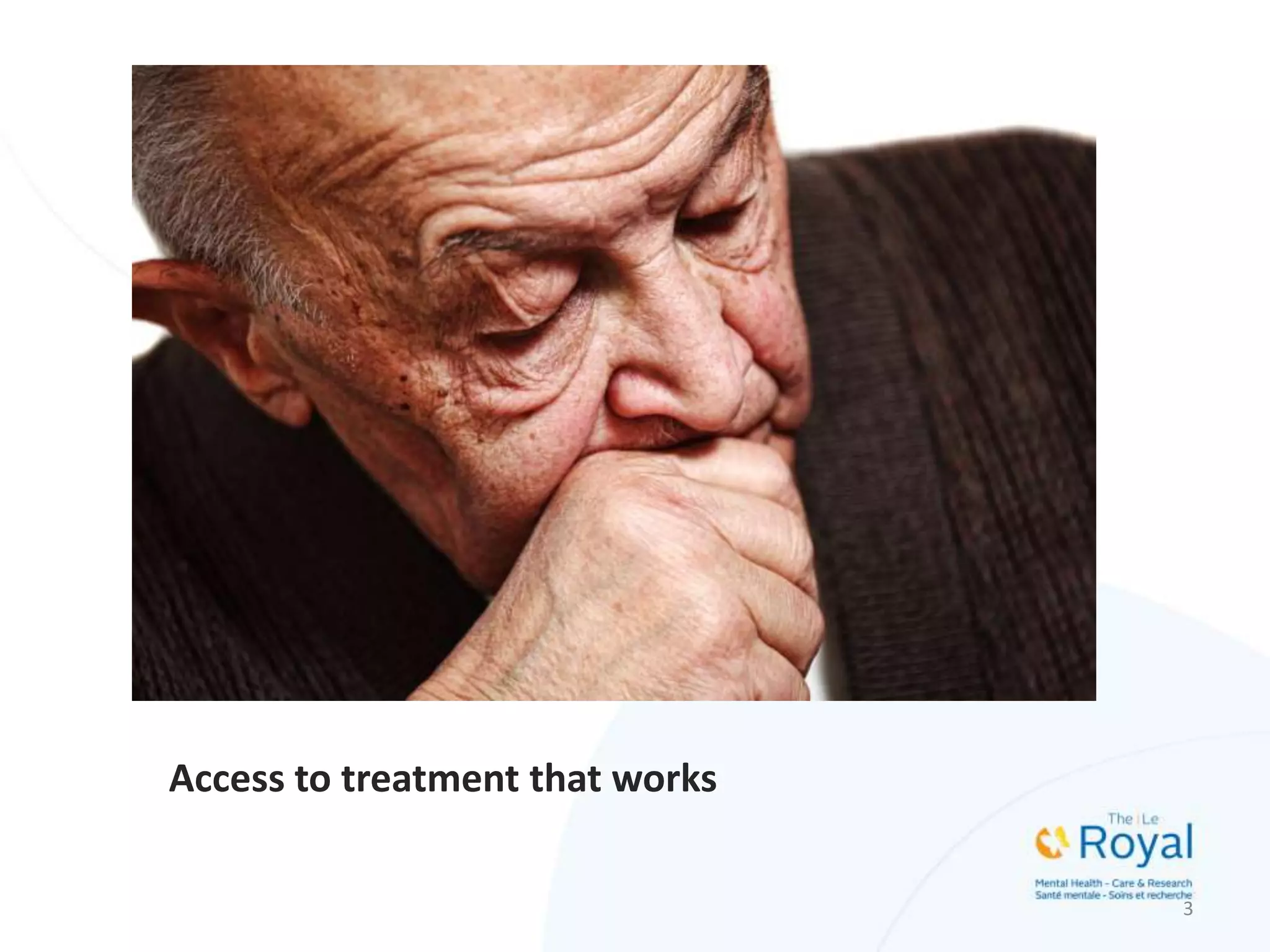
Access to treatment that works
3
Insert photo of
elderly woman
here
WHAT IS ECT?
Electroconvulsive therapy
4
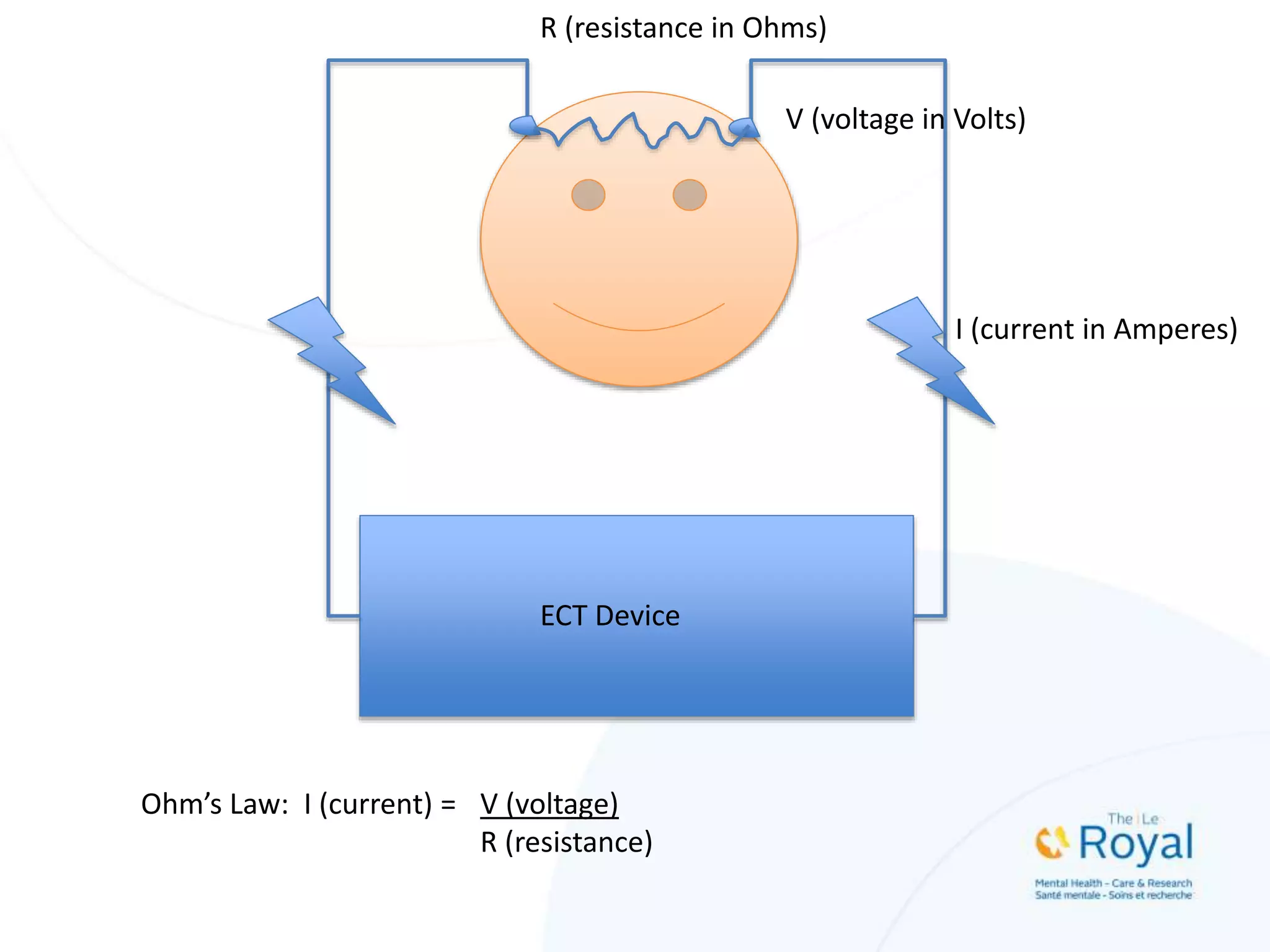
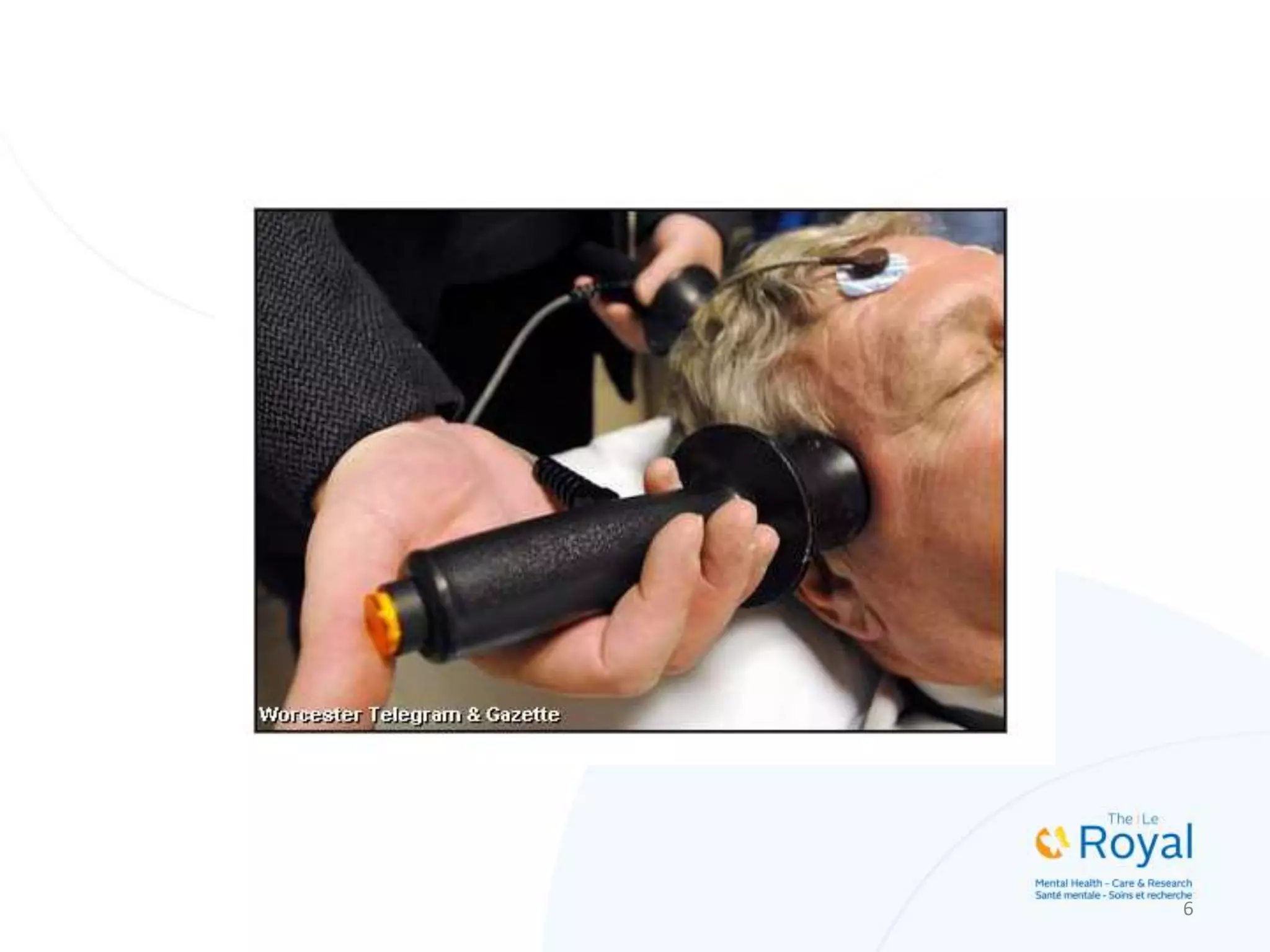
ECT Device
R (resistance in Ohms)
Ohm’s Law: I (current) = V (voltage)
R (resistance)
I (current in Amperes)
V (voltage in Volts)
6
7
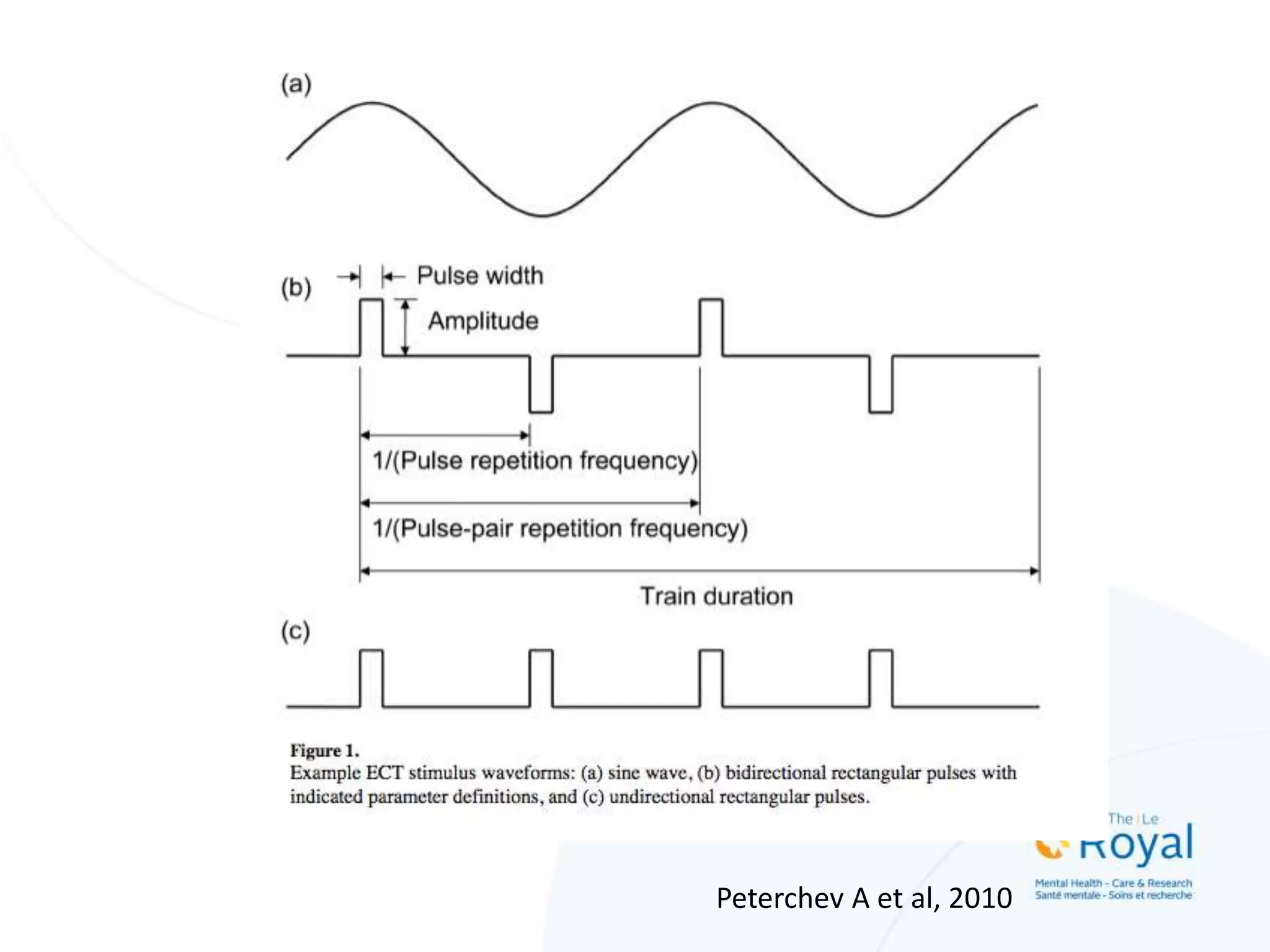
Peterchev A et al, 2010
WHY ON EARTH WOULD WE DO
THIS?
10
Convulsive Therapies
• Insulin-induced coma and convulsions, to treat
schizophrenia, discovered in Berlin by Manfred
J. Sakel, in 1927;
• Metrazol-induced convulsions, to treat
schizophrenia and affective psychoses,
discovered in Budapest by Ladislaus J. von
Meduna, in 1934 (camphor, then
pentylenetetrazol (Metrazol), and
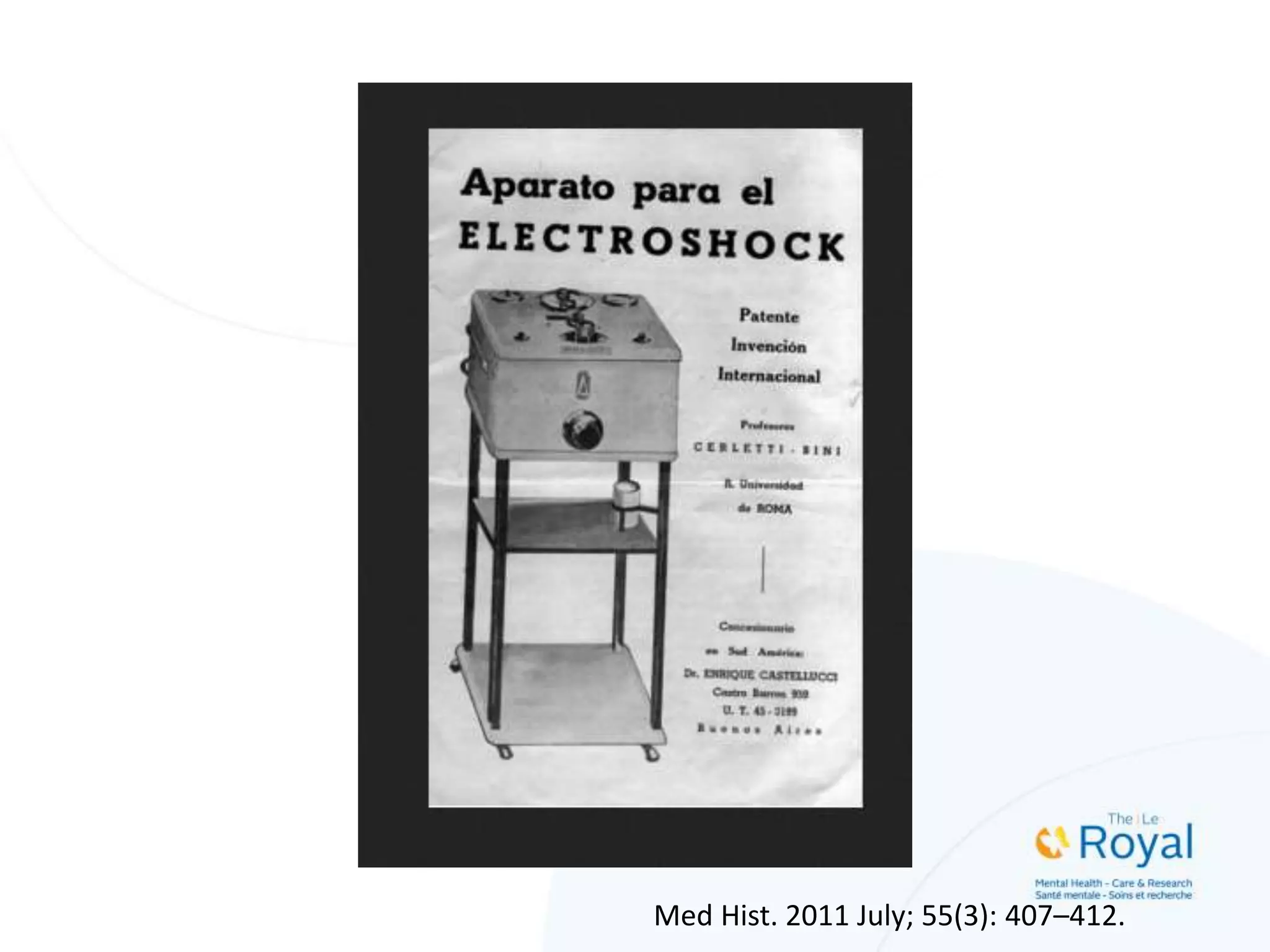
• Electroconvulsive shock therapy, discovered by
Ugo Cerletti and Lucio Bini in Rome, in 1937.
12
Med Hist. 2011 July; 55(3): 407–412.
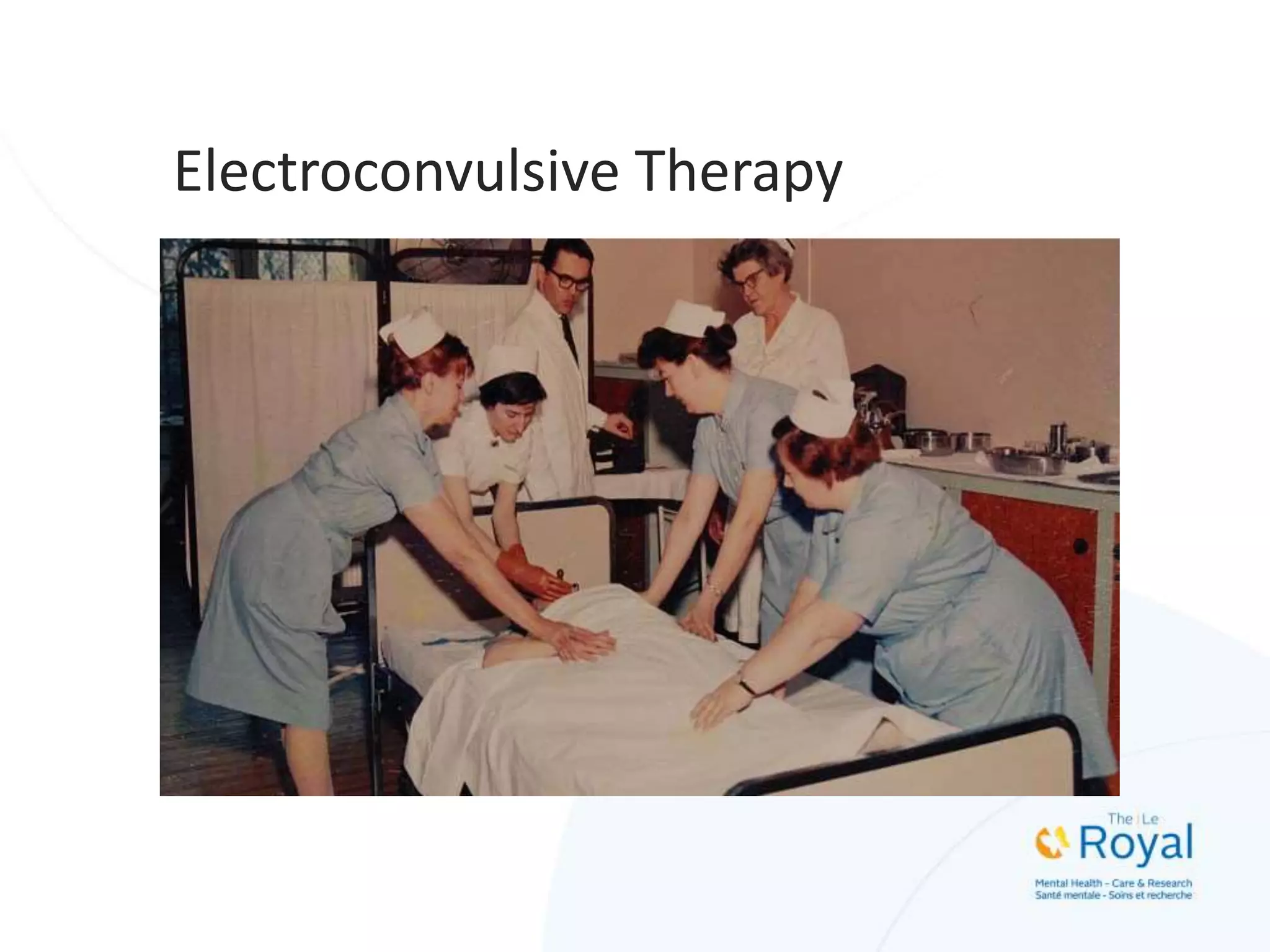
Electroconvulsive Therapy
HOW DOES ECT WORK?
15
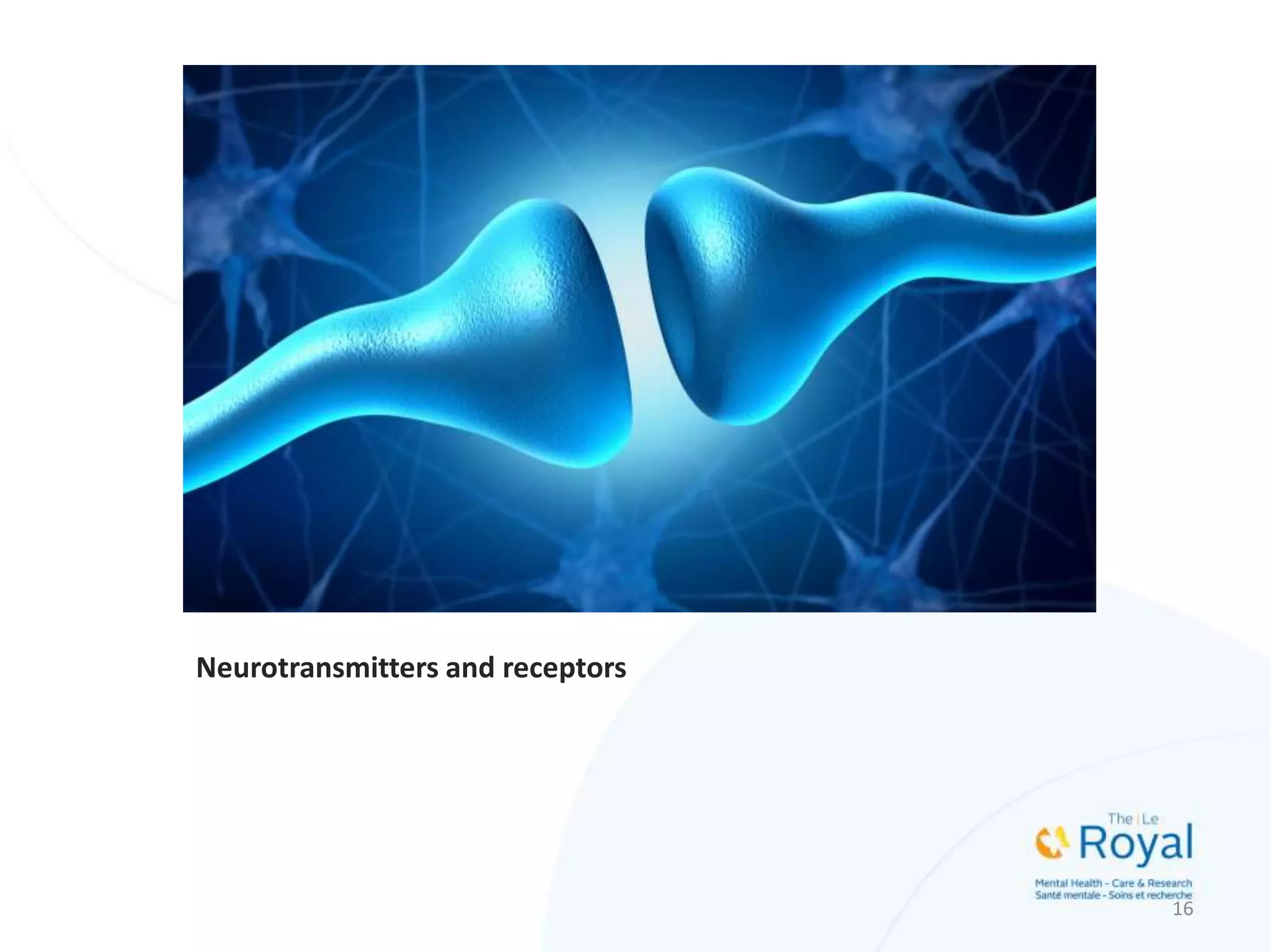
Neurotransmitters and receptors
16
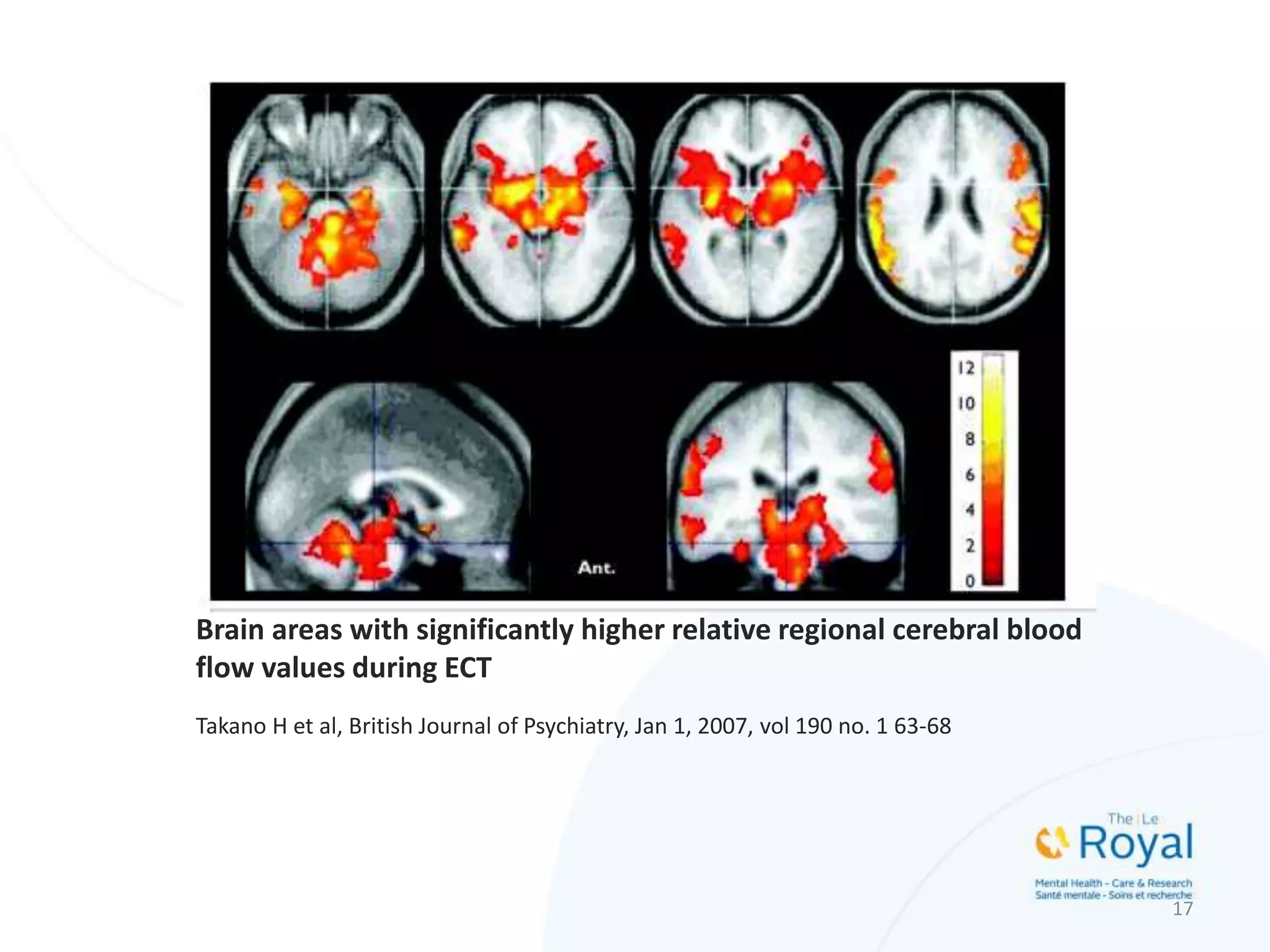
Brain areas with significantly higher relative regional cerebral blood
flow values during ECT
Takano H et al, British Journal of Psychiatry, Jan 1, 2007, vol 190 no. 1 63-68
17
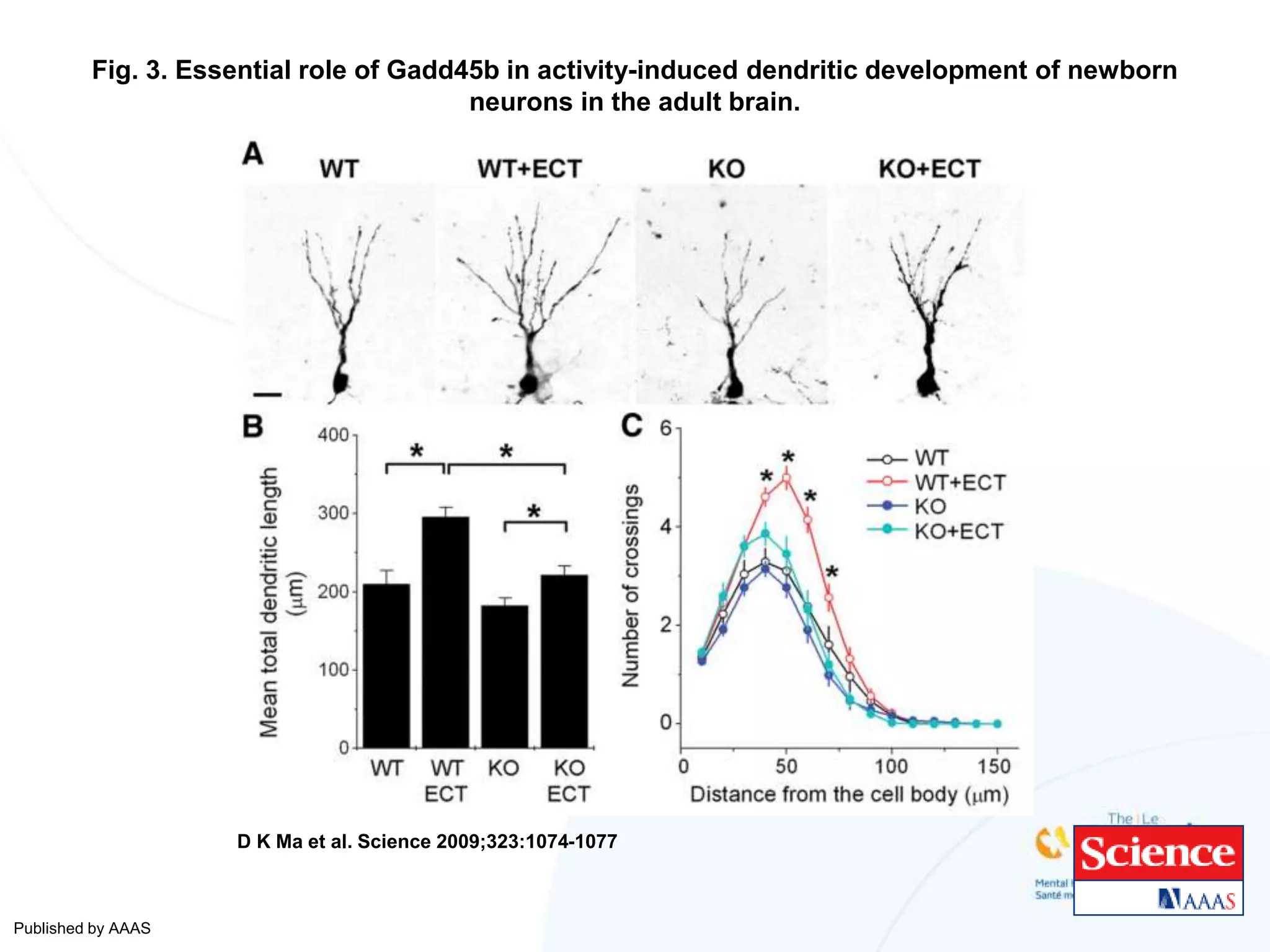
Fig. 3. Essential role of Gadd45b in activity-induced dendritic development of newborn
neurons in the adult brain.
D K Ma et al. Science 2009;323:1074-1077
Published by AAAS
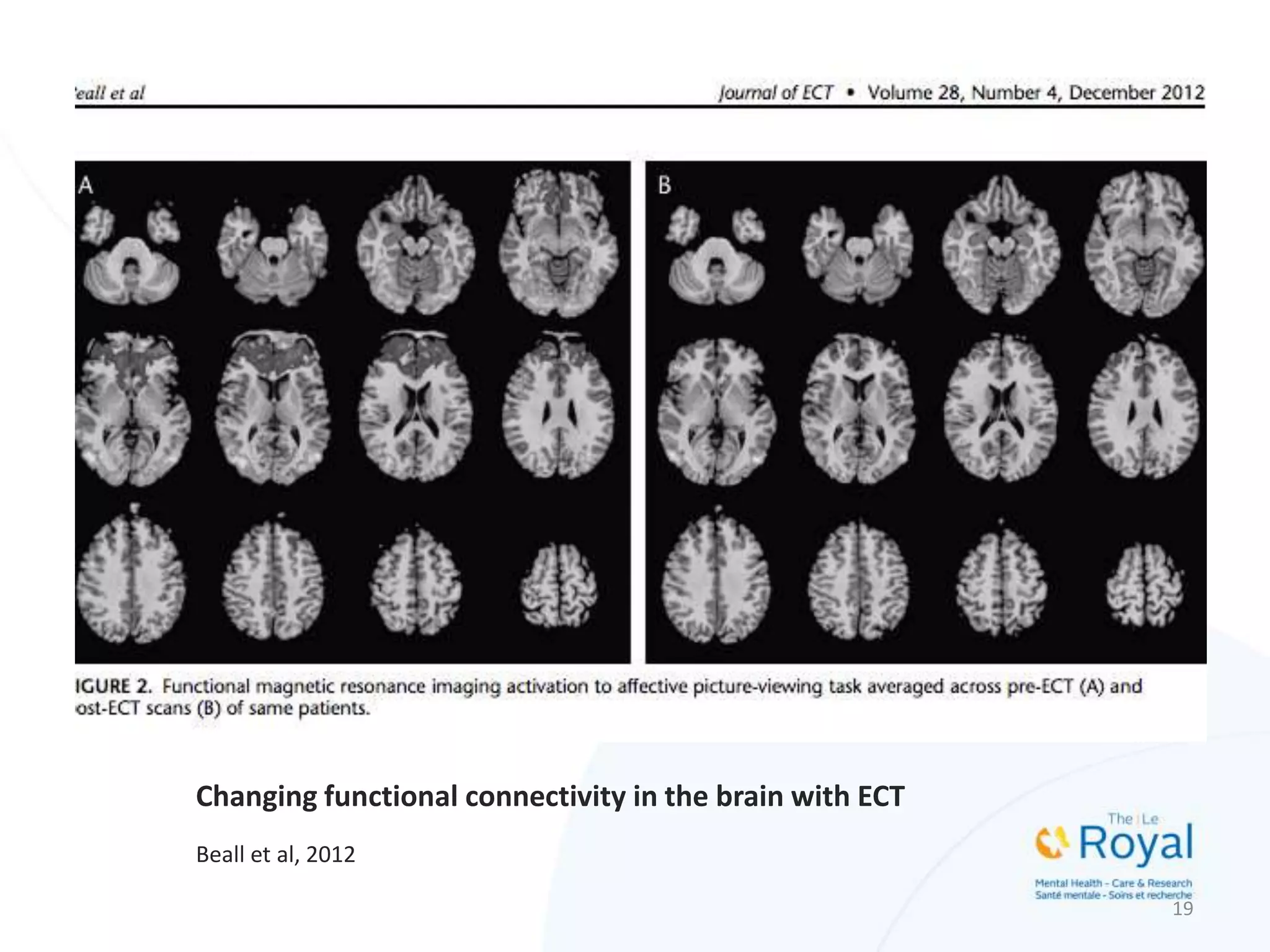
Changing functional connectivity in the brain with ECT
Beall et al, 2012
19
Patterns of use
• 1950’s to 1980: decline
– Pharmacotherapy
– Negative portrayals in media
• Stabilizing and even increasing (modestly)
since then in some jurisdictions
– Modified ECT
– Intolerance to pharmacotherapy
– Speed of action
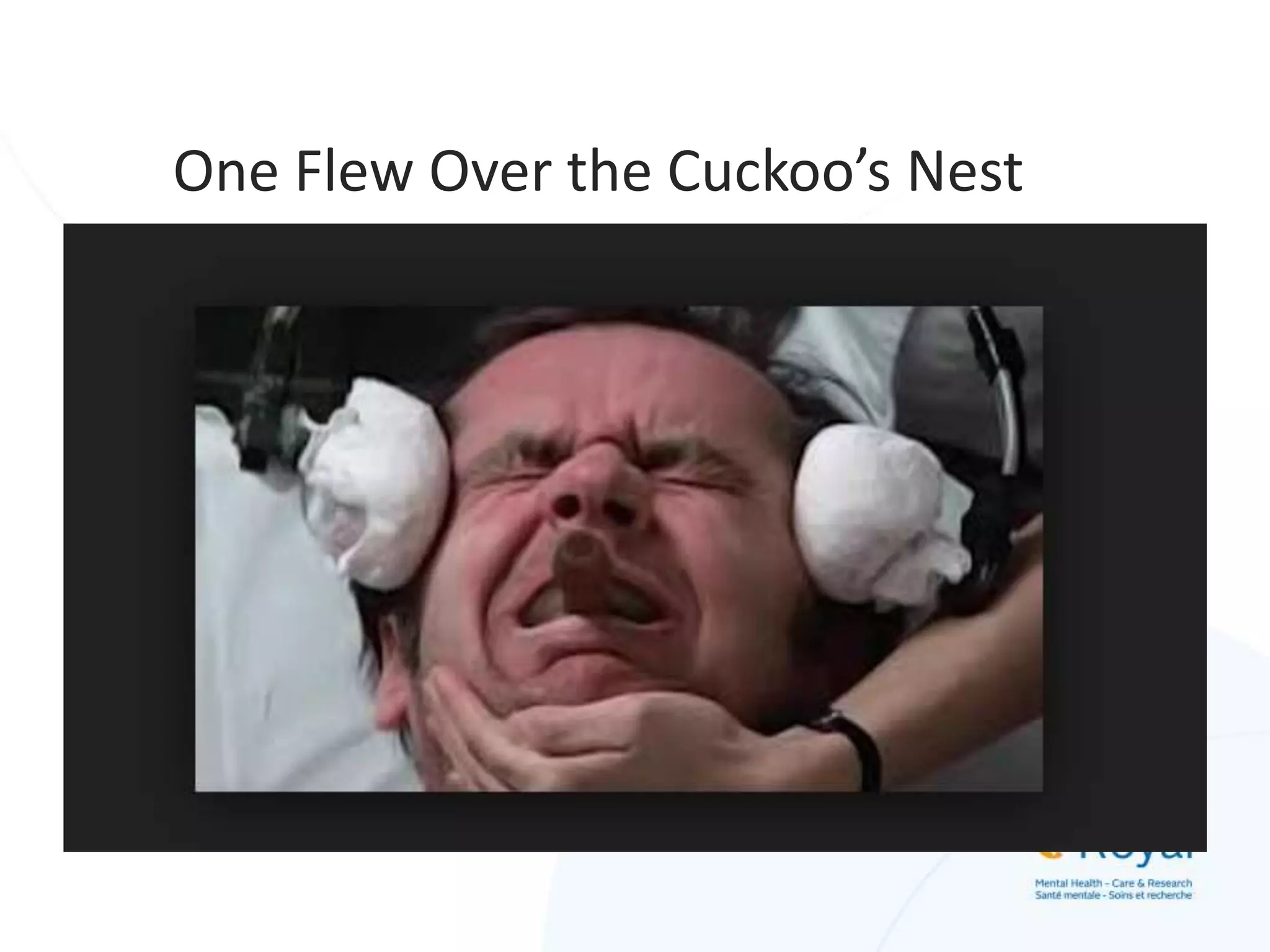
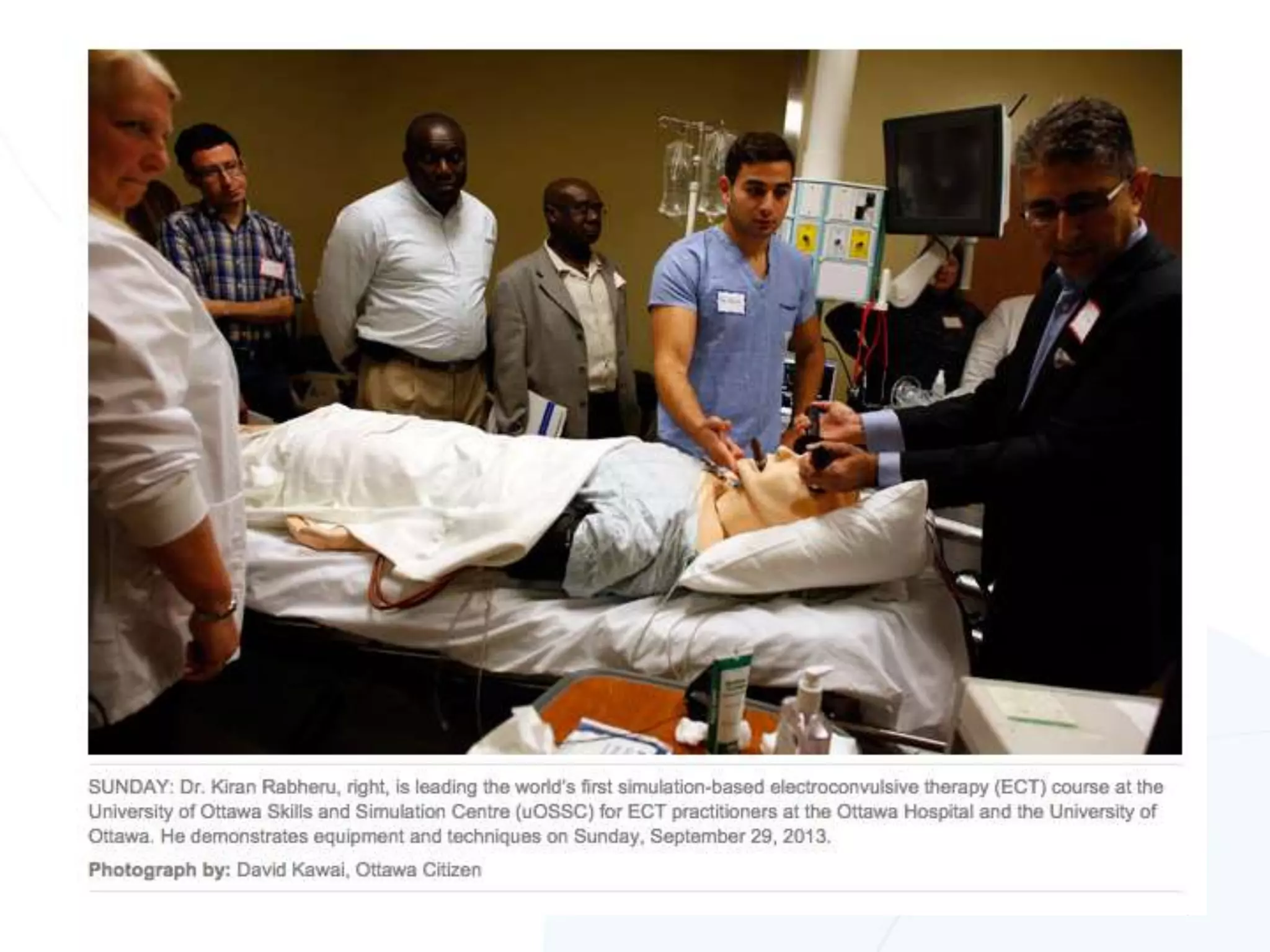
One Flew Over the Cuckoo’s Nest
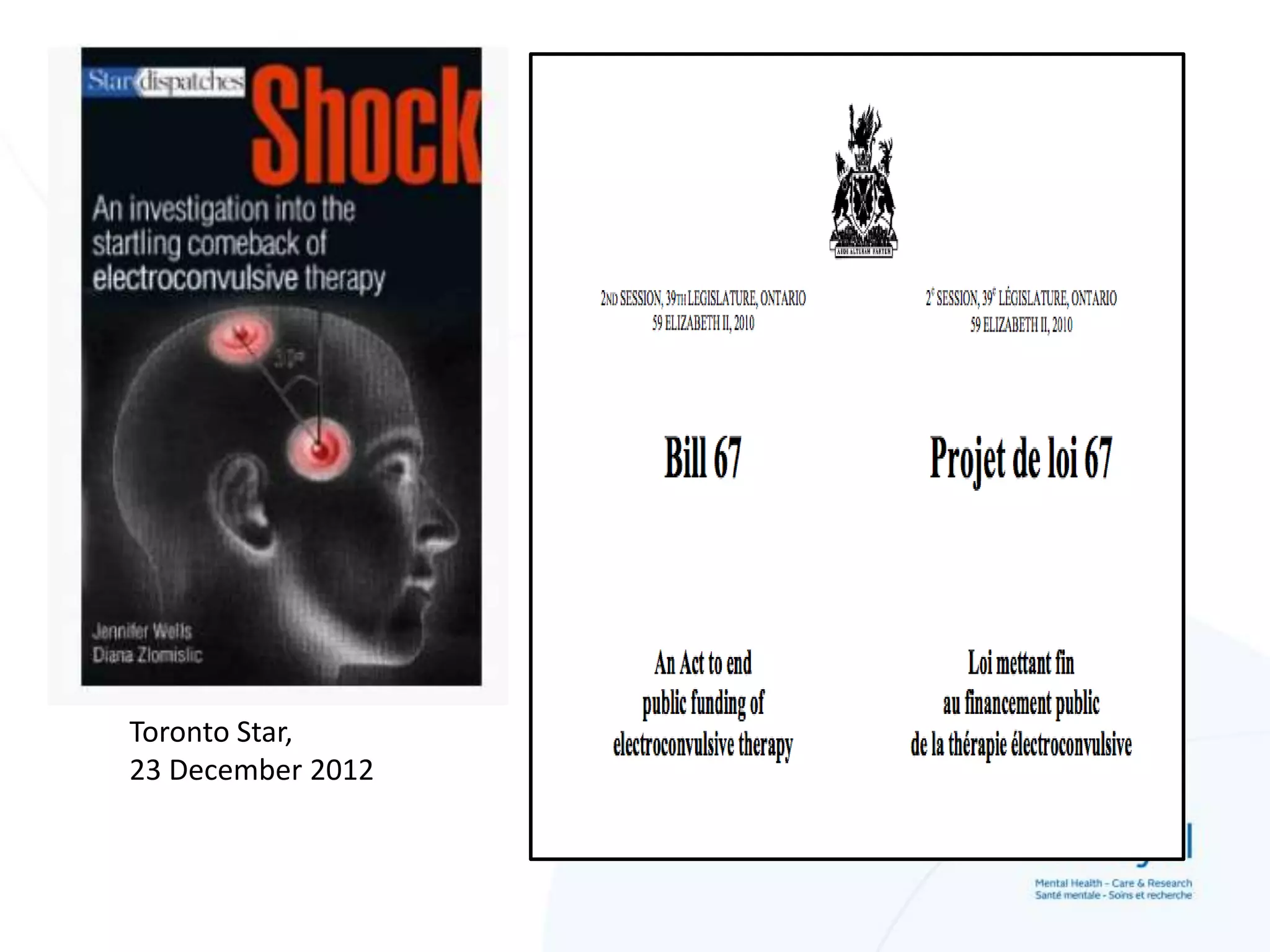
Toronto Star,
23 December 2012
23
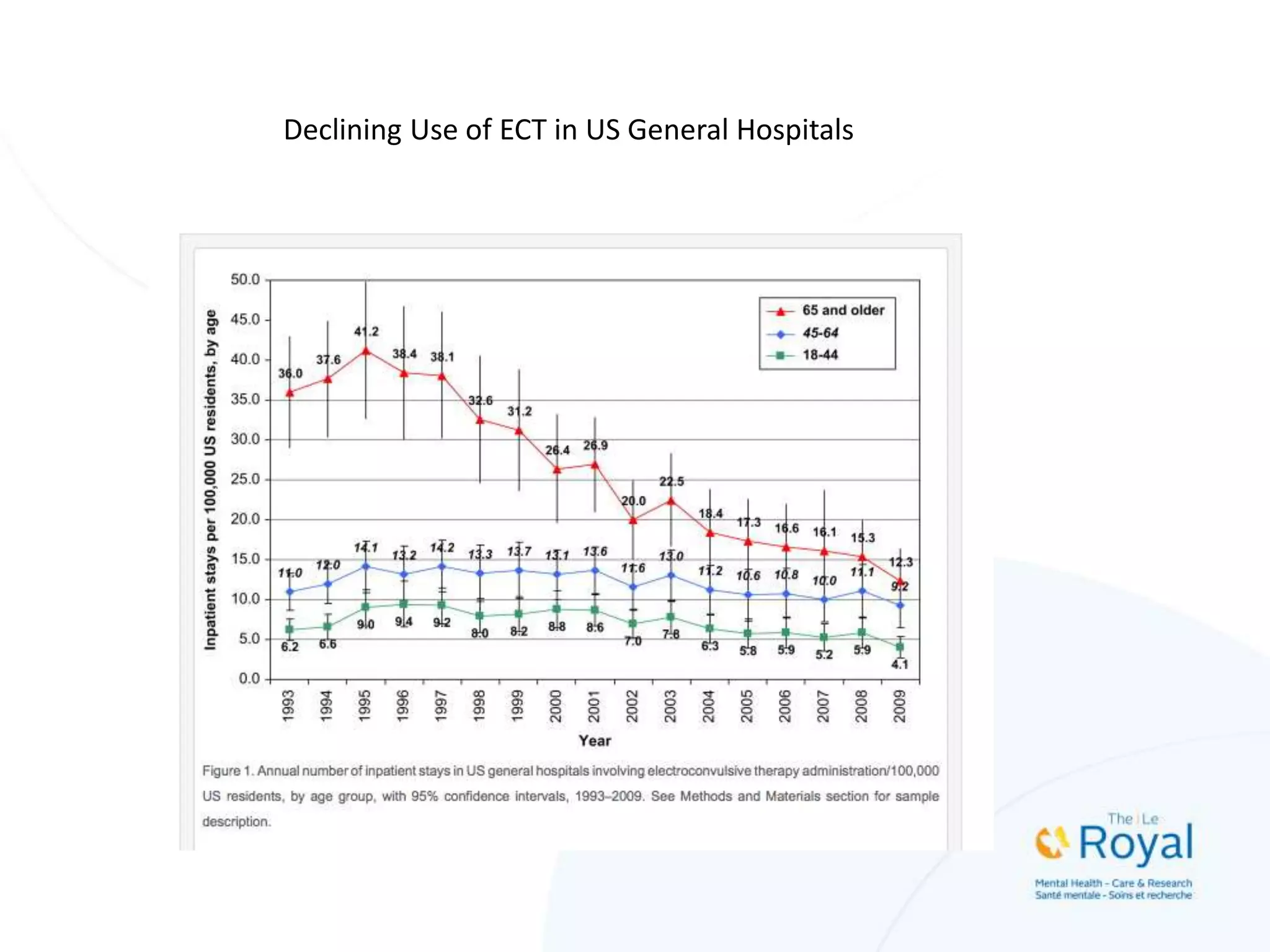
Declining Use of ECT in US General Hospitals
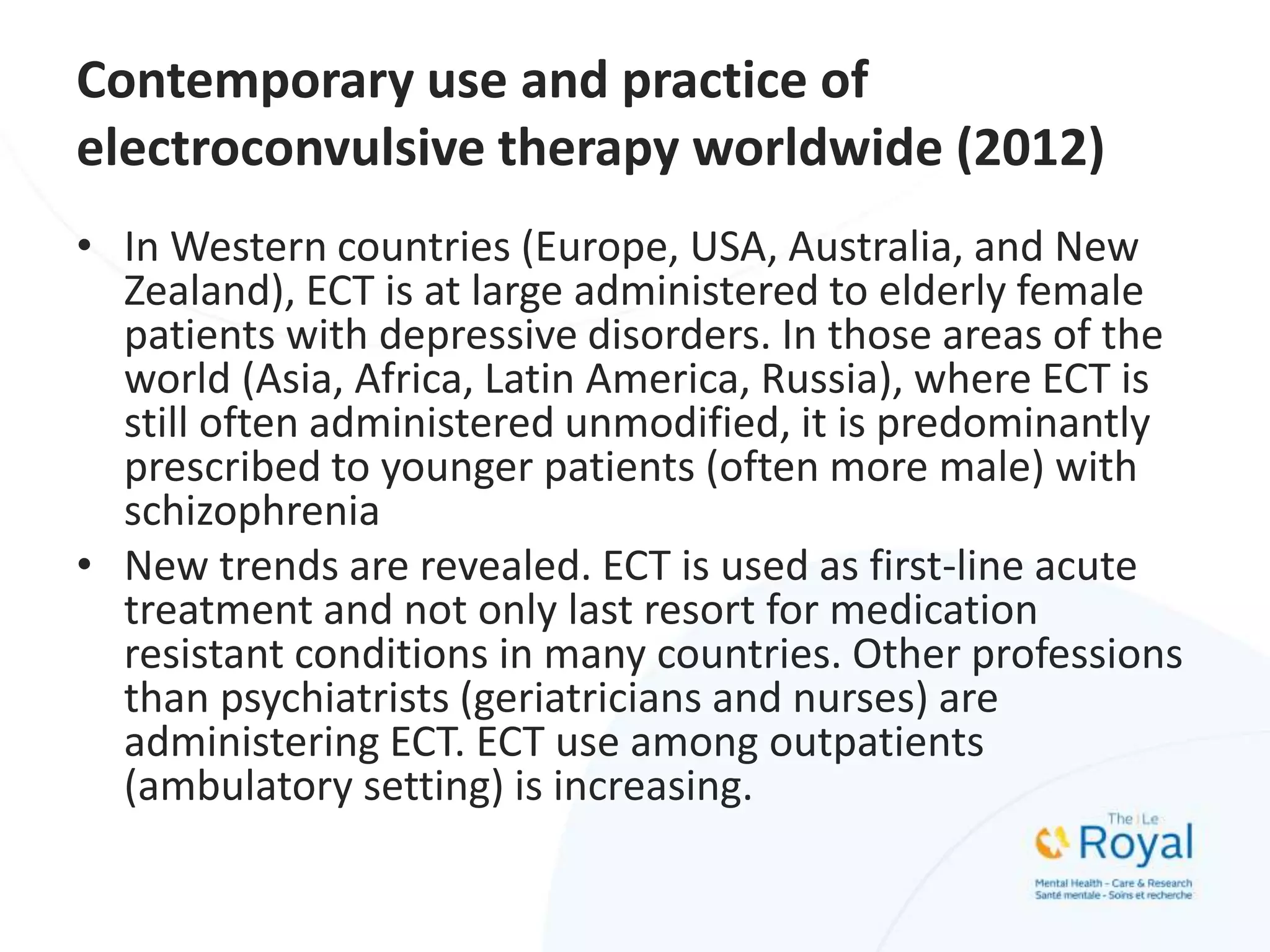
Contemporary use and practice of
electroconvulsive therapy worldwide (2012)
• In Western countries (Europe, USA, Australia, and New
Zealand), ECT is at large administered to elderly female
patients with depressive disorders. In those areas of the
world (Asia, Africa, Latin America, Russia), where ECT is
still often administered unmodified, it is predominantly
prescribed to younger patients (often more male) with
schizophrenia
• New trends are revealed. ECT is used as first-line acute
treatment and not only last resort for medication
resistant conditions in many countries. Other professions
than psychiatrists (geriatricians and nurses) are
administering ECT. ECT use among outpatients
(ambulatory setting) is increasing.
26
27
INDICATIONS FOR USE
ECT works for:
• Major Depressive Episode
• Manic Episode
• Schizoaffective disorder
• Treatment-resistant Schizophenia
• Some medical conditions, e.g. Parkinson’s
ECT does not work for:
• Dysthymic disorder
• Anxiety disorders
• Substance abuse disorders
• Eating disorders
• Personality disorders
– But may treat depression that often comes with
these disorders
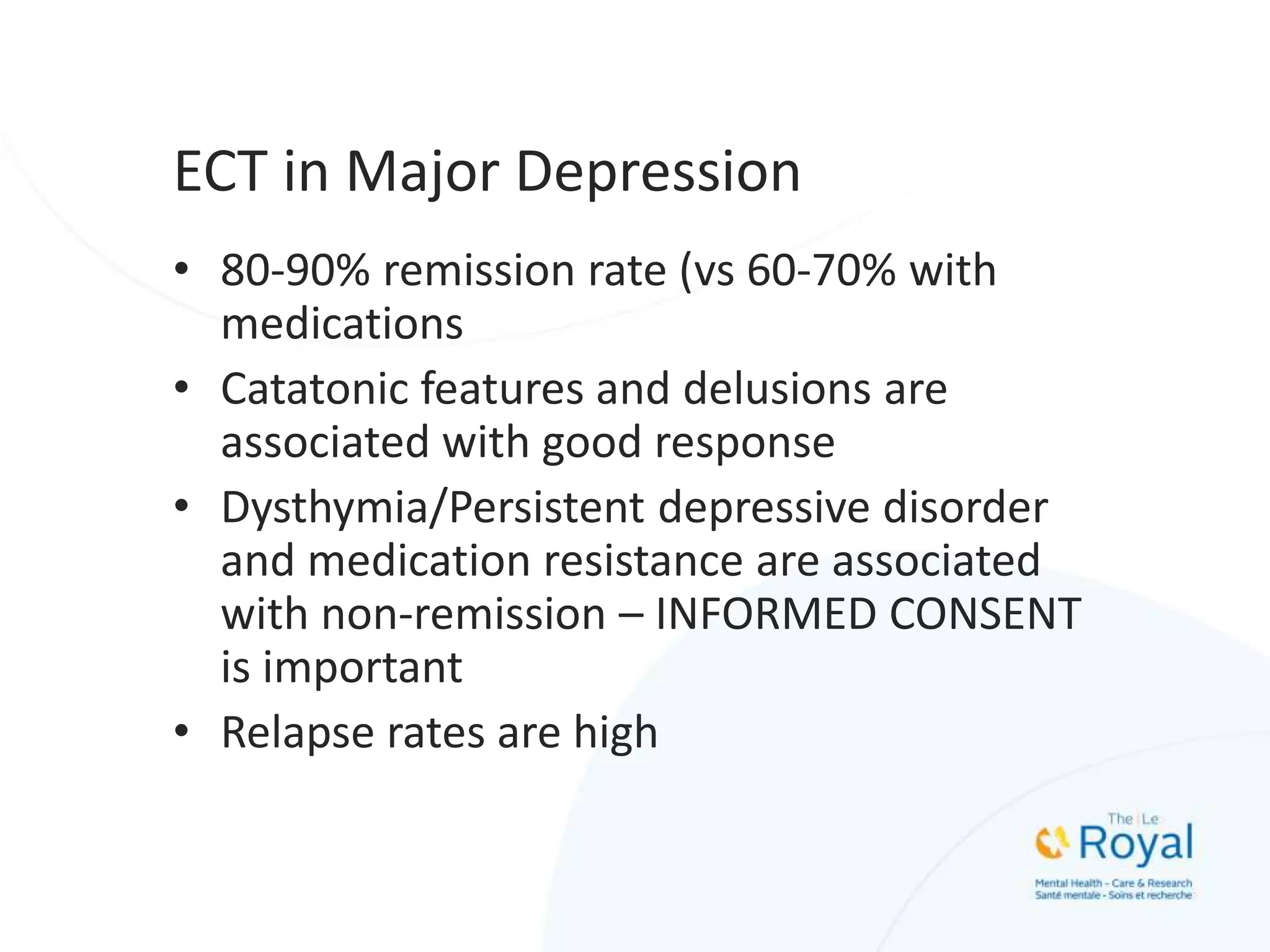
ECT in Major Depression
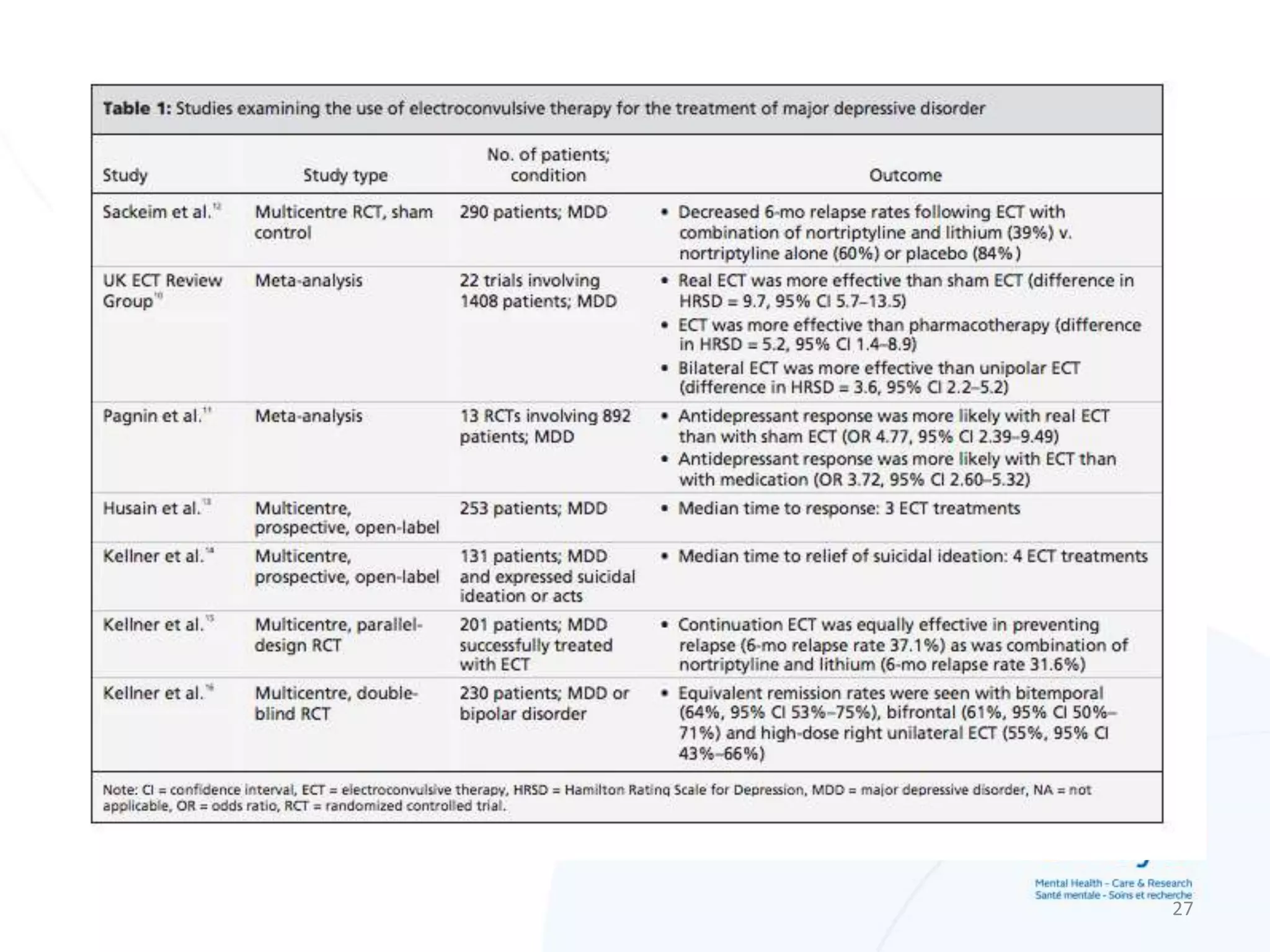
• 80-90% remission rate (vs 60-70% with
medications
• Catatonic features and delusions are
associated with good response
• Dysthymia/Persistent depressive disorder
and medication resistance are associated
with non-remission – INFORMED CONSENT
is important
• Relapse rates are high
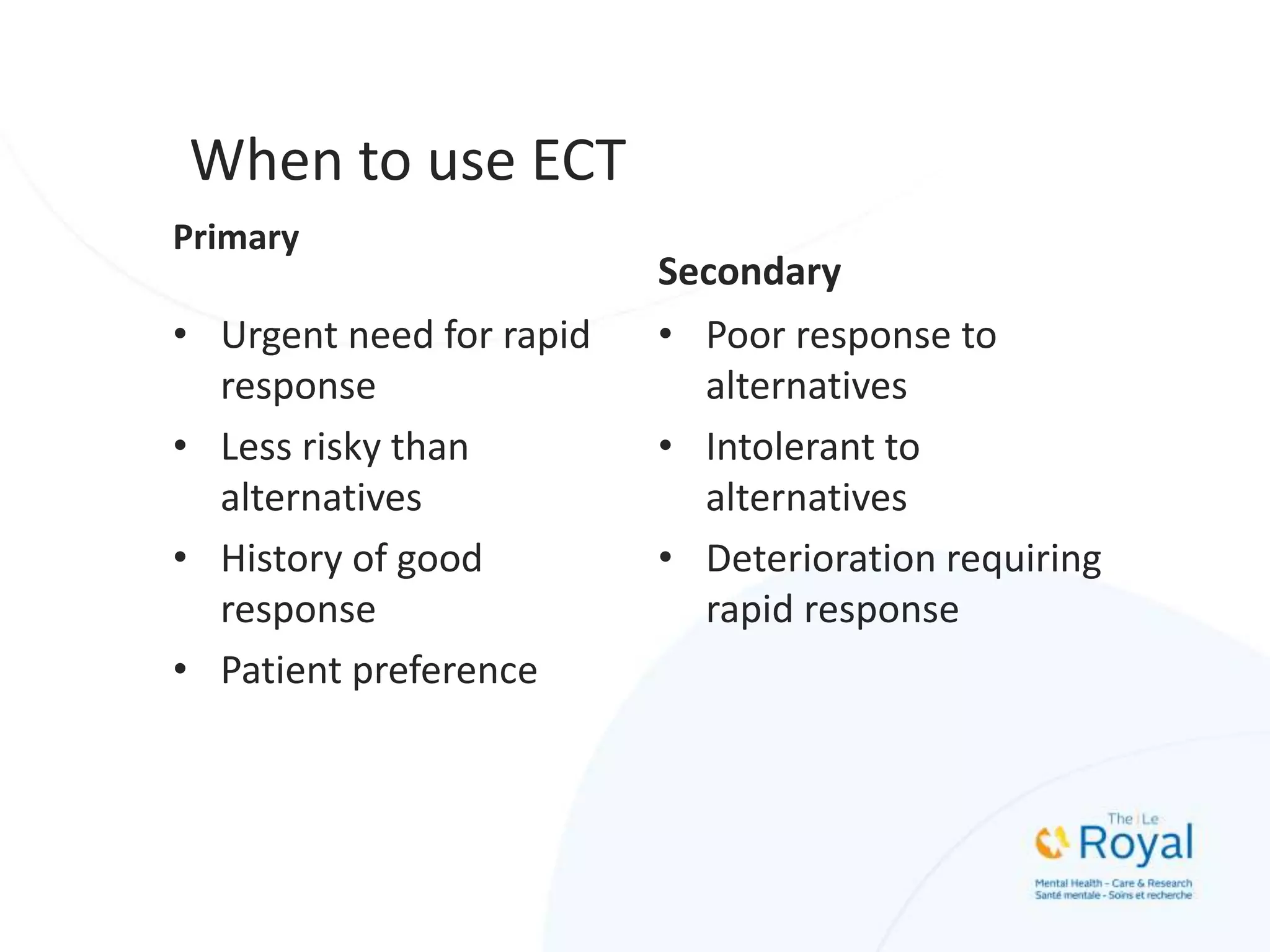
When to use ECT
Primary
• Urgent need for rapid
response
• Less risky than
alternatives
• History of good
response
• Patient preference
Secondary
• Poor response to
alternatives
• Intolerant to
alternatives
• Deterioration requiring
rapid response
ECT with Elderly
• May be more effective than with younger
patients (van der Wurff, 2003)
• Efficacy and safety in patients with
comorbidity (e.g. dementia,
cerebrovascular disease, Parkinson’s) is
under investigation
• Increased complications but safer than
medications
SIDE EFFECTS
34
Consent for ECT should cover:
• Risks and benefits of ECT
– Including cognitive adverse effects
– Including death (1/10 000 per series of ECT)
• Possibility of non-response and relapse
• Behavioural restrictions
– E.g. NPO for several hours prior to treatment
– E.g. no driving during and acute course of ECT
• Alternatives to treatment
– Including no treatment
• Individual indication and rationale for ECT
• Who can answer questions
Informed Consent and Cognition
• Memory loss is a common side effect of ECT
• Memory loss with ECT has a characteristic pattern
– More treatments produce more memory loss
– Worse shortly after a treatment
– Gradual improvement after ECT is discontinued
– Patchy memory loss extending for several months prior to ECT; some may return with
time
• May be left with some permanent gaps in memory
• Difficulty in forming new memories
– Temporary
– Usually disappears within a few weeks after discontinuation of ECT
• Most patients state that benefits of ECT outweigh problems with memory
• Most patients report that memory is IMPROVED after ECT
• A minority of patients report problems in memory that remain for months or years
• There is great variability between patients
• Some stimulus parameters and electrode placements are associated with more
cognitive side effects than others
Summary of ECT
• The best treatment we have for depression
• Works quickly
• Very safe
• Not a last resort!
37
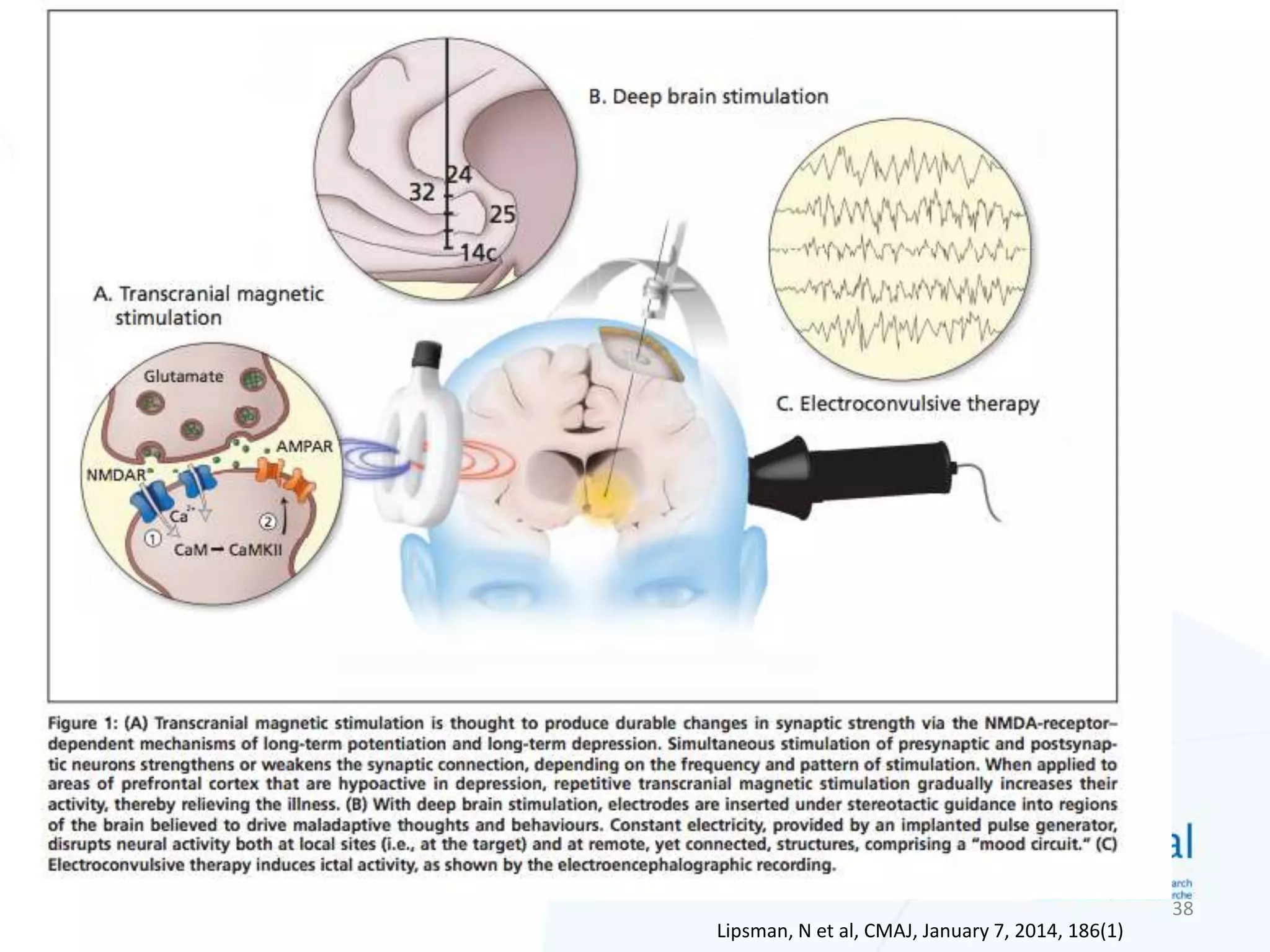
38
Lipsman, N et al, CMAJ, January 7, 2014, 186(1)
39
40
41
42
43
44
Objective information on ECT
• https://www.isen-ect.org/websites-about-
ect
• http://www.canects.org/patients.php
45

Demystifying Electroconvulsive Therapy (ECT)

  • 1.
    Demystifying Electroconvulsive Therapy (ECT) Lisa McMurray,MD, FRCPC Domenica Palermo, RN Tanya McLendon, RN DA BA Gregory McLeod, MHA
  • 2.
  • 3.
    Access to treatmentthat works 3 Insert photo of elderly woman here
  • 4.
  • 5.
    ECT Device R (resistancein Ohms) Ohm’s Law: I (current) = V (voltage) R (resistance) I (current in Amperes) V (voltage in Volts)
  • 6.
  • 7.
  • 8.
  • 10.
    WHY ON EARTHWOULD WE DO THIS? 10
  • 11.
    Convulsive Therapies • Insulin-inducedcoma and convulsions, to treat schizophrenia, discovered in Berlin by Manfred J. Sakel, in 1927; • Metrazol-induced convulsions, to treat schizophrenia and affective psychoses, discovered in Budapest by Ladislaus J. von Meduna, in 1934 (camphor, then pentylenetetrazol (Metrazol), and • Electroconvulsive shock therapy, discovered by Ugo Cerletti and Lucio Bini in Rome, in 1937.
  • 12.
  • 13.
    Med Hist. 2011July; 55(3): 407–412.
  • 14.
  • 15.
    HOW DOES ECTWORK? 15
  • 16.
  • 17.
    Brain areas withsignificantly higher relative regional cerebral blood flow values during ECT Takano H et al, British Journal of Psychiatry, Jan 1, 2007, vol 190 no. 1 63-68 17
  • 18.
    Fig. 3. Essentialrole of Gadd45b in activity-induced dendritic development of newborn neurons in the adult brain. D K Ma et al. Science 2009;323:1074-1077 Published by AAAS
  • 19.
    Changing functional connectivityin the brain with ECT Beall et al, 2012 19
  • 20.
    Patterns of use •1950’s to 1980: decline – Pharmacotherapy – Negative portrayals in media • Stabilizing and even increasing (modestly) since then in some jurisdictions – Modified ECT – Intolerance to pharmacotherapy – Speed of action
  • 21.
    One Flew Overthe Cuckoo’s Nest
  • 22.
  • 23.
  • 24.
    Declining Use ofECT in US General Hospitals
  • 25.
    Contemporary use andpractice of electroconvulsive therapy worldwide (2012) • In Western countries (Europe, USA, Australia, and New Zealand), ECT is at large administered to elderly female patients with depressive disorders. In those areas of the world (Asia, Africa, Latin America, Russia), where ECT is still often administered unmodified, it is predominantly prescribed to younger patients (often more male) with schizophrenia • New trends are revealed. ECT is used as first-line acute treatment and not only last resort for medication resistant conditions in many countries. Other professions than psychiatrists (geriatricians and nurses) are administering ECT. ECT use among outpatients (ambulatory setting) is increasing.
  • 26.
  • 27.
  • 28.
  • 29.
    ECT works for: •Major Depressive Episode • Manic Episode • Schizoaffective disorder • Treatment-resistant Schizophenia • Some medical conditions, e.g. Parkinson’s
  • 30.
    ECT does notwork for: • Dysthymic disorder • Anxiety disorders • Substance abuse disorders • Eating disorders • Personality disorders – But may treat depression that often comes with these disorders
  • 31.
    ECT in MajorDepression • 80-90% remission rate (vs 60-70% with medications • Catatonic features and delusions are associated with good response • Dysthymia/Persistent depressive disorder and medication resistance are associated with non-remission – INFORMED CONSENT is important • Relapse rates are high
  • 32.
    When to useECT Primary • Urgent need for rapid response • Less risky than alternatives • History of good response • Patient preference Secondary • Poor response to alternatives • Intolerant to alternatives • Deterioration requiring rapid response
  • 33.
    ECT with Elderly •May be more effective than with younger patients (van der Wurff, 2003) • Efficacy and safety in patients with comorbidity (e.g. dementia, cerebrovascular disease, Parkinson’s) is under investigation • Increased complications but safer than medications
  • 34.
  • 35.
    Consent for ECTshould cover: • Risks and benefits of ECT – Including cognitive adverse effects – Including death (1/10 000 per series of ECT) • Possibility of non-response and relapse • Behavioural restrictions – E.g. NPO for several hours prior to treatment – E.g. no driving during and acute course of ECT • Alternatives to treatment – Including no treatment • Individual indication and rationale for ECT • Who can answer questions
  • 36.
    Informed Consent andCognition • Memory loss is a common side effect of ECT • Memory loss with ECT has a characteristic pattern – More treatments produce more memory loss – Worse shortly after a treatment – Gradual improvement after ECT is discontinued – Patchy memory loss extending for several months prior to ECT; some may return with time • May be left with some permanent gaps in memory • Difficulty in forming new memories – Temporary – Usually disappears within a few weeks after discontinuation of ECT • Most patients state that benefits of ECT outweigh problems with memory • Most patients report that memory is IMPROVED after ECT • A minority of patients report problems in memory that remain for months or years • There is great variability between patients • Some stimulus parameters and electrode placements are associated with more cognitive side effects than others
  • 37.
    Summary of ECT •The best treatment we have for depression • Works quickly • Very safe • Not a last resort! 37
  • 38.
    38 Lipsman, N etal, CMAJ, January 7, 2014, 186(1)
  • 39.
  • 40.
  • 41.
  • 42.
  • 43.
  • 44.
  • 45.
    Objective information onECT • https://www.isen-ect.org/websites-about- ect • http://www.canects.org/patients.php 45

Editor's Notes

  • #4 CASE PRESENTATION 67 year old woman History of depression, two previous episodes, in her 30’s and 40’s, successfully treated with medications 4 month history of depressive symptoms Began a few months after stressful period in which she lost her apartment and lost one of her children to cancer Lost her “zest for life” Gave up her usual activities – no longer meets with friends for coffee, stopped going to the Y, stopped going to church Stays home most of the time Not eating much; not hungry, finds it too much trouble to cook Does eat some of the meals her daugher brings her, leaves many of them untouched Has lost about 15 lbs Sleep is very poor; she wakes up at 4 am anxious and unable to sleep Is thinking increasingly that she is a burden to her children and that they’d be better off without her Lately, she’s started losing touch with reality Confided to her daughter that she believes she caused her daughter’s cancer, that God was punishing her for having sinned by marrying a Christian of a different denomination Brought to hospital after having taken an overdose of pills to kill herself In hospital, she is on constant observation because she remains actively suicidal, tryiing to take medications from the nursing station to take another overdose The psychiatrist explains that he thinks ECT could help The patient’s daughter is surprised and frightented. Are they stil doing that? Is it dangerous?
  • #6 THE ECT CIRCUIT Current (I) : the number of electrons per second flowing through the circuit Voltage (V): the force that drives the flow of electrons through the circuit Impedance (Z): the obstacle to the current flow (for practical purposes, similar to resistance) CONTEMPORARY DEVICES ARE CONSTANT CURRENT THE PATIENT PROVIDES RESISTANCE MACHINE VARIES THE VOLTAGE (the pressure for electrons to flow) to produce a constant current
  • #11 A long story…
  • #12 http://www.cerebromente.org.br/n04/historia/shock_i.htm
  • #13 Our tissues, including our brain tissues, are full of salt Our cells transport salts in and out of our tissues, causing electrical charges These charges are used to contract muscles, fire nerve cells
  • #15 At London Psychiatric Hospital, ECT began to replace Metrazol around 1943
  • #19 Essential role of Gadd45b in activity-induced dendritic development of newborn neurons in the adult brain. (A) Sample projected Z-series confocal images of GFP+ dentate granule cells at 14 days after viral labeling. Scale bar: 50 μm. (B) Quantification of the total dendritic length of GFP+ dentate granule cells. Values represent mean ± SEM (n = 23 to 45 neurons for each condition; *P < 0.01, ANOVA). (C) Analysis of dendritic complexity of the same group of cells as in (B). Values represent mean ± SEM (*P < 0.01, Student's t test).
  • #23 ECT is one of the most scrutinized of medical treatments It is regarded as a controversial treatment by many Logical or not, we must pay extra attention to informed consent
  • #25  Biological Psychiatry Volume 73, Issue 2, 15 January 2013, Pages 119–126 Risk Mechanisms for Bipolar Disorder Archival Report Declining Use of Electroconvulsive Therapy in United States General Hospitals Brady G. Case1, 2, 4, 5, , , David N. Bertollo4, Eugene M. Laska4, 5, Lawrence H. Price2, 3, Carole E. Siegel4, 5, Mark Olfson6, Steven C. Marcus7
  • #26 Contemporary use and practice of electroconvulsive therapy worldwide. Leiknes, K. A., Schweder, L. J.-V., & Høie, B. (2012). Contemporary use and practice of electroconvulsive therapy worldwide. Brain and Behavior, 2(3), 283–344. doi:10.1002/brb3.37
  • #39 Lipsman, N et al. Neuromodulation for treatment-refractory major depressive disorder. CMAJ, January 7, 2014, 186(1)