A research review ofElectroconvulsive Therapy and its effects on depression and other psychological disorders relevant to Acute In-patient physical therapy Steve Chmielewski, SPT
History 3,8ECT was first introduced as a treatment for psychiatric disorders in 1938 by a neurologist named Urgo Cerletti.Performed ECT on dogs and other animals to induce epileptic attacksThought of concept while watch pigs being killed via electric shockFirst used on schizophrenic patientsBegan injecting CSF from electrically shocked pig brains showing positive resultsLater replaced with the drug Metrazol Widespread by 40’s and 50’s with fine tuning of procedureDecline in popularity in 60’s due to pharmacological treatments and the negative media image
Primary Indications for ECT1Patients with moderate to severe depression  Lack of a response to or intolerance of antidepressant medications A good response to previous ECT The need for a rapid and definitive response (e.g., because of psychosis or a risk of suicide).
Patient Populations 8ECT can be used safely in elderly patients and in persons with cardiac pacemakers or implantable cardioverter–defibrillators. ECT can also be used safely during pregnancy, with proper precautions.
Specific Clinical Disorders  1,5,6,7,9Severe mania (too much talking, insomnia)DepressionSchizophrenia (that doesn’t respond to meds)Suicidal drive conditionsImpulsive behaviorsNeuroleptic Malignant SyndromeContinuous screamingFibromyalgia (fatigue, anxiety, depression)Vegetative dysregulationUnipolar and bipolar disorders (catatonic)Psychosis
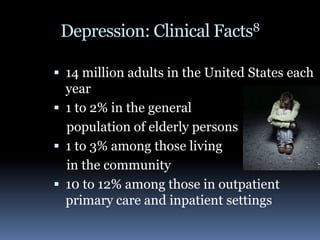
Depression: Clinical Facts814 million adults in the United States each year 1 to 2% in the general     population of elderly persons1 to 3% among those living     in the community10 to 12% among those in outpatient primary care and inpatient settings
Symptoms of Depression 4PainMuscle/joint achesInactivityPoor physical conditionDisturbed body appearanceTensionAnxietyRestlessnessSlownessPostural issuesRestricted breathing
Depression: Pathophysiology8Genetic, developmental, and environmental factors.Brain changes in depression in the elderlyAbnormalities in frontostriatal limbic circuits, can reduce the response to medications Dysregulation in corticolimbic circuits affecting Regional brain structure and functionNeurotransmitter functionNeuroendocrine regulation
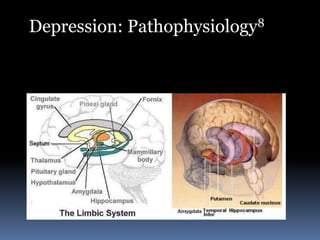
Depression: Pathophysiology8
Depression: Pathophysiology8Abnormalities in the hippocampusatrophy is correlated with the duration of depression in days Abnormalities in prefrontal cortexatrophy is associated with familial depressionHyperintensitiesnotably in depression in the elderly  vascular lesions in white matter disrupt key pathways, leading to a “disconnection syndrome”
Depression: Pathophysiology8Neurotransmitter FunctionPresynaptic and postsynaptic abnormalitiesserotonin-receptor expression deficiencies in GABA
Effects of ECT on Depression Mechanism8Increases cortical GABA concentrationsEnhances serotonergic function Affects the hypothalamic–pituitary–adrenal interactions
ECT Theories 8 Neurophysiological theoryElectrical shock causes seizureStimulates a long term release of neurotransmittersImprove brain cells functioning and increases chemical messengersPunishment Theory (Weak)Patients see treatment as punishment for behaviorImprove to avoid further punishment
ECT: Preparation 2,8 Consent form Physical examHeart and Lung exam AnesthesiaBlood testElectrocardiogramAnticonvulsants and antidepressant drugs are often discontinued
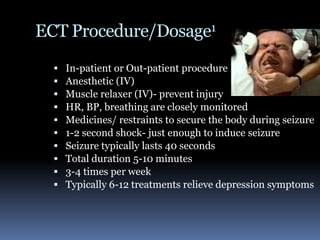
	ECT Procedure/Dosage1In-patient or Out-patient procedureAnesthetic (IV)Muscle relaxer (IV)- prevent injuryHR, BP, breathing are closely monitoredMedicines/ restraints to secure the body during seizure1-2 second shock- just enough to induce seizureSeizure typically lasts 40 secondsTotal duration 5-10 minutes3-4 times per weekTypically 6-12 treatments relieve depression symptoms
ECT Electrode PlacementBifrontaltemporal (bilateral)Right UnilateralBifrontal
Which is more effective?2,8Bilateral electrode placement was moderately more effective than right unilateral placement Greater cholinergic surgeEfficacy of right unilateral ECT is dose-sensitive …(studies may be affected by this to few?)No difference long term
Which is more effective?2,8Right unilateral and bifrontal placementreduce the burden of side effectsbilateral placement may be selected if the right unilateral or bifrontal positions are unlikely to be effective 8
ECT: Post Procedure1Antidepressant Medications are continued to prevent  relapse
Predicting ECT Efficacy 9Short Term60-80% success rate50% relapse rate if antidepressants are not used correctly
Adverse Effects 8Initial anterograde amnesia Short term disorientation or delirium (1hr)Long term retrograde amnesiaSleep disturbancesDeathMemory gaps mostly of interpersonal eventsPhysical effectsHeadachesmuscle achesAcute BP/HR changes- immediately treatednauseaFatigueAnatomical damage
Anatomical Damage 8Thalamic hemorrhages
ECT Uncertainties 8How to prevent relapse after a remissionReduction of cognitive side effectsShorter pulse of electricity?Placement of Electrodes ?
ECT: APA Guidelines 8Administered by properly qualified psychiatrists Recommend ECT only for difficult-to-treat depression (5-6 unsuccessful attempts)Use of ECT for relapse prevention Not recommend ECT as maintenance therapyDetailed criteria for patient selection, medical screening, ECT procedures, and training in ECT Must be credentialed by their local hospital or or board certification for ECT practice in the US
ECT Contraindications 8Ischemiaarrhythmiascerebrovascular diseasecerebral hemorrhage or strokeIncreased intracranial pressure
Application to Practice6Physical therapy interventions for depression are important but will not be affective if neurological deficits limit the patient mobilityECT is ALWAYS secondary treatment to pharmaceutical interventions Is the individual’s consent valid if they  require ECT?
???????????????????????
References	1). Frederikse M, Petrides G, Kellner C. Continuation and maintenance electroconvulsive therapy for the treatment of depressive illness: a response to the National Institute for Clinical Excellence report. J ECT. 2006;22:13-17.2). Asystole during electroconvulsive therapy: a case report. Australian and New Zealand Journal of Psychiatry [serial online]. June 2001;35(3):382-385. Available from: E-Journals, Ipswich, MA. Accessed June 10, 2009. 3). http://www.informatics.susx.ac.uk/research/groups/nlp/gazdar/teach/atc/1999/web/seans 4). Nyboe Jacobsen L, Smith Lassen I, Friis P, Videbech P, Wentzer Licht R. Bodily symptoms in moderate and severe depression. Nordic Journal of Psychiatry [serial online]. August 2006;60(4):294 5). A, Oktayoglu P, Current Pharmaceutical Design [Curr Pharm Des], ISSN: 1873-4286, 2008; Vol. 14 (13), pp. 1274-94; PMID: 18537652 6). Susman, Virginia L.. Psychiatric Quarterly, Dec2001, Vol. 72 Issue 4, p325, 12p; (AN 11303889) 7). Snowdon, John; Meehan, Tom; Halpin, Rhonda. International Journal of Geriatric Psychiatry, Nov94, Vol. 9 Issue 11, p929-932, 4p; (AN 12114218) 8). Lisanby, SH, New England Journal of Medicine (USA), Feb 2007, vol. 357, pp. 1939-1945 9). Kato N, Asakura Y, Mizutani M, Kandatsu N, Fujiwara Y, Komatsu T. Anesthetic management of electroconvulsive therapy in a patient with a known history of neuroleptic malignant syndrome. Journal of Anesthesia [serial online]. November 2007;21(4):527-528. Available from: Academic Search Premier, Ipswich, MA. Accessed June 10, 2009. 10). http://www.informatics.susx.ac.uk/research/groups/nlp/gazdar/teach/atc/1999/web/seans
Electroconvulsiv Therapy Presentation

Electroconvulsiv Therapy Presentation

  • 1.
    A research reviewofElectroconvulsive Therapy and its effects on depression and other psychological disorders relevant to Acute In-patient physical therapy Steve Chmielewski, SPT
  • 2.
    History 3,8ECT wasfirst introduced as a treatment for psychiatric disorders in 1938 by a neurologist named Urgo Cerletti.Performed ECT on dogs and other animals to induce epileptic attacksThought of concept while watch pigs being killed via electric shockFirst used on schizophrenic patientsBegan injecting CSF from electrically shocked pig brains showing positive resultsLater replaced with the drug Metrazol Widespread by 40’s and 50’s with fine tuning of procedureDecline in popularity in 60’s due to pharmacological treatments and the negative media image
  • 3.
    Primary Indications forECT1Patients with moderate to severe depression Lack of a response to or intolerance of antidepressant medications A good response to previous ECT The need for a rapid and definitive response (e.g., because of psychosis or a risk of suicide).
  • 4.
    Patient Populations 8ECTcan be used safely in elderly patients and in persons with cardiac pacemakers or implantable cardioverter–defibrillators. ECT can also be used safely during pregnancy, with proper precautions.
  • 5.
    Specific Clinical Disorders 1,5,6,7,9Severe mania (too much talking, insomnia)DepressionSchizophrenia (that doesn’t respond to meds)Suicidal drive conditionsImpulsive behaviorsNeuroleptic Malignant SyndromeContinuous screamingFibromyalgia (fatigue, anxiety, depression)Vegetative dysregulationUnipolar and bipolar disorders (catatonic)Psychosis
  • 6.
    Depression: Clinical Facts814million adults in the United States each year 1 to 2% in the general population of elderly persons1 to 3% among those living in the community10 to 12% among those in outpatient primary care and inpatient settings
  • 7.
    Symptoms of Depression4PainMuscle/joint achesInactivityPoor physical conditionDisturbed body appearanceTensionAnxietyRestlessnessSlownessPostural issuesRestricted breathing
  • 8.
    Depression: Pathophysiology8Genetic, developmental,and environmental factors.Brain changes in depression in the elderlyAbnormalities in frontostriatal limbic circuits, can reduce the response to medications Dysregulation in corticolimbic circuits affecting Regional brain structure and functionNeurotransmitter functionNeuroendocrine regulation
  • 9.
  • 10.
    Depression: Pathophysiology8Abnormalities inthe hippocampusatrophy is correlated with the duration of depression in days Abnormalities in prefrontal cortexatrophy is associated with familial depressionHyperintensitiesnotably in depression in the elderly vascular lesions in white matter disrupt key pathways, leading to a “disconnection syndrome”
  • 11.
    Depression: Pathophysiology8Neurotransmitter FunctionPresynapticand postsynaptic abnormalitiesserotonin-receptor expression deficiencies in GABA
  • 12.
    Effects of ECTon Depression Mechanism8Increases cortical GABA concentrationsEnhances serotonergic function Affects the hypothalamic–pituitary–adrenal interactions
  • 13.
    ECT Theories 8Neurophysiological theoryElectrical shock causes seizureStimulates a long term release of neurotransmittersImprove brain cells functioning and increases chemical messengersPunishment Theory (Weak)Patients see treatment as punishment for behaviorImprove to avoid further punishment
  • 14.
    ECT: Preparation 2,8Consent form Physical examHeart and Lung exam AnesthesiaBlood testElectrocardiogramAnticonvulsants and antidepressant drugs are often discontinued
  • 15.
    ECT Procedure/Dosage1In-patient orOut-patient procedureAnesthetic (IV)Muscle relaxer (IV)- prevent injuryHR, BP, breathing are closely monitoredMedicines/ restraints to secure the body during seizure1-2 second shock- just enough to induce seizureSeizure typically lasts 40 secondsTotal duration 5-10 minutes3-4 times per weekTypically 6-12 treatments relieve depression symptoms
  • 17.
    ECT Electrode PlacementBifrontaltemporal(bilateral)Right UnilateralBifrontal
  • 18.
    Which is moreeffective?2,8Bilateral electrode placement was moderately more effective than right unilateral placement Greater cholinergic surgeEfficacy of right unilateral ECT is dose-sensitive …(studies may be affected by this to few?)No difference long term
  • 19.
    Which is moreeffective?2,8Right unilateral and bifrontal placementreduce the burden of side effectsbilateral placement may be selected if the right unilateral or bifrontal positions are unlikely to be effective 8
  • 20.
    ECT: Post Procedure1AntidepressantMedications are continued to prevent relapse
  • 21.
    Predicting ECT Efficacy9Short Term60-80% success rate50% relapse rate if antidepressants are not used correctly
  • 22.
    Adverse Effects 8Initialanterograde amnesia Short term disorientation or delirium (1hr)Long term retrograde amnesiaSleep disturbancesDeathMemory gaps mostly of interpersonal eventsPhysical effectsHeadachesmuscle achesAcute BP/HR changes- immediately treatednauseaFatigueAnatomical damage
  • 23.
  • 24.
    ECT Uncertainties 8Howto prevent relapse after a remissionReduction of cognitive side effectsShorter pulse of electricity?Placement of Electrodes ?
  • 25.
    ECT: APA Guidelines8Administered by properly qualified psychiatrists Recommend ECT only for difficult-to-treat depression (5-6 unsuccessful attempts)Use of ECT for relapse prevention Not recommend ECT as maintenance therapyDetailed criteria for patient selection, medical screening, ECT procedures, and training in ECT Must be credentialed by their local hospital or or board certification for ECT practice in the US
  • 26.
    ECT Contraindications 8Ischemiaarrhythmiascerebrovasculardiseasecerebral hemorrhage or strokeIncreased intracranial pressure
  • 27.
    Application to Practice6Physicaltherapy interventions for depression are important but will not be affective if neurological deficits limit the patient mobilityECT is ALWAYS secondary treatment to pharmaceutical interventions Is the individual’s consent valid if they require ECT?
  • 28.
  • 29.
    References 1). Frederikse M,Petrides G, Kellner C. Continuation and maintenance electroconvulsive therapy for the treatment of depressive illness: a response to the National Institute for Clinical Excellence report. J ECT. 2006;22:13-17.2). Asystole during electroconvulsive therapy: a case report. Australian and New Zealand Journal of Psychiatry [serial online]. June 2001;35(3):382-385. Available from: E-Journals, Ipswich, MA. Accessed June 10, 2009. 3). http://www.informatics.susx.ac.uk/research/groups/nlp/gazdar/teach/atc/1999/web/seans 4). Nyboe Jacobsen L, Smith Lassen I, Friis P, Videbech P, Wentzer Licht R. Bodily symptoms in moderate and severe depression. Nordic Journal of Psychiatry [serial online]. August 2006;60(4):294 5). A, Oktayoglu P, Current Pharmaceutical Design [Curr Pharm Des], ISSN: 1873-4286, 2008; Vol. 14 (13), pp. 1274-94; PMID: 18537652 6). Susman, Virginia L.. Psychiatric Quarterly, Dec2001, Vol. 72 Issue 4, p325, 12p; (AN 11303889) 7). Snowdon, John; Meehan, Tom; Halpin, Rhonda. International Journal of Geriatric Psychiatry, Nov94, Vol. 9 Issue 11, p929-932, 4p; (AN 12114218) 8). Lisanby, SH, New England Journal of Medicine (USA), Feb 2007, vol. 357, pp. 1939-1945 9). Kato N, Asakura Y, Mizutani M, Kandatsu N, Fujiwara Y, Komatsu T. Anesthetic management of electroconvulsive therapy in a patient with a known history of neuroleptic malignant syndrome. Journal of Anesthesia [serial online]. November 2007;21(4):527-528. Available from: Academic Search Premier, Ipswich, MA. Accessed June 10, 2009. 10). http://www.informatics.susx.ac.uk/research/groups/nlp/gazdar/teach/atc/1999/web/seans