Topic :-Demolition of a Building
Submitted by
Abhishek kadve
Civil engineering
content
 Introduction
 Demolition
 Steps before demolition
 Surveying
 Removal of Hazardous Materials
 Preparation of Plan
 Stability report
 Safety measures
 Methods of Demolition
 Non-explosive demolition
 Explosive demolition
 Conclusion
Introduction
 We know every structure is
designed for a life period.
 The existence of the structure
after the service life period is
very dangerous to its occupants
and surrounding buildings.For
the protection of public safety
and to ensure adjoining
premises and the site are made
good on complection.
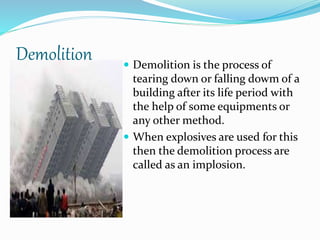
Demolition  Demolition is the process of
tearing down or falling dowm of a
building after its life period with
the help of some equipments or
any other method.
 When explosives are used for this
then the demolition process are
called as an implosion.
Steps before demolition
Surveying
Removal of dangerous material
Preparation of Plan
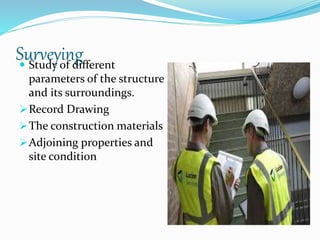
Surveying Study of different
parameters of the structure
and its surroundings.
Record Drawing
The construction materials
Adjoining properties and
site condition
Removal of dangerous material
 Asbestos containing material
 Soil contamination material
Preparation of plan
The location of the building to be demolished .
A layout plan of all floors of the building to be
demolished.
The structure support systems.
Time and frequency.
A temporary parking layout for mobile machines and
trucks.
Stability report
The stability report shall included the following parts
 A report on the stability of the building to be
demolished during all stages of demolition.
 A report on the stability of neighbouring
buildings,adjoining properties.
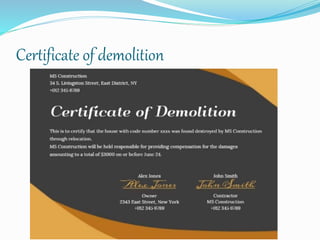
Certificate of demolition
Safety measures
Training and communication.
Equipments Maintenance.
Electrical Safety.
Fire
Occupational Health.
Emergency Exit Requirements in Demolition sites.
Vibration
Enviromental Precautions.
Methods of Demolition
There are two types of Demolition
 Non explosive Demolition
 Explosive Demolition
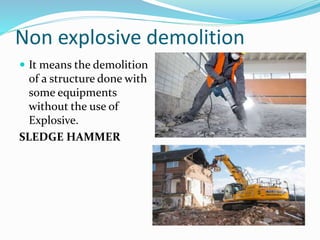
Non explosive demolition
 It means the demolition
of a structure done with
some equipments
without the use of
Explosive.
SLEDGE HAMMER
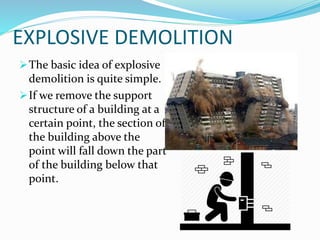
EXPLOSIVE DEMOLITION
The basic idea of explosive
demolition is quite simple.
If we remove the support
structure of a building at a
certain point, the section of
the building above the
point will fall down the part
of the building below that
point.
CONCLUSION
Types of demolition method depend upon various
factor such as site condition,types of structure,age of
building,height of building and economy.
Anyway controlled demolition of building is necessary
to ensure safety.
Explosive demolition is the perfact method for safely
and efficiently demolishing the larger structures.
Referencehttps://www.google.co.in
https://www.slideshare.net
https://www.wikipedia.org
https://images.google.com
https://translate.google.co.in
Demolition of a building

Demolition of a building

  • 1.
    Topic :-Demolition ofa Building Submitted by Abhishek kadve Civil engineering
  • 2.
    content  Introduction  Demolition Steps before demolition  Surveying  Removal of Hazardous Materials  Preparation of Plan  Stability report  Safety measures  Methods of Demolition  Non-explosive demolition  Explosive demolition  Conclusion
  • 3.
    Introduction  We knowevery structure is designed for a life period.  The existence of the structure after the service life period is very dangerous to its occupants and surrounding buildings.For the protection of public safety and to ensure adjoining premises and the site are made good on complection.
  • 4.
    Demolition  Demolitionis the process of tearing down or falling dowm of a building after its life period with the help of some equipments or any other method.  When explosives are used for this then the demolition process are called as an implosion.
  • 5.
    Steps before demolition Surveying Removalof dangerous material Preparation of Plan
  • 6.
    Surveying Study ofdifferent parameters of the structure and its surroundings. Record Drawing The construction materials Adjoining properties and site condition
  • 7.
    Removal of dangerousmaterial  Asbestos containing material  Soil contamination material
  • 8.
    Preparation of plan Thelocation of the building to be demolished . A layout plan of all floors of the building to be demolished. The structure support systems. Time and frequency. A temporary parking layout for mobile machines and trucks.
  • 9.
    Stability report The stabilityreport shall included the following parts  A report on the stability of the building to be demolished during all stages of demolition.  A report on the stability of neighbouring buildings,adjoining properties.
  • 10.
  • 11.
    Safety measures Training andcommunication. Equipments Maintenance. Electrical Safety. Fire Occupational Health. Emergency Exit Requirements in Demolition sites. Vibration Enviromental Precautions.
  • 12.
    Methods of Demolition Thereare two types of Demolition  Non explosive Demolition  Explosive Demolition
  • 13.
    Non explosive demolition It means the demolition of a structure done with some equipments without the use of Explosive. SLEDGE HAMMER
  • 14.
    EXPLOSIVE DEMOLITION The basicidea of explosive demolition is quite simple. If we remove the support structure of a building at a certain point, the section of the building above the point will fall down the part of the building below that point.
  • 15.
    CONCLUSION Types of demolitionmethod depend upon various factor such as site condition,types of structure,age of building,height of building and economy. Anyway controlled demolition of building is necessary to ensure safety. Explosive demolition is the perfact method for safely and efficiently demolishing the larger structures.
  • 16.