DEMOCRA
CY
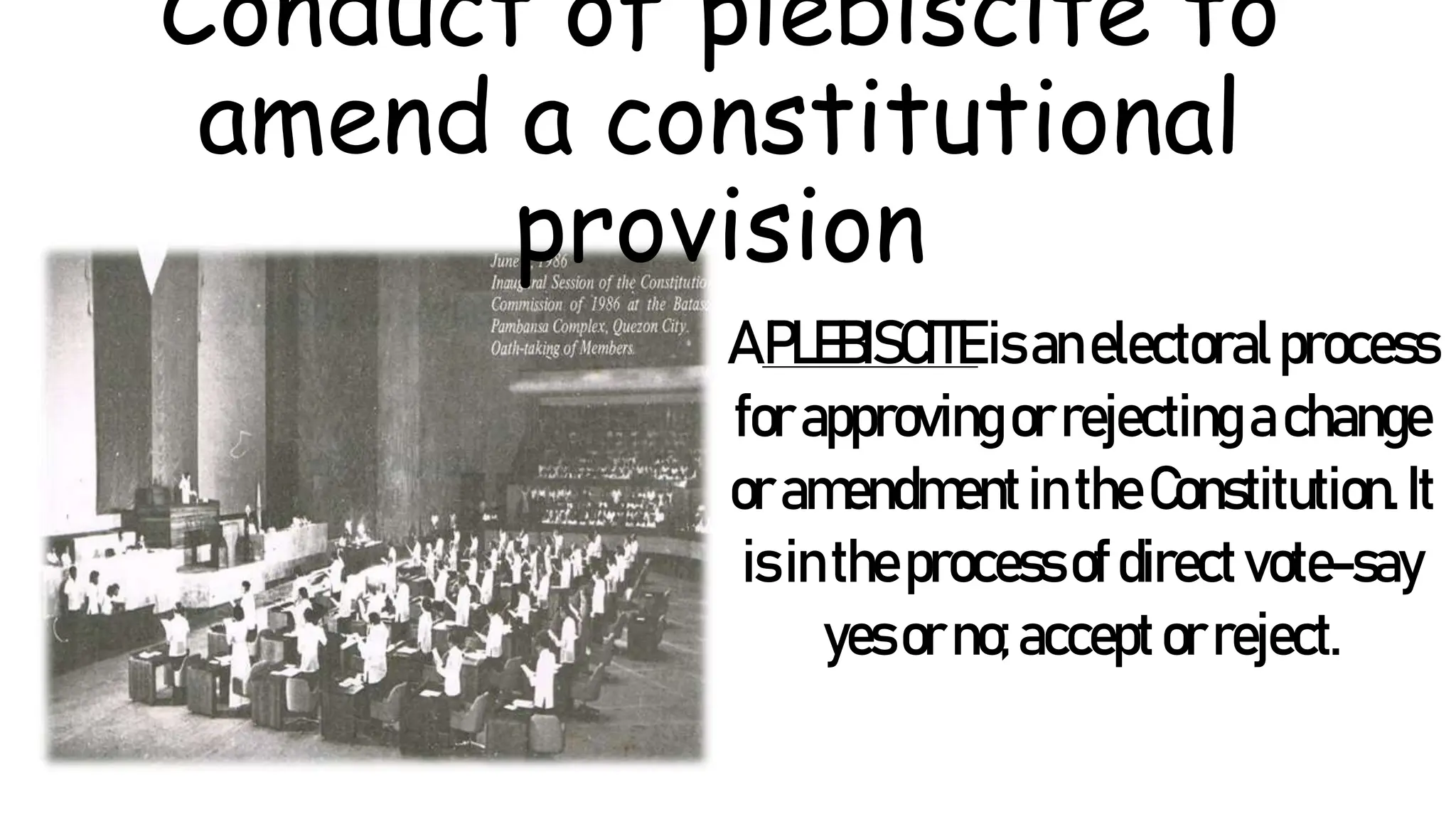
Conduct of plebiscite to
amend a constitutional
provision
APLEBISCITEisanelectoralprocess
forapprovingorrejectingachange
oramendmentintheConstitution.It
isintheprocessofdirectvote-say
yesorno;acceptorreject.
DEMOCRATIC
PARTICIPATI
ON
istheinvolvementorengagementwithsomething
whichisfreelydone,withoutcoercion,andwithout
threatorfear.
1. Democracy provides equality and admission to opportunities for
all its citizen in the government;
2.Checks and balances the government to prevent possible abuse of
political power from the officials;
3. Allows citizens to influence and suggest policies and laws
through plebiscite in selecting delegates or representatives.
4. Allows the popular majority to oust a representative or a politician
who hold too much power and abuses it;
IMPORTANCE OF PARTICIPATION
IN DEMOCRACY
5. Promotes freedom where citizen enjoy human rights, allows people
to engage the business and innovations;
6. Becomes competent, firm, and stable when the state is ruled with
leaders who have dedication and transparency;
7. Provides political education to the people telling them of the state
affairs; and
8. Upholds change since the citizens have the opportunity to
participate in the involvement in the government
IMPORTANCE OF PARTICIPATION
IN DEMOCRACY
REPRESENTATIVE
AND PARTICIPATORY
DEMOCRACIES
REPRESENTATIVE
DEMOCRACIES
It is a political system where the
qualified citizens exercise their
political power through
representatives. The sovereign
power remains on the citizens but
its exercise is delegated to the
representatives
they elect.
PARTICIPATORY
DEMOCRACIES
In the Philippines, one popular
demonstration of participatory
democracy was the EDSA People
Power of 1986.
participatory democracy offers more
opportunities for members of the
population to contribute to decision-
making through popular assemblies.

Democracy: democratic practices in Philippines

  • 1.
  • 12.
    Conduct of plebisciteto amend a constitutional provision APLEBISCITEisanelectoralprocess forapprovingorrejectingachange oramendmentintheConstitution.It isintheprocessofdirectvote-say yesorno;acceptorreject.
  • 13.
  • 14.
    1. Democracy providesequality and admission to opportunities for all its citizen in the government; 2.Checks and balances the government to prevent possible abuse of political power from the officials; 3. Allows citizens to influence and suggest policies and laws through plebiscite in selecting delegates or representatives. 4. Allows the popular majority to oust a representative or a politician who hold too much power and abuses it; IMPORTANCE OF PARTICIPATION IN DEMOCRACY
  • 15.
    5. Promotes freedomwhere citizen enjoy human rights, allows people to engage the business and innovations; 6. Becomes competent, firm, and stable when the state is ruled with leaders who have dedication and transparency; 7. Provides political education to the people telling them of the state affairs; and 8. Upholds change since the citizens have the opportunity to participate in the involvement in the government IMPORTANCE OF PARTICIPATION IN DEMOCRACY
  • 16.
  • 17.
    REPRESENTATIVE DEMOCRACIES It is apolitical system where the qualified citizens exercise their political power through representatives. The sovereign power remains on the citizens but its exercise is delegated to the representatives they elect.
  • 18.
    PARTICIPATORY DEMOCRACIES In the Philippines,one popular demonstration of participatory democracy was the EDSA People Power of 1986. participatory democracy offers more opportunities for members of the population to contribute to decision- making through popular assemblies.