The photos on the following pages explain the patented NewArc™ method of wheel
straightening. Our machine is the only one capable of this process, which requires
less heat application and is much less stressful on the damaged area of the wheel.
This unique dual axis method is the only one recognized by the Society of Automotive
Engineers and is exclusive to all users of the NewArc™ wheel straightening machine.
TM
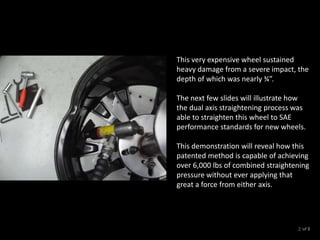
This very expensive wheel sustained
heavy damage from a severe impact, the
depth of which was nearly ¾”.
The next few slides will illustrate how
the dual axis straightening process was
able to straighten this wheel to SAE
performance standards for new wheels.
This demonstration will reveal how this
patented method is capable of achieving
over 6,000 lbs of combined straightening
pressure without ever applying that
great a force from either axis.
of 82
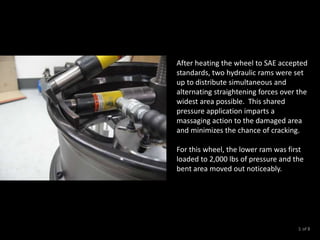
After heating the wheel to SAE accepted
standards, two hydraulic rams were set
up to distribute simultaneous and
alternating straightening forces over the
widest area possible. This shared
pressure application imparts a
massaging action to the damaged area
and minimizes the chance of cracking.
For this wheel, the lower ram was first
loaded to 2,000 lbs of pressure and the
bent area moved out noticeably.
of 83
The upper ram was then loaded to 2,000
lbs as well. This load dropped the
pressure of the lower ram to well under
2,000 lbs. The lower axis pressure was
then brought back up to 2,000 lbs. This
pressure drop occurrence happens
repeatedly in every dual axis straightening
application.
Each time one axis load is increased, the
other axis load decreases. As alternating
pressure applications continued, the
differential amount decreased each time,
until both loads remained steady at 2,000
psi. All pressure increases are always
initiated from the lower axis first.
of 84
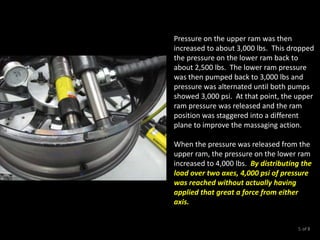
Pressure on the upper ram was then
increased to about 3,000 lbs. This dropped
the pressure on the lower ram back to
about 2,500 lbs. The lower ram pressure
was then pumped back to 3,000 lbs and
pressure was alternated until both pumps
showed 3,000 psi. At that point, the upper
ram pressure was released and the ram
position was staggered into a different
plane to improve the massaging action.
When the pressure was released from the
upper ram, the pressure on the lower ram
increased to 4,000 lbs. By distributing the
load over two axes, 4,000 psi of pressure
was reached without actually having
applied that great a force from either
axis.
of 85
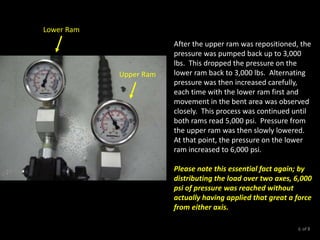
After the upper ram was repositioned, the
pressure was pumped back up to 3,000
lbs. This dropped the pressure on the
lower ram back to 3,000 lbs. Alternating
pressure was then increased carefully,
each time with the lower ram first and
movement in the bent area was observed
closely. This process was continued until
both rams read 5,000 psi. Pressure from
the upper ram was then slowly lowered.
At that point, the pressure on the lower
ram increased to 6,000 psi.
Please note this essential fact again; by
distributing the load over two axes, 6,000
psi of pressure was reached without
actually having applied that great a force
from either axis.
Upper Ram
Lower Ram
of 86
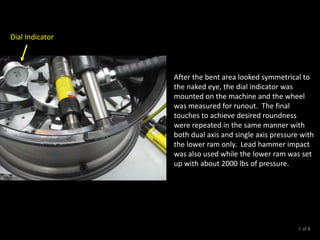
After the bent area looked symmetrical to
the naked eye, the dial indicator was
mounted on the machine and the wheel
was measured for runout. The final
touches to achieve desired roundness
were repeated in the same manner with
both dual axis and single axis pressure with
the lower ram only. Lead hammer impact
was also used while the lower ram was set
up with about 2000 lbs of pressure.
Dial Indicator
of 87
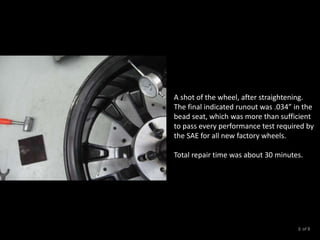
A shot of the wheel, after straightening.
The final indicated runout was .034” in the
bead seat, which was more than sufficient
to pass every performance test required by
the SAE for all new factory wheels.
Total repair time was about 30 minutes.
of 88

Demo sequencephotosnoloop

  • 1.
    The photos onthe following pages explain the patented NewArc™ method of wheel straightening. Our machine is the only one capable of this process, which requires less heat application and is much less stressful on the damaged area of the wheel. This unique dual axis method is the only one recognized by the Society of Automotive Engineers and is exclusive to all users of the NewArc™ wheel straightening machine. TM
  • 2.
    This very expensivewheel sustained heavy damage from a severe impact, the depth of which was nearly ¾”. The next few slides will illustrate how the dual axis straightening process was able to straighten this wheel to SAE performance standards for new wheels. This demonstration will reveal how this patented method is capable of achieving over 6,000 lbs of combined straightening pressure without ever applying that great a force from either axis. of 82
  • 3.
    After heating thewheel to SAE accepted standards, two hydraulic rams were set up to distribute simultaneous and alternating straightening forces over the widest area possible. This shared pressure application imparts a massaging action to the damaged area and minimizes the chance of cracking. For this wheel, the lower ram was first loaded to 2,000 lbs of pressure and the bent area moved out noticeably. of 83
  • 4.
    The upper ramwas then loaded to 2,000 lbs as well. This load dropped the pressure of the lower ram to well under 2,000 lbs. The lower axis pressure was then brought back up to 2,000 lbs. This pressure drop occurrence happens repeatedly in every dual axis straightening application. Each time one axis load is increased, the other axis load decreases. As alternating pressure applications continued, the differential amount decreased each time, until both loads remained steady at 2,000 psi. All pressure increases are always initiated from the lower axis first. of 84
  • 5.
    Pressure on theupper ram was then increased to about 3,000 lbs. This dropped the pressure on the lower ram back to about 2,500 lbs. The lower ram pressure was then pumped back to 3,000 lbs and pressure was alternated until both pumps showed 3,000 psi. At that point, the upper ram pressure was released and the ram position was staggered into a different plane to improve the massaging action. When the pressure was released from the upper ram, the pressure on the lower ram increased to 4,000 lbs. By distributing the load over two axes, 4,000 psi of pressure was reached without actually having applied that great a force from either axis. of 85
  • 6.
    After the upperram was repositioned, the pressure was pumped back up to 3,000 lbs. This dropped the pressure on the lower ram back to 3,000 lbs. Alternating pressure was then increased carefully, each time with the lower ram first and movement in the bent area was observed closely. This process was continued until both rams read 5,000 psi. Pressure from the upper ram was then slowly lowered. At that point, the pressure on the lower ram increased to 6,000 psi. Please note this essential fact again; by distributing the load over two axes, 6,000 psi of pressure was reached without actually having applied that great a force from either axis. Upper Ram Lower Ram of 86
  • 7.
    After the bentarea looked symmetrical to the naked eye, the dial indicator was mounted on the machine and the wheel was measured for runout. The final touches to achieve desired roundness were repeated in the same manner with both dual axis and single axis pressure with the lower ram only. Lead hammer impact was also used while the lower ram was set up with about 2000 lbs of pressure. Dial Indicator of 87
  • 8.
    A shot ofthe wheel, after straightening. The final indicated runout was .034” in the bead seat, which was more than sufficient to pass every performance test required by the SAE for all new factory wheels. Total repair time was about 30 minutes. of 88