ASSIGMENT - 4
Name of the Experiment:
Experimental Study of Propeller Blade Rotation CC & CCL
& its Role in Control.
Objective:
To know about the propeller blade’s role during the
drone flight control in terms of CC and CCL rotation.
Theory :
Propellers for Drones and UAVs.
Propellers are devices that transform rotary
motion into linear thrust.
Drone propellers provide lift for the aircraft by
spinning and creating an airflow, which results in
a pressure difference between the top and bottom
surfaces of the propeller.
Working :
In multicopper drones, propellers are connected
individually to motors.
These motors are then controlled by an Electronic
Speed Controller (ESC) which regulates how fast
each motor rotates.
By varying the speed of rotation of individual
motors, the ESC is able to help drones manoeuvre
in several possible ways.
When propellers rotate, they cut through the air
and direct it downwards.
If the drone is perfectly horizontal, this motion of
the propeller creates lift by pushing against the
wind.
The lifting force generated, as well as the energy it
takes to cut through the air, depends on the shape
and size of the propeller.
Atmospheric conditions, most notably air density,
also plays asignificant role.
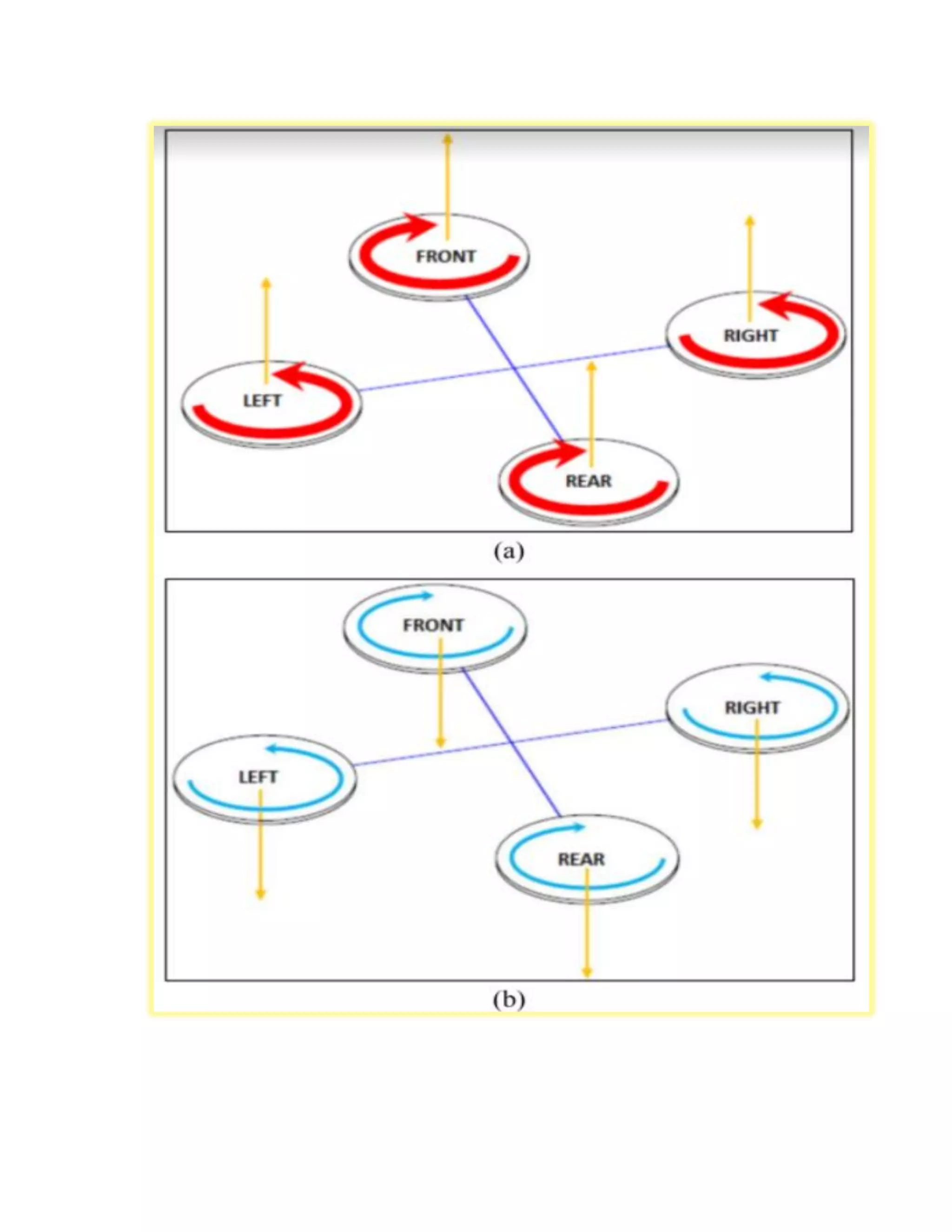
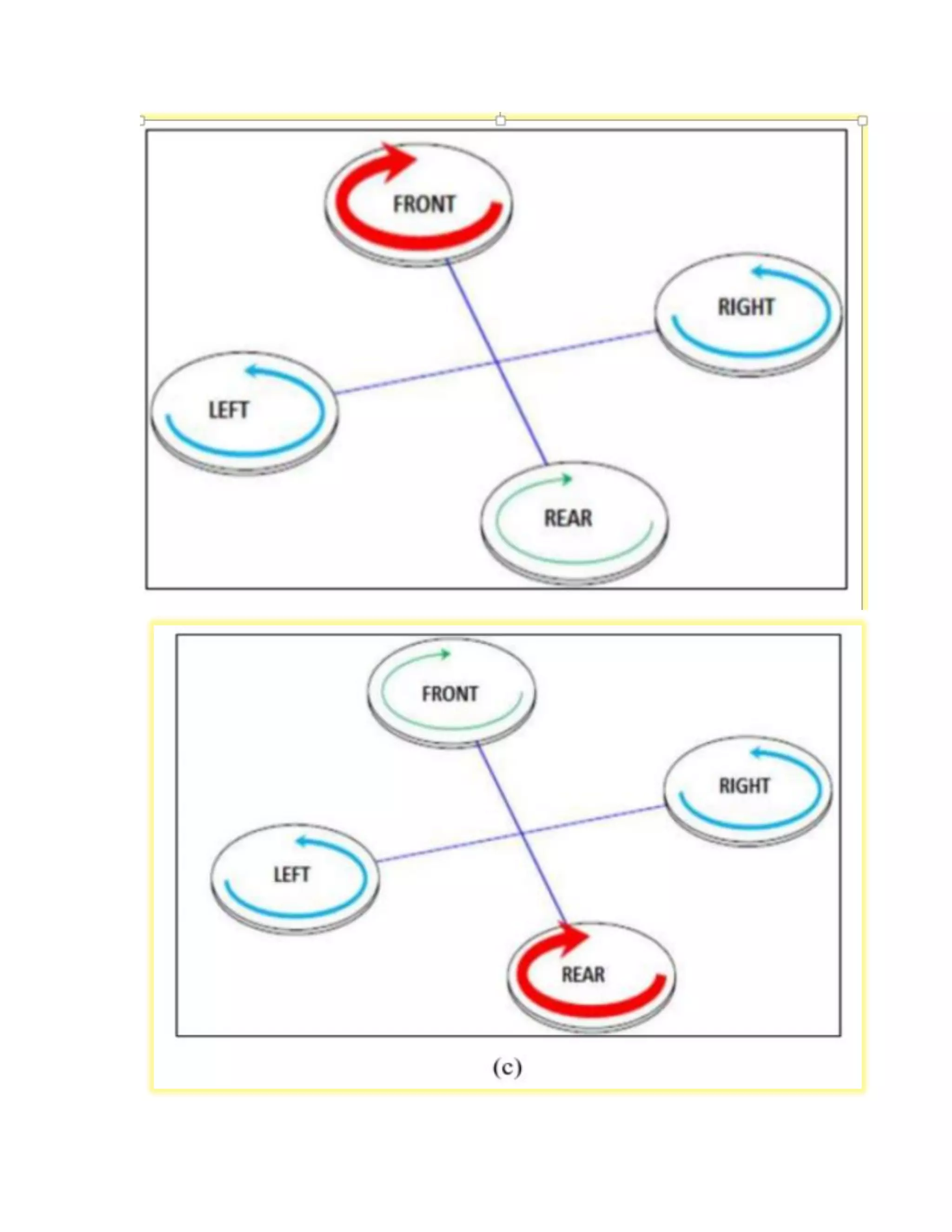
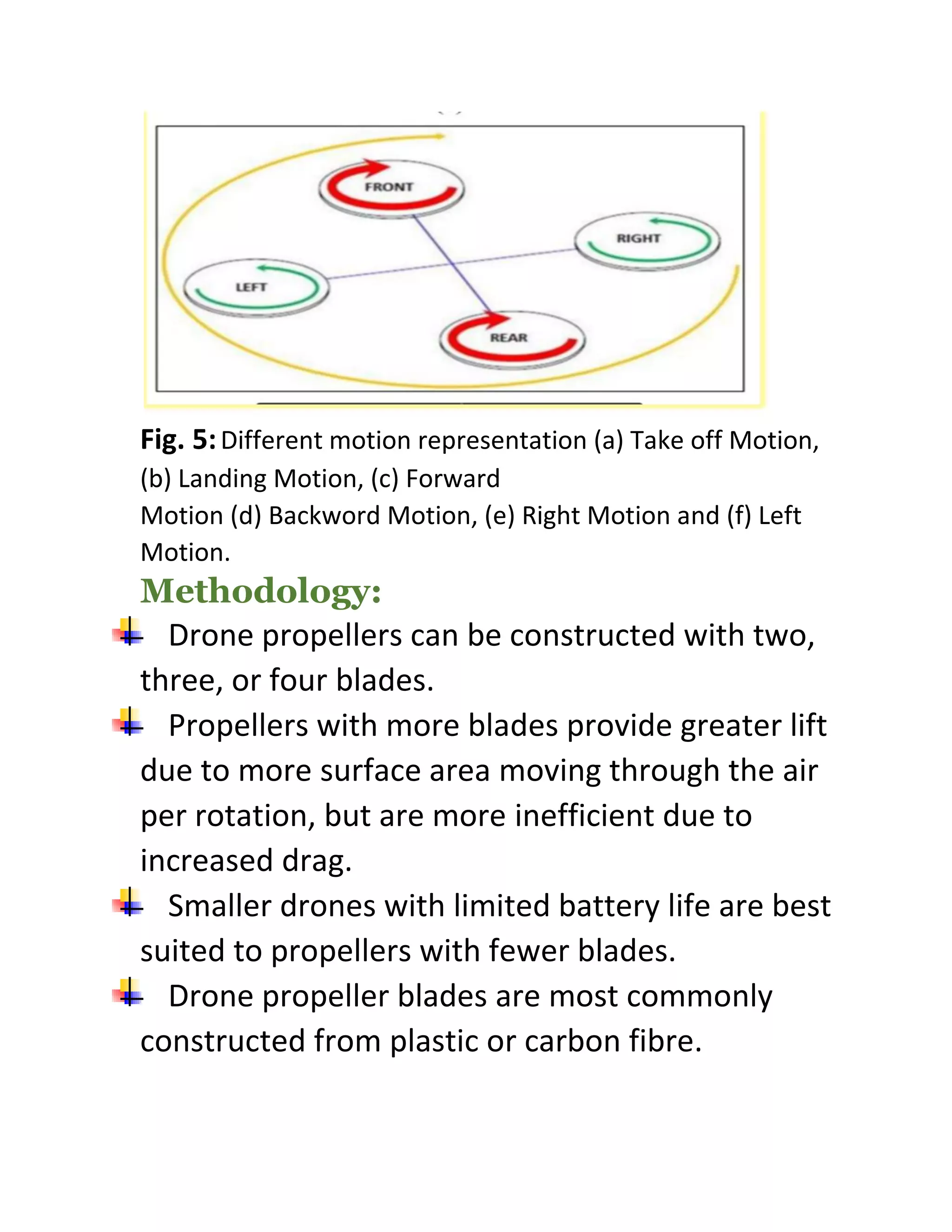
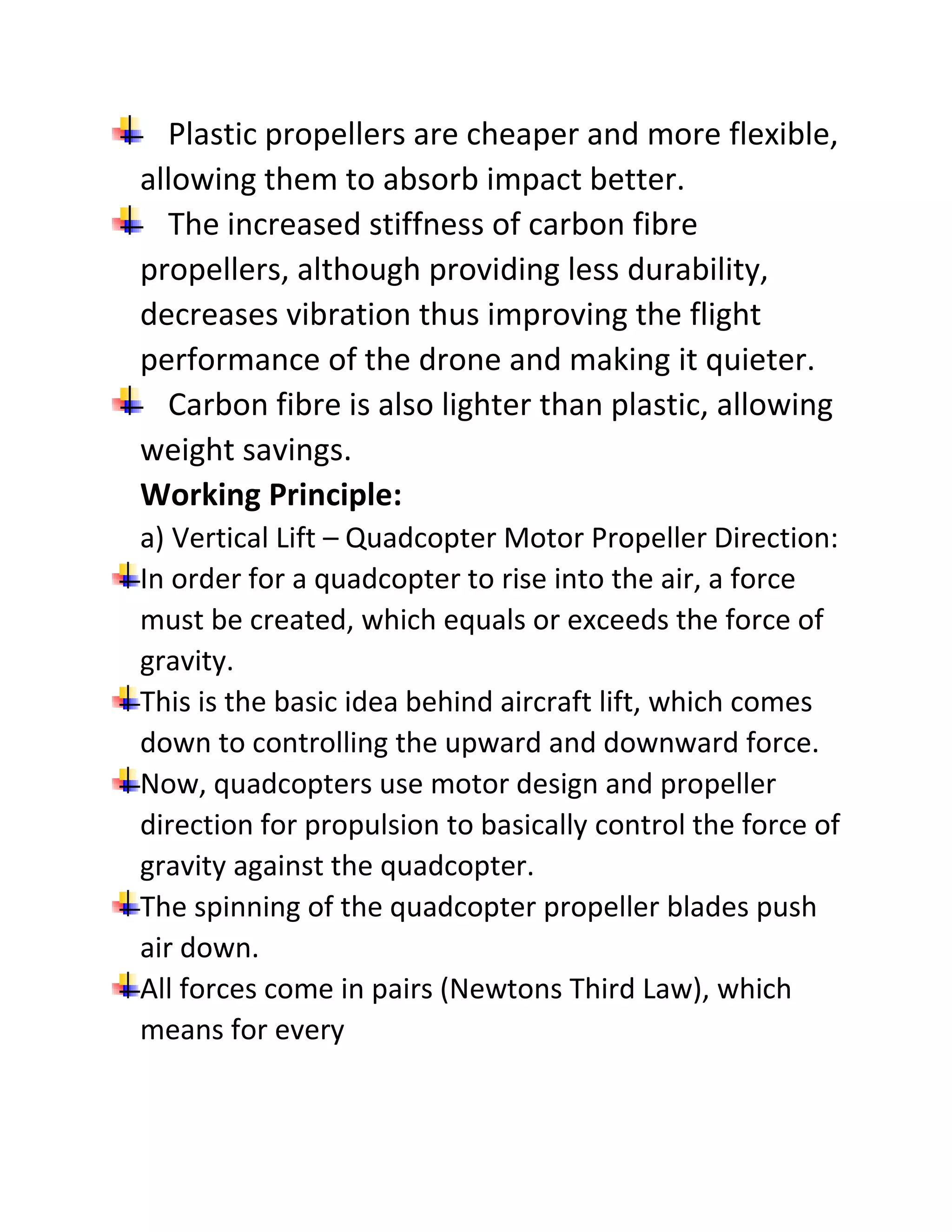
Fig. 5:Different motion representation (a) Take off Motion,
(b) Landing Motion, (c) Forward
Motion (d) Backword Motion, (e) Right Motion and (f) Left
Motion.
Methodology:
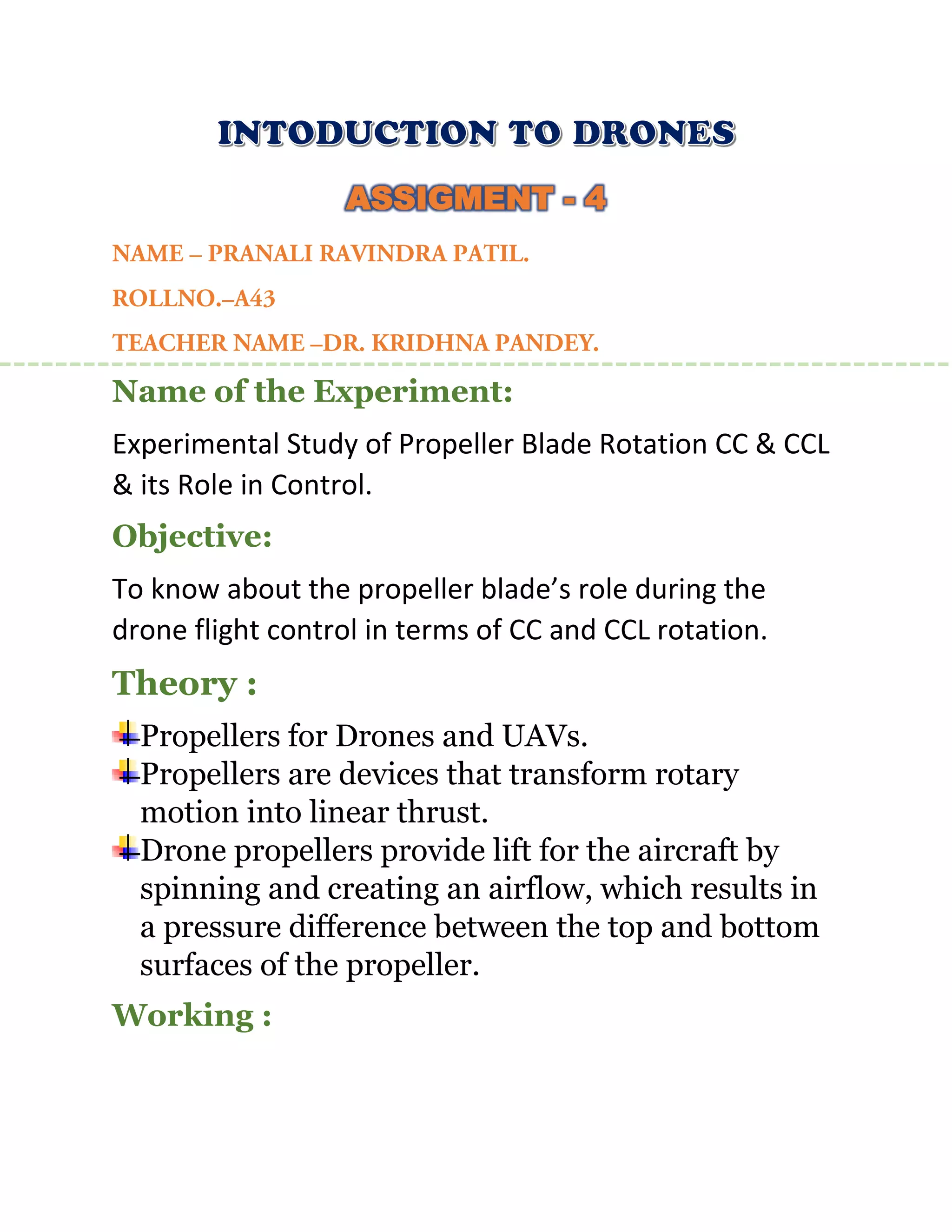
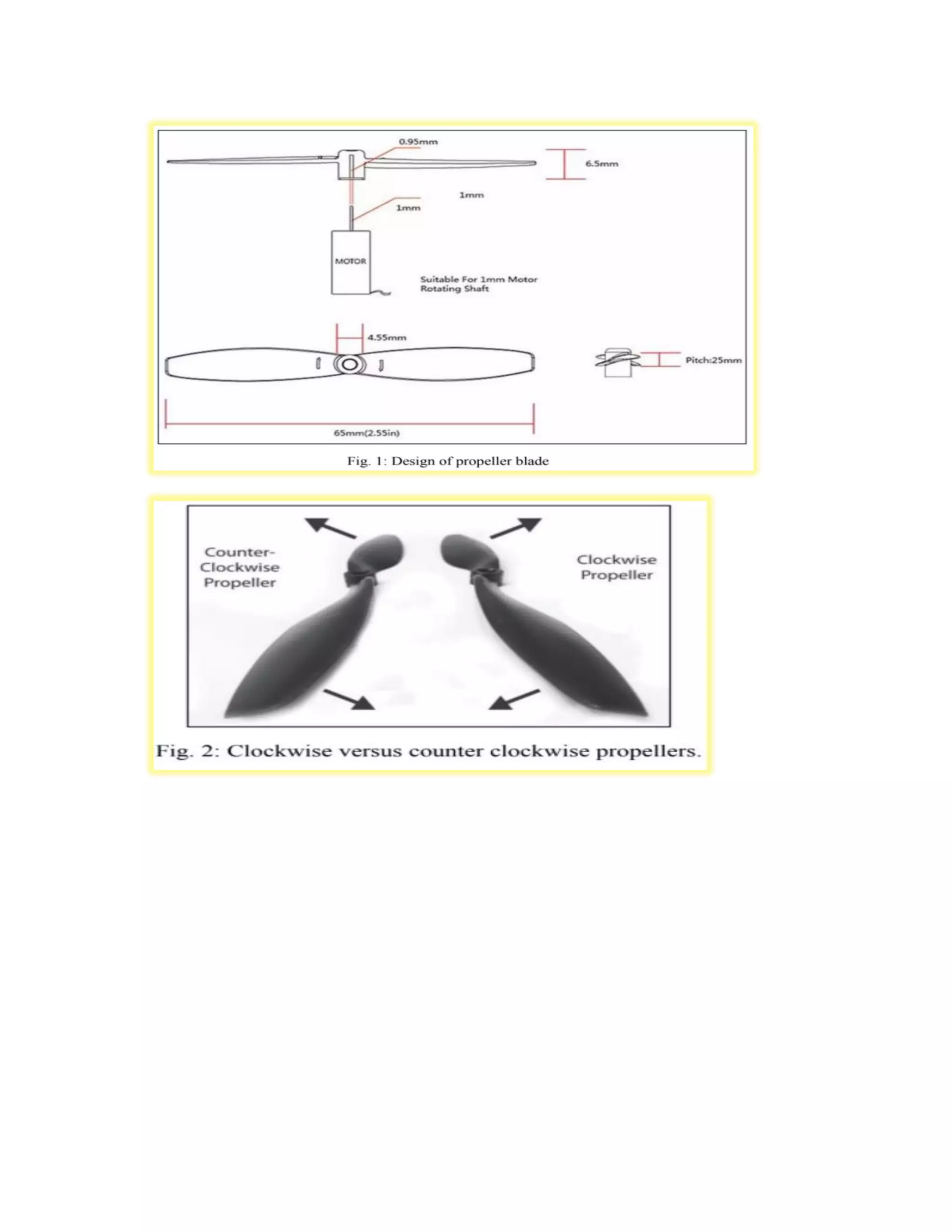
Drone propellers can be constructed with two,
three, or four blades.
Propellers with more blades provide greater lift
due to more surface area moving through the air
per rotation, but are more inefficient due to
increased drag.
Smaller drones with limited battery life are best
suited to propellers with fewer blades.
Drone propeller blades are most commonly
constructed from plastic or carbon fibre.
Plastic propellers are cheaper and more flexible,
allowing them to absorb impact better.
The increased stiffness of carbon fibre
propellers, although providing less durability,
decreases vibration thus improving the flight
performance of the drone and making it quieter.
Carbon fibre is also lighter than plastic, allowing
weight savings.
Working Principle:
a) Vertical Lift – Quadcopter Motor Propeller Direction:
In order for a quadcopter to rise into the air, a force
must be created, which equals or exceeds the force of
gravity.
This is the basic idea behind aircraft lift, which comes
down to controlling the upward and downward force.
Now, quadcopters use motor design and propeller
direction for propulsion to basically control the force of
gravity against the quadcopter.
The spinning of the quadcopter propeller blades push
air down.
All forces come in pairs (Newtons Third Law), which
means for every
action force there is an equal (in size) and opposite (in
direction) reaction force. Therefore, as
the rotor pushes down on the air, the air pushes up on
the rotor. The faster the rotors spin, the
greater the lift and vice-versa.
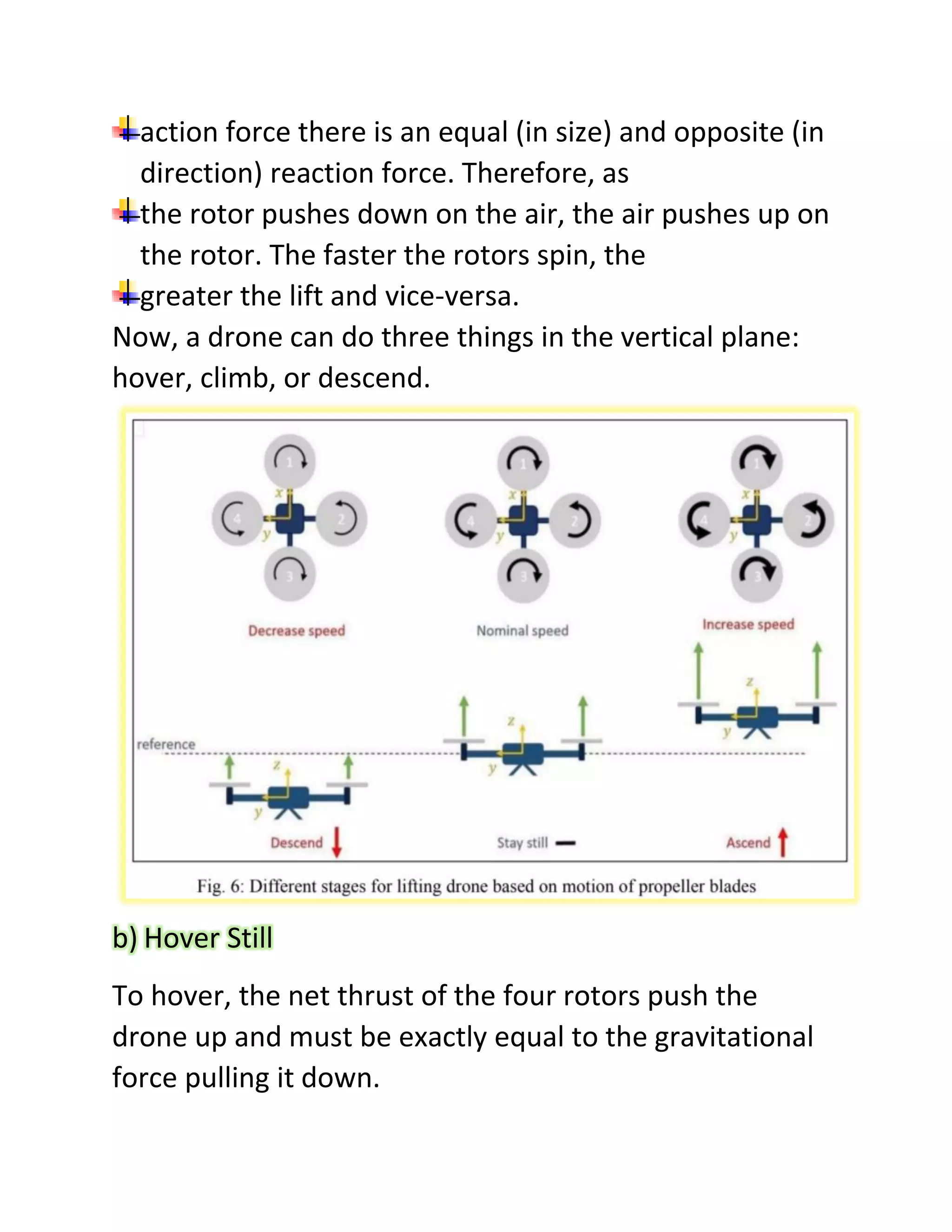
Now, a drone can do three things in the vertical plane:
hover, climb, or descend.
b) Hover Still
To hover, the net thrust of the four rotors push the
drone up and must be exactly equal to the gravitational
force pulling it down.
c) Climb Ascend
By increasing the thrust (speed) of the four quadcopter
rotors so that the upward force is greater
than the weight and pull of gravity.
d) Vertical Descend
Dropping back down requires doing the exact opposite of
the climb. Decrease the rotor thrust
(speed) so the net force is downward.
Summary
In this experiment, the rotational effect of propeller
blades on drone flight has been caried out.
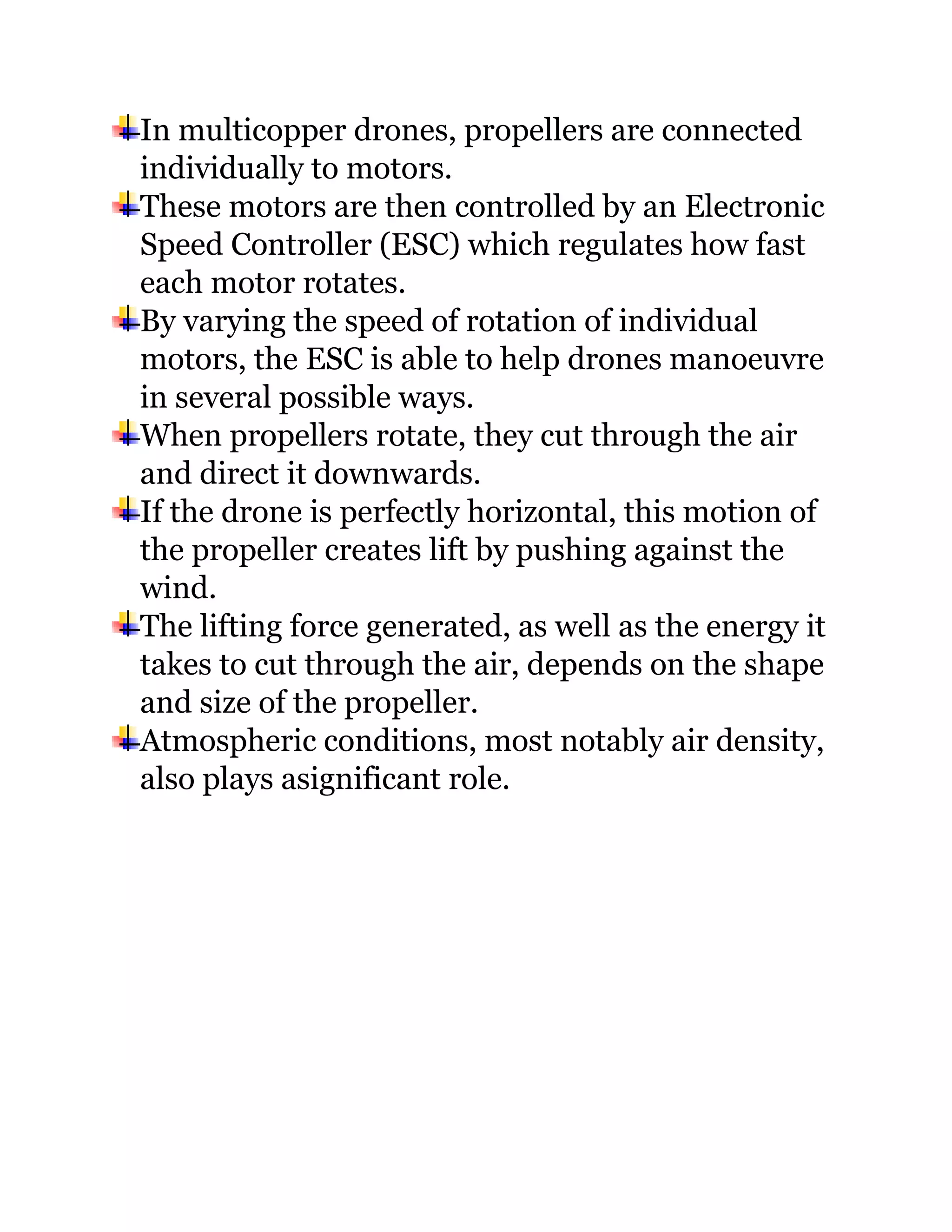
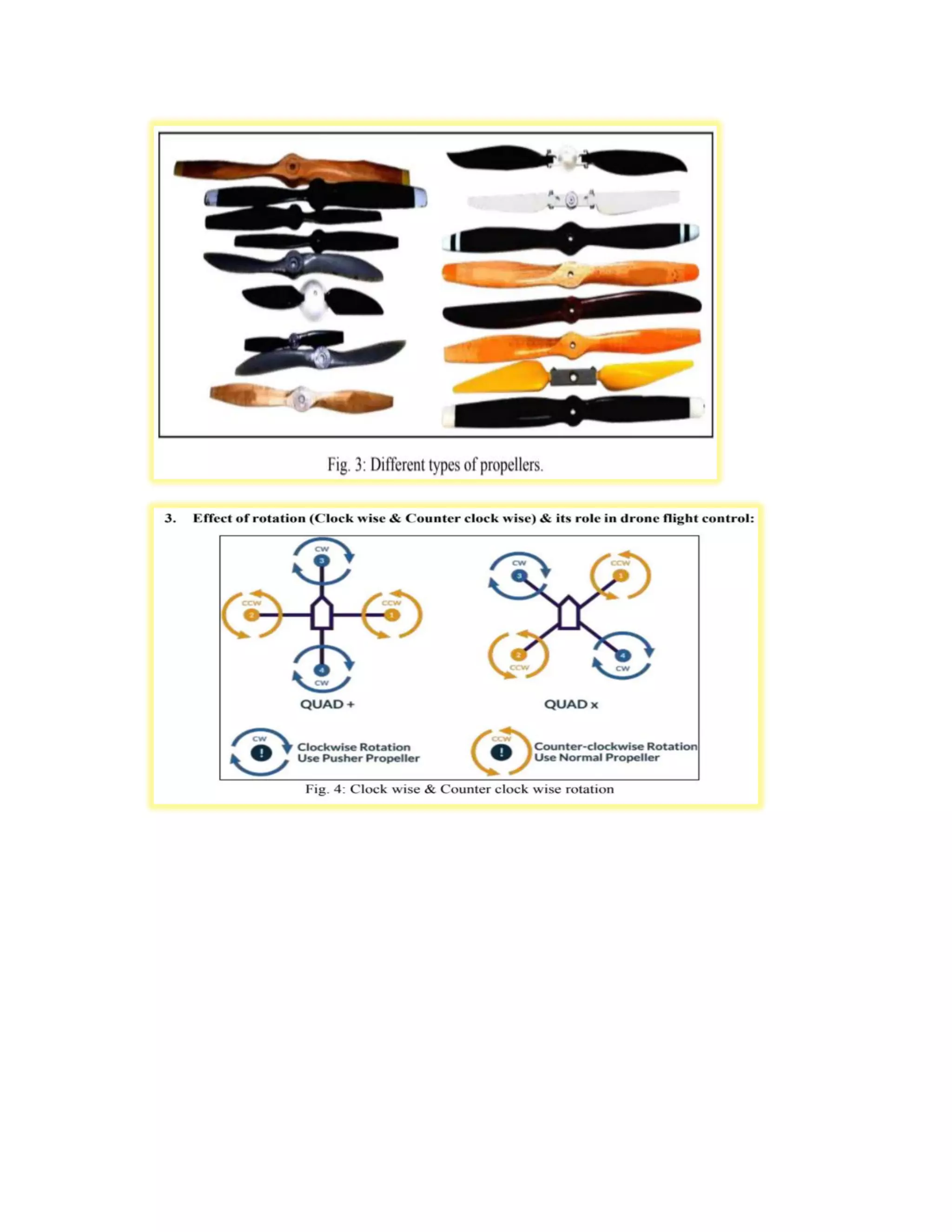
Clockwise and counter clockwise effect due the propeller
blade has been caried out.
Also, the role of propeller blades in motion control has
been studied.

The Ultimate Cheat Sheet on Drones

  • 1.
    ASSIGMENT - 4 Nameof the Experiment: Experimental Study of Propeller Blade Rotation CC & CCL & its Role in Control. Objective: To know about the propeller blade’s role during the drone flight control in terms of CC and CCL rotation. Theory : Propellers for Drones and UAVs. Propellers are devices that transform rotary motion into linear thrust. Drone propellers provide lift for the aircraft by spinning and creating an airflow, which results in a pressure difference between the top and bottom surfaces of the propeller. Working :
  • 2.
    In multicopper drones,propellers are connected individually to motors. These motors are then controlled by an Electronic Speed Controller (ESC) which regulates how fast each motor rotates. By varying the speed of rotation of individual motors, the ESC is able to help drones manoeuvre in several possible ways. When propellers rotate, they cut through the air and direct it downwards. If the drone is perfectly horizontal, this motion of the propeller creates lift by pushing against the wind. The lifting force generated, as well as the energy it takes to cut through the air, depends on the shape and size of the propeller. Atmospheric conditions, most notably air density, also plays asignificant role.
  • 7.
    Fig. 5:Different motionrepresentation (a) Take off Motion, (b) Landing Motion, (c) Forward Motion (d) Backword Motion, (e) Right Motion and (f) Left Motion. Methodology: Drone propellers can be constructed with two, three, or four blades. Propellers with more blades provide greater lift due to more surface area moving through the air per rotation, but are more inefficient due to increased drag. Smaller drones with limited battery life are best suited to propellers with fewer blades. Drone propeller blades are most commonly constructed from plastic or carbon fibre.
  • 8.
    Plastic propellers arecheaper and more flexible, allowing them to absorb impact better. The increased stiffness of carbon fibre propellers, although providing less durability, decreases vibration thus improving the flight performance of the drone and making it quieter. Carbon fibre is also lighter than plastic, allowing weight savings. Working Principle: a) Vertical Lift – Quadcopter Motor Propeller Direction: In order for a quadcopter to rise into the air, a force must be created, which equals or exceeds the force of gravity. This is the basic idea behind aircraft lift, which comes down to controlling the upward and downward force. Now, quadcopters use motor design and propeller direction for propulsion to basically control the force of gravity against the quadcopter. The spinning of the quadcopter propeller blades push air down. All forces come in pairs (Newtons Third Law), which means for every
  • 9.
    action force thereis an equal (in size) and opposite (in direction) reaction force. Therefore, as the rotor pushes down on the air, the air pushes up on the rotor. The faster the rotors spin, the greater the lift and vice-versa. Now, a drone can do three things in the vertical plane: hover, climb, or descend. b) Hover Still To hover, the net thrust of the four rotors push the drone up and must be exactly equal to the gravitational force pulling it down.
  • 10.
    c) Climb Ascend Byincreasing the thrust (speed) of the four quadcopter rotors so that the upward force is greater than the weight and pull of gravity. d) Vertical Descend Dropping back down requires doing the exact opposite of the climb. Decrease the rotor thrust (speed) so the net force is downward. Summary In this experiment, the rotational effect of propeller blades on drone flight has been caried out. Clockwise and counter clockwise effect due the propeller blade has been caried out. Also, the role of propeller blades in motion control has been studied.