D
Demand
C
Controlled
V
Ventilation
 for Energy Savings
Conventional Ventilation
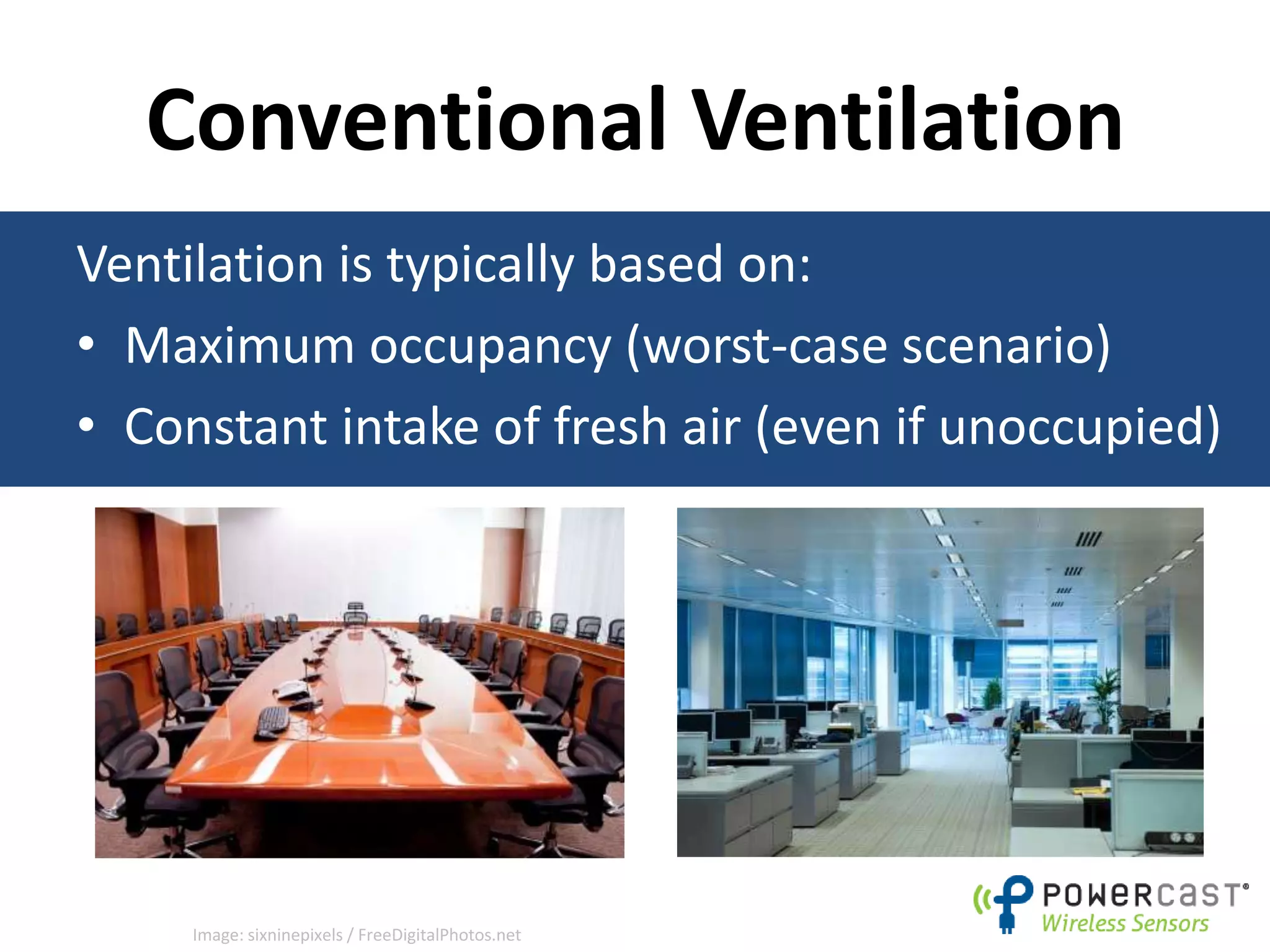
Ventilation is typically based on:
• Maximum occupancy (worst-case scenario)
• Constant intake of fresh air (even if unoccupied)


     Image: sixninepixels / FreeDigitalPhotos.net
The Result
• Significant waste of energy and money


• Excess running of fans


• Excess heating of cold intake air


• Excess cooling of warm intake air
Demand-Controlled Ventilation (DCV)
Outside
  Air                              Adjust fresh-air
          90% Occupied
                                   intake based on
                         Floor 4
                                   occupancy
          10% Occupied   Floor 3


                                   Ventilation demand
          50% Occupied   Floor 2
                                   is determined by
                                   CO2 level (ppm)
          80% Occupied   Floor 1
DCV Benefits
• Maintain acceptable indoor air quality (IAQ)

• Reduce energy consumption

• Monitor space occupancy

• Meet ASHRAE standards

• Support LEED certification
Powercast Wireless CO2 Sensors
 • Fast installation / Easy relocation

 • Reduced occupant disruption

 • Long battery life (3-15 years)

 • 0 - 5000ppm measurement

 • Connect to any BAS network
Powercast Sensor System

 Building
                                           Wireless CO2
 Network                                     Sensors


             Local Monitoring

                                Wireless
                                Gateway
 Cloud
Monitoring
Payback

Payback =   System Cost
Period    Monthly Energy Savings

• Measured in months, not years
• Timeframe supported by US DoE studies
Where to Use?
•   Office buildings
•   Theaters, Auditoriums
•   Shopping malls, retail complex
•   Hospitals, Hotels, Schools, Dormitories
•   Government buildings
•   Bars, nightclubs, entertainment venues
•   Many other places of human occupancy
More Information


PowercastSensors.com
       +1 724.238.3700

Demand Controlled Ventilation and Energy Savings

  • 1.
  • 2.
    Conventional Ventilation Ventilation istypically based on: • Maximum occupancy (worst-case scenario) • Constant intake of fresh air (even if unoccupied) Image: sixninepixels / FreeDigitalPhotos.net
  • 3.
    The Result • Significantwaste of energy and money • Excess running of fans • Excess heating of cold intake air • Excess cooling of warm intake air
  • 4.
    Demand-Controlled Ventilation (DCV) Outside Air Adjust fresh-air 90% Occupied intake based on Floor 4 occupancy 10% Occupied Floor 3 Ventilation demand 50% Occupied Floor 2 is determined by CO2 level (ppm) 80% Occupied Floor 1
  • 5.
    DCV Benefits • Maintainacceptable indoor air quality (IAQ) • Reduce energy consumption • Monitor space occupancy • Meet ASHRAE standards • Support LEED certification
  • 6.
    Powercast Wireless CO2Sensors • Fast installation / Easy relocation • Reduced occupant disruption • Long battery life (3-15 years) • 0 - 5000ppm measurement • Connect to any BAS network
  • 7.
    Powercast Sensor System Building Wireless CO2 Network Sensors Local Monitoring Wireless Gateway Cloud Monitoring
  • 8.
    Payback Payback = System Cost Period Monthly Energy Savings • Measured in months, not years • Timeframe supported by US DoE studies
  • 9.
    Where to Use? • Office buildings • Theaters, Auditoriums • Shopping malls, retail complex • Hospitals, Hotels, Schools, Dormitories • Government buildings • Bars, nightclubs, entertainment venues • Many other places of human occupancy
  • 10.