In a macro economy, the government uses 
certain policies in order to influence or 
control the aggregate demand and supply of 
the economy 
These policies include Demand Side Policies 
& Supply Side Policies
These policies try to influence the level of 
aggregate demand in an economy 
This is done by using a couple of policy 
instruments 
1. total public expenditure 
2. levels of taxation 
3. the interest rates
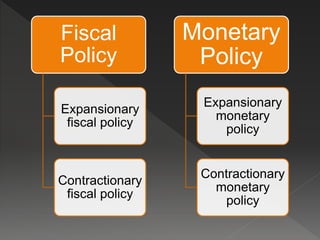
Fiscal 
Policy 
Expansionary 
fiscal policy 
Contractionary 
fiscal policy 
Monetary 
Policy 
Expansionary 
monetary 
policy 
Contractionary 
monetary 
policy
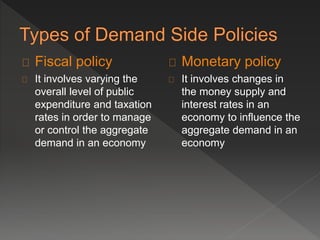
Fiscal policy 
It involves varying the 
overall level of public 
expenditure and taxation 
rates in order to manage 
or control the aggregate 
demand in an economy 
Monetary policy 
It involves changes in 
the money supply and 
interest rates in an 
economy to influence the 
aggregate demand in an 
economy
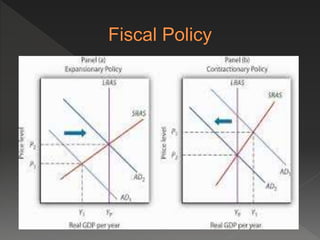
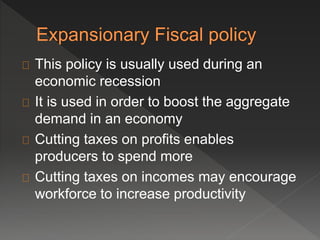
This policy is usually used during an 
economic recession 
It is used in order to boost the aggregate 
demand in an economy 
Cutting taxes on profits enables 
producers to spend more 
Cutting taxes on incomes may encourage 
workforce to increase productivity
Cutting taxes on incomes may also increase the 
disposable income of consumers 
However some consumers may just save the 
surplus money 
Or some consumers may spend more on 
imported goods and services 
An expansionary fiscal policy may also 
create a budget deficit 
In may eventually creates expectations of 
inflation
This policy aims to reduce aggregate 
demand in an economy 
This is done by reducing public expenditure 
or increasing taxation 
This way the budget deficit may go in a 
surplus 
However it may reduce employment and 
output
Advantages of 
Fiscal Policy 
1. Fiscal policy instruments 
can bring about equality 
in the distribution of 
income 
Disadvantages 
of Fiscal Policy 
1. Fiscal policy is 
cumbersome to use 
2. Increases in public 
expenditure decreases 
private spending 
3. Increasing taxes can 
reduce incentives to 
work and enterprise
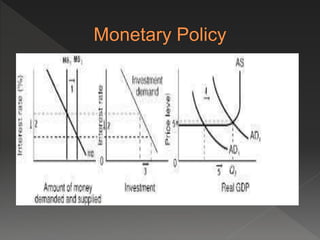
This involves a cut in the interest rates and 
expansion in money supply to increase demand 
It is used when unemployment is rising and 
economic growth is falling 
Monetary policy is decided by the central bank 
A cut in interest rates will encourage more people to 
borrow 
Lower interest rates can increase consumer 
expenditure and investment expenditure 
This will boost output and increase employment
More money supply can result in consumers 
having a higher amount of money to spend 
on goods and services 
However excessive growth in money supply 
can result in inflation
This involves raising interest rates and 
cutting money supply to reduce aggregate 
demand 
This is considered in a situation of inflation 
Increasing interest rates will encourage more 
consumers to save rather than spend 
However this may result in rising 
unemployment and falling economic growth
Increasing interest rates encourages saving 
thence increasing exchange rate 
This may solve the problem of inflation 
Decreasing interest rates decreases 
exchange rates 
This may solve the problem of 
unemployment and may improve the foreign 
exchange of an economy
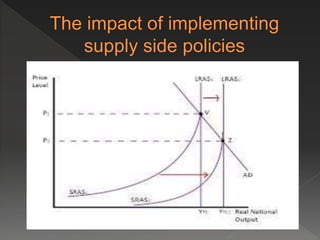
These are designed to boost productive 
potential of an economy to increase the 
aggregate supply of goods and services 
These will help reduce inflation, 
unemployment and boost production of 
goods for exports
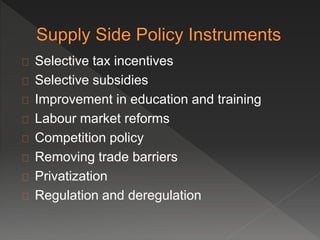
Selective tax incentives 
Selective subsidies 
Improvement in education and training 
Labour market reforms 
Competition policy 
Removing trade barriers 
Privatization 
Regulation and deregulation
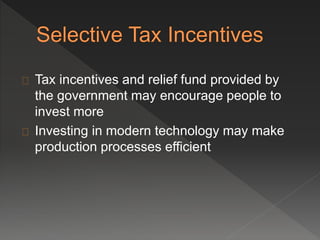
Tax incentives and relief fund provided by 
the government may encourage people to 
invest more 
Investing in modern technology may make 
production processes efficient
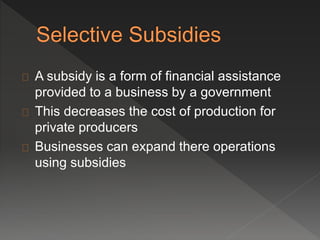
A subsidy is a form of financial assistance 
provided to a business by a government 
This decreases the cost of production for 
private producers 
Businesses can expand there operations 
using subsidies
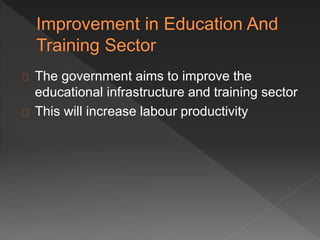
The government aims to improve the 
educational infrastructure and training sector 
This will increase labour productivity
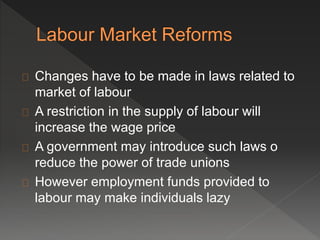
Changes have to be made in laws related to 
market of labour 
A restriction in the supply of labour will 
increase the wage price 
A government may introduce such laws o 
reduce the power of trade unions 
However employment funds provided to 
labour may make individuals lazy
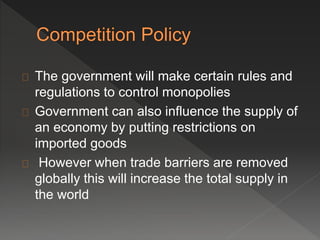
The government will make certain rules and 
regulations to control monopolies 
Government can also influence the supply of 
an economy by putting restrictions on 
imported goods 
However when trade barriers are removed 
globally this will increase the total supply in 
the world
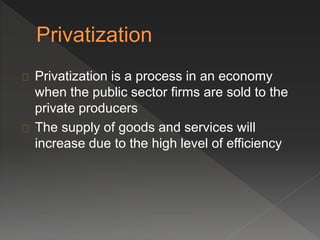
Privatization is a process in an economy 
when the public sector firms are sold to the 
private producers 
The supply of goods and services will 
increase due to the high level of efficiency
Regulations are the laws a business has to 
abide by 
These are set to protect some industries 
from unfair competition 
It also protects the rights of labours 
These are set to protect consumers from 
misleading advertising and to protect the 
environment
Deregulations is a process in which certain 
laws nd rules are eliminated 
This provides freedom of decision making of 
producers 
These may help to remove production costs 
as well 
Deregulations help to reduce production 
costs
demand and supply side policies

demand and supply side policies

  • 2.
    In a macroeconomy, the government uses certain policies in order to influence or control the aggregate demand and supply of the economy These policies include Demand Side Policies & Supply Side Policies
  • 3.
    These policies tryto influence the level of aggregate demand in an economy This is done by using a couple of policy instruments 1. total public expenditure 2. levels of taxation 3. the interest rates
  • 4.
    Fiscal Policy Expansionary fiscal policy Contractionary fiscal policy Monetary Policy Expansionary monetary policy Contractionary monetary policy
  • 5.
    Fiscal policy Itinvolves varying the overall level of public expenditure and taxation rates in order to manage or control the aggregate demand in an economy Monetary policy It involves changes in the money supply and interest rates in an economy to influence the aggregate demand in an economy
  • 8.
    This policy isusually used during an economic recession It is used in order to boost the aggregate demand in an economy Cutting taxes on profits enables producers to spend more Cutting taxes on incomes may encourage workforce to increase productivity
  • 9.
    Cutting taxes onincomes may also increase the disposable income of consumers However some consumers may just save the surplus money Or some consumers may spend more on imported goods and services An expansionary fiscal policy may also create a budget deficit In may eventually creates expectations of inflation
  • 10.
    This policy aimsto reduce aggregate demand in an economy This is done by reducing public expenditure or increasing taxation This way the budget deficit may go in a surplus However it may reduce employment and output
  • 11.
    Advantages of FiscalPolicy 1. Fiscal policy instruments can bring about equality in the distribution of income Disadvantages of Fiscal Policy 1. Fiscal policy is cumbersome to use 2. Increases in public expenditure decreases private spending 3. Increasing taxes can reduce incentives to work and enterprise
  • 12.
    This involves acut in the interest rates and expansion in money supply to increase demand It is used when unemployment is rising and economic growth is falling Monetary policy is decided by the central bank A cut in interest rates will encourage more people to borrow Lower interest rates can increase consumer expenditure and investment expenditure This will boost output and increase employment
  • 13.
    More money supplycan result in consumers having a higher amount of money to spend on goods and services However excessive growth in money supply can result in inflation
  • 14.
    This involves raisinginterest rates and cutting money supply to reduce aggregate demand This is considered in a situation of inflation Increasing interest rates will encourage more consumers to save rather than spend However this may result in rising unemployment and falling economic growth
  • 15.
    Increasing interest ratesencourages saving thence increasing exchange rate This may solve the problem of inflation Decreasing interest rates decreases exchange rates This may solve the problem of unemployment and may improve the foreign exchange of an economy
  • 16.
    These are designedto boost productive potential of an economy to increase the aggregate supply of goods and services These will help reduce inflation, unemployment and boost production of goods for exports
  • 17.
    Selective tax incentives Selective subsidies Improvement in education and training Labour market reforms Competition policy Removing trade barriers Privatization Regulation and deregulation
  • 19.
    Tax incentives andrelief fund provided by the government may encourage people to invest more Investing in modern technology may make production processes efficient
  • 20.
    A subsidy isa form of financial assistance provided to a business by a government This decreases the cost of production for private producers Businesses can expand there operations using subsidies
  • 21.
    The government aimsto improve the educational infrastructure and training sector This will increase labour productivity
  • 22.
    Changes have tobe made in laws related to market of labour A restriction in the supply of labour will increase the wage price A government may introduce such laws o reduce the power of trade unions However employment funds provided to labour may make individuals lazy
  • 23.
    The government willmake certain rules and regulations to control monopolies Government can also influence the supply of an economy by putting restrictions on imported goods However when trade barriers are removed globally this will increase the total supply in the world
  • 24.
    Privatization is aprocess in an economy when the public sector firms are sold to the private producers The supply of goods and services will increase due to the high level of efficiency
  • 25.
    Regulations are thelaws a business has to abide by These are set to protect some industries from unfair competition It also protects the rights of labours These are set to protect consumers from misleading advertising and to protect the environment
  • 26.
    Deregulations is aprocess in which certain laws nd rules are eliminated This provides freedom of decision making of producers These may help to remove production costs as well Deregulations help to reduce production costs