History of Dell Computers
Michael Dell, Founder.
Dell started business as a
student in 1983.
Company renamed Dell
Computer in 1987.
1987
Dell Computers hit Fortune
500 in 1992.
Became the leader of PC
industry in the U.S. in
1999.
Became the worldwide
leader in PCs in 2001.

Dell Inc. in 2005

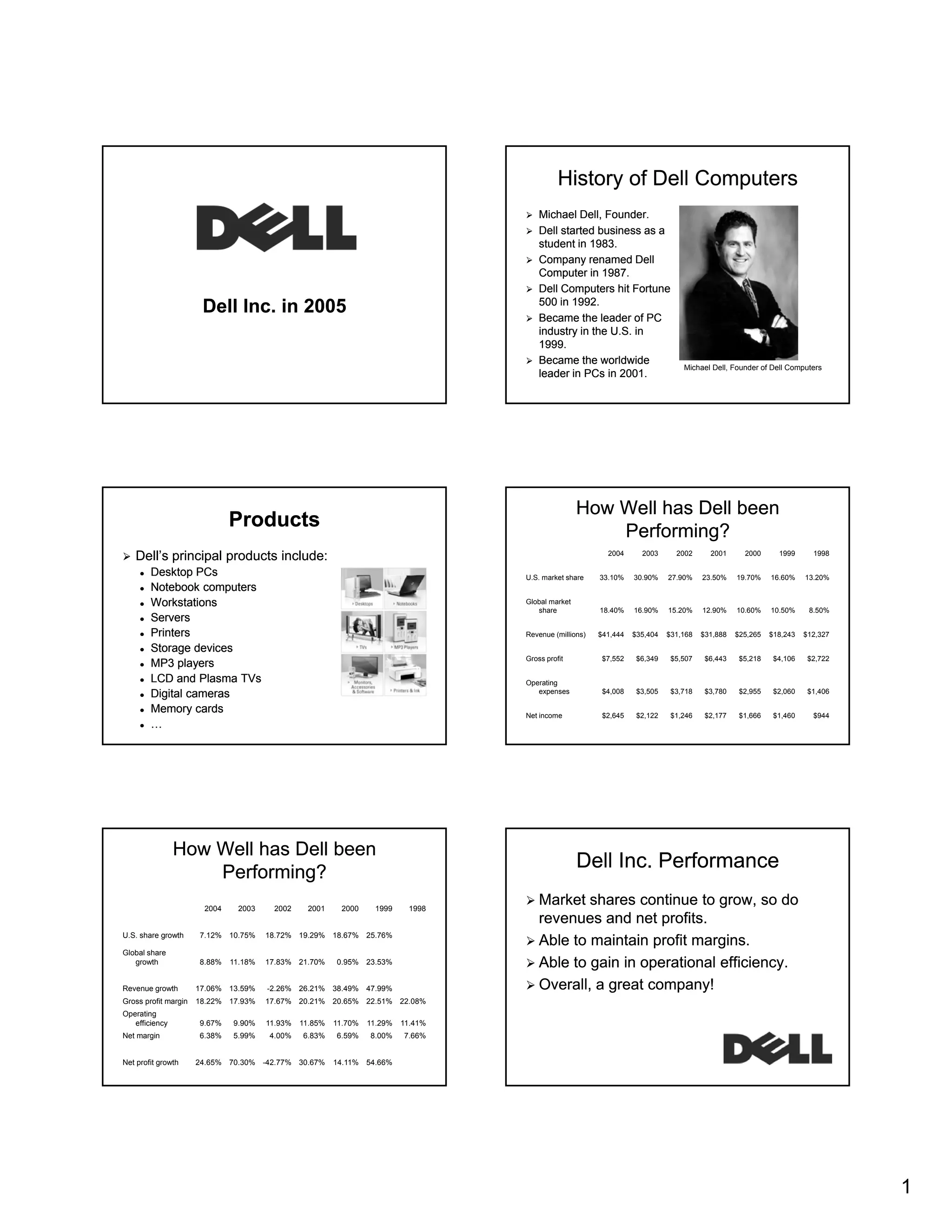
How Well has Dell been
Performing?

Products
Dell’s principal products include:

2004

2003

U.S. share growth

7.12% 10.75%

8.88%

17.83% 21.70%

11.18%

33.10%

30.90%

27.90%

23.50%

19.70%

16.60%

13.20%

18.40%

16.90%

15.20%

12.90%

10.60%

10.50%

8.50%

$41,444

$35,404

$31,168

$31,888

$25,265

$18,243

$12,327

$7,552

$6,349

$5,507

$6,443

$5,218

$4,106

$2,722

$4,008

$3,505

$3,718

$3,780

$2,955

$2,060

$1,406

$2,645

$2,122

$1,246

$2,177

$1,666

$1,460

$944

Dell Inc. Performance
1998

18.72% 19.29% 18.67% 25.76%

Global share
growth

1998

Net income

1999

1999

Operating
expenses

2000

2000

Gross profit

2001

2001

Revenue (millions)

2002

2002

Global market
share

How Well has Dell been
Performing?

2003

U.S. market share

Desktop PCs
Notebook computers
Workstations
Servers
Printers
Storage devices
MP3 players
LCD and Plasma TVs
Digital cameras
Memory cards
…

2004

Michael Dell, Founder of Dell Computers

0.95% 23.53%

Revenue growth

17.06% 13.59%

-2.26% 26.21% 38.49% 47.99%

Gross profit margin

18.22% 17.93%

Market shares continue to grow, so do
revenues and net profits.
Able to maintain profit margins.
Able to i in
Abl t gain i operational efficiency.
ti
l ffi i
Overall, a great company!

17.67% 20.21% 20.65% 22.51% 22.08%

Operating
efficiency

9.67%

9.90%

11.93%

11.85%

11.70%

11.29%

11.41%

Net margin

6.38%

5.99%

4.00%

6.83%

6.59%

8.00%

7.66%

Net profit growth

24.65% 70.30% -42.77% 30.67%

14.11% 54.66%

1
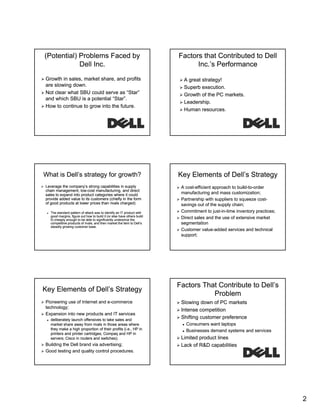
(Potential) Problems Faced by
Dell Inc.
Growth in sales, market share, and profits
are slowing down.
Not clear what SBU could serve as “Star”
Star
and which SBU is a potential “Star”.
How to continue to grow into the future.

Factors that Contributed to Dell
Inc.’s Performance
A great strategy!
Superb execution.
Growth of the PC markets.
Leadership.
Human resources.

What is Dell’s strategy for growth?

Key Elements of Dell’s Strategy

Leverage the company’s strong capabilities in supply
chain management, low-cost manufacturing, and direct
lowsales to expand into product categories where it could
provide added value to its customers (chiefly in the form
of good products at lower prices than rivals charged)

A cost-efficient approach to build-to-order
costbuild-tomanufacturing and mass customization;
Partnership with suppliers to squeeze costcostsavings out of the supply chain;
g
pp y
Commitment to just-in-time inventory practices;
just-inDirect sales and the use of extensive market
segmentation
Customer value-added services and technical
valuesupport;

The standard pattern of attack was to identify an IT product with
good margins, figure out how to build it (or else have others build
it) cheaply enough to be able to significantly underprice the
competitive products of rivals; and then market the item to Dell’s
steadily growing customer base.

Key Elements of Dell’s Strategy
Pioneering use of Internet and e-commerce
etechnology;
Expansion into new products and IT services
deliberately launch offensives to take sales and
y
market share away from rivals in those areas where
they make a high proportion of their profits (i.e., HP in
printers and printer cartridges; Compaq and HP in
servers; Cisco in routers and switches);

Building the Dell brand via advertising;
Good testing and quality control procedures.

Factors That Contribute to Dell’s
Problem
Slowing down of PC markets
Intense competition
Shifting customer preference
Consumers want laptops
Businesses demand systems and services

Limited product lines
Lack of R&D capabilities

2
What are Dell’s Distinctive
Competencies?

What are Key Weaknesses of
Dell?

Just-inJust-in-time inventory practices and supply chain
management (no one in the PC industry does it
better—
better—or even comes close to matching what
Dell can do).
LowLow
L -cost build-t -order manufacturing and mass
t build-to d
b ild tof t i
d
customization— worldcustomization—a world-class manufacturing
innovator.
Direct sales capabilities (no rival can yet match
Dell)—
Dell)—and the capabilities are global.
Leadership in use of the Internet and eecommerce technologies.

Direct sales is probably not the best way to access firstfirsttime buyers, plus it has disadvantages in Japan and
China where buyers like to look and touch before buying.
No in-house repair service capabilities (as some rivals
in)
have).
Lacks the product line and IT service breadth of HewlettHewlettPackard and IBM.
A somewhat weaker brand name image and reputation
as compared to HP and IBM (at least for large enterprise
customers).
Lacks R&D capabilities.
Become too big and too diversified too fast (battery
problem).

Some broad strategies
What Recommendations would
you make for Dell to achieve
long-term growth?
g
g
long-

Complementing product development with
market development.
Global expansion.
Leverage its distinctive competencies
competencies.
Continue brand building and skill
upgrading (e.g., in-house R&D).
inDevelop/acquire systems and service
capabilities.
Build viable “Stars”!

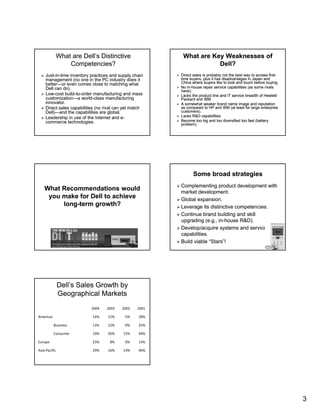
Dell’s Sales Growth by
Geographical Markets
2004

2003

2002

2001

14%

15%

‐5%

28%

Business

13%

12%

‐9%

25%

Consumer

19%

26%

15%

44%

Europe

23%

8%

0%

14%

Asia‐Pacific

29%

16%

14%

46%

Americas

3

Dell inc [compatibility mode]

  • 1.
    History of DellComputers Michael Dell, Founder. Dell started business as a student in 1983. Company renamed Dell Computer in 1987. 1987 Dell Computers hit Fortune 500 in 1992. Became the leader of PC industry in the U.S. in 1999. Became the worldwide leader in PCs in 2001. Dell Inc. in 2005 How Well has Dell been Performing? Products Dell’s principal products include: 2004 2003 U.S. share growth 7.12% 10.75% 8.88% 17.83% 21.70% 11.18% 33.10% 30.90% 27.90% 23.50% 19.70% 16.60% 13.20% 18.40% 16.90% 15.20% 12.90% 10.60% 10.50% 8.50% $41,444 $35,404 $31,168 $31,888 $25,265 $18,243 $12,327 $7,552 $6,349 $5,507 $6,443 $5,218 $4,106 $2,722 $4,008 $3,505 $3,718 $3,780 $2,955 $2,060 $1,406 $2,645 $2,122 $1,246 $2,177 $1,666 $1,460 $944 Dell Inc. Performance 1998 18.72% 19.29% 18.67% 25.76% Global share growth 1998 Net income 1999 1999 Operating expenses 2000 2000 Gross profit 2001 2001 Revenue (millions) 2002 2002 Global market share How Well has Dell been Performing? 2003 U.S. market share Desktop PCs Notebook computers Workstations Servers Printers Storage devices MP3 players LCD and Plasma TVs Digital cameras Memory cards … 2004 Michael Dell, Founder of Dell Computers 0.95% 23.53% Revenue growth 17.06% 13.59% -2.26% 26.21% 38.49% 47.99% Gross profit margin 18.22% 17.93% Market shares continue to grow, so do revenues and net profits. Able to maintain profit margins. Able to i in Abl t gain i operational efficiency. ti l ffi i Overall, a great company! 17.67% 20.21% 20.65% 22.51% 22.08% Operating efficiency 9.67% 9.90% 11.93% 11.85% 11.70% 11.29% 11.41% Net margin 6.38% 5.99% 4.00% 6.83% 6.59% 8.00% 7.66% Net profit growth 24.65% 70.30% -42.77% 30.67% 14.11% 54.66% 1
  • 2.
    (Potential) Problems Facedby Dell Inc. Growth in sales, market share, and profits are slowing down. Not clear what SBU could serve as “Star” Star and which SBU is a potential “Star”. How to continue to grow into the future. Factors that Contributed to Dell Inc.’s Performance A great strategy! Superb execution. Growth of the PC markets. Leadership. Human resources. What is Dell’s strategy for growth? Key Elements of Dell’s Strategy Leverage the company’s strong capabilities in supply chain management, low-cost manufacturing, and direct lowsales to expand into product categories where it could provide added value to its customers (chiefly in the form of good products at lower prices than rivals charged) A cost-efficient approach to build-to-order costbuild-tomanufacturing and mass customization; Partnership with suppliers to squeeze costcostsavings out of the supply chain; g pp y Commitment to just-in-time inventory practices; just-inDirect sales and the use of extensive market segmentation Customer value-added services and technical valuesupport; The standard pattern of attack was to identify an IT product with good margins, figure out how to build it (or else have others build it) cheaply enough to be able to significantly underprice the competitive products of rivals; and then market the item to Dell’s steadily growing customer base. Key Elements of Dell’s Strategy Pioneering use of Internet and e-commerce etechnology; Expansion into new products and IT services deliberately launch offensives to take sales and y market share away from rivals in those areas where they make a high proportion of their profits (i.e., HP in printers and printer cartridges; Compaq and HP in servers; Cisco in routers and switches); Building the Dell brand via advertising; Good testing and quality control procedures. Factors That Contribute to Dell’s Problem Slowing down of PC markets Intense competition Shifting customer preference Consumers want laptops Businesses demand systems and services Limited product lines Lack of R&D capabilities 2
  • 3.
    What are Dell’sDistinctive Competencies? What are Key Weaknesses of Dell? Just-inJust-in-time inventory practices and supply chain management (no one in the PC industry does it better— better—or even comes close to matching what Dell can do). LowLow L -cost build-t -order manufacturing and mass t build-to d b ild tof t i d customization— worldcustomization—a world-class manufacturing innovator. Direct sales capabilities (no rival can yet match Dell)— Dell)—and the capabilities are global. Leadership in use of the Internet and eecommerce technologies. Direct sales is probably not the best way to access firstfirsttime buyers, plus it has disadvantages in Japan and China where buyers like to look and touch before buying. No in-house repair service capabilities (as some rivals in) have). Lacks the product line and IT service breadth of HewlettHewlettPackard and IBM. A somewhat weaker brand name image and reputation as compared to HP and IBM (at least for large enterprise customers). Lacks R&D capabilities. Become too big and too diversified too fast (battery problem). Some broad strategies What Recommendations would you make for Dell to achieve long-term growth? g g long- Complementing product development with market development. Global expansion. Leverage its distinctive competencies competencies. Continue brand building and skill upgrading (e.g., in-house R&D). inDevelop/acquire systems and service capabilities. Build viable “Stars”! Dell’s Sales Growth by Geographical Markets 2004 2003 2002 2001 14% 15% ‐5% 28% Business 13% 12% ‐9% 25% Consumer 19% 26% 15% 44% Europe 23% 8% 0% 14% Asia‐Pacific 29% 16% 14% 46% Americas 3