DELEGATES IN C#
 Basically a function pointer, but are type safe.
 Type safe = A delegate which is pointing to a return type of
int cannot point to a return type of string.
 A placeholder for a/some method(s).
 It is a reference to a function/method. The function is
attached to the delegate and will then can be called via the
delegate object.
 Similar to a function pointer, where functions can be assigned
like a variable and called in the run time based on dynamic
conditions.
 Allow methods to be passed as parameters.
 Allows us to specify what the function we'll be calling
looks like, without having to specify which function to
call.
 has no knowledge of the class that implements the
interface or delegate method.
 We declare the signature of functions that this
delegate can reference.
RULE:The name of your delegate can be anything.
However, you must define the delegate to match the
signature of the method it will point to.
Example
public delegate int DelegateName(int x, int y);
This delegate can point to any method
taking two integers and returning an integer.
 A delegate is a type, i.e. a class.
Like any other class, in order to be used, it must be:
 Declared and Instantiated
= > This will result in an object. The delegate object
will hold a reference of a function. That object can
then be:
 Invoked
= > The function will then can be called via the
delegate object.
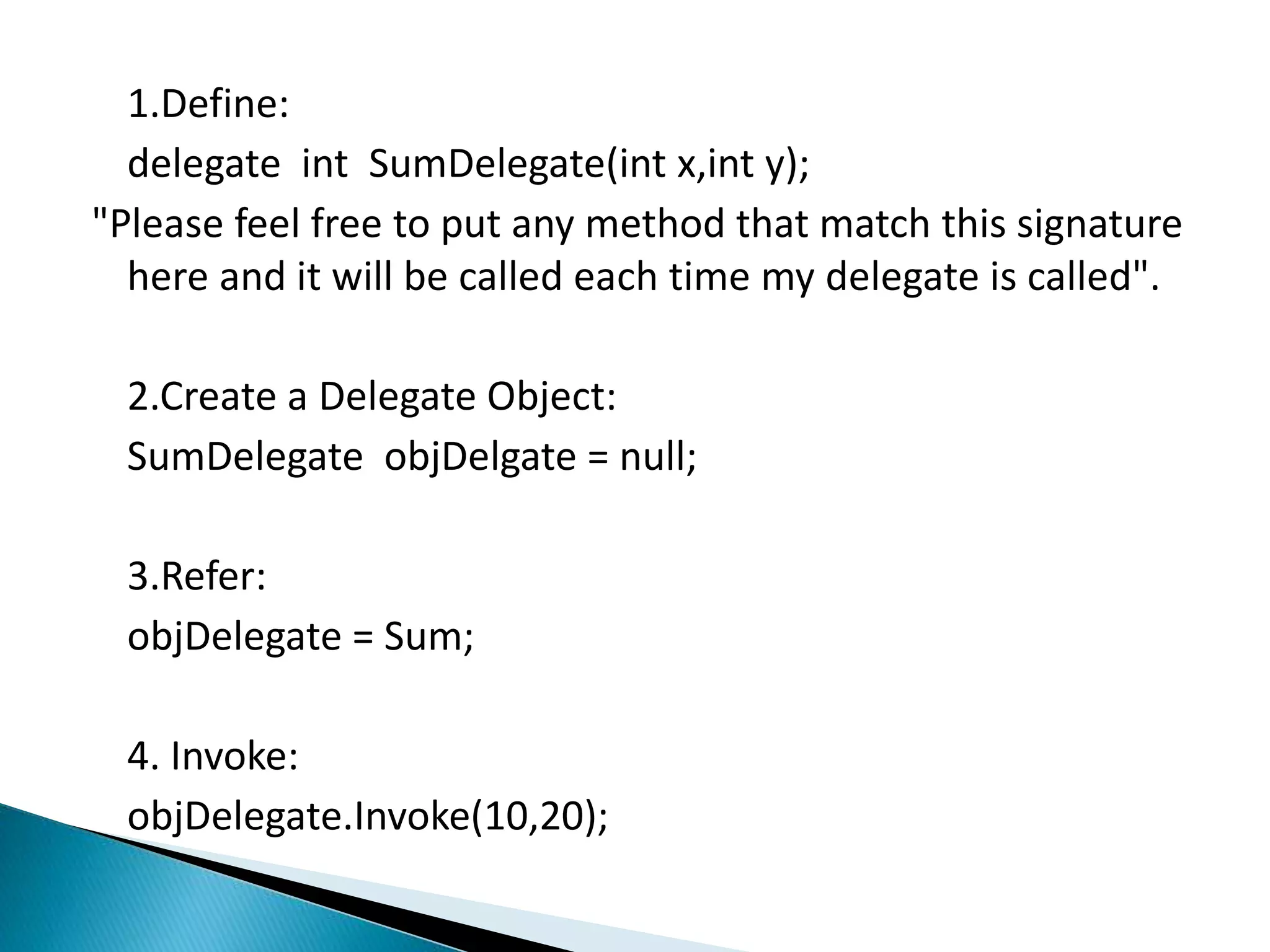
1.Define:
delegate int SumDelegate(int x,int y);
"Please feel free to put any method that match this signature
here and it will be called each time my delegate is called".
2.Create a Delegate Object:
SumDelegate objDelgate = null;
3.Refer:
objDelegate = Sum;
4. Invoke:
objDelegate.Invoke(10,20);
 Multicast =Delegate object can maintain a list of
methods to call, rather than a single method.
 Delegates can be chained together; i.e multiple
methods can be called on a single event.
 Adding a method += operator
 Removing a method -=operator
 Multicast delegate will invoke all the methods and
functions associated with it after another sequentially.
 Invocation happens in the same sequence as the
attachment is done.
delegateptr += Method1;
delegateptr += Method2;
delegateptr.Invoke();
Invokes the Method1 and Method2 sequentially.
Publisher / subscriber kind of model:
Multiple error logging routines.
Broadcast the errors to the respective
components.
1. Abstract and encapsulate a method (Anonymous
invocation)
Define an abstract pointer which can point to methods and
functions.
2. Reusability - Delegates are extremely useful when wanting
to declare a block of code that you want to pass around.
3. Multicasting - Sequential processing
THANK YOU!

C# Delegates

  • 1.
  • 2.
     Basically afunction pointer, but are type safe.  Type safe = A delegate which is pointing to a return type of int cannot point to a return type of string.  A placeholder for a/some method(s).  It is a reference to a function/method. The function is attached to the delegate and will then can be called via the delegate object.  Similar to a function pointer, where functions can be assigned like a variable and called in the run time based on dynamic conditions.  Allow methods to be passed as parameters.
  • 3.
     Allows usto specify what the function we'll be calling looks like, without having to specify which function to call.  has no knowledge of the class that implements the interface or delegate method.  We declare the signature of functions that this delegate can reference.
  • 4.
    RULE:The name ofyour delegate can be anything. However, you must define the delegate to match the signature of the method it will point to. Example public delegate int DelegateName(int x, int y); This delegate can point to any method taking two integers and returning an integer.
  • 6.
     A delegateis a type, i.e. a class. Like any other class, in order to be used, it must be:  Declared and Instantiated = > This will result in an object. The delegate object will hold a reference of a function. That object can then be:  Invoked = > The function will then can be called via the delegate object.
  • 7.
    1.Define: delegate int SumDelegate(intx,int y); "Please feel free to put any method that match this signature here and it will be called each time my delegate is called". 2.Create a Delegate Object: SumDelegate objDelgate = null; 3.Refer: objDelegate = Sum; 4. Invoke: objDelegate.Invoke(10,20);
  • 9.
     Multicast =Delegateobject can maintain a list of methods to call, rather than a single method.  Delegates can be chained together; i.e multiple methods can be called on a single event.  Adding a method += operator  Removing a method -=operator
  • 10.
     Multicast delegatewill invoke all the methods and functions associated with it after another sequentially.  Invocation happens in the same sequence as the attachment is done. delegateptr += Method1; delegateptr += Method2; delegateptr.Invoke(); Invokes the Method1 and Method2 sequentially.
  • 11.
    Publisher / subscriberkind of model: Multiple error logging routines. Broadcast the errors to the respective components.
  • 12.
    1. Abstract andencapsulate a method (Anonymous invocation) Define an abstract pointer which can point to methods and functions. 2. Reusability - Delegates are extremely useful when wanting to declare a block of code that you want to pass around. 3. Multicasting - Sequential processing
  • 13.